Loading summary
Transcript1 lines
- [00:00]
A
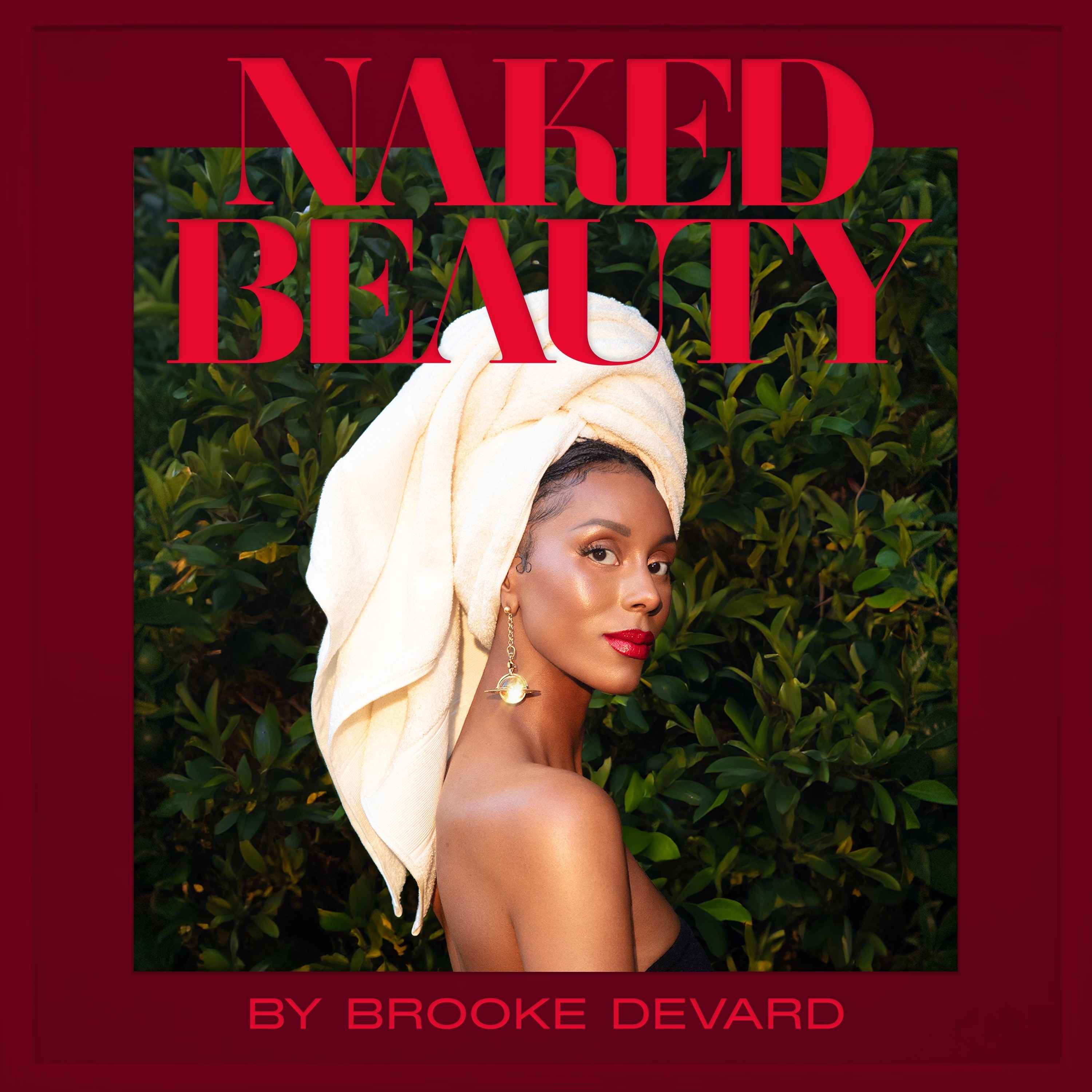
Foreign. This is Brooke Devard, and you're listening to the Naked Beauty podcast. It's 2026. We made it. And I know a lot of us love the new year. It's a fresh start, a blank page. But many of us, I'm raising my hand here, feel very tired, disillusioned, even overstimulated, and just asking myself, is this really it? We're just going to go full throttle into a new year. I actually sat down to record a very practical New Year's episode about work ethic and work stamina and discipline and goals and showing up even when you don't feel like doing the work. And yes, all of those things matter. I would not have been able to build Naked Beauty without those things. As I really started thinking about what I wanted to bring to this first episode of the year, I realized that's not where I wanted to take this. It's probably not what you need, either. What I have needed, especially in moments of fatigue, of doubt, of just too much, like cultural noise, and you're not sure where you fit in, is perspective. Not necessarily advice or specific hacks, but perspective from people that I truly admire. So I am going to introduce you all to the people I return to when I need to remember how to live, how to live more creatively, more courageously, how to be more in touch with myself, how to live with pleasure and purpose. This is my creative board of directors. I believe in having creative ancestors. These are people that you call on when you're tired of figuring out everything alone. And everyone on my list is no longer alive, but their words and their choices and the way that they move through the world still teach me how to keep on going. These are people that I've been intimate with. These are creatives I've built intimate relationships with through their work, through their words, through studying them, through learning about them, through sitting with their texts at different points in my life. And I'm hoping that they'll help you, too. So today, on this first episode of the year, rather than telling you how to get more done, I want to offer you something a little bit gentler, more sustaining, more inspiring. And we're going to start with Diana Vreeland. Now, Diana Vreeland was a legendary fashion editor at Harper's Bazaar, in Vogue, and one of the most influential, in my opinion, tastemakers of. Of the 20th century. I first came across her book DV the I Has to Travel. When I lived in London. It was at the Daunt Bookstore in South Kensington, and I already knew who she was. But I never really sat with her words. I was about 22 when I first read it, and everything resonated. One of Diana Vreeland's simplest ideas, but I find to be the most profound, is her famous quote. The the eye has to travel. And what she means by that isn't, you know, literal travel, even though she loved that too. She was a big proponent of going and seeing the world, but she meant expose your eye to things. Your eye, your taste, your sensibility, your intuition. It doesn't sharpen on its own. It sharpens by seeing things. You have to stretch yourself. You have to expose yourself to new things. You have to allow yourself to be surprised. You have to wander into the random art gallery. You have to go to the movie that's outside of your taste and outside of your comfort zone to train your eye and see different things. Taste isn't something that you're born with. I think that's so important. There's so much talk about what it is to have great taste. Taste is something that you build up over time, through exposure, through diversity, and through stretching yourself. Diana believed that if you keep looking at the same things, your imagination goes stale. She talks a lot about imagination, how imagination is needed to create a great editorial, but also a great outfit. She talked about how style is the thing that gets her out of bed in the morning. But once you start recycling ideas, you basically go dull. Like, as a creative, you go dull and you have to continually educate your eye with new things. And I think this is especially relevant now because we live in this era where our eyes don't really travel anymore beyond what is fed to us by algorithms. We scroll and then we get fed more of what we like, right? The algorithm is signaling, okay, she likes this. We're going to give her more of this. Algorithms are reinforcing our existing taste, and they're calling it personalization, which it is personalization. But that is how taste dies and atrophies. That is not working out the muscle of having interesting taste and an interesting point of view. This is why I've been so big on my solo dates, as part of reading the Artist's Way. The Artist's Way, a famous book in creative circles. If you know, you know. But one of the things that they force you to do is take yourself on a weekly solo date. Now, keeping it 100% honest, I do not do this every week. I aim for once a month, which probably isn't enough, but for me and my schedule, that's what I'm doing, right now, it can be as simple as going to a new neighborhood I've never been to before. And walking around, it can be as simple as going on a hike, putting my phone on airplane mode. Just putting my phone away and walking is huge for me. It's huge for me. I've started going to art shows where I do not understand the art, but other people understand the art. And I read what those critics have to say. And I'm trying to train and educate my eye and understand the root of this work, why it appeals to people, even if it doesn't appeal to me, because I'm trying to make sure that my eyes are well traveled. Another quote of Diana's that I love is, don't be boring, don't be predictable, don't be stale. Being interesting takes practice. My other favorite quote from Diana Vreeland, you don't have to be born beautiful to be wildly attractive. What she's saying here is that allure, like your essence, that comes from your personality, from your interests and living a passionate life. The surface level, prettiness thing doesn't really matter. But you're not going to be interesting. You're not going to be alluring, you're not going to draw people to you if you're not. If you're. If you're not going out of your way to stretch yourself, to be curious. Diana died August 1989. I was born August 1989. So we overlapped on Earth for two weeks. That, I don't know, that's always felt very symbolic to me. I remember reading everything I could, watching everything I could about her. And then I, like, looked up when she died, and I was like, ah, we just caught each other. But I also felt her spirit so deeply when I had the chance to intern at Vogue under the great late Andre Leon Talley. Which brings me to Andre. Andre worked under Diana Vreeland for many, many years, and he was larger than life in every sense. He was an editor, historian, a true intellectual. He's someone who romanticized fashion to, like this, the 100th degree. But he once said, grandeur is a form of self respect. What I learned from Andre Leon Telly, and what I continue to learn as I revisit his work and as I see exhibitions of his clothing, is that you should never shrink your presence to make other people comfortable. He took up a lot of space. He was a very tall, very large black man in the fashion world. I can see him walking down the hallways of Vogue when we were at Four Times Square. He did not just Blend in, right? He took up space. He had a loud, booming voice. He used very big vocabulary words. He wasn't simplifying things for other people. He was expansive intellectually, emotionally, aesthetically. He studied fashion history deeply. He just knew things. When you see him doing those interviews at the Met Gala stairs, which, if you haven't seen those, go back on YouTube and watch his Met Gala interviews. When he used to do the carpet, he knew so much about the construction of clothes, the materiality, the history of all of these different fashion houses. And he always reminds me that depth is still power. Even though we're in this era where algorithms reward quick hits and hot takes. Having depth, there's no substitute for that. Which brings me to the Internet and social media because I don't think you can be a creative or a leader alive and working today and not have to contend with this little thing called social media. It's a big part of my work. It's how I reach people. I make money on social media as well. And that's when I come to Andy Warhol. Now Andy Warhol is someone where, you know, I don't, it's like you don't even, you can't even pinpoint a time when you became aware of Andy Warhol because he's kind of like this ever present part of the pop culture landscape. I can remember in art history learning about how he basically created a whole new genre of art, how he had this background in branding and advertising and marketing and packaging. So it all, it all makes sense. And I think I am a bigger fan of the person of Andy Warhol, like who he was as a person and as a thinker than his art. But I think he would have so much to say about influencer culture. I'm going to read to you a quote he had about the art of making money. Okay, this is Andy business. Art is the step that comes after art. I started as a commercial artist and I want to finish as a business artist. Being good in business is the most fascinating kind of art. During the hippie era, people put down the idea of business. They'd say money is bad and working is bad, but making money is art and working is art and good business is the best art. Now that's a pretty full on endorsement of capitalism, which I don't fully subscribe to the idea that making money is the highest form of art. But what I think he is saying is that commerce and creativity don't have to cancel each other out. And actually as an artist, you have to be mindful of the commerce aspect. These two things can amplify each other when they're done consciously. I think about when I get a brand deal, I want to make my branded work some of my best work because one a brand is trusting me to communicate their values to my audience. But two, what a blessing it is to be in a position where you are making income from doing the thing it is that you love. I no longer see brand deals or having to do paid posts as like this interruption on the path of the work that I really want to do. Instead, I really push myself to say how can I make this commercial thing that I know I have to do rise to the level of the art I would create anyway. Andy is someone I am always in conversation with as I think about the modern artist, as I think about the creator economy, as I think about personal branding and a level of superficiality that you have to have in order to connect with people quickly. So I'm always returning to Andy. Now let's talk about some of the writers who raised me. These are three writers that have given me so much and they're very different, but they're all spiritually aligned. Okay, number one Zora Neale Hurston we are living in a very heavy time politically. Being a black woman has never been easy. It wasn't easy when Zora was writing in the 1920s and it's not easy now in 2026. It is still difficult 100 years later to be a black woman. But what I love about Zora Neale Hurston is how fiercely she defended her joy. Here's one of my favorite quotes from Zora Neale Hurston. Sometimes I feel discriminated against, but it does not make me angry. It merely astonishes me. How can any deny themselves the pleasure of my company? It's beyond me. We all need to walk with the confidence that other people's prejudices do not define us. We are living in a time where queer culture is under such direct attack. There is so much anti trans rhetoric and every time I hear people spew hate about these groups, I think about how they are missing out on some of the most vibrant culture that life has to offer, quite frankly. And if you're queer, if you're a person of color, if you are a woman, there are always going to be people who dislike you simply for existing. This is something I've had to teach my five year old son. People just aren't going to like you for the color of your skin. People aren't going to like you just because you're a woman, they're going to think less of you. But what Zora reminds me is that it is ultimately their loss. You do not need to prove your worthiness. You do not need to angle for an invite. You do not need to angle for recognition. You do not need to hope for a seat at the table for people that don't see it for you. Which leads me to my favorite from Zora Neale Hurston. She says, no, I do not weep at the world. I am too busy sharpening my oyster knife. That's from her essay, how it Feels to Be Colored Me. This is a very resilient approach to life. Instead of lamenting these challenges, that very real challenges, by the way, let's think about how deeply entrenched racism was in that time. Instead of lamenting in the despair of her time, she is focused on preparing to extract pleasure from life. That is resistance to me. She's not rehearsing her pain. She's honing her ability to extract nourishment from life. And to me, that's power. So I always think, if Zora could push through and find humor and levity and joy being a black woman writing and finding success in the time that she was in then, I can certainly do it today, in 2026, I want to move to Walt Whitman. Yes, the transcendentalist Walt Whitman. I fell in love with this whole school of thought of American Transcendentalism during an American literature class. Walt Whitman was someone who spent a lot of his time outside. Like, he would quite literally just go and lay by the pond and watch the sky. He would watch dogs, he would watch grass. He would just write poetry about nature and the body. And he collapsed all of these boundaries between your physical body and the nature that surrounds you. He has an incredible poem called Song of Myself. It's from Leaves of Grass. This was in 1855. He was writing this. I believe a leaf of grass is no less than the journey work of the stars. I exist as I am, and that is enough. I celebrate myself and I sing myself throughout this whole poem. He's basically refusing to separate his body from his soul, his human flesh from the wider nature around him. And what he continually does through his writing is he elevates the ordinary to the sacred. Throughout his work, there's this idea that every moment and every living being is sacred. There's a very famous line in Song of Myself where he says, do I contradict myself? Very well, then, I contradict myself. I am large. I contain multitudes. That lesson has Always stayed with me. Coherence is overrated, okay? The goal is to be alive. The goal is to be flexible in your thinking. The goal is to grow, adapt. You can't have a fixed mindset. And I just love it. Feels very 2026 sub stack where he's like, did I contradict myself? Okay, well, then I contradicted myself. I'm large. I contain multitudes. Like, you are allowed to change and grow and expand. And his work really reminds me of that. I'm going to end with Tick Nhat Han, a spiritual hero of mine. Someone who I've returned to pretty much every month, every year of my life since I first discovered his work. He was a Vietnamese Zen Buddhist monk. I believe he was in a monastery in France towards the end of his life. But he is a teacher, he is a poet, he is a peace activist. His writing, gosh. A friend of mine shout out to Sam Pressman, incredible film producer here in la. But we grew up together. I knew him in New York. We were. We were at Stanford together. And he was reading a book of his. It was just like sitting around in the dorm. And I just picked it up and I started reading it and I just couldn't put it down. And then from that day forward, I think I bought basically every book he's ever published. He had a blog that he used to keep active when he was still alive. He passed a few years ago, but I just returned to his work time and time again. I think the reason why I keep returning to his work is because his teachings center on the thing that I struggle with most, which is mindfulness. Surprise, surprise. Being fully present is always my biggest challenge. I am someone that craves distraction. I am someone that likes to be doing multiple things at once. I am someone that wants to be listening to a podcast as I go on the walk. Like, I have a really hard time just focusing on doing one thing and being fully, fully present and not letting my mind wander. But Thich Nhat Hanh writes a lot about the link between happiness and this. Basically, this false idea that happiness is a destination. So he writes, we believe that happiness will come to us when our conditions are perfect. But the perfect conditions do not exist. If we cannot be happy now, we will never be happy. Happiness is not a destination. It's a way of traveling. That, to me, is so profound, you know, because I'm happy right now, because I'm sitting at my desk recording this episode for you. I've had to work very hard over the years to remind myself that happiness Isn't the thing that happens once I achieve the thing, once I put the thing out, once I accomplish this task, once I. Happiness is in the present moment. And if you can't see that, then you basically will miss out on your entire life. He says people find it difficult to be happy because they see the past as better than it was and the present as worse than it is, and the future as less resolved than it will be. I'm always unlearning this idea of busyness. And he says in his book the Miracle of Mindfulness, people are busy all the time. They rush from one thing to another, believing that doing more will make them happy. But if you are not present, even success will not satisfy you. Without mindfulness, life passes by like a dream. We are often so busy planning for the future that we do not know how to take care of the present moment. We sacrifice our life for what we think will make us happy later. But later never comes. Busyness is not productivity. Now, this is me, Brooke, speaking. Busyness is not productivity. We trade the only moment we actually have for this imagined future that's never really going to arrive. This, to me, is one of the clearest critiques of modern life that he has. He talks about hurrying because we think that happiness is somewhere else, but when we rush, we damage ourselves. He says that. He says that rushing damages ourselves and it damages our capacity to live deeply. It's not that hurrying is just inefficient and like, not a good way to do things. It's actually harmful to us. It's not neutral. Being busy all the time, it costs us this real intimacy with our own lives and with people around us. In his book Being Peace, he has this quote. I think I have it underlined and starred a million times. He says many people keep themselves busy because they are afraid to be with themselves. Silence can be uncomfortable. Stillness can bring up things we do not want to face. So we fill our lives with noise, plans, and activity. This is so big for me because in a lot of ways, busyness is a coping mechanism. It's not a virtue. It's not a virtue, right? So if you're not present, you can't enjoy what you've achieved. You may reach your goals, but you're not going to receive them fully because you're not present. So as you walk into 2026, I want you to do it with ease. Acknowledge the perfection of this present moment and relish in this season of your life. Stay curious. Push yourself to keep yourself interesting. Don't get stale. Don't get boring. As Diana Vreeland said, use humor in the face of discrimination and despair. Have that Zora Neale Hurston energy. Like, who would deny themselves the pleasure of your company? And finally, allow yourself the flexibility to change your mind. Contradict yourself. Enjoy all of those multitudes that are contained in who you are. To every single person listening, I'm sending you so much love. Thank you for being here, and I'll talk with you all next week. Hey, how you doing? Yeah, I'm doing mighty fine. Last time. I think. It's been a long time. Stop smiling at me. Get that look off your face.