← Nat Theo Nature Lessons Rooted in the Bible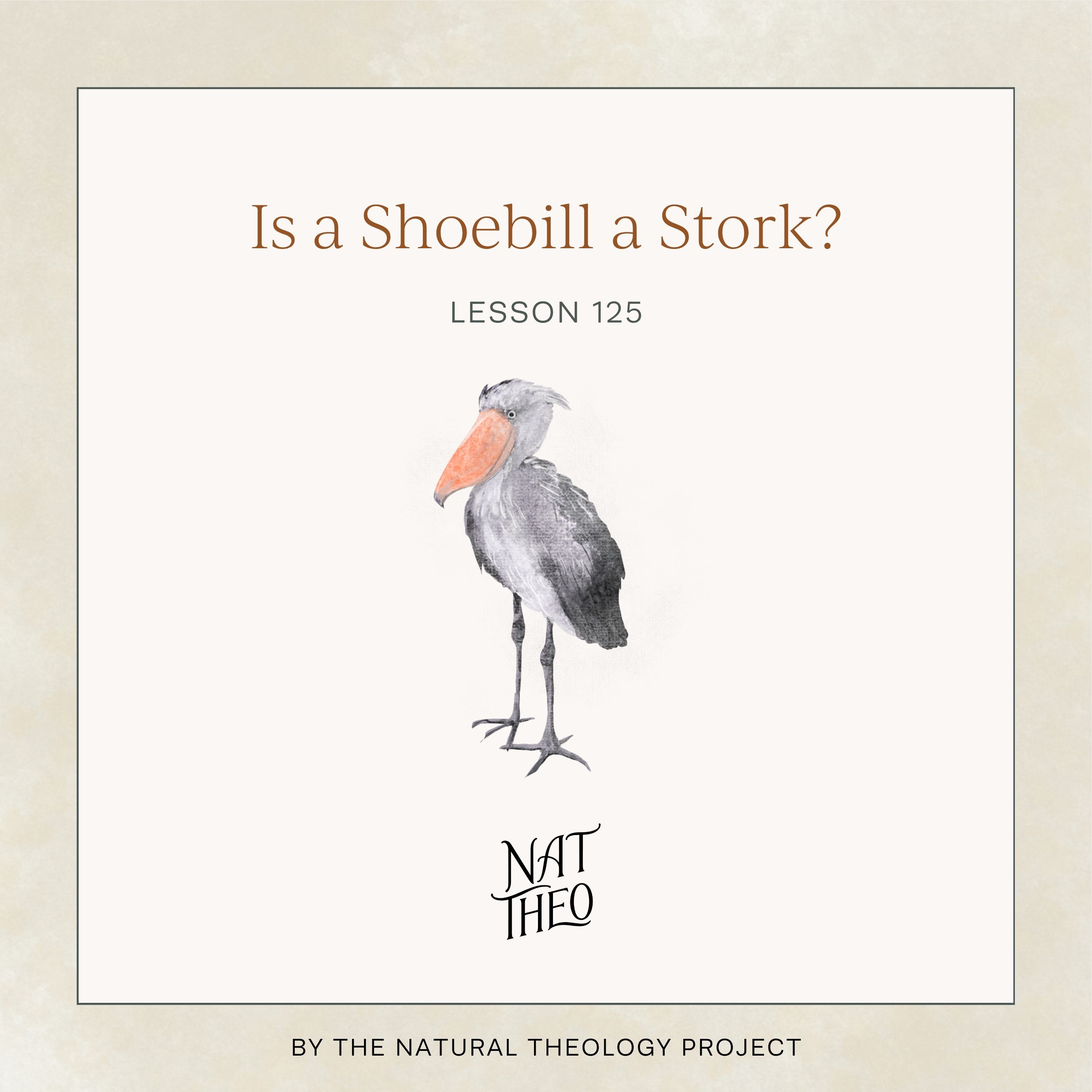
Loading summary
Transcript10 lines
- [00:01]
Erin Lyneum
This summer we invite you to explore God's wild and wonderful world in a whole new way with Magnify A wild and wonderful Summer Adventure. This nine week experience is a child led low prep way to enjoy meaningful nature study right where you live. Each week your family will discover and delight in God's fingerprints through birds, flowers, amphibians, insects, fungi and more. With guided nature journaling, trusted book and resource lists, devotions and three live classes with me throughout the summer, Magnify gives you everything you need for a season of wonder, learning and faith filled discovery. Magnify is designed to help your family slow down, step outside and stand in awe of God's creation. Join us this summer@thenaturaltheologyproject.com magnify or through the link in our show notes hello world.
- [01:03]
Child Listener
Wake me up to another good Good morning. Time to go.
- [01:10]
Erin Lyneum
Are you ready to explore God's wild and wonderful world? Welcome to the Nat Theo Podcast. I'm your host Erin Lyneum. I'm a certified master naturalist, Bible teacher and author and I am so excited to div dive into God's written word, the Bible and His created world with you. Have you ever seen a picture or a video of an animal and you thought right away that cannot be real? That is how I felt about a year ago when my dad sent me a picture and an article about shoe bills. Shoebills are tall birds that can grow to be around 4ft or 1.2 meters tall. So around as tall as a 7 or 8 year old child might be. That is a tall bird and they look as though they came from a science fiction movie set. But they are indeed a unique and real and amazing bird that God designed. What makes a shoebill look so unreal? Maybe it's the massive bill that looks like a shoe on its face, which explains the name Shoebill. Some say it looks like a large wooden Dutch clogged shoe. Or maybe it is the shoebill's humongous feet that look a little too big for its body. Or perhaps it's the yellow piercing eyes. It looks as though its eyebrows are furrowed, like it's angry or displeased. But that is only the shape of its face. Kind of like an axolotl always looks like it's smiling because of the way that its face is shaped. So the shoebill is not actually angry. If it's staring you down in the African wetlands where it lives, it might just look very perturbed. This bird is truly unique. So let's dive in and discover how God designed it. Here is our trail map.
- [03:29]
Listener (Adrian/Nora)
Are you ready?
- [03:31]
Erin Lyneum
We are going to learn Is a shoebill a stork? Can a shoebill eat a crocodile? How are people saving shoebills from extinction? And how has God adopted us? Before we hit the trail, let's thank our sponsor who made this lesson possible. Apologia if you are curious about winged creatures that hit the skies like the shoebill, you will love Apologia's Flying Creatures of the fifth Day Zoology course. Explore busy bees, flying falcons, extinct pterodactyls, acrobatic bats and all the other flying creatures you can think of. Learn how feathers are fashioned for flight, how winged creatures find their way in the sky, and which birds use what flight patterns. With vivid images, helpful diagrams and fun hands on activities in the student journal, this course is sure to wow you as you marvel at God's designs and the many creatures that masterfully maneuver the skies. Pick up the Flying Creatures of the fifth Day Zoology course and explore all of Apologia's award winning science curriculum that points everything in creation back to God. Find it at apologia.com or at the link in our show notes. It's time for our trivia question. How big can a shoebill's wingspan be? Wingspan is the measurement from the tip of one wing to the tip of the opposite wing. When a bird's wings are spread out, can a shoebill's wingspan be up to a 2ft wide, b 4ft wide, c 6ft wide, or d 8ft wide? Again, can a shoebill's wingspan be up to a 2ft wide, B 4ft, c 6ft or d 8ft? Take a guess and we will find out at the end of today's lesson and Nat Theo Club members. After this lesson, click over to the bonus video where we will explore the unique wetland habitats with papyrus plants that shoebills call home. Find that bonus video at the link in our show notes or in your Nathio Club dashboard. All right, let's hit the trail. Shoebills are often called storks and for good reason. It was long believed that they were a type of stork. In fact, they are sometimes still called shoebill storks, although they are not storks. Shoebells look a bit like a stork with their big bodies and their long legs. Because of their body shape and some of the ways that they behave, they were placed into the same category with storks, hence the nickname shoebill stork. Before we go any further, I want to stop right here to really understand just how unique shoebills are, we need to understand how creatures and other living things are categorized or sorted in nature. We are going to learn about taxonomy. Taxonomy is the sorting and naming of living things in nature. In taxonomy, there are bigger categories and smaller categories. Put simply, there are seven levels of classification. The largest level is kingdom. So this is like the animal kingdom and the plant kingdom, along with a few others. These are really big categories. The entire animal kingdom with all of the animals in one and the entire plant kingdom in another. Then level by level, we get more specific. Inside each big kingdom, there are slightly smaller categories called phylums. A little bit smaller than that is class. Then as we go on, order, family, genus, and then the smallest level is species. A while back, my kids and I came up with a short little song to help us remember the seven levels of taxonomy. Are you ready? It goes like this. From the largest to smallest categories. Kingdom, phylum, class, order, family, genus, species. Can you say that with me? Kingdom, phylum, class, order, family, genus, species. Let's try it one more time. Kingdom, phylum, class, order, family, genus, species, taxonomy. So these seven levels of classification is kind of like opening boxes to learn what a creature really is. Big box, and then a smaller box, and then an even smaller box, and then a tiny box, and then the tiniest box called species, tells us exactly what an animal is. But what does all of this have to do with the shoebill and whether or not they are storks? As I mentioned, shoebills were once believed to be a type of stork. They were placed in the stork order. Order is right in the middle of the taxonomy levels. So the stork order is a pretty large category, but it was the wrong category for shoebills. Beginning in the 1980s, scientists began looking closer with new technologies and a deeper understanding of DNA or the instructions inside the cells of living things. When they looked closer, specifically at what a shoebill's eggshells are made of, along with the DNA of a shoebill, they realized that they were not very similar to storks after all. Shoebills were reclassified into a different order called Pelicaniformes. Remember, an order is in the middle of the taxonomy levels, so it's still a pretty large category. Pelicaniformes is an order of waterbirds, including pelicans, shoebill, and the hammer cop. So shoebills are more similar to pelicans than to storks. Do you remember what levels of taxonomy come come after order? Let's repeat the levels again. Kingdom, phylum, class, order, family, genus, species after order comes family, genus, and then finally species, where we learn exactly what an animal is. Well, listen to this. Once we get to the family category of shoebills, that is it. There is only the shoebill. There are no other animals in their family, genus or of course their species. They get a whole family, genus and species to themselves because they are so one of a kind. Shoebills are monotypic. Monotypic means a creature is the only kind in its taxonomy group. The shoebill family is called Balaenocypatidae and there are no other animals in that family. Their family name means whale headed because the scientist who first classified them thought that their big wide bill on their face looked kind of like the head of a baleen whale. Whatever you think their head looks like a wooden clogged shoe or, or a baleen whale's head, they are unique and certainly deserve their own family, genus and species. The top of their large wide bill has a sharp downward hook at its tip that fits kind of like a puzzle piece over the tip of its bottom bill. The bill itself has razor sharp edges that help it catch and eat prey like slippery fish. While we are talking about the shoebill's unique bill, I should probably mention the surprising sounds that shoebills make. I normally think of large birds making a whole lot of noise. Large geese can make a racket as they fly overhead, honking. I live near a lake and every year large tall great blue heron birds nest in the trees nearby. They make a whole lot of noise, especially as their hungry chicks in their nests grow and get bigger. So I would think that a large bird like a shoebill would make a lot of noise. But shoebills don't really make calls like other birds do. When it comes to bird talk, they are not so talkative. But they do make a special sound in order to communicate with others throughout the wetland. Listen to this. A shoebill rapidly claps together the top and bottom of its large bill to make a special sound called bill clattering. It is just another special feature of their surprisingly large bills. With such large bodies and bills, do you think a shoebill can fly? This brings up a great question from one of our listeners.
- [14:06]
Listener (Adrian/Nora)
Hi, my name's Adrian and I wanted to know how high can shoebills fly? And also I'm eight and I live in Wisconsin.
- [14:17]
Erin Lyneum
What a wonderful question, Adrian. How high can a shoebill fly? Despite their large bodies and bills, shoebills are not terribly heavy. They are around 15 pounds or 7 kilograms. We can compare that to an adult male goose that can weigh around 14 pounds. So really, a shoebill can weigh almost the same as a goose. And we know that geese can fly very well. However, shoebills do not have a whole lot of reason to fly. They mainly stay in the wetland area. They might fly a short distance to find food or nesting materials, or if they are disturbed from the area. But they are not long distance flyers, and they are also not high fliers. It's believed that they only fly under 1,000ft of altitude. Shoebills have one of the slowest known flapping rates of all birds, Flapping their wings only around 150 times every minute. Shoebills are built for the ground. Speaking of ground, what about their crazy large feet? Each foot has four long, widespread toes. And these long toes help spread out the shoebill's weight so that it can walk on plants that are floating on the water. So their long toes act a little bit like snowshoes, only for water, helping them not to sink. God designed their feet this way to help them find and catch fish in their wetland habitats. But what else do you think a shoebill might be fishing or hunting for? Maybe a crocodile. Let's learn how and what a shoebill might hunt. Shoebills mostly eat fish, especially one fish that they love called the lungfish. Lungfish have gills like other fish do, but they also have lungs, so they come to the water's surface to breathe air. Shoebills wait for the opportune moment when a lungfish comes up to the surface for a breath. And then, well, what then? We should probably talk about the shoebill's very unique way of getting its lunch. Shoebills are ambush predators. An ambush predator is an animal that hunts its prey by staying still instead of stalking or chasing. Ambush predators stay, stay very still, Often camouflaged. And when another animal gets close, surprise. They pounce or strike super fast. A shoebill stands very, very still as it waits for prey. Like a fish to swim by. The bird looks like a large statue. In the wetland. This is where they get their reputation for staring people down. They stand as still as a statue with their piercing yellow eyes, and they look rather unnerving. Then when a fish swims by, they lunge forward in a powerful strike. Bon appetit, shoebill. Enjoy your fishy lunch. Shoebills will also sometimes wade or walk very slowly through the shallow water in search of food, like I have seen great blue herons do at the shore of our lake. They take every step Very carefully to not spook a fish away. But it is not only fish that a shoebill is after. They will sometimes also eat amphibians like frogs and reptiles like snakes and even baby crocodiles. Yes, a bird that eats crocodiles, baby ones anyways. Because the shoebill's bill is massive, they often get a mouthful or a beak full of water and plants and dirt along with their prey. So they swing their big head back and forth, dumping out everything that is not so tasty and they don't want. And at the same time they are killing their prey with their razor sharp bill. And then they swallow it whole. Even with these smart hunting strategies, shoebills are not doing very well in the wild. Let's learn how some people are lending a hand and helping to save these unique birds that God made. Shoebills are considered to be vulnerable. A vulnerable species is a type of animal or plant that is at a high risk of going extinct in the wild. It is believed that there are only around 3,300 to 5,300 shoebills in the wild. And that is not very many. A lot of things are set up against the shoebill. For one, they have lost their wetland habitats in some areas. And hunting an illegal pet trade have also led to less shoebills in the wild. Along with their nests being disturbed, shoebills do not have as many babies as many other types of birds do. In my yard during the spring and summer, I watch songbirds build nests and tend to their young. They might have a couple or a few broods of several chicks in one season. They can have a lot of chicks, but a shoebill normally lays two eggs at a time and only once a year. Normally, only the first chick that hatches survives. If a second chick hatches, the first one might attack it. And sometimes the parents feed the first chick more. So in most cases, a pair of shoebills might only have one surviving chick per year. And it takes that chick three to four years until it's ready to breed and have a chick of its own. This means the population of shoebills grows very slowly and at the same time, shoebills are dying or being killed. Thankfully, people have stepped in to help rescue the shoebill. In the country of Zambia, Africa, the Shoebill Nest Protection program has been helping to protect shoebill nests and and chicks since the year 2012. Community members volunteer for 24 hour shifts to guard shoebill nests from being disturbed. Then, in the year 2022, the shoebill captive Rearing and Rehabilitation facility was established to raise Shoebill chicks and then release them in the wild. It is the first program of its kind. Do you remember how many eggs a shoebill normally lays and how many chicks usually survive? Normally, two eggs are laid and only the first chick that hatches survives. So in this program, trained workers carefully collect the second egg laid from the wild nests. They take that second egg back to the facility and they carefully tend to it so that that chick can hatch and have a chance to survive. But there is a problem. Baby birds tend to imprint themselves on the first thing that they see when they hatch. This means that if a chick hatches and sees a human right away, it might think the human is its parent. This would make it very hard for the chick to be released in the wild where it should be living. The rearing facility solves this problem with a shoebill parent puppet. Yes, a puppet. They use a puppet designed by an Emmy award winning puppeteer to interact with the chicks. Humans stay behind the scenes at all times so that the chick only sees a puppet that looks like its own species. This way, when it is released in the wild, it will recognize other shoe bills and not depend on human care. Think about humans working so hard and carefully to raise and release shoebill chicks. Picture that second egg laid in a nest. It has very little hope. That chick might hatch but not survive. Instead, these workers come in and in a way adopt that second chick, giving it a chance at life. Did you know that God does the same for us? Like a second laid shoe bell chick. We had no hope. Our sin, the things that we say or do or think that go against God's ways, separate us from God. But there is great news. God sent his son Jesus to die in our place and take our punishment for sin. And then Jesus rose to new life so that we also can have new and eternal life with God. Romans 3:23,24 says, Everyone has sinned and fallen short of God's glorious standard. And all need to be made right with God by his grace, which is a free gift. They need to be made free from sin through Jesus Christ. When we choose to follow Jesus as our Savior, we are set free, free from sin's punishment and penalty, and we are adopted into God's family. Ephesians 1:5 says, God decided in advance to adopt us into his own family by bringing us to himself through Jesus Christ. This is what he wanted to do and it gave him great pleasure. God wants us in his family. Have you ever chosen to follow Jesus as your Savior and be adopted into God's family? When we turn away from our sins and we choose to accept Jesus gift of salvation. We are set free. We are like a shoebill chick being taken in and cared for. We are given new life. If you have never made the decision to follow Jesus, today is a great day to do that. You can pray a simple prayer like Dear God, I know I have done wrong things that go against your ways. I deserve the punishment of sin, but Jesus died to save me. Thank you for sending your son to rescue me. I choose to turn from sin and follow you. Thank you for adopting me into your family. Help me to grow in faith as I follow you all the days of my life. If you have prayed that prayer or one like it today there is much rejoicing and I am celebrating with you. I encourage you to talk to your parent or pastor or a trusted adult so that they also can celebrate with you and help you understand what it looks like to follow Jesus and grow in faith. And if you are already a follower of Christ, we can have great joy knowing that we are adopted. We have hope, a new life. We are children of God, as 1st John 3:1 says. See how very much our Father loves us, for he calls us his children and that is what we are. It's time to answer a question from one of our listeners. Here is today's question.
- [27:07]
Listener (Adrian/Nora)
My name is Nora, I'm eight years old, I live in Alabama, and my question is do bears really like honey?
- [27:15]
Erin Lyneum
Thanks for your great question, Nora. Do bears really like honey? In some cartoons and children's stories, bears raid beehives for a tasty treat of honey. But is it true? Do bears like honey? Well, yes. According to Elizabeth Manning, a wildlife education and outreach specialist, bears do love honey. But it turns out that bears have more than just a sweet tooth. Bears are considered opportunistic omnivores, which means that they will eat all kinds of things, including vegetation with berries, meat and insects. When raiding a beehive, bears will often eat the bees and the larva or baby bees inside the hive. Bees provide the bear with more protein than sugary honey does. So while they sometimes might have a sweet tooth and go after honey, they're looking for what they need from all kinds of food. And God has provided what bears need. Thank you for your great question, Nora. Stay curious about God's wild and wonderful world. Anatio Club members remember to click over after this lesson to the bonus video where we will explore the unique wetland habitats with its papyrus plants that the shoebills live in. You can find that bonus video at the link in our show notes or in your Nat Theo Club Dashboard alright, it's time to answer our trivia question. How big can a ShoeBill's wingspan be? A 2ft wide, B 4ft wide, C 6ft wide, or D 8ft wide? The answer is D. A shoebill's wingspan can be up to around eight feet wide, sometimes eight and a half feet or two and a half meters. That is around as long as a large dining room table. The shoebill is truly a unique and large bird. Now it's your turn to explore. Go look for a bird that is fishing. Ask your parent or caregiver to take you to a pond, lake, river or the ocean and see if you can spot a bird fishing from the shore or soaring overhead looking for fish beneath the water's surface. Watch and marvel at how God designed all of these birds to get their little lunch. Thank you so much for listening. If you enjoyed this lesson on the shoe bill, please take a moment to send it to a friend and subscribe. Rate and review Nat Theo wherever you listen. Until next time, keep exploring God's wild and wonderful world.
- [30:17]
Child Listener
We are all looking for adventure. We are all looking for adventure.