← Navigating Adult ADHD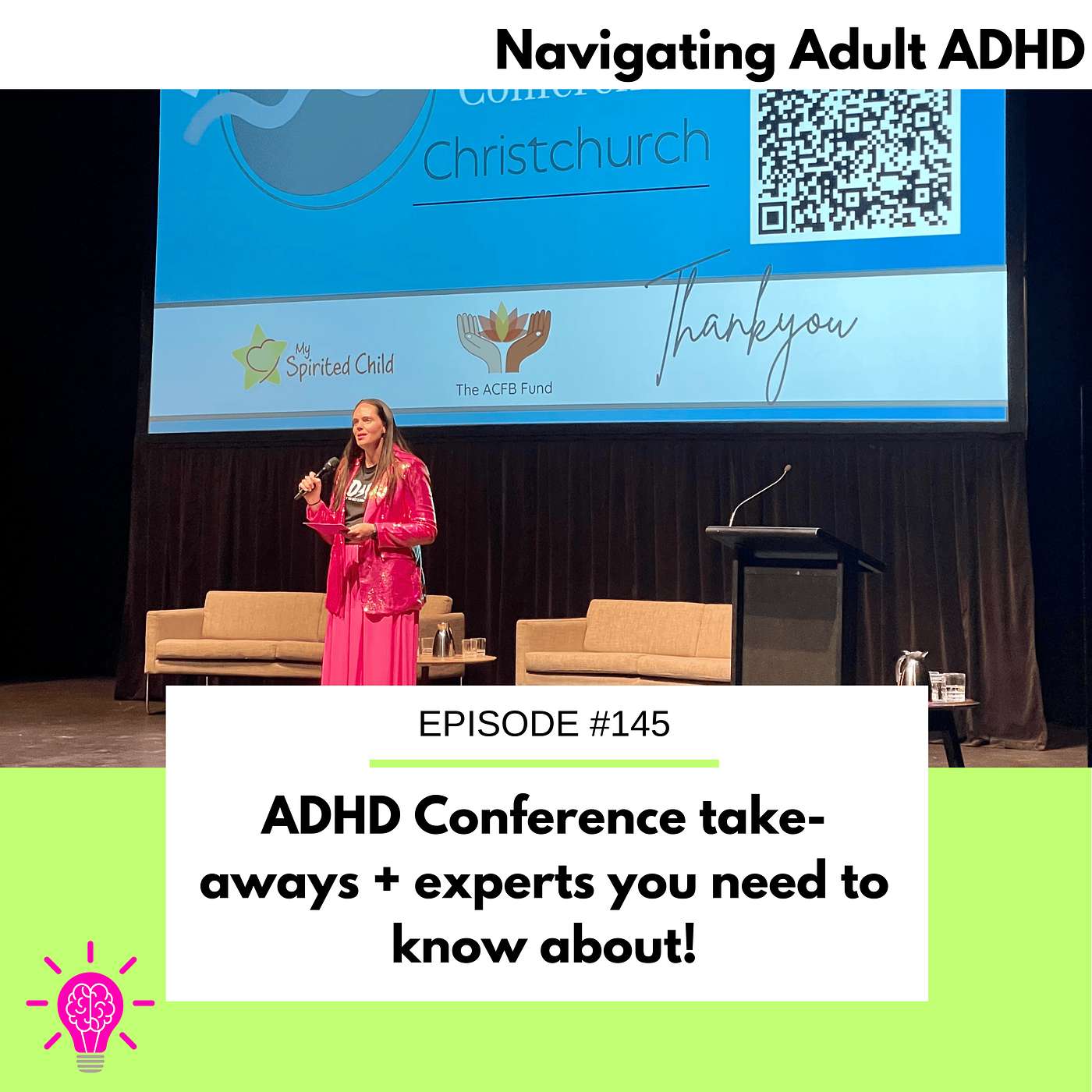
Loading summary
Transcript1 lines
- [00:04]
A
You are listening to the Navigating Adult ADHD Podcast with your ADHD coach and expert, Xena. Hello, my beautiful friend. Now, I gotta do this before I forget, because let's be real, my working memory is not what I would love it to be. I'm likely to forget because, hi, I have adhd. But the first thing I wanted to say today is if you're listening to this in real time, which I appreciate, you might not be, but if you are, I just want to say Merry Christmas and a huge thank you for being a podcast listener, for being here today, for being one of our team, for being on Team adhd. I'm just so grateful for you for pushing play. So thank you for being part of my world and part of my mission to help adults with adhd. And I'm wishing you a beautiful, magical, special, safe, happy, joyous Christmas with those that you love and care about, whoever that is. So I had to say that up front because I was like, oh, my God, my brain's probably gonna forget. So, yes. And if you're not listening to this in real time, hope you had a beautiful Christmas. You're probably like, it's June, lady. What are you on about? So I have not long got back from the My Spirited Child ADHD Conference, which was run in Christchurch. It's the second ADHD conference I have ATT attended in New Zealand this year. And it was incredible. It was so fantastic, fantastic to be in a room full of sparkly brand humans and their supporters. So one of the questions, I was the emcee for this event. One of the questions I asked when I got up on stage was, you know, show of hands, who here has ADHD? And I would say probably about 60 of the room put their hands up. I said, who here is a parent or caregiver of somebody with ADHD? And there was probably about 50%. So obviously, you know, there's a mixture of parents who have ADHD themselves, likely, and quite often because their children have been diagnosed, they've come to that realization. And then the last question I asked was, who here is a support person? So that might look like the teachers, the therapists, the counselors, et cetera. And there was probably maybe 20 to 25% of the hands in the room went up, which was so beautiful to see. So, so wonderful, my friend. If you get the opportunity to attend an ADHD conference, I know these are on around the world at present, we typically have two in New Zealand, one in Auckland around August and one in Christchurch next year, it'll Be the end of November. I know that the same company who runs this event, which is my spirited child, I will link to them in the show notes. They run them all over Australia too. So they do multiple events around Australia. They also do them virtual, so they do them online. And they have typically six different speakers, six different experts come and talk about different ADHD related topics. There's a workbook which is usually optional that you can purchase as well. And you know, as I said, these are done all over the world in different formats. But it's just such a great way to learn not only about your brain but also to be amongst other people like you, who get it, who are, you know, meeting you, where you're at and who appreciate the differences that you have. So again, I highly recommend it. I love them and I just love hanging out with our community. So if you did come up and say, hi, I got to meet lots of you, which was fantastic. I'm so happy I got to meet you and hug you. I'm such a chaga. One of the questions I did get asked over and over from the men was do I coach men? Yes, yes I do. I know I wear bright pink and neon colors and all of that and I talk a lot about women and hormones and so on. But yes, we have got men. I've got some one to one men clients, but in our, in our membership inside adulting with adhd, there are men. Yes. And I'm also making a conscious effort to have some male guests come on as well. Some of the people who I've had the honor of connecting with and becoming friends with in the ADHD space. You know, fellow fellow men with adhd, often late diagnosed, have got such a wonderful perspective and you know, a good variety of tools and a good story, etc. I love to share them on the podcast. So you will have noticed we've had a few of those recently. All right, my friends, I just want to give one shout out before I get into today's lessons that I want to share with you from this conference. I want to give a shout out to the ninjas. So ninjas, specifically at this ADHD conference are the people who volunteer to help it run smoothly. So they're checking the tickets, helping everybody find everything, all of that sort of a thing. And one specific ninja I want to shout out. His name is Sean. Now, I'm hoping Sean might hear this. He may not. But Sean, if you are listening, you came up to me and gave me some really beautiful feedback about being the mc. I had never been An MC before. I've done a lot of public speaking, but not in the MC role. So I just wanted to go in and have fun with it. But it was something I wanted to get was feedback. And I just want to say how much I appreciate you coming up and giving me that feedback. You didn't have to do that, but it meant a lot to me to hear your perspective and to hear what you liked about my style and what I was doing. So I just want to shout you out and say thank you. I really appreciated that and you gave amazing hugs. All right, my friend. So in today's podcast, I'm wanting to share with you one or more lessons from each of the speakers from this conference. So things that they shared their expertise. And I'm also going to, in the show notes, I'm going to link to each of these speakers if you want to go and follow them and check them out and see what they're doing in the ADHD space. Many of them have got some amazing resources that you can take advantage of. So I'm going to go in the order of the speakers from the day. Okay. So the first speaker that we had was Jamie Rose Peacock. Now, if you are an avid listener of the podcast, you might remember Jamie. We've actually had Jamie on the podcast where it was number one, three, six. Yeah. Number 136. She talked about ADHD in the workplace. Okay. She talked about your rights, your reasonable accommodations and adjustments that you can ask for when you need to tell your boss all of these things. That episode has had so much incredible feedback because she answered so many of the questions that we have about, you know, what can we ask for at work? What kind of accommodations are we allowed? And do I have to tell my boss? Should I, shouldn't I? All of these sorts of things. So if you haven't yet listened to that and you are somebody with ADHD in a workplace, even an employer, it would be incredibly valuable. It's number 136. Okay. And her talk on at the conference was very similar and along those lines. But one of the things that I wanted to share with you today was around that question of disclosure. Do I have to tell my boss or should I tell my boss? Like, when do I tell? When do I not tell? Because this is something I was asking some of the attendees throughout the day. You know, like what. What was your takeaway from so and so's talk? And this is something that I heard from people again and again was really, really valuable. Okay? So in terms of whether or not you need to tell your employer. It's entirely up to you, providing there is legal requirement for you to do so. In some cases, there may be a legal requirement which you usually would know about. So, for example, I know in the police force here in New Zealand, there is a legal requirement for you to disclose if you are on any form of medication. Also, if there is a situation where you're operating machinery, it may be required, and you will have been told this during your application of the job, and it will be no doubt there will be drug testing, et cetera, in that role. Then you will likely know that it is something that you need to tell your employer. But in a lot of cases, unless you're, you know, legally required to, the answer is no, you don't have to tell your employer. Okay? Obviously, it's not a good idea to lie, but you don't have to tell your employer. Now if you want to tell them, you can. Okay? But obviously you need to be mindful of the relationship that you have with your employer. Okay? So one of the things that Jamie talks about is if you don't have a great relationship with your employer, if there is a risk of them, you know, misinterpreting or discriminating against you or some sort of a stigma, if the way that they've talked about ADHD previously hasn't been in a positive way, then you may choose not to. And you can still ask for accommodations without having to disclose. Okay. If you want to learn more about that, definitely go listen to number 136 where she talks all about how to do that. Okay. However, there are some, you know, benefits to talking to your employer about your ADHD diagnosis, especially if you do have a good relationship. So there will be access to support and accommodations. You can talk about ways that will better help you to manage your workload and your planning. And that may be something like more regular check inside, more regular, you know, meetings where you two go through and look at the plan and the schedule together, etc, Right. That they will have a better understanding of you. Okay. And in some cases, one beautiful thing that I have seen in the work that I do with people is when they have chosen, and sometimes it's a really courageous thing to do, right? To. To speak to your employer about it. When they have chosen to speak to their employer is sometimes that employer will be like, okay, let's get some training on this. Let's start a neurodiversity program. Let's better understand this and get more involved so that not only you Know me as your, as your boss can understand, but so that all of your colleagues can understand too. Like let's do some training, get some experts come in, etc. So that has been really awesome to see. That might be something that your workplace would choose to embrace as well. Okay, now another thing that Jamie talked about is how the employer's duty is that they have to maintain confidentiality of your health information. If you do choose to disclose legally, they have to keep that information confidential unless you say that they're allowed to share it with your colleagues, etc. Okay. So I just wanted to highlight that again because it's such, it's, it's a question I get asked a lot. But also Jamie's the expert in this space and it's just so good to know this. Okay, so that's Jamie Rose Peacock again. I'm going to listen, listen link to her in the show notes. I feel like today my brain is going too fast for my mouth. So when I drink water and I frequently spill water, and not just water, other things on myself, but when I drink water I sometimes feel like I'm taking a drink of water. But my brain has moved on to the next thing and because my brain's moved on to the next thing and I haven't finished the drink, I spill it. Do you know it? Do you know what I'm saying? Hopefully I'm not the only one. All right, the next, it's not so much a speaker, it was a panel. The next thing that happened at the conference was there was a panel and it was a burnout panel. So we were talking about ADHD burnout. So this was run by Ashley Cairns. Ashley has been a guest on the podcast. It was actually about a year ago when this was released. I remember it was the last episode before Christmas. So Ashley was a guest talking about her own burnout experiences and lessons and takeaways, etc. It was a fantastic episode. But this was a panel that she pulled together. So I was one of the people on the panel. Then there was Ashley sharing her experience. Jamie was also on the panel and somebody called Kate. Now Kate is a mental health and well being counselor based in Christchurch, in Otutahi, Christchurch. So I will link to her and her details as well. One of the things that really came out of this when I was talking to other people about what they got out of that panel afterwards was how normal ADHD burnout is in our community, but how it's not normal full stop, right? So adhd, like burnout is not normal, but it is normal in our community. Okay. And that's really unfortunate because I think of the societal expectations and pressure to perform like a neurotypical person, but also, we're living in a neurotypical world. Right, Right. So it's so normal, but it's not. It shouldn't be normal for us. So I think every single person I spoke to had experienced burnout. Some of them were currently in burnout, the people I was speaking to at the conference. Okay, so I'm going to share with you specifically some of the lessons that I shared on this stage. Ashley asked us, what's one thing you wish you knew back then, back before your burnout or during your burnout? And the thing that I shared was when you think that you do not have time for your mental, emotional, or physical health, sooner or later, you will have to find time for illness. And that was definitely the case for me in. I've experienced burnout a couple of times, and I've talked about it here on the podcast. But specifically the last time I had it, I just felt like I didn't have time for my health. It was sort of the thing that went out the window. And I kind of remember thinking, oh, I just wish I'd get sick so that I, you know, I had to stop everything, you know, even though, like, I didn't have time to get sick, I kind of wanted it to happen, if you know what I mean. But when you think you don't have time for your health, sooner or later you're gonna have to find time for illness. I had to make time for burnout, and that was a long road to recovery. There's this quote, and I am paraphrasing it, but I read it in a book the other day, which really speaks to this. Your body is the only vehicle you ever get to own, the only way you get to explore the world and the window through which you get to experience and enjoy life. It's the only place you'll ever truly call home. If you don't take care of it, you'll be paying a high price to try and repair it. Another question that was asked of the panel was, what tips and tricks do you have for navigating ADHD burnout? And I talked about the difference between slow dopamine and fast dopamine. And I have. You know, there's multiple podcasts on that. It's something I'm very passionate about talking about. But one of the things that I noticed when I was in burnout, and I see this of, you know, the People that I work with, fellow ADHD is when we are in burnout is we're going for quick dopamine. So not all dopamine's created equal. Quick dopamine is things like scrolling on your phone, online shopping, eating fast foods, you know, binge watching Netflix, things that give you that real quick spike in dopamine, real quick and easy alcohol, these sorts of things. But slow dopamine is things like going for a walk, going for a cold, you know, a swim at the beach, going to catch up with a friend for coffee, doing your hobbies and your goals. It could be horse riding, it could be knitting, it could be crocheting, it could be riding your motorbike, those sorts of things. Don't spike and crash your dopamine. The same as quick dopamine, okay? So when you understand that not all dopamine is created equal, and when you are in burnout, typically you're only going for one of those sources or you're highly prioritizing that. It's like if you think about a seesaw, the seesaw is very out of balance. The majority of your dopamine is coming from the quick dopamine, which is spiking and crashing you a lot. It's kind of like blood sugar spiking and crashing it, right? Not all foods created equal. If you just eat fast food all the time, it's going to have a negative impact on your body and no doubt your mind over time. It's the same with our source of dopamine. So one of the things I was very focused on last time and something I've learned over time is to increase the slow dopamine activities. Going for slow walks, spending time out in nature, just going to the beach, just sitting, you know, going for a swim, having a coffee with a friend, doing more of my hobbies, these sorts of things, being more mindful of that balance, and sprinkling, I love the word sprinkle, but sprinkling a little bit more of that slow dopamine into your. It could just be two minutes, literally. I'd sometimes go out and sit on the grass or pull weeds out of my garden. Things like that, that feel good and nourishing to me. Increasing that and being mindful of those two choices of dopamine. So I talked a bit about that. The other one I said is embrace the power nap. Get the naps in and restore and rest wherever you can, okay? And the last thing I said to this point was stop treating yourself like an asshole, right? Learn some self compassion. It is one of the most life changing skills for those of us with adhd, how to stop beating yourself up and stop talking to yourself like an. Because when you go through burnout, there's a lot of, I should be doing this, I have to do this. Like, and you really try and push and push and push yourself. And it's kind of like being in a car and you're stuck in first gear, but you're expecting yourself to do 100 kilometers an hour in first gear. Revving the out of this engine, it's not going good. It's not good for anyone. Okay. So when you learn how to be kind to yourself, how to treat yourself like somebody you actually care about, like your best friend, your child, your cat, whatever, that can be literally life changing and help release the pressure, take the foot off the gas so that you can rest and repair and get better quicker. Okay. All right. I feel like I could talk about this one all day. So our next speaker at the conference was Carrie Lagostet. Now, Carrie has been on the podcast. Fortunately, she's been on the podcast episode number 113. So she's an expert in the space of home organization for the neurodivergent community. And she gave us so many amazing tips and tricks in that episode. And one of the things that she talked about that I really loved and I wanted to share with you was understanding your own organizational style that helps you best function. Okay. So for example, as people with adhd, we are typically very out of sight, out of mind. If I don't see the painting supplies, I forget that I have painting supplies, so I just don't paint. Okay. If I don't see the Christmas mug that I bought, then I forget I have a Christmas mug and I just don't use it and I don't get the joy of it. Okay, so when you understand, you know, are you a visual, like visual calm person, as in when you see like limited things in your space, it is very much a peace of mind. I've talked about this actually in the. One of the overwhelm podcasts where I talked about the different types of overwhelm and how we can have visual overwhelm, which is like when there's a lot of clutter around us, us, we feel overwhelmed. And I know that's very common and I definitely struggle with this because my partner is one of those people who has a lot of everywhere. So in his. In. In our bedroom, he's got all his on his side and then mine's like very minimal. I don't have a lot of stuff on my side. But again, I do have the things out that I want, like the books out that I want to remember to read or I want to pick up. And I've got my jewelry there so that I remember my jewelry and putting it on. Because if I put my jewelry away, I swear to God, I forget I even have it. It. Okay, so it's understanding that you might be a combination of both of these, needing to have things like visually, visually around you so that you can see them and remember them, but also having a balance of having like them out of the way and not cluttered. Hope that's making sense. I really liked what she said and it really kind of spoke to me. And another thing that she said, which I implemented yesterday, so proud of myself, was get a tray. And for example, like on the kitchen bench, if you have things that are scattered across the kitchen bench and this is us. So I've got, you know, some supplements on the, on the bench. So does my partner. He often has this weird ass drink bottle thing on the bench. We might have a few receipts or whatever. She said get a tray and just put all of the things on the tray and it'll just tidy up the space and make it look much more visually appealing. It was magic. I'm gonna share it on my Instagram. It was magic. I did it and I bought it just a cheap tray. Yesterday I found one for like five dollars in a, in a two dollar shop type of place, right. And I grabbed it and I just put all of the, the supplements and the, everything that was on the beach, I put them on this tray and I was like, wow. It's because now they have a home. Now they've got like this collective spice. It just, just made a world of difference, right? So that was a great takeaway for me. I'm now going to do that in a few different spaces in the house. And you know, in a bathroom sometimes you would have that in a bathroom, you'd have a little tray that's got like the, the soap dish that's got a place where you would put your pump soap if you've got one of those liquid soaps. And then like the little thing that would hold your toothbrushes, like it's kind of like puts all of those three items together in one place so that it's not as messy. It's a similar kind of a concept. Okay, all right, let's go, let's move on. Now the next speaker was Freddie. Okay. Now I had not yet Met Freddie, however, I had heard a lot of things about him because he is local, as in him and I actually live very close to each other. But I had heard a lot about him, I think from the ADHD conference in Auckland. People had said, hey, like, have you done any work with Freddie? Have you met him? Have you collaborated, etc? So Freddie is. Sorry, Freddie Bennett, I should have mentioned that. And he is the co founder of Bay Pediatrics, so you may already be in his space. And I have heard such incredible things about this man and about the world that he's. Sorry, the work that he's doing. And he is on a mission to make New Zealand the best supportive place for ADHD diagnosis and help. And like, he's got this incredible mission and he. Beautiful human, right? Beautiful, beautiful human. Now I go up to Freddie because I haven't met him before and I'm very excited to go up to meet him. I was like, I heard like wonderful things about you. And he's like, oh, my God, I've heard a lot about you too, and I'm so glad we get to meet. And he was just like, lovely off the bat. And I said to him, hey, I'm gonna be introducing you. Okay? I'm the emcee. Like, that's awesome. I said, can you give me a story that I could maybe share on stage just to, you know, warm people up, just to give people a little bit of an idea about you and wait for this. He says to me, okay, well, the last time I was in Christchurch, I did get locked out of my hotel room naked. I was like, yes, that is fantastic. So that's what I led with when I introduced him. But basically what had happened is he. It was the middle of the night, he was disorientated, thought he was going in the bathroom, ended up going out there, didn't have his contact lenses in, and next minute he's like literally naked in the hallway of a hotel. Hilarious. But when he spoke, oh, my gosh, he is like an incredible speaker. He does host events here. He has spoken all over the world. The United nations, on the BBC News, like, like incredible resume and a captivating speaker. But I see him when he was going through his talk of, you know, the struggles that he had had and being, you know, diagnosed a little bit later in life and his children being diagnosed and just really struggling with a lot of, like, mental health etc and how he was able to turn that around. Now, if you are familiar with David Goggins, he. I see Freddie as the New Zealand version of David Goggins. Because the things he has been doing. Holy shit, this man is impressive. He's got a Guinness world Record for running a marathon dressed as a fisherman. He literally ran a marathon in gumboots dressed as a fisherman. That's not crazy. I don't know what is, but he's gone on to sort of really challenge himself and how he can work with his ADHD and his brain and produce the brain chemicals that he needs. He was just an incredibly incredible inspirational speaker, I have to say. Now he is going to come on the podcast. He has agreed to come on the podcast. I want you guys to hear his story. I want you to hear about the mission and the work that they are doing. They work specifically with age 6 to 17 in his clinic. And I. Yeah, you have to. You guys, you have to meet him. I'm so excited to share him with you. One of the things I did want to share, which was a big takeaway, and actually a couple of people fed this back to me when I was asking them, hey, what was your biggest takeaway from Freddie's talk? It was this. Telling neurodivergent people to just try harder is like telling someone with type 1 diabetes to just make insulin. Boom. I feel like we could just mic drop and leave it right there. But that is such a powerful visual way to understand. Right? And to. And also a great thing to be able to feed back to somebody when they do say, well, have you just tried harder? Or doesn't. Don't, don't, don't. They just need to try harder. Right? Keep that one in your back pocket, my friend. All right, Last speaker of the day was Rebecca. Now, Rebecca Chandler. No, Chaloner. Oh, my God. I. I had to, like, write down how to say her name because I kept messing it up. I had to, like, sound it out and write it on my piece of paper for when I read it out. Rebecca Chaloner again. She's also agreed to come on the podcast, but Rebecca again has an incredible resume in the ADHD space. She's the only person out there talking about ADHD and trauma and the differences between the two. And she is educating a lot of people on this. She's writing a book, and this is what she spoke about. And, oh, my God, my mind was just blowing as she was talking. She's going to come on the POD and tell us all about it, because, my friends, you've got to hear. You got to hear about. There's so many overlaps, but there's also some very powerful differences. So, yeah, anyway, I mean, I'm getting very excited. I could just tell you all the things. But no, we're going to save it for when she comes on the podcast. So one of the things that she talked about is how we try to protect ourselves against rejection sensitivity by people pleasing. Okay. Now I call myself a recovering people pleaser or a people pleaser in recovery because I can so relate to this. And I know that you, you might too, my friend. But if we were to think about this in terms of. She used the example of young girls. So teenage girls, teenage boys, teenage girls, when pressured with. By, let's say, their boyfriend. Right. Their boyfriend is pressuring them to. To do things. I know you can use your imagination here. They will often say yes, even when they don't want to, because pleasing someone else seems like the safest thing to do to avoid rejection. Another example here is teenage boys. They might be deared by their friend group to go and rob a liquor store, for example. And they do that because not doing it feels unsafe. Like they could be rejected and kicked out of their friend group. So they do it even though they know it's not the right thing to do. And they shouldn't do it because doing it feels like the safest thing to do. I found this to be so fascinating, and I'm going to get her and I to dig into this more on the podcast because it just made so much sense to me and things that I had done or said or agreed to throughout my life that I didn't really align with, didn't necessarily want to do, but it felt like the safest thing to do. This just made a lot of sense to me. So another thing that she shared was the differences between ADHD and trauma in terms of hyperactivity. So how ADHD hyperactivity shows up is in bursts. It often is very interest or excitement driven. And sometimes the flip side of that will be the ADHD paralysis. Okay? And our ADHD hyperactivity is coming from our brain wiring. Okay. Our neurology. Whereas trauma hyperactivity can be constant. So consistently hyperactive on the go, go, go until you run out of steam. It's not related specifically to interest. It comes from a fight or flight survival inst. Leading to that constant feeling of being on edge which then makes somebody appear hyperactive. I found that to be fascinating because I have experienced both of those and you might have too. And this again, I'm going to get a dig into this on the podcast. But so many people with adhd, we have experienced trauma of because we have been wired differently in a world that doesn't necessarily cater for us and our brain differences. Okay? So my friend, these are some pretty big, powerful takeaways. I hope that you enjoy them. And again, we've got a couple more experts that we are going to bring on to share their goodness with you and have some really powerful conversations. I will link to everybody in the show notes so that you can go and connect with them and see the work that they're doing in the world. My friend, I am wishing you a beautiful, amazing, magical Christmas. Look, I remembered if you celebrate Christmas and if if not, just a wonderful holiday season. All right, take care. I will speak to you soon. Hey friend, if you want some more help navigating and thriving with ADHD and some help applying everything that you're learning here on the podcast, then head over to our website, navigating adultadhd.com.