← NerdWallet's Smart Money Podcast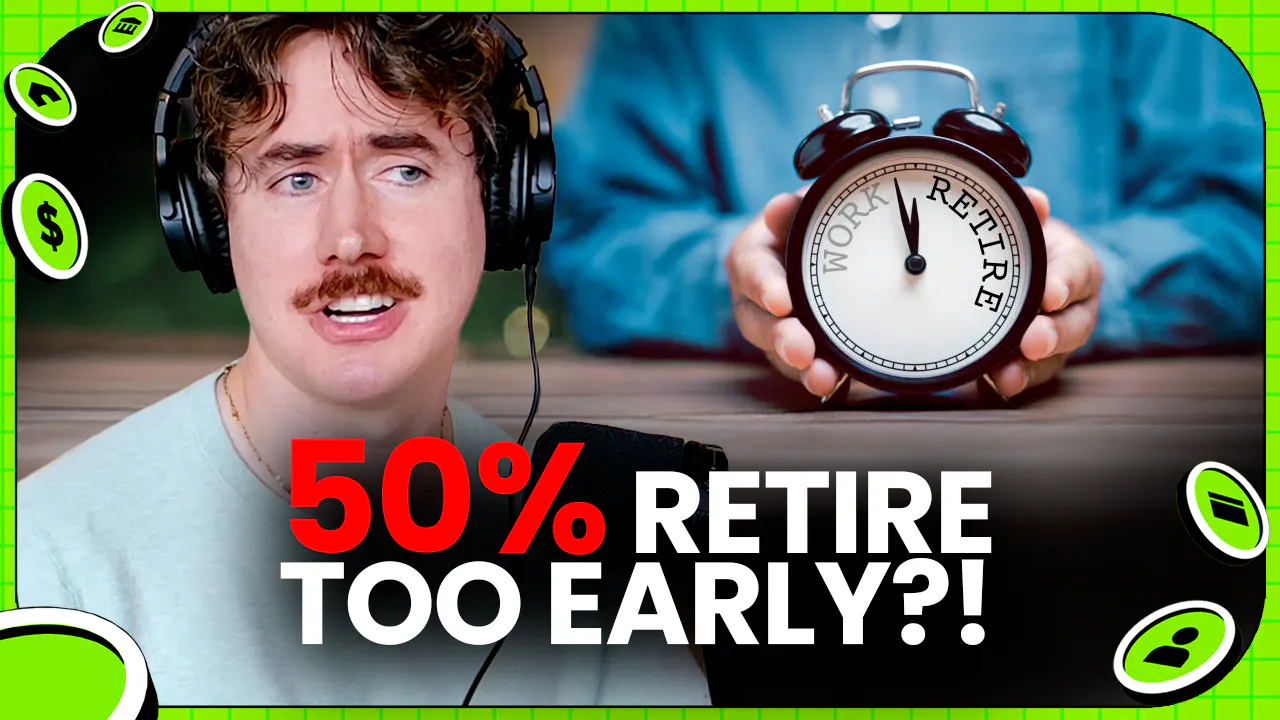
NerdWallet's Smart Money Podcast
Why Credit Report Errors Are Harder to Fix and How to Prepare for Involuntary Early Retirement
00:36:59
Loading summary
Transcript123 lines
- [00:01]
Red Bull Announcer
It's crunch time at work, and you need to bring wings to your workday. Visit redbull.com gettingitdone and answer a couple questions about your work style to get a Spotify customized playlist tuned to your productivity. Plus, score a can of Red Bull on us while you go from to do to done. And remember, Red Bull gives you wings. Supplies are limited. Terms apply. Visit the website for more information.
- [00:27]
Sean Pyles
So good, so good, so good.
- [00:29]
Nordstrom Rack Announcer
Spring styles are at Nordstrom Rack stores now and they're up to 60% off. Stock up and save on rag and bone, Madewell, Vince, All Saints, and more of your favorites.
- [00:39]
Sean Pyles
How did I not know Rack has Adidas?
- [00:40]
Elizabeth
Why do we rack for the hottest deals?
- [00:42]
Indeed Announcer
Just so many good brands.
- [00:44]
Nordstrom Rack Announcer
Join the NordicLub to unlock exclusive discounts. Shop new arrivals first and more. Plus, buy online and pick up at your favorite Rack store for free. Great brands, great prices. That's why you rack.
- [00:56]
Sean
Last year, the Trump administration slammed the brakes on the work of the Consumer Financial Protection Bureau. Today, we'll hear about some real world consequences for consumers. Welcome to NerdWallet's Smart Money podcast, where you send us your money questions and we answer them with the help of our genius nerds. I'm Sean Pyles. Later this episode, Elizabeth and I will be expanding on a listener's advice to ask yourself what would happen if you had to retire early. But first, our weekly Money news roundup, where we break down the latest in the world of finance to help you be smarter with your money. Our news colleague, Ana Helhosky is back. And, Ana, today we're going to hear about the law of unintended consequences, or maybe intended.
- [01:36]
Sean Pyles
Thanks, Sean.
- [01:36]
Elizabeth
Yeah.
- [01:37]
Sean Pyles
Under the Trump administration, the Consumer Financial Protection Bureau, that's the cfpb, had its oversight weakened, and that's been allowing banks and credit bureaus to face fewer checks. So today we're talking about some recent reporting at ProPublica, a nonprofit investigative journalism organization that found that two of the three main credit bureaus are dismissing consumer complaints without providing assistance. Joining me is Joel Jacobs, Data reporter at ProPublica. Joel, welcome to Smart Money.
- [02:06]
Joel Jacobs
Thanks so much for having me.
- [02:07]
Sean Pyles
So we're going to get into some of the specific findings of your research, but let's start with the big picture first. So for years, the CFPB was the main watchdog pushing credit bureaus to fix errors on credit reports. So what's changed?
- [02:21]
Joel Jacobs
Yeah, so the cfpb, as you said, it kind of oversees various parts of the financial sector, including the credit bureaus. One thing that it does is it operates a complaint system. The complaint system basically allows consumers to come to the CFPB's website, but they lodge a complaint with a company. The CFB forwards the complaint to that company and requires the companies to respond. Now, one of the big, big things that's changed overall with the CFPB is that the Trump administration has attempted to lay off about 90% of the staff. The new acting director, Russ Vogt, has told most of the staff to stop nearly all of their work. Now, some of these most dramatic cuts have been held up by a lawsuit, but the CFPB is really not doing a lot of the functions that it used to. It still operates this complaint system, but what we found is that these credit bureaus are being a bit less responsive to these complaints.
- [03:12]
Sean Pyles
So your Reporting found that two of the three major credit bureaus, TransUnion and Experian Trans, dramatically reduce the number of complaints that they resolve in consumers favor. So what did the data show?
- [03:23]
Joel Jacobs
Yeah, so basically we looked at how often they provided what they call non monetary relief. So basically making some kind of change to somebody's credit report in response to a complaint. And what we found is that Experian and TransUnion, they really dialed back pretty substantially how often they provided this relief. So TransUnion was at about 80 to 90% of complaints that provided some kind of relief for a while, that declined by about half over the summer. And then Experian, which had provided around 20% of complaints with relief in 2024, that went to less than 1% in 2025. And so, and notably this is also kind of somewhat of a reversal of a trend where previously the CFPB had really been pressuring these companies to be more responsive. And these relief rates have actually been increasing substantially from 2020 to 2024. So now the CFB is less active and it appears that these companies are a little less responsive.
- [04:19]
Sean Pyles
So how unusual is a drop like that? Had there ever been one in the past when you had been looking?
- [04:24]
Joel Jacobs
Right. So there was actually a time around 2020 where these, these credit bureaus really had not been very responsive to folks and there wasn't much relief. And that's when the CFB really did start taking a look at it. And they, they pressured these companies, they, they released reports critiquing, you know, the lack of kind of individualized responses and the lack of relief they also did and kind of looked at kind of the larger dispute process. So you can, you also can go directly to these credit bureaus to dispute issues on your credit report and they found deficiencies there. So the CFPB had really been making this a priority under the Biden administration, but now has kind of eased up somewhat and so we're seeing a bit of a change there.
- [05:09]
Sean Pyles
So when you look through these complaints, what kind of errors were people fighting? Like mistaken debt, identity mix ups, what sort of stuff?
- [05:17]
Joel Jacobs
Right. So all those kinds of things can happen. I actually talked to a woman in Colorado who did submit complaints. She had $240,000 in student debt on her credit report that was not hers. It belonged to her ex husband and she had tried first directly to dispute with the credit bureaus and was rebuffed. And she had, you know, documentation, even though the loan account manager acknowledged that this debt was not hers. She tried to go to the CFPB or through the CFPB's complaint portal. She also did not get help there. Then she even tried to send a dispute via certified mail directly to the credit bureaus, including documentation, you know, from a letter from the this loan servicer. And actually she didn't get help there, but TransUnion actually sent a postcard back saying we don't think this is you, we think this is some third party. And so she eventually ended up suing because she just could not get her issue fixed.
- [06:07]
Sean Pyles
Now the bureaus are saying that the drop is because credit repair companies are flooding the system with bad faith complaints. Is there evidence that that's actually happening?
- [06:15]
Joel Jacobs
So there definitely are bad actors in the credit repair space. And you know, the CFB does some level of filtering on its own. I do think that those bad actors exist. I think one thing to note though is that the CFB has also previously found they can cast a very broad net when they, when they claim something is third party, some unauthorized third party complaint. So you know, using some kind of templated kind of letter potentially could, could flag you. So it's not that these bad actors don't exist or that there aren't some, you know, illegitimate or more frivolous complaints there, but the credit bureaus can be, can cast a pretty wide net. And the point of the woman that I spoke with in, in Colorado, while this was a direct dispute, you know, she had disputed multiple times. She sent something via mail and she got a postcard back saying we don't think this is you. So it, it can be a kind of broad claim and, and sweep up some legitimate complaints as well.
- [07:05]
Sean Pyles
Now I do want to point out something interesting in your reporting and that's that the remaining credit bureau Equifax didn't show the same drops that TransUnion and Experian did. Why is that?
- [07:15]
Joel Jacobs
They don't say exactly why, you know, it was different than the others. But, you know, one thing that is notable is that a few days before the second Trump administration came back into office, Equifax had settled with the CFPB over an enforcement action around their kind of broader dispute process. It didn't specifically mention complaints, but it was about how basically they were not effectively investigating disputes, looking at people's documents. When somebody goes to a credit bureau, the credit bureau kind of turns to the creditor and asks, what are your records look like? And would sometimes just basically parrot that response. If it was verified by the furnisher, then it was verified in the credit bureau's minds, even when there was documents to the contrary. So that's what this consent order was about, was about reforming some of those practices. And one thing just notably to add what we found is TransUnion also was potentially on the verge of a settlement like this. They were in talks, according to their SEC filings, about a similar enforcement action to reform their dispute practices. But those settlement talks were basically abandoned under the new administration.
- [08:20]
Sean Pyles
Now, you report that the complaint portal now includes several warnings that steer consumers away from filing publicly. What prompted that change and what does it mean for people in practice?
- [08:31]
Joel Jacobs
The credit bureaus basically say that, you know, this complaint system has kind of been abused in one way by third parties, but also that, you know, we do have a law called the Fair Credit Reporting act, and it gives people the right to dispute issues on the credit report, which it's a very important law because, you know, we don't have a choice whether the credit bureaus report our data right? And yet our financial lies are quite subject to them. So, but they, the credit bureaus say, you know, under the fcra, you're supposed to go directly to a credit bureau, only go to this complaint system once you've had a dispute, and you're unsatisfied with that. And so these notices are kind of the CFPB sort of aligning with the credit bureaus to say, you really gotta make a dispute here first. Now, the thing is, the CFPB's own data says that people say that they went already went to the credit bureaus. Many of these complaints, in theory, already involved people who tried to fix their issue with the credit bureau and didn't get help. And again, the CFP has also found that some of these processes for handling disputes are deficient. So that's the goal of the credit bureaus is to get more stuff internally. And I think one thing that's notable is we don't see much data on that. Right. We don't know how often people get help when they go directly to these credit bureaus.
- [09:35]
Sean Pyles
Now the attorney that you quoted says that he guarantees that in five years credit reports could be worse and harder to fix. What's his reasoning on that?
- [09:44]
Joel Jacobs
We are the product, we are not the customer here. And so the incentive is, you know, they want some level of accuracy. But, you know, these disputes are kind of additional costs for them. Right. And so the incentive for them to look at these disputes really closely, I think, is it comes from the regulators. Right. It comes from the law. It can potentially come from private lawsuits, but there's really no replacement for this federal regulator. We did get a glimpse briefly into the staffing levels to handle some of these disputes from a House subcommittee report a few years ago. And TransUnion had 171 employees working on disputes covering around 38 million line items in 2021. So, you know, they say they've added staffing since then, but I think it just goes to show that, you know, the priority here is not to handle these disputes thoroughly and that's not their incentive. So the regulator is really potentially needed here.
- [10:34]
Sean Pyles
When mistakes stay on someone's credit report, what does that actually mean for their life, for their housing, for their jobs, for the loans that they already have?
- [10:42]
Joel Jacobs
The woman from Colorado who I mentioned, she, her credit score dropped around 85 points from having all this student loan debt that wasn't hers on her report. It kind of jeopardized her plan. She was going to move with her disabled father to a more accessible home. And those plans were kind of jeopardized. I mean, it really, you know, people get higher interest rate, they can be declined from housing or loans. I mean, these credit scores really do control our financial lives in some way, which is why it's important to make sure they're accurate and that the credit bureaus are responsive when people raise issues.
- [11:13]
Sean Pyles
So if the CFPB is stepping back, who, if anyone, is left to hold credit bureaus accountable?
- [11:20]
Joel Jacobs
So the FTC can do enforcement actions against the credit bureaus, but one thing they can't do is they can't have regular examiners kind of come and observe and supervise. And that's something that the CFB had a unique ability to do. That was really important is what consumer advocates tell me. Now, private attorneys can sue. You know, when somebody has an issue and they show harm. They can sue under the Fair Credit Reporting act and attorneys general can do some amount of enforcement. But again, I think what folks told me is there really is no replacement for the, you know, the federal regulator like the CFPB that had this kind of supervision and oversight ability.
- [11:54]
Sean Pyles
Now, if we as consumers have found ourselves in this position, what would you tell someone who's struggling to get an error corrected on their credit report?
- [12:02]
Joel Jacobs
Right. So, so I'm, I'm not a credit attorney, so I don't want to, you know, I don't want to give people legal advice.
- [12:06]
Sean Pyles
Fair enough.
- [12:07]
Joel Jacobs
You know, I, I will say, you know, make sure you keep documentation, right, Whatever documentation you can have about the inaccuracy about any also harm that maybe came from the inaccuracy, whether it's, you know, being denied, something you can dispute with the credit credit bureau. The CFB portal does still exist. I'm not telling people to not, not go through it and then, you know, go to an attorney and get advice there and they can probably give you that kind of next steps in terms of potentially getting something fixed.
- [12:32]
Sean Pyles
All right, Joel Jacobs, data reporter at ProPublica, thanks for joining us today.
- [12:36]
Joel Jacobs
Thank you so much. Really appreciate it.
- [12:38]
Sean
And thank you, Ana. Up next, Elizabeth and I will expand on some advice that came in from a listener about thinking through what you do if you were forced to retire early for whatever reason. But first, a reminder listener to send us your money questions. This is a show that runs on your financial questions. Whether you're wondering how to keep your credit safe or maybe just fund your summer vacation, let us know. Leave us a voicemail or text us on the nerd hotline at 901-730-6373. That's 901-730-Nerd. You can also email us@podcasterdwallet.com or leave us a comment on Spotify or YouTube. All right, we're back in a moment with this episode's money question. Stay with us.
- [13:19]
Elizabeth
Today's episode is sponsored by Spectrum Business.
- [13:21]
Sean
Picture this. You're running a business and the Internet drops during business hours. Your to do list instantly becomes one panic. Two, stare at the router like you're negotiating with it.
- [13:32]
Elizabeth
And three, start offering customers a brief moment of mindfulness while the checkout screen loads.
- [13:37]
Sean
For business owners, being connected isn't a perk. It's how you take payments, talk to clients, and keep things moving.
- [13:43]
Elizabeth
Spectrum Business keeps businesses connected seamlessly with fast, reliable Internet and advanced WI fi plus phone, TV and mobile services if you need them.
- [13:52]
Sean
Inspectrum business offers 100% US based customer support 24. 7 to help you stay up and running. That means you get actual help, not submit a ticket and hope for the best.
- [14:02]
Elizabeth
Our colleague Carrie is a Spectrum customer shout out to our social media team and she told us that she chose Spectrum because people online kept recommending it as a reliable and affordable option for Internet and phone service.
- [14:14]
Sean
Carrie told us she was actually a little hesitant to switch at first because she'd been using a different service for a while, but after a year with Spectrum, she's had a really good experience. Her phone gets strong reliable service and it automatically connects to Spectrum WI FI everywhere.
- [14:27]
Elizabeth
Join the millions who rely on Spectrum Business. Visit spectrum.combusiness to learn more one more time. That's spectrum.com business restrictions apply.
- [14:37]
Sean
Services not available in all areas this
- [14:40]
Indeed Announcer
episode is brought to you by indeed. Stop waiting around for the perfect candidate. Instead, use Indeed sponsored Jobs to find the right people with the right skills fast. It's a simple way to make sure your listing is the first candidate. C According to Indeed data, sponsored jobs have four times more applicants than non sponsored jobs. So go build your dream team today with Indeed. Get a $75 sponsored job credit@ Indeed.com podcast. Terms and conditions apply.
- [15:08]
Sean
We're back and answering your money questions to help you make smarter financial decisions. This episode we're discussing an interesting comment that we received from a listener named Lisa, who sent us an email. Hello. Thanks for the great content and breaking up the monotony during my weekly travels around Texas. I was a retirement advisor for over a decade and I always wish people would start learning sooner. It's been wonderful to see the increase in interest in finance. One thing I noticed in my experience is the number of people who planned to work a lot longer but were forced to retire because either they or someone they cared for could no longer physically work. A question I would always ask is, if something happened to you today and you or your family lost this income, would they be able to survive or thrive with the resources you currently have? Thanks again, Lisa.
- [15:54]
Elizabeth
All right, this episode Sean and I are exploring what exactly Lisa's comment means for your retirement planning. And also like, what do you do if you end up retiring earlier than you plan to? I don't know. Sounds like a dream, but there also may be some, you know, pitfalls here.
- [16:10]
Sean
Yes, especially if you're not ready for it. And something people get wrong about retirement is that they will for sure have a say in when they retire. And here's the reality. About 50% of people retire earlier than expected, according to MassMutual.
- [16:24]
Elizabeth
Hmm. That's a huger number than I would have thought, Sean.
- [16:26]
Sean
Yeah, and we can save as much as we want for as long as we can in anticipation of this one specific day where we might retire. But, you know, life often has other plans.
- [16:35]
Elizabeth
It does sometimes. I know some people who had planned to retire in their 60s and got laid off, and especially they maybe were higher earning people and then couldn't find another job and they're forced to retire. Right?
- [16:48]
Sean
Yeah. And that made me think about when people actually retire. The average retirement age in the United States is 62, according to a 2024 report by MassMutual. The figure has gone up over the years. Back in 2002, the average retirement age was 59. That's according to a Gallup poll. And I had mentioned earlier that about 50% of people retire earlier than expected. And why people retire earlier than they want to is kind of interesting. About a third of people retired early because of unexpected changes at work. And that might be what our listener was alluding to. Although around 28% of people retired early because they could afford to do it. So those are our fire people. That's going to be you one day, Elizabeth.
- [17:31]
Elizabeth
It's going to be me one day. I'm sorry, Sean. If we are, you know, on this podcast, hopefully until we're old and gray, I'm going to be leaving first.
- [17:39]
Sean
I would say let's have a race to see who can retire sooner and do it on our own timeline.
- [17:44]
Elizabeth
Oh, don't. Don't tempt me with a good time, okay? Cause I love a good competition.
- [17:48]
Sean
So, yeah, I mean, I'm about to turn 35 this year, and as much as I love my job, the idea of working another 30 years doesn't sound like my dream.
- [17:56]
Elizabeth
Don't get me started, Shawn. I feel like they told us so many things when we were younger about what to prepare for when you're older, but I don't think I ever really conceptualized that I would be working for multiple decades.
- [18:09]
Sean
Yes, almost 50 years of working. And just so you can have maybe a few years of not working or working on things that you care for that maybe aren't bringing you money every day.
- [18:19]
Elizabeth
Right. And that's why I think retirement planning can be so fun. Right. Because you spend all this time working and then you get to daydream a little about what you wanna do when you're not working. But as we're talking about, I guess with addressing these comments, it's so important to have a plan in place and make sure you've saved enough.
- [18:35]
Sean
I'm thinking too about the various steps of retirement planning because there are a lot of phases of retirement planning that I learned about during my CFP education. There are five specific phases. I'll walk through them really quickly. The first one is the accumulation phase, which is exactly what it sounds like. It's what we're doing right now, Elizabeth, just tucking away as much as we can for as long as we can. And then as you get nearer to retirement, there is what's called pre retirement. This is around the 10 to 15 years before you expect or hope to retire. And then there's early retirement step three, and that's the years immediately after you actually retire. And then heading on down the line, there's mid retirement and late retirement, which again, are pretty much what they sound like.
- [19:16]
Elizabeth
Multiple, multiple steps here. But it makes sense, I guess, when you look at it within the context of your whole lifetime or working years. Sean, which steps should we focus on? Because you've outlined multiple here.
- [19:26]
Sean
Yeah. For our listeners comment, let's talk about steps 2 and 3 again, pre retirement and early retirement. So for pre retirement, this is often going to be around age 50 when you are about 10 to 15 years from retirement retirement at this point, hopefully you've been saving for a while and you have some idea of the nest egg that you might be working with during retirement. But this is really when you need to get a detailed picture of your assets and what your expenses might be in retirement and how these final working years will hopefully go for you. And this is why consulting with a financial planner, hopefully a CFP is really essential at this time because a CFP can model different simulations to show you how your retirement might look if you do end up retiring before you initially plan to. And what would if you actually maybe aren't able to save as much as you would ideally be able to, or maybe if you have on the other side some kind of sudden windfall that boosts your retirement savings.
- [20:19]
Elizabeth
Yeah, I have some questions for you, Sean, especially since you are now, you know, having your own firm and working with clients. I feel like on the show we often tell people to speak with a financial planner, but what kind of question should they be asking? What should they be discussing? Let's say someone is 10 to 15 years away from retirement. What kind of conversation should they be having with the cfp?
- [20:39]
Sean
The main question that everyone really wants answered is am I going to be okay? That can cover things like retirement and also just saving for a rainy day. So when it comes to retirement funding, you're going to want to know if you actually have enough to fund what could be 30 years of not working. And so that's where simulating these different outcomes and forecasting forward how what you've saved now might be able to fund your life or not is really important because you can begin to have conversations around what changes you would want to make. And working with a financial advisor, they're really going to be your thought partner in this conversation. They're not telling you what to do per se, but they are going to help you walk through different scenarios. So you can be the one choosing how you want your finances and your life to be structured as you head toward your retirement.
- [21:24]
Elizabeth
Yeah, and I see two parts of this, right? It may be the people who are firing shout out to y' all and who are excited about retiring early and have planned for it. And then the people, as we've mentioned, who may be, haven't planned for it. So how can those conversations maybe look very different? And also, as you always say, Sean, you guys are therapists too. So how do you talk people through the nerves of spending or maybe realizing they don't have enough?
- [21:46]
Sean
Well, this gets to conversations around early retirement as well because this is often a really challenging and scary time for people because you're going from saving, saving, saving, or at least thinking that you should be saving, saving, saving, and then going to spending down this amount of money. And that is a really scary shift that I think everyone has to get through their own terms. Realize that, look, you are doing what you can with the resources that you have. You will have other ways to get some money, hopefully through Social Security, which we'll talk about in a minute. But just know how you can allocate your funds in the smartest, most tax advantaged way. And that's going to help you have some sort of feeling of security or at least confidence in the knowledge of what your assets are to be able to work through what's going to be a tough transition.
- [22:33]
Elizabeth
Yeah, and I love that you mentioned tax advantage, because I think that's something maybe not enough people think about, especially when they consider early retirement, how to plan your withdrawals from your account so that you're not hit with huge tax bills every year. You have required minimum distributions. But as we're talking about this, I think one of the most important things for people to consider when retiring early is when you can withdraw from your retirement accounts. And most accounts like your 401k, your 403b, you can't withdraw without penalties until 59 and a half.
- [23:02]
Sean
There's one exception to this, which is called, in a very exciting technical IRS way, the 72T rule. A different name for the 72T rule is the Substantially Equal Periodic Payments rule, or SEP rule, or two Ps at the end there. And this allows you to take equal payments from your tax advantage retirement accounts before you hit 59 and a half without penalty for five years or until you hit 59 and a half, whichever is longer.
- [23:30]
Elizabeth
I read about it the other day and I was like, what's the catch?
- [23:33]
Sean
The catch is that you have to keep these payments coming until you're 59 and a half or the account is empty. Let me give you a quick example of how this might work. So say that you end up losing your job at 50 and you just say, that's it, I'm going to retire. You want money from your retirement accounts, but you don't want to hit the penalties that you would get from the IRS if you actually took withdrawals from your retirement account. In that case, you can set up these substantially equal periodic payments and begin to get income from your retirement accounts until you hit 59 and a half. And you can do that again without the regular penalties associated with doing this. Although note that this income is considered taxable income by the irs. So you keep getting these payments for these many years, nine and a half years if you start taking it at 50, until you hit that age or your account is empty.
- [24:19]
Elizabeth
I know we typically, I don't want to say advise, but suggest that people don't take early withdrawals from their accounts, which means before the age of 59 and a half if they don't have to. So when is it ideal to use this SEP S E double P rule?
- [24:33]
Sean
A lot of people are going to be taking this because they don't have other better options. And that might be taking money from a taxable brokerage account. Because think about it, you can't take your Social Security retirement benefits until you're 62. So if you have this gap of years between when you need money coming in and when you can get Social Security benefits, this might be your only option. And this is actually a pretty handy tool for a lot of people that I don't think folks are really aware of. It's just a nice way to access the money you have been saving for as long as you have been without the typical penalties.
- [25:05]
Elizabeth
That's right. And then now this makes me think of another income source that some people I don't want to say rely solely on, but think is going to fund their most of their retirement, which is Social Security. So when is it a good time to start taking that?
- [25:18]
Sean
The average retirement age is 62, which is earlier than what the IRS and Social Security considers your full retirement age of 65. So if you take your benefit before that full retirement age, which is between 66 and 67, depending on when you're born, that benefit is going to be reduced. Now, if you take your benefit at 62, which is the earliest you're eligible to do it, and your full retirement age is 67, the amount of your benefit is going to be reduced by 25%. So say you're getting a monthly benefit of $1,000. You would just be getting $750. Although again, sometimes you don't have any other options. You just need this money coming in.
- [25:59]
Elizabeth
You can delay your Social Security benefit until 70. Correct. And then also get maybe an even more robust benefit.
- [26:05]
Sean
Yes, exactly. If you delay your benefit beyond your full retirement age, you can actually get an additional kind of surplus benefit that would be beyond your standard benefit, which can be a nice thing for people to get. But you also have to think about how long you're going to be getting this benefit for. And that gets to knowing your break even point for your retirement benefits. And that's when the amount that you would receive by delaying this benefit surpasses the amount you'd receive by taking it early. So kind of confusing to think about, but basically think about when the amount you'd be getting is worth waiting for. So for those who delay their benefit until full retirement age, it can take about a day, decade to hit that point. So you would be around 80 for this to work out yet again. Think about how long you're going to be living here. I hope to live until 100, 150. We'll see.
- [26:54]
Elizabeth
I was just going to ask you how long do you want to live, but I should know that already, Sean.
- [26:58]
Sean
No, no, no.
- [26:58]
Elizabeth
We have to have a side quest conversation about that because I don't understand what you want to do on this Earth for 150 years.
- [27:05]
Sean
What I could garden for the rest of my life. Because it takes a long time to get these plants to grow just how you want them to. And the work is never done. And it's always beautiful. I'm gonna be tilling away in my yard until I can't do it any longer.
- [27:18]
Elizabeth
Okay, well, we'll see. I'm gonna tell you, I'm not living till 150, so maybe I won't see what you'll be doing at that age. All right, but getting back on topic, Sean, I want you to expand on this break even because it might be a bit of a head spin for some people.
- [27:30]
Sean
Knowing your exact break even point can be a little finicky because it does require math. So again, I would recommend speaking to a financial advisor. Or you can check the article that we have in our show, Notes from Thrivent, which actually gives you the calculation how to do this yourself. If you feel like a MA and you want to go above and beyond, check that out.
- [27:48]
Elizabeth
And also, as you're talking about Social Security, I'm thinking that, you know, for people who are thinking, wow, I would love to delay my benefit so that I can get that extra money. And maybe they also want to live to 150, so have enough time to spend it. Sometimes it's most ideal for people who have enough money saved in other avenues, whether that's your brokerage account, your Roth ira, because you don't necessarily need to get that money early. But I remember having a conversation with my dad because one of the perks of working in finance is you're like, oh, wait, I know this and maybe I can give information to my family members. And he is at retirement age. So I asked him what age did he retire? And he actually retired around the age of 62, which means that his benefit is permanently reduced. But he didn't really have an option because he didn't have enough retirement savings to say, hey, I'm going to wait until the full retirement age.
- [28:36]
Sean
And that's the case for a lot of people. If you look at the average amount that people have say for retirement, it's not nearly enough to fund 30 plus years of being retired. Folks often have no other choice but to take their retirement benefit around 62. No judgment here.
- [28:51]
Elizabeth
You need to do what you need
- [28:52]
Sean
to do to survive.
- [28:53]
Elizabeth
So just to point out, people shouldn't feel terrible if, you know, they do retire earlier than they expected and that's their only means of income or survival.
- [29:00]
Sean
Right? And another way that people can begin to survive or thrive if they do retire before they want to, is rethinking what retirement might look like for them. Because we do have this idea, at least for me. I'm going to be working away in my garden. Elizabeth is going to be ziplining well into her 80s.
- [29:17]
Elizabeth
How did you know?
- [29:19]
Sean
And while that's the ideal, that might not always Be the case of what happens when you do retire.
- [29:23]
Elizabeth
That's right. And Sean, you just made me think about a lady on Instagram who was my hero named Baddie Winkle. And you're gonna have to riple, rip Baddie Winkle.
- [29:34]
Sean
For people who don't know, this was an elderly lady who had incredible style. She passed away, I think, last year. Fabulous before, but she just lived the ideal retirement of just being a very glamorous older lady. And that's kind of what I want too.
- [29:47]
Elizabeth
Me too. See, we have that in common. So she's my retirement inspiration. So in addition to ziplining, I will be ziplining in something very fabulous. You know, I'm gonna be stylish too.
- [29:56]
Sean
Like vibrant purple feather coat just going down the zipline like some tropical bird.
- [30:03]
Elizabeth
I love it. You sure know how to paint a picture, Shawn. That's exactly what I'm gonna be doing. Okay.
- [30:07]
Sean
So, Elizabeth, if people aren't able to have their feather coat ziplining dreams in retirement, how can they sort of rethink what retirement might look like for them if they don't have as much money as it would take to afford such a fabulous coat?
- [30:19]
Elizabeth
Maybe it looks like working part time. So maybe let's say you had to retire early because you lost your dream job or the career that you've been working in for decades. Now you can go to a lower stress pay job. And one of the things that that can do is give you health insurance. So that's one of the benefits. Health insurance is a big thing that people who retire early have to think about. So there is nothing wrong with going back to work just to supplement your income and take some of that financial stress away.
- [30:44]
Sean
Mm. One caveat I'll add to that is that your retirement benefit could be reduced if you are taking it before full retirement age and earning income. This only applies until you hit that full retirement age, but it's something to be aware of.
- [30:58]
Elizabeth
Yeah, that's also something as I was having a conversation with my dad that he has struggled with. And I just wish. I wish I knew this information earlier so that I could have maybe given him some tips. And I'm just so thankful we're on the podcast talking about it so we can help people before they're in these situations.
- [31:14]
Sean
People could also reimagine what their lifestyle might be like. I think we talked a couple episodes back on the podcast about having a little golden girls situation where you move in with some people around your age. Ideally, you would have people that you like to live with. But just finding a way to cut your expenses can be really important. And that might mean rethinking where and how you're living.
- [31:36]
Elizabeth
It can. And that reminds me of an article that I read some time ago about people rethinking because we do live in a very individualistic society and sometimes it's just you and your nuclear family, but expanding that out to having parents come live with you again and living with siblings and just kind of having this communal living in order to reduce expenses. Not gonna lie, that sounds like a bit of a nightmare for me. But I am warming up to the idea of it because, you know, I don't wanna put my parents. They're both still able bodied and able to work and things now, but I don't wanna put them in a. Yeah, but I also don't know I love you parents if I want them living in my home either. So we'll see.
- [32:17]
Sean
I feel that. Yeah, it strikes me too that, you know, we talked earlier about pre retirement and this financial exercise of kind of knowing what your nest egg is and what your expenses might be. I think that there's also a social element and a lifestyle element of establishing and thinking about your pre retirement. That's really important too. So would you want to live with your kids maybe? Do you have kids that you could even live with? Or do you want to move into some sort of broader retirement community? Just begin to imagine how your life is going to be different in these retirement years.
- [32:46]
Elizabeth
That's right. Now I think we can quickly round up some other tips because we've covered so much ground here for how people can prepare now for early retirement. Whether you're trying to retire or you just want to have yourself a safety net, one of the things that comes to mind. Oh my gosh, Sean, I have a wonderful side quest story that I'm not going to bore you with. Well, no, it's actually very exciting during this episode. But I was talking to a stranger who I let in my house other day and. Excuse me, I know, I know.
- [33:14]
Sean
You were talking to a stranger that you let into your house.
- [33:17]
Elizabeth
I was talking to a stranger. You know what? She used to live here. She used to live here. And she knocks on my door with her son. I know that she comes to your
- [33:25]
Sean
door and says, I used to live in your house, let me in. And you said, sure.
- [33:28]
Elizabeth
And I said, yes, I let her into my house. But that's not the point. We'll talk about that another episode. The point is she was telling me about debt and bringing it Back to the conversation. You know, debt is something that you want to try to get rid of. I know everyone's financial situation is different, but if you can, you want to try to get rid of as much debt as possible because, you know, having to lose your job earlier, retire early, and also having debt that is compounding and snowballing can make retirement very stressful. So the less debt that you have, the better. So now can be a good time to tackle that.
- [34:02]
Sean
And I would say simplifying your finances in general, including shutting things like debt, can be really smart. So if you have eight to 10 bank accounts, like some people like me, maybe go down to fewer bank accounts just so that you don't have as many things to manage so you know what you're doing with your money, just find ways so that it's easier to juggle for you.
- [34:22]
Elizabeth
And another thing during retirement that people don't think about, and a reason that people would end up retiring early is your health may end up deteriorating. You could develop a healthcare condition. So it's also important to plan for healthcare expenses and start thinking about that now. I personally have a health savings account for this reason. And even if you do not have a health condition during that time where you retire, assuming that it's before your Medicare kicks in, you have that gap in coverage, having a health savings account can be very helpful during that time.
- [34:49]
Sean
Medicare and Medicaid is its own rabbit hole that we haven't quite gone down that I don't think we're fully going to this episode. We have covered it elsewhere. But it's also important to know how you can get access to health care if you don't have the funds to cover it through something like an hsa. Okay, well, returning to our listener Lisa's comment, all of what we've talked about so far can really help folks answer that question, that if they did lose their source of income today, how would they be able to survive or thrive on their current resources? This is such a personal question that's not going to be easy to answer, but it's important that you start thinking about it and beginning to answer that question gradually over time.
- [35:28]
Elizabeth
And please don't stress about it because we have lots of wonderful listeners who are thoughtful about their finances and they may start stressing about it. The key here is just to plan ahead because we don't know what's going to happen in the future, but we do know what we can do now to help.
- [35:42]
Sean
Exactly. Okay, well, I think that's all we have for this episode. I'm going to pull in our producer Tess to read us out. Tess, hi.
- [35:51]
Tess
All right. Well, hey you guys, nice to join you from in front of the mic every once in a while. So that is all we have. As Sean just mentioned, turn to the Nerds and call or text us your questions at 901-730-6373. That's 901-730-N E R D. You can also email us@podcasterdwallet.com and someday I will memorize that because I hear it every day.
- [36:16]
Sean
Yes, beautifully done, Tess. Thank you so much. Also, if folks want to they can leave us a comment on Spotify or YouTube with their financial questions we want
- [36:25]
Elizabeth
you to pull up on us. That means join us next time to hear all about tax season 2026. And that includes what changes you need to be aware of as you file your taxes. Follow Smart Money on your favorite podcast app. We don't mind which one that is. It could be Spotify, Apple Podcasts, or iHeartRadio to automatically download new episodes.
- [36:44]
Sean
Here's our brief disclaimer. We are not your financial or investment advisors. This nerdy info is provided for general educational and entertainment purposes and may not apply to your specific circumstances.
- [36:55]
Elizabeth
This episode is produced by Tess. Hilary Georgie helped with editing. Nick Karisami and Eve Krogman helm our audio and video production. And a big thank you to nerdwallis editors for their help.
- [37:07]
Sean
And with that said, until next time, turn to the Nerds.