← Networth and Chill with Your Rich BFF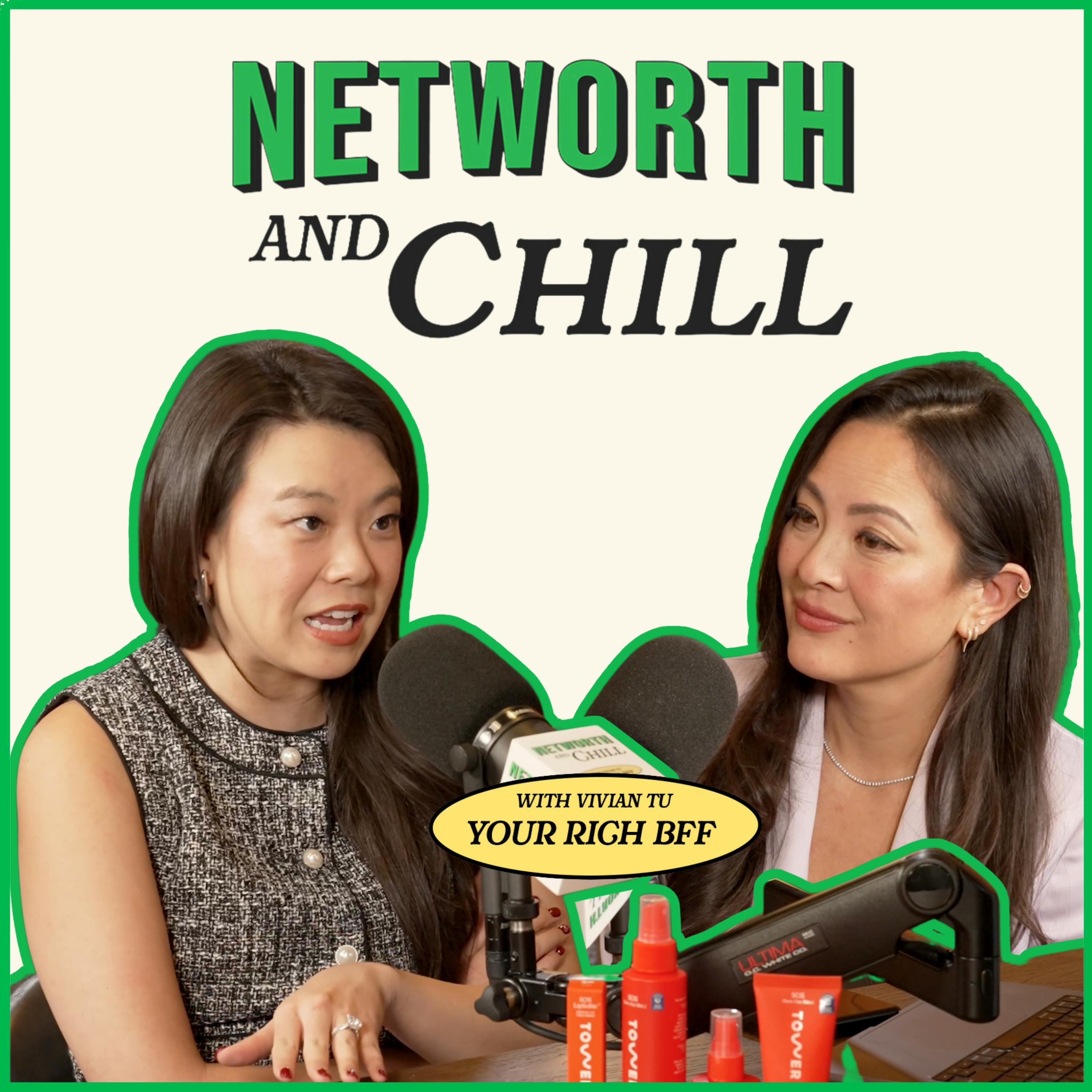
Networth and Chill with Your Rich BFF
Clean Beauty to $228M: Tower 28's Amy Liu on Scaling a Sensitive Skin Empire
00:53:14
Loading summary
Transcript188 lines
- [00:00]
A
No one's going to pat you on the back if you don't lose their money.
- [00:04]
B
Statistics research have shown that, and I quote, pretty people get paid more.
- [00:09]
A
My parents never had a lot of money.
- [00:19]
B
Support for Net Worth and Chill comes from Amazon One Medical. When someone says Amazon, do you think healthcare, maybe you should? AmazonOne Medical offers 24.7Virtual Care so you can speak to a provider within minutes. Not only that, there's also Amazon Pharmacy. So after your virtual visit, Amazon will deliver your prescriptions directly to your door. No more waiting in line with people who are sick with who knows what. Thanks to Amazon Pharmacy and Amazon One Medical, healthcare just got less painful. Learn more at health.Amazon.com what's up Rich friends? Welcome back to another episode of Net Worth and Chill with me. Your host, Vivian Tu, AKA Urich, BFF and and your favorite Wall street girly. And today I am getting vulnerable about the skin that I'm in. In particular the itchy skin. I don't know how high res this camera is, but as you can see, I am currently in la. The air's a little dry. Everything's feeling a little different than the moist, humid east coast air. And I am having an eczema flare up on my skin the worst. And I can't tell you when it started, but at some point my smile smooth preteen baby's butt skin started to turn into sandpaper. And then there were little itchy patches on it and they started to form on my back and on my torso and my arms and it just felt like I had a perpetual rash. Yeah, and ultimately I was diagnosed with eczema and it's been, I would say, a medium struggle for me ever since. I don't want it. I don't want to equate it to people who are truly living with, you know, severe eczema or frankly any other chronic conditions. Mine is just a little itchy, it's a little unsightly sometimes, but it still had a really big impact on my confidence for almost all of my adult life. I've dealt with it and I have paid for pricey lotions, prescription creams, some that you, by the way, your skin can get addicted to, which can get a little scary. And you know, I will say I am not alone. More than 31 million people have eczema in the US alone. And having sensitive skin often means you are relegated to using products that are kind of, shall we say, made for your grandmother. They are herbaceous smelling. As a polite term. They are super not sexy. You don't get to use the type of makeup that you see in advertisements. That's fun. And Chicago, you kind of have to go with the boring, unscented, unsexy stuff. But today, I've invited a close personal friend who is changing the game and bringing sensitive skin products into the mainstream while also showing the legacy beauty players how a marketing is done. Everyone, please welcome the CEO and founder of Tower 28, Beauty, Amy Liu.
- [03:13]
A
Hi. Thank you so much for having me. Vivian. I'm so excited to be here.
- [03:16]
B
Thank you so much for chatting with me. I feel like the last time we hung out in your office, it was like free therapy for me.
- [03:25]
A
And me.
- [03:27]
B
But as a fellow eczema girly, you shared your struggle on social media. So I kind of want to start this conversation about your journey. Like, when did your skin issues start to impact your life?
- [03:40]
A
Yeah, my eczema actually started happening right around the time that I was in college and probably towards the end of college. And I'll never really know, but they say that eczema either is genetic, it is bacterial, or it is something that happens environmentally. And for me, I think it was when I lived with eight girls in a house, and I pulled the short straw, and I ended up living in the garage.
- [04:04]
B
Wait, what?
- [04:05]
A
I live. Yeah. When I was in college, I lived in a garage, and it wasn't like a.
- [04:10]
B
Was it insulated?
- [04:12]
A
Probably not really. I mean, no. It was a garage that we remodeled. I mean, remodeled as in, like, we threw a carpet in there.
- [04:19]
B
Oh, my goodness. Okay.
- [04:20]
A
And I was trying to save money at the time. Yeah, of course.
- [04:24]
B
Of course.
- [04:24]
A
And who knows? But, I mean, after that, I really have had eczema since then.
- [04:29]
B
Yeah. And did it ever, like, impact your confidence?
- [04:31]
A
I mean, it's. I think that's why I feel so passionate about what I do. And I think I ended up going into the beauty industry because I think I. I actually am not someone who, like, is so obsessed with makeup. It's not like I love makeup so much. I think the thing that really gets me up in the morning and the part that is my purpose is I think a lot about the relationship we, as women have with not just makeup and beauty products, but the way that we relate to confidence and the way that we look and how that affects the way we walk through the world and our ability to kind of strive and achieve is really related to oftentimes the way that we feel about ourselves. And I think, for me, my eczema was something that showed up on my face. It showed up on My hands in really public ways. Yeah, yeah. And so it was something I really understood about how when you have a skin condition or anything that shows up on your face in a public way that you just feel, you feel it so much. Yeah.
- [05:28]
B
It's so visible, so apparent. And since this is a money show, we should talk about the fact that like statistics research have shown that, and I quote, pretty people get paid more. So not only is having an underlying medical condition that impacts your confidence going to impact how you walk and talk and breathe, but it's probably gonna also impact your work and the opportunities you're given.
- [05:52]
A
And then consider trying to work in areas like fashion, beauty, editorial, like those types of industries where whether we like it or not, people are biased. Right. So there is an expectation that you know how to wear makeup, that you have good skin, and if you're the one sitting there marketing and selling these products, that you implicitly understand it and that you would walk the walk and talk the talk.
- [06:13]
B
Yeah. From a financial perspective, just gimme a quick ballpark. How much money do you think you have spent on eczema on like products to tackle your eczema or like random solutions that you googled online?
- [06:27]
A
I'm sure upwards of. I, I'm sure in the five digits. I mean, really, like for sure, because. Or even more than that. I mean, I have had bouts. It's been a journey for me. So. Right. So this has been, I would say in the neighborhood of like 30 years that I've now had eczema. And so I've tried everything from. I've done acupuncture really regularly. I've done TCM herbs, I've done kind of all the Eastern medicine things and on the Western medicine side, I've done steroids, I've done shots. There's shot dupixent at one point that I couldn't get a prescription for. And it was if you don't have a prescription or if you're, you can get a prescription, but if you don't.
- [07:05]
B
Get it covered by your pre authorization. Yeah, it's.
- [07:08]
A
I think it's $3,000 a shot and.
- [07:11]
B
You gotta take it like every other week or every week.
- [07:13]
A
It's wild.
- [07:14]
B
Right.
- [07:14]
A
So a lot of these things are not just like steroids are cheap, but like the new things are not necessarily.
- [07:20]
B
And steroids you can get addicted to.
- [07:22]
A
Well, and there's topical steroid withdrawal and I used to. I'm not proud of this, but there are times in my life, especially when I was in my 20s and I had, like, a wedding every weekend, or I was going. I was dating a lot. And, you know, you want to look pretty, for lack of a better word. And, like, I.
- [07:37]
B
And there's nothing wrong with saying that, like, wanting to look and feel your best is not a crime.
- [07:41]
A
Totally, totally. And I think there is, like, a vanity, right, that, like, we as a society have. And I think it's kind of forced upon women, to be honest, in a lot of ways. But I was that person that would wake up in the morning, and I would literally, like, not know what my skin would be like that day. And I would literally touch my skin. Like, is it today an okay day? Or is it going to be red? Is it going to be rashy? Are my eyes going to be swollen? Like, what kind of a day is it today? And so I would even pop steroid pills sometimes before I needed to, because I wanted to proactively. Like, I would do it two days before I had, like, a big meeting or an event or something like that, because I didn't want to have a problem. And even now, I worry that as I get older, that there will be problems that result out of that, because all of those pills have warning signs on the side that say, of course, you know, like, one day you might have, like, bone density loss or eye vision issues. And so, I mean, there's a lot of side effects, too.
- [08:37]
B
Yeah, definitely. And I want to switch gears really quickly. You're the daughter of immigrant parents like me. Your parents immigrated to the States from Taiwan. What was it like growing up in the immigrant experience? And how did that play into your early relationship with money?
- [08:56]
A
Yeah, so my parents immigrated from Taiwan for grad school. We first they migrated to Minnesota, then Illinois.
- [09:03]
B
Minnesota.
- [09:04]
A
Minnesota. So I was actually born in Minnesota. Yeah. My parents say that I was born right next to the Hormel chili plant. Really sexy. And then we ended up moving to Los Angeles when I was probably five years old. But I remember growing up in really predominantly white communities. Like my parents. My dad, when he moved here, had. He had a host family. And so growing up, my dad's host family, I called them Grandpa and Grandma Gao. Right. And so I think that was actually lovely. But I think in terms of money, my parents never had a lot of money when they were young because they were students, too. So they were grad school students. And I think my dad really felt like he became an entrepreneur. So he. He was a general contractor. He did a lot of commercial, like, con. Like, condos, that type of a thing. And I think he Would say that entrepreneurship was something that he ended up doing because he had to, because he didn't feel like he was able to get jobs that were willing to pay him what he wanted to make because of the fact that English was the second language. And he felt like it was much more productive for him to go and get jobs working with people who spoke the same language as him. So that's why he ended up moving. We ended up moving to la. A lot of the work that he did was in the San Gabriel Valley, which is here, which is where a lot of the Asians live.
- [10:28]
B
It's where all the best Asian food.
- [10:29]
A
Is, by the way. All the best Asian food. I mean, you can literally live in the San Gabriel Valley and not speak English. Yeah. But you know, in terms of money, like, I was really raised with a mentality of like, never have credit card debt, never had debt in general, don't ever borrow money, don't ever spend more than you make. Save, save, save.
- [10:50]
B
I find it very interesting that entrepreneurship was the route that your dad felt like he had to take, because that's so opposite of what I feel like. Many immigrants think they're like, oh, I should just put my head down, work for somebody else, and then I'll get noticed and maybe get promoted. That was very bold.
- [11:12]
A
Maybe, I mean, maybe. But I don't think he felt like he wasn't prepared or like educated to be like a doctor or lawyer. Gotcha. An engineer. So like the thing that he and actually come from a family that is maybe different in the sense too that like my dad was an architect or he got a degree in architecture too, and at one point practiced and I think like had more of an artistic kind of feeling to it. And so I think to do what he wanted to do, he didn't feel like he was able to get the shot that he wanted. But yeah, you're right, it is a little bit different.
- [11:45]
B
And since we are on the topic of Asians, have you noticed that Asian people get eczema a lot more?
- [11:53]
A
Actually it's like statistically true that Asian and black people get more have eczema and children, children have a higher propensity of getting eczema too. And I don't know why, I don't know if it's like the melanin in the skin or what it is, but.
- [12:09]
B
Did you get any money habits from your parents that you are one proud of or two felt like you had to unlearn?
- [12:19]
A
I think that probably the biggest one is just being risk averse. And I think you wanna unlearn or keep that one. I think, honestly, I think it's a dual edged sword. Right. I think there's a part of it where part of the reason. So we've been profitable for a very long time. And that's something I'm proud of as a company, but also, like, it is because I pay attention, because I'm not trying to waste money. But at the same time, at the beginning of my journey, and even now, I have to remind myself, like, I actually had a career, like a founder mentor who was like, you, no one's gonna pat you on the back if you don't lose their money. Like, I raised friends and family money. And she was like, no one's gonna be proud of you because you didn't lose it. You have to actually spend it to try to get it back and to invest it and make money. And so that was something I had to lear well. And I think even now I'm trying to learn that on a regular basis.
- [13:16]
B
Can you give me the Tower 28 birth story for those of us who don't know?
- [13:23]
A
Yeah, sure. So quickly? I've had eczema my entire adult life. I've also been a beauty executive for a really long time. It's been 22 years now. And I think the combination of those two things made me really conscious of what I looked like, and self conscious, I should say. And I was always looking for products that were not only clean, but safe for sensitive skin. And that's what Tower 28 is today. So the thing I really wanted to do was to be able to wear makeup. Because I think when you have something on your skin, yes, you want to cure it, but you also, in the short term, you want to cover it up. And I was so worried that by putting on product on top of my skin, that I was just exacerbating my own issues or making them worse. And so about six years ago, I raised friends and family money. I raised $500,000 before I did anything basically on my resume and really did raise it from people I like, go to lunch with and vacation with my friends from high school.
- [14:22]
B
These are like real friends. These aren't like, oh, networking friends.
- [14:25]
A
No. And people I worked with. And it's like small checks, big checks, very few big checks.
- [14:31]
B
You're like actually just two.
- [14:32]
A
No, actually, when you said that. It's true. I had two big checks and a lot of small check. It was really motivating for me too. So we launched five years ago, we raised money six Years ago. We launched five years ago. Today we're in all Sephoras, US and Canada. We're in Mecca in distribution too, in Australia. And it's been a really fun and fast ride.
- [14:53]
B
Yeah. And I do want to take a second to focus on the numbers. I think we hear this a lot, like, oh, you're 40, your life is over. You didn't even start Tower 28 until you turned 40.
- [15:05]
A
Yeah.
- [15:06]
B
Can you give me like your perspective on aging your career and how to continue to make the most of what you want to do through your life?
- [15:14]
A
I actually love the fact that I didn't start until I was 40. Not to say that when I was 40 and starting I felt like that. But looking back on it, I was really nervous at the time. But part of the reason I think it happened was because frankly I had a friend who invested that had said to me, he was like, you're if you don't do this now, you're literally never gonna do it. And I had, at the time I had three kids. I still have three kids. And that I have three kids. I had a mortgage, still have a mortgage. But we had just bought our first house. Cause we live in LA and it takes a long time to save up money and do that. And I wasn't going to start a company. And I got a little bit of tough love where he was like, either you've said you wanted to do this for 20 years. Cause I was in business school saying I majored in entrepreneurship.
- [16:02]
B
Yeah.
- [16:03]
A
And I never did it because I kept working for other people. Which part of it was because of fear. But part of it I thought was such a good thing in retrospect, because I learned so much from doing that. And not only did I learn a lot, but I also gained the community and the resources of being able to ask people if I had questions. And so fast forward to today. I actually like sometimes people in these types of settings, they're like, is it okay if we talk about your age? And I'm like, I'm so proud of the fact that I'm 46 today. Because honestly, like, I don't think I would have been able to handle this if I was younger. And also I think that there are so many women who people. Nevermind women. But I do think a lot of women have kids when they're in like the prime of their career. And especially during COVID a lot of people had to give up their careers because somebody had to step back and help take care of the kids. And then they worry so much about not being able to get back in or they feel like their life is over. And even I have a lot of friends who are in their 40s now who are like, I guess it's too late. Too late to be happy. Whether it is choosing a new career, whether it is divorcing your husband and finding a new one because you're not happy or whatever it is. And I just. It makes me so sad because we have, like, another half of my life to live at this point. So, like, to think that it's too late seems crazy to me. Yeah.
- [17:20]
B
You're only at the halfway mark.
- [17:21]
A
We're only at the halfway mark, but yes. So, like, I would encourage anyone to learn on someone else's dime. I think, like, some. Some people say to me, like, oh, you've had this, like, overnight success. And I'm like, wait, can you define that?
- [17:35]
B
Learn on someone else's dime.
- [17:37]
A
So I. Meaning, like, other people were paying me to work for them at other beauty companies. At other beauty companies. And I was able to not only observe through, like, I learned the positives, what to do, but I also learned what not to do. I learned from other people's mistakes. And so I think I was able to apply that to what doing today. So as an example of that, like, I worked for a brand who went into full distribution when. When we went into retail, we went into Nordstrom's, Neiman's, Sephora, qvc. We everywhere at the same time.
- [18:10]
B
Yeah.
- [18:11]
A
And that's like, going into, like, having a lot of boyfriends. Like, if you have a lot of boyfriends, like, does. It's hard to juggle. And does anyone think that you're the one that they're going to marry? They're, like, a little bit paying attention, and they're like, well, you're dating lots of people. I don't know how important I am to you. As opposed to, like, that's why looking at that, I was like, okay, well, I'm going to pick one person, which is Sephora. We're going to get married. It's funny because we just. We literally call it. I was like, joking. We call it, like our. Our vow renewal. We just upped our. Our exclusivity with them. Amazing. But it is. It's like, if you can pay attention, do one thing, and do it really well, I think there is a real benefit to that, especially when you're small and you're not like, this huge conglomerate. Yeah.
- [18:53]
B
And you're not spreading yourself too thin. I do want to take a Second, to play devil's advocate.
- [18:58]
A
Yeah.
- [18:58]
B
You said you didn't think that you would have been ready to make Tower 28 what it was had you been younger and single and not had the family and stuff. But how were you able to juggle building this company, which takes money. You had to raise money, while also knowing in the back of your mind, oh, my kids need lunch money and I need to pay my mortgage and my car payment and all this other stuff going on in your personal life.
- [19:24]
A
So, by the way, I genuinely think there is no right way to do it. Like, I think I look at young people sometimes. I have a lot of founder friends who are much younger than I am, and I'm like, I think it's great that they're going for it and they're able to do it in a different way. So I don't think there's a right or wrong. It was. For me personally, I think that my journey happened the way it did in a really beautiful way. But you're right. I think it's a different type of a struggle if you do it later in life. And I had the privilege of the fact that I married someone who was able to help me hold down the fort financially. Right. So my husband made enough money that we could, like, it wasn't a question of can my kids eat. So we didn't have those types of golden handcuffs, but we did have golden handcuffs in the sense where, you know, I didn't take a salary. I didn't. We invested money. We had to. This is like rich people problems to some degree. But we had to pull our kids out of private school. We had to think about the way that we, like, vacation, the way they spent money. So it definitely changes things, of course. But there is a privilege to being able to, like, just live. I'm not worried about feeding myself in that situation.
- [20:34]
B
I think that's very, very honest, but also, like, practical.
- [20:40]
A
Practical. But I would also say the thing that we did that I thought was good is my husband really upfront was like, especially since we're talking about money. He was like, okay, he is. I might be risk averse. He's even less. Really. He is even more risk averse. Like, he is really a frugal guy. If anyone. Anyone who knows knows we're all here laughing at it. Yeah. If you saw his. He just bought like a. You have to try to buy a minivan that is like the base level, like, doesn't have any.
- [21:09]
B
Yeah, no, no, no. Because you're at the dealership. They're like, do you want this and that and this?
- [21:12]
A
No, you have to like pre order it and wait for it because they don't actually normally sell it. Like, and I, I still get mad because he doesn't even have like the automatic trunk. You have to like actually like get into when you're holding things. You have to. Anyways, that's, that's a whole different thing. No, but my husband and I had a lot of conversations up front because our relationship is important to me too. We've been together for 24 years and he knew that this was my dream, but at the same time he was like, we need to have a ceiling on this.
- [21:39]
B
Yeah. Oh, like a pull out point.
- [21:41]
A
Yes, like both. Like time. Because there's like a certain amount of. Because if I just keep doing this and I'm not making money, that's not making money. And then if I also keep doing this and I keep wanting to put more into it financially, that's hard because we also invested. I did take money from friends and family, but we also invested. And he was like, I can't, like, let's just agree up front. Like, it can't be like, you just keep pouring money into this. And I actually think that's really healthy.
- [22:06]
B
What was, do you mind me asking, what was your eject number?
- [22:10]
A
Oh, God, I can't remember. But it was probably, I'm gonna guess it was like 250,000 of your own personal. Of our own personal money. Yeah.
- [22:16]
B
I mean, that's a huge amount.
- [22:18]
A
Yeah.
- [22:19]
B
That's college tuition for one kid. Yeah, it was.
- [22:22]
A
I mean, I think that's essentially the money that we had earmarks. Had. And so we were also kind of like, I mean, in terms of taking risk too. It's like we, at one point we, you know, collateralized our house and we took money against our house just so we would have in case. You know what I mean?
- [22:41]
B
Yeah. Did you ever have a moment where you're like, shit, I might have made the wrong call.
- [22:49]
A
I mean, there are moments I think, when you're like, oh, this is hard, that you. But financially, we haven't had that because I was, Because I raised money up front.
- [22:58]
B
Yeah.
- [22:59]
A
I haven't had those types of issues, I think in terms of risk where it would have been really hard for me. I hear about other founders talking about how like, we've never had cash flow issues. I never, I've never hired someone and been fearful I couldn't pay them. That would make me very anxious if I was, you know, because now we have people on our team who are the breadwinners or their families, they have kids. Like, that would make me super nervous. Or even vendors. I've never not been able to pay my. My vendors. And I think that's the type of thing that is. Would make me anxious. But in terms of risk tolerance, I do think that all entrepreneurs need to think a little bit about how their own minds work. Like, that would be really hard for. For me to be in that mindset. And I think for that reason, I'm really glad that I raised money early. Yeah.
- [23:46]
B
So for anybody at home who hasn't used Tower 28 products, they are unbelievable. They feel so nice on your skin, especially if you're scentsy like me. But, you know, I think something aside from the actual quality of your product being able to stand on its own, you gotta convince people to buy it.
- [24:08]
A
Yeah.
- [24:08]
B
And if there is one thing that I feel like you really have bested the old guard, those behemoth companies who very literally have hundreds of millions of dollars to spend on marketing, it's social media.
- [24:22]
A
Yeah.
- [24:22]
B
And social media, you know, obviously you're hiring people, but social media is a marketing channel from an organic perspective that is free.
- [24:30]
A
Yeah.
- [24:31]
B
What were you thinking when you were like, we are going to leverage this and how did you do it strategically?
- [24:37]
A
So, honestly, I mean, I'd love to say that I'm so strategic and we did this from the beginning, and I, like, really, you know, whatever. But I think the most important thing is you have to have good products. Really? There's nothing your products do speak for themselves. Yeah. You cannot skip that step. There's nothing like that. And I think the thing that I'm always flattered by is that when I look at the comments, when I read the testimonials, people are like, I will try anything you make. Because I love everything Tower 28 makes, and that makes me really proud.
- [25:05]
B
Quick side note. Amy was so kind to, like, make me goodie bags for my bachelorette party.
- [25:13]
A
Yeah.
- [25:13]
B
And one of my girlfriends, my little from my sorority actually texted me the other day and she was like, support for net worth and chill comes from Amazon One Medical. All right, I'm about to fill you in on an absolute game changer. Amazon is now in healthcare. Yes, Amazon. The same place you order books and socks and stream movies that Amazon. And it's called Amazon One Medical. With Amazon One Medical, you can get 24. 7 virtual care, which means you can speak to a provider within minutes. How convenient is that? So if you're ever feeling so Sick that even the thought of getting out of bed is too much for you. With Amazon One Medical, you don't have to leave the house. But of course, what good is that if you then have to drag yourself to the pharmacy? Well, they already thought of that too. With Amazon Pharmacy, of course, delivering things fast is what Amazon is already known for. And that's exactly what they do here. They'll deliver your prescriptions directly to your door. No more waiting in pharmacy lines jammed in with a bunch of other sick people. It's about time that someone rethought healthcare. And now they have, thanks to Amazon Pharmacy and AmazonOne Medical Healthcare just got less painful. Learn more at health.Amazon.com yo, this is entirely your fault. But now my Entire family uses Tower 28 products. Because she's like, we are. She made the joke. She was like, we are the type of white that has rosacea and eczema and has super sensitive skin. She's like, I wear SPF 50 on my whole body every single day. Like very, very sensitive. And she's like, this is the first product that everybody in my family uses.
- [26:43]
A
Oh, that makes me so happy. I mean, we really try so hard to make sure that our products are safe for sensitive skin. So we like avoid, avoid, avoid. We test. We're the only brand that is 100% compliant with the National Eczema association. And we really like to say we are creating a safe space for sensitive skin. So that's a huge part of what we do. Yeah.
- [27:03]
B
So when it comes to the social media piece, like talk to me about what you think made some of your content go viral versus anybody else's. I mean, the content hits.
- [27:16]
A
Well, I appreciate that. Well, I'll take you back to 2020. So what happened was in 2020, we're in the pandemic. Well, right before the pandemic, we launched. We. Tower 20 launched for the first time. It was my dream. Like I wanted to launch in Sephora and somehow.
- [27:33]
B
What month was this? January.
- [27:35]
A
March. March of 2020.
- [27:37]
B
Okay.
- [27:37]
A
We launched in all stores at Sephora on a half shelf. I thought I was going to spend that year as a one man salesperson, going all to the different Sephoras and educating and selling and doing events and things like that. And then all of a sudden the pandemic hit. Yep.
- [27:54]
B
So none of that exists.
- [27:55]
A
And I literally thought it's over. Like the business is over, it's done. Because quite literally my inventory is sitting in stores and the stores are closed. And if you remember, we also didn't we didn't know how long we were going to be in panic.
- [28:07]
B
It was two weeks and then two weeks and then two weeks and then two weeks.
- [28:10]
A
So there's like an incrementalism to it where you're like. It's like dread, more dread. And like, it just keeps getting worse.
- [28:16]
B
It's like when they keep delaying your flight but they won't cancel it.
- [28:19]
A
And then you're sleeping on the floor. Yes. So it's all of those things. And so, yes, my mindset at that point was like, you didn't really know what was going to happen. But at the same time, we were like, okay, well, we're at home. What else are we doing? So we started paying attention to social.
- [28:35]
B
And you say we? Who's we?
- [28:36]
A
So I literally started the business with me and there were two girls in the very beginning who start. My first three girls who started with me had never had jobs before. The third one started in Pandemic because she was my nanny. And I actually was like, okay, if I'm gonna pay you anyways, why don't you write some purchase orders for me? So she became my ops person. Nice. And those three girls are still with me today, which I'm super grateful for. And I love being on the ride with them because it's just. It's fun to be your kids grew.
- [29:05]
B
Up and your nanny needed a new job and she was pretty good at.
- [29:08]
A
It, and she ended up being really good at it. So anyways, those girls and I, we all started just paying attention. We were like doing social content and we kind of focused on social. And what we found was a lot of people. So SOS spray, which I know you're a Stan.
- [29:23]
B
Do you know how much product I have to go through to be too embarrassed to ask a personal friend founder to send me pr? I am running through these bottles like it is literally just liquid gold. I put it on.
- [29:34]
A
I just. I just sent you all sizes.
- [29:35]
B
Oh, my gosh.
- [29:36]
A
So you would have. Perfect. The SOS is this really interesting product that is an antibacterial, anti inflammatory, but also 100% natural. So during the pandemic, we were all wearing masks, and because we were all wearing masks, people started getting maskne. Started getting maskne. Because when you are wearing a mask.
- [29:55]
B
Yeah.
- [29:55]
A
You're still talking, you're still eating that saliva literally comes out and then it sits on your skin, which is basically just a hotbed of bacteria.
- [30:05]
B
Yeah.
- [30:06]
A
And bacteria is the thing that makes anything worse.
- [30:09]
B
Yeah.
- [30:10]
A
Like, it creates so any type of inflammation you have on your skin, it just exacerbates it. Right. Because it just makes it worse. And so that's what we started seeing happen. And people started writing us and saying, hey, I tried your SOS spray, and it changed my skin. It cured my masking. So we were like, that's interesting. Why don't we start sending this to essential workers? If this is for people who are wearing masks. So we would send it to, like, ers, we would send it to nurses, we would send it to. I had friends who were doctors. I was like, tell me about, like, whatever. And I would have them walk it in. And then we started just seeding it to people. And people started writing to us and saying, I would send us on their own before and after. And I was like, this is kind of amazing. And then I would say, okay, well, if you let me post it, I'll give you another bottle.
- [31:00]
B
Yeah.
- [31:00]
A
And so. And they all say it, and I would like. And if it's real, like, they've already come to me telling me that this is their experience. I'm like, if you would write a review, I would be so happy and so, so grateful. And so they would write reviews. And it just was this thing that truly organically grew on its own, and we fed it. And I think that's the thing with entrepreneurship or anything is, like, even your own career. Right. You do something, you see what works, and then you keep following the cookie trail.
- [31:28]
B
Yeah.
- [31:28]
A
And that's. That's, in the end, I think, where success comes from. It's just paying attention.
- [31:33]
B
That's genius. And you actually were sending to essential workers, not, like, influencers or anything.
- [31:38]
A
In the beginning, it was essential workers. We also sent to influencers, too. But it was like, a lot of it is, again, paying attention. So it's like, I know, like, one of the very early people we seeded was Nicole Guerrero, and she's an OG beauty influencer. And we had seeded her. Like, back in the day, people used to just put their addresses. They don't do it as much, but they just left their addresses on their YouTube. What pages? Back in the day, if you just looked at the info, like, they would just say, like, for mailings. I think that this was. I mean, this is six years ago or five years ago. And so we would just send people packages. I didn't know her. And she opened the product, she tried it on, and then she screenshot her selfie buying, I think, like, five or ten more. Like a bunch more.
- [32:24]
B
Yeah.
- [32:24]
A
And we were like, oh, my God. And overnight, I thought like the website broke. Like people started buying product and people like our follower count went up. And even today I am not friends with Nicole Guerrero. Like we tried sending her flowers, she didn't seem to, you know, care. But yeah, but I was so grateful and I think there is something to like people who have influence. It's just like anything else. If something's good, word of mouth happens and even better if it's somebody who has a megaphone. But like it just takes time. But overall that's what happens.
- [32:57]
B
And now we have a quick break to share the tip of the day presented by Amazon One Medical it's 2025 now and it's the perfect time to get a jump on your financial goals. Specifically with your budgeting. Yes, you budgeting is a lot like exercise or dieting. If you restrict yourself too much in the beginning, you'll break your budget faster than you started it. If you're thinking of starting a budget this year, but hate the idea of limiting your spending or saying no to stuff, give the 503020 method a try. There are no hard limits on specific purchases, but 50% of your after tax take home pay goes towards your needs, 30% towards your wants, and 20% to preparing for future you aka saving debt, pay down investing. You can adjust the category slightly to fit your lifestyle, but for the most part 50, 3020 is a good jump off point over time as you make more money. The hope is that the 50 and the 30 portions become smaller percentages of your take home pay while the 20 starts to increase in size. Remember, a realistic budget is going to lead to more savings for you versus some ultra strict only rice and beans budget. The best budget is the one you can actually stick to. Now back to our show. That's amazing.
- [34:14]
A
So social media is like this combination for us of it's trying to just amplify the things that are already happening, whether it is showing before and afters but it's also like I think we have a vantage point that is very like it's fun too. We're trying to make it fun. One of the most viral social pieces we've ever had was when we opened up our end cap at Sephora. So the first time we got our own end cap, four shelves. My team was so nice and genius about this but they, I didn't know this but they put like a sheet over the end cap and then they had me come in but they took my kids out of school and had them stand and they were the ones who unveiled the in cap and I Very genuinely started crying when I walked in and I saw my end cap. It was like all four of my babies, you know, it's like my three kids and the brand, and it was. And I started crying. And that piece of content, like, I think I just looked at our TikTok the other day. I think it has like 3.3 million views and it's 100% organic.
- [35:18]
B
So authentic.
- [35:19]
A
Because it's so authentic. And I think at the end of the day, like, social is about either you're educating someone or you're entertaining them. And I think the more people relate to people, right, they want to know what the stories are, they want to understand what they're buying. And I think people really, at the end of the day, vote with their wallets.
- [35:37]
B
Yeah. I think that's so, so powerful. I want us to switch gears. Cause you gave me some really good advice in our last therapy session. And I think we both agreed that hiring the right team is probably one of the hardest parts for sure of building a business. You said that the first three women who joined you at Tower 28, one of whom was your nanny, they're still there with you to this day. And they've been there through thick and thin. Like, what are you looking for when you are looking for employee number two, three, four, what are you looking for for that star talent?
- [36:15]
A
I think in the beginning you really need, like, Swiss army knives. You need people who are able to do a lot of things, to do them without ego and to do them well and to be like sponges. They have to be so curious. I mean, the. The girls on my team. So those three girls had not had jobs before when they first started working with me. And I am. I've had a lot of experience. And so I, on the other hand, had not been used to working with people who did not have experience. And it's funny because they would tell me afterwards that they would, like, literally Google the things I would say. I was saying because they didn't understand. I was like, good thing you didn't tell me that at the time. But they were like, what's cogs? What's like a. Whatever. They didn't know. And it makes sense now that I think about it, that they didn't know, but it's a little bit like sink or swim. And I think you just have to. You don't have to know everything. Those people don't have to know everything, but they have to be curious. And I think they have to believe in what you believe. They have to believe in you, and they have to believe in what you're trying to do. And I think that's really important. I believe a lot in. In energy, too. And if you don't feel the right vibe from someone, I think you'll know, too. Especially in those early days. Yeah, it makes a big difference because there's always voices in the room, and you need to make sure that you're listening, that, like, you don't want the wrong voices in the room.
- [37:38]
B
Yeah, definitely. Another great piece of advice you gave me, and this was, like, kind of a contentious one, and I, like, took this one and I. I went home and, like, sat in the dark and thought about it. You told me, and I'm paraphrasing, you said, the team that gets you from 0 to 1 million is not the same team that gets you from 1 to 5 is not the same team that gets you from 5 to 25.
- [38:02]
A
Yep.
- [38:03]
B
Can you explain to me and everybody listening what that means?
- [38:06]
A
So I don't think it means that you have to shed people necessarily, but I do think that it changes and it morphs. Right. So it depends if those people, like I said, the first three people that started with me are still with me.
- [38:20]
B
Yeah.
- [38:21]
A
But I think they're with me because they're able to understand and they're able to, like, reshape how they think about the business and that they've also have. You have to have, like, a growth mindset around it. Right. So like I said in the beginning, you want, like, Swiss army knives and you have. You need breadth because you need someone who's willing to, like, do social and then turn around and talk to Sephora and then turn around and. And make sure bills get paid. And there's so many things that need to get done. And then as you get bigger, you need depth. You don't need breadth. You need people who really can start focusing on and picking a lane and then going deeper into it. And then you need functional, like, experts. You need ninjas who just really know what they're doing. And so one thing I always said to the girls on my team who were younger is I was like, listen, at some point, we bring someone in above you. If we're all doing a great job and we're all doing the right thing and this goes the way it's supposed to, we'll bring someone in above you, but you'll understand it. You'll say, like, you'll be like, that person's awesome. And I can learn from them. Ultimately, I really do feel like every Job needs to have this tension of, like, you need to feel like there are some things that you can go and do and you're so good at, and you're like, easy, I got this. And there has to be a little bit of tension where you're like, I'm learning. I'm uncomfortable. I need to figure this out. But if you don't have either of those, you have to have both a little bit. If it's overweighted in one way or the other, you're uncomfortable. And ultimately a business is like that too. You can't have so much that there's no domain expertise. Somebody has to steer the ship, and I don't know everything. And so I'm constantly looking at the business and thinking, where are my biggest leaky buckets? What is. How do I fill them? Who do I fill them with? Am I ready for, you know, a person at this level or whatever it is? And it's. It's investment, too, because you're investing in. There's nothing else. It's just like the team and the product. Like, there's. That's the most important thing. But it. You can't have the right person in terms of expertise that is also, like, going to kill the culture. The culture is so important. So it's always been important to me that even if we bring someone in above, it's not just because they're domain experts. It's also because they have the mindset of teaching and they have the mindset of being, like, servant leaders and being part of an organization that wants to, like, grow.
- [40:48]
B
Servant leaders.
- [40:49]
A
I love that phrase. Yeah, it's. It's something I really believe in.
- [40:54]
B
Yeah.
- [40:55]
A
I mean, I think, like, part of the reason I started my own company is because I wanted to choose the people I worked with. I wanted to have fun doing what I was doing. I've always loved the work, but I think politics and that kind of thing can really. Especially when you talk about all women. And frankly, I don't really know. I haven't worked with all men before in a long time, but I think it has to be more complicated with all women.
- [41:16]
B
Yeah. And we've heard some really, really amazing wisdom from you, but I'd like to ask you to be vulnerable for a second.
- [41:25]
A
Yeah.
- [41:26]
B
What is the biggest money mistake you've made, either in your business or in your personal life?
- [41:32]
A
Oh, it's such a good question. I think it's probably just not investing ahead.
- [41:43]
B
Probably trying to hold onto those dollars too tight.
- [41:46]
A
Yeah. I think there's definitely Been moments where I was too reluctant, too scared, too nervous. I think coming into this, I. I just. I have a little bit of that even, like, honestly, buying a house. It took us a long time to buy a house, and if you look at that, like, the market got away from us and we ended up. And whatever, in retrospect, you'd be like, you did fine. Because we still did buy, you know, six years. Eight. Eight years ago now. So it is. It's fine. But, like, at the time, it always feels hard. And I think buying a house is probably a good example of that. Like, no matter where you are, I think Everybody wants, like, 20% more than they can, what their budget is. And I remember one of my best friends, they bought pretty early, and I was like, how did you know to do that so early? And she was like, amy, we bet on ourselves. Like, we. And I think there is something about that where, like, early in my career, I think I bet on other people a lot too. Like, I would always want to join. I was trying to always join the better company. And even, like, I had started. I don't talk about this a lot, but I had actually started three other companies before this with other people, and.
- [42:59]
B
They didn't work out.
- [42:59]
A
And they didn't work out. But I did it because I was like, well, they're smart, and it was always their idea. And because I thought really well of them and that I would join them. And I wasn't betting on myself. I was like, oh, I can just do the work. I'm really good at, like, being a number two and being a hard worker. And I think it is. At the end of the day, it is like, just learning how to bet on yourself and taking the risk on your own is really the biggest thing.
- [43:26]
B
So I want to wrap us out with two kind of great questions and great topics. You recently called me and asked me for a quick favor. I was more than happy to oblige, but I ended up really falling in love with this initiative that you are running. I spoke at the Tower 28 Clean Beauty Summer School, which is a program that you started that essentially just gets together, women, people of color, LGBTQ founders, creators, people in the beauty space, and just gives them almost like a crash course in both beauty, content creation, marketing, I mean, finance. Like, you had somebody from everywhere come and talk that costs you money. Why did you do that?
- [44:15]
A
So the. It actually doesn't cost us that much. I mean, it does in terms of, like, I have people who help on the admin side of it. Everybody Volunteers. So thank you for doing that. Yes, of course. So it is a virtual program. So let me back up. So the Clean Beauty Summer School is a mentorship and education program. Every year we take applications in this year we have two different tracks. One is for influencers and one is for. This is the first time we've ever done the influencer track. So micro influencers. And then this is our fifth year of doing beauty founders. And the concept around it is really like, I don't know, coming into this, I didn't see women who looked like me at the top, never mind women of color. I didn't see women. And the women I saw who were, like, on the COVID of Forbes were really masculine back then. Like, they didn't. So you felt like, okay, if I was going to be a successful woman in business, which I never wanted to be, like, a celebrity or there were very. I never wanted to be an actress, a model, like, none of those things. I always wanted to be a woman in business. But it. It looked different. It was like back in the day when, like, I don't know, it just like, it. It felt harsher and more masculine. Yeah.
- [45:25]
B
They would put them in oversized pinstripe suits and like, it was. If you. This was like, essentially the. The girl who was best at cosplaying, the male CEO versus being proud of being of, like, a woman CEO.
- [45:40]
A
Yeah. And they didn't. They didn't look like mothers. They didn't look like my friends. They didn't look like. They didn't look feminine. And so I really. I think about that a lot today, and I think about it specifically in beauty, because beauty is this industry where we are literally defining aspiration every day. We're defining what it looks like and in a lot of ways, self confidence.
- [46:01]
B
Yeah.
- [46:01]
A
And the people at the top, if they're. You cannot help but look at the world through your own lens. Right. Even myself, like, I'm only able to put out images and things that I think are cool and aesthetic. It will be through the lens that I see the world and the people I hire the way they see it. And so, like, if everybody looks the same at the top, then that's when we don't have diversity. That's when we don't get to see ourselves. Right. And so to me, like, if I can change, if I can help impact the probability of success for some of these bipoc or minority founders in general, that is the way that we will ultimately see the face of beauty. The face of aspiration, our own self confidence. Changes. And so that's a huge thing to me. And that's what the program is. So for anyone who is interested in starting a beauty brand, we open it up every year and we take 10 people for the virtual program and also for beauty founders and also for the creators. And we have this really great community. And then the people who. Once you're in it, you're in it, you can come back every year. But we teach all these great classes, and the only reason it happens is because of people like you who volunteer your time. So it's literally like you teaching a class on finance. Nancy Twine taught a class on fundraising. We had, you know, Danessa Myricks taught a class on product development. Like, so it is kind of like the best of the best in every vertical I can think of. And then this past year, we actually did our first in Real Life summit, which was amazing. We had, I think it was 150 people come together and we had like breakout sessions and we called it like our homecoming because it was like clean beauty summer school. But it is. It is something really special to me. I think a lot of people worry. A lot of people think about, like, I'm gonna wait until the end of it when I sell my company, when I'm really successful, then I'll have the bandwidth and then I'll turn around and give back. And to me, like, maybe it's cause I'm older, but I really do think, like, there's. There's nothing like right now. And so I'm trying to live my life in a way where I'm able to do everything I want now and I just won't have any regrets later. And I'm not just gonna wait until the end for dessert. I'm gonna, like, do the things that I wanna do now. I'm trying to celebrate more. And that's why I love so much of what you talk about. Cause it's not just about struggling and saving every dollar, which is the way I was raised. But you also talk about thriving, not just surviving. Right? Exactly. And I think that's so important for people to hear because, yeah, it's yolo. Yolo. You only live once.
- [48:38]
B
You really do.
- [48:39]
A
Yeah. And so you have to be happy.
- [48:41]
B
Yeah.
- [48:41]
A
Today you can't just keep waiting until the end. And part of it is like, what makes me happy is being able to, like, create a community and give back a little bit too.
- [48:50]
B
Yeah. You are inspirational. Final question.
- [48:54]
A
Yeah.
- [48:55]
B
Speaking of, you only live once. Yolo. Is there a personal mantra that you'd like, to share with all of the BFFs listening on how to level up their life and achieve more richness, more success and joy.
- [49:09]
A
Oh. I will tell you one thing I'm just trying to remember more regularly is just to not take things personally. I bought this book. I buy this book probably more regularly and give it to people than any other book. I gave it to everybody on my team the other day. I also gave them your book. But I recently bought everybody on my team the Four Agreements, which I don't know if you know that book, but the one that always stands out to me the most, and that is the don't take things personally because it's the thing that I have to remind myself about the most.
- [49:40]
B
Yeah.
- [49:41]
A
I think so often we. We go through life and we think of like, oh, God, this thing happened to me. And I'm like, maybe it's happening for me. Right. Like, if this person needs to, like, quit and go do their thing, like, I hope you find what you're looking for. And having grace and looking as opposed to like, oh, now what happens to me? Yeah. And taking things personally doesn't have to.
- [50:03]
B
Revolve just around us.
- [50:04]
A
Yeah. And I mean, listen, I also think, like, comparison is the thief of joy, which people talk about all the time, but it's really true. And like, even for you, it's like, what. What does it mean to be rich? Right. Like, I think a lot of times I know a lot of wealthy people now, too, and I think the people who feel actually, like, wealthy are the ones who the goal post at some point has to stop moving.
- [50:29]
B
Yeah.
- [50:30]
A
You know, like, there's always someone who's going to be richer than you, better, smarter, hotter, all of these things. Right. So it's like, what is. What is that version of it for you? And, like, I don't know, like, I've. I've been interested in this idea of, like, I went on my first, like, private jet recently. Oh, I've never done that before, by the way. I didn't pay for it. Someone else private jet. And I was like, oh, what is this like? And I was like, this is actually, like, it's so nice, but it's like, I don't know that that's, like, the goal for me. Right. Like, I don't know that that's the lifestyle. It's nice if somebody else wants to take me. But, like, you. You, like, see things and you're like, is that what I actually want or not? And I think I'm just talking about books but there's another book that I love called the Second Mountain by David Bruck. And it's, it's basically like the first mountain is in society, we're told, like it's, you know, how much money you make, it's the job you get, it's the title, it's all these things that you having a kid, getting married, all these things that we society tells you that you should need and want. And the Second mountain is like, once you've achieved those things or you've kind of figured it out, you're like, wait, but now what?
- [51:39]
B
Now what?
- [51:41]
A
And so I think, like, I think a lot about, about that. And for me I think it is community and I think it is meeting interesting people that I like and, and doing things that I care about.
- [51:51]
B
Amazing. Amy, thank you so much for being here. You are filled with wisdom. I'm so grateful you've shared it with us. Can you let everyone at home know where they can find you and find Tower 28?
- [52:01]
A
Yeah, so you can find me personally at amylou amy l I u_t28 on Instagram and then also our company, Tower 28 Beauty on both Instagram and Tick Tock. Amazing and Sephora.
- [52:15]
B
Yeah, guys, go get these.
- [52:17]
A
US and Canada.
- [52:18]
B
Can we get like a yorich BFF discount code?
- [52:20]
A
Sure can. Yeah.
- [52:22]
B
Okay, well, we'll put the discount code in the show notes. If you guys are dying to get your hands some of these products, it'll be something really funny and unique like Vivian is the best.
- [52:30]
A
Sure, let's do it. Done.
- [52:33]
B
Perfect.
- [52:35]
A
Thanks for having me.
- [52:36]
B
Thanks for tuning into this week's episode of Net Worth and Chill, part of the Vox Media podcast network. If you like the episode, make sure to leave a rating and review and subscribe so you never miss an episode. Got a burning financial question that you want covered in a future episode? Write to us via podcastorrichbff.com follow net worth and Chill Pod on Instagram to stay up to date on all podcast related news. And you can follow me at YourRichBFF for even more financial know how. See you next week.
- [53:03]
A
Bye.
- [53:06]
B
Support for Net Worth and chill comes from AmazonOne Medical. When you think of Amazon, what's the first thing that comes to mind? Probably convenience, fast delivery, everything you need with the click of a button. Now, when you think of healthcare, what do you picture? I'm guessing the exact opposite. Well, not anymore because Amazon is now getting into healthcare. It's called Amazon One Medical and it offers 24. 7 virtual care so you can speak to a provider within minutes. And they've also got Amazon Pharmacy, so after your virtual visit, Amazon can deliver your prescriptions directly to your door. After all, convenient, fast delivery is what Amazon is known for. Thanks to Amazon Pharmacy and Amazon One Medical Healthcare just got less painful. Learn more at health.Amazon.com.