← Networth and Chill with Your Rich BFF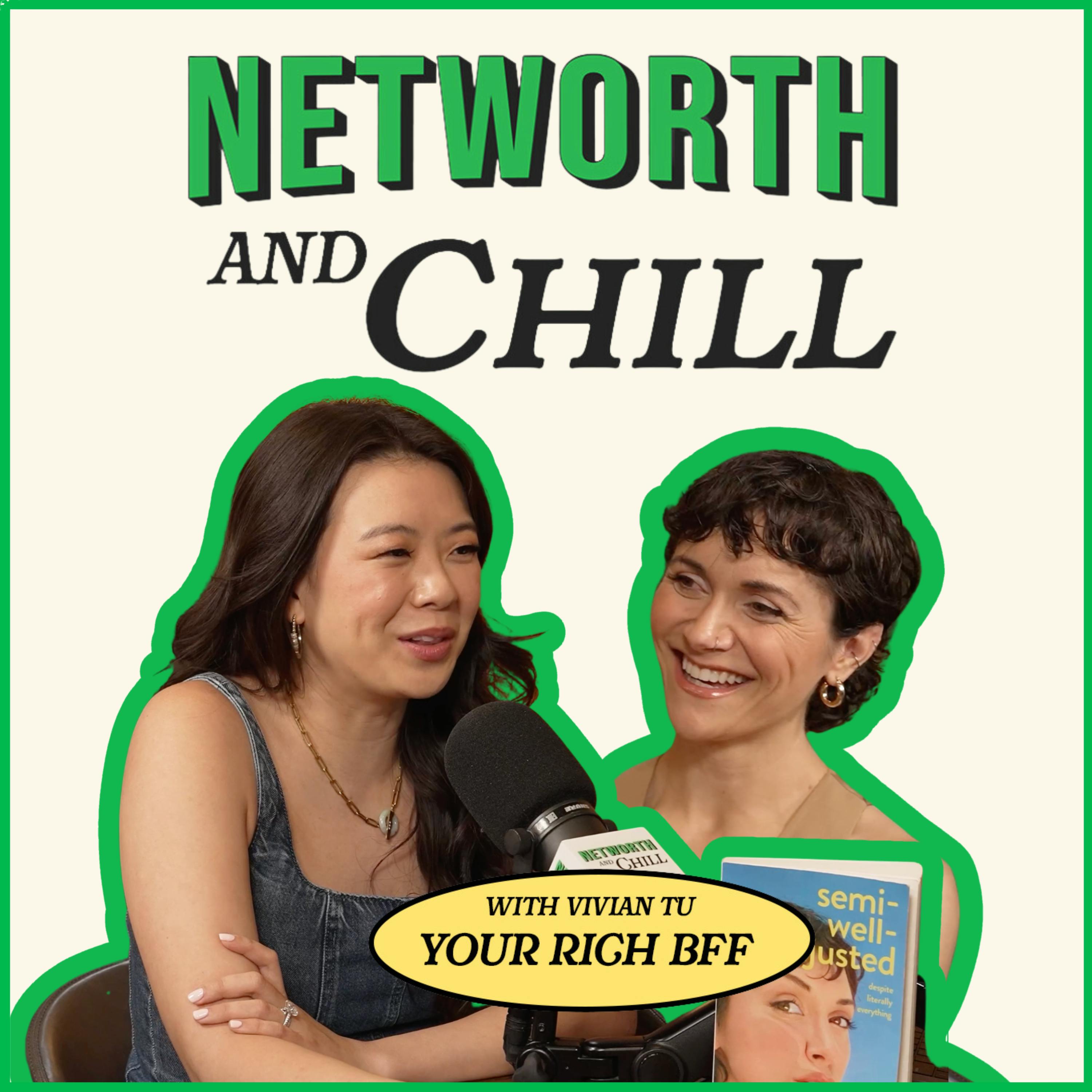
Networth and Chill with Your Rich BFF
The Price of Fame: Alyson Stoner on Child Star Money Myths vs. Reality
00:58:08
Loading summary
Transcript206 lines
- [00:00]
Alison Stoner
I was self funding a tour, a music tour, and I had two brilliant dancers with me. One of them let me know that her check bounced. I'm ultra frugal, so I'm not spending anything.
- [00:11]
Vivian Tu
You're like, how does my check bounce?
- [00:12]
Alison Stoner
Nothing lined up. I uncovered that many people had been taking money in various ways since I was a child. Without me really knowing or understanding that number was shocking to me.
- [00:32]
Vivian Tu
What's up, rich friends? Welcome back to another episode of Net Worth and Chill with me.
- [00:36]
Alison Stoner
Your host, Vivian Tu, AKA your rich.
- [00:38]
Vivian Tu
BFF and your favorite Wall street girly. And today, we're going to have a little bit of a throwback. When I was growing up, I absolutely loved watching the cartoon channels. So I'm talking Cartoon Network, Disney Channel, Nickelodeon. And something I think I love so much about those shows were that they featured people who are roughly the same age as me. And while I was having so much fun watching them on my TV screen, I don't think I ever really realized that while I was relaxing, they were actually working. I was going to school, but they were clocking in, day in, day out, reading lines, memorizing scenes, and obviously still having to be normal kids, hopefully on the back end. But today's guest is more than just someone I watched on TV. They were absolutely everywhere in the 2000s. From dancing alongside Missy Elliot in the iconic work it music video to starring in Cheaper by the Dozen, Camp Rock, and the Suite Life of Zack and Cody. They've been a massive part of millennial pop culture since then. They've transformed into a multi hyphenate creative force. Dancer, actor, singer, voice artist, and now an outspoken advocate for performer wellness and industry reform. Plus, their new book, Semi well Adjusted Despite Literally Everything, just released and is out available for sale now. Everyone, please welcome Alison Stoner.
- [02:03]
Alison Stoner
Ta da.
- [02:05]
Vivian Tu
Thank you so much for joining me. I'm so excited to chat.
- [02:08]
Alison Stoner
I was watching your videos this morning on Instagram, learning a lot about inflation versus deflation and stagflation.
- [02:15]
Vivian Tu
Yes. Oh, my gosh.
- [02:16]
Alison Stoner
Let's go. Pinned comment with 95,000 likes. Helping the world out. Let's go. Education.
- [02:23]
Vivian Tu
You are so funny. But before we get into the big interview, I want to open us up with an icebreaker. Okay, so you are an OG child star. Do you remember what your first paycheck was for? And for how much support for this.
- [02:40]
Pure Leaf Iced Tea
Show comes from pure leaf iced tea? When you find yourself in the afternoon slump, you need the right thing to make you bounce back. You need pure leaf iced tea. It's real brewed tea made in a variety of bold flavors with just the right amount of naturally occurring caffeine. You're left feeling refreshing and revitalized so you can be ready to take on what's next. The next time you need to hit the reset button, grab a pure leaf iced tea. Time for a tea break. Time for a pure leaf.
- [03:10]
Alison Stoner
Oh, wow. So there are a lot of layers to that question, actually, because some children are in the union, while others are still working as a non union actor. And then you've got regional versus industrial versus national commercials and spots, and those all have different fees and payment structures. And this was circa 2000. So now with streamers and new contracts, people used to make money off of like one national commercial, and they could potentially pay for a year of university. But now there are companies who will actually have full auditions where they'll pay an actor just a few hundred dollars as a buyout, meaning they won't see any residuals thereafter, even if the company gets to use that piece of material in perpetuity. Even at the Super Bowl, I had some actor friends who were only making like a couple hundred dollars on a spot that then got used. And, you know, you know, these companies are profiting, you know, a gargantuan millions. Yes. So I think one of my first jobs, I started performing at three years old, but professionally in the industry around six, seven. And I think it was a Kinko's commercial. Kinko's is now. It sounds kinky. It's not. It's about fax machines and printers. Yeah, printers, Copier. Kiko. Kinko's, I think, is now owned by FedEx. And I think all I had to do was walk down a street with this person playing my mother. And it was almost like the copy machine was cheating on the fax machine or something. And I had to, like, cover my eyes as if I was witnessing something inappropriate. And I'm sure I made maybe a couple hundred dollars. But then let me complicate it a little further and say from that couple hundred dollars, I had an agent who took commission, a manager who took commission. And as you start to work in the industry, you might have lawyers reviewing the contracts who take commissions or fees, business managers who take commissions or fees. So you can pretty confidently say that the amount of money we spent trekking across town to auditions, like for months and getting rejected and all of the acting training and accompanying costs far surpassed the few dollars that I brought home From Kinko's. From Kinko's, brought to you by your fave coffee Machine I love.
- [05:31]
Vivian Tu
So let's talk about, like, your overall kind of journey throughout the industry. You mentioned, you know, at the very beginning with this Kinko's commercial, your family was trekking across town to get paid a couple hundred bucks. But eventually that ends up leading to some pretty bigger opportunities for you in music videos and TV shows and even in movies. What was like your relationship with money throughout all of those different phases?
- [05:56]
Alison Stoner
That is a very loaded question, and it'll probably feel pretty sensitive to talk about a lot of these things, so heads up. You'll probably be be visited by past versions of myself who feel a bit vulnerable talking. It's something that I discuss at length in my book. But money is, and I'm sure many of your guests have expressed this, a particularly potent topic that just. Yeah, so I made some notes because I wanted to really reflect on how my relationship has evolved and. And where it actually still could stand to grow and shift. So initially, I think it's important to point out that my family painted the industry as a fun endeavor. So I was specifically not fun focusing on money. And I do think there is some beauty in that, protecting a child from feeling the pressure of being a breadwinner directly. But it also comes at the cost of me understanding the business that is running on my labor and understanding how my sense of worth and identity and my time and energy, how all of those are intermixed with the fact that I am literal human capital to these companies and that they're seeing, you know, these wild profits from these shows and I'm potentially really not so in. I think the ignorance created room for a lot of vulnerability to later be taken advantage of. In teenhood, I understood that I was in a different position than other children. Yeah, I recognized I am a part of these, you know, giant multimillion dollar movies. And I would hear my mother talking about things like tax write off, and suddenly I was the president of an S corporation. Of course, I didn't understand the gravity or the business structure around it, but I knew something was abnormal. But I didn't have the financial literacy yet, and I desired so badly to understand how money worked. So around 13 years old, I actually chose of my own volition, depending on how much free will we actually have in this world, to take a personal finance course. And I was so excited to understand the basics of budgeting and maybe even some investing. And I had to be like maybe 13 or 14. However, none of that directly applied to the entertainment industry, so I was still left in the dark. And then in My late teens, I remember seeing my peers who were starting to clearly like secure these major deals and I very much was not. So I might have been a part of the cast and I might have been on stage with people who made a lot of money, but that does not mean that all of us made that much money. And that's when I started realizing I felt a fearfulness around If I turn 18 and I'm not able to provide for myself, like, am I going to need to get another job? So I started having a very kind of scarcity driven mentality. I would not spend at all. And I'm talking like beyond the bare minimum. When I moved out, like I would not allow myself to have, you know, a television or anything. It was a plain room mattress on the floor, like, gosh, super scared. And it'll make sense when you read the book why that happened. Because I was watching all of this money, you know, come through different jobs, but it seemed to just go out right away to all these expenses. And I was like, I can't keep up with this. I don't understand. I'm working this much and I like still am scared to pay rent type of thing. So there was a lot of shame from the ignorance, a lot of fear. And then I think it was really in my twenties when the big thing happened that's in the book, the big, big thing. And it was like a bubble burst. And suddenly I realized, oh, I absolutely have to take charge of everything happening with my business, with my time, energy, efforts. And I eventually started my own company and realized, yeah, I can't have a scarcity mentality. If we're talking about what it means to operationalize this mission and serve a community. Like, I'm going to have to think differently, act differently. But it all came, took a lot of active effort and self education that as you speak about, often was simply not provided anywhere else.
- [10:50]
Unnamed Speaker
Yeah.
- [10:51]
Alison Stoner
And now my company, Movement Genius, we actually have a financial literacy workshop and it's completely free. And there's like, I think it's just over 7,000 people now who have joined this workshop to get the tools that like all of us need. And I know you have so many great resources as well.
- [11:12]
Vivian Tu
Yeah, absolutely.
- [11:13]
Alison Stoner
So, yeah, a lot of shame, a lot of fear. I'm guessing I'm not alone.
- [11:17]
Vivian Tu
You're definitely not alone. I mean, how would you have possibly been expected to know all of that? We don't learn about it in school. And certainly you even had a probably a more niche schooling experience than the rest of us going through public school K through 12, or even private school K through 12. But there's no federally mandated personal finance course that we all have to take.
- [11:40]
Alison Stoner
Wild.
- [11:41]
Vivian Tu
So then you wake up one day and suddenly you're 18, you're 21, but you're expected to know how to file a tax return. And, you know, we don't learn it.
- [11:49]
Alison Stoner
Just started spelling tax a couple years ago.
- [11:53]
Vivian Tu
Exactly. You mentioned a little earlier that initially your parents had kind of like talked to you about the entertainment industry being this fun thing, but you, by the time you were eight, were working 80 hours a week. Did you actually want to be doing that?
- [12:12]
Alison Stoner
That's a great question. And I, I don't think any 8 year old or 10 year old or 15 year old or maybe even 18 year old could really answer that with full awareness.
- [12:22]
Vivian Tu
Right.
- [12:23]
Alison Stoner
At 8, this is my first map of the world. Whatever I'm introduced to is what becomes my norm. And that goes for all of us. Whatever the environments you are in, the, you know, childhood, family dynamic, home dynamics, they are normalized. And then if you don't bring any kind of conscious awareness to it, chances are you'll either seek out more of the same and begin to reenact or repeat the same patterns, or you'll face some kind of, you know, big life event that challenges your psychological schema. So at 8 now at, you know, 31, actually newly 32, depending on when people are listening, I know for a fact I would not have decided to pursue the industry. I would have been on the path that I'm on now. So yay for still finding it as a mental health practitioner and, or a researcher in a lab. And I think some of the complexity is as a child, you depend on the adults around you to meet your basic needs. And, and if they're asking you to be a compliant machine on set, then the kids who are the most compliant work the most and receive the most praise. And so in that adultification, parentification, you know, adult workplace, adult responsibility, et cetera, I think I absorbed implicitly the pressure to keep everyone around me paid so that they could feed their families. We're talking like, you know, at 8 to 10 years old, there's still a team of 10 to 15 agents, managers, secondary folks who need their clients to book work so that they can commission and make money. And so as a child, I'm going, well, my family didn't uproot all of us to California for me to fail. Yeah, even if my mother is saying it's just for fun, it's just for fun. There's just a lot of mixed messages and implicit messages absorbed.
- [14:34]
Unnamed Speaker
Yeah.
- [14:35]
Vivian Tu
And when you walked in today, you actually made a joke about being the youngest child in your family. Being the youngest, did you ever feel like, based on your family's financial situation, you had to succeed a certain amount or, like, do a certain amount of work, or was that because of your family?
- [14:58]
Alison Stoner
That's a great question, and I'll share my experience. But I know that many young people in the industry have very different family dynamics. In my case, my mother remarried someone who actually had more means than we would have before he was in our lives. And so because of his. You know. Because of. Because what? He. He enabled us to be able to fly out to California and have the. The testing period of meeting with agencies and understanding the ropes and getting the proper training. So there's a. A privilege as a part of this.
- [15:39]
Unnamed Speaker
Yeah.
- [15:41]
Alison Stoner
And as I mentioned, it was never explicitly framed, as it was my job to support my siblings. However, the deeper in you are, the more sacrifices that every member has to make. Now, for my mother, that meant she could not have a job at the same time. She was on set with me every day. That also meant that my siblings no longer had the attention and care they deserved from their mother. And my stepfather, who thought he was, you know, marrying someone where he could build a life and they could go and do things together, was now away from him.
- [16:19]
Unnamed Speaker
Yeah.
- [16:19]
Alison Stoner
On set with this young little pipsqueak who happened to randomly book a hip hop music video that was seen by the world.
- [16:29]
Vivian Tu
Right.
- [16:30]
Alison Stoner
So I really wish that there would have been resources provided to the parents and guardians so you could make more informed decisions about what you're getting involved in, because at face value, it can just look so simple and so fun, and it really is. It's never the way it seems.
- [16:47]
Vivian Tu
Why did you and your family initially decide to get into the industry? Was it something you wanted to do, or was it just because there was a need for income?
- [16:57]
Alison Stoner
I would like to redefine income. I'd like to expand the definition, and I'd like to touch on how attention can be a currency for someone. Yeah, social network can be a currency for someone. And so I don't think people necessarily have to be driven by financial gain to still subconsciously or consciously feel compelled to pursue whatever that avenue is. I want to let the words that I've spent a year and a half writing speak for themselves, because I think I labored over every single word. So I want you to hear about it in its full context. In the book. But I feel confident in saying that no child can give fully informed consent, nor can they fully understand the short and long term implications of being uprooted, of altering their socialization, of being a public figure, of making, you know, a significantly different amount of money than most children and all that comes with this cultural phenomenon called child stardom.
- [18:18]
Unnamed Speaker
Yeah.
- [18:19]
Alison Stoner
And I will, I refuse to parentify children. I think that's actually contributing to a harmful narrative and why we so easily can dehumanize young stars when they have complications. We've actually all participated to some degree, even if minor, in creating a culture where their setup is not, you know, it's not set up for them to succeed.
- [18:47]
Unnamed Speaker
Yeah.
- [18:48]
Vivian Tu
I mean, even like me as a little kid watching at home, like I was so envious. I wanted to be, you know, one of the kids on tv same, having so much fun dancing. It looked like so much fun, but it was a job. Yes. And sometimes not a very fun one.
- [19:05]
Alison Stoner
Well, and it's complicated because there were. There are a lot of well meaning adults.
- [19:10]
Unnamed Speaker
Yeah.
- [19:11]
Alison Stoner
Who I don't think have paused to consider things from this deep of an angle. I spent 10 years researching the intersection of media culture and child development and, you know, different aspects of psychology and neurobiology. Not everyone has time to be thinking about this as their main mission in life. So that's a part of why I'm writing the book, why I'm sharing the story in depth. And I'm enfolding all of this information because I think once people know, it'll actually drum up questions. You'll start to reorient to how you see children in media, how we think about employing children in spaces and like fun fact. Actually not so fun fact, but truth. Child entertainers are exempt from federal labor law protections. So we don't even count the 80 hour work weeks in the same way that we would for a child in a different labor environment.
- [20:14]
Unnamed Speaker
Yeah.
- [20:14]
Alison Stoner
So like we've got a long way to go in shifting the narrative.
- [20:19]
Unnamed Speaker
Yeah.
- [20:20]
Alison Stoner
And protecting kids.
- [20:21]
Vivian Tu
I've got a bold question.
- [20:23]
Alison Stoner
I have a bold answer.
- [20:25]
Vivian Tu
How much money do you think you made before the age of 18?
- [20:28]
LinkedIn Ads
Does it ever feel like you're a marketing professional just speaking into the void? Well, with LinkedIn ads, you can know you're reaching the right decision makers. You can even target buyers by job title, industry, company seniority skills. Wait, did I say job title yet? Get started today and see how you can avoid the void and reach the right buyers with LinkedIn ads. We'll even give you a $100 credit on your next campaign. Get started@LinkedIn.com results. Terms and conditions apply.
- [21:01]
Alison Stoner
How much money should I have made, how much money I did make and how much money or how much money I didn't make but legally was supposed to.
- [21:12]
Vivian Tu
Wow. Can you break that down for me?
- [21:14]
Alison Stoner
Like, sure.
- [21:15]
Vivian Tu
Clearly there was something that happened. Would love to learn more.
- [21:19]
Alison Stoner
Something. Some things as plural. So the high level answer would be, of course, as we're gaining momentum in any new career path, we are asked quite often to do things for exposure or there's a lot of unpaid labor that's like the backbone of the creative industry and many other industries. And so technically I probably after working on 200 projects, even if it was minimum wage or you know, the minimum rate or a scale rate, et cetera, that would, that should amount to probably, I don't know, with residuals and everything, we could be looking at seven figures.
- [22:04]
Unnamed Speaker
Yeah.
- [22:05]
Alison Stoner
And that's over the span of, you know, 15 plus years at that time or sorry, from it would be more like 12 professional years. But then there are things like these loopholes where if someone was hiring a child, sometimes they would almost see us like half of a human, half of.
- [22:26]
Vivian Tu
A person, half of an adult.
- [22:27]
Alison Stoner
So like maybe the kids on the show only make this much money when the others make this much money. Or we have to give the star of the show the biggest paycheck. So now we gotta split the rest of the pie among, you know, everyone else here. And then of course there are some really unfortunate events that I discovered in my early 20s where I, I had finally. It's so, it's so tender to reflect on and it's such a bummer and. But it catalyzed a very big shift and I'm ultimately grateful for the path I'm on now. But I, I was self funding a tour, a music tour. And I had two brilliant dancers with me. And one of them let me know that her check bounced after one of the weeks. And remember, I'm ultra frugal, so I'm not spending anything.
- [23:25]
Vivian Tu
You're like, how does my check bounce?
- [23:27]
Alison Stoner
Nothing lined up. And that became an aha moment where I had to start looking at all of my statements with a more scrutinizing eye. And I had to connect different dots, I had to interrogate different people in different ways. And I uncovered that many people had been taking money in various ways since I was a child without me really knowing or understanding.
- [23:56]
Unnamed Speaker
Yeah.
- [23:56]
Alison Stoner
And that. I won't tell you the number, but it is in the book that number was shocking to me. It. It hurt. I was. I was actually, like, numb, and I couldn't even process it.
- [24:10]
Unnamed Speaker
Yeah.
- [24:12]
Vivian Tu
You. You talk about financial guardianship and how. I think one of the people that ultimately did take advantage was your mom. Talk to me about that experience. Someone who's supposed to be protecting you. It doesn't necessarily feel quite fair.
- [24:32]
Alison Stoner
I'll start by always assuming good intent.
- [24:35]
Unnamed Speaker
Yeah.
- [24:36]
Alison Stoner
That we are doing the best with what we know. And that many steps actually were taken to protect me in many ways. A lot of the recommendations of establishing an S Corp and following certain protocols and opening a Kukan account as a trust fund. All of those steps were followed. And there was literally no guidance for parents and guardians to understand not only how to protect the money coming in, but also the ginormous expenses that come with. And I could read a little bit from the book. The further in you are in the industry, the steeper the costs from people like a stylist, which becomes a mandatory. Unfortunately, a mandatory part of being on camera every single day. Like, a single stylist could charge up to $10,000 or more per month, and the parent might be feeling pressured. Like, you know, well, I don't want to jeopardize my child's career or not play along or have them look like the odd person out because we're not keeping up with the Jones Joneses. So I do want to give that as context. And it was. It was both surprising as well as actually relieving because I finally had more insight as to why it felt like. Here's where the emotions come in. Why it felt like I was working every single day of my life since childhood, but for some reason was scared of money still.
- [26:32]
Unnamed Speaker
Yeah.
- [26:32]
Alison Stoner
It just didn't line up. And so that information, it was illuminating. It was relieving. And as you can imagine, extremely complicated for family dynamic.
- [26:45]
Vivian Tu
Of course. Must have felt like you were running on a treadmill instead of around a track. You weren't going anywhere, but you were still running at a sprint space.
- [26:54]
Alison Stoner
Right.
- [26:55]
Unnamed Speaker
Yeah.
- [26:55]
Alison Stoner
And that pattern has stayed with me in ways that I desire to break even. Like, I'm learning this year how to recognize how much time and effort I'm putting into things that literally are just all. It's all unpaid labor.
- [27:11]
Unnamed Speaker
Yeah.
- [27:11]
Vivian Tu
Literally or figuratively not paying off.
- [27:13]
Alison Stoner
Yes. Yes. Yeah. And I'm okay. You know, please let me be clear. I absolutely am always going to be like, pro community projects, like, love volunteering. I'm not expecting. I don't. I'm not desiring to live a super wealthy life whatsoever. But I am going to have to make enough to keep the lights on.
- [27:32]
Vivian Tu
Right.
- [27:33]
Alison Stoner
And so far my conditioning, you know, would not guide me toward establishing myself in a, like a sustainable lifestyle. So I still have to learn how to be like, hey, someone is going to have to pay me at some point for what I'm doing. Yeah, yeah, it's complicated.
- [27:53]
Vivian Tu
You talk a lot about like, you know, even though you were making quite a lot of money, the expenses were crazy. Would you be able to kind of like share an example for us?
- [28:02]
Alison Stoner
Yeah, I can actually bring up this little digital version of the manuscript, you.
- [28:09]
Vivian Tu
Guys, just so everybody knows, Alison came prepared. Yes, they've done their homework. So we are here to make sure that we get the numbers correct.
- [28:18]
Alison Stoner
I love that. So I'll give you some context and you can keep and toss whatever you want from this. Unpaid work and publicity were the backbone of the creative industry, easily filling more than half my schedule. Ironically, due to the hefty out of pocket costs of being a performer, many rising artists actually lost money climbing the ladder in hopes that the next rung proffered higher salaries. A partial list of expenses could include a 3 to $12,000 monthly retainer for a publicist, a 6 to $10,000 monthly retainer for a fashion stylist and glam team, which I say in the book is unfortunately mandatory because I wouldn't care otherwise how for sweatpants. But due to the quantity and high profile nature of events, it was mandatory. $2,000 in monthly voice lessons. And yes, I was regularly recording music and hired on jobs where music was a required skill set. $500 in monthly dance training, $500 for updated headshots, $75 per audition for acting coaching. And I went on an average of three to four auditions per week and so on. And then it continues. So you can really understand where money goes here. Interestingly, the paying jobs often didn't amount to a living income for artists due to their infrequency and team commission structures. In my case, for every check coming in, my team took approximately 35% in commissions, with another 35% for taxes. I had at most 30 cents left from every dollar to cover as all. I'll spare you the rest. But like all of those costs that we discussed previously, and it says I was often left wondering, how does anyone make money? And like when you hear that, and.
- [30:17]
Vivian Tu
That'S not even like 2025 inflation prices. This was when you were a child.
- [30:22]
Alison Stoner
And this is like, you know, D list actor, right I wouldn't call you D list. Well, I appreciate it. Maybe D for Disney. Yay. But when you hear that with your industry expertise and background, I know that this is not the only place that this is happening. But what comes up for you knowing that this is the norm? How do you respond to that and, you know, what is your advice to people in recognizing we all live within this system and it's highly imperfect but to a degree necessary to, you know, participate in. What do you do? How do you advocate for your quote unquote value and worth when a lot of times you just will get passed over for the job and they'll go for the person who'll take the lower cut?
- [31:15]
Vivian Tu
I think that's, it's essentially a race to the bottom, right? Like, there's always gonna be someone who is so eager to take your spot in line behind you, willing to do it for less. And I find that to be really troublesome even just in the work that I do as an entrepreneur and as a digital creator, among other things. I can think of one specific moment too. It's so funny. I had a New York Times profile come out last year and they shared a big number and they said, you're rich. BFF, as a company made $7 million. And I think people thought that meant I took $7 million and went ahead and just put it in my pocket.
- [32:00]
Alison Stoner
Right.
- [32:01]
Vivian Tu
Not to mention, you know, I'm in a similar entertainment field. So you get 10% of the agent, 10% to the manager, 5% to the attorney. You've got a publicist on retainer every month, a business manager on retainer every month. I have two full time employees, you know, multiple freelancers who help me to do this, an editor that I pay, I pay for studio time. We're here recording this in a beautiful space that costs money. Like people didn't realize that to run your own business, you are very literally running your own business. And the same way that the bakery has to pay for the real estate on the corner and the flour and the butter and the eggs to make the bread, we have to pay for all of the inputs to be able to have the output that we have. And even when we do have this very exciting top line number, by the time it gets down to what you are actually taking home at the end.
- [32:55]
Alison Stoner
Of the day, Right?
- [32:56]
Vivian Tu
And I don't want to sit here and pretend like I had a bad year. I made a lot of money, but it wasn't $7 million, let's just say that. So, yeah, I think it's very, very challenging because there is always someone who wants to do it for less or.
- [33:10]
Alison Stoner
For many reasons may be forced to do it for less to do it for less.
- [33:13]
Vivian Tu
And I don't hold that against anybody else. But it's. It's almost like lip service advice to give to people.
- [33:22]
Alison Stoner
It's like, well, make sure you're differentiated. Make sure you are asking and demanding your worth.
- [33:27]
Vivian Tu
And it's like, well, but at a certain point, if you are doing that, do you lose the opportunity?
- [33:33]
Alison Stoner
Right. Bars. I don't have anything to follow on that one. I'm in agreement and I'm signing up for all your courses. So it works.
- [33:41]
Vivian Tu
There's no course. I don't even sell a course. Everybody, everybody, like, thinks that, you know, there's like a get rich question and there isn't. There literally is not. I don't sell a course. And unfortunately, we have to make healthy, sustainable financial choices day in and day out.
- [33:59]
Alison Stoner
Yes. Right.
- [33:59]
Vivian Tu
It's not a, you know, quick yo yo diet and suddenly you're cured.
- [34:04]
Alison Stoner
So are you then, sorry I flipped the script. I'm not interviewing. You are. I know that for me, several missions drive why I'm willing to show up here. And, you know, I want to be here. I want to do this conversation even. Even if neither of us are getting paid.
- [34:20]
Unnamed Speaker
Yep.
- [34:21]
Alison Stoner
Well, hopefully, you know, you got some little cool brand sponsors here and there. But, like, I know that my artist well Being Essentials toolkit, the book, my advocacy for child protections and policy, like, these are all things that are worth people learning about so that I can better serve the community of young artists as well as hopefully shift narratives at, you know, a larger level. So that helps me keep showing up even though I still know I'm gonna have to implement some, like, boundaries around time and energy. But for you, then, what is the. The real driving mission that feels like it's. It's relevant to today? Maybe you started with one, but like, as you've built your platform and it's evolving, is there something this year that.
- [35:07]
Vivian Tu
Feels it's always been the same? I spent the first part of my career working on Wall street, making very, very rich people even richer. And then I moved into the tech and media space and I spent my time making very rich companies richer.
- [35:25]
Alison Stoner
Listen.
- [35:26]
Vivian Tu
And now, as your rich bff, I get to make regular people richer and to get a DM that says, you know, you're the reason I was able to leave a bad relationship. You are the reason why I have a retirement savings account now. You are the reason why I asked for that raise. I mean, that's a feeling that money can't buy, right?
- [35:45]
Unnamed Speaker
Yeah.
- [35:46]
Alison Stoner
Yes. Enabling actual empowerment.
- [35:50]
Unnamed Speaker
Yeah. Yeah.
- [35:52]
Vivian Tu
I wanted to talk about a word that you said a little earlier in this interview that I'm guessing many folks at home haven't heard about a Coogan account.
- [36:00]
Alison Stoner
Yes.
- [36:01]
Vivian Tu
Coogan. I don't know the exact backstory, but basically it was named after a child star.
- [36:06]
Alison Stoner
Jackie Coogan.
- [36:07]
Vivian Tu
Jackie Coogan. And it's essentially a trust account for young talent and particularly in entertainment. And it essentially automatically sets aside 15% of your earnings. My. And this is again, a loaded question. Do you think that's enough for the average young person to then be able to comfortably retire?
- [36:31]
Alison Stoner
To retire? No, no, no, no, no, silly. No. Because lol. I worked every day of my life as a child, and if that were the case, then I could retire by now, and I am far from it.
- [36:49]
Unnamed Speaker
Yeah.
- [36:50]
Alison Stoner
Also, isn't it interesting that it's only 15%? Like, where does the other 85% go? And I know, I understand that, you know, families can justify it as family expenses, and sometimes it means that you'll have folks on. On the child's payroll, and there's just a lot of. A lot of room for loopholes.
- [37:10]
Unnamed Speaker
Yeah.
- [37:11]
Alison Stoner
So I. What's. What's even more startling is that for digital kid influencers, they don't even have the Coogan account yet. So there are only, I think, three states, maybe four. Three states who have any kind of protections in place to. To guard their money, and it's still just a portion of the money. And I'm. I'm hoping to see. Senator Alex Padilla is announcing, I believe it's called Child Influencer Protection act, sipa, like hipaa, and hopefully it will address not only finances, but also young people's right to privacy, knowing that nowadays the only barrier between a child, you know, being exploited for money is just an Internet connection.
- [37:59]
Unnamed Speaker
Yeah.
- [37:59]
Alison Stoner
You don't have to drive to a set. You don't have to be a trained actor or pursuing a particular craft. So the funnel is wider than ever. And I. I want people to understand that because we're not just talking about a very, very small demographic of children anymore. It really. It could be. Honestly, if you wanted to do this to your child, you could.
- [38:21]
Unnamed Speaker
Yeah.
- [38:22]
Alison Stoner
Hopefully you don't.
- [38:26]
Vivian Tu
I think I'm a worse person than you because I'm incredibly vengeful. Oh, for. You know, some of the folks that may have taken advantage of your stardom, people who may have been on Former teams who didn't do right by you. Did you ever have a desire to go after them for that money?
- [38:45]
Alison Stoner
Ooh. If I could actually take us back just a moment and address. I know it's, you know, more of a joke of who's better than who in how we responded, but from a mental health practitioner standpoint, if I can just put that hat on briefly. Both responses, you know, an action oriented behavior or more mitigating the risk. Numbing out. Dissociative behavior can be trauma responses. And depending on what state your body is in at any given time, you might choose one or the other. And so, you know, no judgment there. It's actually a normal.
- [39:27]
Vivian Tu
These are so telling me my, like, blind rage is normal. Great.
- [39:30]
Alison Stoner
Well, what I'm saying is that in those states of being, if your body is detecting some kind of threat, it's perceiving that there has been a violation. Maybe it's, you know, actually legitimate. It's real, it's happening. Or it's just based on a memory or something flashback. That response is within the realm of a normal response of a body when the body is triggered in that way. So I'm not normalizing the, you know, choices we. We make.
- [39:59]
Unnamed Speaker
Yeah.
- [39:59]
Alison Stoner
So much as saying, like, we have to recognize our minds and bodies are very complex. So with that said, I had quite a complacent response. And that, I think, was actually because I had never learned to advocate for myself. So on the outside, it might have looked like I was altruistic, but I could actually argue that I was scared of speaking truth to power. I had only ever learned to people, please. I didn't want to disrupt the peace. My middle path, though, was I did speak with a lawyer, and it was so out of my element to consider pursuing quote, unquote justice in this particular way. I ultimately felt like. I think I might have approached it differently now than when I was that age. I think now I might have actually gone a few steps further.
- [41:03]
Unnamed Speaker
Yeah.
- [41:04]
Alison Stoner
But what I will commend my younger self for doing is recognizing that in your early 20s, you could either spend the next 10 years of your life in courtrooms trying to get. Hoping. Hoping that something works out in your favor, or you can rebuild from scratch and you already live frugally enough that it's not gonna really change your lifestyle and you can actually get outside of this bubble and be a part of the quote, unquote, real world.
- [41:31]
Unnamed Speaker
Yeah.
- [41:32]
Alison Stoner
And like, gain other kinds of developmental skill sets and, you know.
- [41:38]
Unnamed Speaker
Yeah.
- [41:39]
Alison Stoner
Build friendships with people where it feels like oh, we're all the same age. Finally, we're actually doing the things in parallel. And I'm not like, you know, some of my peers who just simply are like in a whole different tier of.
- [41:51]
Unnamed Speaker
Yeah.
- [41:52]
Alison Stoner
Success, fame and, and wealth.
- [41:54]
Unnamed Speaker
Yeah.
- [41:55]
Alison Stoner
Like, wow.
- [41:56]
Vivian Tu
I have a funny question for you.
- [41:58]
Alison Stoner
Okay.
- [41:59]
Vivian Tu
What would you say is your most frugal habit? Like, what's your silly frugal habit?
- [42:03]
Alison Stoner
Oh, like what isn't my silly frugal habit? Well, it, maybe it's not silly, but it kind of ties into a larger ethos where when it comes to consumerism, capitalism, all of our favorite words. I actually feel empowered when I realize what the company wants is for me to assume that I need to possess the thing in order to be satisfied. Where I really could actually appreciate, honor, celebrate how brilliant this invention is or how cool this product is, and realize I don't need to have it in order to have a complete exchange of appreciation. You know, so whenever there's a price tag on something, I mean, my default is no. And it takes a lot for it to become a yes. And that, that's just simply not my challenge. I know it is for, for other folks who are like, you know, they might get the dopamine satisfaction and so it becomes a habit. Listen, I leaned on sweet treats for that, so I've just found my satisfaction in other ways. But I think my challenge or opportunity now is to realize like, hey, if this would actually improve your quality of life in a, in a tangible way and would allow you to show up better in the world, like, maybe, maybe it is okay to. I don't know what it would even be like, get a pair of new socks that don't have holes in them.
- [43:41]
Vivian Tu
Right.
- [43:41]
Unnamed Speaker
Yeah. Yeah.
- [43:42]
Alison Stoner
Okay.
- [43:43]
Vivian Tu
I love that, that you're like so semi well adjusted.
- [43:47]
Alison Stoner
There it is.
- [43:49]
Vivian Tu
And, but like are so thoughtful about your own spending.
- [43:52]
Alison Stoner
Well, we have. Well, I feel like I have to be. I also feel like I'm a citizen of the world and we're all interconnected in these systems. So I'm not just making decisions for my own well being. I have to recognize my positionality in society. I also have to recognize, like, what are we collectively trying to do to redistribute resources? And, and all I need is, is enough.
- [44:15]
Unnamed Speaker
Yeah.
- [44:15]
Alison Stoner
And there are so many people who don't even have enough. So like, let's first make sure that happens and then we can get on with the extravagance.
- [44:25]
Unnamed Speaker
Yeah.
- [44:26]
Alison Stoner
But even that I'm like, the things I love in life, most are free.
- [44:30]
Unnamed Speaker
Yeah.
- [44:30]
Alison Stoner
So if you ever need a really cheap date, I'm the person.
- [44:35]
Unnamed Speaker
Yeah.
- [44:36]
Vivian Tu
And through the course of your career, you know, you talk about this in the book, about how, you know, you start in the industry, you suddenly have this, like, very successful, kind of almost like turning point. You start working a ton, but then as you get older, you see a lot of your peers continuing to keep that same pace of work, but you actually saw a little bit of a slowdown. How did you think about navigating that? And obviously there was a lot going on on the back end. But visualizing your future when you had less coming in the door, how were you able to do that?
- [45:12]
Alison Stoner
Hmm. That's. I'd like to maybe reframe something in there, which is. I actually didn't slow down. The projects were simply less visible in, you know, to mass audiences. So I was working just as much and technically bringing just as much in. But what I can speak to is when you hit 18 and there's this child star expiration date.
- [45:45]
Vivian Tu
Oh, I hate that.
- [45:46]
Alison Stoner
Yeah. You have to make sure that you've set yourself up to somehow become a trusted performer as an adult who people will hire. A lot of young people go through their own strategies here. Some are intentional, some are just like, they just, they. They're going through their independence journey and make decisions. But a lot of times people try to drastically rebrand themselves. You know, maybe it's like, I want to do something that's super mature and. And sexy and, you know, or I want to do something that's like. And now I'm the, you know, cold blooded killer in this series. Like, believe me, I'm a serious actor. And so it was when, around 18, that I recognized I'm gonna have to start playing games in ways that feel really. I have a lot of resistance in my body. I wouldn't have used those words then, but, like, these do not align with my values. None of them do. So where do I go from here? That's when I had to start thinking about alternate revenue streams, career paths. And I was just becoming more aware of how the system worked and the toll it was taking on my health. And I thought, like, I just, I don't think now that I'm coming of age, I don't think I would have chosen this. And if not this, then what? Who knows at that point? But, you know, the, the currency that terrified me the most was the attention, currency waning, because that's what I was trained as a child to believe was your source of worth, your guarantee for income. It proves your market value so you can be hireable and whatever. So I wasn't, I don't think yet, thinking about dollars specifically. And, yeah, now I'm glad that my health collapsed because it was the first break. I had to have a team of professionals be like, yo, you good? You're on bed rest and you're still being asked to do auditions.
- [47:58]
Unnamed Speaker
Yeah.
- [47:58]
Alison Stoner
From rehab.
- [48:00]
Unnamed Speaker
Yeah.
- [48:01]
Alison Stoner
Like, are the people around you, the people you want to be around?
- [48:05]
Unnamed Speaker
Yeah.
- [48:06]
Alison Stoner
Are they taking care of you? Are you taking care of you?
- [48:08]
Unnamed Speaker
Yeah. Yeah.
- [48:09]
Alison Stoner
Had never asked that question before.
- [48:10]
Unnamed Speaker
Yeah, yeah.
- [48:11]
Vivian Tu
These days, how are you financially taken care of? Future Allison.
- [48:17]
Unnamed Speaker
Ooh.
- [48:17]
Alison Stoner
Of future Allison. H H. It started with a lot of deconstruction, so I needed to understand capitalism. I needed to understand the wage gap, I needed to understand industry norms. I needed to understand my own beliefs guiding my financial decisions. So it was a lot of self education, and that continues. I also have restructured my team, so I do work with new people where nothing happens without the conversation and a moment for me to go, what is that term? How does it apply here? Give me the context. Tell me the short term, the midterm, and the long term implication. And so, yeah, it's just a lot more thoughtful. And I, I actually, again, it's maybe like, not what others might say typically, but I really think that future Allison needs to take a break and do some things that are enjoyable just for the sake of, like, life experiences. So I want to leave room during this book campaign to hopefully, you know, bring enough money to, like, cover basic living costs, but then also, like, give myself a chance to step away long enough, regroup and ask, like, what does the next chapter look like?
- [49:46]
Unnamed Speaker
Yeah.
- [49:47]
Alison Stoner
And that's gonna require, you know, having enough excess. And I'm not talking a lot. I'm talking, like, we can make a lot out of a little over in my. My camp, we go a long way on a little bit, like, ask any artist who's self funded. So I. Yeah, I'm hoping to maybe, like, make room for future Allison to have a more balanced lifestyle where it's not just, like, sitting on empty.
- [50:13]
Vivian Tu
That is an excellent answer.
- [50:15]
Alison Stoner
Okay, good.
- [50:16]
Unnamed Speaker
Yay.
- [50:17]
Vivian Tu
And I think something that you talk about so much and is part of your work now is kind of like Hollywood's reckoning with the child star. I mean, there was literally a documentary that you were a part of called Child Star.
- [50:30]
Alison Stoner
Yes.
- [50:31]
Vivian Tu
How do you think Hollywood can make more meaningful changes to protect these young, talented actors, musicians, everybody in between? And what do they already do? And what do you think needs to be done?
- [50:45]
Alison Stoner
Some strides have been made. Many more need to be made. Essentially, as with any industry, now that we have research, we can update our protocols to create healthier environments where we can pursue our dreams in a more sustainable way. And, you know, our stories can be told more ethically. The specifics of that could include, and I hope include the Artists well Being Essentials toolkit that I designed with a team of experts which helps equip young performers and parents, guardians, agents, managers, folks in the ecosystem with tools to navigate the unique artistic performance experiences that they'll be, you know, moving through on a daily basis. Like if a child is going to be doing a scene that's really intense, why don't we have a tool that helps them get into character, but also to get out of character and not carry that home with them and have it stored in their body as, you know, trauma, so things like that. But I want to be clear here. We cannot place all of the responsibility on the individual. We have to look at the system. So at, you know, a micro mezzo, macro level in the industrial level, we're able to implement new protocols for having, let's say, a mental health coordinator on sets. And I, depending on when this is shared, will be the newest certified mental health coordinator on productions. And I'm so eager to support that. Can look a lot of ways. Check out associationmhc.com for more info not paid. And then at a macro level, we have the opportunity to pass federal legislation knowing that a lot of these rules might not get enforced perfectly, but at least if we've got something inked, we can then hold folks accountable and say, hey, this is the new standard and at large in terms of public consciousness. There's a reason I, you know, poured my heart and soul into this book. It was because I actually felt like there were a lot of missing details that the public deserves to know about this cultural phenomenon of child stardom that will help actually not only shift how we see it, but actually like bring about change as opposed to just becoming the next tell all. Yeah, that keeps the toddler to train wreck pipeline bolted in place.
- [53:16]
Unnamed Speaker
Yeah.
- [53:17]
Alison Stoner
So, you know, I wrote this memoir so that it could be the last of its kind that has to be written or written read written.
- [53:25]
Unnamed Speaker
Yeah, that's really powerful.
- [53:28]
Alison Stoner
Tryin'.
- [53:29]
Vivian Tu
Yeah, I absolutely love that. Before we go, I always ask this and I love to break it out for all of our listeners and viewers at home these days, 31, maybe 32 by the time this is released. Alison, what are all of the different ways that you have income coming in the door.
- [53:51]
Unnamed Speaker
Oh, wow.
- [53:52]
Alison Stoner
I'm all over the place at the moment. And I'm specifically doing this, frankly, so that I don't have to depend on, on the entertainment industry. Especially if what I say in the book is a little too spicy. We gotta make sure.
- [54:05]
Unnamed Speaker
Yeah.
- [54:05]
Vivian Tu
Talk about diversifying those income streams.
- [54:08]
Alison Stoner
Yeah. So let's see. Gosh, just this past week, I taught youth at a dance convention as a Somatic Movement facilitator. I'm also the founder and CEO of Movement Genius. However, spoiler, I actually don't pay myself a salary from it. So it's not an income stream, but it is something you're building. Yeah, something I'm building. I did receive a fee for writing the book, but as you may or may not know, that money usually goes right back out to spreading the word about the book. And then, let's see. I know I'm gonna forget things, but gosh, what are my main. I'm like, gosh, I write, I produce, I direct. Also, as someone with a social platform, occasionally you can work with a brand, brand deals and partnerships, but that's not really my, it's definitely not my end game. I do not want to be beholden to helping giant corporations increase the amount of advertising we have to face every time we open our phones. Um, and yeah, let's see. I'm also just, I'm really open to taking on odd jobs. So I do a lot of small one time things that just help make ends meet. Um, and I don't mind being like the grunt worker. So, you know, I, I, there's really no hierarchy in my list of jobs. We're all over the place.
- [55:45]
Vivian Tu
I love that you keep such an open mind, but you do have so many revenue streams coming in because it helps to diversify. It helps you weather any sort of storms if one or two categories go quiet for a little bit or if, you know, you don't ever want to continue to be in the entertainment world.
- [56:02]
Alison Stoner
Oh, that's the one I forgot. I'm an actor. That's right. That's funny that this is where my mind is. Yeah.
- [56:10]
Vivian Tu
The irony, Right?
- [56:11]
Alison Stoner
Well, I'm on to other, other things. Pursuits.
- [56:14]
Unnamed Speaker
Yeah.
- [56:15]
Alison Stoner
And I will tell stories for as long as they feel meaningful and aligned. But beyond that. Yeah. I'm like, please bring me on as your mental health practitioner, as your coordinator. Let's tell incredible stories together in ways that protect the well being of everyone on set and the audiences at home. Period.
- [56:33]
Vivian Tu
Allison, thank you so much for joining me. Everyone. Please check out Semi well Adjusted despite literally everything. It goes on sale August 12, so maybe that date's past. Maybe that date's coming. But you should go to a bookstore near you and check it out.
- [56:49]
Alison Stoner
And I name names and I name numbers.
- [56:52]
Vivian Tu
There's tea. There's a lot of tea in this.
- [56:54]
Alison Stoner
Maybe I shouldn't have said that.
- [56:57]
Vivian Tu
Thanks for tuning into this week's episode of Net Worth and Chill, part of the Vox Media Podcast network. If you liked the episode, make sure to leave a rating and review and subscribe so you never miss an episode. Got a burning financial question that you want covered in a future episode? Write to us via podcastorrichbff.com follow Net Worth and Chillpod on Instagram to stay up to date on all podcast related news. And you can follow me at yourrichbff for even more financial know how. See you next week.
- [57:24]
Alison Stoner
Bye.