← Neuroscience Meets Social and Emotional Learning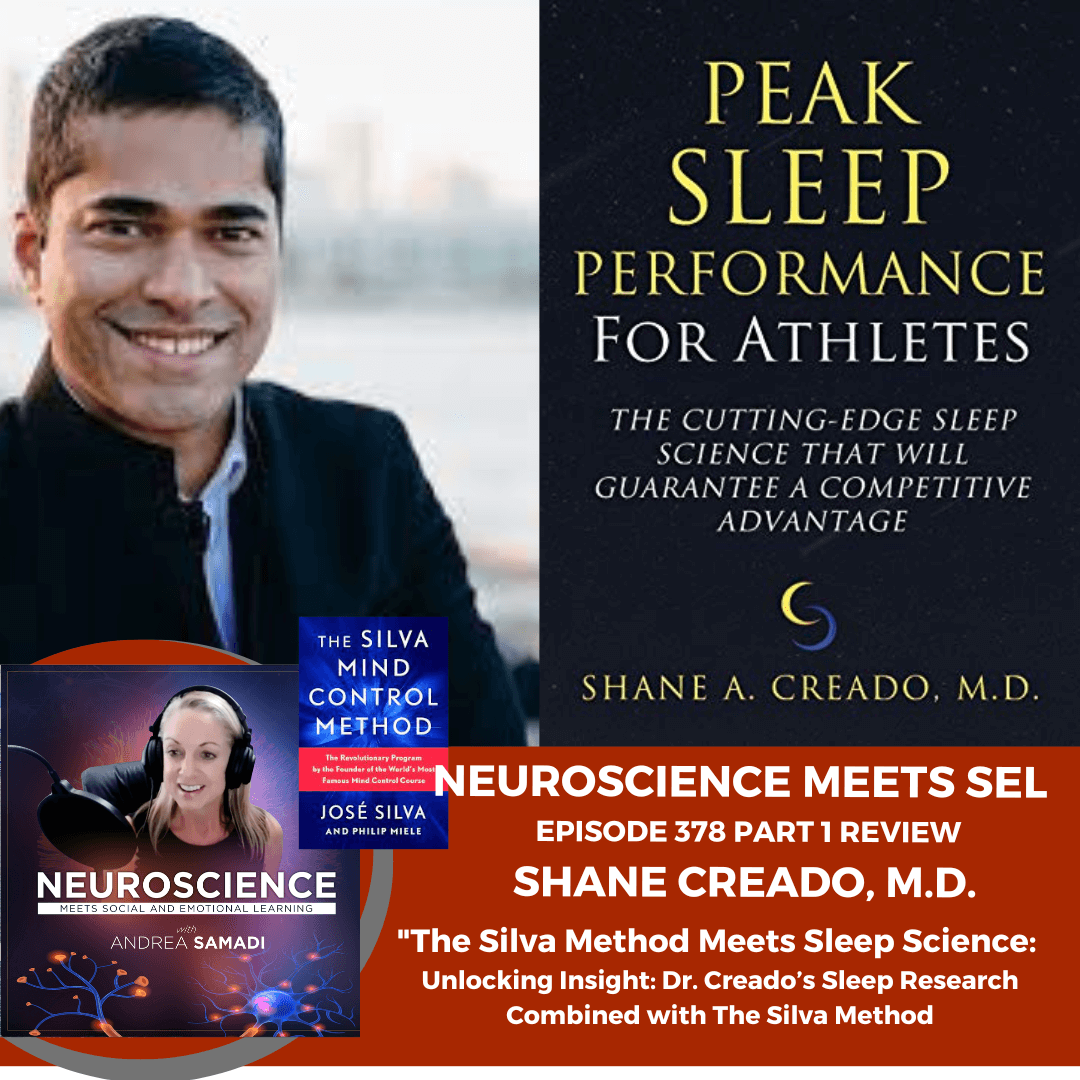
Neuroscience Meets Social and Emotional Learning
Unlock Peak Performance with Strategic Napping — Dr. Shane Creado's Sleep Research Combined with The Silva Method
00:27:28
Loading summary
Transcript7 lines
- [00:03]
A
Welcome Back to season 14 of the Neuroscience Meets Social and Emotional Learning Podcast where we connect the science based evidence behind social and emotional learning and emotional intelligence training for improved well being, achievement, productivity and results using what I saw as the missing link since we weren't taught this when we were growing up in school, the Application Practical Neuroscience. I'm Andrea Samadhi and seven years ago launched this podcast with a question that I've never truly asked myself before and that is if productivity and results matter to us, and they do now more than ever, how exactly are we using our brain to make them happen? And most of us were never taught how to apply neuroscience to improve productivity, our results or our well being. About a decade ago I became fascinated by the Mind brain results connection and how science can be applied to our everyday lives. And that's why I've made it my mission to bring you the world's top experts. So together we we can explore the intersection of science and social and emotional learning. We'll break down complex ideas and turn them into practical strategies we can use for predictable science backed results. For Today's episode number 378 we continue with our review of past episodes as we make connections to prior learning with whatever it is we're currently working on. This year, I'll create a roadmap at the end of this season so this pathway will make sense to us as we piece together important parts of our success puzzle and begin to bring them to life. As we review these episodes, you'll notice that around the time of the pandemic, around 2020, our interviews took a turn towards health and wellness and to stay on track, I created a framework of our top five health staples that we covered on episode 87, which eventually evolved into our top six health staples when we added stress reduction to help us to boost our physical and mental health. This week we're going back to one of my favorite interviews with the inspiring Dr. Shane Creato, who we first met on episode 72 and in July of 2020 on the topic of sleep strategies that will guarantee a competitive advantage. Dr. Creato is a double board certified sleep medicine doctor and psychiatrist who practices functional sleep medicine, integrative psychiatry and sports psychiatry. He brings all these specialties together to uncover the underlying factors that sabotage our sleep and then treats them comprehensively, helping people to achieve their health and performance goals with sleep at the forefront. To quickly review his background, Dr. Creato completed an undergraduate degree in Physical Therapy. He went on to earn his MD and then completed a fellowship in Sleep Medicine at the University of Wisconsin, recognizing the huge overlap between sleep and psychiatric issues. He believes in optimization, not normalization, and he devotes his work to optimizing brain health in professional athletes, executives, and anyone interested in peak performance. And we did a deep dive into his book Peak Sleep Performance for athletes on episode 71, so that when he came on for our interview with episode 72, we could maximize our time together by asking the most practical questions to help all of us move our needle with sleep. So how did I come across Dr. Creato? I first heard him on Dr. Daniel Amen's Brain Warriors Way podcast since he worked closely with Dr. Amen at that time. And at that point I was just beginning to learn how to track and improve my own sleep. This conversation with him actually happened about a year before our interview with Dr. Kristin Holmes, the VP of Performance Science at Whoop, and before I actually began officially measuring my sleep data with a wearable device. And a few months after this interview, Dr. Creato reviewed my brain scan results from Dr. Amen's clinics and told me that my brain showed the same pattern as someone who was sleep deprived, which we shared on episode 84. And that feedback sent me searching for what else I could do to improve this crucial health staple sleep. And this episode opened the door for me to meet many other leaders in health and wellness and ultimately led to our deep dive into the six health staples that are scientifically proven to improve our mental and physical well being. And this was all years before the popular series on the Silva Method, still our most listened to series on this podcast where we covered how to improve our creativity and innovation with sleep. And also before a review of the Fisher Wallace Brain Stimul that held the top spot for years with this topic of improving sleep. But it all really began with conversations like this one with Dr. Shane Creato on achieving peak performance with our sleep. So let's go back to March of 2020 and revisit what Dr. Creato had to say about sleep in video one. You can click on the link in the show Notes to watch that video. Dr. Creator reminds us here that every cell in our body has its own circadian rhythm. And when we understand this, it becomes clear what we need to do to support healthy sleep.
- [06:24]
B
Every cell in your body has its unique circadian rhythm. Every single cell. When we understand the basics, it's very clear in terms of what we need to do. So historically human sleep has been polymodal or human beings would get a few hours of sleep early at night and then they'd be awake for a few hours, then maybe get some sleep in morning or late at night and then maybe get some sleep in the afternoon. And it makes sense because we see the rise of melatonin at night and then a dip and then again a slight rise in the afternoon. So yeah, when people feel sleepy in the afternoon, it's their melatonin rising. It's their lunchtime. The brain is fatigued. They need a recharge. And I know sleep hygiene says avoid naps. That's pretty much wrong. You can nap as long as you know how much time you're doing it for, where you're doing it, and what time you're doing it. So those are keys to strategic napping.
- [07:12]
A
Foreign. Some key takeaways from Dr. Shane Creato in clip one, Dr. Creato challenges older sleep hygiene advice that says to avoid naps altogether. In his words, he says that's pretty much wrong. Naps can be incredibly helpful as long as you're strategic about them. You've got to know how long you're going to nap and be deliberate about when and where you'll do it. And these are the keys to strategic napping, which we'll explore more as we revisit this powerful conversation. But first, let's put strategic napping into action. Tip number one keep your nap between 10 to 20 minutes a quick power nap Short naps prevent you from dropping into deep sleep. This helps you to wake up refreshed, not groggy, and boost alertness, memory and mood. Tip 2 Use the 90 minute cycle only when needed. A full 90 minute nap allows you to complete an entire sleep cycle, but use this only if you're recovering from sleep debt, which I think most of us are, or if you're jet lagged or if you're coming off a night of fragmented sleep. Avoid these longer naps later in the day. Tip 3 Nap before 3pm so align your nap with the natural melatonin rise that occurs in the early afternoon. This prevents nighttime sleep disruption and supports your Circadian rhythm. Tip 4 Create a consistent nap environment. Set up conditions that your brain recognizes as rest time, so dark or dim your lighting. Have comfortable temperature. Lower temperatures are recommended. Have some quieter white noise and make sure you're lying down if that's possible. And consistency trains the brain to drop into restorative rest efficiently. Tip 5 Try a caffeine nap if this works for you. So drink a small amount of caffeine like a cup of green tea or half a cup of coffee immediately before that 10 to 20 minute nap and the caffeine kicks in right as you wake up, giving you a double boost. Tip six Set an alarm. This helps you to avoid drifting into deep sleep and waking up groggy. And this trains your brain to trust short naps and prevents oversleeping. Observe your afternoon melatonin dip if you naturally feel sleepy between 1 to 3pm, this is your biological nap window. Don't fight it. Leverage it if you can. Tip 8 Don't nap to escape stress. Use napping as a performance tool, not as an emotional coping mechanism. If you're lying down to escape anxiety, use breath, work or a five minute mindfulness break instead. Track your sleep response. Everyone's nap sensitivity is unique. Track how naps affect your nighttime sleep, your alertness, your mood, your work performance or your training or athletic performance. If you want to dive deep, you can now measure it with a wearable device like WHOOP or the OURA ring or any wearable that can help determine your best nap duration and timing. And tip 10 combine naps with movement. A short walk before or after a nap enhances the circadian benefits and clears residual grogginess. So how do we put these tips into action? By now we've all heard that napping is not a sign of laziness, it's a strategic tool for combating the sleep epidemic that we're facing. Sleep deprivation can impair the brain as much as being under the influence, which is why even short, well timed naps can play a powerful role in restoring our cognitive performance, our mood and our overall health. And I had to look to see what Dr. Matthew Walker, also known as the Sleep Diplomat, had to say about napping compared to Dr. Creato's view. Since I was studying both at the same time and I put a chart that you can see in the show notes that shows Dr. Creato's philosophy helps you to nap for performance, which makes sense to me since his book was all about advising athletes and Matthew Walker helps you to nap without harming your nighttime sleep. And his advice also made sense to me because he advises the general population and statistics don't lie. Most of us are sleep deprived. Both sleep experts believe in the power of taking naps and they both lean towards napping for less than 20 minutes for power napping that avoids that grogginess. So while not all work environments are built to to support this research that surrounds napping before 3pm, there are companies that are embracing this research and I put a link to the article where you can NAP at these 10 companies, including Google, Ben and Jerry, Cisco, Zappos and Thrive and Global. And if you like this option, you're in good company because many organizations are already embracing future focused workspaces. With this research in mind, Arianna Huffington, now the founder of Thrive Global, has been one of the loudest voices calling attention to the sleep deprivation crisis. She wrote the best selling book the Sleep Revolution to highlight the science behind sleep and why our culture must change. Huffington points to research showing that naps boost the immune system, they lower blood pressure, they increase learning capacity, improve memory and enhance our ability to perform complex tasks. Companies adopting nap rooms and rest pods aren't being trendy. They're aligning their workplaces with well established neuroscience and physiology. And this brings us full circle because Dr. Shane Creato was emphasizing these same science backed principles of long before workplace culture caught up, showing us exactly how sleep, even strategic napping, can become a powerful tool for peak performance. And here's where today's episode takes a powerful turn. We are going back to our most downloaded series, the Silva Method, to now implement this method into Dr. Creato's tips for napping. To increase our creation, creativity, our innovation and our productivity, we're combining the Silva method with this 20 minute nap. This is where creativity, insight and neuroscience meet. Now we know what to do from Dr. Creato's research. Use short strategic naps to support performance. The next step is to take this deeper and connect it to the most transformative tool that we've covered in our seven years of hosting this podcast, the the Silva Method. This is where magic happens as theory meets practice. What Jose Silva taught decades ago about guiding the brain into the alpha state, that mental state of calm wakefulness that's distinct from the high frequency beta waves of a busy alert mind aligns perfectly with what neuroscience shows happens in a 20 minute nap. And it also explains why so many innovators Einstein, Edison, Dalle, Tesla, da Vinci, they used structured micro naps, or drifting states to solve complex problems. They weren't just relaxing, they were deliberately entering the insight zone. Edison used metal balls to wake himself up the moment he crossed into theta. That brain state of deep relaxation that's a gateway to creativity, inspiration and new ideas. Dali held a key over a plate for the same purpose. Einstein was known for multiple micro naps throughout the day, and da Vinci mapped polyphasic sleep schedules to stay in the creative borderland between wake and sleep. They had discovered what both neuroscience and the Silva Method can confirm. The moments between wakefulness and Sleep alpha and early theta are the brain's most fertile ground for new ideas. And if you have not yet listened to the four part series on the Silva method, I highly encourage it as we do go into detail on how to start this practice and learn how to train your brain to accomplish outstanding results that will truly shock you. So how does this work? The Silva method adds conscious intention. Before entering the alpha state, you plant a question, a problem or an intention, something you want to solve or learn more about. Then during the nap, like drift, the brain naturally reorganizes information. It makes connections and surfaces insights. When you return to beta full wakefulness, those insights often rise effortlessly. I've been doing this practice for over 26 years now and I can tell you that this takes practice. In the beginning, I didn't have control of what was showing up on the screen of my mind during these short naps. And I had a difficult time understanding what certain things or insights that were flashing on the screen of my mind really meant. This will take practice, but it's well worth the time spent. A 20 minute nap and the Silva method are using the same brain states. One is intentionally and one is biologically. Combined they become a powerful creativity tool. Why this works? Neuroscience plus the Silva Method well, the brain enters alpha and theta, which are insight frequencies, our cortisol drops which frees our cognitive resources. The default mode in the brain activates our creativity network and the nap resets your mental clarity. The Silva method gives the mind a specific task, whatever it is you're looking to solve. And together they create a simple natural protocol for breakthrough thinking. So how do we use this Silva method with a 20 minute nap to improve our creativity? I put an image with a simple protocol that we can all use. Step one Set an intention. So say in your mind, show me a solution for X, Y and Z. Give me a creative idea for something. Step two, Enter the alpha state through the Silva method and we explain how to do this in detail. In the four step series, you can use the three, two, one countdown or your preferred silver relaxation method. Step three drift for 15 to 20 minutes. You don't need full sleep. Just hover between wake and sleep. And then step four, wake up and write down what came to you. Capture images, ideas, feelings or impressions immediately. This is truly one of the fastest ways to reset the brain, boost creativity and spark intuition because it aligns neuroscience with intention. The insights that you discover here are life changing. Start by writing down the ideas that you see and feel and you'll begin to find solutions to problems or ways forward in your daily life. And this brings us to our second clip from Dr. Creato who reminds us about an important habit that I have yet to master. Dr. Creato explains the deeper biological consequences of poor sleep with a powerful reminder.
- [19:27]
B
If you immediately go to social media or your work emails, as soon as you wake up your cortisol levels are boosted even more and then you go into danger mode, anxiety mode. You're chasing the day. For example, shift workers. Shift work actually causes fragmentations and breaks in your DNA. It causes people to be set up for increased risks of heart attacks and strokes. And the WHO has designated shift work as a probable carcinogen or cancer causing behavior. People don't know these things.
- [19:53]
A
Things.
- [19:53]
B
It's not simply about being sleepy or being irritated if you lose out on a few hours of sleep. This, this goes down to your very DNA. And that's what I want people to know about that Sleep is your anchor. It can stave off aging. It can prevent obesity, it can reduce inflammation, can boost your immune system, it can stave off menopause, can help to regulate your testosterone and growth hormone levels and suppress your stress hormone levels and regulates your gut flora as well.
- [20:20]
A
Some key takeaways from Dr. Credo's second clip avoid social media and emails. Upon waking, they spike cortisol and they activate danger mode, increasing anxiety from the moment our day begins. He reminds us that shift work is biologically damaging. It fragments DNA, increases risk of heart attacks and strokes, and it's recognized by the World Health Organization as a possible carcinogen. He reminds us that sleep is not optional, it's our biological anchor. It stabilizes our entire internal system including our mood, our hormones, metabolism and immunity. Poor sleep, he reminds us, accelerates aging. Adequate sleep can slow, even reverse biological wear, protecting long term health. Our sleep regulates critical hormones. It boosts testosterone and growth hormones while reducing stress hormones like cortisol. And our gut depends on our sleep quality. Sleep helps maintain a healthy gut flora which influences everything from mood to inflammation to immunity. So how do we put these tips into action? I've outlined seven Tip 1 Protect the first 30 minutes of your morning. No social media, no emails, no news. This is time for grounding, hydration, sunlight, breathwork or movement. And Dr. Credo is far from the only expert who emphasizes this point. Best selling author Brendan Burchard includes this as one of his core high performance habits. Reminding us how we start our morning sets the tone for our entire Day. Tip 2 if you're a shift worker, control what you can Keep a consistent sleep wake schedule when possible, use blackout curtains and cool temperatures and nap strategically to offset circadian disruption and this population is often overlooked. It came up with Dr. Creato as well as with our interview with Kelly Roman, how many people with shift work should be given extra support. Tip 3 Build a nighttime routine that signals safety to the brain. Dim the light 60 to 90 minutes before bed. Reduce screens. Use calming cues like stretching, reading, a warm shower or meditation and keep that bedtime consistent. Tip 4 Use strategic napping to lower stress hormones. Set an alarm to avoid deep sleep. Grogginess and a caffeine nap can boost alertness and if it's well tolerated Tip 5 Strengthen your hormone health through sleep consistency. Aim for 7.5 to 8.5 hours a night or more if you can. A regular sleep schedule supports testosterone, growth hormones and metabolic stability. And tip 6 support your gut through rest. Quality sleep means more balanced gut flora, so try eating meals two to three hours before bed and avoid heavy meals late at night. And our last tip is View sleep as the foundation for everything else. Instead of seeing sleep as something that we fit in, shift our mindset. Sleep is the strategy that makes all other strategies work better. So to review and conclude this week's episode 378 and part one of our review with Dr. Shane Creato. Dr. Creato reminded us that every cell in the body runs its own circadian rhythm and historically humans slept in multiple phases including early afternoon naps aligned with our melatonin's natural rise. He challenged outdated sleep hygiene rules that discouraged napping and instead showed us how to nap strategically. Short, intentional and well timed naps can restore energy and boost performance and we covered practice practical strategies for making napping work in our real life from 10 to 20 minute power naps to full 90 minute cycles when recovery is needed, emphasizing timing, environment and consistency. To deepen this topic, we compared Dr. Creato's approach with Matthew Walker's and both agree that short naps under 20 minutes offer the best everyday benefits, though their philosophies are differ. Dr. Crieto teaches us to nap for performance, especially for athletes and high performers, and Matthew Walker teaches us to nap without disrupting our nighttime sleep, focusing on the general population and while not all workplaces support napping, many leading companies do now. And in our second clip, Dr. Creata warned us about the habit that many of us, including myself, struggle with checking the phone immediately upon waking and this single behavior spikes cortisol and sends the brain into danger mode, setting the tone for an anxious, reactive day. He also described the biological risks of shift work, including DNA fragmentation and increased risks of heart attack and stroke, conditions serious enough for the World Health Organization to classify shift work as a possible carcinogen. His message was clear. Sleep is your anchor. It affects aging, inflammation, immunity, hormone balance, and even gut health. Dr. Creato reminded us that sleep isn't a luxury, it's foundational biology. And when we optimize sleep, we improve every system in our body our hormones, our immunity, our focus, our mood, and even our longevity. And we take what he taught us and we combine it. With the intentional practice of the Silva Method, we unlock something even more powerful. A simple 20 minute nap becomes more than rest. It becomes a doorway into the alpha state where creativity, insight and intuition live. And this is why so many innovators throughout history used micro naps to solve problems. The Silva method simply adds conscious intention. And when we pair intention with the brain's natural rhythms, we create one of the most reliable pathways for breakthroughs. And watch how your best, most innovative and creative ideas begin to rise to the surface. And with that thought, we'll close out this episode and we'll see you next week with part two of our interview review with Dr. Creato. And we've only just scratched the surface of our review of this important health staple of sleep. See you next week. If you're enjoying the Neuroscience Meets Social and Emotional Learning Podcast, please don't forget to subscribe so you'll stay up to date with our new episodes. While you're there, please feel free to give us a review or a five star rating as it helps others find us. For more information on our programs, books and tools for schools and the workplace, Visit us at www. AchieveIt360.com.