Loading summary
Transcript131 lines
- [00:01]
Nikki Siano
Make your next move with American Express Business Platinum. Enjoy complimentary access to the American Express.
- [00:07]
Ryan Purcell
Global Lounge Collection and with a welcome offer of 150,000 points. After you spend $20,000 on purchases on.
- [00:14]
Nikki Siano
The card within your first three months of membership, your business can soar to new heights. Terms apply.
- [00:20]
Ryan Purcell
Learn more@americanexpress.com Business Platinum AmEx Business Platinum.
- [00:26]
Nikki Siano
Built for business by American Express Press.
- [00:32]
Ryan Purcell
Shaq here Spinning Fast acting pain relief with Icy Hot Ice works Fast heat makes it last Icy Hot. You're so back.
- [00:45]
Nikki Siano
Ah, smart water. Pure, crisp taste.
- [00:49]
Christy Soares
That's really good water.
- [00:50]
Nikki Siano
It's the kind of water that says, I have my life together.
- [00:54]
Christy Soares
I do feel more sophisticated.
- [00:56]
Ryan Purcell
Smart water.
- [00:57]
Nikki Siano
For those with a taste for taste, grab yours today.
- [01:10]
Ryan Purcell
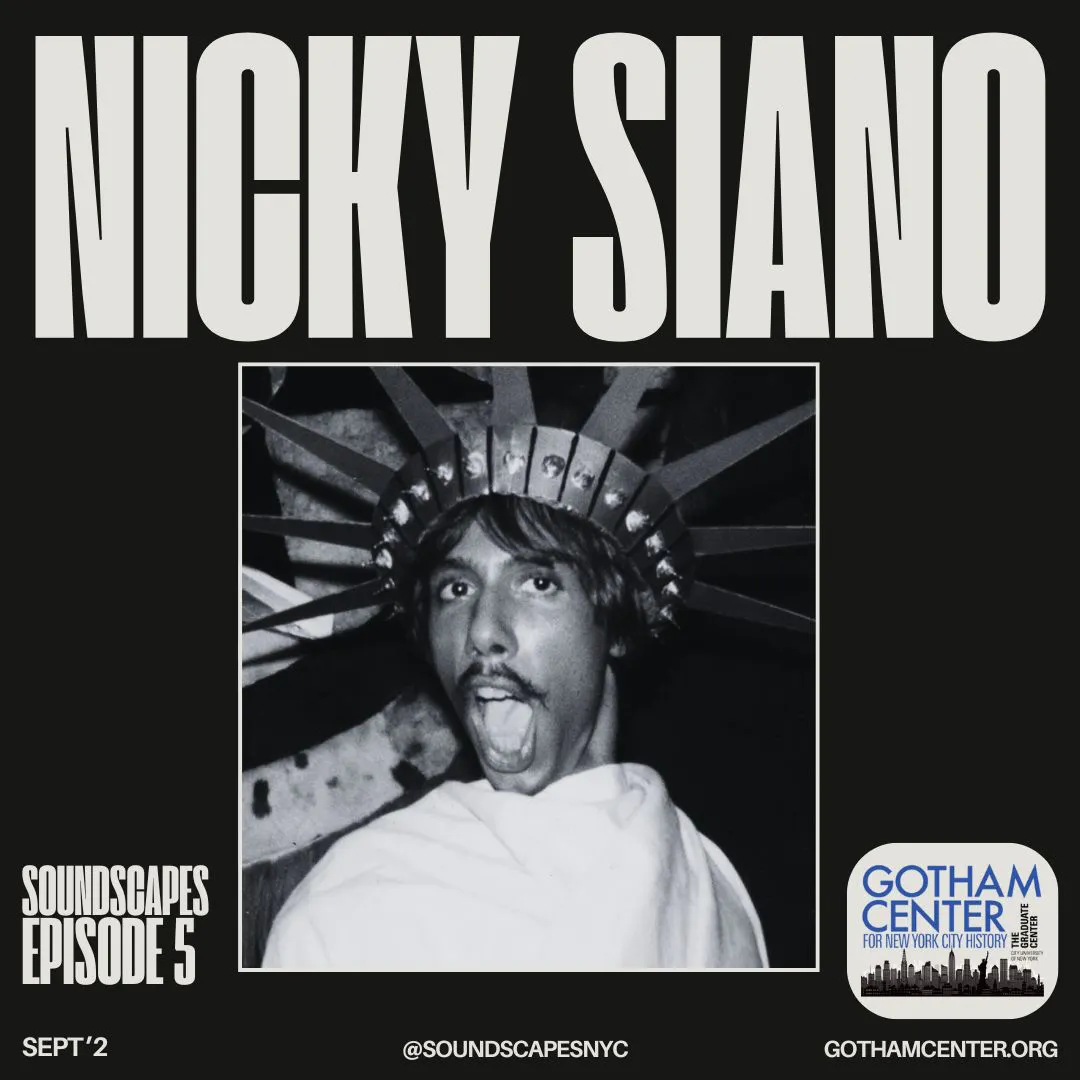
New York, 1971 Nikki Siano, an energetic, bisexual Brooklyn tearaway, had moved to Manhattan at the tender age of 16. He had already been exploring the post Stonewall New York nightlife for nearly a year. By the time he was 17, he owned his own club. The Galleries Siano's gallery took Dave and Mancuso's loft blueprint to another level. Siano took the same pains with sound and decor, but encouraged a wholly more abandoned atmosphere. Mancuso was inviting you to enter his home, while Nikki wanted to take you away on a tide of ecstasy. I always felt like I took what David Mancuso did to a more commercial level, sienna recalled. Ours was like a club version of David's loft. That feeling, that atmosphere was there, the caring about people. The Siano designed the club experience as a vehicle for social solidarity and spiritual transcendence. DJ Larry Levan remembered calling the gallery his Sunday mass. The gallery created a blueprint for dance clubs in New York to follow. Like the Paradise Garage and Studio 54, the gallery thrilled audiences until 1978. On its closure, Ciano left for the gay after hours club called Buttermilk Bottom. He also spun three months at Studio 54, playing there until a serious drug problem got the better of him. To this day, Ciano maintains a belief in the healing and unifying power of music. There is a force that connects us, he insists, and if I connect with that force and I'm playing from that center, you're all going to get it. I'm Ryan Purcell, I'm Christy Soares, and this is Soundscape. The history of dance music in 1970s New York is synonymous with the life and work of Nikki Siano, legendary dj, producer and pioneer of the early disco scene. In this fifth episode of the second season of Soundscapes nyc, Christy Suarez and I Sit down with Nikki Siano to discuss his experiences and memories from that decade as a dj. Siano pioneered techniques such as beat matching, Eqing, and using three turntables at once, creating a proto disco sound. Via has preferred funky soul and R B records, leading the way for a host of legendary figures like DJ Larry Levan and Frankie Knuckles, among others. And I am so excited to present this world to you from the voice of a primary source who was instrumental in shaping the culture that we now know as disco. Hey, Christy, how are you doing?
- [03:36]
Christy Soares
Hey, Ryan. I'm doing great. How are you today?
- [03:38]
Ryan Purcell
Pretty good. I'm really excited about Nikki Siano. He's a historical figure that I read a lot about, so I'm really interested in putting a face to the name in the text.
- [03:46]
Christy Soares
Nikki Siano is a huge figure in the disco and dance music scene of the 1970s in New York, most famous probably for opening up the gallery with his brother.
- [03:55]
Ryan Purcell
Yes, the gallery. But he's also an integral part of the loft scene, both at 645 Broadway and 99 Prince Street. So he's really getting into this DJ culture from the ground up.
- [04:04]
Christy Soares
Yeah. Nikki in many ways represents the evolution of the loft scene, turning it into more of a discotheque space and taking it out of a home space and creating really a musical revolution. I think it really helps fill out the picture. After having talked to Ronnie Soares and Luis Mario Oriano Rizzo last week, also DJs of the era, now we get taken to another physical space that was really important.
- [04:30]
Ryan Purcell
Yeah. He comes to New York in 1971 at the tender age of 16.
- [04:34]
Christy Soares
Isn't that amazing? He's really a child. He's a teenager, and he's opening up his own nightclub space, DJing there, and then eventually, as we'll hear, moving on to DJ at Studio 54.
- [04:47]
Ryan Purcell
What I love about Siano is that music is a spiritual force that he uses to bring people together and heal.
- [04:53]
Christy Soares
Yeah, this is so key. Obviously, the gallery was a healing space for many, and then he was doing literal healing in the 1980s. After losing many friends who were gay men to AIDS, he actually starts working in AIDS prevention and treatment. So he's really kind of embodying that ethos of unity, of care for one another, actually, in the kind of apocalyptic landscape of AIDS in New York.
- [05:19]
Ryan Purcell
It's an incredible journey and it's an incredible story, and I'm really excited to dive right in.
- [05:23]
Nikki Siano
Now.
- [05:23]
Ryan Purcell
Let's check out that conversation. Nikki Siano. It's such a pleasure and quite an Honor to have you on this show. How are you doing today?
- [05:30]
Nikki Siano
Namaste. Namaste. Namaste.
- [05:34]
Ryan Purcell
We got to keep the peace somehow. And I suppose that keeping peace starts with oneself.
- [05:39]
Nikki Siano
Yes, absolutely. I'm a big fan of meditation. I study a book called A Course in Miracles, and it's a big book that is 365 daily meditations. And basically it teaches you how to meditate. The book and I used it since 1984. I've been using it and I meditate at least three times a week. Hopefully I'm starting to feel like more is in order. Daily meditation opens a channel to your creative self. It's. That's where creativity comes from. The highest form of energies in the. In the universe, the Christ mind, what people say. I have nothing against Jesus either. I just have real problems with the Catholic Church, that's all.
- [06:45]
Christy Soares
Meditation is a flow and music is flow. It's the same state you hit with that state of ecstasy is the state of being in flow.
- [06:52]
Nikki Siano
Thank you. And that's a lot of times that's exactly what I say when I'm writing a song. It's flowing through me. It just flows out, it just comes. The words just come to me like this, and they rhyme and they're perfect. And the verse and chorus and the bridge, it all comes out at once. Sometimes it doesn't, but at times it will when I'm in that state of connection.
- [07:19]
Ryan Purcell
I really appreciate that, the piece that you bring to this conversation. And just as part of our project, we want to explore some of the sounds and the history of New York city during the 70s, specifically with your role. But I'd like to start with the very beginning. When were you first exposed to what we would now call disco music? And how important were the specific spaces in that trajectory?
- [07:42]
Nikki Siano
I won't call it exposed to disco music because it wasn't called disco music then. It wasn't called disco music until 1974, I think. 74, 75. In there somewhere. I started going out in 1970 to a place called the Loft, which was run by my good friend David Mancuso, and he was the DJ there. Wasn't my friend at that time, but we became friends over the years and I. It was the only place I could go at 15 to dance. All the other places were bars and you needed to be 18 to get into the bars in New York at that time. So I had just an affinity, a calling to this type of music. I used to. I had a girlfriend at the time, and we would Walk down this street in New York where all the gay people hung out. It's called Christopher Street. And doors from bars would open along the way. And I'd hear this music and I'd go up to the next person coming out and say, what's that song? What's that song? And they tell me like Sultana by Titanic. And I would run around New York City until I found that record and I would play it to death. And I started collecting records. And then I went to a party and the music was awful. And I brought my records and I started playing them one after another. And one person in that party came up to me and said, you should come with me to the loft Saturday night. And Robin and I did, and we became members at 15 years old. And I never missed a Saturday night until the gallery opened. I remember one morning, Robin and I went over to the table and it was empty. It was like 5:30, 6:00 clock in the morning. It was almost closing. And Robin looked at the girl back there. Sheila was her name. And she said, sheila, I'm so hungry. And she went in the refrigerator and she digged out a fresh slice of pie and she gave it to us. And that was the loft. That was the loft.
- [10:14]
Christy Soares
That spirit of generosity that David Mancuso cultivated musically. Food, in terms of walking people into the space where he lived. When you opened the gallery, is that something that you were trying to cultivate? Even though it was perhaps a more formal space than the loft, I. I.
- [10:34]
Nikki Siano
Want to say it was more design than the loss loft. When David built the loft, I think he just. It wasn't like accidental pieces came together. Like he got two clip Sean's and he liked the way they sounded. The room was sounding so tight and so good. He would just go with it. And the lighting. Some guy came in and said, oh, you should have red, green and yellow here. And he just did it. I. When we went to the gallery, we. We said, okay, people are going to be dancing. I want the dance floor to be separate because I don't want the energy or the lighting or sound, lighting, spirit, whatever, to intrude on the dance floor. I want the dance floor to be my. My cauldron that I would stir every Saturday night and get crazy until it exploded. So we built a wall around it, just things like that. We designed it as a place to dance and blow your mind. David just was his house, you know, my deodorant is in the bathroom and his shaving kit. He was so mad. One night someone stole my Shaving kit. I said, david, you leave it out all the time. Like, there were 300 people in and out of the doors here. You know it. You never know what's going to happen. So he was very trusting. But he learned. He learned it was always hundreds of people. He wanted to do like 500, 600. The gallery fit 800. The first gallery fit 6 to 800. We could. We could squeeze them in there. The new gallery would hold 1500.
- [12:28]
Ryan Purcell
So the gallery is automatically just bigger, a bigger version of the loft. You're incorporating some elements.
- [12:33]
Nikki Siano
Okay.
- [12:34]
Ryan Purcell
And just to get the. The date straight, did you open the gallery in 72, is that correct? The first location?
- [12:39]
Nikki Siano
70.
- [12:40]
Ryan Purcell
73.
- [12:41]
Nikki Siano
February of 73.
- [12:43]
Ryan Purcell
At what date does it. What time does it move to the second? There's a second location, Is that correct?
- [12:47]
Nikki Siano
Yes. The end of 74. 136 W. 22nd St. And then 647 Mercer St.
- [12:58]
Ryan Purcell
Okay, great. So you're moving. You're moving during that period as well. That's fascinating. Just to think that you're. You're taking some of the elements from the loft and you're bringing them to another level.
- [13:06]
Nikki Siano
That's exactly what we did. We. We took elements of the loft, and then we brought them to another level. And I. And I just. While I was putting it together together, people would say, well, what about this here? And Larry and Frankie started working for me. The first night that they came to the opening night.
- [13:26]
Ryan Purcell
Oh, my God.
- [13:26]
Nikki Siano
Frankie came, asked for a job opening night, and we told him to come. And then he said, he. I got to bring you this guy. He's crazy, but he's really talented, Larry. So they came together and their creative energies were added to the cauldron. We were. I. I didn't turn down any suggestions. So there was one time where we were painting something like the walls, and we were using rags like you. You would paint the walls white, and then you dip a rag in a blue color, and you roll the rag around on the wall and make like, just crazy designs. And Larry wanted to make clouds all over, so we made clouds all. And that night we would like. I. I remember doing, like, I. I put a spotlight near the clouds, and in the morning, I let it just slowly go down into the. Like, the sun rising. I picked it up. The sun rising in the morning. I wanted to. To reiterate. And so that's the stuff we did. We just sort of. We were kids, and we were having fun, and we. And the experience just lent itself to the creative process. We were all creative people. In a cauldron where creativity was welcome. So it's like being in a Broadway theater and you have all these assets. Use them to the best of your abilities. And we did. I like the sound system. I think like David stayed with two Clipshawns and two La Scalas for years. I started moving way forward. I got bass horns before he did. I got a three way crossover before he did because I just started thinking of things. And then I would call my sound man and say, I want you to build me this. And he said, oh, yeah, you want a crossover is what you want. And I wanted a volume for the bass torns and the tweeters separate from the full range speakers. I wanted to control the full range on one level on one knob and the tweeters on one knob and the bass horns with not one knob. So I could turn off the bass horns but not turn off all the bass in the room. And then at a moment I would bring in the bass horns really fully, like. And it was powerful. People just to this day, I mean, people just go nuts. And we're having our party the 22nd and people are so excited. This is the first time, I think we're almost sold out and it's the first time ever that I've been totally sold out for a party.
- [16:24]
Ryan Purcell
Oh, gosh. I hope, I hope there's more tickets because on March 22, right?
- [16:28]
Nikki Siano
Yeah.
- [16:28]
Ryan Purcell
Birthday party at the El Dorado Auto Scooter in Coney Island. Is it in Coney Island?
- [16:33]
Nikki Siano
Yeah.
- [16:33]
Ryan Purcell
Is it a recreation of the gallery experience or is it like a version of it?
- [16:38]
Nikki Siano
That's what we're going to do. We're going to create the gallery experience. And we did it once before in there, but we're going to go it even a step further. We have a lot of plans.
- [16:49]
Ryan Purcell
I hope there's one more ticket left because I haven't gotten mine yet.
- [16:51]
Nikki Siano
No, there are, there's. There's 75 tickets left.
- [16:55]
Ryan Purcell
Okay.
- [16:56]
Nikki Siano
And it's the best sound system in all of New York City. I'm telling you. This is an old fashioned, like the Loft, like the Paradise Garage. This is a Richard Long sound system.
- [17:09]
Ryan Purcell
Richard Long is a very important figure here. Alex Rosner is also an important figure here. Could you talk a little bit about Alex Rosner's sound system at the Loft and how that may have translated or influenced the sound system at the gallery?
- [17:22]
Nikki Siano
Well, Alex was our sound man.
- [17:25]
Ryan Purcell
Okay.
- [17:25]
Nikki Siano
We were trying to choose a sound man. We had $10,000 to open the club and we had this extensive plan. That we had laid out, Robin and I. But we were kids. We were 17. My brother was 28. So he was the business guy. And we thought, well, if we don't know, he'll know. Wrong answer. He was just a 28 year old kid. We were more mature than he was at that time. Anyway, he sort of ran the business end of it. And I was trying to decide which sound man to use. And we kept going out to this club and that club and I kept seeing Rosner Custom Sound. That's Alex Rosner company. But there was this new guy coming up called Richard Long and he was making a lot of noise and he had built this sound system. I think it was at somewhere on Christopher street because it was very, very crude back then. It was like two speakers in a room on stands. That was it. And I said, I don't know, Robin, what we should do. We were at the Rolling, the roller skating rink in Rockefeller center, and I was returning my skates and I said, I'll never figure this out. And I looked up and there was the amplifiers for the sound system and there was a little strip at top and it said Rosner Custom Sound. And I said, okay, here we go. And he came in, he said, I have the greatest sound system for you. It's the greatest ever. $6,500. That was more than half of our budget. We had to put down a wood floor. I mean, we had work to do. We went with it. We went with it.
- [19:24]
Ryan Purcell
The gallery, was it just. When you got in there in 73, was it just an open space that you recreated and you had to add everything?
- [19:31]
Nikki Siano
We got in there in 72. We were, we were building the club for at least two months before we opened. I mean, we did everything ourselves. Yeah, I wasn't anybody. I couldn't. We had a couple of friends who came down and helped, but it was a small crew.
- [19:50]
Christy Soares
Let's. Let's Talk about your DJing. So I don't mean to embarrass you. I don't know if you get embarrassed when you hear compliments, but I'm gonna read a few compliments. So I did an interview with Ray Pinky Velasquez of Ipanema. And he always has said that he interviews your. He respects your mixing because. And this is what he said, it was not so much mixing records on beat as compared to creating an environment of spirituality based on playing a good dance song that had a great beat. Another interview, this one with Tony Smith of Xenon and Funhouse, conducted by Batman Brewster says of you, Nikki was like a really young. And his style was just like crazy. He could throw anything on. He had such a rapport with the crowd, he would take a chance. That's what I liked about him. He was very courageous. So you're being talked about as tapping into spirituality, as being courageous. How do you think about your own DJing style? In those early days.
- [20:49]
Nikki Siano
I. I didn't know what I was doing.
- [20:55]
Christy Soares
You're innocent now.
- [20:57]
Nikki Siano
People just. No one knew what they were doing. And my best friend was David Rodriguez, and he basically taught me a lot of the things he's okay now. Make the beats match. And beat matching back then was. It was a chore. It was hard because first of all, the Turntables only went 2% in each direction. To change the speed of the. Of the table and you to hold the table was a real chore. You had to be so light on your touch. There were a few things that I did that used to freak people out. And it. I don't know how or what, but I do it even to this day. I hear a record, and all of a sudden I hear the horn in the other record, and it sounds like the same horn, but it's on two different records, and it's two different beats, even. But what I do is I match the horn real quick and the song goes. And this one. And all of a sudden the song is different and people freak out. And I do too, a little bit, because it's not only about the beats, it's about the sounds. And then there's always the baseline. Like, instead of the kick, sometimes the base baseline goes, you know, and different baselines can. Sometimes there's a kind of rhythm that you can match the baselines. You don't have to match the kit. And that works out really beautifully for me a lot of times. So, yes, there's things that I do that I always thought the selection of the song was more important than whether it matched or not. And these DJs who play 126 to 128 all night long are boring. They're boring to me. I gotta hear 90, I gotta hear 98. I gotta hear 105, I gotta hear 110, 115, all the way up to 134. I want to hear them all be. If they're good, I want to hear them really good songs. So you can't sometimes match the song you want to play next. So you just let the record end. Then you put it on from the beginning, play a sound effect. Or something. Get creative, do something, say something in the mic and then just put the next record on. Just look at the people and wave. Sometimes that works for me.
- [23:57]
Ryan Purcell
I love it when a DJ takes me on a journey. It really takes me up and down, makes me feel emotions, makes me really connect with the people around me. I think it's such a beautiful thing.
- [24:05]
Nikki Siano
That's why I'm playing the whole night. Yeah, this Saturday. Well, the 22nd, because it's been a long time that I played the whole evening.
- [24:16]
Christy Soares
And.
- [24:16]
Nikki Siano
And that's the journey. That's. If there's a beginning, there's a middle, there's an end, and then there's another beginning sometimes, and then another end sometimes. I love that about. I love feeling that whole night. That journey you go on, that's so exciting to me. And that could include a Barbra Streisand song or, you know, or Keep your head to the sky by Earth, Wind and Fire is always a good one to, like, slow it all down and just listen to the beautiful music that this sound system produces. It's so intense. You know, that's the kind of thing. It's a journey of music. Not just dancing, but of music and. But almost everything I play, you know, you could dance to, except maybe the slow dance. You gotta bump and grind a little bit.
- [25:20]
Ryan Purcell
That's part of the journey, too. I'd like to bring us back to the 70s a little bit. And, you know, whether we're talking about what we're calling disco or some other kind of dance music, we're in a space, we're dancing.
- [25:31]
Nikki Siano
It was. We used to call it. We used to go to the record companies and say, danceable R and B. Because R and B was not rap at the time. Right. R B was just that rhythm and blues. It was black music. That's basically what it was. That's what we would go in asking for, danceable R B. But a lot of time they would. Jazz records. So many. I. I mean, Donald Byrd was a breakout from the jazz records. So many good club records. I mean, I don't think Manu Dabongo even knew that he would produce one of the biggest songs ever, Somacosa. And then another hit on his album called New Bell. I don't think he'd ever thought he would, you know, was creating that for a dance floor. It was about his music and the rhythm of where he lived.
- [26:32]
Ryan Purcell
All right, let's take a step back and explore the soundscape that we've been illustrating. Here's a live recording of Nikki Siano's DJ set at the opening of the second gallery location at 172 Mercer Street. Listen for the sound effect of a jet engine plane taking off that Nikki Siano famously wove into his sets to suggest a liftoff.
- [26:58]
Nikki Siano
It.
- [27:42]
Ryan Purcell
Now compare that with a more recent track, Wrong. You Dropped the Bomb by Annie and the Caldwells, released by David Burns, Luca Bop Label 2025. Produced and remixed by Ciano, this unstoppable track is Siano's first remix in over a decade.
- [28:20]
Nikki Siano
You Dropped the bomb on my.
- [28:40]
Ryan Purcell
Now let's get back to that conversation. Just to bring us back into that time frame, we've talked to a lot of scholars and also DJs and artists from this time who all draw a connection between the music that's taking place in these clubs and being produced and the journeys that DJs are taking people on. And specifically, you know, spaces of liberation for queer people. Could you talk a little bit about a little bit about that relationship if you see that relationship in that history?
- [29:07]
Nikki Siano
Yes. The Stonewall riots were before I started going to the Loss. And I did wind up. I did wind up at the Stonewall riots. I came out outside and it was the Saturday started on a Friday, and I came this Saturday and they were still going at it. And I came up out of the subway and the whole place, Sixth Avenue, I couldn't believe it. Sixth Avenue was blocked. And I was going, what the hell are these people doing? And then I saw people were sitting across the street to block the traffic. And then I saw it was all gay people and the cops were lifting them up and putting them in the paddy wagon. As soon as they lift a person up and put in the paddock, someone would run and take their place. And they blocked the traffic on 6th Avenue, 7th Avenue and 8th Avenue the whole Saturday night. They blocked it for the whole 24 hours. You could not go up or down a major thoroughfare on the west side. And it just showed what our people could do. I loved it. And then the parade started and of course the music started saying everything that was. I don't know if you guys know some of the music back then, but there was like this song by the Tramps, said it all, called Love Epidemic. Spread the love epidemic all around the world to every man, woman and boy. I was just everything that was being said. There was a song called Little Bit of Love by Brenda and the tabulations brother and sister. That's what God made us. Why do we hate you and why do you hate us? Living Together is what God planned it. All we need is a little bit of love to make it through this challenge. And that's what all the music was saying. It wasn't about bumpy, giddy, you know, wasn't any of that stuff yet. It didn't until that word disco came into it. The music was about love, passion, and the war ending and the race riots ending. Because all of that was going on. Between Vietnam and the racial riots, this place was a mess. Oh, gosh. But in the best way, people were hopeful. They felt like they were making a change, that their voices mattered. And they did. The war ended. We stopped the war by peaceful protests everywhere, every day, everywhere.
- [32:13]
Christy Soares
Nikki, let me follow up with you about this. So when you're at Stonewall, when you're at those sort of protest spaces, is there music playing? What does it sound like?
- [32:24]
Nikki Siano
No, not at Stonewall. Stonewall. All I remember that that night were people screaming and yelling and chanting. A lot of chanting, like, what do we need? Freedom. You know, it was like gay rights. Gay rights, gay rights. And then there was a lot of smashing things. Like, I kept hearing glass shattering. Like people were taking bottles and smashing them on the floor. Kept hearing that over and over. Then I walked over to 7th Avenue, and that was when I first heard some of the music from the Stonewall. Actually, they had their doors open and their music on, but I don't know, people weren't hanging out there. They were all, like, on 7th Avenue and 8th Avenue, blocking traffic. And on 6th Avenue, people were very involved in getting this done, in really getting this done, to really make them see us, hear us, and change the fucking law. Change it. There was a law on the books that said two people of the same sex could not dance together on the dance floor. And that's what they were arresting people for all the time.
- [33:50]
Ryan Purcell
Your activities had a real impact on changing not only society, but changing the legal structures in New York City, but also changing the culture, too.
- [33:58]
Nikki Siano
I keep getting involved with these things. The same thing with aids. I mean, when I got into the AIDS movement, there was not one treatment available for people with aids. No one. You got this, you got. Someone said you have aids, and in two years you were dead. That was it. Period. End of story. That's all you heard. By the time I left, it was a triple antiretroviral combination. In 1993, just coming out, 94 out. Sometimes you just got to get involved when the spirit calls you. And I didn't know I was going to work with people with aids. That's why my whole life is just like higher power saying, okay, here we go, another ride on a roller coaster. Here's another challenge for you, Nick. And I just go, I just go.
- [34:56]
Christy Soares
We go with the flow. Wherever the flow takes you.
- [35:00]
Nikki Siano
Allow life to move you to you. Right.
- [35:05]
Ryan Purcell
Earlier in this conversation you talked about, you know, the word disco. And I was wondering, how does the music change after that word becomes associated with it? You know what I'm saying?
- [35:14]
Nikki Siano
It becomes formulaic. It's no longer these original anthems, except once in a while, you know, you always had your breakthrough and those were the records I played. But.
- [35:28]
Ryan Purcell
Right.
- [35:29]
Nikki Siano
There were all these songs like the Love I Lost and Bad Luck and. And Don't Leave Me this Way. There were, There was one every month, Turn the Beat Around, Love Hangover. There was one a month that became an anthem. And I was so lucky because I had such a good ear. I would always hear it and know it first. Like, like all these people heard it and they said, yeah, it's good, but I can't mix it in. Right? Like Trans Europe Express. No one knew how to mix that record in. I said, play from the beginning. And that's what I did. I played it from the beginning. Huge, huge record. I got fired from Studio 54 for playing that fucking. I swear to God, I swear to God, I. Wow.
- [36:25]
Christy Soares
Really?
- [36:26]
Nikki Siano
Steve had had it with me and my antics of going to the bathroom and not coming back for hours and. And haha. And he's on the balcony with Richie and I'm playing records and it was Trans Europe. So I let the record end, I put it on from the beginning and he stood up, he said, and listen to this record. He played it the other night. I hate it.
- [36:55]
Christy Soares
You're obviously extremely famous for having played Studio 54. And in fact, the book you wrote, I DJ Stonewall to Studio 54. My Life behind the Turntables.
- [37:06]
Nikki Siano
I'm still writing it.
- [37:07]
Christy Soares
You're still writing it?
- [37:08]
Nikki Siano
Yeah, yeah, it's not finished.
- [37:11]
Christy Soares
So let's talk a little bit about that book and kind of that story. Because I think when people think about STONEWALL In Studio 54 that weren't there, they think about them as two distinct phenomena, not connected, but you are connecting them. So why that title and what do you see? What's the narrative, if you will, of your life from STONEWALL To Studio 54?
- [37:34]
Nikki Siano
No, someone said it the other night to me and they, they didn't know me but 15 minutes and they looked at my history and they just googled Nikki Siano and then they started scrolling and scrolling and they said, you're this New York icon and that. And that's what it is. It's my experiences in New York as a gay man. And Studio 54 was a gay club. I had a lot of straight people there, but it was a gay club. I mean, Rollerina would, you know, be there every night, hitting you with her feathers, like just boom, over your head. She'd hit you with that wand. So, yeah, so I consider it the New York experience. And. But nightlife started at this. Like you mentioned, Ryan, in the beginning, it was queer and it was people of color, marginalized people who didn't normally have a place to go and gather, and they started coming together first. It was a lot of people of color, people of different races, and there were white people, but it wasn't the majority, which was great because they party. And that spirit is what fueled the music industry into creating this thing called disco, which was a multibillion dollar industry during the 70s and is still being used over and over. Disco Cruise, which sells out every year, anytime you put that word around the thing, people seem to flock, especially if they know one other thing about it. They branded it. That's what happened. They branded it and then they were asking people who really were not rhythmic, rhythm and blues people to make club records.
- [39:43]
Christy Soares
Before we closed, I wanted to give you a little time, Nikki, to talk a little bit about the music that you were playing at Studio 54. Because Studio 54 was a production, right at this point, disco was big money. This is not the loft. This is not the gallery. Does that change how you play?
- [39:59]
Nikki Siano
No, it didn't change how I played. That's why I got fired. Now. It did change. Richie adapted. Richie and I, I mean, we came up together. He played every Sunday night at. He played a Club on 45th Street. And I used to go there every Sunday night after I played Saturday night. And he would come to hear me on Saturday night, and then he would basically play what I played on Sunday. But he had a really good mixing style. He really matched beats.
- [40:36]
Christy Soares
So Richie. Richie Kayser you're talking about?
- [40:39]
Nikki Siano
Yes, Richie Kzar. And he mixed seamlessly and something I never did and never wanted to do. I thought, like I said at the beginning of this interview, the recording was much more important than how many beats per minute it was. But he curtailed his set and that's why he survived at Studio 54. And I did. I didn't change when I came in there. And so it got me fired, which everything Happens for a reason. I really wish I would have played there longer, a little longer, but I had some great experiences there. Hey, I played for the most famous party they ever had. The Bianca Jagger rode in on a White Horse party.
- [41:28]
Christy Soares
Oh, yeah.
- [41:29]
Nikki Siano
Everybody knows that picture of Bianca Jagger on that white horse. And that's the part I played for that party.
- [41:36]
Christy Soares
Yeah. That's phenomenal.
- [41:38]
Nikki Siano
So can I say.
- [41:39]
Christy Soares
So this podcast is on 1970s New York disco music in 1970s New York. The first season was on punk music. Next season will be on salsa music. So is there anything else? Yeah, it's. It's really cool. You know, it's a dynamic time, obviously, all these different music cultures intersecting. So is there anything. I think, you know, a lot of stuff's been written on 1970s New York. It's almost idealized, I think, in a lot of people's minds. Is there anything you want to tell us that. That we. That we should know? That we're not talking about. That we should be okay.
- [42:08]
Nikki Siano
That club music in the early 70s had heavy messages within the lyrics. And oftentimes in the late 70s, they would be kind of fluff. You know, Casey and the sun do a little dance, you know, don't leave me this way, I can't go on. I mean, the words to the early songs were amazing. Go back and listen to those 1972, listen to Rain by Dorothy Morrison, or All God. Better yet, All God's Children Got Soul by Dorothy Morrison. Aggravation by Martha Velez. These songs were classic underground club songs. And the Bottle by Gil Scott Heron. I mean, these songs spoke to us. We were at a turning point in our lives because there was so much chaos going on in the streets of the United States of America. And we survived it because that music told us that we were growing and changing through the chaos.
- [43:24]
Christy Soares
That's beautiful.
- [43:24]
Nikki Siano
And that's why the chaos was there, to help us receive great gifts. And they came and they went. And now it's a circle, it's secular. We're going through a very similar time.
- [43:38]
Ryan Purcell
Nikki, it's been a pleasure to talk with you. Really, really an honor to be here. And I really look forward to your party on the 22nd.
- [43:45]
Nikki Siano
Are you coming as well, Christy?
- [43:48]
Christy Soares
I wish I could. I'm in Colorado with my little kiddos, so it's going to be tough for. But I'll be there in spirit.
- [43:53]
Nikki Siano
Hey, Ryan, I'm looking forward to seeing you there. Really. Oh, come up and say hello.
- [43:58]
Ryan Purcell
I certainly will, and I'm looking forward to it. Thank you so Much. Thank you.
- [44:02]
Nikki Siano
God is blessed. Ciao for now.
- [44:04]
Christy Soares
Thank you so much. Bye, Nikki. Take care.
- [44:06]
Ryan Purcell
Ciao. Bye.
- [44:13]
Nikki Siano
Okay.
- [44:18]
Ryan Purcell
That was our conversation with legendary DJ Nikki Siano, and I hope it was as fun for you to listen to as it was for us to record. Christy, what did you think?
- [44:26]
Christy Soares
I love that conversation. And I am just realizing that Nikki was talking about a birthday party that he was hosting for himself and DJing. And you actually went, didn't you?
- [44:36]
Nikki Siano
I went.
- [44:37]
Ryan Purcell
He put me on a list. It was very nice. It was very generous of him. And it was so fun because it was held with a in an old bumper car rink in Coney Island. It was fantastic. It was awesome.
- [44:47]
Christy Soares
And did he DJ Ryan, what was that like to hear him DJ?
- [44:50]
Ryan Purcell
He was DJing the entire night and it was really incredible because he really interacts with the crowd. He really gets people going. He reads the audience and uses the music to reach the audience on a higher level. It was fantastic. It was. It was the kind of experience that I think he wanted to create and has created at places like the gallery.
- [45:10]
Christy Soares
That is so cool that you got to hear Nikki Siano DJ live. And it kind of takes us to our episode next week, which is going to be with historian and cultural critic Lucas Hildebrand. And Lucas wrote a book about gay bars in America, and we're going to talk to him about the history of gay nightlife in New York city in the 1970s.
- [45:30]
Ryan Purcell
Hildebrandt takes us on a deep dive of post Stonewall gay bars, including the Continental Baths, the Anvil, the Mineshaft, Paradise Garage, and also the Scene.
- [45:38]
Christy Soares
So that's going to be an amazing journey going from the gallery and kind of going into these explicitly gay spaces that Hildebrandt is going to tell us all about. I'm really excited.
- [45:47]
Ryan Purcell
Well, one of the things is he's connecting it to the political activism that is part of the context of these spaces and emergence of these spaces in 1970s New York. So I'm looking forward to get more context for the kind of music that's taking place within this spaces as well. So I just want to give a few shout outs. First, the Gotham center for New York City History at the CUNY Graduate center in Midtown Manhattan, to Fordham University, where I now teach American Studies, and to the generous support of the Urban History Association.
- [46:14]
Christy Soares
Thank you. Also to the Society for American Music and to the University of Colorado Boulder President's Fund for the Humanities.
- [46:20]
Ryan Purcell
Check out our socials to stay tuned for upcoming episodes and events related to the podcast @ Instagram. That's soundscapesnyc@soundscapes NYC. I'm Ryan Purcell.
- [46:30]
Christy Soares
I'm Christy Soares.
- [46:31]
Ryan Purcell
Until next time. The opening anecdote of episode five drew from Bill Brewster and Frank Broughton's classic text. Last Night, A DJ Saved My Life. The History of the Disc Jockey, Grove Street Press, 1999.