← Next Up with Mark Halperin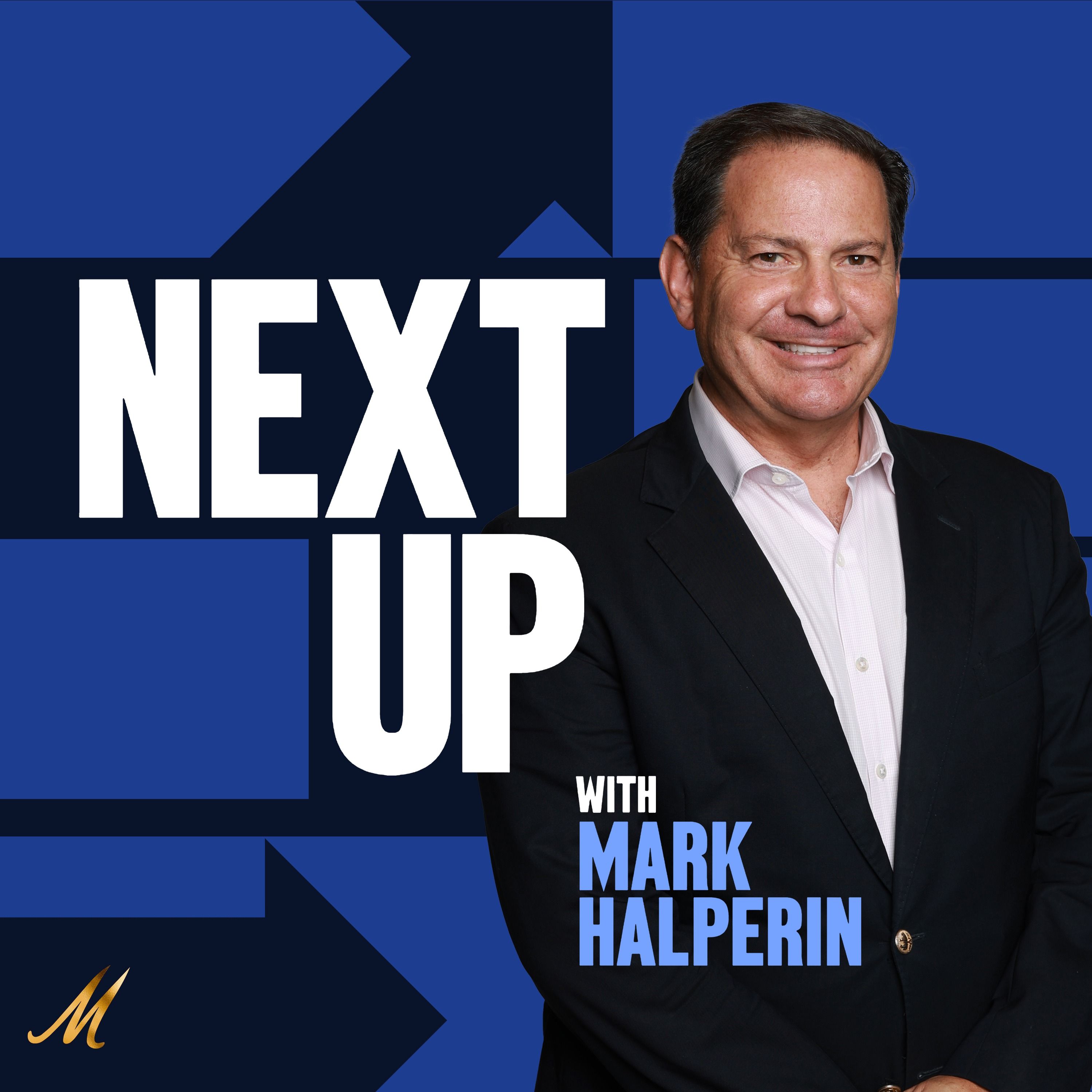
Next Up with Mark Halperin
The REAL Story of Why Trump Changed Course on Minnesota, and How Clay Travis and Buck Sexton Took Over After Limbaugh
01:07:18
On today’s episode of Next Up, Mark Halperin uses his reported monologue to go inside what really drove Donald Trump to change course on Minnesota. He lays out the specific voices that matter when Trump rethinks a decision and explains why media optics, internal pressure, and shifting political narratives pushed a rapid reversal — all informed by Trump insiders who really understand how he made the choice to head in a different direction. Later, Buck Sexton and Clay Travis join Mark for a wide-ranging conversation that moves from politics to culture to media. What starts as a playful debate over iconic duos quickly exposes a serious generational divide, before turning to how Clay and Buck managed to succeed in a time slot long defined by Rush Limbaugh. The episode wraps with a look inside Trump’s cabinet, as Buck and Clay explain why Treasury Secretary Scott Bessent has quietly emerged as one of the administration’s most impressive figures and closes with a candid debate over who w...
Loading summary
Transcript143 lines
- [00:00]
LifeLock Advertiser
The new year brings new health goals and wealth goals. Protecting your identity is an important step. Your info is in endless places that could expose you to identity theft leading to lost funds. LifeLock monitors millions of data points per second. If your identity is stolen, our restoration specialists will fix it, guaranteed or your money back. Resolve to make identity, health and wealth part of your New year's goals. With LifeLock, save up to 40% your first year. Visit lifeblock.com Specialoffer terms apply.
- [00:30]
1-800-Flowers and Monday.com Advertiser
Looking for a Valentine's gift she'll truly love? 1-800-Flowers.com knows what she wants. For 50 years, 1-800-Flowers.Com has helped guys get it right, delivering millions of fresh Valentine's roses nationwide with high quality bouquets guaranteed to last. Right now, when you buy one dozen premium roses, they'll double your bouquet to two dozen for free. Valentine's is coming fast, so don't wait until the last minute. Double your blooms today at 1-800-flowers.com sxm. That's 1-800-flowers. Com sxm.
- [01:03]
Mark Halpern
Greetings, everybody. Welcome to NextUp. I'm Mark Halpern, editor in chief of the live interactive video platform two Way, the host here of our little program that we love to share with you. Thanks for tuning in. You can settle in because you're about to get a lot smarter. We're going to talk about Minnesota and Donald Trump and I'm going to try to explain to you what I've learned over the years and in my reporting over the last day about Donald Trump and when he changes his mind, what are the conditions under which this famously somewhat stubborn man decides to reverse course? I think I've got the goods on that and I'm ready to share it with you. And then we'll spend the rest of the episode with two smarty pants. It's two great thinkers, funny guys, smart guys, Clay Travis and Buck Sexton. They, of course, host the Clay Travis and Buck Sexton show, an extraordinary success story. They did nearly the impossible. They replaced a legend. Rush Limbaugh passed away. That slot, that famous 12 to 3 Eastern time slot was available. And those two guys who didn't really know each other, Match Made in Heaven radio executive put them together and we're going to talk to them about what works about the show and then run through everything in the news with the two of them, excited to get a chance to talk to them about everything. But before they join us in just a moment, my reported monologue on when and how Donald Trump changes his mind. That's next up. Are you being lied to. They tell you to max out your 401k and your IRA and then they make you beg for permission to use your own money. It's time to get the truth and discover a better way to grow and protect your money. Bank on yourself is the proven retirement plan alternative that banks and Wall street desperately hope you never hear about. It gives you guaranteed growth and retirement income that never goes backward even when markets tumble. Your principal and growth are locked in with tax free retirement income and a zero tax rate under current law. Access your money anytime for emergencies or any opportunities that come up with no penalties and no restrictions and it keeps growing like you never touched it. Built in inflation protection means your savings grow every year in good times and in bad. Plus you'll always know the minimum guaranteed level of your retirement savings when you need them. You can get a free report that reveals how you can bank on yourself and enjoy tax free retirement income, guaranteed growth and control of your own money. Just go to bankonyourself.com, and get your free report again. That's bankonyourself.com/mark one more time. Bankonyourself.com, all right, right now, next up, my reported monologue on Donald Trump and when and how he changes his mind, which he did in Minnesota. The changes on Monday were quite extensive. Announced that Mr. Homan was going to go to Minnesota to run the operation. Downgraded the status of the head of the Customs Service and at least for now, the head of Homeland Security, Christy Noem. Talked to both the governor of Minnesota and the mayor of Minneapolis, had a friendly conversations with them and in an interview with the Wall Street Journal and on social media, much more conciliatory about the operation. Even conceded perhaps more forces would be coming out of Minnesota. Big change. And some people were surprised. I was not. And you know, I don't like to spend the whole show patting myself on the back. But I've told you before, I've spent a lot of time really since 2011 trying to understand Donald Trump and, and I'm amazed at how little understood he is. I'm amazed a guy so in the public eye there's this paradox. So covered the most covered person in our lives for the last decade and yet still so little understood. I spoke to a Group in Washington, D.C. last week of people who I would have thought understood Donald Trump, but they hunger for more knowledge about him. They don't seem to get him. Same in Davos. President went to Davos and spoke to a bunch of people and I talked to folks in Davos, people just in Europe, in the United States, around the world, they still don't get the guy. Now, part of the reason is, as I've said before, if you read every article ever written in the Washington Post, in the New York Times about Donald Trump, I don't think you'd really understand him because for whatever reason, the coverage does not suggest what he's really like. So Monday morning I woke up early to work on my newsletter that I write. And I knew, I knew he was about to change course. This was about three hours before he had went on Truth Social and announced the changes, some of the changes he was making. But I here's what I wrote. This is what I wrote in my newsletter. A4 please. This is called the Wide World of News Concierge Coverage. I write it every day. If you go online, you can subscribe if you'd like. It's a little pricey, but here's a little taste for you. My headline was the Minnesota Jig is Up. And here's how I concluded after running through my explanation at the time of why Donald Trump was certain to change his mind. How the falling action will fall, I cannot tell you. The Trump administration will knock back down across the board. Enforcement will continue in other places. But the ICE operation in Minneapolis and the conduct of ICE itself as we have known it all that is over. I proved to be right a few hours later. And and some of my readers asked me, mark, how'd you know? How did you know that Donald Trump was on the precipice of changing his mind? And the answer is, having reported for him over 10 years and having talked to folks over the weekend, I've learned to tell the conditions under which Donald Trump is not going to change his mind. Now, most presidents don't like to change their mind. Most business leaders, executives, they don't like to change their mind, particularly in a high profile situation. And they know the costs of changing their mind. First of all, in this case, there was going to be a cost. Some folks in Malaga would not like the president changing his mind because they like the current policy and they don't like weakness. And the president doesn't like to show weakness. His brand is strength. That's the core of the Trump brand. And when you change your mind, by definition, that's showing some weakness. But like I said, they're telltale signs. And some of them are visible in public, but some are behind the scenes. So you got to know what the signs are of when Donald Trump's going to change his mind. And then you got to know that those things are happening. Okay, so what are the conditions where Donald Trump changes his mind? And I'm going to lay them out for you. And again, I've learned these over time, two part thing, knowing what the conditions are and then knowing that they're happening. And so I've done a lot of reporting over the course of the last 24 hours to folks who know Donald Trump well, known better than I do, and learned again to say what happened in the last 24 hours and how does that match the patterns that we've seen? Okay, so there's a category, categories of people. If they tell the president he should change his mind, he's likely to change his mind. And the first category is people who the president knows from business, knows from Mar A Lago, his friends. Some of them are in politics, but most of them are not. Mostly they're business people. A lot of them are real estate people or they're, or they're members of the Mar A Lago and, and they'll call the president. They all know how to reach him. This president's very available to his friends and a lot of people have his phone number and they'll call him and they'll say it doesn't look good, this looks bad, what's happening now. And so when they privately tell him things look bad, he takes that to heart. Some of these people are names you'd know. Some of them are not, they're not prominent people. They're not people in the news in any way. But the president listens to him. So that's one category. And again, that happened over the weekend. Friends of the president said to him, you got to change, this is not good. Another category, he listens to Fox News anchors and legal analysts. If people on Fox say this doesn't look good, the president, who's a regular viewer, he takes that to heart. Here's the best example of the last couple of days. Brian Kilmeade on Fox and Friend Friends before the president went on on Truth Social and said I'm sending home into to Minnesota and, and he'll report directly to me. Listen to what Brian Kilmeade said right before that on Fox and friend. This is S13. You know, I would hope that maybe a fresh set of eyes, Tom Holman going in there, taking control of this, letting some of the 3,000 move on.
- [09:24]
Clay Travis
To other cities that definitely need ICE.
- [09:26]
Mark Halpern
And Border Patrol to patrol. I would love to see Tom Holman just be asked to go in there. And settle things down. He understands the president's objective. He could come in with a fresh set of eyes. What I would do is just bring Tom Holman in. Tom Holman's been marginalized. Okay, so like shortly after that, Fox and friends starts at 6am I don't know why Brian Kilmeade was on that. Maybe he had a tip that the president was going to change. But for whatever reason, shortly after Kilmeade finished his third reference to Tom Homan taking over, the president went on true social. So Fox News host, very influential with the president. Two guys who are very influential also the president's main pollsters, Tony Fabrizio and John McLaughlin, they're doing their own polling. They're talking to the president about the public polling. If one or both of those guys say to the president, the polls are bad, that has a lot of impact on the president. And the polls have been bad. The public polls and the private polls have shown the ICE enforcement operation in Minneapolis unpopular. The. The killing of the two. The two, the two people dying in Minnesota very unpopular. And the overall impact that was happening on the president's image, extremely important to the president. When his pollsters tell him that members of Congress are not universally influential with the president. But if someone who doesn't normally criticize him says the president not just I don't like this, but that members of Congress don't like Republicans, there's panic on Capitol Hill that influences the president. And that happened in this case, too. Another, another person, type of person who's influential with the president, change his mind is his kids. If, if Don Jr. Or Eric or Ivanka say, you got to change, this is not working out. Influential. Maybe the most influential voice with the president, maybe not a surprise because this is true of a lot of people. His spouse, Melania Trump, watches a lot of tv. She talks to a lot of people she has. When she has an opinion about stuff like this, it's strong. And she's not afraid to share them with the president, to say the least. If she thinks something's bad, she'll say it. Here she is Monday morning or Tuesday morning on Fox and Friends, making clear the tone she wants to see for Minnesota. S14. We need to unify. I'm calling for unity. I know my husband, the president had a great call yesterday with the governor and the mayor and they're working together to make it peaceful and without riots. I'm against the violence. So if, please, if we protest, protest in peace. And we need to unify in these times now. In this case, I was not able to report out whether the first lady weighed in privately with the President. But I can tell you, based on what she said on Fox and friends there, people I talked to said they wouldn't be surprised if she's saying that point of view on television would not be surprised she said it to him in public. So that's the, the roster of people who can influence the president to change his mind. If they say you got to change, more likely to change. Another thing that influences him. Rupert Murdoch's two newspapers, conservative editorial boards at the New York Post and the Wall Street Journal. They'll write negative articles about the pieces about editorials about the president's policies or his, his, his stance on things. The Journal more than the Post, but both will do it. But if they write more than one on the same topic, I'm told that gets his attention. He'll see multiple editorials saying you're wrong about this. Makes him more likely to change his mind. The White House chief of staff, Susie Wiles, she has the attitude of I'm not here to convince the president of anything or to, or to set policy, but to present him with options. And, but she's got a point of view, if she's hearing from people as she was on this matter of the image that's coming out of ICE and Border Patrol out of Minnesota. If she hears people think that's a problem, her, her way of handling it is to convince the President that if he does want to change course, that he can do it in a way that will solve the problem but not lead to a MAGA freak out, will not have spinoff consequences that he won't like. It's an extremely important function in this White House to say, okay, we want to change course, but let's do it in a way that doesn't cause net net additional problems. Okay? Very important, I believe happened in this case. The president looks at the Democrats. And often the president will say on an issue like immigration, well, there may be some problems here, but I don't need to do anything because the Democrats are acting like crazy liberals. And, and so as bad as I might look, they look worse. And in the case of Minnesota, he could look at the mayor of Minneapolis, he could look at Governor Waltz and say, I may look bad, but they look worse. But what was being seen by people around him over the weekend was in the wake of the shooting, the Democrats were calmer. They were not overreacting. They were not screaming hysterically. They were occasionally saying things that the President and others thought were intemperate. But if he interprets them as gaining confidence and the upper hand, he's more likely to want to change. And that's what many people around the President saw this weekend in the wake of the shooting, that Democrats were suddenly in a dominant position and had the upper hand over him. And that leads him to think, maybe I need to change, need to shake things up. Maybe the most influential thing on the president was tv. Okay, Guy's a great TV producer. He's a huge consumer of news on television. And if he starts to see those video clips of the shooting does not sit well with him at a personal level. But also the framing of it, that Trump is, is stuck. Trump's not bold and aggressive, but the tone of the coverage is Trump is stuck. Trump is in a. Trump is in a, in a tough place. He does not like that. And that leads him to say, you know, maybe, maybe I got, I got to change the dynamic. If the scenes on television, and that's what happened this weekend, if they switch. If he thinks about television news like it's a movie with a narrative and characters, if the scenes of, of that he's seen on television are no longer putting him as the hero of the story, he wants to move on. He doesn't want to stay where he's no longer the hero of the piece. And again, that's what he was seeing over the weekend from the time of the shooting through, through this decision to change on Monday. He was seeing a narrative of Trump's now not the hero. Trump's no longer saving Minnesota. Trump's no longer fighting with Waltz and, and beating him. What he's seeing is he's now the villain of this, that his policies are causing a problem and causing chaos. How does Trump then, then move to want to change? Because he doesn't want to admit his own brain, admit to failure. So what he does is in order to, to decide to change, he says the problem wasn't his fault. It's the fault of people around him. And that's why you're seeing a little bit of negativity towards Kristi Noem, a little bit of negativity towards the head of the Border Patrol. He wants to, at that point, say, well, let's either fire them or marginalize them, at least temporarily. And then he can move on mentally. He can say, well, we're going to make the change because other people caused a problem. Wasn't my fault. He'll say to himself, I got to move, move on, though, and believes that if he, if he, if he switches, he can. He can go back to a position of dominance, that he can pivot to some new stance, and the alternative would be to stay the course and look foolish and stubborn. He does not like to look foolish and stubborn. The minute he's convinced by all these people he talked to, by all the circumstances around him, the minute he's convinced that it's more damaging to stay the course, that the status quo is not going to go well for him, that's when he switches. That's when he moves to saying, I got to do something different. And then he starts to think, my sources say, how am I going to. How am I going to communicate this? How am I going to make a change where, where the page is turned in the narrative, where he can go back to trying to be the hero of the story without minimizing the downside? Because he doesn't want the story to be Trump caved. He doesn't want the story to be Trump let the liberals win. And so his preferred method of doing this is sometimes it's with an interview with a reporter on the phone, but typically it's on truth Social. Right? He wants to go on truth social media and think about, how do I communicate this? So, you know, he went on True Social and he said, sending Tom Homans, he's reporting to me, that sends a clear message. A guy who Democrats used to like, they don't like him as much because he's now in the Trump administration, but a guy who has the respect of law enforcement, a guy who's been more temperate throughout this, in the wake of the shootings, has said, let's wait for the investigations. A guy who has good relationships in law enforcement, knows how to talk to governors, know how to talk to mayors, knows how to talk to local police, knows how to manage the national security and immigration bureaucracy. So he goes on, says Homans is in charge, and then, then he talks to the mayor and he talks the governor, and then he puts out on true social. Great talks, really good. A lot of common ground. Okay. He can do all this, he thinks, using language he wants to use to turn the page. Now, how did it turn out? At least so far, coverage, I think, if you measure, it's been pretty positive on television, on social media, on conservative podcasts and shows. Here's one example. Watch this. This is a. Not a host who's typically. Or channel that's typically too favorable to him. Here's Aaron Burnett talking about the change in posture and policy. This is S7. Please on CNN.
- [19:33]
Erin Burnett
And good evening. I'm Erin Burnett. And out front tonight, the breaking news. Trump retreating. President Trump now appearing to backtrack on his aggressive immigration crackdown in Minnesota two days after ICE agents killed Alex Preddy. Alex, of course, a nurse who cared for veterans. The total change of tone now, in part because of the reality on the ground Trump was unable to face down. Trump now touting a meeting between Mayor Fry and Homan. His borders are. And Homan is now taking the lead in Minnesota. Trump's controversial top Border Patrol official, Gregory Bovino, is expected to leave Minneapolis within the next 24 hours. And he's taking some of his 2,000 masked and armed border agents with him.
- [20:15]
Mark Halpern
Now, if I think about the mentality of the president, how would he feel about that? Aaron Burnett, framing probably wouldn't love the word retreat, but I think he'd be happy with the rest of it based on what his goals are. What when he does make a change, she's emphasizing the things that are going to be different and the fact that something's going to be different. The thing that my sources say most influenced the president was those TV images. The president does not like death. He does not like violence. He does not like the kind of disorder that he knows turns off voters. The irony, the paradox of this whole thing is the purpose of ICE and Border Patrol going to Minneapolis was to bring order to the city, to remove the disruption of particularly violent illegal immigrants, but illegal immigration overall, and to deal to some extent, at least indirectly, with the fraud scandal there. What he was getting instead was the message Trump is the cause of chaos in Minnesota. And that's intolerable to him from a political point of view, from a personal point of view. He doesn't want to be the bringer of chaos. So I woke up yesterday before the change and just knew the confluence of these factors, the advice he was getting, the images he was seeing, the reality that he was no longer the hero of the story. And seemed pretty clear to me we were going to see a change. And then he did it. Now, some people are saying, will there be backsliding? I don't think so. Because although Trump could change again, I think he set in motion now conditions that are going to make this possible for him to escape without much more political damage, bring the controversy down, take Bovino of the Border Patrol out of Minnesota to some extent, sideline Kristi Noem to bring home in as the face of this, to work with state and local officials to coordinate more on the ground. Now we'll see because of the uncertainty of the people in Minnesota and Minneapolis were unhappy. Here we'll see about just the cruelty of fate and happenstance, what might occur. But this was a classic execution where Donald Trump is influenced by the advice he gets, influenced by what he's seeing and despite his reputation as a guy who won't change. My sources lay out quite clearly here. Here's when Trump changes and when he does, very clear formula, why it happens, when it happens and how he executes it. This was textbook. We saw it. We'll see it again. When Trump's in trouble. When Trump doesn't like the narrative, he makes a change. All right, there you have it. My reported molo about why Donald Trump changed and when he changes. As a general rule, let me know what you think about it. Send me your thoughts. Do you agree? You disagree? What did I miss? What do you think of Donald Trump's change in this case? Email me what you think about today's reported monologue. Send an email to NextUp halperin gmail.com if you're watching the program and you haven't subscribed yet, fix that. We need lots of subscribers, lots of folks to get the YouTube videos, both the full episodes as well as clips quickly, as quick as they get posted bonus content on there as well. Go to YouTube.com NextUp Halpern Again, next up on YouTube is YouTube.com NextUp Halperin if you like the audio version, whether you're on Apple, Spotify or somewhere else, make sure you've hit follow. To get the podcast, turn the downloads on so it comes in every week, runs Tuesdays and Thursdays. Make sure you get the episode as soon as it's available, will turn up automatically the moment it goes live. If you've followed us there, don't have to search, don't have to scroll, don't have to worry about missing a single episode or a single clip. Nexters, tell your friends we want to grow here. All right, quick break right now, but when we come back, next up, two legends of broadcasting partners, Clay Travis and Buck Sexton, hosts of the Clay Travis and Buck Sexton show, are going to tell us their origin story in doing what many people in media thought was impossible, how they successfully replaced Rush Limbaugh in some of the most prime real estate in all of media. Clay Travis and Buck Sexton are next up. Small businesses are the backbone of the American economy, but getting funding from traditional banks is always an uphill battle. Of the 36 million small businesses in the US over 70% report needing additional capital each and every year. While revenue for the banks is at an all time high, those big banks are tightening standards and approving fewer loans than ever before, leaving business owners stuck with mountains of paperwork. But if you want bank rates without the bank delays, check out cardiff.co mark for up to $500,000 in same day funding. Cardiff is the largest privately held small business lender in the country having funded over $12 billion since 2004. Their application takes less than five minutes, has no impact on personal credit and approvals happen in minutes. With same day funding, banks try to lock out small businesses. Cardiff has the key. Big banks may not want to approve your business loans, but Cardiff does. If you've been in business for at least a year and are pulling in 20,000amonth in revenue, apply now for up to $500,000 in same day business funding at Cardiff Co Mark again. That's Cardiff Co Mark Real growth, fast funding. Cardiff is a better way to borrow.
- [25:50]
1-800-Flowers and Monday.com Advertiser
This is a Monday.com ad, the same Monday.com designed for every team. The same Monday.com with built in AI scaling your work from day one the same Monday.com with an easy and intuitive setup. Go to Monday.com and try it for free. Coming off a GLP1 and looking for a weight loss solution that actually lasts this new year. Research shows up to 40% of weight loss on GLP1s comes from lean muscle, slowing metabolism and making weight regain almost inevitable progress. Prolon's five day fasting mimicking diet offers a drug free way to get and keep results. It activates fasting pathways to trigger fat focused weight loss, protect muscle and rejuvenate cells when paired with proper diet and exercise. No injections, no guesswork, just real results. Get 15% off. Plus a bonus gift when you subscribe at prolonlife.com PandoraProMo that's prolonlife.com PandoraProMe These statements have not been evaluated by the FDA. These products are not intended to diagnose, treat, cure or prevent any disease. See site for detail.
- [26:53]
Mark Halpern
All right, joining me now and next up, Clay Travis and Buck Sexton. They're the hosts of the Clay Travis and Buck Sexton Show. It airs live weekdays, noon to 3 Eastern on stations across America and other places. We'll talk about that. Two very successful communicators and very successful businessmen. We're going to talk about their model. Gentlemen, welcome.
- [27:14]
Clay Travis
Hey, thank you.
- [27:15]
Buck Sexton
Thanks for having us.
- [27:15]
Mark Halpern
So I've, I've interviewed presidents, dictators, Academy Award winners. Preparing for YouTube was tough and I'll tell you why. I want to talk to you about everything. I want the three of us to be cloned, and I want to do 12 hours. I want to talk about sports, business, politics, parenthood, a lot of stuff. But here's how we're going to start. You've never started an interview this way because I always like to ask questions you've never been asked. I'm going to give you great pairs. Great pairs. Two pairs. And you tell me which pair is better and why. Okay. Which pair is better or more important to you and why? It'll become clear what I'm doing in just a moment. Let's start with this. And Clay, we'll start with you on the first one. Penn and Teller versus Sonny and Shear. Who's better and why?
- [27:57]
Clay Travis
Pen and Teller, because they're both still alive, to my knowledge, and they manage to avoid trees if they are in the skiing world. But, but in, in all seriousness, I, I think durability of talent is one of the most of all the hallmarks of communicators, entertainers, people in the entertainment space, however you want to define it. Being durable and having the ability to last a long time, to me is one of the great signifiers of a career of excellence. So, so I would say Penn and Teller.
- [28:32]
Mark Halpern
All right, so you, you and I wonder how, how long. How long were Sonny and Cher band. Let's see, how long were Sonny and Cher?
- [28:39]
Clay Travis
Eight years is my guess.
- [28:41]
Mark Halpern
Eight years. What do you think? Eight years. Let's see. And how long do you think Penn and teller were together?
- [28:49]
Clay Travis
40 years.
- [28:50]
Mark Halpern
Okay. Son and share a decade. And Penn and Teller, what do you think? 40 years.
- [28:57]
Clay Travis
That's my guess.
- [28:58]
Mark Halpern
40 years. Let's see. Because I do like the longevity. 50 years.
- [29:04]
Clay Travis
Oh, wow.
- [29:04]
Mark Halpern
All right, so that's a great answer because it actually had a, A rationale to it. Celebration of longevity. And the fact that they've been together for 50 years is kind of nuts. They must have made you think they've made a billion dollars. Might have made a billion dollars.
- [29:18]
Buck Sexton
I mean, if you.
- [29:19]
Clay Travis
Inflation adjusted, obviously the money that they made 40 years ago is. Looks probably paltry today, but certainly I would think a billion dollars in revenue is not crazy for their career.
- [29:28]
Mark Halpern
All right, Buck ready?
- [29:30]
Buck Sexton
Well, I just wanted. Can I jump in on that really quickly or.
- [29:32]
Mark Halpern
Of course you can weigh in on that one. No, the whole, this could be the whole interview.
- [29:35]
Buck Sexton
I say I'm just glad you guys could go as deep on that as you did, because I really have very little knowledge of either of those Pairs really just. Well, it brings us to a little bit of an uncomfortable situation here, which is that you guys are a different generation than me. And this comes up on the show. You know, Clay is. Clay is a Gen X guy and I am technically a graybeard millennial. So when you talk about this Sonny and Cher, you two can high five. And I don't know, I was in kindergarten, you guys were finishing college. I don't know.
- [30:05]
Mark Halpern
I understand, I understand. But. But don't worry, because I'm a thoughtful host. I've given you for your main answer.
- [30:12]
Clay Travis
Okay.
- [30:12]
Mark Halpern
You can annotate. I've given you ones. I'm pretty sure you'll know.
- [30:15]
Buck Sexton
All right. I'm just. I'm just saying. I just want you to be understanding of the gender. I mean. Sorry, the gender. The generational conversation.
- [30:22]
Mark Halpern
I think you'll be. I understand. I thought that through. I think you can do this one.
- [30:27]
Clay Travis
Ready?
- [30:28]
Mark Halpern
Here we go. Madden and Summerall or salt and peppa?
- [30:32]
Buck Sexton
I don't even know who Madden and Summerall are. I've never even.
- [30:35]
Mark Halpern
No, be serious. No, be serious, dude. You really don't know who Madden and Sumrall is?
- [30:39]
Buck Sexton
I have no idea.
- [30:39]
LifeLock Advertiser
Who.
- [30:41]
Clay Travis
You know the Madden video game.
- [30:43]
Buck Sexton
Oh, John Madden, the coach.
- [30:45]
Mark Halpern
Oh, my goodness.
- [30:46]
Buck Sexton
Him I've heard of. I have no idea.
- [30:48]
Mark Halpern
How do you, Clay, how do you host a show with someone who's culturally literate for, For. For our age?
- [30:54]
Clay Travis
I actually. So first of all, Buck, to put it in your context.
- [31:00]
Mark Halpern
The whole interview, stopping. Do you not know about the pairing of John Madden and Pat Summerall? Does that mean nothing?
- [31:07]
Buck Sexton
Another thing. Clay is the sports guy on the show. And this is why, where we have.
- [31:13]
Mark Halpern
Not sports, this is American history. Let me, Let me walk you through it. And, And Clay will help. Okay? These are. These are. John Madden was the coach of the Raiders.
- [31:22]
Buck Sexton
Sure, sure. I hear my video game.
- [31:25]
Mark Halpern
Pat Summerall was, Was a. He played for the Giants. Right.
- [31:28]
Clay Travis
He was a punter back in the day. And he put it in context. Buck would know. He's actually the dad of Susie Wild.
- [31:35]
Mark Halpern
Yeah. Anyway, they were paired on. I know they were paired on CBS sports as announcers. They did the, the marquee game every week. And they are like, there's nothing. There's literally nothing in American history. Maybe Howard Cosell and, And. And the team he did Monday Night Football with. But these are. These are two iconic figures who. I don't know how long do you think they were paired?
- [31:57]
Erin Burnett
Given.
- [31:58]
Buck Sexton
Given that my knowledge on this is clearly lacking. I think it just Makes me want to shoot. I mean, I have to go salt and pepper.
- [32:07]
Clay Travis
Because more about salt.
- [32:09]
Buck Sexton
I know more about salt and pepper than summer, you know, because I went to dances in, like, eighth grade where they were playing that salt and pepper Again. You guys were finishing up your PhDs, but I was in, like, grammar school, and I remember salt and pepper. So there you go.
- [32:23]
Mark Halpern
I. I've misfired because, again, while I was fully conscious of the fact that you were a child, I assumed. I assumed you had. You took history classes. I assumed. All right, so here's what we're going to do. You've ruined the segment.
- [32:36]
Buck Sexton
I missed Fort Sumrall in history.
- [32:39]
Mark Halpern
Clay. Clay, you and I are just going to do the rest of the list. And. And here's how it's going to go. You'll just give, like, one sentence. Who you pick, who's more significant to you, why you pick him. And then. And then Buck's just going to say, never heard of him, because that's probably going to be what it is. Here we go. Abbott and Costello versus Hall and Oates.
- [32:58]
Clay Travis
Abbott and Costello. A lot of, like, kind of musicians here and. And sort of, you know, the. The magicians and everything else. But I would go Abbott and Costello for longevity.
- [33:10]
Mark Halpern
Again, I think, okay, this man's got a fetish for, like.
- [33:13]
Buck Sexton
This is a repeated theme on the show because Clay's wrong. The correct answer is clearly hall and Oats and private eyes are watching you.
- [33:20]
Mark Halpern
Okay, so, Buck, you've. You've heard of them.
- [33:21]
Buck Sexton
You've heard of them. I know the music stuff. I'm good on the.
- [33:24]
Mark Halpern
These sports.
- [33:24]
Buck Sexton
Professional football guys. Not as much.
- [33:27]
Mark Halpern
Okay. I predict this one will divide you to the extent Buck's ever heard of them. Captain and Tenille versus Cheech and Chong.
- [33:35]
Clay Travis
I don't know much about Captain and Tenille, to be frank. Obviously, very influential culturally. Buck will be cringing because of their drug induced.
- [33:44]
Buck Sexton
Yeah, I'm the prohibitionist of the duo here. I mean, Clay is far more. Has a far stronger libert. Libertarian streak than I do. So I guess I'd have to go Captain and Tenille because they're music guys, right? They do music?
- [33:58]
Mark Halpern
Yeah, they do music. Love Will Keep Us Together was, like, one of the biggest hits of all time. All right, here's the last one, and I'm confident. Buck, you can go first on this one.
- [34:07]
Clay Travis
There we go.
- [34:07]
Mark Halpern
I'm throwing a bunch out because this segment was a conceptual failure. Travis and Sexton versus Burton Ernie.
- [34:16]
Buck Sexton
I mean, we're. We're clearly Superior. But, you know, if you're. If you're really going to be linking us up, I prefer, like, the comparison to Tango and Cash or Crockett and Tubs, which would also bring us a little bit more into a contemporary cultural milieu. I mean, Mark, if you want to sit here and talk about MASH characters all day, we can do it, but it's just.
- [34:36]
Mark Halpern
It's going to go. So Starsky and Hutch wouldn't work. All right, let's. Let's move to the whole purpose of this, which is you guys are an incredible story. You've been paired now for five years. Right. And you didn't know each other before. So there's a. There's the on air issue and then there's the business model. So let's talk on air first. Buck, why is it that you guys work together? What is it about the alchemy of the two of you together that you think works?
- [35:03]
Buck Sexton
Wow, that's like a. That's actually a really. We just went from I have no idea we're talking about to now. I could talk about this for a long time.
- [35:09]
Mark Halpern
It's all right. Take your time.
- [35:10]
Buck Sexton
Yeah, Yeah, I would say so. It's fascinating because in a couple of ways, we're a little bit unprecedented in the space. Right. There aren't really a lot of, like, broad scale or, you know, large spectrum media duos these days. I know there have been some in. In the past.
- [35:30]
Mark Halpern
Yeah.
- [35:31]
Buck Sexton
So the idea, and this comes right from the, you know, the big brains at iHeart who, you know, were. Helped build Rush over the decades and Sean Hannity and Glenn Beck and, I mean, so, like, they know what they're doing in radio and radio syndication and. And building up big shows. The idea was, look, it's impossible for one person to fill the shoes of Rush Limbaugh because Rush Limbaugh, apart from the incredible talent and the dedication to what he was doing, was an icon who was sort of like a singular category builder. And you just can't replicate. I mean, AM Band would have been a fraction of what it was without Rush. And then because of him, you had huge shows like Hannity, et cetera. So he was like a force multiplier. You can't replicate that. But what you can do is try to perpetuate or continue on with the mission for that audience and serving that audience and having two people. What we always say now about this is like, no one can fill Rush's shoes. So they put clay in one shoe and me in the other, and we Go as fast as we can every day together. And I think because. And that's, that's in earnest because I grew up listening to Rush and, you know, we had learned so much about radio from this guy. And so, you know, nobody, even if you're signed to a Bulls contract, like, nobody wants to put on Michael Jordan's jersey. But the Bulls, like Chicago fans, still need a team, right? I mean, you know, you still want people to carry on the legacy. So because of that built in humility, which is like, neither of us are Rush, we can't be Rush, but we can try to uphold the legacy of what he built. I think we came into it with the right mindset, and the audience knew that too, that we weren't. It wasn't. You know, neither of us have ever said, and I think it would be foolish for anyone to say, I'm the new Rush, no such thing, not possible. And so we knew that, and that was part of our mandate. And they said, look, why don't we bring two guys who are similar on, you know, viewpoint and background on let's say 60, 70, maybe 80% of stuff and then the other 20%. I come from a CIA background. Clay comes from a sports and entrepreneur background. They can cover a lot of ground together between the two of them. And that was the formula. And so when we came together, they were just like you guys, you have an incredible opportunity. Make it work. And Clay's a pro, and I like to think I'm a pro. And it was just go time from day one.
- [37:54]
Mark Halpern
Yeah, Clay, before you weigh in on the same question, just for the context, for people who may not know, after Rush passed away, I hard had a serious question of how are you going to replace the guy? And they thought about single hose, and then they came up with the idea for the two of you. And I got to say, of all the sort of created in a, in a media executive suite ideas of all time, I can't think of anything that was as, as well executed by the two of you and as well conceived by the executives who thought of this, because the show is exactly sort of what they touted in the beginning. And as you said, Buck, you guys have some overlap in your, in your kind of orientation, particularly towards politics and media, but you do also have separate backgrounds. So, Clay, same question to you. What works about it, do you think? Why. Why has it been so successful?
- [38:37]
Clay Travis
I don't think there's anything else like it. And so I'll start there. I mean, if you're trying to do the same thing that everybody else has already done. It's oftentimes very difficult to stick out and, or cut, you know, your own niche, your own lane. But I think it works because we have humbly the smartest show, I think daily that's in media. And I think that's true if you're a liberal, if you're a conservative, if you're middle of the road, if you're not even particularly political, you know, in any nature at all. I don't think there's a smarter show every day that's on. And then in context with that, it's also fun. Look, there's an element every day when you're on for three hours, that's a really long time. Buck talks about it. It's true. I talk to him more every day than I talk to my wife. And he talks to me more than he talks to his wife oftentimes. And so whatever you are, you can't fake radio. You know this. A lot of people fake tv. They're very different in their one hour television than their real life. They can seem really nice on television, but then the staff all hates them and you know, they're, they're terrors to work with. You know how often there is a disconnect between sometimes media Persona in real life, I think that's very hard to pull off on radio. And so ultimately you have to decide are these people that I want to hang out with. And radio is unique. We talk about this some. You take us wherever you go, right? You're in your car, on the way to drop the kids off at school, you're running an errand on your lunch break, you are turning us on, maybe in your office for a break. Some people are starting off their day on the west coast and they're taking the radio with them while they're getting ready, brushing their teeth, taking a shower. So we are sort of in that live vein company Buck has talked about it. I think it's a, it's a really good example. You know, people, when you meet radio listeners in real life, they want to give you a hug because they feel like you're a part of their family. And we are such a strong part of their day. So I think people, there's a void unfortunately in media, I think for both smart and fun. And I think we certainly serve that niche very, very well. And I'm thankful that Julie Talbot gave us this opportunity. And you know, you're. Buck's not a sports guy, but I always think, you know, you never want to Be the guy who takes over after Nick Saban or Bill Belichick or whoever, the greatest coach of all time is, because usually they fail. We're quite a bit different than Russian, that there's two of us. But I'm honored that the audience has stuck with us. And in many ways, we've actually grown. If you look at the podcast, you look at video and the expansive nature under which people consume the show now, you know, we're younger, and so I think we've been more dynamic in terms of reaching out to the audience where they are beyond the AM&FM dial.
- [41:30]
Mark Halpern
Isn't it incredible with all the media out there, that if you go through most shows on cable, most podcasts, and you say, okay, we're just judging by two metrics. Are you smart and are you fun? And you think, well, a lot. Some shows might have to choose, but most shows are neither, and you guys are both. And I really do think, like, if I went through the lineup of the major cable channels and said, smarter, fun, yes or no. You do a lot of no's, you do a lot of checks and no. And it seems pretty basic because that is what people want. They want smart, and they want fun.
- [42:02]
Clay Travis
I think that's right. And what I always said is coming from the Internet, and Buck really came from the Internet too. What I found is smart, original, funny, and authentic wins on the Internet. And I think as everything is sort of radio, tv, everything's kind of becoming Internet sensibility, if you have to classify it. I think what works on the Internet increasingly is going to work everywhere in media, and I think we work everywhere in media.
- [42:26]
Buck Sexton
I had gone, I was going to say, in the. In the sort of media landscape and the multiplatform approach that we have, you know, I had a very unusual. And actually Clay had a kind of unusual start in me. I'll let him, you know, if you have any questions about law in the US Virgin Islands. Clay is. Clay's expertise runs deep. I mean, you wouldn't have expected that he would become a guy running a company doing, you know, a Talk show on 600 stations or whatever, if you'd sat with him 15 years ago. I was coming out of the CIA, so the secret world. I didn't even have social media, really, and everyone else did, just because of the. The risks of it. And through total happenstance, Glenn Beck heard about me, just heard about me by reputation, and that I was interested in transitioning out of government for, you know, not necessarily even forever, but for a while. And Glenn gave Me a shot. But the thing about it was at that time and again this is 2011. So yeah, going back 15 years at that time, the attitude was, you have to be able to, if you're going to do this, you have to be able to do everything. And I was, that was impressed upon me in the beginning. Now Clay started his own site. So if you're an entrepreneur, like obviously, you know, you're doing your own taxes, you're taking out your own trash, like there's that all of the above approach, but from a media content perspective. When I started at the Blaze, I didn't start as a radio host, I didn't start as a TV guy. They brought me in. They're like, your job is to write articles and get readers and get clicks every day. And that was actually great training. And then it was, hey, you write enough good articles and you seem like you can speak about these things in the newsroom. We'll do some short form video in the newsroom. And then it was, you can do some tv. And then it was, you know, and within a few years I'm guest hosting for Rush Limbaugh on the biggest radio show in the world. Right. But the point is you had to be a jack of all trades. And I think that people who are digital native, which both of us are, have come up in that world where you just have to. Wherever the audience is, to Clay's point, you have to find them. And that just means you have to be a constant content machine. You have to be prolific as well as insightful. And it just has to be 24,7 in your brain.
- [44:38]
Mark Halpern
You know, I say content is king, everybody says that. But I say distribution is queen. And you think about the changes from when Rush was in that slot. There was terrestrial radio, that was distribution. E Simple. You need the, the, the, the, the Syndicator sells it to terrestrial stations around the country. And that's a build market, you guys. Just in the space of the short time, relatively short time you've been doing the show. Distribution of audio and video products is now multifaceted across social media as well as brands like iHeart. You want to share any distribution news with the audience. Well, that you're.
- [45:14]
Clay Travis
Well, I'll just say it. They're probably not going to be happy. But Buck knows I can't keep secrets very long. We're Rush, so let, let's start here. Rush built, as Buck said, the greatest AM radio, FM radio show that has ever existed in terms of its reach, in terms of its expansive impact. But he was not super Internet native like the two of us are. And like people roughly, I would say under the age of 50, ish, 55, whatever, wherever the line you want to, to draw is. And so we try to be everywhere. So we are super active. We're going to be putting more and more of the video version of the show come June. You'll be able to watch all three hours on the Internet, whether you want to see us or not.
- [46:00]
Mark Halpern
Will that be on YouTube, among others?
- [46:03]
Clay Travis
We're still figuring out exactly. But certainly you can find us on YouTube. We need to expand our footprint there. I've got three boys. That's where they spend all their time. I mean, YouTube is their favorite media platform. We're, you know, pretty reach, pretty impactful on Instagram, Twitter, all those places. But we're about to add satellite radio too. So when we came in, this show did not have a podcast. Rush did not have a podcast. He did not want one. So we have built a, you know, we're getting, I don't know, 10 million podcast downloads a month now across the podcast network. And we will be on satellite radio. Russia show was never on satellite radio. Starting in a couple of weeks, which we're very excited about after Glenn Beck. They probably did not want me to say this, but you've heard we just got this email starting Monday, the Monday after The Super Bowl, February 9th will be on channel 123. So we're on, as Buck said, nearly 600am FM stations nationwide, all 50 states, satellite radio. You'll be able to watch the video. You can't say that you can't find us. We are omnipresent everywhere.
- [47:10]
Mark Halpern
Yeah. So your distribution is going to expand and you're just going to reach more people with, with the program that already is available to so many. Super exciting. We're gonna take quick break and we come back. We're going to talk about what's going on in the news with two gentlemen who have lots of views about most everything, except for Pat Summerall. Right back next up, more with More with Clay Travis and Buck Sexton. That's next up. You probably love chips the way I do. And if you've ever taken a look at the nutrition label on a typical bag of chips, what you're going to find looks more like a chemical cocktail than something you'd want to snack on. Seed oils, msg, artificial dyes, vague references to quote unquote, natural flavors and ingredients that are just a mess. Masa is defining snack food in a new way. Real food their chips have three just three ingredients organic corn, sea salt and 100% grass fed beef tallow. Clean, simple and very tasty. Massive chips leave you satisfied and energized without the crash, bloat or sluggishness from other chips. No binging, no lingering hunger. Just a snack that feels and tastes great. I love them. I love all the flavors. My favorite remains the blue corn chips, but they're all fantastic. If you love Masa, you'll also love the Vandy Crisps. Vandy is the sister brand of Masa and it makes delicious three ingredient potato chips. My favorite flavor is the original but they're all great. Ready to give Masar Vandy a try. You can by using the code mark for 25 off your first order. You can do that@masachips.com or vandycripts.com 25% off. Also simply click the link in the video description or you can scan the QR code you see there to claim this delicious offer. If you want to get them in person and not online, you can do that. Available nationwide, both Masa and Vandy at your local Sprout supermarket. Stop by now pick up a bag or two before someone else grabs them.
- [49:11]
LifeLock Advertiser
Close your eyes. Focus. Listen to work getting done with Monday.com relax as AI does the manual work while your teams are aligned on a single source of truth? Feel the sensation of an AI work platform so flexible and intuitive it feels like it was built just for you. Notice you're limitless. Now open your eyes. Go to Monday.comstart for free and finally breathe.
- [49:41]
1-800-Flowers and Monday.com Advertiser
Coming off a GLP1 and looking for a weight loss solution that actually lasts this new year research shows up to 40% of weight lost on GLP1s comes from lean muscle, slowing metabolism and making weight regain almost inevitable. Prolon's five day Fasting Mimicking Diet offers a drug free way to get and keep results. It activates fasting pathways to trigger fat focused weight loss, protect muscle and rejuvenate cells when paired with proper diet and exercise. No injections, no guesswork, just real results. Get 15% off plus a bonus gift when you subscribe at prolonlife.com PandoraProMo that's prolonlife.com PandoraProMe These statements have not been evaluated by the FDA. These products are not intended to diagnose, treat, cure or prevent any disease. See site for details.
- [50:29]
Mark Halpern
All right, next up, we're back with Clay and Buck talking about now guys, what's in the news and I'm curious about about your views of some People in the cabinet. And let's start with, with Scott Besson. Uh, did you guys. Was he on your radar before he was named Treasury Secretary?
- [50:47]
Buck Sexton
This is. We've been talking about him a lot on the show recently. Yeah, because I think that, I mean, to call him Rookie of the Year would be a strange thing because he's been in the game, generally speaking, for quite some time and achieved some prominence. But I think in the political world, he was absolutely under the radar and not somebody. A lot of the names in this cabinet, I mean, certainly talking about Marco Rubio and many of the people that are in top positions are. If you knew Trump World, if you didn't know Trump World, you might not have expected it. But like, I knew. I've known Cash Patel for years. I knew Cash was going to be the FBI director. I mean, you go down the list. The one that I think has been the best surprise in a, you know, the most surprising in a good way would be. Would be Besant, because I think that he brings an experience, a, A gravitas, dare I say. But also the messaging capability. So he has expertise, but also the messaging capability to handle what is still a very hostile, I mean, somewhat neutered compared to before, but a very hostile press corps on policy issues pertaining to Trump. So I think he's been a real standout and a star. And actually it's funny because Clay and I were supposed to meet with him and do an interview in person, and because of the snowpocalypse that Clay went through, we had to reschedule that, but otherwise we were going to be talking to him, I think, today. So. Yeah.
- [52:13]
Mark Halpern
Well, Buck, let me ask you about. You mentioned him in the press conference corps. Let me ask you about him in China. This administration came in and still has a huge long range vision about how to deal with the existential fight with China. And I'm wondering if, as you listen to the Treasury Secretary who's very involved. He's involved as anybody, including Secretary Rubio. Do you have a. Do you discern what Besson's long range plan is for dealing with China?
- [52:37]
Buck Sexton
I think the challenge for any long range plan, you know, I have a particular view of this as well because I tend to lean very pro Taiwan. I actually met with the President of Taiwan. I was out there in September and met with the National Security Advisor and, and spent real time on the ground to get their sense of the China threat and also talk to them about TSMC supply chain, with America, all these things. I mean, it was a. It was really incredibly worthwhile and eye opening to sort of get that first person perspective from the very top. And I'll tell you how that pertains to the US China relationship is a deal with China is not really a deal. You always have to wait and see how they implement and how they respond because whatever they sign, whatever they agree to is not and this is even recent history, in fact, the Trump administration, from the first administration, China has violated some of the things that it agreed to and so on. The one, the broad vision of confronting China for the nonsense that it was getting away with in terms of the US And I mean from the America first perspective, this is not even, well, I'm not even getting into the human rights stuff, which China is obviously terrible on and is a problem all on its own. But just from a US Interest perspective, they've screwed us over and they've screwed Trump over in previous deals. So Trump is always trying to wheel and deal and negotiate on this stuff and Besant has to operate in that framework. I think what we want to see is China having to abide by a more even playing field in trade and just in all relations with the US and with regional partners. The problem is China gets a tremendous amount of advantage from not doing that. And so it's going to be carrots and sticks all along the way. So when you say long term vision, the long term vision is that China actually that's a really good question because I'm not sure there is a long term vision beyond the economic side of things. I wonder if we've just given up on political reform from within China because the, the economic was supposed to lead to political reform for 40 years and that was an abject failure. So but in the end, in the next few years, yeah, they want to get a deal done. They want China to stop the shenanigans.
- [54:52]
Mark Halpern
Clay, I see about different member of the administration, a vice president. Do you get the sense that, that he's on a track to be the next president or at least the next Republican nominee? Or as I increasingly hear from folks, the jury's more out on that.
- [55:08]
Clay Travis
I think you have to make JD Vance a huge favorite. Let me build on something Buck said. I'll come back to JD In a sec. Buck went, like he said, to Taiwan, interviewed the president of Taiwan and we've talked about this on the program quite a bit. To me, the collapse of China's population is one of the great untold stories. If you go study history, it's not usually when countries or empires are at their apex that they're the most dangerous. It's when that decline has begun. And I think China's decline, if you look at by the end of this century, we're talking about their population being down about 50%. The One China policy was a disaster. So we've talked about this on the program, and I think Buck was prescient to go over there and visit. I'd like to go visit at some point, too. But if China is going to invade Taiwan, I think it's going to happen in the next next decade because a decade from now, I think China will be weaker than they are now, and I think it will become more difficult on. J.D.
- [56:04]
Mark Halpern
Hold on, because, hold on, because you raised something about China. So we'll, we'll, we'll pause there. All these rumors that I hear that you guys hear too, that she is ill. We've seen, we've seen this corruption scandal. You know, they accused one of his top advisors, top military officials of, of corruption, but also of selling secrets to the United States. There's clearly a lot of instability. There's at the same time, again, rumor for a year now that the president of the United States is going to let him have Taiwan in some Portuguese in some sort of grand bargain. So is it possible that there's more going on in China at the top that could lead to what would be the biggest, let me go to talk.
- [56:41]
Clay Travis
On the expertise here. But he I the biggest thing in Taiwan is the semiconductor industry, right?
- [56:48]
Mark Halpern
Yeah.
- [56:48]
Clay Travis
Because basically everything is being powered by the ability of Taiwan to create all of the processing basically that we need for the AI era. And I know they're trying to source some of that in the United States now, Buck, but you saw that. I mean, this isn't an easily replicable issue and it's to be the foundation of the battle. Right.
- [57:09]
Buck Sexton
So I spoke, it's funny, Mark, of all the meetings that I got and a credit to my friend Steve Yates, who has been, he speaks fluent, fluent Mandarin and has been going to China since this rather Taiwan, pardon me, and China, but Taiwan mostly since the late 70s. So this is a guy who really knows his way around the island. The meetings that we were able to get there were incredible. But the one that was the most surprising even to government officials and I mean the president, the vice president, and they spent hours with me was tsmc, which just because TSMC operates, you know, Taiwan Semiconductor Manufacturing Corporation operates as really a state within a state. I mean people call it like the Vatican City of Taiwan, everything because and the thing is, I mean, they're pretty straight. Look, they just want to make the best. The stuff they do. If you even try to comprehend the level of, of engineering genius and proficiency involved in what they do, it almost seems like magic. I mean, it's pure science, but it's incredible stuff that they're able to do. It boggles the mind. And they recognize that they have the most valuable, to Clay's point, the single most important technology probably for the 21st century in their hands right now. And they have 80% of the top end of that, of that market and capability. And we're telling them, hey, maybe you can move a whole lot more of that here. And they're looking at us and saying, well, then what leverage do we have to make sure China doesn't just come in and take everything? Because right now, by the way, the notion that we could allow China, and this is a huge. We could do, Mark, literally a three hour show, I know, really interesting on just China, Taiwan. But I'll just say this. I've met with top people from Pentagon, top people from think tanks, top people. People think they have the answer to this and they're diametrically opposed. They say it'd be easy for China to take it. It'd be impossible for China to take. TSMC factories could never be run by China. They destroy them. TSMC factor. I mean, everyone thinks they know and no one actually knows because everyone's in opposition to each other. I would just say this. It's the most important technology in the world strategically. And to even think about allowing China to control that would give them a stranglehold on the global economy. That if you're America first, you can't allow that. And this is why I love what Palmer Lucky is doing and others are doing by being more involved in the defense sector, not just for America's purposes, but also for allies like Taiwan. I think what Andrew is doing is fascinating and really important. So because we have to allow partner states that are true allies, that have strategic resources that we need to be in a position to defend themselves. I'm sorry, I get fired up at the Taiwan issue and go on all day.
- [60:01]
Mark Halpern
It's awesome because. Because you've laid out both the stakes and the ambiguity really well. Clay, go back, talk about J.D. vance and where do you think he sits now?
- [60:09]
Clay Travis
I think he needs to be considered a substantial favorite to be the nominee in 2028. I think that in my opinion, the economy is going to be in a really good place with the decisions that the Trump administration has made as we move into 28. But I don't think a lot of people are going to hand it to him because if he wins, that's four more years. Right. He would be the nominee in 32 as well. Right. So if you're out there and you are thinking you have presidential ambitions and you're in your 50s or you're in your 60s, that window can close on you in a hurry, particularly if he ran with Marco Rubio as his vp. And there was an expected opportunity, as that continued, for Marco Rubio to, to, to send to the top of the ticket at some point. So I think Ted Cruz will run 100% against JD Vancher. Already seeing it. I think Josh Hawley will run against, against JD Vance. I think you're already seeing angling that is going on there. And look, there will be several other people in the Republican Party ecosystem that will line up against JD Now, JD Will have all the money, he'll have all the organizational support. So I think he has to be the presumptive favorite. But we've certainly seen a lot of presumptive favorites that when they needed to hit the ground running, they didn't hit it in the same way. And let me add one little wrinkle here that's a little bit of a complexity. You know this. When you're going into Iowa, when you're going into New Hampshire, sometimes the apparatus of the Secret Service can, and in the larger government sphere that surrounds you can be a difficult bubble to penetrate for you to seem like a normal people, normal person at the fairgrounds, work in the diners of New Hampshire, places like that. And sometimes being an outsider without that huge apparatus surrounding you, you're more of a, you know, I know that I love the analogy of speedboat versus aircraft carrier. You can be more dynamic on the ground running a much smaller campaign that sometimes can catch and harness energy faster than a big campaign that's hundreds of millions of dollars that has the apparatus and can sometimes get, I think, back down with inertia since I'm doing it all day.
- [62:28]
Buck Sexton
Can I, can I, can I piggyback Mark for a second on Clay? I'm trying to let you run the interview without me just mechanically jumping in.
- [62:35]
Mark Halpern
You be, you be Ben Shambiro to my Gavin Newsom, take over this.
- [62:38]
Buck Sexton
Because I'd be so, I'm so used to Clay's done. I'm like, all right, I got to jump in. No, but I would just say one thing about the Republican lineup for the next go round, and you could Call this maybe the Vivek effect. And that is there's running and there's auditioning. And I think we need to think of those as different things. Now, even when someone is technically a candidate, Vivek was not a candidate for President of the United States, and he did it. Now, people have done this before where someone says, oh, they're auditioning for a Cabinet post. I mean, that's not a new concept. But I think the Vivek campaign made it, in my opinion, a little too explicit.
- [63:15]
Mark Halpern
It was.
- [63:15]
Buck Sexton
It seemed the whole thing struck me as phony, but it was. I'm going to basically be another voice in this. I'm not really going to attack the front runner any way that's going to create, you know, friction down the line, but it'll get me my moment in the sun so that then I'm in a better position to be Secretary of State or whatever. To me, like when you're talking about someone like a Josh Hawley, for example, running Josh Hawley's not going to be the next President of the United States, whether it's a Republican or a Democrat. And I think Josh Hawley's got a lot of, you know, skills. And I've always thought he's, you know, acquitted himself well when he's been on the show and everything else. But if he runs it so that his name is alongside a Rubio or a Vance in contention, and I think that's true of some of the other Republican candidates. I don't think that's true of Ted Cruz. I think Ted Cruz would run to run like Ted Cruz runs. He's running to be President. He's not running to be Secretary of State. That's just the distinction that I wanted to throw in there.
- [64:08]
Mark Halpern
Understood. I'm screwed. I've got 30 topics and we've got three minutes left. So here we go. Rapid, rapid. Round one. One. One or two words. I'll name two Democrats. You tell me who's more likely to be the Democratic nominee, in your view? Okay, who's more likely to be the nominee, Kamala Harris or Pete buttigieg? Clay.
- [64:25]
Clay Travis
Kamala. 1 billion percent black guys aren't voting for a gay white guy. I mean, Pete is at 0% support among black voters. Zero.
- [64:34]
Mark Halpern
Buck, you agree?
- [64:35]
Buck Sexton
Unfortunately, I hate admitting that Clay is right, but Clay is right.
- [64:39]
Mark Halpern
All right, Clay, you first again. AOC or Josh Shapiro?
- [64:43]
Clay Travis
Josh Shapiro. I think he's actually smart. I'm not sold on AOC as being smart enough. I think Democrats are going to be very hesitant after Two straight female losers to nominate another woman to run at the top of the ticket. Okay, Buck, you agree all is restored.
- [65:00]
Buck Sexton
The force is normalized. Clay is completely wrong. He's insane. It would absolutely be aoc. No shot will be Josh Shapiro, aoc. And, and I would put money on this one.
- [65:10]
Mark Halpern
Okay? Two Illinoisans, Land of Linkoners. Governor Pritzker, Rahm Emanuel, Clay.
- [65:17]
Clay Travis
So this is an interesting one. I think Rahm Emanuel is where the Democrat party should be. I think Pritzker is where the Democrat party is. But I'm going to go with sort of the, the Wayne Gretzky. You skate where the puck is. I think Rahm Emanuel over Pritzker.
- [65:32]
Mark Halpern
Okay.
- [65:33]
Buck Sexton
Again, Clay is. Clay is wrong, which is fantastic. I love seeing. This would clearly be Pritzker. He's got the money advantage, the weight advantage. I think you add all these things together and it's going to be. He's also got so much more in the news cycle these days. It's just the name recognition thing. So. And I think people think of Rahm Emanuel as kind of a behind the scenes number two man. I don't think people think of him as a leader. So I don't, I don't see it.
- [65:57]
Mark Halpern
Okay. Lastly, Wes Moore or Gavin Newsom.
- [66:02]
Clay Travis
This is a good one. I think Gavin Newsom, because he's diabolical and he has political instincts. I'm not sure that West Moore does. He's sort of a blank slate on the, on the table. Buck has been big on Westmore as kind of this Batman esque figure that could jump in and save the Democrats. So I bet he has a different answer, but maybe not.
- [66:24]
Buck Sexton
No, I wish, because I love arguing with you, but unfortunately I think that it will be Gavin Newsom. I think Wes Moore VP slot would be a much easier sell for Democrats because of the name recognition issue. And evil Keanu Reeves, as we call him, AKA Gavin Newsom. I mean, you know, with those Midwestern mommy voters, you know, if he goes four buttons down, mark on the shirt, you know, Gavin Newsom can get it done. I think he's. He's got some swagger.
- [66:51]
Mark Halpern
All right, do you guys have time for another question or the producer? I mean, sure, of course. All right, last, last one. And this. Take this seriously. Don't goof on this one. If you both decided you wanted to be the Republican nominee for president someday, someday, and you both set out to just make whatever life choices you needed to make to run and win the nomination, who would have a better chance of someday being the nominee. Not in 2008. 28, but someday. Buck, you first. Who would have a better chance to someday be the nominee and why of.
- [67:20]
Buck Sexton
The two of us.
- [67:21]
Mark Halpern
Yeah, the two of you.
- [67:22]
Buck Sexton
Oh, my God, Clay. I'm way too. I don't like people. I don't like going out. I'm. I'm. It's definitely Clay. I will be the, like, the Rasputin behind the Clay campaign. But I. He has way more like, political, you know, glad hand. Clay loves everybody. Clay loves every movie. Clay loves every American. Clay is just a big teddy bear of love. This is what the people in sports. You yell at him. Don't know. It's just because he's not woke.
- [67:48]
Mark Halpern
Yeah, Clay, is he right?
- [67:50]
Clay Travis
Well, Buck shared a meme with us recently. Where? Well, I think it wasn't a meme. It was our friend Nate Bargazi's comedy special where he said, in your 20s, like, you'll just show up for anything. In your 30s, you start asking questions. In your 40s, you're like, yeah, I don't want to go to that. And Buck was on our text chain. He said, yeah, I'm the guy in the 30s. Like, who's gonna be there? I'll drive myself. Like, how?
- [68:13]
Buck Sexton
And plays the guy in the 20s. To be clear, Clay's like, let's go. I'm there.
- [68:16]
Clay Travis
I'll just show up. I'll go. Like, it doesn't. It doesn't matter. Look, I, I, I like, like crowds, and I get energy from, like, I, I would enjoy. I mean, look, I, I came from college football. Mark, I met you at a tailgate that I traveled to with, with Dave McCormick and his wife Dina, because I just love being in the craziness of a tailgate scene and just the chaos of. Of all that. So I think a political campaign would be really fun. So I don't think Buck would enjoy it. I think he would like the actual decision making of being in the government. I think I would love, like, just.
- [68:54]
Buck Sexton
The crazy saying is, I'd be an amazing chief of staff in the Travis administration, and that is accurate. But, like, kissing babies and all that stuff. Mark, raising money. No way.
- [69:04]
Mark Halpern
But Clay would be so Travis for president and. And Buck for Dick Morris, basically. Well, I don't know that he's Steve.
- [69:13]
Clay Travis
Steve Bannon, better chief of staff.
- [69:16]
Mark Halpern
All right. Susie Wells. Gentlemen, you talk for a living, multiple hours a week. And I couldn't be more grateful to you for making time to talk a little bit more. And I'd say you're welcome back anytime. But I hope that goes without saying because I got 38 more topics we didn't get.
- [69:28]
Buck Sexton
Love to anytime then.
- [69:29]
Clay Travis
Congratulations on the success you're having. I love what you're doing and like I told you before, big fan of the books you've written. Keep that up as well.
- [69:37]
Buck Sexton
We actually did your show because we like your show.
- [69:40]
Mark Halpern
So that's why I think I appreciate it now and I want you to get you on two way as well. And I want you to have it back here again anytime you can. But I know how busy you are as the empire expands. Very grateful to you.
- [69:51]
Buck Sexton
Sure thing.
- [69:51]
Mark Halpern
All right, again. Clay Travis Buck Sexton, host of the Clay Travis Buck Sexton show airs every weekday, noon to 3 across a variety of platforms with more on the way. If you've never listened to their show, you're missing out as much as Bucks missing out not knowing who John Madden is. Grateful to you guys. That's it for today's program. Thank you to those guys and grateful to you all for being Nexters. Back Thursday with another brand new episode. Subscribe subscribe to NextUp on YouTube wherever you get your podcast, continue to help us grow here. We're not as big as those guys, but we're trying be part of the program so you always know what's coming. Next up. We'll see you on Thursday.
- [70:34]
LifeLock Advertiser
The New year brings new health goals and wealth goals. Protecting your identity is an important step. Your info is in endless places that could expose you to identity theft leading to lost funds. LifeLock monitors millions of data points per second. If your identity is stolen, our restoration specialists will fix it, guaranteed or your money back. Resolve to make identity, health and wealth part of your new year's goals with LifeLock, save up to 40% your first year. Visit LifeLock.com Special offer terms apply.
- [71:04]
1-800-Flowers and Monday.com Advertiser
This is a Monday.com ad the same Monday.com designed for every team. The same Monday.com with built in AI scaling your work from day one. The same Monday.comwith an easy and intuitive setup. Go to Monday.com and try it for free.