← Next Up with Mark Halperin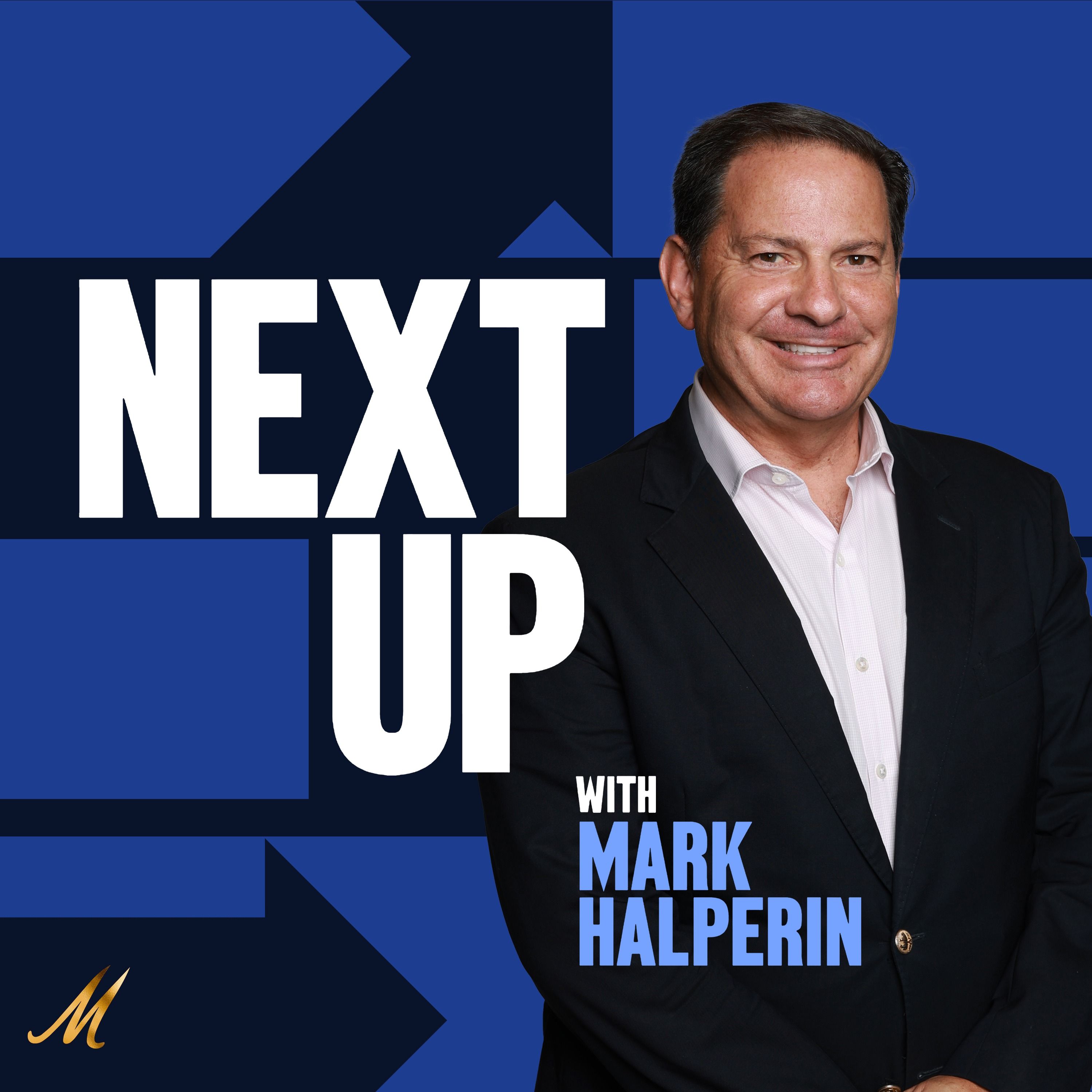
Next Up with Mark Halperin
What The Media Blackout of Trump's Election Speech Reveals
00:11:34
In this bonus episode, Mark Halperin gives a master class on the White House and the media, breaking down the broad news media blackout of President Trump's primetime address on election security, explaining why he believes the controversy is more complicated than accusations of simple bias. Drawing on decades of experience covering both politics and the press, Mark examines how today's fractured media landscape, the legacy of 2020 election coverage, and the White House's own communications strategy all shaped the coverage of and response to the speech. He also lays out what both the networks and the Trump White House could have done differently—and why, in today's media environment, the old rules for presidential addresses no longer apply.
Loading summary
Transcript11 lines
- [00:00]
A
You're great at protecting your data, but lots of places could still expose you to identity theft.
- [00:05]
B
I thought it was safe.
- [00:06]
A
If that happens, LifeLock gives you a US based restoration agent who will stick by your side from start to finish. Phone calls, filing documentation, preparing insurance claims. Your agent handles it all. In fact, we're so confident restoration is guaranteed. Pour your money back. Isn't it nice to have someone like that on your side? Save up to 30% your first year@lifelock.com podcast terms apply. Lots of places can expose you to identity theft.
- [00:33]
B
Oh, no.
- [00:34]
A
That's why LifeLock monitors hundreds of millions of data points a second for threats to your identity, which is way more than anyone can do on their own. If we find anything suspicious, like new loans or changes to your financial accounts, we alert you right away, all through text, phone, email, or the LifeLock app. Get the alerts that could make all the difference. Save up to 30% your first year@lifelock.com podcast terms apply.
- [01:02]
B
Hey, Nexters, got a lot of questions today about the media and the President's speech on the vulnerability of US Election systems. And I thought I'd come on and try to walk you through it. It's a topic I know well because I know it from pretty much not all sides, but most sides. And I think some of the confusion and, and, and some of the anger is caused by a failure to realize that there's some special case, special aspects of this, of these questions. First of all, this is not the olden days. If ABC or NBC doesn't cover the President's speech, it's not like people can't see it now when it's not roadblocked, which is the term of art for everybody taking it. So if you're watching any news channel or if you're watching any broadcast channel for, from the big, the big abc, cbs, NBC. If it's roadblocked, then people have to watch it, so you're going to get a higher audience. But those days are over. The White House streams this out. It's streamed everywhere. It's streamed on Newsmax, it's streamed on Salem. So people want to see it, can see it. And that's different than in the olden days. So people say, well, in the olden days, if the President asked for time from the networks, they got it. That's true. But this is not the olden days. They don't have the audience they used to and they don't have the monopoly that he used to. That's number one. Number two, this, this President doesn't, hasn't asked for a lot of time in prime time, but he does often not say what he, they say in advance. He's going to say. And so there's some trepidation. Now there's also hostility to him because he's a Republican and he's Donald Trump. But any president, if their beloved Barack Obama went to them and said, we want time, they'd ask questions, what's it for? And as it's been reported, both President Obama and President Biden gave primetime addresses that were not covered by all the broadcast networks because they thought they were too political. Number three that's distinctive in this case is Donald Trump's history and the network's history with the issue of claims about election fraud or elections being stolen. President has not told the truth all the time on that issue. And so that makes it fraught. It's also fraught because for four years and longer, really, the Democratic aligned media has Russia, Russia, Russia claimed an election was stolen that the independent Council found was not stolen. And so all that makes it a very fraught issue. And because the networks, the traditional networks haven't come clean about their failures, their systematic, horrible failures about President Trump and the Russia inclusion investigation, it's unfair to President Trump. But that makes them even more sensitive about this issue. They sort of don't even want to look at it. Now lastly, there's a lot of throat clearing before I get to this case. You always have to think about that in any situation, including one like this, the difference between what is and what ought to be. Okay, what what ought to be? What ought to be is whoever the President is, regardless of party, regardless of the ideological leanings of a, of a network that normally covers the President. And when I say normally covers the President, if they ever take a Trump event live, if they ever do right, they're in the business of covering the president live. If they do it once a year, whenever a president asks for it, the network should grant it to him. That's I think the way the country should work. The White House should be judicious about when they ask. And the network should trust the President, regardless of ideology and party, to say, well, if the White House says the President's given a primetime address on cherries, they should take it. That's, I think the way it ought to be. What's the way it is? The way it is is we're in a different period now. The networks don't feel the same. Broadcast network, cbs, NBC, abc, Fox broadcast network, they don't feel the same public service obligation to cover everything the way they used to, because there are other ways for it to be seen. They also don't feel about this president, as I said, that they have total trust in him, to say the least. And they don't make the money they used to. They're declining. Back in the olden days, they didn't like giving up primetime shows to the president for a speech of any duration, but they did it because they had a monopoly and they were making so much money it wasn't a hit that was going to affect their bottom line. That's the way it ought to be, but that's not the way it is. And part of why that's not the way it is for this president, that he doesn't automatically get covered live is because they didn't do this the way they should have, particularly in a situation where there was going to be skepticism on the topic of Donald Trump talking live about allegations of election fraud or election theft. If the White House wanted time, rather than saying to everybody, tune in and see, which is what they said, I think they should have done a background briefing, embargoed trust the trust the network executive say, come on into the White House and a serious person with documents will walk you through what the president's going to talk about. I think that would have helped everybody in this case. Maybe they would have been worried about leaks, but maybe make them sign NDAs, I don't know. So that's the live coverage. I'm not surprised that the White House is upset they didn't get the live coverage that they wanted. And I'm not surprised the networks didn't take it live. And I wouldn't in this case, and you know my credibility on talking about liberal media bias. I wouldn't in this case attribute the failure to cover it to liberal media bias. Look, look no further than Fox News Channel, which is not liberally media, liberal media, they didn't cover the whole speech. So that's the first thing about the live coverage. Now, regarding the coverage after the fact, it's difficult at a 9 o' clock speech where the documents aren't readily available that are backing up what the president said. And it's difficult to do reporting overnight, to call the Chinese embassy, to call intelligence sources, to call election officials in Michigan. It's difficult to do that reporting overnight. And unfortunately for the president, if there's not a lot of reporting in the morning, first thing in the morning on television and in what used to be called newspapers, on the websites, the Momentum kind of fades. And of course, it's a Friday in the summer. And so the concept of getting momentum into the summer weekend is a challenge. I do believe that there'll be more on this. I do believe news organizations will look into it. I'm quite confident that some of what the President said is not true and does not. Or new. Neither true nor new, and therefore does not warrant and will not get much investigation. But some of the things he said were new and certainly, if true, are extraordinarily important stories. And I know some news organizations will follow up on that. Fox News Channel, the Fox and Friends, the curvy couch. They did not mention this story for at least the first hour and a half of their show this morning. That's extraordinary. Okay, just think, take that as a snapshot of how this was covered. The President of the United States, who normally gets a lot of good coverage on Fox News Channel, gave a speech that he and his White House said was of extreme importance. Hyperbolically, some of the President's associates said this is like one of the most important speeches a president's ever given. Okay. He gives a speech, they cover most of it live on their channel, and then their morning program, their signature morning program, does not mention it. Okay. Is that because Fox is biased against the President? No. Is it because Fox is skittish about these issues because of what happened after the election in 2020? I'm sure that's part of it. But it's also easy to justify saying the President said some combinations of things that were old, demonstrably, or known to be false or not currently verified. He said very few things, arguably maybe none, where you could go on and say breaking news. The President made this new claim that's definitively illustrated by documentation. And so I'm not surprised it didn't get much coverage. I'll be curious to see when the next round comes. I'll be curious to see if the White House helps the media. You know, the news news organizations don't have subpoena power. They don't have the capacity to go out and get all these documents or make people in the intelligence community talk to them. So again, I'm saying from the point of view of the public interest, the media's interest and the White House's interest for reporters who are credible, for reporters who want to advance this story or confirm this story in good faith, the allegations that the President made the White House should help them. The hostility that the White House has towards the press is understandable. It's well earned. Because the way the President's been treated by the dominant media. But if you're, if you want to get this story out through those organs, you got to help them. You got to demonstrate some good faith with them and demand that they show good faith back if they've got the goods. If what the President said was lock cinch true, it shouldn't be any challenge to present the information to reporters, even from legacy organizations, and walk them through it and have them do stories. And like I said, if they'd done that in advance, I think they would have gotten more life coverage. There's so much about this that makes people on the right, people in MAGA say, well, what about the way Joe Biden was covered or Barack Obama? These are all important points, they're all part of the context. But if Donald Trump were George Washington, if he were the first President, United States, there was no precedent for how previous Democratic presidents were covered. And last night he went to the networks and said, I want time to talk about election security. I don't think it would have been any different. And I don't think it's helpful to always say, well, look at the coverage Biden got in this case, in this case, the White House could have done a better job. The President could have done a better job. And if they want, if they still care about coverage, which they apparently do on the broadcast networks and on cable, they need to, they need to work a little bit differently in advance and after the fact to get the kind of coverage they want. It's, it's, it's possible that they could do everything perfectly and they still wouldn't get it. But in this case, they didn't do everything perfectly. Bottom line, though is it doesn't matter nearly as much as it did. And, and some would argue doesn't matter at all. If, if this is an important story and people who normally would watch ABC or CBS or NBC, if, if, if they didn't see it live last night and they watch whatever entertainment programs were on, they're still going to hear about it. Because the nature of the way media works today, I hope that cleared up some of it. I'm trying to bring the temperature down on this and, and be a little bit more about light than heat because I know people are super emotional whenever anything about the media and Donald Trump comes up. Thank you for watching. Thank you for being nexters. You can always get all my content on YouTube, slash, NextUp, Halperin, or where you get your finer podcast. I hope everybody has a great summer weekend and we'll see you next week with our regular scheduled episodes, Tuesdays and Thursdays, and wherever special episodes might pop up. See you soon, everybody.
- [12:35]
A
You're great at protecting your data, but lots of places could still expose you to identity theft.
- [12:40]
B
I thought it was safe.
- [12:41]
A
If that happens, LifeLock gives you a US based restoration agent who will stick by your side from start to finish. Phone calls, filing documentation, preparing insurance claims. Your agent handles it all. In fact, we're so confident restoration is guaranteed. Pour your money back. Isn't it nice to have someone like that on your side? Save up to 30% your first year@lifelock.com podcast terms apply. Lots of places can expose you to identity theft.
- [13:08]
B
Oh no.
- [13:09]
A
That's why LifeLock monitors hundreds of millions of data points a second for threats to your identity, which is way more than anyone can do on their own. If we find anything suspicious, like new loans or changes to your financial accounts, we alert you right away, all through text, phone, email or the Lifelock app. Get the alerts that could make all the difference. Save up to 30% your first year@lifelock.com podcast terms apply.