← Scrolling with Hayley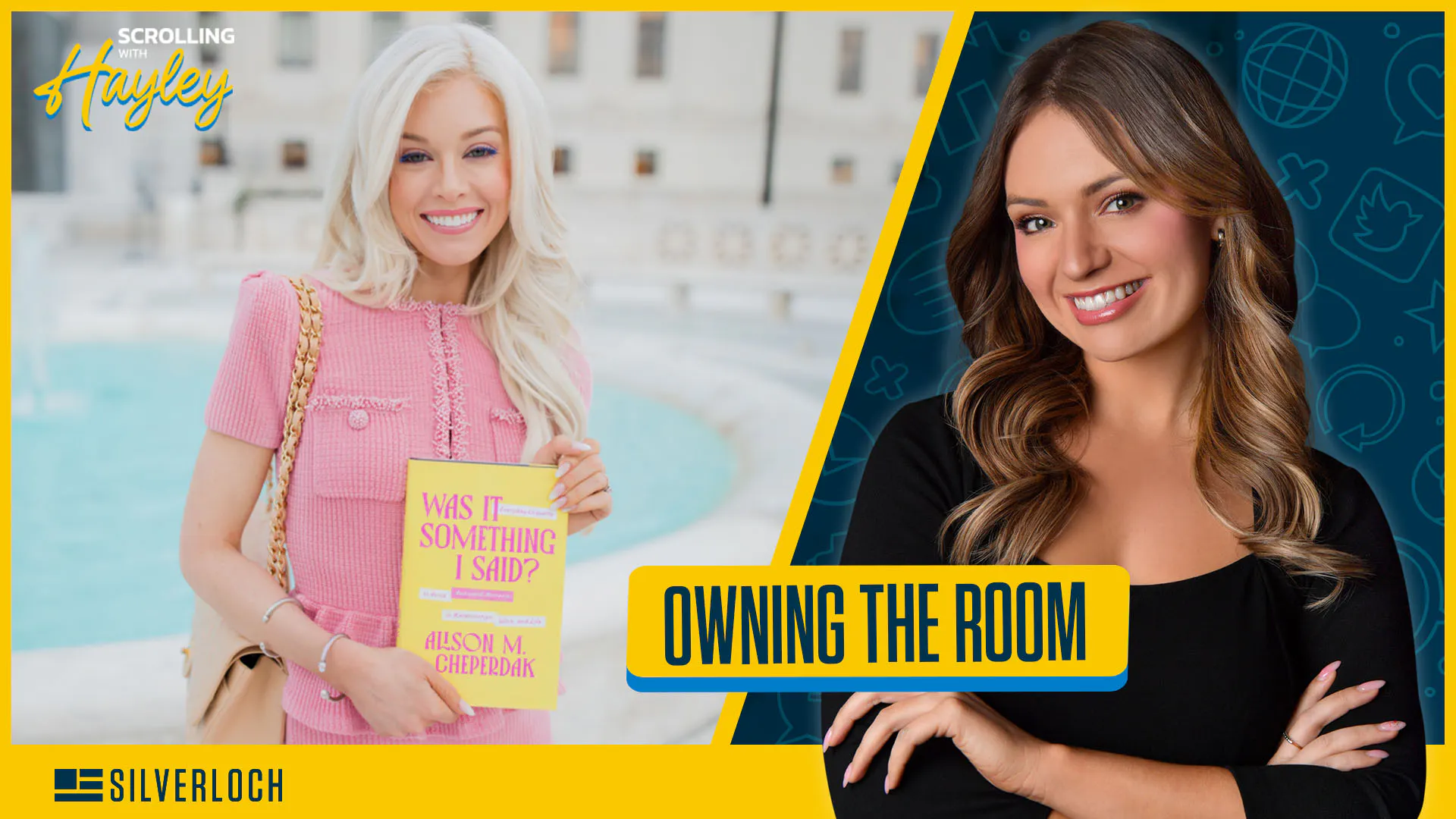
Scrolling with Hayley
White House Etiquette for Everyday Life - Scrolling w/ Hayley (Ep. 260)
00:49:35
Loading summary
Transcript50 lines
- [00:00]
A
Welcome to Scrolling with Haley. I'm Haley Carania. Quick reminder to everyone to subscribe to the show rumble.com Haley brings you to the Bongino Report channel. That's where you can watch this show live at 12 Eastern Monday through Friday. If you can't catch us live, I totally get it. You can watch whenever you want. We also have the video available on Spotify now. So as soon as the live show is complete, you can go and watch that at your leisure or you can listen on your favorite podcast platform, Apple Podcast, Spotify, iHeartRadio. Wherever you get your shows, I love it. However you watch, however you listen, all I ask is that you leave a nice review. Say something nice about me and tell a friend. All right, tell a friend because we're trying to build something here. So thank you for joining me today for this special episode and interview with the White House staff for keeping everyone on their toes and on their best behavior. That's just a little hint, but first, a message from today's sponsor. You know how important my morning coffee is, so let me tell you about the one I've been loving lately, and that is Blackout Coffee. Blackout Coffee is a premium American coffee brand known for bold flavor, high quality beans and roasting fresh right here in the US Every order ships straight to your door. So you always have an amazing cup whenever you need it. And what I love is how smooth and rich it tastes without any bitterness. That perfect balance of flavor and energy getting me through busy mornings and long days. You can try their subscribe and Save programs. You can always have fresh coffee on hand. You can switch flavors at any time, pause or cancel whenever you want. Plus get discounted pricing, free shipping and reward points on every order. It is simple, flexible and saves you money. They offer dark roasts, flavored coffee. I'm serious. You can go to their website. Any flavor you think up in your brain, they probably have it on there. So many different flavors, espresso blends and more. There is something for every coffee lover. So now is the time to try Blackout Coffee. Go to blackout coffee.com and use code scroll for 20% off your first order. Once you try it, you won't want to go back. All right, well, Allison Shepherdak has done it all, from a TV news anchor to lawyer and now expert on all things etiquette. Her journey has taken her to the White House during Trump's first term. Now she's back teaching White House interns and everything they need to know to keep up in the world of politics and look polished while they're at it. And you don't have to be a White House intern to have Alison's wisdom imparted onto you. She has a brand new book out right now called Was It Something I Said? Everyday Etiquette to Avoid Awkward Moments in relationships, work and life. And Allison Shepherdak joins me on this episode of Scrolling with Haley.
- [02:41]
B
Thank you so much for having me.
- [02:43]
A
Thank you so much. You have a fascinating, fascinating backstory. So I want to get into this because I read you wrote an article for the Conservator. So I read that and I've been following you for so long, but I had no idea that you started as a TV anchor. When did, when and where did you do that?
- [03:00]
B
So I studied journalism and political science in college. I went to Villanova University and at the time I was interning basically anywhere that would take me. So I interned at the ABC Hearst flagship in Boston and then in FOX in Philadelphia and NBC in Philadelphia and then also for a public access station where I was a multimedia journalist. And then I graduated from college. I worked first as a one man pan reporter in upstate New York for the Plattsburgh, Vermont market, if you're familiar, if anyone here is in media too. And then was able to get more experience on the anchor desk as I was there a little bit longer. And at the time I was covering general assignment news, so really wanted to cover legal stories and political stories. And so that's what inspired me to go to law school. And I moved to Washington where I got into the George Washington University Law School and then ended up working in government and practicing law and eventually got into all of this etiquette.
- [03:53]
A
Wow. Yeah, it is so fascinating. And it's kind of one of these stories where you think everything happens for a reason. That's definitely how I feel about my career and my life and how it's taken me. I mean, I've met the right people at the right time and everything has sort of made sense. But yeah, there is a lot of over overlap between politics and etiquette and news and there is a whole overlap there in that culture. So how did you get involved in the first Trump White House? How did you get involved in that?
- [04:22]
B
So I was in law school during the first election cycle and really wanted to work in the White House or wanted to work in the administration more generally. And despite all of my efforts, I did not land a position on day one of the first term. And so I worked in a large corporate law firm. So I started my career in big law law after I graduated and then I was at a Christmas party for a conservative group that I was a part of, really involved in, in law school at the Dolly Madison House, over by the White House. And I saw an old boss from the Hill and they were looking for someone to start yesterday. And so, and it was at the U.S. treasury. And at first I thought, I don't like taxes, I don't know what I'm gonna do over there. And so I, I thought, I, I don't like taxes. I don't know if this is going to be a good fit for me. And then I thought about it a little more and a mentor of mine who had actually worked in administration said I'd be crazy not to take it. And so my first job in the Trump administration was at the US treasury as the attorney adviser to the General Council. And I worked on a lot of congressional investigations and sensitive Freedom of Information act work there. And then I still wanted to be at the White House, and I made that known to some friends that worked there. And eventually I, I had an opportunity to work in the Staff Secretary's office. So I was n assistant Staff Secretary in the West Wing during the first term. That's the office that manages all the President's documents. So it's like everything from his briefing materials to his pocket card that has like everybody's names in the meetings that he's going to and how to pronounce them, executive orders, legislation, his schedule, like his line by line schedule of the day, and his like, you know, more broad look at his schedule for the months to come. You're picking out the news articles that he's looking at that are in his briefing book, all that kind of thing. So that was the office I was in, traveled on Air Force One. It was, it was really incredible. And so I was there up until the very end of the first term. And then after that clerked for a federal judge that President Trump put on the bench, and then after that time joined a non profit. I was executive director of the March for Life. And while I was there, I was kind of, I think anyone who has worked in the White House or has worked in a really intense capacity will say that it's not like the easiest transition from that level of intensity or just that it's a very unique experience working there. And I think it takes some time to kind of figure out what's next. And in that season, post White House, I was really thinking about, like, what are my gifts, what are my talents, and what am I called to do? And the way I found myself at the March for Life first was because I was thinking development, so fundraising and political fundraising, specifically because I love, like, hospitality and bringing people together and events and all these kinds of things. And so I was doing a bit of that. And soon after being the director of development, I was promoted to be the executive director. And while I was there, I started posting about etiquette online. I had so to rewind. I first got into etiquette when my husband and I were engaged to be married. I was like 21, 22 years old, had so many wedding etiquette questions. And I got myself my first etiquette book, thinking that it would give me the answers that I was looking for, like, do my cousins get a plus one? Or how do I dress this envelope? Or who sits where all these traditions. And so I got this first book and I ended up reading it cover to cover and then countless books since then on social, emotional intelligence and soft skills and protocol and etiquette and all of these things. And I found it so helpful, like, whether it was being a news reporter and knowing how to make someone feel comfortable. Like, if you want good sources, you need to be a good human. You need to be someone that people can trust and someone that makes people feel comfortable. Like, if you don't make someone comfortable on television, they're going to say no when you ask them. Yes. Oh, it was very, very helpful. And I know you're so good at all of this, so you get it. And then going to law school, I also saw. And also being in D.C. it's such a relationship driven town. Most people are not from there. And so many people come to Washington and they have the academic credentials, but it's the people who are a team player, who are loyal, who are trustworthy, who you can depend on, those are the people that ultimately rise. And, and I also would see things, like people would make requests or they would say things that I would think, like, if they only knew just a little bit better, they wouldn't do that. You know, like I was going to
- [08:55]
A
ask you about that. So first I ask anyone that has worked with or around President Trump this same question, because I feel like everyone has a story. Do you have any funny stories about him? Because I feel like that's. Usually people say that he's so funny, he's so gregarious, he has this big personality. Did you ever have a moment with President Trump? Trump that's memorable.
- [09:18]
B
Yes. And I, I won't like, disclose everything here, but so a part of our office we managed all the President's documents, so that included speeches. And no person anywhere knows how to pronounce anything. Like, I definitely learned that as I was recording my audiobook. There are so many words that I wrote that I wasn't sure how to pronounce, whether it's like names, places, things, all these things. And so if you're on remarks, it's your job to make sure that there's a phonetic for any word that the President may not know. And, and there was a word in one of the speeches that I was responsible for that I did not put a phonetic in. And it was something that I just, it was an oversight on my part and the President pronounced it incorrectly and it became this whole story. And then the next time I was on remarks a few days later, because we would rotate. It wasn't like every single day, you were on every single speech. And a few days later, also, it was my fault and that I didn't get him the document early enough. Like, if I had brought it to the residence the night before, he would have been able to look at it. And I think I handed it to him like the morning of. And so that was a mistake on my part too. And a few days later, we're at the Red Cross and he says plasma instead of plasma. And I was like, ready to pack up all my things. And like, you know, I just thought my days were done there. And then nobody cared. It was like, he's just like a New Yorker. There was no story about it. And it was just like, that's the way that he pronounces blood plasma. But he, I had a phenomenal experience. I found him to be indefatigable. No one works harder than him. And I, I was speaking with someone earlier about this. Like, love or hate his policies, he speaks the truth. Like what you see is what you get. And, and I think there's a lot to respect about that. Yeah, yeah.
- [11:15]
A
People love that about him. So what would you say his manners are like, do you think that the President is well mannered? People say all the time that he's not presidential. You know, people who don't like the President, they'll come out and say that. But what were your, what was your experience with him?
- [11:29]
B
So my experience with him is that he's a good listener. And is he someone that's studying protocol? Maybe not, but he has military aides. He has a phenomenal advisor in the chief of protocol, Ambassador Monica Crowley. And he really respects her. I love her. Yeah, she's amazing. Yeah, she's wonderful. He really, really respects her, and he listens to his advisors. And so. And I would say with etiquette. And I talk about this whether we're talking about the President of the United States or we're talking about an intern or anybody. It's not about memorizing rules for the sake of rules. It's about showing kindness and respect and the way that we do things. Whether it's like how you do a Medal of Honor ceremony or something like that. It's. That's how we show our kindness in our respect. And I will say to a person, anyone who has been with the president and has spoken with him, he's very disarming, and he's very charming. And that's more important, like, the. It's the way you make people feel. It's not how you impress people with all of the manners that you know.
- [12:37]
A
Absolutely. So you started getting these books. You were planning your wedding. You thought, okay, I need to brush up my etiquette skills myself. And then how did this become more of a career for you? Do you become certified? How does that work?
- [12:52]
B
I did. So I. And I got a certification in both British and North American etiquette. Not necessarily thinking that I would teach it. I was sort of thinking, like, I have girlfriends who have gone through the yoga teacher certification program just because they wanted to, like, deepen their practice and get more into it, but not necessarily because they wanted to teach or open up a studio. And so I thought this would be, like, it's something that I've wanted to do for a while. And when you go from working in the White House to not all of a sudden you feel like you have, like, so much time because you're not working all hours of the day and night. And so I thought, now makes sense. I have a more, like, normal amount of work. I wasn't working in big law anymore. I wasn't billing a million hours. And so I go through the certification process. And while I'm doing it, I got to meet all these other people who had these thriving etiquette and protocol businesses around the world. And so I saw proof of concept, and I especially saw people posting online. And I was thinking about it, like, if there's a million people that you could follow for fitness advice or for, you know, beauty or whatever it is, you're not going to follow every single person. You're probably going to follow just the people that resonate with you. It's like their personality or maybe you have some other commonality and So I thought, like, there aren't that many people who are sharing about etiquette to begin with, but there's definitely not anyone who's just like me. And I saw that as a gap in the market that I could fill. And I started posting and things took off pretty quickly and seemed to really resonate with an audience that wants to learn, is super kind, and really cares about compassion.
- [14:29]
A
Yeah, I think etiquette is for everyone and I'm certainly interested in it. I'm not perfect. Nobody's perfect. But just seeing these videos come across my for you page or my Instagram explore page or what have you, I see this and I think, oh, I always learn something new. And I think that that's something that everyone can benefit from. So how did you get into teaching White House interns? Because you're back sort of in the White House atmosphere, right?
- [14:57]
B
Yes. And it's interesting you asked that. I usually don't tell or I hadn't been telling people too much about it. I've been teaching the White House interns since the beginning of the second term, and it was a pretty natural fit because I was already teaching kind of all over Washington at the U.S. congress, Harvard Law School, like lots of universities, and I have a lot of friends that are back there that worked in the first term. So I was asked if I could help with their orientation process. And I'm one of many folks, they really do a phenomenal job of bringing in a lot of cabinet members and other leaders within the White House and other parts of the administration to meet with the interns. And it's a program that they take seriously where a lot of people who intern there become full time employees. So I've been doing that for some time and I haven't shared too much about it until now, mostly because I didn't want it to be a distraction because I think sometimes people can forget that. Well, I just think when you, when you talk about politics, especially in social media, things can be misinterpreted pretty easily. But I have a book coming out soon and it's something that I'm proud of, the fact that I work at the White or I have worked at the White House in this capacity and. And it felt like the right time.
- [16:15]
A
Yeah, it's so cool. And I, I would love to go back in time and be a White House intern. I think I'm probably too old at this point, but at least I can get my etiquette classes from you in this short interview that we have today. So I want to get into that, because manners can make or break your reputation in all areas and industries. And a first impression is very important. And it's hard to come back from a poor one. But. So do you have any horror stories? And I'm not going to have you name names. You don't have to name names. But when you were working in the White House, was there anyone that you thought to yourself, whoo, that is so bad. Or they didn't put their napkin on their lap or they said this. What is something that you've seen in your career where you thought you need my help?
- [16:59]
B
Well, I've seen this at the White House, but I've also seen this everywhere. I think it happens everywhere is when people have this misconception that only the people in power are the ones that they should be giving their best to and forgetting about everybody else. And it's really not a good look and people notice it. And so that would be my biggest advice. Whether it's the receptionist or the managing partner or whomever you're working with, everyone is deserving of respect. And so people really see through that. And then another thing that I think is really important, especially when you're working in a place like the White House or other places, when you are maybe a junior person and there's all these opportunities that are available to you, you want to make sure that you're doing whatever work you are assigned really, really well before you ask to do something cool that's kind of beyond the scope of your role, but is an opportunity that's afforded to you.
- [17:54]
A
Great tip. And that goes for everything. I used to see this in news all the time. People want to do the cool things. They want to volunteer for the things happening on the weekend or the big shoots and things like that. And these are people that barely have their day to day work under control. And I always used to say, get that done. And then we can talk about some other things. But that's definitely good advice. Is there anyone that you met in the White House who had great manners?
- [18:19]
B
Oh my gosh. I would say so many people. I would say the First Lady's office in particular. They. I would say the First Lady's office. I would also say the Office of Legislative affairs, but there's so many folks like opa, the Office of Political Affairs. Any office that is engaging with a lot of external entities, I would say needs a high level of emotional intelligence. And you see it on the Hill too. And this is folks of all political persuasions. Being on Capitol Hill requires charisma and people skills and being disarming and making people feel welcome.
- [18:59]
A
Absolutely. So I want to get into political discussions, and is it ever rude to discuss politics? Because I grew up in the 90s, I was a 90s baby, and my parents always told me it's rude to discuss politics. And that was then, and now it's 2026, and I feel like political. Political discussion has become a prerequisite where now I'm on dating apps and people won't date and unless politics are discussed right off the bat. So now it seems like politics is a little less taboo as it was before. What is your take on this?
- [19:33]
B
I think you're absolutely right. I also grew up in the 90s, and I actually wrote an editorial about this in the New Hampshire Journal last week about how it wasn't that long ago where people didn't know. Like, I have no idea who my grandparents are close with them, but it was just something that they didn't talk about. And they were very well read, they were very up on the news what was happening in the world, but they didn't talk about who they were voting for. And now we're in this era where people want to know their dentist or their seamstress or they're like kind of everyone that they're doing business with. And I'm not saying that people shouldn't speak their mind if they want to, but it's an interesting time in that silence can be misinterpreted, as some, you know, silence can be misinterpreted in a way that can be really hurtful for someone's reputation. And people are like, demanding people to issue statements and all these kinds of things. And I, I think it's gone a little too far. But when we talk about politics, what I recommend today is that when, when you're first starting to meet someone, I don't recommend bringing it up. So money, sex, politics, religion, and health status, those are the topics that I would not recommend starting with of like, hi, my name's Allison, and these are my political views. What are yours? Unless you're at a political event and people are expecting it. Like, if you're at a house of worship and people are expecting it, then it's fair game. Once you get to know someone a little more, then, of course, talk about these things and. But when you're trying to make someone feel comfortable, just let it softly unfold. If someone else brings something up, that's kind of a tell. Like, for, for example, maybe they, you know, you ask them what they did this weekend and they tell you a little bit, and then that tells you maybe a little something about their religious views or their political views or something like that. Then they've opened the door. Just like it's not very polite to ask someone what do you do? But when they basically tell you what they do in conversation, naturally, then they've opened the door and it's perfectly fine to ask them a little bit more about that. That's how I take politics, or I think politics should be considered in conversation. And when you're talking with someone, it's more kind to approach conversations with curiosity than seeking to convert someone's opinions. So even if you feel super, super strongly and you completely disagree with someone, you. If you approach the conversation being combative and argumentative or like trying to shut them down, you're probably not going to change their mind. Right. They're probably going to leave that conversation thinking you were combative and arrogant and annoying, and they never want to talk to you about that or any other controversial thing ever again. But if you make them feel heard and actually hear them out, it's much more likely that they'll be persuaded and impressed by how, like, calm and respectful you are.
- [22:29]
A
Yeah, it's a lost art. Absolutely. I think more people should be more open to hearing other sides. And I feel like now people are really not interested in having conversations with people unless they already know where they stand politically, which makes that very difficult. But on that topic of striking up a conversation with someone, I feel like people hate small talk. Oh, small talk. I don't want to talk about the weather. And I feel like now with younger generations too, people don't really like striking up conversation. Maybe people are kind of socially inept now because of social media a little bit. But what are the best ways to strike up conversation? Is there anywhere that you shouldn't? Is there any way that you shouldn't? How to best strike up small talk with someone new.
- [23:13]
B
It depends on where you are, but in general, asking questions about things that you're experiencing in common. So, like, if you're at a wedding, you can comment on what you see, like the flowers, the architecture, the music, the experience, how you know the couple, how you know the family. Like, if you ever are at an event, like let's say you're at a birthday and your childhood friend is turning, you know, however old, and then there's someone else there that's a graduate school friend, you can share memories and sweet stories from. Knowing the person, even though you're just meeting for the first time. I also think it's helpful to be prepared with some topics. So I write about this in my book. One of my favorite studies that's cited in Charles Du Hig's book, Super Communicators, is about this index card study that was done at Harvard Business School where they took a whole bunch of people who had anxiety in networking and social conversations, and they told them to write down some topics on an index card that they could talk about if an awkward silence happened. And they did that. So they jotted down some topics, put them in, put them on an index card, put them in their back pocket, went to a networking event like a cocktail party, and not only do did most people not talk about those topics, but just the activity of preparing made them feel so much more comfortable in conversation. So something that I recommend is just have some things ready to talk about, like the kind of things that you could talk about if you had to take a plane tonight and you had to say something to the person that was right next to you. So yes, we talked about money, sex, politics, religion, and health status being the ones that you don't want to talk about. But that leaves plenty of things, like things that you're genuinely interested in. Another mistake people make is that they think, okay, what can I talk about that's going to make me sound smart? Or what can I talk about that's going to make me sound really impressive? And while sometimes the result of a conversation is that people are impressed by you and they do think you're smart if that's your singular goal, usually the conversations don't go super well. They feel disjointed. They don't feel like relationally connected. It's much better to think, what is something I'm genuinely interested in that this other person will also be interested in talking about that we can talk about for a little while. So that can be like something you've read, watched, listened to recently and enjoyed, something you're looking forward to, something you've been spending a lot of time on recently, traditions you enjoy, travel, performing arts, food, sports, hobbies. The list goes on and on.
- [25:37]
A
Yeah, and I think it's more impressive to not just hear about something, but to show someone that you are these things. So to your point about people who want to sound smart or they're trying to impress you, that's not going to come off the same way as when you're having a conversation and they genuinely convince you that they are smart and interesting. So I think that that's a great Tip. What about small talk that you really don't want to get involved with? Someone strikes up a conversation with you, you do not want to engage. What is a polite way to turn them down so you don't have to
- [26:09]
B
answer every question that's asked. But what you do want to do is pivot to something else. So you can say something like, I don't really have an update there, or, I'm not ready to share about that, but I'd love to hear about, or I'd love to about, and then pivot that way. This comes up often when people are asked milestone questions or can happen in the political sense of. Like, sometimes people, if you work in politics, they'll ask you questions about things, not realizing that it's classified or not realizing that it's sensitive. And even if you wanted to, you're really not at liberty to share. So you can just say something like, I'm not able to share about that right now, but I'd love to share about whatever. And it's more about the pivot and not making them feel like, oh, my gosh, how dare you ask me about that? And also, I, I like to approach responding. Like, when some people ask you questions, they might be trying to push your buttons, but a lot of people ask questions that aren't that appropriate, but they don't really mean anything by it. Like, they're not trying to be malicious. Like, for example, asking someone, why are you still single? Is rude. But most people who ask it, I think they're thinking, like, you are so amazing. How in the world are you not married? Right. So remember that and just say like, oh, if I only had a crystal ball, or, you know, something like, I don't know, but I'd love to share about whatever. How have you been? How was that trip? That kind of thing.
- [27:31]
A
Yeah, it's. I was, I was going to ask you about this too, because I get that question a lot and I do think that it comes from a, a positive place and a curious place. I think people want the best for you, so they ask these kinds of questions. And part of me wants to say, that's such a stupid question. This is just my inside. I'm just being. I would never, I would never say this to someone who asked me this, but it's such a stupid question because I don't know the answer. I don't have the answer. When are you getting married?
- [27:57]
B
I don't know.
- [27:59]
A
I don't know. I have no idea. People ask me to. How many kids do you want to have. When do you want to have kids? Well, I'm not dating anyone, so why are you. Why are you even asking me this? But I think people are genuinely curious, and I am. So I do questions on my Instagram story all the time. I'm very open with people who follow me about where I'm at in my life and what I do want, and I think that that's important because I want people to come and watch my show because of me and they like my personality. To your point earlier, about, there are so many influencers in this space. I want people to come to me because they like my personality. That's why someone's going to choose my show over someone else. And I think I. I like being honest and open, but then that comes with the, you know, the negative side effects of that, where I have to deal with what I think are stupid questions and sometimes rude. And to your point, too, about them being, well, meaning, I do think that people want me to be married. I would like to be married, too. People want me to have children, but what if I can't have children? And not just me, but any woman who might be of an older age or they might be struggling to get pregnant, and then how damaging and how hurtful can that question be to someone? So I liked your answer to that, of just pivoting and saying, I'm not ready to answer that question right now. And I think that might. If someone is presented with that answer, they might think, oh, they might think twice about asking someone else that same question. So.
- [29:23]
B
And it's also, it's okay to be honest. Like, sometimes these questions can be really cutting and really painful. And you bring up a great point. A lot of times, questions where the answer is a number are kind of rude. Like, you don't need to ask someone how tall they are. Like, just because someone's really, really tall does not mean that you can be like, how tall are you?
- [29:42]
A
Yeah, you don't need to know the
- [29:43]
B
answer when that tall. And like, when you ask someone, like, how much do you weigh? It's just. It's a very odd thing. And same goes for, like, how many children do you want to have? Or what did you score on that test? Or how big is your home? How much did that cost? There's a lot of. There's a lot of those types of questions that are just not very appropriate, but you don't need to answer them. So just, I hope people feel empowered that they don't.
- [30:11]
A
It's a great point. It's a Great point. You don't have to answer the questions that people ask you. And there are polite ways to kind of circumnavigate that. So I think that's great. What about grief? Because I feel like this pops up in people's lives a lot where someone could be going through something, a loss of some sort of. And I feel like people get very uncomfortable where they want to show support, they want to be kind, but they have no idea how. So what are some of the things that people can say in grief that are a no go?
- [30:38]
B
Things that you don't want to say to anyone who's experiencing grief are things that start with, like, at least things that minimize their experience. Like, at least they're in a better place, or at least they weren't in pain, or at least you have other siblings, or at least like, basically, like, it's not as bad, it could have been worse. Those types of things are not generally super comforting. Also, asking questions that are curious, like asking about a cause of death or funeral plans, or like, just personal things that you don't need to know. Not super helpful. Wait for people to share or. Or even if you think someone wants to share with you, you can say like, I want to be here to support you. If you need someone to listen, I'm not going to ask personal questions, but if you want to share personal things and you need someone to be that person for you, I'm happy to be that person. Those are things that are more helpful to say for someone who's not sure what to say. Like, I was on a podcast recently about fertility and we were talking about how so often people say nothing because they don't want to say the wrong thing, but you can say, I really love you. I don't know what to say, but I want you to know my love for you and that I really want to support you. And then if you have ideas that are specific of ways you can help, that's excellent. Because when someone's experiencing grief, it's generally much easier to say yes or no versus asking for something specific. Like, I was speaking with a friend recently who is a cancer survivor, and she said that when someone said, let me know if there's anything I can do to help, she would think, well, it's weird for me to ask if you would donate to my GoFundMe page, but if someone says, like, what's the link to your GoFundMe page? Or like, something specific, like, can I pick up the kids on Tuesday? Or can I do your grocery Shopping or whatever it is, big or small, help you with laundry, drive you to appointments. The specific things are easier for someone to say yes or no to, versus you're like creating a task for someone to come up with what they could potentially delegate. And I share all that in broad terms as generalizations because not every family, not every loss situation is going to be the same. But those are some things to think about. And I think another thing that's often overlooked in the world of grief is that oftentimes when someone goes through something hard, they want want their community to know about it, but they don't necessarily want to be the one to tell everybody. Like let's say you had a miscarriage or you had a death in the family, or maybe you didn't get into that school or you didn't get that job that everybody knew that you wanted to get. If there's someone else in your life that can help spread the words that you don't have to, that can be really helpful because as you experience a loss, it's like another layer of grieving. Each time you tell someone that will also be grieving as you share that sad news with them. So sometimes if you can be the person to help share the sad news that people need to know, but it's hard to share, that can be a really kind gesture too.
- [33:40]
A
That's great advice. And to your point about asking people how you can show up for them and not giving them an extra task, this kind of happened to me personally and I was the bad guy in the situation. But I. I don't have kids myself, but one of my really, really good friends just had a baby and I told her before she gave birth, I said I did. I do not know how to help you. I want to help you though. I love you. I want to help you. You can call me in the middle of the night, you can call me to vent about anything, anything you need. I said, I'll cook for you, I'll prep things for you, but I just don't know what you're going to need. So I gave her a heads up ahead of time. I want to help you. I don't know how. I have so many different options of ways I can help you, but I need you to tell me what you need from me and I will absolutely be there. And she said, haley, that's what I have a husband for. Let's just go get drinks, you know, let's just go get dinner sometime. And I said, perfect, I can do. So I think just opening the Conversation too ahead of time and just kind of getting in front of it and saying, I don't really know how to help you, but I want to help, is definitely a way that you can go about it, not in terms of grief, but just any way that you can show up for someone in a milestone. But I kind of want to ask you about dating, because I'm dating right now and it's horrible. I'll just be honest. It's really not good. And I want to know why men aren't approaching women anymore. And I've asked this on social media before, why men don't approach women, why they don't ask. Ask people out anymore. And a lot of men say that it's because they're afraid of backlash from women. And this sort of stems from this feminist movement, mostly liberal women who don't want men to approach them in certain places. So now men are coming from a place of fear. They don't want to approach women. It's not that they don't really naturally want to. I think they're biologically driven to want to do that, but they are kind of. Of taking a step back now because of what's happening in society. So what's your take on approaching people? Is there a good place to do it, a bad place to do it? Because I personally think I'm a conservative woman. I'm more traditional. I'm not a traditional woman, but more than most women nowadays. I mean, I work and all these doubts, but I want to be married. I want to have kids and all that. And I would love to be approached, but it just doesn't really happen anymore.
- [35:54]
B
I see what you're saying. I will say I do think it's encouraging to hear people like you who want to be approached. I also. It's been a while since I was dating myself. My husband and I have been married almost 13 years. But I write for EV magazine, and their next issue is all about, like, a return to romance and about women and that want to be approached for sure and want these more traditional male, female relationships. And I do see the pendant swinging somewhat. Like, I think we're seeing less of the, like, toxic masculinity courses at colleges, and we're seeing more conversations around, like, has all the conversation around supporting women and girls, has it been to the detriment of young boys? Which I don't think anyone wants that. So I think the more like I see, I see social media as very powerful in terms of impacting the culture. And I am seeing more and more Positive examples of relationships, whether it's celebrities or influencers, etc, and so I see that as comforting as a move in that direction. And I would also say have faith. And that might sound like, not like the thing that you want to hear, but have faith that your person is out there. Like, I so often, especially when I'm writing for Evie, I hear from women that are like, I want to meet a chivalrous man that has manners and, like, doesn't wear a hat and opens the door and, you know, all of these things. And I think if you're the more specific you. You can be and more dialed in and, like, what are your standards? And how do you want to be respected and loved and not waver and perhaps communicate that to someone who you meet? That, like, I often hear from women that are like, my brothers do this. My dad did this. I can't believe that my, you know, boyfriend, who I love, doesn't get it. Give him an opportunity to hear. Like, this is what I grew up with, and this is why I care. It's not about memorizing rules just for the sake of rules. It's about a way that I feel respected. So give people the chance to step up, and then if they don't, they don't. But right. Chance.
- [38:04]
A
Oh, that's great. And I think it's a learning curve for everyone. Not everyone grows up with an etiquette coach at home. Not everyone grows up around these. These spaces, going to nice dinners or events or things like that. So it is a learning curve. A lot of people, they don't know this. These things. So do you deal with men at all? Do you give men chivalrous tips? Do you make videos about that? What is your top tip for men these days? Because I feel like a lot of women follow etiquette, but maybe men lesser. So. So how. How do you communicate with men?
- [38:36]
B
Well, it's interesting you ask that. So when I'm doing most of my speaking engagements, like, I work with a lot of companies in law and finance and in government, and Those are pretty 50, 50 or more men than women. But my community online, my readers of EV magazine, it's almost 100 women. And so it's a different audience there. I would say with men, a lot of the questions I receive are around, like, handshakes and hugs and, like, what is appropriate for compliments, things like that. So I talk about, like, how. And we're not talking about in a romantic relationship, but, like, let's say you work with someone and you're going to A gala. Like, there's something interesting about America where if it's more casual, like, if you see someone, maybe you have a colleague at work, you see them every day. You don't shake hands. You just, you know, say hello. But if you see them at a formal event, you're going to give them a hug because we're dressed up, and that's just the thing that we do. And so we have conversations around, like, what is appropriate, or like, there are men. I had this conversation last week, last week on a podcast where there's a guy who. He doesn't want to touch women ever, unless it's his wife. And so he always stands with his hands in his pocket. And I was saying, like, that's fine, but you should know that that's a more casual posture. So instead, you could clasp your hands in front of you. Something like that. A question that comes up a lot is around, like, opening doors and things like that. And what I say for that is opening a door for someone is a way that you show respect. So you can do that for anyone. And if you want to show that respect to a woman, great. If you want to show that respect to a client, to a colleague, to a business partner, that's what you're doing. When you open a door for someone, are there women who don't want a door to be open for them? Yes, but I think it's a relatively small, perhaps exceedingly vocal, but I think it's a relatively small percentage of women that feel that way.
- [40:26]
A
Right. And maybe they wouldn't be invited to these sorts of events anyway. I feel like that's kind of a complaint that women have that I don't really know how often they're coming in contact with. With men that are opening doors for them or. Or not. It just seems like if you're going to a gala. If I'm going to a gala and I'm wearing a gown and a man opens the door for me, I'm. I'm accepting of that. And I am more than happy to open the door for someone else. I just got coffee before this interview, and I opened the door for another woman. I don't care who it is. Why wouldn't I open the door for you? So what are some common mistakes you see men and women make?
- [41:03]
B
Not communicating enough. Like, I think people waste time if we're talking about the relationship phase. I think people waste time not being clear about what they want. And I think the sooner clarity is kind in so many things, like whether you're RSVPing to something, whether you're telling someone how to pronounce your name. There's so many things. Clarity is kind and in relationships, I think people are afraid to like scare people off by talking about certain topics too soon and it's, it's not about. I think people should be less afraid of talking about things too soon and it should be more about talking about them in the right way. Like you don't want your first, second, third date to feel like an interrogation. But if there's certain things that are really important to you, bring it up. You can do it in a soft way like what are you doing this weekend? Whether you know what they tell you is probably going to be pretty illuminating in terms of what their priorities are. Asking about their family, again, very enlightening. So don't be afraid to talk about the things that are important to you early because we only have so much time and you might as well respect your own time while you're dating.
- [42:09]
A
Absolutely. And what are you seeing with younger generations with Gen Z and Gen Alpha? I know that I've read studies about how they don't like talking on the phone. They'd rather text. So they have sort of this phone anxiety or they have of anxiety around having face to face IRL conversations. Are you seeing that and how do we, how do we reverse that?
- [42:31]
B
I'm definitely seeing that. And one of the most common things that I, when I'm brought in to speak at organizations, it's often to younger employees, interns, first year associates, people who are, they could be millennial, Gen Z, Gen Alpha and they're digital natives and they may not be aware. And this was. There's a book called Generations that came out a while ago but I really loved it. It explains so well the distinction between like Gen Z and Gen Alpha. They're, if something happens at work, they are more likely to report it to a supervisor rather than going to that person that they are uncomfortable with to actually talk about it, to resolve. They're more comfortable bringing in a third party or like some might call it tattling. But they're, they're more comfortable reporting than like addressing it themselves.
- [43:23]
A
Interesting.
- [43:25]
B
Which I find very interesting. And I think part of being online all the time people think, well it's just efficient. I can message them so easily rather than picking up the phone. And I also want to acknowledge that the youngest people in the workforce, they came of age during COVID and so many of them were in college during COVID or they were starting their careers during COVID And there's so much that you learn outside of structured time in the office. And I'm not saying we all need to be in the office from 9 to 6, Monday through Friday, every single day. But if you only were interacting with your colleagues on a zoom call and you're following an agenda, you're missing out on so much. Like, there's so much interpersonal dynamics and, like, things about power and politics that you learn. And I'm not talking about, like, politics and government, but just how an organization functions. Being in an elevator, going to lunch, seeing someone in a break room, having just that regular chit chat. And many of our youngest workers didn't experience that. They didn't see how people were dressing for the office. And so they don't have the same frame of reference that older generations did. And so when I talk to younger groups, I try not to be like, these are all the things that you're doing wrong. Please fix it. But I try to enlighten them that this is how some of these habits can come across. Like, for example, I was at a university last week, and it came up that many of the students who receive business cards at a career fair were texting the people that they received business cards to instead of emailing because they don't really like using email, and they just thought texting was more appropriate. Where I would recommend if, like, you want to get a job, you want to get an internship, someone gives you their business card, and it has their physical address, their email, and their cell phone and their office number. Email is probably the best means of communicating with them because it's less disruptive for the day. They can read it on their own time. You're probably going to be writing something a little bit longer. So those are just. That's just one example of how it feels.
- [45:36]
A
I feel like that feels more professional than personal, which I think if you're trying to get into a networking type situation or get a job, I feel like I would go for the email instead of the phone number too. So that's a great tip.
- [45:50]
B
Yeah, yeah. And I think with the phone, it comes with time. Like, I know millennials that were not comfortable when they first graduated and they were working. Like, I think of one person in particular who was working in sales and was very uncomfortable at first on the phone. And with practice, you get better and, and the confidence comes.
- [46:09]
A
Well, I have one, one or two more questions for you, but I feel like when we talk about etiquette and a lot of these questions stem from meeting strangers and meeting people for the first time. But a lot of people watching this show are married and they're in relationships. So what is the best way to be polite and show respect to your partner?
- [46:27]
B
I love that question. I would start with acknowledging that so often the people who are closest to us can be taken for granted and they get what's left of us rather than the best of us. So try to remember that, like your parents, your significant other, your siblings, all these people deserve your best as well, even though they're going to see you in the good, the bad and the ugly because you're so close with them. And then also if there's things that you need to talk about that are difficult, try to pick the time. So be really considerate. Don't pick like late at night when everybody's tired. Like pick a good time. Or even say like, this is something that I really want to talk about. When would be a good time? And try to focus on understanding their perspective, being calm in your demeanor, making them feel heard, actually hearing them out and sticking to your words. And that goes for everything. Like, so often I think it's very easy for especially people pleasers to say things that they think are polite but actually make them come across as like, flaky or fake if they actually don't carry through. So like, don't say things that you can't actually follow up or follow through with. Like don't tell everybody in the world that you'd love to get coffee with them if you don't have the capacity to go to coffee with every single person that you meet. That kind of a thing.
- [47:54]
A
Yeah, I think that's great advice. And I'm sure there's even more advice where that came from in your new book, Was It Something I Said? So do a little elevator pitch at the end of this episode. Tell people where they can get the book, where, where it's available, when it's available, and where they can follow you too for more.
- [48:10]
B
Well, thank you so much. My book is called Was It Something I Said? Everyday Etiquette to Avoid Awkward Moments in relationships, work and life. And it is available on March 17, so St. Patrick's Day. Everywhere Books are sold. It's also in an audiobook form and I read the entire audiobook myself and we can stay connected on social media at Elevate Etiquette Everywhere except for Substack. I am at the Elevate Edit and you can find all the details on my book tour@the elevateediquette.com I'm headed to. I think I'm doing 12 events in 15 days and lots of book signings and really looking forward to seeing everyone.
- [48:46]
A
Well, that's wonderful. I'm so grateful for you for coming on the show, and I'm so excited for this journey for you, too. I had such a lovely conversation, and I can't wait for more people to read your book and. And hear more of your tips because it's. It's something that we certainly do need in this society. So, Allison, thank you so much for being here. I appreciate you.
- [49:04]
B
Thank you for having me.