Podcast
Non-Toxic
Hosted by Daniel Penny · EN
From the manosphere to the atmosphere, Non-Toxic is devoted to understanding the intersections between the crisis of masculinity and the climate crisis. Join us for conversations with experts, journalists, and regular guys on topics ranging from how to blow up a pipeline to why incels are obsessed with the idea of alphas to why meatfluencers may not have your best interests at heart.
Hosted by critic and journalist Daniel Waite Penny.
nontoxicpodcast.substack.com
nontoxicpodcast.substack.com
29episodes
Episodes
Newest firstAll episodes
Abdul El-Sayed on how progressives can win back men and Democrats can take back the Senate
1w ago00:37:16Tap to summarizeToday I’m bringing you a conversation I had with Dr. Abdul El-Sayed, who is one of the two Democratic candidates facing off in a primary tomorrow to represent Michigan in the US Senate.I talked to Dr. El-Sayed about a year ago for Carbon Bros., the miniseries I did with Amy Westervelt and Drilled. In this conversation, we get into why Democrats lost young men in 2024, and whether it’s possible to win them back. El-Sayed's argument is basically that corporations are engineering addiction—through things like sports betting, porn, social media—and that Democrats have failed to offer a compelling alternative vision of masculinity.El-Sayed wants Democrats to be authentic, bold, and willing to actually throw out the interests that are sucking dry the party, and that means getting rid of the super PACs corrupting our politics. At the same time, I think he’s shown a way to be authentic and even vulnerable while running a campaign that has become one of the most contested this cycle. Long before Hasan Piker was stumping for El-Sayed or Fox News was freaking out about him, I was talking with him about getting everybody healthcare and getting dirty money out of politics.I’d like to think, we’re early to these things here at Non-Toxic, but we tend to be right. Give it a listen. This is a public episode. If you'd like to discuss this with other subscribers or get access to bonus episodes, visit nontoxicpodcast.substack.com/subscribe
Transcribe →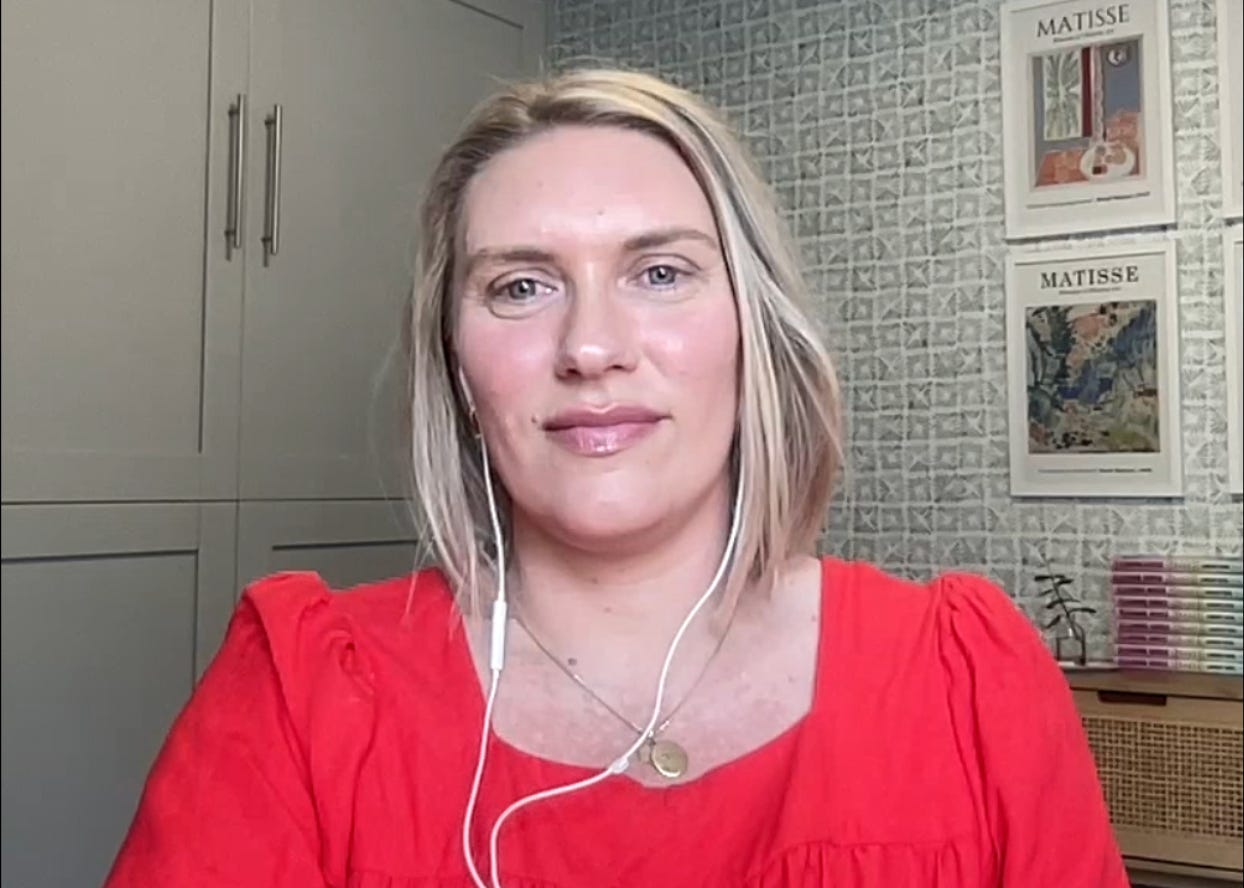
Why we need better laws to keep toxic chemicals out of our bodies.
2w ago00:37:36Tap to summarizeThroughout “Just Keep Swimming,” we’ve been connecting the dots between the chemicals hiding in everyday life and what they're doing to male fertility, and it’s not looking good. To catch you up:* Phthalates are everywhere — your cologne, your aftershave, even milk — silently interfering with the hormonal signals your body uses to produce healthy sperm.* Flame retardants migrate out of your furniture and into household dust — which sounds whatever until you realize how much dust you’re actually ingesting and inhaling on the daily, and how persistent these compounds are once they’re in your body.* And don’t forget the classics, like pesticides. The fertility impacts of these chemicals on farmworkers are well-documented. The question of what lower-level, long-term exposure does to the general population is still being studied, but the early data isn’t reassuring.All this is to say that your sperm is taking hits from every angle (chemically speaking). Plus as a population, we’re all more stressed and less active than ever. Not a good environment for your boys!This week, I wanted to zoom out to understand why endocrine-disrupting chemicals are in our products in the first place and why the regulatory system has failed to keep us safe from them. Especially as the Trump administration and congressional Republicans are actively rolling back the few laws and regulations we do have to keep us safe from toxic chemicals.So I called Lindsay Dahl. She’s spent twenty years as an environmental health advocate and lobbyist, and she’s helped pass over thirty state and federal laws restricting toxic chemicals. Now she’s the chief impact officer at Ritual. Lindsay also wrote Cleaning House, and she runs a newsletter I absolutely recommend for anyone interested in this topic called The Environmental Health Brief. Lindsay is the person who knows why the system is broken, who broke it, and why men should be a hell of a lot angrier about it than they are.If you’re just finding “Just Keep Swimming”, in episode one, we heard from Felix Van Der Heijden, the steroid-injecting Dutch looksmaxxser who decided to let his fertility drop for the sake of his gains. Then we went deep with the researchers at Silent Spring Institute on what endocrine-disrupting chemicals actually are and what they do to sperm, and why a lot of that damage happens before you’re even born. If you haven’t listened yet, go back and start there. And last time, we went into your closet with Ben Mead of OEKOTEX, and we broke down the azo dyes and the heavy metals hiding in your clothes, and how they make their way into your body through your skin.Non-Toxic is a reader-supported publication. This podcast might just save your life. Consider throwing me a few dollars. This is a public episode. If you'd like to discuss this with other subscribers or get access to bonus episodes, visit nontoxicpodcast.substack.com/subscribe
Transcribe →
How do we know our clothes are safe?
3w ago00:26:55Tap to summarizeYou’ve likely heard the horror stories about lead-contaminated fast fashion, airline uniforms triggering severe allergic reactions or sweaters bursting into flames. Maybe you’re worried about the chemicals lurking in your own closet or have stared at a tag while shopping, wondering what’s actually safe and reliable versus what’s just marketing BS.In this special episode of Non-Toxic’s summer miniseries, “Just Keep Swimming,” we’re diving into the world of textiles—specifically, the hidden chemicals in our clothes and how they make their way into our bodies. We’ll be talking azo dyes, PFAS coatings, heavy metals, and all of the other things that may be good for manufacturers but are definitely bad for us.I’m joined by Ben Mead of Hohenstein Americas and OEKO-TEX, who breaks down how this stuff can absorb through the skin and potentially impact health and fertility. Ben demystifies what “non-toxic” actually means when it comes to fabrics, challenges the myth that natural fibers are always safe, and explains exactly how OEKO-TEX tests and certifies the complicated supply chain behind a simple T-shirt. If you’ve ever spotted a “STANDARD 100” tag in the wild and wondered what it actually guarantees, this episode is for you.This is the first sponsored interview I’ve ever done for Non-Toxic, and I’m only sharing it because I truly believe in the work OEKO-TEX does—it really is the gold standard for textile testing.Also! If you’re freaked out and wondering what is actually safe to buy, I’m putting together an extensive, vetted list of products I vouch for—exclusive to paid subscribers. Later this summer, I’ll be dropping that guide alongside new episodes of “Just Keep Swimming.”Non-Toxic is a reader-supported publication. Consider becoming a paid subscriber today. This is a public episode. If you'd like to discuss this with other subscribers or get access to bonus episodes, visit nontoxicpodcast.substack.com/subscribe
Transcribe →
These chemicals may be killing your fertility
4w ago00:26:24Tap to summarizeThinking of having children? Wondering whether your sperm has been compromised by years of eating lunchables and drinking from a battered Nalgene?A growing body of evidence suggests sperm counts may have dropped by nearly half since the 1970s. Commentators have blamed obesity, nutrition, even feminism. But the more I dug into the research, the more one culprit kept coming up: the endocrine disrupting chemicals hiding in plain sight in our food packaging, furniture, products with fragrances, and even children’s toys. This isn’t some MAHA conspiracy, it’s well documented, and there’s even a Netflix doc about it, though they kind of muddy the waters by talking too much about microplastics (more on those in a future episode).In this episode of Just Keep Swimming, I sat down with Dr Julia Brody and Ruthann Rudel of Silent Spring Institute — two of the leading environmental health researchers — to understand what EDCs actually do to the male reproductive system, why the damage done in the womb and in childhood can be permanent, and what any of us can actually do about it.One thing that stopped me cold. Most people assume that if a product is on the shelf, it’s been tested for safety. It hasn’t. That assumption may be costing you your shot at having a kid. This one closes with practical steps you can take today — no off-grid homesteading required. And for more practical tips, don’t forget to check out Silent Spring’s Detox Me app.Non-Toxic is supported by people like you. To receive new posts and support my work, consider becoming a paid subscriber. This is a public episode. If you'd like to discuss this with other subscribers or get access to bonus episodes, visit nontoxicpodcast.substack.com/subscribe
Transcribe →
After Cooling with Eric Dean Wilson (Part 1)
Jun 2500:29:06Tap to summarizeWestern Europe has been experiencing its hottest temperatures in the history of humanity this week, so it felt like a good time to resurface this episode I recorded way back with my old co-host Andrew Lewis, and our guest Eric Dean Wilson, author of After Cooling: On Freon, Global Warming, and the Terrible Cost of Comfort.We take a look back at the history of air conditioning (it’s weird and wild), and try to understand how we almost managed to destroy all life on earth in our quest for personal comfort. And don’t miss Eric’s journey into the shady underworld of used refrigerant sales to understand just why dudes are so attached to their Freon.This episode is part of the Non-Toxic Performative Male Book Club. It’s a series of all the author interviews I’ve done over the years, featuring some of the smartest writers, journalists, and academics I know. If you’re into Non-Toxic book coverage, click on any episode with the tag “Performative Male Book Club” to find more good books for guys who read, or pretend to.To listen to the second part of this conversation, you’ll need to upgrade to a paid subscription to Non-Toxic.Lastly, if your A/C is busted and you need to get rid of it, read the EPA’s advice on how to safely dispose of it first. Because letting that stuff escape into the atmosphere is not good! This is a public episode. If you'd like to discuss this with other subscribers or get access to bonus episodes, visit nontoxicpodcast.substack.com/subscribe
Transcribe →
"I got two sperms"
Jun 800:10:38Tap to summarizeI’m bringing you the first episode of a series I’m doing called “Just Keep Swimming.” It’s a Non-Toxic miniseries about male infertility and chemical exposure, exploring how chemicals in our environment (or chemicals we choose to inject into our bodies) can have an enormous impact on our individual health and even the future of humanity.This episode is a conversation that I had with the Dutch looksmaxxer, Felix van der Heiden, when I was visiting the offices of the biotech startup, Sperm Racing. For the full story there, you can read my article in The New York Times Magazine about the week I spent with those boys. Felix, I thought, was a super interesting character, and he shows up in the piece, but I didn't really get to go as deep in the article as I wanted to. I had some amazing tape that just was sitting around, and I thought, “People need to really hear his full story.”What follows is a selection from the scene when Felix first looked at his sperm under a microscope with his friend Manu, and then a conversation that Felix and I had afterwards, where he talks to me a bit about the different enhancements that he’s using and his thoughts about the effects on his fertility and why he’s decided to pursue chemical enhancement at such a young age. I think you’ll enjoy it. This is a public episode. If you'd like to discuss this with other subscribers or get access to bonus episodes, visit nontoxicpodcast.substack.com/subscribe
Transcribe →
The real winner of the war in Iran will be solar power
Apr 2100:27:05Tap to summarizeA fifth of the world’s oil flows through the Strait of Hormuz, a sliver of ocean between Iran and the Gulf States. Since the beginning of the US Israeli war in Iran, that traffic has slowed to a trickle, which has sent the price of oil skyward. Countries around the world are doing everything they can to accelerate the transition because whether they care about the climate crisis or not, they recognize that there is no choke point on the sun. This is a public episode. If you'd like to discuss this with other subscribers or get access to bonus episodes, visit nontoxicpodcast.substack.com/subscribe
Transcribe →
How to break the rightwing chokehold on gym culture
Apr 300:24:48Tap to summarizeThis is a free preview of a paid episode. To hear more, visit nontoxicpodcast.substack.comIn this episode of Non-Toxic, I’m joined by fitness influencer Colin Davis to explore the intersection of muscle hypertrophy, masculinity, and climate activism. You might remember Colin from the Carbon Bros finale, but a brief cameo didn’t do him justice—so we’re diving into the full, extended conversation here.Colin is breaking the mold by proving bodybuilding isn’t just for the right wing. He argues that to reach men today, the left needs to meet them in their own digital spaces and speak their language. We get into the surprising links between empathy and physical strength, while Colin deconstructs some of my own biases about gym culture. It’s a wide-ranging, candid conversation that feels like a long-overdue hang.Non-Toxic Newsletter is supported by listeners like you. Consider becoming a paid subscriber today.
Transcribe →
The Dark Side of the Battery Supply Chain
Mar 2000:38:45Tap to summarizeIs our “green” future being built on a global sacrifice zone?In this episode, I’m joined by my former New Yorker colleague Nicolas Niarchos to discuss his revelatory new book, The Elements of Power. It’s a globe-spanning investigation into the battery supply chain—stretching from the Congo and Indonesia to Israel, China, and the US—revealing how the promise of clean energy is often built on violence, child labor, and systemic corruption.With conflict in the Middle East driving up oil prices, many EV owners are feeling a sense of moral (and economic) superiority. But as Nicholas explains, the supply chain powering those batteries is just as ethically fraught as the oil and gas industry, if perhaps a bit more functional at the moment.We dive into Nicolas’s firsthand accounts of Congolese mining “crevasses,” where hand-dug pits collapse on workers with terrifying frequency. We also discuss how mineral wealth dictates Congolese politics and why cobalt has become the “new oil” in a high-stakes geopolitical tug-of-war between the US and China.Don’t miss the end of our talk: Nicolas shares the harrowing story of his detention by the Congolese secret police while investigating the ties between mining interests, the presidential family, and separatist militias. It is an absolutely insane, must-hear account.PS: Nicolas has just launched a brilliant new magazine with another New Yorker alum called Now Voyager. Their first issue is available now, both online and at newsstands. If you value the kind of deep-dive, boots-on-the-ground reporting we discuss today, you definitely need to check it out.This epsiode is sponsored by Bluecorn Candles. Use the code NONTOXIC20 for 20% off your first order.Non-Toxic Newsletter is a reader-supported publication. To receive new posts and support my work, consider becoming a paid subscriber. This is a public episode. If you'd like to discuss this with other subscribers or get access to bonus episodes, visit nontoxicpodcast.substack.com/subscribe
Transcribe →
The doctor who was helping Jeffrey Epstein live (and creep) forever
Feb 2000:28:06Tap to summarizeIf you’ve been reading the latest batch of the Epstein files, you may have noticed an unlikely name from the world of longevity and “Medicine 2.0”: Dr Peter Attia. To understand the connection between Jeffrey Epstein and Attia, I sat down with Sami Reiss, author of the Super Health. An expert in “dark wellness,” Sami interviewed Attia way back for GQ and has been following his rise (and fall) for a long time now.In our chat, he breaks down the history of longevity medicine and Attia’s kind of basic approach to the science of aging. Hint: eat protein and do strength training. We get into the emails showing Attia’s years-long post-conviction relationship with Epstein, and we also touch on Epstein’s broader interest in genetics and eugenics (including a proposed sperm bank of Nobel laureates). And of course we gotta talk about masculinity’s role in all this—especially the obsession with testosterone replacement therapy in the longevity space. Because it’s really all about erections at the end of the day.Non-Toxic Newsletter is a reader-supported publication. To receive new posts and support my work, consider becoming a paid subscriber. This is a public episode. If you'd like to discuss this with other subscribers or get access to bonus episodes, visit nontoxicpodcast.substack.com/subscribe
Transcribe →