← Nonprofit Leadership Podcast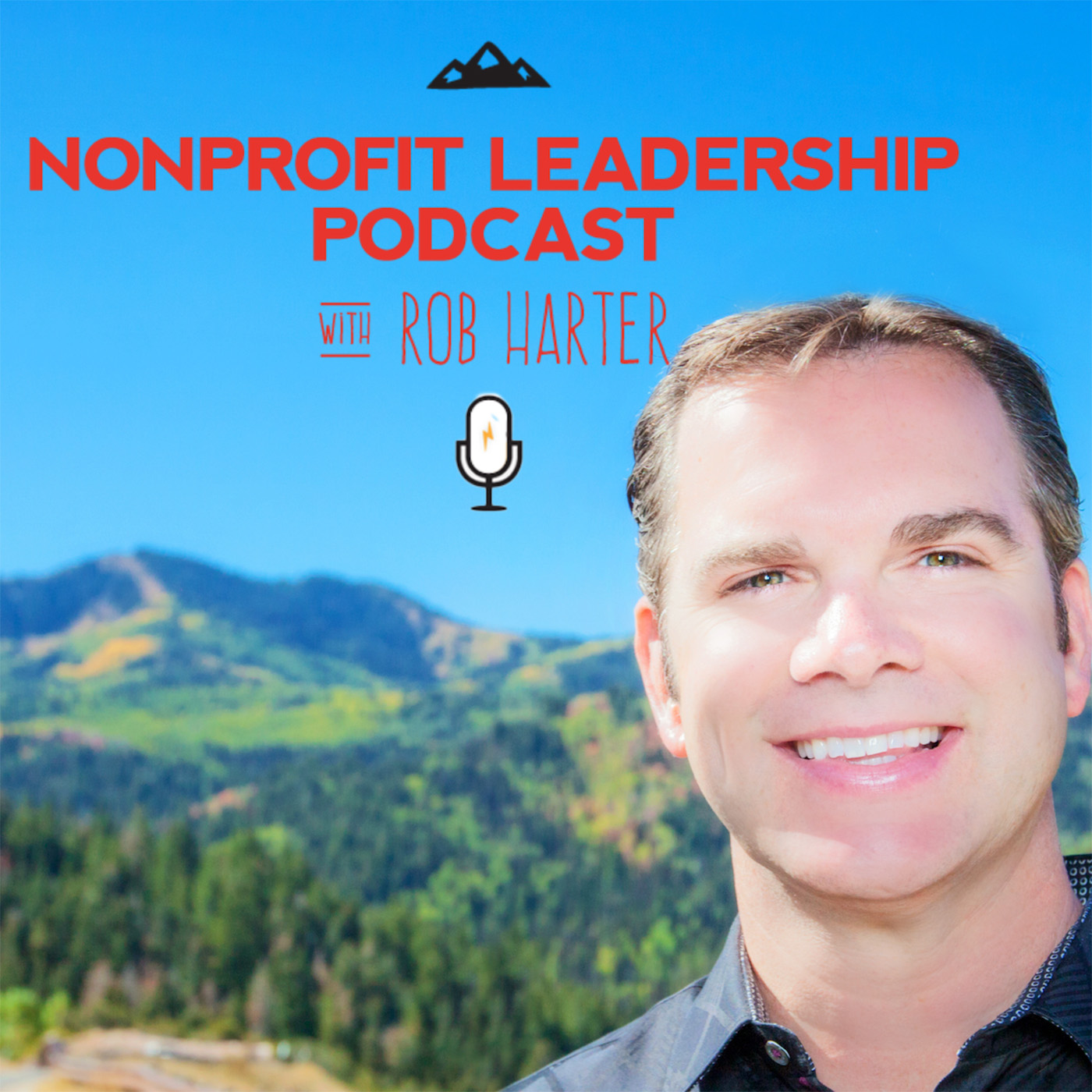
Nonprofit Leadership Podcast
Leadership as a “Sacred Experience”
00:31:46
In this episode of the Nonprofit Leadership Podcast, Dr. Rob Harter sits down with Dan Tocchini, a seasoned nonprofit leader, coach, and founder who ...
Loading summary
Transcript35 lines
- [00:02]
Dr. Rob Harder
This is Dr. Rob Harder with the Nonprofit Leadership podcast, Making youg World Better. What does it take to be an effective nonprofit leader today? What are the biggest challenges? What are the biggest obstacles? How should nonprofits fundraise in an economy that is constantly changing? All these reasons combined led me to start this show. And it's my hope that through this series, people can learn not only what it takes to be an effective nonprofit organization, but to hear from effective leaders who. Who are successfully making a positive impact in their communities. We hope you enjoy the show as together we hear how they are making their world better. Welcome everybody, to the Nonprofit Leadership Podcast. Thanks for tuning in. I hope you're doing well wherever you are listening. Whether you're driving, working out at the gym, maybe you're running, wherever you're doing. We're so glad you're tuning in. I've got a great show for you today, and it's all about leadership. Now, of course, this is a nonprofit leadership show, so that would make sense, right? But I really liked the description guest on this particular episode, how he describes leadership. He describes leadership as a sacred experience. And I like that description. And I think as I think of each one of you as you journey through your role and your leadership impact, you have such an impact on people's lives, right? And not only just the people you serve, the staff and the volunteers you work with, your organization that you lead, you're impacting many, many lives. And so I think the description of a sacred experience is a really good one. And we're going to talk about not just the sacred experience of leadership, but we're going to talk a lot about how do you transform your team? How do you change the culture of your team? How do you implement courageous leadership, particularly when it comes to difficult and crucial conversations? How do you implement creative conflict resolution on your team? That and more. It's a great discussion. Again, my guest today is Dan Takini. Dan Takini is a longtime leader coach. He's been a nonprofit leader for 25 years. He worked with ESPN and Disney when they merged together. He's just done a lot of different things, a wide variety of leadership opportunities, and he's got a wealth of information he's going to share today. So I'm glad you're tuning in. Now onto the show. This podcast is sponsored by Donorbox, helping you help others with the best donation forms in the business. Well, welcome to the Nonprofit Leadership Podcast. I'm so glad to have Dan Takini on the show. Dan, thanks so much for being on the show. Today.
- [02:30]
Dan Takini
Thanks, Rob. Love being here. I appreciate your time. Thank you.
- [02:33]
Dr. Rob Harder
Absolutely. Well, great to have you on the show. And we're going to, of course, narrow our conversation on leadership, which is perfect for this nonprofit leadership podcast. It's what you've done for a long time. You've led a nonprofit for 25 years. So I wanted to start out with really getting to some nitty gritty questions in terms of what does leadership look like? So let's start with strategies that you use to really transform leadership teams. How do you do that without relying on traditional motivational tactics or what you call pixie dust? Thought that'd be a good one to start with.
- [03:04]
Dan Takini
All right. Well, I. I work from a principal, like, principally based, if you would, and the main principle is what you tend to avoid, what I tend to avoid, or, you know, get around will eventually defeat me. And knowing that it helps, it helps motivate me to get to the tough conversations. You know, I. I know for most people, difficult conversations, they like to put them off. They don't, you know, they hoping it'll disappear a lot of times. And when you're working in a nonprofit, there's multiple difficult conversations that arise, anywhere from volunteers to, you know, donors to, you know, staff, etc. And how willing are you? How accomplished are you? How confident are you in having those conversations? Because those are the conversations that move the ball down the field. They're difficult because usually there's something at stake, and I'm concerned that if I don't do well in this conversation, what's at stake could be lost. So, you know, most leaders often. Let's just say many leaders often try to find a way to reduce that tension rather than deal with it straight up and see it for what it's worth and prepare for it in a way that could increase the possibility of something beneficial coming out of it.
- [04:27]
Dr. Rob Harder
Yeah. Oh, I love that. That's great. Well, again, you've got lots of experience. Could you talk a bit more about your experience? And specifically, maybe you could talk about a failure you've gone through that has really turned out to help you become a better leader, and it's actually strengthened you as a leader?
- [04:41]
Dan Takini
Well, like I said, I ran a nonprofit. It was a ministry for 25 years, and most of our employees were there for 15 years or more, and it was running well. And about year 2122, I realized I was done. You know, I needed to get. I needed. I just was done. I'd done it. I wanted to go do something else. And rather than Speak about it. It was a hard thing to say because I was driving the organization. I founded it, I drove it. I had a board. We were looking at how to move somebody, succession plan. And only in the succession plan, they wanted me to stay on in a certain way, and I really didn't want to. And I didn't say it. I didn't speak to that. I. I tried to live up to something I wanted to be rather than say where I was. And I think that really, it really, you know, in the end, it. It offended. Hurt people. In fact, you know, they told me, well, you know, you lied to me. And they were telling the truth. I wasn't, like, going around lying consciously, but I could see that my desire to play Mr. You know, benevolent and try to make it work for everybody when it wasn't working for me, instead of just saying, you know, this isn't working for me, let's talk about how to have this work. And instead, I gave the impression that I was on board with a lot of what was going on, and I wasn't. And that was. That cost. That cost a lot. Okay, yeah.
- [06:14]
Dr. Rob Harder
Tell me more about, like, what. How did. What did you learn from that? Were some of the key takeaways that.
- [06:18]
Dan Takini
Have really helped you become what you avoid. What you avoid will eventually, you know, defeat you. And I avoided the difficult conversation. In the end, when we had it, it was defeating me because I had, up to that point, said the opposite. And so now I'm very conscious about, okay, what is it I don't want to talk about? What am I? Whatever you don't want to talk about. For me, it shows up like a complaint, like a chronic complaint. And if I'm in a chronic complaint, then there's something I want to talk about, but I'm afraid to talk about it. That's why I complain. And so if I can define what it is I don't want to talk about and get that out and prepare, I can go sit down and have a conversation that's resourceful. And even though I don't know a way through the way to find the way that, you know, the. The obstacle is the way. So if I can get into the obstacle, I will find a way and I'm authentic and honest about it. And that's what I've done for the last. Let's see, I left that company, that. That position almost 17 years ago.
- [07:28]
Dr. Rob Harder
Wow. Okay. You said something really interesting. You were talking about how there was complaints that were. That would be like a common theme that would keep Popping up. And then you've learned as you look back now, those are the very complain receiving we're actually telling you. These are the issues you're not willing to address. Is that I hear that accurate?
- [07:47]
Dan Takini
Well, the complaint that I had. Right. My complaints are indication of what I don't want to talk about.
- [07:54]
Dr. Rob Harder
Aha, got it.
- [07:55]
Dan Takini
They're in a way, they're. A complaint is a frustrated request. I'm afraid to make the request. So I complain because I'm afraid if I make the request I won't get what I want. And so I complain about it, hoping somebody else will do something about it because I'm afraid to ask for what I want.
- [08:12]
Dr. Rob Harder
Yeah, thanks for clarifying that. No, it makes total sense and I like that insight that's so interesting when it comes to like courageous leadership. I've had other people on the show talk about that. Maybe you could speak to courageous leadership specifically. And specifically, how does courageous leadership help leaders navigate these difficult conversations you've mentioned, while at the same time inspire innovation with their teams? And I think that's the balance. Often leaders, particularly if you're the senior leader of your organization, you, you have to have these really difficult conversations. But you're, you got to keep your eye on innovating innovation number one and inspiring your team. How have you done that over the years and how would you recommend leaders to do that?
- [08:49]
Dan Takini
Well, courage is an interesting thing. You know, it comes from the French word or Latin word corps or in French courage. And it means to proceed with fear. It means to face with your fear. With the fear, you take it with you. And most look, people are five times more likely to act upon something to prevent suffering than they are to generate a sense of well being. So the idea is to let myself see what the potential problem is going to be, what the parade of horribles would be if I continue in the state I'm complaining about now, if I'm willing to see what alter, you know, like I'm complaining because I don't want the difficulty of the conversation. So complaining is, is a strategy for convenience. I don't, I'd rather be convenient than effective. I'd rather feel the relief of the tension rather than let the tension direct me into what's wanted and needed and have a breakthrough. So the only way to face it, I think is to let yourself see what you're choosing. If I take the short term gain of relieving the tension and not having the conversation, finding some strategy to avoid it, working around it, et cetera, then what Am I going to end up with five months, six months, two years, five years down the road? And to see that plainly is. It's going to be uncomfortable. I'm going to go, oh, I don't want that. Which motivates me to do it now, to take the fear in hand and go forward. So that's why I have a way of inventory that inventorying what's coming. I have a very framework I prepare for when I have a conversation. In fact, when I get off of this call, I'm getting on with a couple partners and we're going to have. There's a difficult conversation we need to have around just iterating our partnership. We started about a year ago, been very successful, we talked about iterations. I've got some things that aren't working for me. I'm going to sit down and have a conversation with them because I know that if I don't, what's going to come on the other end of that is resentment and frustration and things that will cause division rather than unity. So if I sit down and say, look, there are certain things that aren't working for me, let me put them on the table. Love to hear your point of view and I've prepared to do that. I go through a very specific framework so that when I sit down I can hear what they have to say and not be reactive because I can look down at my notes and bring it back to what I want to talk about or contextualize whatever information I gain from them in what I want to talk about because they'll give me information I didn't have which will help me be more articulate about what I'm up to.
- [11:38]
Dr. Rob Harder
Well said like that. And thanks for the real life example you're going to be putting into practice here this afternoon. Let's talk about creative conflict and particularly conflict resolution. When it comes to creative conflict resolution, what role does it play in building high performing teams in your opinion and how have you approached that in the past?
- [11:57]
Dan Takini
Just to what I was just saying about this last conflict. If I don't, if I handle it well, it creates a deeper sense of trust and confidence in the partners in the team. And so the way to do that is to prepare and to make sure that I'm clear about what I actually want to get done and then be able to state the problem clearly. That enables other people to see what I'm seeing and then give them an example of the statement so they have an example, so they know what I'm deriving this from. It doesn't mean I'm right about it. It doesn't mean it is a problem. It just means for me it's a problem. And they can see why that is. And then I can let them know how I experience it, when it occurs, like when this occurs. For me, this example of the stated problem. I experience frustration. I feel, you know, it could be a number of things, frustration, anger, or helplessness, whatever. I can tell them this is what I experience. And then I can say, and here's how I've contributed to it. So now I've written that down. I've contributed to it by not addressing it as quickly as I wanted to, by avoiding it, by being gone. There's a number of different ways I might have contributed to it, what I did or didn't do, say or didn't say. And I can own those to let them know I see that. And then I can say, if this continues, here's what I'm concerned will occur. In other words, this is what's at stake, I believe, if we continue like this, so they get a sense of my urgency, what I'm speaking for. Because my commitment is to this and I'm concerned if we continue like this, we're going to end over here. And here's the parade of horribles that we may inherit. And so here's my proposal, that's the next level. And then I let them know after I make the proposal, or if I have the proposal, it's all prepared, and then I say, whether you accept the proposal or not, here's how I'm committed. Now that could be, look, this is a game breaker to me, or even if you don't do it, we can work something out later on or I'd love to hear your counter, But I'm committed to having this work out anyway. So if I have all that prepared before I go in, I'm much more relaxed to sit down and be creative, hear their ideas, see what they see. That creates a partnership where we're side by side solving an issue rather than head to head blaming each other.
- [14:36]
Dr. Rob Harder
Oh, I like that. Shift the other side by side. I know. Oftentimes, you know, I've talked about it. You know, leadership can be like tennis. You instead of fighting against each other, playing against each other, you jump the net and you were on the same team, you know, side by side. I love that image, doing side by side work. The conflict is what you're trying to do together as a team. Now that's really good.
- [14:55]
Dan Takini
I like that. And you know, the Conversation is the relationship. So if I'm talking in the conversation with them about, here's an issue that I need your support in, it's not working for me. Love to hear your ideas. Now we're side by side, and the quality of our conversation determines the quality of the relationship, not just with each other, but really with ourselves, our work, and the world as we go forward. So every relationship, I try to remember, every relationship's an ongoing dialogue. It's not static, it's dynamic. It's an entity that's evolving all the time. And I mean, you think about it, silence and avoidance are forms of communication. You know, they tell a story just as words do. So, you know, the depth of our presence determines the depth of the relationship itself and the quality of it.
- [15:45]
Dr. Rob Harder
What's interesting, you call leadership a sacred experience. Tell me more about that. Why do you say it's that? And how does that inform your coaching methodology?
- [15:55]
Dan Takini
Leaving. We're impacting other people's lives. We are influencing others. We're influencing them make decisions that impact their families, that impact their social status, impact their children, you know, in every way. It's impacting them at some level, and it's a service to others. If I'm really thinking about, if I just see people as tools, I'm demeaning them. If I see them as humans, then I'm serving them. I need to consider how I'm serving them. How does working here serve them? And not just how it serves me. It might be somebody might be a great producer, but they may not be good for them or it may not be working for them at home. Am I? Do I? You know, that's a potential. Like being able to catch that problem before it becomes an issue is part of good leadership. It's sacred. It's sacred to be able to help people think through what's wanted and needed for them to succeed. It makes sure that what they're doing aligns with their purpose so that they have an experience of meaning and fulfillment. You know, if those things happen, well, you know, they're going to transform and they're going to transform, meaning they're going to answer the issues, the challenges they have with their full participation, which will. There'll be a different person on the other end of it. And part of that's taking responsibility for their legacy on top of it. What legacy are they going to leave at work? What legacy are they leaving at home? How do both of these things serve them? Are they acting ethical in an ethical way that's going to support them both with their co workers, but also when they go home. And if what they do at work is a problem, there are legal issues or whatever that's going to haunt them at home. So in many ways that's how I see it, as sacred, because it's impacting, influencing their life, their loved ones lives, their community lives. So I take that seriously and think about it when they come on board. And I keep that in mind because they're not just there to serve me, I'm there to serve them as well.
- [18:01]
Dr. Rob Harder
I like that description of the sacred experience. I would agree with you. And I think there's so much at stake with leadership. You're influencing people's lives, as you said, 100%. We'll be right back. Are you looking for an easy and effective way to boost your nonprofit's donations? Well, look no further than Donorbox, the online fundraising platform that streamlines your fundraising efforts, maximizes donations, and simplifies giving for your supporters. With Donorbox, you can create beautiful donation forms, accept digital wallet payments, track donations, and send auto receipts. And the best part, there are no setup or monthly fees and no long term contracts required. So what are you waiting for? Visit donorbox.org today to get started. That is www.donorbox.org okay. Another part of leadership that can be challenging to balance and sometimes maybe as Share this My listeners may say, why lean this way or the other when it comes to these two things? When it comes to leadership, there's this balance between intuition. On the one hand, a lot of us have this just innate feeling about things or this intuition that's been honed through experience. But you've also got this analytical reasoning right. You get data, you get data points, and you want to put those together ideally. But sometimes it's hard to have a leader that has both of those to integrate those well. So when it comes to balancing intuition and analytical reasoning and whatever data you have in front of you, when it particularly comes to critical decisions, how do you go about making decisions and putting those two pieces together?
- [19:41]
Dan Takini
Well, I mean, look, if you have an intuition, it's good. First off, you know, I realize that what I do most naturally is probably the thing I teach most poorly because I'm in many ways an unconscious competent. And many good entrepreneurs are. So being able to get ahold of what you do well naturally and being able to impart that linguistically in language to other people, be able to put language on it so they can get a sense of how they can engage and maybe save some experience or benefit from Your experience a big deal. I don't know how many leaders really take the time to consider that. That requires some whiteboard time. That requires willingness to get feedback. It requires, you know, a lot more effort than just giving somebody a job description with their deliverables and saying, go get them, tiger. You know, you know, there's onboarding them, helping them iterate themselves into it, holding them accountable, making sure they're. They're doing the work, but you're there supporting them, standing with them. You know, it's like, show them how to do it. You know, that whole thing, show them how to do it, have them do it, watch them do it. You know, like, it's like, do those things and then let them do it and critique them as they do afterwards, etc. Like, gradually support them so they can get off on, you know, get off and get off, get out of the box and be successful. That takes a certain level of care. And a lot of people, a lot of leaders will say, well, I'm not there to babysit. And they'll see onboarding somebody, well, as babysitting, rather than setting them up to win and then letting them go and then letting them be responsible for doing it, but making sure that they have what they need, they understand where they're headed. They. They know how to engage the organization. All those things need to be in place to really get them out of the box well. And if they get out of the box, well, it serves everybody, including most likely, here's, you know, the, the leader. The leader is going to benefit from that.
- [21:50]
Dr. Rob Harder
Well, it's interesting to say that, because I think you think about a culture and a leadership or a leader's role in shaping culture. Tell me about your experience when it comes to nonprofit leaders who know they need to change the culture of their organization because maybe it's head in the wrong direction. Maybe it's even becoming toxic. What would you say are some of the key factors that prevent nonprofits from really changing their culture for the better? And how would you help leaders address these challenges?
- [22:16]
Dan Takini
Well, I mean, I think the most prominent one is they're not willing to have real conversations. You know, they're not willing to. To say what they think, to hear what others think and to explore it rather than, you know, like if somebody says something that you don't agree with, rather than initially trying to disprove it, why don't you deepen the understanding of it? What is it they. What causes them to see the way they see it? What do they see that I might not see, am I seeing what they're seeing? If I'm see if I'm. Am I seeing something they're not seeing? You know, like taking the time in a very open handed way to fully understand what they're seeing, the scope of what they're seeing, that's a big deal. And most people don't take the time to really do that. I mean, I've seen, you know, I myself have done this, made these mistakes of just getting with the team and then directing them onto what I want to get done versus proposing what I want to get done. Taking the time to plan it with them, understand how they see it. Do they see what their part is? What could they bring to their part that I haven't considered? I mean, those are all aspects. And if something's not working, do they get. They can talk to me about it or do they, you know, you know, culture is an interesting thing. You think about culture. It's like this table here. There are certain things on top of the table. Those are the things we can talk about. Then there's things under the table. That's what the culture just implies. We don't talk about that. And most of the time what's under the table is driving the culture, not what's on top of it. So getting it, being able to create an environment, being able to invite, to become an environment where people can bring what's under the table on top of the table so we can vet it and come together and see what's wanted and needed for all of us to have this work out well, or for some of us may want to leave, this is not where they need to be, et cetera. But having those conversations earlier, not later, is the difference between having it work out or not.
- [24:24]
Dr. Rob Harder
Yeah. What's interesting that leads to really conflict and crisis, even in nonprofit or just in organizations in general. In I would say this, if you've led long enough, you will have a crisis, you will have conflict. It's part of leadership. And we've all gone through Covid collectively and that was a crisis in many ways. So maybe we talk about that a little bit. How would you say leaders. And again, this is aimed towards nonprofit leaders. How can nonprofit leaders prepare themselves and their teams for meaningful discussions, productive discussions when it comes to conflict and crisis that erupts in their team?
- [25:00]
Dan Takini
Well, we actually provide a leadership training called the Revenant process. And it's designed, it's a four day intensive and it's designed for leaders to come and get involved. And the difficult conversations come up so they get a chance to exercise, practice what I'd been talking about earlier, and then see how they react and then get in touch with and learn about their particular brand of reaction. Right. And so when they do that, they become, you know, it's like, where can you go to get that kind of practice that you just don't, you know, you don't get that chance. So we provide a space for that. Or as a leader, your meetings could be exercised like you can have. I mean, I do a weekly meeting with my team that goes about an hour, hour and a half. And if there's something that needs to be talked about before we talk about it first, before we get to the agenda. Right. Like if somebody's got to bring something up, they're upset with me, or they're upset with somebody else, or they're just having a difficult time out there and they're looking for some coaching and that comes up. Well, we'll take the first 20 minutes, half hour and just kind of work through some of that. Then people are much clearer when they sit down and go through the agenda. And then if there continues to be problems, we take them offline and we do it asynchronous, synchronously, because, you know, we want to make sure we get the team lined out. And then I might say, you know, Rob, let's talk about this later. We skip with the team. I'll pick it up with you later. We'll, we'll handle it. Those are things I think that are vital in order to really benefit, have the team benefit, you know, and that's how you prepare the team. And you're, and you know, the idea is it's dynamic. You know, you can't, if you're not open handed, you can do these things and then people won't talk because they'll know you're just doing it as a kind of formula and they're going to be waiting for you to jump them, you know.
- [26:59]
Dr. Rob Harder
Right, yeah. No, that's good. Word on that. And do you feel like, because we've all gone through this Covid experience together collectively, not just as nonprofit leaders, just as a society is leadership shifted based because of the crisis we've all been through? What would you say to that when it comes to leadership of any organization?
- [27:17]
Dan Takini
Yeah, I mean, I think, I mean, it depends on the conversation. I mean, some people are stuck on people working from home. I think you have to look at that case by case. You know, some guys, some leaders want to have everybody in the office Great. You know, I would personally, if I make a decision, I want to give the logic of the decision to the team so they can start thinking the same way. I don't have a problem saying, I think you should all be here because in this particular event, we ought to have everybody in the office. But, you know, if we're going to do this. But afterwards we can go like, I'm real flexible. The structure to me can be worked a million different ways. But yes, I think particularly with Gen Z, there's got to be the willingness to educate them about why you're doing what you're doing. And it's not like you're explaining or you're trying to ask permission. You're saying, this is what we're up to and I want to share the thinking with you so you can get on board with it. Now, if you have a better idea, great. Ping me privately. Let's talk about it. But you know, as much as I hear and I let people know, I'm going to listen to your idea. I may or may not take action on it, but I want to hear it in case it's something I think it's worthy. I have to believe it's worthy of taking action. I could be wrong. And then if somebody talks to me about this and I don't plan on taking action, and I'll actually say to them, look, I'm not going to act on this. Is that going to work for you? Are you going to still be able to get on board in the line? Because I hear you. I just feel like it'll work better for me to go down this path. I don't have any problem doing that now. If we get into a crisis, I'll flat out say, do what I ask you to do. Let's go. We're going down this path and we can pick it up later because we're in a situation where we got to move. We can't stop and think about it now. So I think a lot of it's the leader's willingness to contextualize their conversation in a way that other people can get. You're working with them and this is what you're up against and you need them to get on board now or, hey, let's talk about it. We got some time. It'll work. I have found, you know, most people think, well, it takes too much time to do that. Actually, no, I found that if I'm really there and I'm. And I'm adept at having a difficult conversation, much like I talked about that framework. These conversations. The most difficult conversation takes a half hour maximum. It's not a big deal. But you know what? If you don't have it, it could pollute you for months, years. I've seen it. I've seen it. You know, people don't come to the table. They're hiding information that you need, but they're afraid to bring it up because they don't want to get in their mind, yelled at or fired or penalized, you know, that kind of thing.
- [29:58]
Dr. Rob Harder
No. Well said. Well, it's been a fascinating conversation about leadership. Love having these kind of conversations. Thanks for all you do in this space. For my listeners who want to get to know a little bit more about you and your work, where would you send them?
- [30:09]
Dan Takini
Go to take newground.com that's our website. Everything's on there. There's a free. I wrote a book when I was at. I was part of. I was hired to help ESPN integrate with Disney when Disney bought them.
- [30:24]
Dr. Rob Harder
Oh, wow.
- [30:25]
Dan Takini
And I wrote this ebook. It's not 90 pages, 99 pages. And it's called the Change Imperative. It's free. You download it right on the site or they'll send it to you in the email. You can get that, all the training stuff. So you can look through the. And our services are on there. And then I'm on LinkedIn too. They can look me up there.
- [30:43]
Dr. Rob Harder
Oh, sounds great. Well, Dan, thanks for taking time to be on the show and thanks for all the insights you're sharing and all you're doing to pour into leaders. I think leadership and those who invest in leaders is so critical now we need it more than ever. So thanks for again for your time and your insights.
- [30:56]
Dan Takini
Thanks, Rob, for having me on. I really appreciate it. It was really enjoyable.
- [31:00]
Dr. Rob Harder
Hey, friends. Well, I wanted you to know that this podcast can be found on itunes, Spotify, Amazon, Google podcasts, and wherever you listen to other podcasts. I also want to encourage you to, like subscribe and share this podcast with others. This will actually help us get this great content out to more nonprofit leaders just like you. You can also join the Nonprofit Leadership Podcast community, find other resources and interviews of past guests, all on my website. Nonprofit Leadership Podcast. Well, thanks again for listening and until next time, keep making your world better. This podcast is sponsored by DonorBox. DonorBox, helping you help others with the best donation forms in the business.