← Nonprofits Are Messy: Lessons in Leadership | Fundraising | Board Development | Communications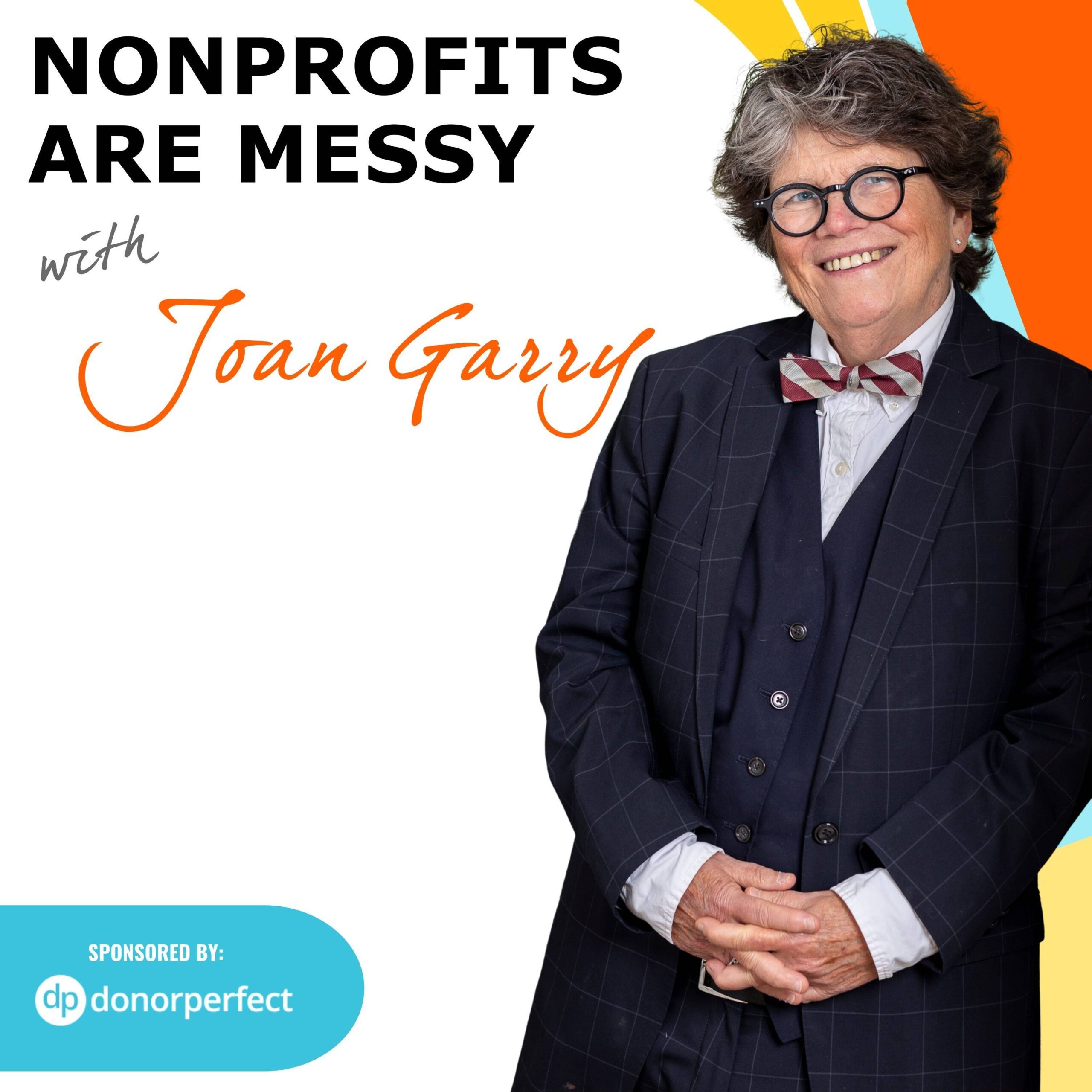
Nonprofits Are Messy: Lessons in Leadership | Fundraising | Board Development | Communications
Ep 227: What Challenging Times Make Possible with Michael Hyatt
00:46:27
What if challenging times are invitations to redefine what matters most? Michael Hyatt shares what helped him redefine success, and find a fulfilling way to live and lead.
Loading summary
Transcript68 lines
- [00:00]
Joan Garry
As a nonprofit leader, you deserve tools and support that help you to thrive. That's why I feel it is important to introduce you to today's sponsor, DonorPerfect. Their All in one fundraising platform simplifies donor management, communications, and reporting so you can focus on what you do best. Changing lives. Plus, their expert team is always on hand to cheer you on. Do you want a partner who truly gets you? Visit donorperfect.com joan to learn more. So you scored a big win today. Today we're joined by Michael Hyatt. He's actually all the things. A coach, a productivity consultant, an author. He's developed successful frameworks that focus on goal achievement and productivity. Thanks to the work of Full Focus, millions have seen results in ending chaotic days, establishing peace, confidence, and success. Ooh, I just saw your eyebrows furrow. You're skeptical. You are the leader of a nonprofit. You are like many clients at Full Focus. High performers, overachievers driven to succeed. That said, in the nonprofit space, chaos often feels like the order of the day. And as for peace, we got some talking to do to Michael Hyatt about what that's all about in the nonprofit space. So how does the work of Michael Hyatt, his decades of experience, his many bestselling books, apply to you? As a nonpro, he's played a lot in that space. But running an arts organization, advocating for survivors of domestic violence, working to preserve history in a museum, supporting kids with autism, finding homes for the unhoused. This is the kind of work that lives in your kishkas. That's a Yiddish word for deep in your gut. And it lives there 24 7. I was particularly intrigued by Michael's most recent book, Mind you'd Mindset. And I believe its lessons are really valuable to you as a nonprofit leader. Sometimes, maybe often, it feels like the world rests on your shoulder, that everyone's counting on you to do all the things, the things that are urgent, that impact the lives of those who are counting so much on you. Michael and I are going to talk a little bit about that mindset, and I promise we will help you help those who are counting on you. Finally, let's talk about Michael's belief that focus can bring confidence, success, and peace. While peace may feel like a stretch at the moment, I really believe very deeply in one of Michael's mantras, which is, what do challenging times make possible? Michael's positive perspective that darkness can bring the light of innovation is one you and I need to hear. Like, really need to hear.
- [02:47]
Gary
Welcome to nonprofits. Are Messy with Joan, Gary and experts. This podcast is your go to space for insights, advice and inspiration designed to help nonprofit leaders overcome challenges and drive impact. Whether you're navigating small beginnings or leading a larger organization, we're here to support you every step of the way. Together with Joan and a diverse group of expert guests, we tackle the big questions nonprofit leaders face and offer actionable advice to fuel your leadership journey. A special thank you to donorperfect for sponsoring this episode and supporting nonprofits that we love. Now let's jump in.
- [03:39]
Joan Garry
Michael Hyatt is the founder and Chairman of Full Focus. He has scaled multiple companies over the years, including a $250 million publishing company with 700 and his own goal achievement company. Under his leadership, Full Focus has been featured in the Inc. 5000 list of the fastest growing companies in America and Inc's best place to Work. He's the author of several New York Times, Wall Street Journal and USA Today best selling books including your Best Year you Ever Free to Focus, Win at Work and Succeed at Life and the book I just referenced, Mind to youo Mindset. He has been married to over 45 years to his wife Gail, has five daughters and 10 grandchildren. Michael, as I read your bio, I realize that for me what most stood out was being happily married for 45 years. I know it's not really true that anyone can write books and have great thoughts, but I do know it's true that it takes something very special to build a relationship to last. So you must be someone special. Welcome.
- [04:39]
Michael Hyatt
Well, thank you. It's great to be on the show with you, Joan. I would say I'm not so special, but my wife is pretty special to put up with me for 45 years, 46 years now. It's amazing.
- [04:50]
Joan Garry
I often say to nonprofit leaders that I coach that if you can actually embrace and really get good at partnerships and relationships, you're going to be extremely successful. And so when I read your bio, it's funny that that particularly stood out. My wife and I have been together for 43 years. People ask us how long we've been married. That's a shorter period of time and that something to do with the Supreme Court. So Michael, I spent 15 years in the corporate world and then took a leap to run a national LGBTQ advocacy organization called glaad. And I brought skills with me that were very valuable and I learned both hard and soft skills as a nonprofit leader that were invaluable. Now tell me a little bit about what you've learned about kind of the Distinction between the for profit world and the nonprofit world, or do you see one at all?
- [05:40]
Michael Hyatt
I think there is a distinction, but I think the grass always looks greener on the other side. So I get for profit leaders say, oh man, I wish I could be in a world where I had volunteers because they're there for the mission. And then I talk to nonprofit leaders and they say, man, if I could just have employees, I could coerce them and get them to do what I want to do. And so the grass always looks greener on the other side, but the truth is it has to be mowed either way. But I think there's huge, huge overlap. And I think that, you know, we can learn from each other in that regard.
- [06:16]
Joan Garry
I often think that before we dig into some of the other things that folks who lead for profit organizations have a certain bias against the nonprofit sector. That is that they're not as well run, that they're like as if all businesses are well run, by the way. Right, right. I happen to think that nonprofit leaders have a lot to teach for profit leaders. What do you think?
- [06:40]
Michael Hyatt
Yeah, totally. Because there's things that they have to do that for profit leaders don't always have to do. You know, in the for profit world, you may have investors that you have to relate to, and in the nonprofit world, you have donors or, you know, government. Government agencies that you have to relate to. But something you said, interestingly, when we were talking about marriage, it really comes down to relationships, doesn't it? And I think as somebody who has always been very task oriented and very much an achiever, I think the thing that I've learned over the last 20 years in particular is that you can be average on that, but if you're great on relationships, you're going to excel. And I think the people that manage their relationships well and really invest and be generous and be helpful, you know, those are the people that are going to succeed regardless of this fear of operation you're in.
- [07:33]
Joan Garry
I also think too agree completely. I also think too, that for profit leaders have something to learn from nonprofit leaders, because nonprofit leaders have to motivate and inspire their staff around a cause or a set of clients. Right. As opposed to a product or a service that might result. Like, I'm driven to come to work every day by the passion I have for the mission rather than that big fat year end bonus I'm going to get. Right. And so I actually think that if more for profit leaders approached leadership the way nonprofit leaders did, that they would get. They would ignite More productivity in their employees.
- [08:12]
Michael Hyatt
Well, I think that's especially true today because I think people are. You know, everybody wants to get paid well. But I think people more than ever, particularly millennials and younger, are very motivated about mission. I wrote a book called the Vision Driven Leader. And I think vision is the single most important thing that leaders in any domain have to master. Because it's like, without vision, the people perish. Right. And you've got to paint a picture of a better, brighter future if you're going to attract people to your cause. And I think, unfortunately, so many times we're concerned about the things that are negative, and we put exclusive focus on all that stuff. And that doesn't ever move an organization forward. It's like trying to drive by, looking through the rearview mirror. And what we have to do as leaders is have a big, wide windshield where we're looking forward to the future, where we can really make a difference.
- [09:07]
Joan Garry
I spend a lot of time speaking to nonprofit leaders, and we are in a particularly turbulent time where there's a certain element of hysteria. And I believe, as you do, Michael, that if you do not get your people, your stakeholders, so those folks who are connected to your cause, focused on that destination, that vision, that's what's gonna draw them and keep them. And that's what's actually gonna motivate you through what is a turbulent time. Cause you're always gonna have that eye on that long ball.
- [09:41]
Michael Hyatt
Yeah, that's right. I mean, that's what gives you hope, gets you out of bed in the morning, keeps you working when you wanna quit, keeps you going when you're overwhelmed and discouraged. But I was thinking as you were talking, Joan, I think that it's really important in these times, especially that as leaders, we show up as calm and confident. Because there's a sense in which. I did a lot of research this last year on nervous system regulation, and there's this concept called co regulation. And if we don't regulate ourselves, then we basically. We become contagious. We infect everybody else. So if my hair is on fire, then everybody gets on fire. And that's where I think, even in turbulent times, and you may feel it internally, but to show up to your team and be a resource, because you're calming them, because you're confident, you're reminding them that it's all going to work out. And I just think that's perspective. And you and I are at the age where we have something to offer in terms of perspective. And for my clients, I have private coaching Clients like you do most often, the single most important thing I can offer them is perspective. In the middle of a world where it seems like everything's falling down around their ankles.
- [10:53]
Joan Garry
Totally. Right, let's pivot a bit and talk about this phrase that you use about winning at work and success in life. Right? You call it the double win. And I'd love to hear a little bit more about. What do you mean when you say winning?
- [11:13]
Michael Hyatt
Let me start with this story, please, because my definition of winning has evolved over the years. So back in the year 2000, I became the general manager for a large publishing company for one of their 14 publishing divisions. They published all different kinds of books. And I became the publisher of the adult trade publishing division. And what I didn't realize when I took the job was that that division was dead last in that company in terms of growth and profitability. It had lost money the previous year, and it was actually shrinking. So the CEO gave me the charge to turn that division around. And if I'm honest, I didn't really know what I was doing. I just was committed to working hard, doing my best to try to make it work. So he said, how long is it going to take you? And I said, and this. I totally pulled this out of the air. I said, I think it's going to take about three years.
- [12:05]
Joan Garry
Okay.
- [12:06]
Michael Hyatt
And he said, well, that's kind of what I was thinking. And so he said, do what you need to do. You've got my full support. So first thing I did was I went off and I kind of got a vision for what I wanted to see happen. And I wrote it down as a series of 10 bullet points, went back to the team, shared it with them. Them. They were pumped up. And then we just started working. But we were working all the time. We were working, you know, 60, 70, 80 hours a week, no weekends, working during the evenings, working through vacations. But we did it, and we turned that division around and went literally from number 14 to number one in revenue growth and profitability, not in three years, but in a year and a half. As a result of that. As a result of that, I got the biggest bonus check I'd ever gotten. It was more than my annual salary. And I was giddy. And I couldn't wait to get home to my wife, Gail, and show it to her, because I knew it would kind of validate all the hard work that I'd put in. And I just knew that she would be impressed. Except when I showed it to her, she wasn't so impressed.
- [13:13]
Joan Garry
Okay.
- [13:14]
Michael Hyatt
And so she looked at me and she said, honey, we need to talk. And I had that sinking feeling in my stomach that I knew what she wanted to talk about. So we went into the den, we sat down, and she began to tear up. And she said, look, I appreciate everything you've done for our family, for the sacrifices you've made, but I've got to be honest, you are never home. And even when you are, your head's somewhere else. And she said, you, five daughters need you now more than ever. And then she began to cry, and she said, I really just feel like a single mom. Well, that wasn't what I was going for. It was a gut kick.
- [13:57]
Joan Garry
I bet it was. Well, and the fact that you were that right, that you went into that conversation thinking one thing, like you were clueless.
- [14:09]
Michael Hyatt
I was clueless. That's a good word for it. But when she shared that with me, I felt enormously conflicted. I felt like I was facing the impossible choice. Like, I could win at work and continue to lead this division, or I could, you know, succeed at life, but I would have to sacrifice one for the other. I thought it was kind of a binary choice. And I began to think as I wrestled with it over the next several months, I thought, there's gotta be a third alternative.
- [14:39]
Joan Garry
Yeah.
- [14:40]
Michael Hyatt
And I think that for a lot of leaders, they do think it's binary.
- [14:43]
Joan Garry
They do.
- [14:44]
Michael Hyatt
And I had been sacrificing, really, my family and my health on the altar of my own ambition. And so I came to the conclusion, and it didn't happen overnight, and I had to get an executive coach myself, but that it was possible to win at work and succeed at life. It's not either or. It's both and. But winning, to me. And that's where we started with this conversation. Indeed, winning for me means winning in both. You know, if you're winning at work and crushing it, but your health is on the precipice of a, you know, nosedive, or you've alienated the people that you love the most, that's not winning. And so, to me, it's both.
- [15:24]
Joan Garry
And, yeah, I interviewed for this podcast a really interesting woman named Dr. Tracy Bauer, and she actually rejects the phrase work, life, balance and says that I thought this was fascinating and says that it isn't. Like, I do work until I then have enough time for my life. Like. Right. She, too, rejects this binary nature of how we think about our work and our lives. Like, my wife will tell you, I love what I do. Like, she is so happy I'm over at my office chatting with you on this podcast because she knows that it fuels me and that it's an integrated kind of happiness that is drawn from the happiness you have in your relationships or with your family and the happiness that you derive. And for me, as someone who had run a nonprofit, from knowing that I was doing something that actually mattered to real people in their everyday lives. And so I feel like I have a pretty full picture, you know, and so I really like this idea. It's not an either or, it's a both and. And winning is actually just experiencing the full joy that comes with being in your relationship with your wife. The full joy that comes from coaching somebody to remove a toxic board chair to sitting and having a conversation with someone like yourself. So I really. It's an important message for the folks who are listening because it is not binary. And in fact, one last thing I'll say is I just did a podcast about how to navigate 2025, and I said this is a year where you might want to try to ironically embrace the non binary. Right, that you can hold to what seemingly opposite truths at the same time. And so I think I was really intrigued by you talking about winning at both and that being sort of a both and.
- [17:33]
Michael Hyatt
Well, you know, it's so interesting because I've used various words over the years to describe it. I've talked about work life integration, work life alignment, and I do keep coming back to balance. And I realize that a lot of people don't like that word. And I'm probably with them when I hear the explanation. But, you know, balance does not mean that you're giving equal time to every different category of your life, but it means that you're orchestrating all that so that it all works together. You know, I don't spend the same time with my hobbies that I do at work. I don't spend the same time even at home as I do with my work. But I spend the appropriate amount of time. But this is not attention to resolve, it's attention to manage. And if you've ever seen somebody on a balance bar, it's constantly, you know, they're moving around trying to maintain their balance. And if we're honest, sometimes we lose it. You know, we fall off the balance bar. But that's okay. You know, resilience is, are we willing to get back up and keep working at it?
- [18:30]
Joan Garry
Agreed. Another topic that you explore in varying things that you have written and I think is something that's quite rampant in the Certainly, I Have seen it a lot with folks who have founded nonprofits, people who run larger ones. Imposter syndrome, Right, Right. Let's say you run a suicide hotline for LGBT teens. So since the election in November of 2024, calls have increased 700% to those suicide hotlines. And not just from kids. From parents, grandparents, teachers. Right. And in a situation like that, it's so easy to wake up and say, me, like, I'm supposed to do this. All these people are counting on me. And for me, like, that's the most common symptom of what we know as imposter syndrome. And I feel like you have explored that in a very powerful way in your book. And it is something that nonprofit leaders talk about all the time. Like, I don't know what I don't know. Like, I. I've never fundraised. I mean, when I started at glaad, I had never asked anybody for money before. Like, when they offered me the job, I was like, you mean me, Right? It's like, help. Based on what you have seen and learned and studied, help nonprofit leaders grapple with this idea of imposter syndrome and how they might overcome it and really step into their power. That would be a real gift to the people listening today.
- [20:10]
Michael Hyatt
Well, the first thing I would say, if you are struggling with imposter syndrome, those of you listening, it's very common. You know, I coach very successful entrepreneurs, and from all appearances, from the outside, they've got it all figured out. All of them, literally all of them struggle with imposter syndrome. And I know when I finally became the CEO of that publishing company that I was mentioning earlier, you know, I thought to myself, I don't know, we were a publicly held company. I don't know how to relate to investors. Never had that experience. You know, now I'm responsible for this entire company. You know, we had company to private equity, all that stuff. And I felt like, you know, once they figure out I don't really know what I'm doing, they're going to show up with the boxes so that I can pack and get out of time, you know? But the truth is, everybody feels that way, and I think you've got to normalize that for yourself and realize that it's because you're in your discomfort zone, which, by the way, that's where all the great stuff happens.
- [21:07]
Joan Garry
Totally.
- [21:08]
Michael Hyatt
You know, and so if you're feeling fear, uncertainty, or doubt, fud. Those are the markers of being in the discomfort zone. And that means that you're growing. And so I now intentionally try to put myself in those situations because I know that's where the growth is going to happen. So. And it will subside over time as you gain confidence. But I think my coach, Dan Sullivan, one of the things he says is that usually any initiative, any role, you have to start with courage.
- [21:40]
Joan Garry
Right?
- [21:40]
Michael Hyatt
And as you. And if you start with courage, and courage is doing it despite how you feel. Right. And so if I have courage, I'm going to gain capacity and then I'm going to get confidence. So this is exactly backwards for how most people think about it. Most people think, well, gosh, when I get confidence, I'll do that thing that scares me.
- [22:01]
Joan Garry
No, you have to do the thing that scares you first.
- [22:04]
Michael Hyatt
That's right. And then you get the confidence as you do it. Enough times like, I used to hate public speaking. Scared me to death. In fact, I'm embarrassed to say this, but I'm gonna tell you anyway. I would be so nervous.
- [22:15]
Joan Garry
You're not just telling me, by the way, you're telling a bunch of people.
- [22:19]
Michael Hyatt
Just so you remember, okay, just between all of us, when I would speak publicly, I would wear two T shirts because I would sweat so profusely that just because I was so nervous that I just didn't want it to show through my clothing. But now I love public speaking and so I don't. I still get a little bit nervous. But I've said to myself, and this kind of goes back to the mindset part of this, I tell myself this is how my body prepares for peak performance. So if my palm starts sweating, I have a few butterflies in my stomach. Fantastic. That just means the adrenaline has kicked in. And I always perform better with a little of adrenaline. So I welcome it. So you gotta normalize it. That's the most important thing.
- [23:03]
Joan Garry
I think that's absolutely right. If you go onto a stage and you don't actually experience any of that stuff, you don't care as much, right? That's right. When I stand backstage and they're about to call my name as a keynote speaker and I'm sort of pumped up, I'm thinking, okay, I care about this. I wanna do a great job. And that's why I feel the way that I feel right now. So this is super interesting. Are you a staff or board member of a small to mid sized nonprofit? Now you might feel alone, but trust me, you are not. I built the nonprofit leadership lab for the millions who are just like you. You'll find time saving resources when your pants are on fire. Opportunities to uplevel your skills and a warm, nurturing, private community of what we call superheroes. Thousands of board and staff leaders call the lab home, and we'd love for you to join us. Learn more@nonprofitleadershiplab.com podcast. We're having a conversation with Michael Hyatt, and his long bio is in the show notes. And he's like all the things. He is an executive coach himself, and he runs a company with his daughter. Full focus. And this word focus is a very interesting one because I will tell you that as somebody who coaches nonprofit leaders, it is one of the hardest things to kind of get their heads that focus and intentionality and prioritization will actually matter because there's so many people that want a bite out of a nonprofit leader. There's your board, there's your staff, there's your donors, your stakeholders, your Gen Z employees. Right? They all want skin in the game. And I think that's actually something I learned about the nonprofit sector, is that people come to have a voice. Right? There's a lot of voices around you. And I'm very interested in this, what feels like an elusive state of being for nonprofits with few resources and way too much on their plate. And I know you have this framework, Free to Focus, that so many have benefited from. Would there be some thoughts you can share about how a nonprofit leader can embrace the possibility of a world where there might actually be focused?
- [25:22]
Michael Hyatt
I know it seems elusive, right? I would say that one of the things that so many people suffer from is the tyranny of tiny tasks. They've just got so much to do that they feel overwhelmed. And when I was doing the research for that book, Free to Focus, I discovered that in my audience, and there were probably 10,000 people that participated in this survey that we did. And I asked them, on average, if you keep a to do list, how many items do you have to accomplish on any given day? And so the average came back 15.
- [25:53]
Joan Garry
Okay.
- [25:54]
Michael Hyatt
Well, if you have 15 tasks to get done today, you know, maybe once in a blue moon you can pull that off. But for most of us, we end up feeling overwhelmed as we look at that list, because we know there's not a chance that we're going to get through that entire list today. And even if we do, you know, eight of them, we've still got almost half that are left undone. And so then we go to bed defeated. And the truth is, we need to invent or create a new game. We can't keep on this treadmill of feeling like we're overwhelmed and discouraged. And so what we recommend at full focus is that people would identify their. We call it the daily big three.
- [26:37]
Joan Garry
The daily.
- [26:38]
Michael Hyatt
Those are the three things out of the 15 that are the single most important. Or they could be urgent and important, but they can't just be urgent or not important. So they've got to be urgent and important or just important. And when you focus on the 20%. Because 3 of 15 is 20%. Right. When you focus on the 20%, then you invoke sort of the Prado principle, which is that 20% drives 80% of the results.
- [27:06]
Joan Garry
Correct.
- [27:06]
Michael Hyatt
Not all tasks created equal. Some tasks are busy work. Some tasks, it doesn't really matter if you accomplish them today, you could do them tomorrow. But there's probably three tasks that if you got those done today, you'd feel enormously fulfilled and you'd feel like you're making progress and moving your life and your organization forward. So that's what we really focus on at full focus is having a much more narrow focus so that we're not approaching life with a shotgun kind of approach. And we live in such an enormously distracted time, and especially with social media and these devices that we're looking at constantly, that we've got to be very intentional and have a strategy because we're up against people with billions of dollars who are trying to distract us.
- [27:54]
Joan Garry
I do an exercise with my clients. I call it the New Year's Eve bucket list in January. And I say, okay, you're in. You're sitting in front of a fireplace. Let's assume you have a fireplace, and you're sitting with your spouse, your imaginary friend, your dog, and you've got champagne or something akin to champagne, and you're saying, I had a great year. It was a really great year. And you get to tell me five to seven things that made it a great year. That's it. I made a rock star hire as my head of programs, it made all the difference, Right? So there are five big things, and then I have them. You could be as crazy as putting it on a. Post it on your desk. When I coach my clients, I say, how we doing on the big things? Right. And if you're not working on something that's in the service of one of those things that you're gonna brag about on New Year's Eve. I'm wondering why it's on your list at all. Right. So it sounds like a variation of your. Of your big three.
- [29:02]
Michael Hyatt
Yeah. You know, it's so important to identify Those kind of big rocks or those big goals. I have a program called your best year ever. And we do just that. We say to people, you identify eight or so goals for the year. Annual goals, be very specific. We have a system called the SMARTER framework, which varies a little bit in two significant ways from the SMART framework for goal setting. Usually that first R in smart stands for realistic. And based on the goal achievement research, if you have realistic goals, it actually works against you because there's no challenge in it. And it basically doesn't command your attention, it doesn't ignite your imagination, it doesn't really constrain your focus. But if you're willing to set that goal in the discomfort zone, now all of a sudden you marshal all your resources to achieve it. You don't want to be in the delusional zone, but in the discomfort zone, that's where all the good things happen. So having eight or so goals for the year and don't get too many, less is more. But having some goals that really are in the discomfort zone and that could become an organizing principle for the rest of your work and what you're trying to do. Enormously helpful.
- [30:13]
Joan Garry
You know, I started out by sort of acknowledging the real achievement of being married for 45 years. And I have a similar tenure in my relationship. And a quick story about to do lists. My wife, when we first got together, would put together her to do list, and she'd put 15 things on it, right? And she always felt deflated at the end of the day. Cause she'd never actually get all 15 done. And then she'd look at my list. I only have like six on the list. And I felt enormously satisfied that I'd gotten all my six things done. But then she challenged me and she said, you know what? You could have done four more. You could have stretched and done four more. Maybe my list is too long, but I think your list was too short. And so I actually think that's a relationship thing where you actually challenge each other in that way. But as it turned out, she actually has challenged me in many ways to be quite ambitious and shoot for big, big things.
- [31:17]
Michael Hyatt
Yeah. And I think, you know, it's good to have people in our lives that, that do that. I. I have a practice of when I accomplish the daily big three, I declare victory.
- [31:26]
Joan Garry
How do you do that?
- [31:28]
Michael Hyatt
Now, there's other items. In fact, we have an analog physical planner called the full focus planner. And it's really the biggest part of our revenue. But with the full focus planner, we have A space on the daily page not only for your daily big three, but but also for your other tasks. And so then, but once I've accomplished the big three, then I have the opportunity, I get the opportunity to work on the other task list or the great thing is I can create the margin and use it for the things that are non achievement oriented. And I think this is something that's come to me late in life because in the strength finders test achiever is my number one thing on the enneagram. You know, I'm number three. So achiever. And what I've realized is that there's huge value in non achievement. Like I want to be available if I've done my big three and my little grandson who's two and a half years old drops by, I can get up, walk out of the office because my office is behind the house and just go play with him for an hour. But I wouldn't leave margin for that kind of thing because those are the things that really ultimately matter in life.
- [32:33]
Joan Garry
Well, and boy, that doesn't that circle back to what you were talking about winning at both. And that's not an either or, right? Exactly. Two other quick topics before we end. I want to talk about fear of risk for a moment. One of the disturbing patterns I see in the nonprofit sector and I think in these turbulent times with a new administration, is a fear of risk, scarcity of resources boards who see themselves not as generative thinkers but as risk managers. Fear of the power of donors who don't value the idea that you might pilot something and fail. And I just wonder if you have any thoughts as you think about all so what it takes to be successful, how leaders can overcome this fear of risk and create space to experiment and innovate. And I use as a quick example the pandemic year where there was no choice but to innovate and try new things. If you had to close a theater right, you had to provide arts a different way. If you had an annual gala that represented 75% of your revenue, not only was that sort of a bad business choice, but you had to actually solve for it and do so innovatively. And I just wonder, I think it's a big irony in the nonprofit space. We could talk about this for a long time, Michael, that big change agents come to the world, come to the nonprofit world to change the world. And they actually sometimes can be squashed by a. By being risk averse. And I wonder if you have any thoughts about that or advice for those who might be listening you know, I.
- [34:12]
Michael Hyatt
Would say, first of all, that based on our temperament, there are some of us that are more risk adverse than others. And it's just kind of hardwired in, but just to be aware of it is helpful. So there's a test that I give all my clients called the Colby Index, A. And it measures several things, but it measures your tolerance for risk. Now, if you have a low tolerance for risk, like I'm coaching one CEO right now, in fact, he's a nonprofit CEO who one out of 10, tolerance for risk. He's one. And so that doesn't mean he can't lead. What it means is he needs to intentionally surround himself not with clones of who he is, so that they can. People that are willing to take a risk and help him manage the risk. But I think it's also important, Joan, to reframe failure. And I think this, to me, is the superpower of every successful leader. And I heard this acronym the other day. I'd love to credit the source, but I don't know. I can't remember who told me this, but they said, you know, fail could be an acronym that means first attempt in learning.
- [35:24]
Joan Garry
So that's really good.
- [35:26]
Michael Hyatt
Isn't that good? Yeah, first in learning. And so when you fail, and I heard this from Tony Robbins years ago, but, you know, failure isn't final. It's just feedback.
- [35:36]
Joan Garry
Yep.
- [35:36]
Michael Hyatt
And if you go out there, I mean, like, we've all failed. I failed a number of times. I've had a business go bankrupt. You know, I've had all kinds of things go, you know, off the tracks, but it's never as bad as I fear. You know, you get up, you dust yourself off, and you keep going and you learn something. And it's like when I went through my bankruptcy back in the 80s. I've often said now I would never want to go through that again because, you know, it was humiliating. It was horrific. It had some real big impacts on my personal life. But I wouldn't trade it for anything, what I gained out of that. So fail can really serve us if we reframe it, and especially if we allow it to build resilience in our life. If we can get up, dust ourselves off and keep going, that's what matters. The people that fail are the people that quit. And if you don't quit, you will not fail. Impossible.
- [36:34]
Joan Garry
Yeah. And I believe that certainly the folks that I deal with, they can model this so that they can build a culture in their organization that says, when you're a part of this organization, you should know, we came to be agents of change in this world and that means we're going to try things. Right. We're not going to do all the same things all the same time. Right. And educating your board who see themselves as fiduciaries to say you joined a board that is led and populated by a kick ass team of people who are change agents and they're going to try new things, they're going to learn, we're going to adapt. And I have to say that I find myself sometimes a little disappointed that the nonprofit sector hasn't hung on to that spirit of innovation and piloting and failing forward. That was your phrase, what the challenging times of the pandemic made possible for nonprofits. Right. And I think this is the same. And this is really where I want to kind of close out with us today, Michael, is we are in turbulent waters here in the United States, certainly around the world in so many different ways. And I think that nonprofit leaders feel that very, very deeply right now. And this idea of what challenging times make possible is very, very hopeful phrase for me. You know, I am a Jew by choice. And one of the things you talk about around Shabbat is that there's only light. You can only appreciate the light when there's darkness. Right. And like there's all kinds of really lovely philosophical, religious, existential ways of thinking about this. What challenging times make possible, what kinds of treasures you find in the darkness. I mean, we could go on for a long time on this. And I think you're the one. I think that you like broke a leg or something and you were in a wheelchair for a while and you wrote about what that challenging time made possible and what you learned during that time. I loved that story. You could tell it again, I wouldn't mind at all. But that's what I want you to. I would love for you to leave listeners with the possibility that comes with challenging times.
- [39:05]
Michael Hyatt
You know, I think it's human nature that we tend to think always that we're in the worst of times, that this is unprecedented what we're facing. And yet you could go back to the French Revolution or the Civil War or, you know, innumerable times in history where it was a very dark time. And I think we have to be careful with the story that we're telling ourselves about the times we're in, because there are stories in our head. And this is kind of the whole point of my book, mind you'd mindset that I wrote with my daughter is that there's a narrator that lives inside of our head. In fact, it may be a committee, but the narrator is always whispering to you. The narrator is always whispering to you. And the narrator has one job and that's to keep you safe. And so it will tell you, don't try that you could fail, don't try that you might get in trouble, don't try this. The board won't like it, your constituents won't like it, or whatever. But that's a story, that's a narration that's happening in your head. And I think that it's incumbent upon leaders to become self aware enough that they recognize that the story's happening, but they're in control of the story. They could change the story, they could emphasize different parts of it. I have a friend who grew up Amish and sadly died a few years ago. But he used to tell this story about. He said, I grew up in this Amish community. And he tells us from his page. He said it was an incredibly repressive environment. He said, we were never allowed to play with outsiders. We didn't have any technology, any form of entertainment, and it was just a really difficult environment to grow up in. He pauses and he tells it much better than I do. He says, or I grew up in this amazing community where we were so connected with our neighbors and anytime there was a project that had to be done, everybody rolled up their sleeves and helped everybody else. And we weren't distracted with TV or other kinds of entertainment. We would play board games at night, sitting around the dinner table and laugh with our family. We learned to tell stories. And he said, I have the choice of which version of that I'm going to tell myself. And it doesn't mean that we have to ignore the hard things or we have to somehow put some frosting on it and eat it. But we've got to be willing to the other side of it and say, yes. I personally don't believe things accidents happen and say to myself, what does this make possible? What does this make possible? I grew up in an alcoholic home where my dad drank a lot. And fortunately he wasn't physically abusive, but man, I mean, he started drinking heavily when I was in middle school, like the worst possible time.
- [41:57]
Joan Garry
Yes.
- [41:57]
Michael Hyatt
And I was offended to him for years, but then I got to think I would be who I am today. Now that doesn't excuse him, obviously, but I didn't get the dad that I wanted. But I think looking back on it, this again is a gift of perspective. I got the dad I needed People may take issue with that, that's fine. But I just think there's something empowering when we retain our agency and not see ourselves as victims, but seeing ourselves as able to manage the story and to be able to exercise our agency in creating a different future. Does that make sense?
- [42:36]
Joan Garry
It totally makes sense. I have been asked on numerous occasions if you could flip a switch, Joan, and you could not be gay because you're a second class citizen in certain ways. Right. You're all, you know, and the list goes on. And you could be straight. Would you choose it? Not in a million years. First of all, Eileen would be very angry with me. But secondly, I am more self aware, more empathetic. I think my moral compass is stronger. I believe that I live more authentically than I would have otherwise. Like, there's so many things that I wouldn't trade for anything. I don't know if that's exactly the same, but I do feel that way. That's my story.
- [43:30]
Michael Hyatt
I think it's the same and I think for all of us, if we could kind of re engineer the stories, or at least, and we say this in mind your mindset, but write down the story. What is the story? What's the narrator saying? What are the sentences in your head? And then turn those limiting beliefs into liberating truths. You know, what's the value in that thing? And what have I been able to derive from that that's really equipped me to do the work that I do? And you mentioned empathy. And I can tell you that having gone through really difficult things in business and in life, it does give me empathy for other people because I can feel their pain. I know what it's like because I've been there myself.
- [44:11]
Joan Garry
And I'm sure you would agree with me that empathy is a core component of a great leader.
- [44:19]
Michael Hyatt
Totally without it, in fact, I would say that's like almost the ultimate component thing you can have as a leader. Self awareness and empathy.
- [44:26]
Joan Garry
Right. That you got to be. Yep. You've got to. You got to be able to put yourself in the other person's shoes for sure. Michael, thank you. Any last words to these folks out there fighting the good fight?
- [44:42]
Michael Hyatt
Man, I would just say that the work you're doing matters and it probably matters more than you know, and it's easy to forget, but any good thing that you're trying to do is going to be resisted. It's just the nature of how things work. And so when you encounter the resistance, when things seem chaotic and you want to quit, just know that that's in direct proportion to the importance of the work. Things that are more important are going to be more strongly opposed. So hang in there. The world needs you.
- [45:14]
Joan Garry
Thank you very much, Michael. It was a pleasure, like a real pleasure to have a conversation with you today. So thank you very and for those of you who are listening, I hope you enjoyed the conversation. I know I did. And in the meantime, thank you for the work that you do. Take good care of yourselves and we'll see you next time.
- [45:36]
Gary
Thank you for spending time with us today. We hope this conversation provides valuable insights as you navigate the messy but meaningful world of nonprofits. Especially, a Special thanks to DonorPerfect for sponsoring this episode and for their dedication to empowering nonprofits like yours to do more good. For more resources to support your work, visit joengarry.com podcast. We think you'll find a lot of helpful things there. Most importantly, thank you for all you do to make the world a better place, one small or large step at a time. Talk to you all next time.