← Nonprofits Are Messy: Lessons in Leadership | Fundraising | Board Development | Communications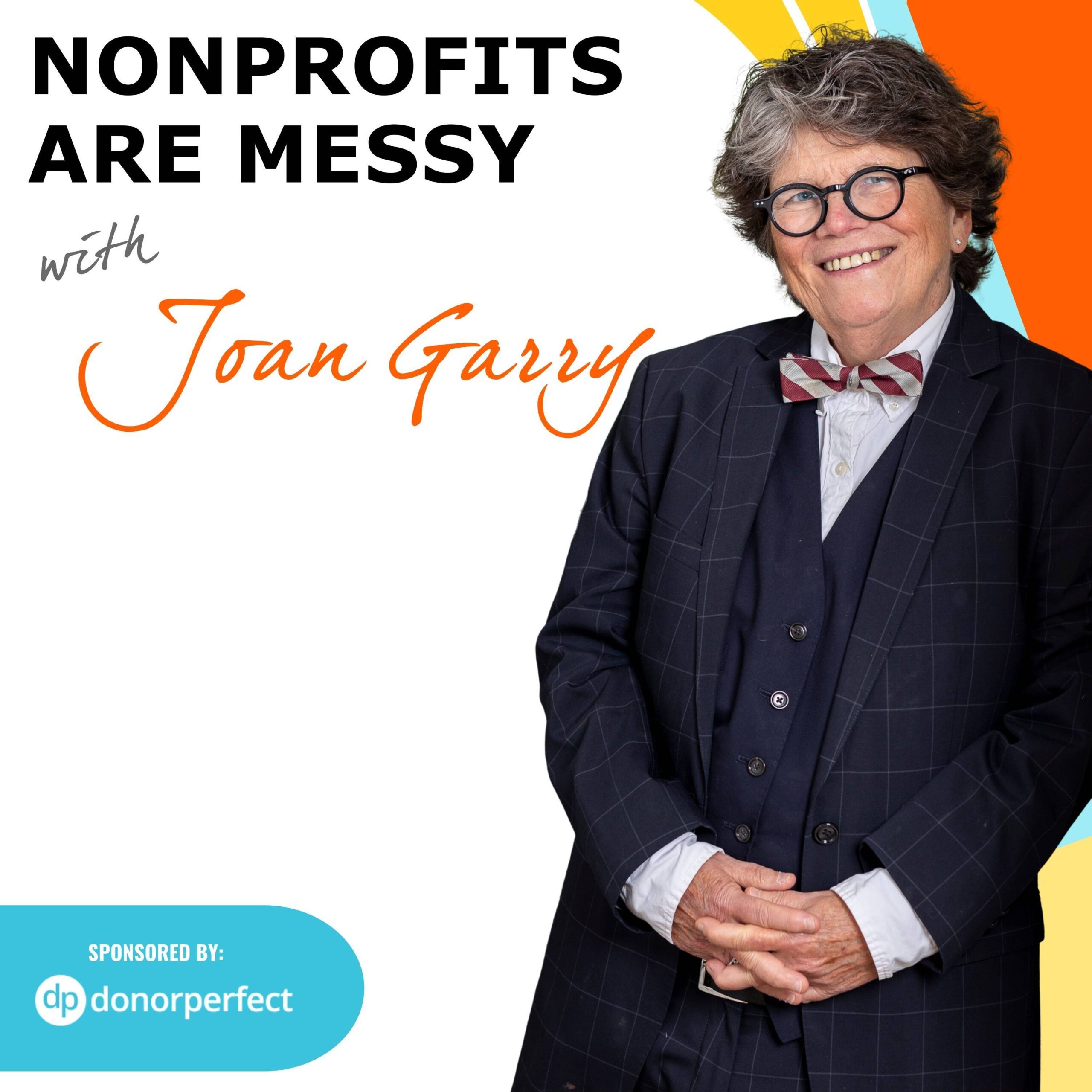
Nonprofits Are Messy: Lessons in Leadership | Fundraising | Board Development | Communications
Ep. 228: Nonprofits Are Under Attack
00:43:15
Nonprofits are under attack in 2025—from hostile federal policies, harmful public misconceptions, and risk-averse boards. Glennda Testone and I urge nonprofit leaders to push back, speak up, and lead with boldness and creativity.
Loading summary
Transcript94 lines
- [00:00]
Joan Gary
As a nonprofit leader, you deserve tools and support that help you to thrive. That's why I feel it is important to introduce you to today's sponsor, DonorPerfect. Their All in one fundraising platform simplifies donor management, communications, and reporting so you can focus on what you do best, changing lives. Plus, their expert team is always on hand to cheer you on. Do you want a partner who truly gets you? Visit donorperfect.com joan to learn more.
- [00:31]
Glenda
Okay, the name of this podcast is Nonprofits Are Messy. And it seems really appropriate given what's going on with nonprofits in the world today. It's not just nonprofits that are messy. I would say the world is pretty messy right now. We're trying to figure out the economy. We're trying to figure out where we stand as a country, especially if you're in the U.S. but even if you're not, every other country is trying to figure out where they stand in relation to the US So I'm super excited to be here with this podcast founder and host, Joan Gary. And we are going to talk about exactly the title of this podcast, that Nonprofits are Messy and why and how and what the heck we can do about it.
- [01:29]
Joan Gary
And be forewarned, this podcast might be messy, too.
- [01:35]
Glenda
Exactly. Welcome to Nonprofits Are Messy with Joan Gary and experts. This podcast is your go to space for insights, advice, and inspiration, designed to help nonprofit leaders overcome challenges and drive impact. Whether you're navigating small beginnings or leading a larger organization, we're here to support you every step of the way. Together with Joan and a diverse group of expert guests, we tackle the big questions nonprofit leaders face and offer actionable advice to fuel your leadership journey. A special thank you to donorperfect for sponsoring this episode and supporting nonprofits that we love. Now, let's jump in.
- [02:34]
Joan Gary
So, Glenda, you and I talk regularly, and in some ways, this podcast is that regular conversation. The things that are infuriating us, the things that we don't believe people really understand about the unique harm that is falling on the shoulders of nonprofits. And so I want to ask you this. So riddle me this, Batwoman bat person. What's infuriating you? What's infuriating you right now?
- [03:18]
Glenda
Okay. What is really pissing me off right now is seeing people and institutions and companies who could be standing up to the federal administration. They have the power to. They have the capability, but they're not doing it.
- [03:43]
Joan Gary
Would you be talking about, like, law firms or corporations?
- [03:46]
Glenda
I might be talking about some law firms. I might be talking about some universities. Look, my entire career is nonprofit, and that means tough choices every day. The choices that I see facing nonprofits since January 20, 2025 are really beyond anything I've seen. These are tough choices. You have an administration saying we don't support dei. If you're an organization that's job is diversity, equity and inclusion, what do you do? That is a really tough choice. But what is pissing me off and some of those nonprofits will hap may have to change what they're doing. They may have to continue what they're doing and call it something different. And I hate that they have to make that choice. And I have tremendous respect for the choices people are going to make to try and weather this storm and get through and help the people they're trying to help. But I know that there are people out there who could stand up and say something and fight. And it pisses me off when I see those people shrinking and saying, yes, what else would you like me to do?
- [05:04]
Joan Gary
Ditto all of that. What pisses me off is how blind people are to the value that the nonprofit sector brings to the world. And we see it all the time in the leadership lab on comments on social about overpaid executives and stuff. That is just bullshit. Yeah, Right. And so just a complete, complete set of myths that are being amplified by administration. And it infuriates me to think about. It's like a big, big boulder has been thrown in this pond. And I'm starting to anticipate that the ripples of that and they're catastrophic. It could mean that people die. They could mean that people commit suicide. It is not hyperbole to say that when you actually weaken the nonprofit sector in this way, when you remove federal funding, when you close down usaid, that lives are in jeopardy.
- [06:41]
Glenda
Yes.
- [06:42]
Joan Gary
And I'm furious. And just as Willy Wonka phrase would come to me, I'm just totally gobsmacked that anybody would do that and that people would allow it to happen.
- [06:56]
Glenda
Yeah. Yeah. I see the nonprofit sector as the social safety net of our society. This is the like when the government can't do it, when individuals can't do it, nonprofits come in and fill in those gaps and create a safety net that keeps people safe and fed and housed and sane and all of the things. And to see that ripped apart, it just feels heartbreaking to know this is. I've spent my entire life in this sector, and people come in to nonprofits to do this work because they want to help. These are the helpers to see the helpers, like, undercut and fired and their funding taken away and their own livelihood on top of the livelihoods of the communities they serve. To see that threatened is really devastating.
- [08:04]
Joan Gary
And I am so frickin tired of hearing that people should pull themselves up by bootstraps, whatever the hell those are. I don't know what bootstraps are, because isn't that the basic premise? Like I did. Well, I. I stood on my own two feet. Why can't everyone else? Well, the bottom line is not everyone else has equal access. Not everyone else has privilege. The list goes on and on and on and on and on and on. And it makes me feel so bad, so bad for the people that we see every day, the clients we coach, the thousands of members of our leadership lab who are already doing the hardest work there is and are now getting on the verge of getting crushed in all kinds of ways they don't even know yet.
- [09:03]
Glenda
Yeah. Joan, you mentioned in the beginning of the podcast, we track, you know, we post on social media, Joan Gary Consulting, and the Nonprofit Leadership Lab, and we get these comments from folks that just hit me. Gobsmacked is the word. They just hit me in the face like, wow, people so fundamentally misunderstand what the nonprofit sector is like. One of those comments was, how can it be a nonprofit if you pay people to work there? If you get a paycheck, it's not a nonprofit.
- [09:36]
Joan Gary
Yeah. And that's a whole nother podcast is. I believe that the nonprofit sector should be rebranded because it's not really about profit at all. And the name is about what it isn't, not about what it is.
- [09:50]
Glenda
Yeah.
- [09:51]
Joan Gary
And so here we are faced with all kinds of leadership challenges that board and staff members are grappling with as if they weren't already. Now, I don't think you or I would make the argument that nonprofits are perfect.
- [10:13]
Glenda
No, nonprofits are messy. I think we started with that, right? No, they're imperfect. It's not a perfect sector. It's not only perfect people that, I mean, perfectionist bullshit. Can we just agree on that? Number one?
- [10:28]
Joan Gary
Yeah, I think we do.
- [10:29]
Glenda
Yeah. Number two. Yeah, there are bad apples everywhere. But the vast majority, majority of nonprofit folks are good people trying to help. Period. End of story. They get a pay. Let me just explain for folks, this is probably not for our audience because they're listening to this podcast, but for anybody who's like, secondhand hearing this podcast, and you're thinking, wait, how can it be a nonprofit if you make a paycheck the difference between a for profit and nonprofit is that a nonprofit brings in money and an investment money back into the programs and services that they deliver. Right. So it doesn't make a profit for shareholders or anyone else. They take the profits and they put it back into helping the people versus for profit.
- [11:25]
Joan Gary
The profit is social impact.
- [11:27]
Glenda
Exactly. Exactly. It's helping people. So I think, you know, I would have thought before, like the federal funding freeze that everybody knew this stuff, but I was so surprised to see how many people didn't realize, like Head Start or Meals on Wheels, these are federal programs that are nonprofits. These are nonprofit organizations, you know, And I think people just think they're something else. They're like a magical unicorn out there. They're not government, they're not nonprofit. They're just. They just should happen. They should be exempt.
- [12:01]
Joan Gary
And why don't you think they know? Why don't you think they know? Right. Why are people so ignorant, honestly uneducated about the nonprofit sector? And then I want to get into a little bit more into the here and now, but it strikes me, it's so obvious to us. I asked somebody how many nonprofits there were in the town I live of Montclair, New Jersey. As I asked them somebody to guess, they said, I don't know, 40. There are a hundred nonprofits in Montclair in a town of 40,000 people. They're everywhere.
- [12:38]
Glenda
Yeah, right.
- [12:40]
Joan Gary
How could people be missing the importance? Why do you think that is?
- [12:44]
Glenda
I guess one of the reasons could be they don't have to see it. They don't need the services, they don't need the support. They're not people who are living lives where they are facing that adversity or gaps in systems that people fall through. If you are one of those lucky people, you may not realize what a nonprofit is or how it could help. That's very foreign to me. I'm not that person. But I know there are probably people out there. So I would say one answer is privilege, extreme privilege.
- [13:19]
Joan Gary
I think another one is that nonprofits don't have the resources typically to be able to market their good work.
- [13:31]
Glenda
Yes, you're right.
- [13:32]
Joan Gary
And they tend to be so focused on doing the good work, they ignore the importance of being able to tell people about the good work. And the other corollary, there is not that many platforms available to get the word out about things, whether that's news or Internet or whatever. Has seemed to have very much interest in people who do good things. And I believe that all of those things work against nonprofit leaders to the extent where it is much easier to write a story about the scandal of the. Can you believe the CEO of XYZ Nonprofit makes $1 million? Like, are you kidding me right now? That's scandal. Scandal. Media love scandal. And the. I saw a difference during the pandemic. I saw a difference during the pandemic where it was very clear that the government couldn't help all the people who needed help. And so essential workers and hospitals and educators and food service providers. I believe the nonprofit sector got more visibility during the pandemic than I can remember ever. And now I think we are in a very, very different and kind of dark place.
- [14:54]
Glenda
Yeah.
- [14:55]
Joan Gary
I want to talk about something else that I'm pissed off about.
- [14:58]
Glenda
Great, Go for it, Joan.
- [15:02]
Joan Gary
And this is actually more internal and I understand it, but it doesn't make me less pissed off about it. You know how you said that there are people that should be standing up that are not standing up, board members are not standing up.
- [15:16]
Glenda
What are you seeing?
- [15:18]
Joan Gary
What I'm seeing is risk management. What I'm seeing is fear. And what I'm seeing is scarcity and. Or a head in sand strategy. And so when things are bad, like, you feel like you're losing. So I have a client who's funder has adjusted the priorities away from X to international aid because of usaid, that perfectly legitimate choice for that funder to make. But it's a kick in the gut to my client. Right? Yeah.
- [15:54]
Glenda
Yeah.
- [15:55]
Joan Gary
So is the strategy. The board strategy in many cases is to make sure nothing goes wrong. Well, we're way past that now. Things are going wrong. Yeah, right.
- [16:07]
Glenda
We're swimming in the wrong.
- [16:09]
Joan Gary
And I think that because we don't engage our boards at higher altitudes of thinking and engaging in thought partnership, that they're pointing at the executive director and say, you better be ready to cut, to lay off, to do whatever you can to lower expenses, as opposed to looking at both sides of the P and L and saying, okay, you know what? We as a board, we need to be part of the solution here, too. We are going to ups, we're going to uplevel our commitment to give and get. We are going to be thought partners with you about creative ways to generate new revenue. And I am not seeing nearly enough of that. I'm seeing very little of it. And I guess the other piece of the puzzle is I'm seeing executive directors that are playing right into it. Right. Executive directors who are pleasers, who want to please their boards. Their boards want to know about what kind of cuts they're going to make, and they give them what they want. And I guess pissed off isn't really the word. I think I'm really disappointed. And that part of leadership is to really look at the whole ecosystem of an organization. And that is actually what many organizations did during the pandemic. You ran a community center for LGBT people that came in and out of a building that no one could come in and out of anymore.
- [17:41]
Glenda
Yeah. That building was closed for nine years.
- [17:45]
Joan Gary
And you all had to do creative strategies to enable the community to feel the support and the resources that you are obligated to deliver to them as a result of the mission of your organization. And I just feel the sector can be better with the right kind of coaching and tools and resources. Yeah. I mean, you talked about scenario planning the other day.
- [18:11]
Glenda
Yeah. Yeah. I think you have to do both. Right. But I share your meaning. You have to scenario plan, and you have to think about the risks. This is for board and staff, but you can't only think about that because then you're just barely going to make it through this moment if you make it. We had to do both. As a community center facing the pandemic, we had to look at expenses, and we had to make some cuts, and we had to get really creative really quick, because the things we used to do, we couldn't do any of them. We had to find a way to do that differently. I do agree with you. I think board members, especially, who are really into the risk management. This is going to be a terrible temptation right now, this moment, to just, like, double down on that and pull back and cut and shrink and that. It kind of ties into my. My anger around, like, that might have to happen for some organizations.
- [19:13]
Joan Gary
Yes.
- [19:14]
Glenda
But it does not have to happen for every organization. And I want to. I know we're.
- [19:19]
Joan Gary
We're.
- [19:20]
Glenda
We're ranting and we're, you know, this is messy podcast about messy nonprofits. But. But I want to call out a moment of hope that I saw recently, which is a philanthropy network called Wings published an open letter to funders asking them to, quote, act boldly to protect and strengthen civil society. I don't know what change that will bring, but I really appreciate coalition of funders coming together and saying, I know this is scary. I know our stock portfolios are probably being impacted, our endowments, all of that. If we go into a recession, this is everyone. But we need to act boldly given all of the carnage that's happening right now in our country. And in the nonprofit sector in particular.
- [20:15]
Joan Gary
This messy podcast is going to go away and come back in just a minute. I also have a couple of hopefuls and we're going to talk a little bit about what we want and wish to be different. We'll be right back. Are you a staff or board member of a small to mid sized nonprofit? Now you might feel alone, but trust me, you are not. I built the nonprofit Leadership Lab for the millions who are just like you. You'll find time saving resources when your pants are on fire, opportunities to uplevel your skills and a warm, nurturing private community of what we call superheroes. Thousands of board and staff leaders call the lab home and we'd love for you to join us. Learn more@nonprofitleadershiplab.com podcast so we're back. Glenda left us before the break talking about funders and sort of glimmer of hope around acting boldly. And that is what is demanded. And by the way, it is what nonprofit leaders. You didn't take the job to run a nonprofit and be an agent of change if you aren't fundamentally hardwired to be bold. And what you talked about, that funding collaborative reminded me of something that an individual organization, not a very large organization. It's called Keshet and it is an organization that advocates for young adults, LGBT Jews. And the email that I got from the organization quoted some letters that they had gotten my family needs to move. The attacks on our non binary kid in our state have become unbearable. Where do we find support and that these are the kinds of inquiries that they get and not infrequently. And so they announced a partnership with the Hebrew Free Loan Society called Move to Thrive. It's an interest free loan up to $10,000 to individuals and families who need additional resources to get out of their home states due to anti LGBTQ climate and policies they can relocate to states where they and their families can live in greater safety and dignity. This was one organization, right? A not a big organization and another organization, the Hebrew Free Loan Society. Also we're not talking about Gates, we're not talking about Mackenzie Scott.
- [22:55]
Glenda
Nope.
- [22:55]
Joan Gary
Right. And I read this and I said why? Why are we not seeing more of this from bigger players?
- [23:06]
Glenda
Yeah, yeah, I agree. I it really feels like we're in a moment where the nonprofit sector government workers, nonprofit workers are under attack, are really being painted as the bad guy. Their jobs are being eliminated, funding taken away. They're very our very identities and values and safety are being threatened. And to hear that story about Keshet is incredibly hopeful. I refuse to believe that we can't do anything right.
- [23:45]
Joan Gary
And for me, that. That was like. That was one call that a deep Klein made to one person and said, we've got to be able to solve for this. Don't you think?
- [23:55]
Glenda
Yeah, right. Yeah.
- [23:57]
Joan Gary
And I, when I went under the category of what do I want and wish to be different? I want more people to think creatively like that, using their relationships that they have built over time and nurtured, which is why relationship building is so essential, to be able to make things like that happen and to 10x that kind of thing. I found myself hopeful this morning in a similar way. Think about this for a moment. How many people, Glenda, do you think are just walking around stunned? I'm kind of imagining some dystopian film of people walking around aimlessly who have been unilaterally fired from the federal government and that they're like just walking aimlessly through Washington, D.C. do you know, can you imagine how much expertise there is, how much skill, how much actually interest in social impact there is among so many of those people? All the people at usaid, right. The Environmental Protection Agency, all of these people, their assets, how does our sector. Right. And don't go there. Please don't go there. I don't have the money to hire them. Please don't go there. Right. This particular client of mine thinks that they could potentially fund. They could get a funder to resource those people to come and support the work of that organization, solving for two very important things, resources that are underutilized and resources that are desperately needed. And I thought to myself, okay, that's what we're looking for here. Yes, that's what we're looking for.
- [26:03]
Glenda
Yes, yes.
- [26:04]
Joan Gary
That's bold. That's creative. An idea like that, that's fundable and it is, no question, pressworthy.
- [26:17]
Glenda
Yeah, right.
- [26:19]
Joan Gary
Somebody has to have been. When is somebody going to write an article about all the human capital that has been thrown into the streets?
- [26:28]
Glenda
Yeah, yeah, right.
- [26:29]
Joan Gary
People may be wondering where these people are going to work and how they're going to pay their bills, but we also should just take stock of the fact of how much human capital there is that could be devoted to actually the betterment of civil society.
- [26:47]
Glenda
Yeah.
- [26:48]
Joan Gary
What else? When you think about what could be different and what other kinds of things come to mind for you, Glenda?
- [26:56]
Glenda
I always think in these moments. I thought this during the pandemic and I feel it now, too, that the silver lining of these moments is that so Much of what we assume to be true and we relied on is sort of thrown out the window, that it opens an opportunity, a gap, a moment for us to hopefully think differently and figure out how to build something that helps more people, that includes more people. And there's a Sonia Renee Taylor quote that I hung onto all through the pandemic because she's an activist and artist and New York Times best selling author. She said this in the beginning of the pandemic. We will not go back to normal. Normal never was. Our pre corona existence was not normal other than we normalized. Greed, inequity, exhaustion, depletion, extraction, disconnection, confusion, rage, hoarding, hate, and lack. We should not return or long to return to that. My friends, we are being given the opportunity to stitch a new garment, one that fits all of humanity and nature. So I really hope that the moment we're in allows us to do that, allows us to take the relationships we have been building and expand those to greater creative, creative collaborations and collectives. And yes, I have a women's studies master's degree, and I'm not talking drum circles, but, like, I want us to get together and figure out how to take care of each other in a way that is more sustainable. And I don't know exactly what that looks like, but having the old playbook thrown out the window, I think gives us an opportunity to figure out what the new one is.
- [28:59]
Joan Gary
It's a great quote, and if this podcast was less messy, we would have closed with that quote, by the way. But c' est la vie. We did do a lot of that in 2020.
- [29:10]
Glenda
Yeah.
- [29:10]
Joan Gary
And I felt so hopeful and confident that we would sustain that, that it would fundamentally change the nonprofit sector, that we wouldn't again become overly reliant on our gala, that we would move more towards relational fundraising than transactional fundraising. We learned so many good lessons in 2020, and I'm a little sad that we didn't hang onto as many of them, because I feel like we're having. I see people having to relearn them. I mean, I remember Sometime early in 2020, a board, a member, I was doing some strategic planning, and they said, well, you could do a strategic plan for us, Joan, but could you just find us a billionaire? If people could only hear themselves. And I have a client, and I'm sure they're not the only ones where the people inside the organization are saying, boy, I hope MacKenzie Scott comes through.
- [30:19]
Glenda
Yep, yep, I'm hearing that.
- [30:22]
Joan Gary
Is that where we're at? That you hang Your hopes. Right. You don't take ownership or agency for the future and sustainability of your organization. You don't sit down and say, I don't know, let's think about the wackiest idea we possibly could. Right. And flesh it out and see if it leads us to some idea that is fundable, that is a new source of revenue.
- [30:49]
Glenda
Yeah.
- [30:50]
Joan Gary
And we have to be careful. Everybody has to be careful not to get so exhausted that they lose the energy to do that. And I'm going to go back to my client from this morning, his previous session. He did seem kind of out of gas and anxious because they had had this session where they had generated ideas of what they could do that could generate different revenue. It was like he was a different guy. And I think part of the Strategic Vision workshop we did in the Leadership Lab in February was if you can focus on where you want to go with the organization, the. That puts gas into your tank.
- [31:35]
Glenda
Yes. Yes.
- [31:36]
Joan Gary
At a time when it's really, really easy for you to run on empty. And I really wish that people would see that and recognize that it's not just a yoga class that's gonna put fuel in your tank. It's actually thinking creatively about how to build something to last.
- [31:56]
Glenda
Totally. And it makes me think about that phrase, we're the ones we've been waiting for. We didn't. That's what I'm reminding myself in this moment. You know, I. I think many nonprofit leaders, no one that I know who's a nonprofit leader, became one to become more powerful, to get more money, to buy more things. They became a nonprofit leader because they care about something or someone or some animals, and. And they are trying to do things to help those folks. So I never believed we were going to get this, you know, from the federal government, and we're certainly not getting it now. We are the ones we've been waiting for. We're still here. This is what leaders like us were made for, is these moments when other leaders are failing and we have to step in and say, you know what? There's another way we're going to get through this. This is what it looks like. This is a small example, but I thought it was an interesting one. The new head of the association of Fundraising Professionals. I don't know if you heard about this, Joan. His name. I don't know this man. His name's H. Art Taylor. He started his job on April 1st. On April. Oh, God love him. I just. I don't know him, but I'm sending him so much love. April 1st. On April 28th, I think it is, they have their national conference. They started to have a lot of Canadian and other international members. Say, you know, I don't feel so comfortable coming to the AFP conference this year from Canada. Who. Your president is saying he wants to make it the 51st state. I just don't feel great about that. I don't want to come. It grew.
- [33:53]
Joan Gary
Call me crazy.
- [33:54]
Glenda
Call me crazy. That doesn't make me feel welcome. And he made a video. He originally AFP came out and said, let's come together. This isn't about the US and people. That message didn't quite land. And so H. Art Taylor made a video, and in his video, he's an African American guy. And he said, you know, I started this job a week ago. I wish you could see our faces. I have so much empathy for this guy. Started my job a week ago. But I've learned a lot, and here's what I've learned. We need to do things differently. I understand what it feels like as an African American guy to feel unsafe traveling places. Some of you, when you bought your tickets for this conference, you didn't know this would be an unsafe place that you would feel like coming. But it does now. So, you know what? If you don't want to come, we're going to refund your money. And you know what else? That's a big deal. Big deal. We're going to refund your money because we understand you. We support our members. And he's like, I don't even know if we can do this. He's only been there a week. Joan. We're going to try and figure out a virtual option. I don't even know if it's possible, but if it is, I want people to be able to participate in that way. I just thought that was such an incredible example of strong leadership and making decisions that are connected to the moment that we're in and trying to be creative and empathetic and find our people and move forward together.
- [35:28]
Joan Gary
And authentic.
- [35:30]
Glenda
So authentic.
- [35:31]
Joan Gary
How many leaders would actually go on and say, here's what I think we should do? I. I think we should do a virtual option. But I have actually no idea whether we can do that or not. I'll get back to you. Right, but if most leaders said that, they would be mocked.
- [35:46]
Glenda
Yes.
- [35:46]
Joan Gary
Right. But in this video, that's just totally authentic. We're gonna do everything we can, and I don't know if we'll be able to do it, but we're gonna Try. If you were gonna refund your money and we're gonna try to make this conference available to you. Yeah, Right. That has all the attributes, many of the attributes that you and I talk about with our clients and inside the lab about what leadership looks like. Many moments are tough in nonprofits, but this one, uniquely so. And what it is, what it demands of its leaders. That was a very. One of my clients refers to. He'll ask me a question every once in a while, say, do you think that was leader Y enough? And I would just say the new head of the afp. Very leadery in that video.
- [36:30]
Glenda
Yeah, that was very leaderly. I watched that video and I thought, you know, I want to see more of this. More authenticity, more true leadership, more standing up, more. We've got to think differently. We just do.
- [36:45]
Joan Gary
Yeah. And as we, I think, close this out, I do think it's really important. And it goes back to the quote you used and what we have learned in our own work with the leadership Lab community. That community matters. At this time, when we talk about self care and what fuels you, we just talked about, it isn't necessarily a yoga class. It could be a great, bold idea to pursue.
- [37:21]
Glenda
Yep.
- [37:21]
Joan Gary
Right. There's both. Community, moral support. There's the notion that this is a traumatizing time for a nonprofit leader.
- [37:30]
Glenda
It is.
- [37:31]
Joan Gary
Yes. And, you know, and the community that we provide really does take a trauma informed approach to our members. And I think that makes it unique and valuable. But also, self care is about, do I know how to do this? Do I know how to do scenario planning? Do I know how to engage my board in a dark time? All of those kinds of things. You have to be the best leader you can be. And that may be because. And that may mean you have to fill a gap. Right. Or find a way to shore up something.
- [38:13]
Glenda
Yeah, yeah.
- [38:14]
Joan Gary
And so please remember that as you and rely on people who have that kind of creative juice and feed off of them. I think that makes a big difference as well. Any last thoughts you have? You could read that quote again. That was really good.
- [38:35]
Glenda
I love that you love it so much. When the pandemic started, I read it to my board, and I think some of them were like, whoa, this is radical. And then some people were like, oh, I love it. This is amazing. It really. It really separated people. But, yeah, something like that inspires me. The. The vision, where are we going? You know, and I think saying that we won't go back to normal. Normal never was normal. We're still aiming for that and this. This really gives us an opportunity to stitch a new garment, one that fits all of humanity and nature. So when I think of all of this hard time that we're in right now, it could be in the service of something better for everyone. That is what gets me through. But I guess my advice to nonprofit leaders would be, this is not a time to be a hero. Well, it is. You're superheroes, all of you. But it's not time to be a hero alone. Ask for help. Reach out to people, reach out to your board, reach out to your colleagues. You know, I've seen a lot of really good coalition building, AIDS funding getting cut, AIDS organizations coming together to say, this is life or death for our people.
- [39:59]
Joan Gary
Right.
- [40:00]
Glenda
So more of that, I think we could wind up, you know, four years from now and a better place potentially.
- [40:08]
Joan Gary
So we started out ranting, and I'm going to end. To add onto your quote, when I travel from Newark Penn Station and I've been on an Amtrak from D.C. i drive home up Bloomfield Avenue and I pass kind of a storefront church. And I see it, because you make the turn and you're staring right at that church. And I don't know why they picked this quote, but I see it every time I do this, and it really sticks with me. And it just simply says, finding treasures in the darkness. And I do believe that if you actually approach that, along with the kind of sentiment of the statements we've made and the quotes we've used today, go on a hunt for the treasures because they're there, right? Can't have light without darkness. There's a whole all kinds of places you could go, all the things. Right. But one of the reasons they're powerful quotes is because they're true. So we're gonna keep ranting about. We're gonna continue to rant about what's happening to this sector and its implications on our world and on the people who are our neighbors. And we're gonna continue to do everything we can to fuel you with the hope you need, to fuel you with the juice you need to continue to move during these grim times. So, Glenda, thanks for the chat.
- [41:44]
Glenda
Thank you, Joan. Hope is not a strategy, but we need some now. We need to hang on to that and keep going.
- [41:52]
Joan Gary
Okay. I think we have done famous quotes for 400 today. In the meantime, please take good care of yourselves. Reach out to joengarry.com there's resources galore there. Glenda and I blog and podcasts the Leadership Lab. So don't be a stranger. Take care of yourselves and we'll see you next time.
- [42:17]
Glenda
Thank you. Thank you for spending time with us today. We hope this conversation provides valuable insights as you navigate the messy but meaningful world of nonprofits. A Special thanks to DonorPerfect for sponsoring this episode and for their dedication to empowering nonprofits like yours to do more good. For more resources to support your work, visit joengarry.com to SL podcast. We think you'll find a lot of helpful things there. Most importantly, thank you for all you do to make the world a better place, one small or large step at a time. Talk to you all next time.