← Nonprofits Are Messy: Lessons in Leadership | Fundraising | Board Development | Communications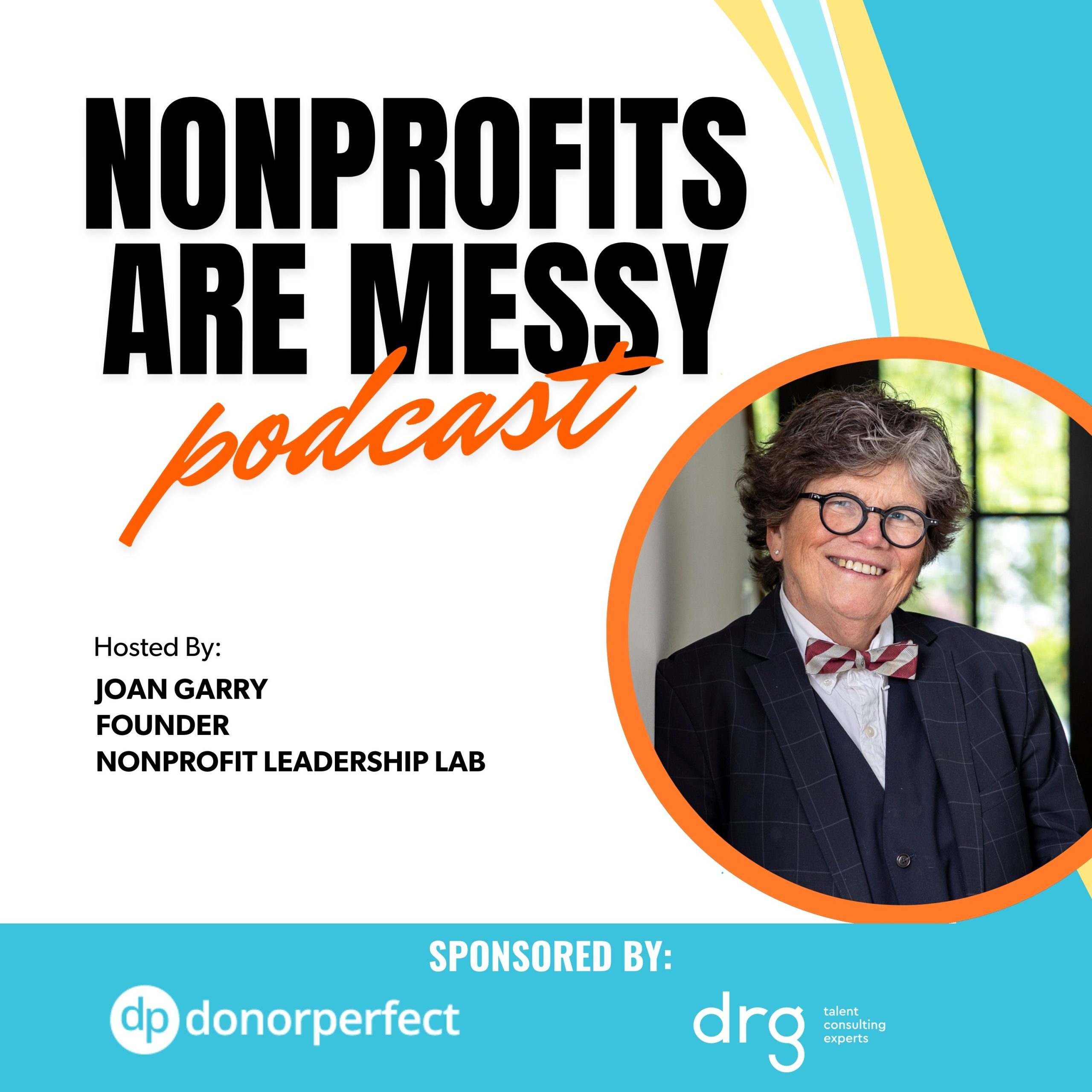
Nonprofits Are Messy: Lessons in Leadership | Fundraising | Board Development | Communications
Ep 245: Rethinking Leadership in 2026: The Shifts Nonprofit Leaders Need to Make Now
00:42:30
Loading summary
Transcript140 lines
- [00:00]
A
So at the beginning of every calendar year here at Nonprofits or Messy, we like to offer observations and insights. What do we see coming down the road in the coming year?
- [00:11]
B
You know, Joan, I'm sure whatever we said last January was likely wrong on every level.
- [00:17]
A
For sure.
- [00:18]
B
Joan and I are such passionate champions for the nonprofit sector. And to us, it feels hard to imagine that anyone isn't. And yet, in 2025, our most prominent, highest level elected leaders came after not only the nonprofit sector, but also the superheroes who work every day to change the world in ways large and small. You know what? Scratch that. There are no small ways. All of the ways are important.
- [00:47]
A
Right, right, right. Sometimes what you think is a small way is actually a big way.
- [00:51]
B
Absolutely. By the end of January, we saw that the federal government funding for nonprofit worked, was paused or pulled. Executive orders targeted the very people that many of our organizations advocate for. It felt like foundations were trying, but they moved so slowly as they tried to figure out the new landscape and a world in which they too were under attack. It wasn't just nonprofit. It was philanthropy. And there were threats that the IRS would scrutinize nonprofits in an effort to jeopardize or yank the their tax exempt status. We thought things might get rough for you all, but it felt like 10 times rough, even what we could imagine completely.
- [01:35]
A
And so here we are a year later, and presumably you're listening to us because you're looking for those smart observations and insights about how to approach the coming year. And it turns out we think we have some.
- [01:51]
B
We have some. Yeah.
- [01:52]
A
A year of working with clients, coaching folks in our online learning community, the Nonprofit Leadership Lab. We learned more than just a few things. Yes, sure, we saw how folks struggled. We saw common challenges, and we saw folks who said, hell no, we're not just going to hang on for dear life and tread water. They made new things happen, secured new funding from new sources, and actually grew. And so today, what we want to do is we want to share what we learned that can inform you about how to show up as a leader in 2026. What will it take to be a great leader this year? Now it may be deja vu all over again for nonprofits, but it doesn't have to be for your leadership approach and your style or your priorities and your strategies. Leaders, staff, and board. We hope you will share this episode to kick off the year and maybe to even listen to it again a few times this year to check in on yourselves and keep yourselves on track. So let's get started. We know you're busy and there's not a moment to waste.
- [03:06]
B
Welcome to Nonprofits are Messy with Joan Gary and Expert. This podcast is your go to space for insights, advice, and inspiration, designed to help nonprofit leaders overcome challenges and drive impact. Whether you're navigating small beginnings or leading a larger organization, we're here to support you every step of the way. Together with Joan and a diverse group of expert guests, we tackle the big questions nonprofit leaders face and offer actionable advice to fuel your leadership journey. A special thank you to donorperfect for sponsoring this episode and supporting nonprofits that we love. Now let's jump in.
- [04:00]
A
I think we've already established, Glenda, that 2025 was like nothing else. Right. Like nothing else I've ever seen during, during this work. During the last 15 years, you've been on the front lines helping the helpers as a, as a nonprofit leader in the, in the trenches. Would you agree with that characterization?
- [04:21]
B
Absolutely. 2025 was unique in some of the worst ways. And I think it was especially unique because, you know, 2020 was a unique year. We had the COVID global pandemic that felt like something external that was sort of attacking from the outside. What's going on, what has gone on in 2025 feels like many attacks from within. And I would frame it also as, you know, places like, depending on where you live in the country, Seattle, Minneapolis, I can't even keep track of all the places D.C. you would be living your life in those cities. But you would hear, this is a war torn place and we need to send the National Guard.
- [05:10]
A
Right.
- [05:10]
B
So it really feels like democracy itself was under attack. This life, liberty, the pursuit of happiness here in the US Was something that we could not take for granted anymore. And I have never in my 49 years seen anything like it.
- [05:29]
A
We often talk about helping nonprofit leaders navigate turbulent waters. And there's always something that's implied about that, that they're going to navigate those turbulent waters to get to some smooth sailing.
- [05:44]
B
Yeah.
- [05:44]
A
Right. So like 2020, like, can you hang on until we get a vaccine? Absolutely. And you go into 2026 and you think to yourself, I don't, I don't see smooth sailing.
- [05:59]
B
No.
- [05:59]
A
And I don't see it. And let's get started on this. I don't see it in 2026 either.
- [06:05]
B
No.
- [06:05]
A
Right. Because there isn't. You can't, we can't be inoculated about by this. And so a leader, I think one of the things that I've learned in watching leaders in 2025, some of them led and managed as if there were smooth sailing ahead. And the ones that were really stepping and leaning in said, oh, this is not going anywhere anytime soon and I've got to learn how to navigate ongoing chaos, basically.
- [06:42]
B
Yeah, Yeah. I really think it would probably help listeners for us to think about between the lab and all the individuals that we work with there, the thousands of individuals, and then the people, the leaders that we coach, what are some of the things that for this past year, 2025, we feel like got in their way? Like, let's. Let's start with the bad and the ugly and then let's. We'll get to the good. But what's something that you saw come up for leaders in 2025 that challenged them? I think you just offered something. Some people saw this as a very short term problem.
- [07:22]
A
I think that some people let the chaos manage them. Right. Is that, you know, do you remember the Exorcist with Linda Blair, where her head spun around?
- [07:33]
B
Yeah. It was terrifying.
- [07:34]
A
Terrifying, right?
- [07:35]
B
Terrifying as a child.
- [07:36]
A
Right. But I think there were some people, like every day it felt like their head was spinning around 360. And they let that take over. And they lived in this place of chaos and fear. Yeah. And I guess the other thing I would say is that boards got in the way. A lot of boards got in the way because, remember, they are risk managers. That's how they somehow, how they come to the work. Because we haven't really done a very good job of educating them about this full scope of what they do. Maybe more that in 2026. But risk, fear, chaos, these are not the ingredients for creativity, for innovation. They don't build resilience. And so, you know, you and I both know Drew Dyson at the center for Modern Aging. He's got a great board he partners with, and they started to talk about what's possible, what do challenging times make possible, what does the elder community in the Princeton region need? And in the middle of all of that chaos, he kept his head from spinning around, and he was actually able to start a capital campaign and successfully at that. And I do. So I think the recipe, the ingredients have to be just right for people not to be managed by the chaos, but to actually thrive in it. There's actually a book. There's actually a book, Glenda, which I have on my shelf, and I think it might be called Messy and. No, no, no, no.
- [09:18]
B
Nonprofits are messy.
- [09:20]
A
Nonprofits are messy. But this book is actually called Messy. I'm pretty sure I had him on iPodcast. And it's actually a book about how to thrive in mess and the treasures you can find in it. And I think that's, you know, we got in our own way because we weren't seeing some of that. How about you?
- [09:36]
B
Yeah, I think so. This is similar to what you said, but it's a slightly different look at it. I think what when I saw leaders who were really feeling stuck or really not succeeding and leaning more towards failure, it's because they were only doing one of these two things. They were either, as you said, stuck in the urgency and the mess and the chaos. Like they could not see beyond. Oh my God, my federal funding is getting pulled. What am I going to do? I need to lay off staff, I need to blah, blah, blah. If they only stayed there and they never got to the what happens next? What could this look like? Is sort of short term thinking, long term for thinking. And I saw leaders who were very comfortable in the long term thinking. You know, like I can see a world where we're going to get past this and we will get. But if they were not managing the truly urgent things that were coming up in the short term, if they were not in some cases laying off the staff and dealing with what was right in front of them, they're not gonna make it to the long term. So I really feel like what got in some leaders way is that it was very hard to shift between those two.
- [10:56]
A
Yeah, that's true.
- [10:56]
B
To really be able to see like, oh my God, the urgency my community is being targeted and the long term, how do I need to structure my organization? How does this sector need to be structured to succeed more and better in the future?
- [11:14]
A
Yep. Don't you think also that the people that where it got in their way was that they had no partner, no community.
- [11:23]
B
No.
- [11:24]
A
It's like they felt like they were all by themselves in that boat without windshield wipers. Right. I mean I feel like that's right. I mean, you know, I talk about boards and twin engine jets and co pilots and stuff, but there's some real truth to this is that if you feel like you're the only person who can be relied on, first of all, it's a fast pass to burnout, but it also isn't the best way to get the best ideas.
- [11:51]
B
No, no. And I wanna say for the record, and I know you'll agree, Joan, there is no doing it alone and succeeding in this world. It just does not work that way. And you see, especially in times of crisis leaders who kind of begin to go inward, and they're not consulting, they're not talking, they're not partnering. They're just going inward and freaking out, usually. And those are the leaders I really worry about, the ones that are doing the opposite, reaching out, talking to their colleagues, talking to their peers. How are you handling this? Building new partnerships, thinking expansively, have much more of a chance of surviving something like this last year and going into 2026.
- [12:41]
A
Yep. And I want to go back to the boards for a second because certainly you see smaller organizations and even larger organizations where the staff is highly deferential to what the board thinks ought to happen. Right. They think of themselves as truly working at the pleasure of the board. And that's not untrue. But how do you deal with a board who says, there's no more money coming in, we got to shut down. And I have a, you know, I have a former client whose organization, in a bad way, the word messy, very bad, messy way, closed their doors and they were doing really, really important work in an important space. And I don't think they want. The staff didn't necessarily want to shut down. And I wonder, because I wasn't on the inside at that conversation, how much thought was really given to what the different paths were that they could have explored rather than, oh, all of that got pulled. We've got to shut the doors. And I bet many more organization shut doors than should have.
- [13:54]
B
That's an interesting hypothesis.
- [13:56]
A
Yeah.
- [13:56]
B
We should see if we could talk about that in a future podcast, because I agree. I think 2025 was scary in a way that I have never seen, because it was not just fear and anxiety. There was real damage there.
- [14:13]
A
Yes.
- [14:13]
B
There was real pain that people felt. It wasn't just threatened, although it was certainly threatene, but people really felt it.
- [14:22]
A
Yep.
- [14:22]
B
You know, and I. That can be just. That can lead people to prematurely kind of turn in and shut down in a way that we cannot afford for leaders to do that.
- [14:38]
A
Yeah.
- [14:41]
B
I think maybe when we come back, let's talk about the good things.
- [14:45]
A
Oh, you don't want to just have an entire podcast where we throw a bucket of cold water on our listeners.
- [14:52]
B
I mean, I absolutely could. That is in me. But I don't think it would be wise.
- [14:57]
A
No. And I don't actually think it's why people are listening to us today. So we're going to be back in just a moment, and we're going to talk about some of the common threads we saw in what was strong about leaders in 2025. We've touched on some of that and then lead it into some advice about how you might think about your leadership in the coming year. So stay tuned. Yeah. Are you a staff or board member of a small to mid sized nonprofit? Now, you might feel alone, but trust me, you are not. I built the Nonprofit Leadership Lab for the millions who are just like you. You'll find time saving resources when your pants are on fire, opportunities to uplevel your skills, and a warm, nurturing, private community of what we call superheroes. Thousands of board and staff leaders call the lab home and we'd love for you to join us. Learn more@nonprofitleadershiplab.com podcast. All right, we're back.
- [15:50]
B
All right, so Joan, I want to, I want to make a hypothesis here. I want to talk about the common threads we saw in strong leadership for 2025. And I guess one of the first things I want to say which might sound counterintuitive is that I really saw so much leadership that did not necessarily come with a big leader title or like a national global platform. I saw people the listeners know, I think I live in Asbury Park, New Jersey. It is a small town in New Jersey and it is a very close knit community, very diverse community and we don't have the best schools. That's just objectively true. And there was a woman who ran for the school board this year and in our local town who is, was born and raised in Asbury. She went through the schools and graduated. She now has a child in the school and she really wanted to try and make a change and make the schools better. Her name is Brittany Ramos and she's awesome. And she, it was one of the best examples of leadership I saw in last year. And she won, you know, and she could have sat back and said, I don't need to do, I'm just trying to get my kid through the school, make it okay. But she really made the call. You know what? I want to make it better for the community and for everyone's kids. So I'm going to, I'm going to run for the school board. No easy feat. Anyone who's been on a board knows and I'm really going to try and see if I can make a difference.
- [17:30]
A
This whole notion of leaders not being found in the person who gets the most votes or the, you know, the person who has some appointed title or get hired to lead is really, really interesting. I mean, we've seen it, you know, we've seen it with no kings marches, like anybody who shows up, who says, I'm not going to sit on the sidelines, is actually demonstrating some kind of leadership. And I remember you were talking with Darlene Knipper, one of a podcast we guest, we have had a couple times from Rockwood Leadership Institute, who was really, sadly part of the Altadena wildfires in California, and she talked about how people led in those times. And it wasn't the mayor of Altadena. It wasn't right. It was neighbors.
- [18:23]
B
Yeah, yeah.
- [18:24]
A
And I think that's a key thing, right? Neighbors as leaders. Right. Can you lead on behalf of your neighbors? Do that thing, show up for them?
- [18:34]
B
Yeah, yeah, absolutely. We had a really consequential governor's election here, and my partner Jayma, who identifies as transgender, wrote little notes to our neighbors about, like, hey, you may not know this, but my name is Jayma. This is my family. I'm trans. And if we don't get the right governor elected, I could find myself deeply under attack.
- [19:02]
A
Right.
- [19:02]
B
So I hope you'll consider that. I hope you'll think about it. And that didn't come with a title or a platform. That's just people's own lived experience and people wanting to educate their neighbors and lead in a way that I think is so, so inspiring. It's how I've always thought about leadership. It's not just one person. Everybody can be a leader.
- [19:27]
A
Absolutely. And, you know, the story you told about the school board on the politics on the left, politics on the right, the folks on the right, they've understood that kind of power for a really, really long time. You and I have both been part of the LGBT movement for a long time, and, you know, you just saw that they were very smart and strategic about growing leaders. Right. The person who runs for the school board and does a great job, becomes your next mayor, becomes your next. Gives a shot at running for Congress. And so there's a pipeline that I think starts in places like Altadena and Asbury park, and I think that that's something for you to think about as a leader. Listening today is, who are the people in my world that I can light up to get engaged in different kinds of ways, and can I start them down a path that will fill them with meaning and purpose and also help our organization grow in its power and its impact? Because there are more people who are ignited by what you're doing. So I think that's. There's a nice connection between the leader, who's the next door neighbor writing the notes, the person running the school board and how you build a new and different kind of leadership. Absolutely. There's a couple of other things that come my mind as I think about what will be required of leaders in 2026. We talked a little bit about it. Simon Sinek, who's a, you know, he writes some really great stuff. If you haven't seen any TED talks by Simon Sinek, definitely worth it. He's got one called Start with why that's great. He's also one has something else called Great Leaders Eat Last. Great leaders do not lead alone. So they may be hungry because they're eating last, but they are not leading alone. Collaboration, seeding a little control, believing that your board can actually be of value. I think that the folks who are going to get it right in 2026 are actually going to in fact invest and build like a real group of village people, if you will. Right. That they're really going to recognize that being a control freak, believing that you can do it all yourself has never been a winning strategy. But now, because the waters are turbulent and they got sharks in them and they're not going to be smooth for a while, you cannot afford to do it by yourself.
- [22:19]
B
Absolutely. I think creative examples from 2025, I want to hold one up where there's almost like a vacuum of leadership and so other leaders step in and fill it. And so, you know, we talked about foundations earlier and it's not been an easier for foundations. They found themselves under attack as well. But there, there have been situations where foundations are giving all the money to the biggest organizations. And there's an example in the trans community where the biggest organization that got, you know, the magic McKinsey Scott money.
- [22:59]
A
Right.
- [22:59]
B
And so was in a really place they did not just take that money and hoard it. They figured out who are the smaller organizations on the ground across the country that didn't get any of this money that need it to keep their doors open, to keep their organizations on track, to, you know, feed people, bail people out of jail, housing, all of that. And they actually gave those organizations money. That's something they were, were set up to do.
- [23:28]
A
Nor was it.
- [23:29]
B
Nor was because it needed to be done.
- [23:31]
A
And it wasn't a stipulation of the gr.
- [23:34]
B
No, there were no stipulations of the grant. And that's just such, such a good example of an organization. This is the Transgender Law center, by the way, who sees it's not just about us succeeding. We need this entire ecosystem to succeed if we are really going to fulfill our mission. And Living those values. So wanted to hold, hold that up.
- [23:57]
A
No, I think that's really good. And I, I want to recommend a book to listeners. It's an easy read. It's called the book is called Mindset. Some of you may have read it or heard of it. It's written by Carol Dweck. And I think this, in this year, you've actually got to enrich the people in your village to get them thinking differently to moving away from this fixed view of. This is how we've always done it. Right. This, you know, I don't understand my job as a board member and that accepting that as the reality as opposed to kind of a growth mindset where you approach, where you approach a problem from a place of curiosity, from a place of collaboration. And maybe in the show notes we'll have, there's a, there's a very good Harvard Business Review article that summarizes the book and because I'm sure some of you heard book but article maybe. And I think so I do think enriching yourselves and your board and your volunteers just to name what you're going through and to try to make these kinds of shifts, to try new things is going to be pretty essential. Absolutely.
- [25:23]
B
So here's the deal. We promise we will not encourage you to make New Year's resolutions. You know, the things that are gone before January is even over. But after the break, we will offer you our thinking about how great leaders will show up next year. Spoiler alert. We do have something to say about New Year's, but it's not a requirement. Right after the break.
- [25:49]
A
Today's episode is sponsored by DRG Talent. I go way back with drg. This team is passionate about strengthening the nonprofit sector. Their work goes well beyond a holistic executive search process with strat plans, comp analyses, culture surveys, leadership 360s, and the list goes on. I refer clients to DRG regularly. And I'm excited to be able to say this with a microphone in front of me. These folks are good and they care. Reach out to them. Drgtalent.com and tell them, Joan, Gary sent you. We're back. We were offering, you know, we kind of offered you a glimpse of what we saw as challenges, some successes. And what we wanted to do in this final segment here is to put them, put it all together. And I guess I would start by saying that great leaders this year will actually assume that this year is just like last year. Right. To assume something different might be naive.
- [26:46]
B
Yes.
- [26:46]
A
Right. To think, oh, it can't be as bad as it was last year. Right. It could be.
- [26:53]
B
Oh, I think it could.
- [26:55]
A
It could be. We have no idea.
- [26:58]
B
We have no idea.
- [26:59]
A
And by the way, you know, you use this word a lot, Glenda, and I really like it as the nonprofit sector as just this huge. We need to come up with a different word from army. And when you do, will you let me know? This huge army of change makers. Right?
- [27:17]
B
Yeah.
- [27:18]
A
And I don't think a lot's gonna change in the landscape in 2026. I don't think we should walk into it assuming that. So that's the first thing that I would say to everybody. And I don't want you to be depressed by it because you'd actually be more depressed if you thought it was gonna be better and it wasn't. Right, right, right, right.
- [27:38]
B
I wanna double down on that a little bit. I think, actually leaders could assume, because I didn't. Going into 2025, I knew it was going to be hard. I had no idea how hard. I had no idea the myriad of challenges and things that were gonna be coming at us. So I think we could even assume that it might.
- [28:04]
A
26.
- [28:05]
B
And if it does, instead of it being a surprise or just way beyond our expectations as it was in 2025, I think maybe taking some time to think about scenario, plan. What if it gets worse?
- [28:19]
A
Yep.
- [28:20]
B
What would that look like? And what would we do about it? I'm a. I'm a big believer that one of the best things we can always do to make things better is. Is to plan, is take a pause and think about it and think about, what if it goes really bad and what if it goes really amazing? What are we going to do in each of those scenarios? So it's not a surprise.
- [28:43]
A
And that. And the way I was thinking about it is, in 2025, we played too much. Whack a mole. Yep. And in 2026, I want all of you to think about this phrase, if then. Okay. Think about if then, because if then is actually at the heart of scenario planning. If this happens, then this is the path. If this happens, then this is the path. If this path. This is the path. And you're going to say, where am I going to have time for that? Well, if you're spending all your time whacking moles, you won't. Right, Right. If you take a. If you take a group of people and say, it's still going to be chaotic the day after tomorrow. Let's spend a whole day talking about scenario planning. That's an investment in your time that will pay massive dividends. And I think it's the key to what I'm beginning to understand this concept of adaptive leadership, which is a leader who really does have this growth mindset and can really sort of pivot when necessary, try new things, and isn't afraid of those things.
- [30:00]
B
Yeah. A couple of things. Number one, I just want to say I've worked with Joan for a long time, and you are the first, only, and the person who, the most in my life has ever discussed Whack a Mole. From the very beginning, from when I first met you, many, many years of glaad, I think you were the first person to talk about Whack a Mole and the Whack a Mole metal.
- [30:23]
A
Really?
- [30:24]
B
Yes.
- [30:25]
A
Oh, yes.
- [30:26]
B
But you live in Asbury Park.
- [30:27]
A
There's like.
- [30:28]
B
I know, but I get galore.
- [30:30]
A
You didn't know what Whack a Mole was?
- [30:32]
B
I didn't back then, no. It's one of those things. As soon as you use the analogy, I was like, oh, that's so appropriate. Yeah, it pops up, you gotta hit it down. It pops up, you gotta hit it down. So you're just reactive. It's like a great example of how if you spend all your time being reactive, it never ends. You're never going to get out of that mode. So.
- [30:52]
A
Right.
- [30:53]
B
You know, that was just my first.
- [30:55]
A
That's very funny. I did not know I introduced you to the phrase Whack a mole even though. Even though there must be five arcades on the boardwalk at Asbury where you could play it. Yeah.
- [31:07]
B
I mean, I had definitely played Whack a Mole as a child. I just had not looked. I think it's safe to say that Joan and I never met a metaphor we didn't like. We will use them. We will mix them.
- [31:19]
A
Oh, yeah. I've got boats. I'm about transportation myself.
- [31:23]
B
I know you are.
- [31:23]
A
At least you have airplanes.
- [31:25]
B
I don't have a theme.
- [31:26]
A
Yeah. So. And you know what? They're helpful. And you could come up with some of your very own at home. It's a game you can play at home. Try it over the holidays.
- [31:36]
B
What is the metaphor you want to come up with?
- [31:38]
A
There you go.
- [31:41]
B
Yeah. So I think one of the things that leaders want to do to succeed in 2026 is to keep in mind that thing I said in the very beginning about balancing the crisis in front of you, the short term, thinking what needs to happen right now, you can't not do that. But don't forget about the long Term planning. You know, I are. It is true that our opponents have been thinking long term for a long time, and it is paying off for them. So I want us to get some of that. Some of that prize and do it and get some wins on the other side.
- [32:23]
A
So I want to go back to boards. I have a client, and their board is so focused on how much money they have in their reserve, how much should come out, and they spend all this time talking about their reserve. Right. And I am absolutely convinced that one of the reasons that people on boards focus on things like that is because they don't actually get what their job is or why it is so important. And I think that a Great Leader in 2026 says, I can't listen one more time to a board member saying, I don't understand what my role is or me saying it in the mirror. These people don't understand their jobs. That can be fixed.
- [33:06]
B
Yes.
- [33:07]
A
And that needs to be fixed because you need them as thought partners. And you might say, I don't have the right people on the bus. And you can go ahead and start to fix that. It may seem onerous, but it's doable. But I do think that, like, if I was gonna do anything in quarter one, that's one of the things I would do, is I would actually educate my board on what a great board looks like, so they know what they're shooting for there.
- [33:37]
B
You know, Joan, there's another way to ask this question, and we're sort of getting to the end of our podcast, and I am a big fan of kind of starting with the end in mind, like, what is the thing you want to be able to achieve and then working back from that. So this is where New Year's is going to come in. This is where we're not going to ask people to make resolutions, but we are going to ask you to imagine that it is roughly a year from today that it is the end. It's December 31, 2026. What would you, as a leader, want to be able to say that you feel grateful that you accomplished in this year? Let's role play, Joan. We've both got some theater background. I think we can do it.
- [34:26]
A
I think we can.
- [34:28]
B
Who are you playing and what would you like to say at the end of next year?
- [34:32]
A
So I'm gonna pretend I'm a board chair. Stay there. And I would like to be sitting in front of the fire on New Year's Eve holding some Prosecco and saying, that's my drink. I know I was Giving you a tip of the hat. I don't like bubbly boos. I took the lead as a board chair in ensuring that my board really understood how important their jobs were brought and brought in, gave them resources to learn that, and started to create functioning committees that were doing their own work.
- [35:12]
B
Right.
- [35:12]
A
So that I could actually be a valuable, our board engine could be a valuable asset to the staff. So that's a board New Year's Eve one. What do you got?
- [35:25]
B
I love that. So I'm going to be playing the role of development director and I, or chief development officer, whatever you call that person in your organization. And I would like to be sitting before the fire, drinking Prosecco or perhaps some red wine.
- [35:44]
A
Wine.
- [35:44]
B
We'll see.
- [35:45]
A
That's usually my drink in the winter.
- [35:47]
B
Yeah, we'll see how cold it is. You know, I would like to be able to say, you know what, there's never a good time to focus on the small dollar donors, but this last year I realized if we didn't start, we were never going to get anywhere. And so I put some time and effort into it and now we have a small dollar donor fundraising program that is actually going to make us more sustainable than a single million dollar donor. May not be what my board wanted to hear, may not be what my executive director wanted to hear, but I know and believe this is the path to being sustainable year over year over year. And so I did it and I feel really proud about it.
- [36:39]
A
Okay, so I'll be an executive director. My staff stayed with me all year. It was hard, but I think we have a culture in our organization that really named how hard it was. I feel like I showed up for them in a way that wasn't chaotic, that if I ever had moments of terror, I had them in the quiet of my own home. I didn't BS the staff, but I also talked a lot about what challenging times make possible. Right? Yeah. So I think I took good care of my staff this year. I feel like they felt ignited in a way they might not have if I didn't show up that way.
- [37:28]
B
Yeah, I wanna do one more and I could do this. Playing the role of executive director or playing the role of volunteer, these are two sides of the same coin. But let's say I'm a volunteer and it's the end of the year and I say, you know, I am so glad that the people that run the organization that I absolutely love reached out to me and asked for help because I had something to give this year.
- [37:56]
A
Love it.
- [37:57]
B
You know, I Could. I could send those thank you letters. I could call those people and ask them to sign up for the thing. I felt so, so good being asked to contribute to the organization that I love, that I just feel really fulfilled and I just want to give them all my money when I win the lottery. Something like that.
- [38:19]
A
Something like that.
- [38:19]
B
I'm just spitballing.
- [38:20]
A
Spitballing. I want to throw one more in. And it's all about the question mark. Okay. So I'm an executive director. It's New Year's Eve, and I want to be able to say that I embrace the power of the question mark. And what that means is I asked difficult questions. What if we didn't do program X anymore and we doubled down on A, B and C? What if we literally entertained merging with another organization?
- [38:56]
B
We don't have to.
- [38:57]
A
But what if. And come to it with a growth mindset rather than a fixed mindset that would say, show me a merger that works. Right. So that's one part of the question mark. And the other part of the question mark is just to come to. I came to my work this year from a place of curiosity. Right? What could we try? What might be different? How are my staff feeling? Right. Is that rather than presuppose. Because executive directors often think they know all the answers. By the way, I've heard that. I've been one of those people and I coach those people. Why don't you imagine that you don't have all the answers and that the power doesn't come from your head, it comes from all around you. And I think that'd be a hell of a nice thing to say on New Year's Eve.
- [39:51]
B
Yeah. I can't top that. I think that's a really good place to end. The power of the question mark. The power of curiosity. Asking ourselves as leaders the tough questions and asking other people the tough questions. That would be something new. That would be something that challenging times may make possible.
- [40:13]
A
You sure you don't want me to go back and talk some more about whack a mole? Because I could.
- [40:17]
B
No. I've heard it.
- [40:18]
A
Okay, enough already. Joan. On the whack a mole. Anyway, move away from whack a mole to if. Then use your question marks. Take good care of yourselves. Take good care of your teams.
- [40:33]
B
Prepare for the worst and celebrate the good things.
- [40:37]
A
Right. They're out there and be ready scenario plan. Take your nose up, look down the road. That's what people are hoping that you will do. Right. And it will give you the most sense of reward, gratification, meaning and purpose.
- [40:56]
B
And we'll be right here with you.
- [40:57]
A
We will be.
- [40:58]
B
Not alone.
- [40:58]
A
Nope.
- [40:59]
B
No, not alone.
- [41:00]
A
And so the other New Year's resolutions are going to all probably already gone by the wayside by the time this airs. But if you can hang on to some of these ideas throughout the year and maybe re listen, because things are going to get tough and you're going to say, oh, that was a good podcast back in January. I should really listen to that again. Then you should. You know where to find us. Anyway, Glenda, happy New Year.
- [41:26]
B
Happy New Year, Jo. Thank you so much. All right, see y' all next year.
- [41:30]
A
All right. Thanks very much. Take good care. Bye.
- [41:38]
B
Thank you for spending time with us today. We hope this conversation provides valuable insights as you navigate the messy but meaningful world of nonprofits. A Special thanks to DonorPerfect for sponsoring this episode and for their dedication to empowering nonprofits like yours to do more good. For more resources to support your work, visit joengary.com podcast. We think you'll find a lot of helpful things there. Most importantly, thank you for all you do to make the world a better place, one small or large step at a time. Talk to you all next time.