← Nonprofits Are Messy: Lessons in Leadership | Fundraising | Board Development | Communications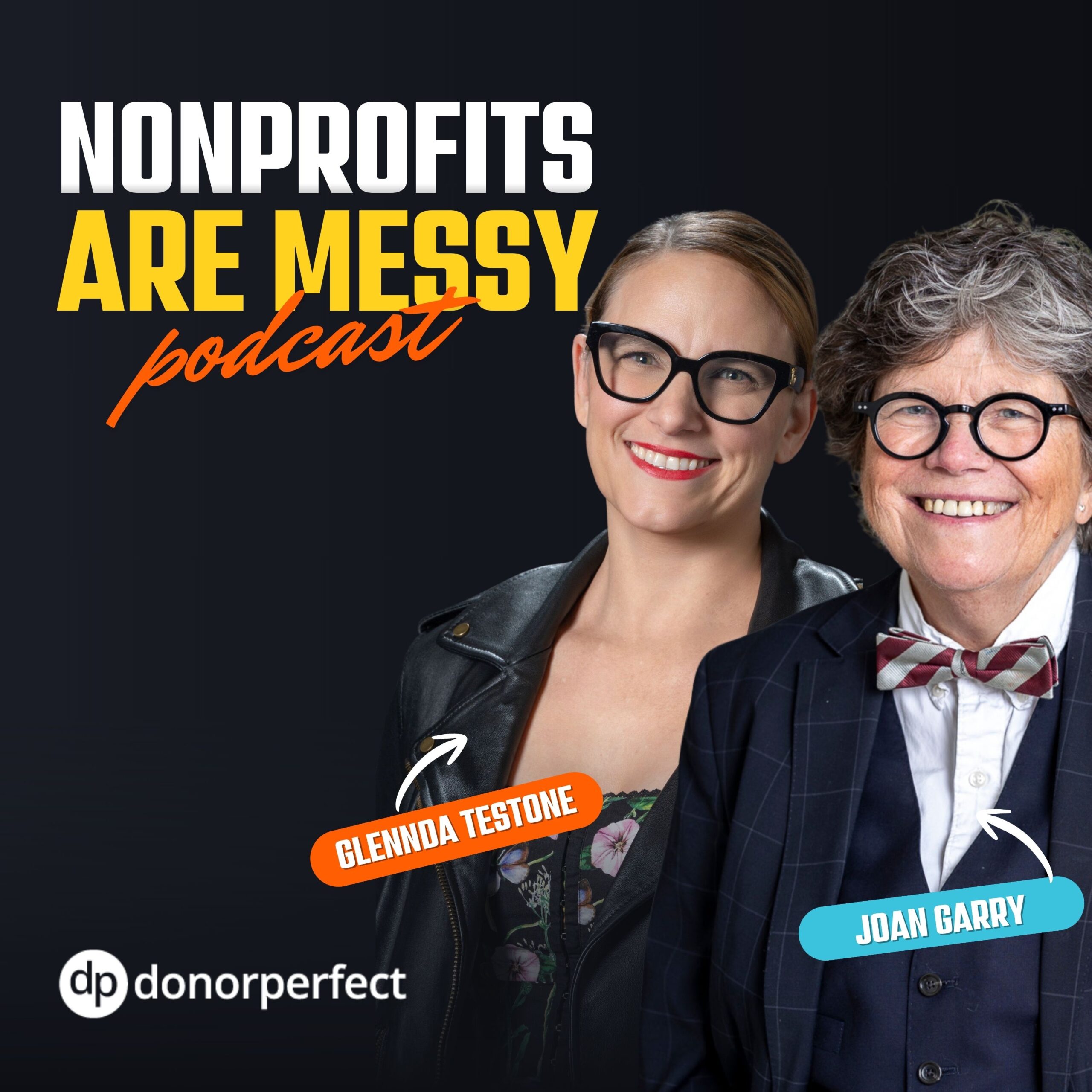
Nonprofits Are Messy: Lessons in Leadership | Fundraising | Board Development | Communications
Ep 253: Still Figuring It Out: An Honest Take on People Pleasing and Leadership
00:25:41
Loading summary
Transcript5 lines
- [00:00]
A
Okay, y', all. True confession. I am a people pleaser. I'm not scared to say that. Although it does feel a little vulnerable. I know that I am not alone, that there are others like me out there. And I will even go so far as to tell you that my people pleasing prevented me from. From actually recording this people pleasing podcast. Now, I know you're sitting there thinking, but I'm listening to this right now, so you're doing it, and I am. But it was a long road to get here because I kept thinking about, well, what if I say the wrong thing and people don't like it? And welcome to my world. What I mean when I say I'm a people pleaser is that my first instinct from very, very young, the first thought I have when I sense, and I'm very keenly attuned to other people when I sense that someone else might be displeased, is to tap dance as fast as I possibly can to make them happy again. It's sort of the exact opposite of my daughter right now, Frankie, where when I ask her anything, it could be, put on your coat. It could be, hey, do you want some ice cream? It could be, hey, let's go to Disneyland. Her first response is, is no, no, no, no, no, no, no. Not easy. As a parent, as a people pleaser, my first instinct when I'm talking to someone who wants something is usually to say yes. This has been part of my DNA for a long time, and I did eventually unravel it. I do. I did come to eventually consider myself in the recovering people pleaser category. And I went through a journey of being a nonprofit leader to get there. I am so excited to tell you all about this. And so let's dive in. I'm going to give you all the dirty details. Welcome to Nonprofits Are Messy with Joan, Gary and Experts. This podcast is your go to space for insights, advice and inspiration, designed to help nonprofit leaders overcome challenges and drive impact. Whether you're navigating small beginnings or leading a larger organization, we're here to support you every step of the way. Together with Joan and a diverse group of expert guests, we tackle the big questions nonprofit leaders face and offer actionable advice to friends. Fuel your leadership journey. A special thank you to donorperfect for sponsoring this episode and supporting nonprofits that we love. Now, let's jump in. Okay, we are back. And I realized an important thing. I was so wrapped up in my people pleasing journey storytelling that I forgot to tell you who I am. My name is Glenda testone. I am the CEO of the Nonprofit Leadership Lab. I am a host, a co host of this podcast, Nonprofits are Messy. And we are about to go there because we're going to talk about messy. We're going to talk about how to get out of that. And I'm really excited to be here with you today talking about me as a people pleaser. When I was young, so much of this, I think, comes from family dynamics. And my mom, I grew up with a mom who did not get angry. She would tell you that herself. She did not get angry, but she did get something even worse in my mind, which was sometimes she would be disappointed, and it would be like a knife in my heart, like she is disappointed. Whether I was the one that disappointed her or someone else did, I would do everything I can to try and make it better. I think that's kind of where it started. And I want to be clear. I don't think people pleasing is all bad. Thinking about other people, how what you do impacts them, thinking about your interconnection with the world, that's not a bad thing. And probably that plus, you know, actual people pleasing led me into nonprofit work. I wanted to change and improve the world, but it can go too far. And when you're in leadership especially, I realized pretty quickly it was going to be impossible to please everyone. And if I tried to do that, I was actually going to fail myself and my organization. So I now consider myself a recovering people pleaser. And here's what I mean. True story. I was in my job running the LGBT Community center in New York City, and as an executive director. Whoever becomes the next board president or chair of your board is a really important decision. It is one that should be done by the board, with heavy and critical input and partnership from the CEO or executive director. You don't want to select someone that the CEO can't work with or the staff can't work with. That's a mistake I see a lot of nonprofits make, and it's a recipe for disaster. So there was a moment in my career at the center when the next person in line to be board president was someone I knew I had worked with for years. He met all the usual criteria. He was engaged. He gave, was one of the biggest donors on the board, and he fundraised. He would ask his friends to give money, too. He also seemed more recently to be caring more about equity. He was a white man, and he had shared with me that he was in a book club reading some books that were more about Racial equity. And that was a must have for our organization. Sounds good, right? No. Then he sent an email to a staff member of mine, a black woman on my staff. He chastised her. He ordered her to do things she does not, did not, would not ever report to him. And he generally disrespected her expertise and her role. And it made her feel terrible. She also felt like she couldn't speak up. He was a board member. He had much more power than her. And so I did have a conversation with her. He didn't apologize. I don't think he saw that there was anything wrong. And this is the really, this is the part I'm really not proud of. In truth, I was still poised to support him to be the next board president. Kind of on autopilot, like this is the way we always do it. And it took that woman of color on my staff and another woman of color who was also a leader to come to me and say, please pause and think about this and think about what it's going to mean for our organization's equity journey if this guy becomes board president. And it was a wake up call for me. It was an opportunity for me to walk the talk that I had been talking. And I realized that it was going to be upsetting to him if he did not become board president. But it was going to be really important to these women on my staff if I made that call. And so that's what I did. I decided in that moment it mattered more to me that they approved of my actions around this issue than he did. Even though he had more power, ultimately he was disappointed. And ultimately those women were pleased that I had made the right call. And so I realized in that moment, there's no way I'm going to avoid disappointing people. I just have to decide who are the people I'm willing to disappoint. I can't continue to be a people pleaser for everyone that's not going to serve anyone. And so I had to figure out what to do. How do you handle this? I think a lot of people have people pleasing tendencies. What does that mean? When you're a leader, how do you actually navigate that? I'm excited to tell you when we come back from the break.
- [09:02]
B
Are you a staff or board member of a small to mid sized nonprofit? Now you might feel alone, but trust me, you are not. I built the nonprofit leadership lab for the millions who are just like you. You'll find time saving resources when your pants are on fire. Opportunities to uplevel your skills and a warm, nurturing, private community of what we call superheroes. Thousands of board and staff leaders call the Lab home and we'd love for you to join us. Learn more@nonprofitleadershiplab.com podcast when you become a
- [09:34]
A
leader I don't need to tell many of you listening to this podcast you realize pretty quickly that there are so many stakeholders. There are so many people that care deeply about the organization that you lead and they sit in different positions and it's impossible to please all of them. So you're going to have to figure out how do you take your recovering people pleaser personality and shift into the leader that you need to be and your organization needs you to be. I've got five suggestions. The first one is start with you and your organization's mission. What I mean by that is like sit down and have a heart to heart with yourself. Now I know being a people pleaser myself, you're going to be tempted. Okay, that sounds good. But I want to talk to other people. Who can I ask about what is most important to me, what my values are? The answer is you. It is not everybody else. If your instinct is to go pull your best friend and your spouse and your most important work colleague reject that. That is not the answer in this case. This is an inside job. It is a solo journey. You need to spend some time with yourself and think about what are your core values? What are the two or three things that matter most to you as a human being? Brene Brown has a really great chapter in her book Dare to Lead about this. If you're looking for a reference, that's how I did it. I went through the exercise and I figured out that for me community and justice are my deepest held. They are my core values. And so I know if I'm faced with a tough decision and I can connect the decision I make to those north stars, I'm headed in the right direction. The other piece of this is your organization's mission. There's a reason why you went to work for and lead this organization. There are things you care deeply about. There are things the organization is trying to accomplish. Looking at the Venn diagram of like the overlap of your values and your organization's mission or your organization's values. That's where the magic lives. That's really where you want to be as you're making difficult decisions and you're in a position which you will be all the time, where you're going to please some people and disappoint others. Number two, figure out Ahead of time, explicitly, who are you? Okay. Disappointing. So I led an LGBTQ community center. If you can't tell by the letters, that's a lot of different constituency. Lesbian, gay, bisexual, transgender, questioning, queer, asexual, ally. Like, we have a lot of letters. We are a diverse community. We are a multifaceted community. We have many opinions. And so I had to decide early on because there are some people in our community who felt like the trans community, for example, isn't really as much a part of us or shouldn't be. And I decided I totally disagree with that. This is part of our community. And so I'm going to disappoint those people in our community who think that trans people should not be a part of this group. That was an explicit decision that I made. Now, that might sound easy to some, like the T is in lgbt. That is the decision as a leader that I absolutely 1,000% should make. And this is where number three, and I think this is a really critical one, comes into it. You do have to consider power, and consider it carefully. It may seem simple, like, well, the way this is structured in nonprofit. If I please the people with the most power, I will continue to keep my job that I applied for, that I love, that I want to do. I would offer two things. Number one, that's not always true. I've seen a lot of examples recently where staff and community members have looked at a leader of a nonprofit and said, you are not reflecting this organization. You are not making the decisions you need to make, and they have actually stood up and gotten that person out of their position. Number two, and even more important, because it's not about. And I don't think I really understood this when I was younger, it's not just about keeping your job. It's about making things better for the people you signed up to make things better for. And that means looking at the people in your world, in your nonprofit world, with the least power and thinking about what they need. Because if you just please the people with the most power, you may not actually be making a change in the ways that you and your organization have committed to do so. As a white leader leading an organization where the board at the time, especially in the beginning of my tenure, was mostly white and the donors were mostly white and the staff were majority people of color and the community were majority people of color, I needed to think about the power dynamic and to really make sure that I was listening to and valuing the voices of the folks with the least power. And that was the staff and the community. So that meant sometimes making decisions that might upset the board or donors because it was the right thing for the community overall. It's not easy to do that. I'm not going to lie to you. It can be scary, it can feel risky, and it is risky. But the payoff is huge because it actually will get you further in having the impact you want to have with the organization that you say you love so much. And so I think it's something to really think about explicitly and make some explicit decisions. I've got two more. They might be unexpected, and I'm excited to share them with you right after the break.
- [16:21]
B
Today's episode is sponsored by DRG Talent. I go way back with drg. This team is passionate about strengthening the nonprofit sector. Their work goes well beyond a holistic executive search process with strat plans, comp analyses, culture surveys, leadership 360s, and the list goes on. I refer clients to DRG regularly, and I'm excited to be able to say this with a microphone in front of me. These folks are good and they care. Reach out to them. Drgtalent.com and tell them Joan Gary sent you.
- [16:50]
A
Okay, so number four, thanks for coming back. There's a saying, right? Don't take criticism from people you wouldn't take advice from. This is sort of in line with that saying. Number four is consider the peers, the people who are in your position, who are nonprofit leaders themselves that you respect, and ask yourself if they would respect the decisions you're making. So executive director, nonprofit CEO jobs are really lonely. And they're lonely because you have a board that you report to and they're your bosses, but also, like, you know, they're not paid, and you're paid, and then you got the stat. It's messy, it's complicated. Look back at the title of this podcast. The people who understand that mess better than anyone are the people in the exact same spot you're in. So if you're a nonprofit executive director, those people, they understand where you're coming from. And so I found that in my peer group of fellow nonprofit executive directors, there were some people that I came to really know and respect, the way they ran their organizations and the decisions that they made. And so I found that a, if those people came to me and thought that something I was doing was not so great, I would absolutely listen. I would need to know why they thought that, what they had to say. And thank God we had the kind of relationship where they could share that with me. And number two, they were the People that I would go to and say, hey, I'm faced with this really tough decision and, you know, the complexity of our community, the region, the role, the politics, the. All of it. What do you think? You know, and to have some good advice from people I really trusted and respected who were not giving that advice from a different position than I was in, but in the position that I was in, just in a different organization was really, really helpful. So find, find those people. They can really be such a support system for you and another North Star. You know, if those folks are like, seems like you're, you know, you're, you're wimping out or you're not doing the thing you should do, listen to them. Number five. And this is perhaps the one I'm most passionate about right now, because I feel like this goes against the world that we are living in. At least in the US it is don't be tricked into either or around decisions when the answer can be both. And now I know what you're thinking. If you're a recovering people pleaser like me, you're like both. And that sounds great. Let's please everybody. I'll do this. And I'll do this. See, it's perfect. I am the queen of compromise. That is a good thing. And that has also been part of my people pleasing. That's not what I'm talking about. I'm talking about places where the world tries to make you think that it's an either or. Like, you have to choose one or the other. There's no way to have both. But that's not actually true. So, you know, that phrase divide and conquer feels like there's a lot of that happening right now. There are places where you can reject that, and that actually is the answer. So I'll give you an example. My organization had a women's event that we had been running for many years, and there were a handful, not a huge handful, but a handful of lesbian women in the community who felt that we had been focusing too much on trans women. And this women's event was founded by and for lesbians, and that should be the focus. I struggled with that. It was sort of like they were asking me to choose my favorite child. I love both of these communities very deeply, and I tried year after year to strike a balance and to do both. And I feel like sometimes I succeeded and sometimes I fail. Sometimes I fell into thinking, well, if I do this, if I lift up lesbians, I'm, you know, putting down trans women, or if I lift up Trans women. I'm not acknowledging les. I have to say I went to this event recently after not being executive director as a guest and the new leader of my organization. She struck this balance perfectly. I didn't know what it could look like until I saw it myself from someone else. She really created an event that was the definition of both. And lesbian women were highlighted and trans women were spotlighted and everyone was lifted up by this magical event. And it made me realize that maybe I fell into this either or thinking when I didn't need to. So I offer that humbly Dear listener, I offer this to you if you are someone who, like me, might be a struggling or recovering or semi recovered people pleaser. If you spend some time explicitly to think about what matters most to you, what matters most to your organization. Who are the people you trust that you need to look to? Who are the voices that don't have power, that need to be listened to. You're going to put yourself in a much better position to make the best decisions for your organization and for your movement. I'm not saying this is easy. Nothing is easy when you're running a mission driven organization. There are lots of opinions, feelings, passion. It's messy. But if you are so lucky as to be chosen to lead one of these organizations, that is why you were hired. You were hired to make these tough calls and to do the very best that you can. So figure out who you are, be prepared and even decide ahead of time who you are willing to disappoint and then make that call because the world is counting on you and I'm standing right there with you doing my most imperfect best to do the same thing. So I want to end this people pleasing podcast, my first solo podcast on nonprofits are messy where I started, which is I'm so glad I did this. And it was not perfect, but it was very honest. And I hope it helps folks out there who might be struggling with people pleasing. It's not a terrible instinct, but it needs boundaries. Especially when you're a leader. You need to decide what's really important. You need to decide who you're willing to disappoint. And you need to decide who you're going to listen to. And don't leave out those people that don't have the same power as other folks do. So choose wisely. Go out there and be bold. And thank you for listening. I'd be really interested to hear from other recovering people pleasers about how are you navigating this? How do you balance it all? How do you do it? Because I am certainly still learning myself. Thanks for going on this journey with me. Thank you for spending time with us today. We hope this conversation provides valuable insights as you navigate the messy but meaningful world of nonprofits. A Special thanks to DonorPerfect for sponsoring this episode and for their donations dedication to empowering nonprofits like yours to do more good. For more resources to support your work, visit joengary.com podcast. We think you'll find a lot of helpful things there. Most importantly, thank you for all you do to make the world a better place, one small or large step at a time. Join. Talk to you all next time.