← Not All Hood (NAH) with Malcolm-Jamal Warner & Candace Kelley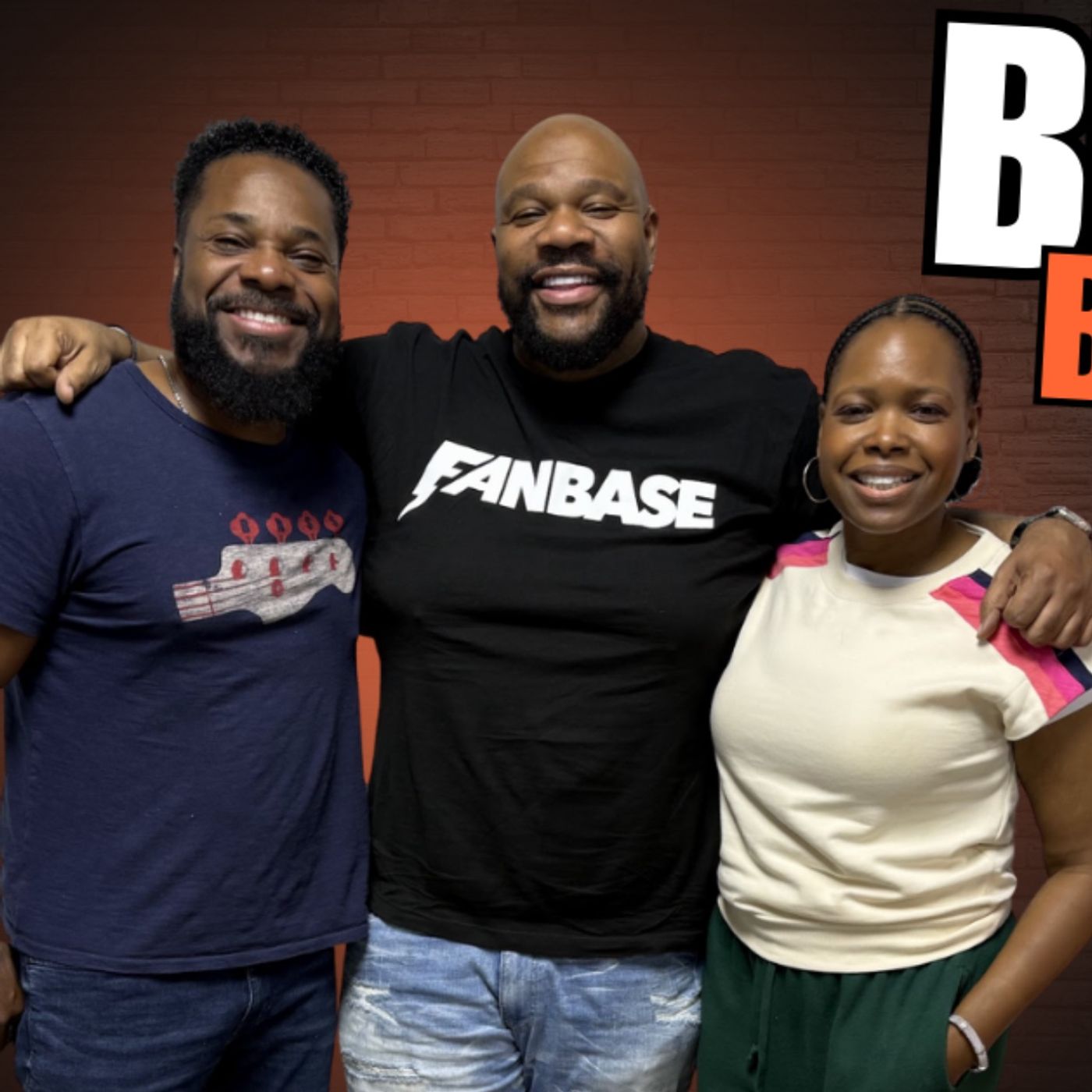
Not All Hood (NAH) with Malcolm-Jamal Warner & Candace Kelley
Building Black Wealth , Tech. & Power The Future of Black America- With Isaac Hayes III
01:11:54
Tech disruptor, musician, and Fanbase founder Isaac Hayes III sits down with Malcolm-Jamal Warner and Candace Kelley to break down the blueprint for unapologetic Black power. From Atlanta’s unique political and economic infrastructure to the sacrifices needed for collective progress, Hayes challenges the Black community to move as a monolith, leverage political power, and control the platforms that profit from Black culture. He dives into reparations, cannabis legalization, the role of media, and how platforms like Fanbase can be the key to building true digital ownership. With personal stories of sacrifice, his father’s legacy, and his mission to build kings not be one. Isaac Hayes III delivers one of the boldest visions yet for Black unity, innovation, and generational wealth.
Loading summary
Transcript398 lines
- [00:00]
Isaac Hayes III
Netcredit is here to say yes to a personal loan or line of credit. When other lenders say no, apply in minutes and get a decision as soon as the same day. Loans offered by NetCredit or lending partner banks and serviced by NetCredit applications subject to review and approval. Learn more at netcredit.com partners NetCredit credit.
- [00:15]
Podcast Sponsor/Ad Voice
To the People this podcast is sponsored by Talkspace. You know when you're really stressed or not feeling so great about your life or about yourself? Talking to someone who understands can really help. But who is that person? How do you find them? Where do you even start? Talkspace. Talkspace makes it easy to get the support you need. With Talkspace, you can go online, answer a few questions about your preferences and be matched with a therapist. And because you'll meet your therapist online, you don't have to take time off work or arrange childcare. You'll meet on your schedule wherever you feel most at ease. If you're depressed, stressed, struggling with a relationship, or if you want some counseling for you and your partner, we're just need a little extra one on one support. Talkspace is here for you. Plus Talkspace works with most major insurers and most insured members have a zero dollar copay. No insurance, no problem. Now get $80 off of your first month with promo code space80 when you go to talkspace.com match with a licensed therapist today at talkspace.com save $80 with code space80@talkspace.com so if you pour black.
- [01:17]
Isaac Hayes III
Culture into a shoe, you get a Jordan. If you pour black culture into a record player, you get DJing, you get hip hop. If you pour it in there, you know what I'm saying? You pour back culture into music, you get rap, you pour black culture into a phone, you get Instagram and Tick Tock and all those things. The infrastructure is there. So this is the, this is the. The software is there. What makes the software the dopest shit on the planet is we pour into it.
- [01:50]
Podcast Host (likely a Black media professional or commentator)
Comrades, welcome to Not Allhood. Innovation meets unapologetic black power when it comes to Isaac Hayes iii. He's a musician, a tech disruptor, culture shifter and the founder of Fanbase. He is laser focused and I mean focused on changing how we connect online and who profits from it. And this man loves Atlanta. For him, it's more than a city, it's a real black mecca. His bold vis. Every black person in America should consider moving to Atlanta to shift the political needle. He says if you don't have a place to Stay. You can stay with him. Okay, Isaac, Enjoy the conversation.
- [02:31]
Podcast Co-host or Guest (providing commentary and questions)
We give each other shit all the time.
- [02:33]
Isaac Hayes III
Black people should be a monolith. Black people should be a monolith. Wow. A monolith in code and behavior. Monolithic behavior. Not identity, not how you want to pray, what you want to wear, how you want to express yourself, who you want to love. No. But how we move, we need monolithic. Monolithic community. Because we're. We. We are screwed in a major way.
- [03:06]
Podcast Host (likely a Black media professional or commentator)
So there's some attributes that we should all be sharing. Such as?
- [03:12]
Isaac Hayes III
Well, something that I say all the time is that black people are a nation without a nation. We have no nationalism. And every other group of people, indigenous, you know, foreign, international, have a culture that dates back, you know, hundreds of years that is so connected to who they are. And we don't have that because we're in America. So black culture is the smallest culture group on earth and the youngest, but the most influential. So there is no. There is no black America outside of America. So if you come from Jamaica, you can come to the United States of America. Because there's a Jamaica to go back to.
- [04:08]
Podcast Co-host or Guest (providing commentary and questions)
Sure.
- [04:09]
Isaac Hayes III
Or there's a Haiti to go back to, or there's a Ghana or Japan or Germany. So there's nowhere for black people to go back to. So all those people come here with a set of traditions, codes, values, unity that we don't have because we've been splintered from the beginning. So that's why, I mean, monolithic behavior. We move in cold. The Jewish community moves in code. The Islamic community moves in coal. The white community moves in cold. We don't move in code. We're fractured. And so that's why if we move together, we could do whatever we wanted to do in, like, seconds.
- [04:44]
Podcast Co-host or Guest (providing commentary and questions)
So I love the concept of that.
- [04:45]
Isaac Hayes III
Right.
- [04:46]
Podcast Co-host or Guest (providing commentary and questions)
But I always go back to. Because I have this philosophy that, you know, human beings are not designed to all get along, if you will.
- [04:54]
Isaac Hayes III
Right, perfect. So you're exactly right.
- [04:56]
Podcast Co-host or Guest (providing commentary and questions)
So when I think about pre colonized Africa and I think about just tribal warfare, so even, you know, if we go back to the motherland, everyone didn't move in that code.
- [05:12]
Isaac Hayes III
They moved in that code within their.
- [05:13]
Podcast Co-host or Guest (providing commentary and questions)
Tribe, within their tribe.
- [05:15]
Isaac Hayes III
Okay.
- [05:16]
Podcast Co-host or Guest (providing commentary and questions)
So if we have different facets of the black community.
- [05:21]
Isaac Hayes III
Right.
- [05:21]
Podcast Co-host or Guest (providing commentary and questions)
Cause we tend to always talk about the black community like it's just one. But so there are different groups and different facets of black community, different lanes of black community that aren't necessarily aligned enough to move in the way you're talking, which I agree in concept. And I believe in concept. That's cool. But I question how that would really work, because we all have different sacrifice.
- [05:53]
Isaac Hayes III
Sacrifice that a lot of us are willing to make. So I've lived in Atlanta since I was 3 years old. I've never a day in my entire life felt like a minority. I have no idea what that feels like. I have no idea to feel like somebody white is in the way of me accomplishing anything or making me feel feel inferior or that I can't accomplish them, or I'm not smarter than they are, I don't know more than they are, or I'm not as educated or as talented or as confident as any of them. Never in my life. And the only reason that that exists is because of a chain of events that was started through civil rights with Martin Luther King, which led to five years after his assassination, we elected our first black mayor, Maynard Jackson. And that transition from the church to politics was the beginning because they were like, look, we can march all day long, but they're just going to shoot us, whatever. But we infiltrate the government and then write laws that economically benefit us. That changes. That's a code, how we move. So politics has served as a great tool to create black wealth that no other section of America's been able to do with black people. So I don't know how familiar you are with Maynard Jackson and his legacy, but when he came to Atlanta, he. He integrated the police force. He created the joint venture contracting system, which means government contracts. You should just go to firms like, you have a firm. I'm going to pay your firm to build this building, Maynard. And all those contracts are going to white people. And so Maynard came and said, ah, no, you'll get 75% of the contract, but 25% of the contract, by law, has to go to these black people. So I don't care if you selling stuff in the airport, if you're building the airport, if you're doing food services, if you're doing sanitation, if you're doing landscaping, if you're doing construction, all these things, these contracts have to, by law, go to black people. So if you fast forward to Mercedes Benz stadium, I can't. I can't remember how many billions of dollars that stadium cost. But 25% of that contract had to go to H.J. russell and Company.
- [08:17]
Podcast Co-host or Guest (providing commentary and questions)
So that's still in existence?
- [08:18]
Isaac Hayes III
Yeah, it's higher. It's up to 33%. Even. Even in the airport? Even. So every. So the airport does $6 million in concessions every year. Business. Six billion. Not a million billion. And by law, 33% of that business has to go to black owned businesses. Meaning if you want to put a business in the airport, you can put your business in the airport, but just go find somebody black to own it. So there's a shake shack in the airport. You all familiar with Shake Shack?
- [08:51]
Podcast Host (likely a Black media professional or commentator)
Yeah. Oh, yeah, yeah.
- [08:52]
Isaac Hayes III
But the owner of Shake shack in the airport is a black man. Because they can't build no shake shack in the airport unless you go find somebody black to build it. That's what code look like. That's how you make people rich beyond like, it's like it's in the law. So when I said it takes sacrifice. We often talk about reparations or legalizing marijuana, decriminalizing marijuana, and then owning the marijuana industry based off of what. How we were criminalized. So I think, I think black people in the state of Georgia, I can't remember sometime I think I researched, were criminalized somewhere around 78 to 80% of the, the criminal, the, the arrests and convictions were black people in Georgia.
- [09:37]
Podcast Host (likely a Black media professional or commentator)
That's right.
- [09:38]
Isaac Hayes III
So now that everybody's going around and legalizing weed, it should only fair that 80% of the business should be owned by black people. But the only way you get that accomplished is you gotta have a black governor. So how do we get a black governor? We almost had one. So I'm like, all right, cool. And then people talk about reparations. I hear reparations conversations about all these councils, committees. I know of reparations. Only being able to pass two ways, federal and state. So if you need bodies to pass laws. And I say this all the time. I said, Texas has the largest population of black people in the country. I think it's like 4 million African American people live in the entire state of Texas. I'm gonna say this now, which I always say, if all 4 million of those black people decided to pick up their stuff, get in cars and move to Atlanta, I would let as many of them sleep on the floor of my townhouse for the next two years. As long as Tyler Perry and Will Packer and every other black person that got room in their house to do so.
- [10:41]
Podcast Co-host or Guest (providing commentary and questions)
Same thing.
- [10:42]
Isaac Hayes III
And then let's register all of us to vote. Let's get a black governor, a black house, a black representative, and pass whatever the hell we want to. And you know what happens when people say that? I just can't pack up my car and just drive from Texas to Atlanta. Meanwhile, I literally watch migrants walk from Central and South America barefoot just to have the opportunity to get to the United States of America having no idea how they're going to eat or survive just for a taste of freedom. And you can't pack up a Nissan Sentra and drive from Houston to Atlanta and sleep on the floor for a year or two to change the course of your life.
- [11:18]
Podcast Host (likely a Black media professional or commentator)
Well, and that's what you mean by sacrifice. Because people are too much. They're too comfortable. They wouldn't do that.
- [11:23]
Isaac Hayes III
And that is. And that is. And that is why black people don't operate as a monolith. Because we're so comfortable. Everybody has their own agenda. I got to feed my family that. Oh, let all these pixels. When I say we live in the matrix. Yeah, See, that's one of those pixels. I got to feed my family. Okay, that's just an excuse to not be unified. We're family. We got to feed all of our family. We have to be building things that feed our collective community. If not, we get passive about the very few people that are successful and supposed to accept their success as enough for us. So if Tyler Perry makes it and Robert F. Smith and Oprah and jay Z and LeBron make it, that should be good enough for the rest of us.
- [12:09]
Podcast Host (likely a Black media professional or commentator)
So I understand what you're saying. A lot of it is the times in which we're living and the political force. So that you're from. Well, you were born in Memphis, right? All right. But then you grew up in Atlanta. And then you say you've never been made to feel like a minority. But then the reason I've been made to feel like a minority is because. And a lot of other people, just because of the history and the civil rights movement to look for better times. Migrate up north, send for people back down south. And then we're split, go back and visit our cousins down in the summer. Cause they're still there. And you know, all the roots. That's why we have jazz. That's why we have blues. Correct. We can't connect it to anybody in Ghana, but it is African American culture, and that's where it was born.
- [12:49]
Isaac Hayes III
Generation one, right?
- [12:51]
Podcast Host (likely a Black media professional or commentator)
Generation One. Now, I just lost my point. What was I gonna say? But I think that you not feeling like a minority ever and not knowing what that looks like. You have a good name, sir. I mean, I'm just saying that if people are watching this, gonna say, well, of course he hasn't made them feel like a minority. You're Isaac Hayes iii. And I also think that certainly that plays into it. Just.
- [13:14]
Isaac Hayes III
I'm just being real I will challenge anyone that sees this show that any person that has lived in Atlanta their entire life will say they have never felt like a minority. How, here's why. How can't you, how can, how can you feel like a minority if you wake up every day, the mayor is black, the city council is black, one of the lead construction companies is black.
- [13:35]
Podcast Host (likely a Black media professional or commentator)
But the bank of America isn't black.
- [13:36]
Isaac Hayes III
No, but the.
- [13:37]
Podcast Host (likely a Black media professional or commentator)
Like, you're going to get a loan, like at some point.
- [13:40]
Isaac Hayes III
No, actually, actually Georgia and Atlanta, because I got in a conversation with Van Lathan about this.
- [13:44]
Podcast Host (likely a Black media professional or commentator)
Okay.
- [13:45]
Isaac Hayes III
I think, I think the amount of black people that get approved for home loans is like upwards of 80, 90% in Atlanta. It's like crazy amounts.
- [13:53]
Podcast Host (likely a Black media professional or commentator)
But has that always been, Again, we live in a different time.
- [13:56]
Isaac Hayes III
No, but we've lived in this era that. Until black people see themselves not as the media tries to portray them, as like athletes and rappers, anything in entertainment. Right. So Atlanta, that's what I, that's what I always talk about. Like, that's what. If you ever hear LA and Babyface talk about why they moved to Atlanta, they would tell you why they moved to Atlanta.
- [14:21]
Podcast Host (likely a Black media professional or commentator)
I don't recall.
- [14:21]
Isaac Hayes III
So they were in LA and Pebbles came out here for something and her and LA were married. Whether. And she said, she said, these are. I'm a, I'm a. I'm a. Can I. Yeah, you can go ahead.
- [14:33]
Podcast Host (likely a Black media professional or commentator)
First, look, First Amendment, go ahead.
- [14:34]
Isaac Hayes III
But she went back to LA and said, we're moving to Atlanta. There's with mansions out there. We out. I seen with mansions. Even Deion Sanders, he said he wanted to be in Atlanta because he said it's doctors and lawyers and I've never seen people have these perfect dentists. I've never seen people like that. Like, all my doctors said my dentist is black. My doctor, cardiologist, all black people.
- [15:02]
Podcast Host (likely a Black media professional or commentator)
Right, right. And you probably had choices of black people that you could choose from. Yeah, right, right.
- [15:07]
Isaac Hayes III
So not feeling. So that's a different. I'm telling you, ask anybody. That's why Atlanta is the way that it is.
- [15:12]
Podcast Co-host or Guest (providing commentary and questions)
Yeah, I think so. I didn't get the same feeling when he said that. Yeah, I didn't get the. I didn't, didn't get the Isaac Hayes legacy. That felt, that feels like an Atlanta sentiment. And so Atlanta, I've been here seven years now, and Atlanta to me feels like an anomaly.
- [15:33]
Isaac Hayes III
Yeah, right.
- [15:35]
Podcast Co-host or Guest (providing commentary and questions)
Like, how come this hasn't happened in other states, other cities, other capitals?
- [15:43]
Isaac Hayes III
Because you need the populace. So 55% of all black people Live in the South. So we have to understand, like, I look at, like, politics, like Game of Thrones, like, moving the pieces around the board, like, okay, what territories are we going to take? So it's prolific and powerful as a messaging of black people that come out of California. Right. And I want to fight for reparations and all these things. Black people only make up 6% of LA County. It's never going to happen. Just do the math. It'll never happen. You will never get anything. You will never get an agenda specifically passed on your behalf simply by the numbers. So you need large groups of voters to move into one section and then duplicate that. What I like about Atlanta is it's kind of trickled into Alabama a little bit and trickling into Mississippi. And that's what happens. It's like, oh, if everybody. I'm telling you right now, if everybody black in the United States of America moved to, like, North South Carolina, Georgia, Alabama, Mississippi and Louisiana, we would pass. We would be running everything.
- [16:49]
Podcast Host (likely a Black media professional or commentator)
Comrades, if you're enjoying this episode, join the conversation and make sure to, like, subscribe and comment below. Na, na na.
- [16:58]
Podcast Co-host or Guest (providing commentary and questions)
You've completely blown my mind. I think this is the first vision that I've heard in a long time that has completely uprooted my thinking about possibilities.
- [17:13]
Isaac Hayes III
It's there, though. You have to, like. So, like, Atlanta has. It's like I catch myself all the time. There's moments where I forget that I'm in Atlanta and I lived here my whole life. Tell you two quick stories.
- [17:30]
Podcast Host (likely a Black media professional or commentator)
Okay.
- [17:30]
Isaac Hayes III
It's like when I was first. When I first moved to. Close to Buckhead, I was shopping for furniture and I went in CB2. There's a CB2 in Midtown. I'm looking around there, looking at furniture and something. And so then I went up to the I, by the way, I asked this black dude. I was like, yo, like, I wanted to check something out.
- [17:52]
Podcast Host (likely a Black media professional or commentator)
Yeah.
- [17:52]
Isaac Hayes III
And get ready to get up out of there and say, I want to ask about this. And as soon as I started talking, this white girl comes up and she says, can I take my break now? And I was like, oh, you're in charge. Blew my mind. I said, well, I am in it, right? I'm in the atl. Like, that is.
- [18:10]
Podcast Host (likely a Black media professional or commentator)
That is different.
- [18:10]
Isaac Hayes III
You'd be forgetting.
- [18:12]
Podcast Host (likely a Black media professional or commentator)
Yeah.
- [18:12]
Isaac Hayes III
That. Okay. You're in charge.
- [18:15]
Podcast Host (likely a Black media professional or commentator)
Yeah.
- [18:15]
Isaac Hayes III
Or you walk into a. You walk into a restaurant and. And I say this all the time when you walk into a restaurant. Like, all of us would go to a restaurant. A different city. Let's say we Go to a restaurant in Cincinnati. We walk in there. The restaurant had all white people in it, and we came in there. We wouldn't feel uncomfortable about that, because that's the norm.
- [18:36]
Podcast Host (likely a Black media professional or commentator)
Right, Right.
- [18:37]
Isaac Hayes III
But imagine what happens when you see, like, I'll be where my office is in West Midtown and there's a bar and a restaurant, or I'll go to Houston's and it's all black and white. People walk in there. They'd be like, do we belong here? Like, what is going.
- [18:49]
Podcast Host (likely a Black media professional or commentator)
Yeah.
- [18:50]
Isaac Hayes III
I said, that's what it's like to feel like a minority. And I look, I said, see? Yeah.
- [18:53]
Podcast Host (likely a Black media professional or commentator)
You've never felt like that.
- [18:54]
Isaac Hayes III
Yeah, yeah. They. That's what it feels like. Do I belong. I feel like I'm in the wrong place.
- [18:59]
Podcast Host (likely a Black media professional or commentator)
Right.
- [18:59]
Isaac Hayes III
And that's. Atlanta has that type of energy.
- [19:02]
Podcast Host (likely a Black media professional or commentator)
And you're saying that's the only place in this country so far that you think that something kind of, if everybody moves there, that it's got the base enough to happen.
- [19:09]
Isaac Hayes III
Well, I told you, you build empires by. From. You don't build. You don't build empires from operating in different sectors. You build empires, you expand them. So if Atlanta is the first successful that. Then let's expand the empire to Georgia, and then let's expand our empire to Alabama, and then let's expand our empire to Mississippi and keep doing that and just keep flooding this area with people, and you can't stop it. Like, Georgia is 30, 35% African American, and Atlanta is like 49 African American. Like, that's. That's.
- [19:47]
Podcast Host (likely a Black media professional or commentator)
That's not hard.
- [19:47]
Isaac Hayes III
We can flip that, especially with it. Especially with people that have a more liberal agenda. That's nothing. How many have. We can have a black governor this next. This next governor's race. We should have a black governor. There should be no reason that. We know there's 10 million people that live in Georgia. 7 million registered. Only 4 million people voted the first time that Stacey Abrams and. And Brian Kemp won. And so. And what's important about that is a black governor has the power to. To. To create those types of laws. Decriminalizing marijuana.
- [20:17]
Podcast Host (likely a Black media professional or commentator)
Sure.
- [20:17]
Isaac Hayes III
Passing reparations on a statewide level. All those things that you're able to do. So I just look at the law game. There's a city. Have you ever heard of a city called South Fulton?
- [20:28]
Podcast Host (likely a Black media professional or commentator)
No.
- [20:28]
Isaac Hayes III
Anybody know there's a city in Atlanta called South Fulton? It was unincorporated Fulton county. And these guys, and I love my guy Roger Bruce, who's a state rep, decided to turn South Fulton into a city. And I was like, why would you do that? Because Atlanta was the. The ratio of. Of black population was declining. And I was like, why would you make your own seat? Why would you not annex into Atlanta? You see what I'm saying? Annex into Atlanta. South Fulton has 100,000 extra citizens. So now you take Atlanta from a 500,000 population to a 600,000 population city with 100,000 new extra voters when we're winning elections by 872 voters.
- [21:12]
Podcast Host (likely a Black media professional or commentator)
Right.
- [21:12]
Podcast Co-host or Guest (providing commentary and questions)
So what was his.
- [21:16]
Isaac Hayes III
And if you look in south Fulton is a mess. Look, anybody see this and live in south Fulton, they'd be like, yo, we want out the trash. Don't come on time. Trash be piled up. I don't know who to call. I call APD or Southampton police. The mayor be going to Africa for like three months and don't. And they be online. But I guess they just felt like. I felt like they decided that Atlanta was going to fall at some point. And so this is the backup. And I'm like, no, just bruh. Who that bad boy in? Because even you get like, I think with every 25,000 citizens, you get a city council seat. So imagine expanding. It's like, as I'm saying, it's literal math. It's like, okay, so now we expand the city council to four more people that are probably going to be black city council members. So you're all in favor, say I pass. All right, let's keep it moving. Moving. Like that's. But that's no different than any other white municipality does across the country. Every day, 365 days a year, they pass laws on their behalf. They sign ordinances to say, you can't open this bar here. You can't build this building here. You can't tell it. Like, imagine that, a black man.
- [22:16]
Podcast Host (likely a Black media professional or commentator)
Yeah.
- [22:17]
Isaac Hayes III
Kaseem Reed. 2 mars ago 3 mars ago so, Tyler Perry. 350 acres. For $35 million, that amount of land in LA would cost about 800 million. And in New York City, it would cost about 1.3 billion. But even if even take off, that aside, do you think a white mayor of any of those cities would have sold a black man enough money to build a movie studio bigger than any movie studio in America? No, the only reason is because there's a black mayor there. So it's like, oh, I want to build a movie studio. Sure, buy that old military base. We don't want nothing with that anyway. How much I want? We want $35 million. Take it. And now he has the biggest Movie studio in the country that's owned by a black person. That only happens in Atlanta. You only get Tyler Perry. You only get LA and Babyface and Jermaine Dupree and the gathering spots and all these business that pop up. You only get fan base in Atlanta. Yeah, you only get those types of businesses because we have the balls to build things. The audacity to build things. Like what you're going to try to do what movie studio?
- [23:23]
Podcast Host (likely a Black media professional or commentator)
Right.
- [23:23]
Isaac Hayes III
Man, get out of here.
- [23:24]
Podcast Host (likely a Black media professional or commentator)
Okay, but you're right, there has to be more of it because not everybody can come to Atlanta. Right. So even, even every black person cannot come to an America. They cannot come to Atlanta.
- [23:34]
Podcast Co-host or Guest (providing commentary and questions)
That's what he's proposing.
- [23:36]
Isaac Hayes III
This is what I'm saying, though.
- [23:37]
Podcast Host (likely a Black media professional or commentator)
Well, that's what I'm saying is that what you said earlier is that it has to be expanded to Mississippi, to wherever, so that black people can have more places to go.
- [23:44]
Isaac Hayes III
What I mean by it, so what I mean by. Okay, so let me give you a little bit of background before I sound like an okay. So my father lost the rights to his music a year before I was born.
- [23:56]
Podcast Host (likely a Black media professional or commentator)
Yes.
- [23:56]
Isaac Hayes III
He filed for bankruptcy. Stacks records owe him $12 million in 74. That's like 50 million, $60 million in 2020.
- [24:04]
Podcast Host (likely a Black media professional or commentator)
Right.
- [24:05]
Isaac Hayes III
That.
- [24:05]
Podcast Host (likely a Black media professional or commentator)
That couldn't be passed along.
- [24:06]
Isaac Hayes III
He never saw it. Never saw that money. All right, then because he defaulted on a loan, they took his catalog, not as an income stream, but as a. Right. So usually when you default on something in the music business, say, oh, you owes $2 million, the checks just keep going to the people to. The loan gets paid off, right? No, they took the asset in perpetuity from him, then they sold it to somebody else in like 83, 84. And then sampling comes along. So every song that you ever heard that with Isaac Hayes, sampling in the course of hip hop over the last 35, 40 years, he never saw a dime of that money. Being that when we lived in Atlanta, my parents got divorced. I lived in a one bedroom apartment with my mom and two sisters, right. So one slept on the floor, one slept on the couch. I slept in my mom's bed with her through middle school.
- [24:51]
Podcast Host (likely a Black media professional or commentator)
Okay.
- [24:52]
Isaac Hayes III
And then in high school, she was like, you a grown boy. We got a two bedroom and my sister slept in the bed with my mom through high school. And then I had my own bedroom. So I don't want people to think that I don't know about sacrifice or what being broke is like, because I come from. Like, we ain't have that like, my dad had. Like, it was 11 children that he had. And I got to think about the pressure and the shame that falls upon a man that sees all these records being made and his checks going to somebody's mailbox. Or two white people, and they're putting their kids through college and they're building generational wealth on his. But my point is, is that I know what sleeping on the floor is like. I've done it. I could do it again. I'm not afraid. I've been. I've always worked. I've always had jobs. Like, I always had jobs at 13, 14 years old. I've always been an entrepreneur, so I've never been afraid of hard work. So I'm saying that's why I say, yo, y' all want to come sleep in my house? Y' all can come sleep in my house all day long.
- [25:43]
Podcast Co-host or Guest (providing commentary and questions)
You know that experience.
- [25:44]
Isaac Hayes III
Yeah, y' all can do that. That's not a problem. We've had to stay with friends. We've had to. But my point is, you can stay in my house, but just make sure you register to vote.
- [25:50]
Podcast Host (likely a Black media professional or commentator)
Right.
- [25:50]
Isaac Hayes III
So y' all only in here for, like, two years. So then when we win, everybody go get jobs, we go run it up and do what we need to do. You can change the law.
- [25:58]
Podcast Host (likely a Black media professional or commentator)
Change.
- [25:59]
Isaac Hayes III
Oh, yeah, we gonna. We gonna wipe out all these little ordinances. They don't let you own property here and there and all that. So what I mean is, when you can see someone. Well, I think we get. We get caught up in levels of sacrifice that. That don't. That we kind of get. I'm not going to say entitled. We just lose sight of, like, people that really struggle.
- [26:18]
Podcast Host (likely a Black media professional or commentator)
Yeah.
- [26:19]
Isaac Hayes III
And imagine. Imagine living somewhere in the Middle east right now trying to do this, but there's a chance that a missile could come right through here and just kill everybody.
- [26:30]
Podcast Host (likely a Black media professional or commentator)
All right. Right.
- [26:31]
Isaac Hayes III
But you still got to go do it every day. And again, you can't pack your Nissan Sentra and sleep on the floor for two years. I just don't. I don't get it.
- [26:39]
Podcast Host (likely a Black media professional or commentator)
Well, I mean, if I. I can see that. I mean, a family who has five kids and they're in school, and they've got two of them that are in college, and they're hoping for, you know, their son to do this or their daughter to do that. No, they can't. I don't. I. I mean, you're not gonna find people by the dress.
- [26:55]
Isaac Hayes III
But I think it also.
- [26:56]
Podcast Co-host or Guest (providing commentary and questions)
It goes back.
- [26:56]
Podcast Host (likely a Black media professional or commentator)
I mean, I see your point, but I see practicality Guess who did it, though?
- [27:00]
Isaac Hayes III
Tyler Perry did.
- [27:01]
Podcast Host (likely a Black media professional or commentator)
He did. Singularly.
- [27:03]
Isaac Hayes III
No, but hold on. You ever heard of Cammie Cakes?
- [27:05]
Podcast Host (likely a Black media professional or commentator)
No.
- [27:06]
Isaac Hayes III
Yeah. Okay. Yeah. Andrew Hall. So Andrew hall had a cupcake business in Jackson. Jacksonville.
- [27:12]
Podcast Host (likely a Black media professional or commentator)
Oh, she did. Out of her house.
- [27:13]
Isaac Hayes III
She. No, she had. She had a cupcake business in Jackson before she brought her ass up to Atlanta and Cammy Cakes blew up.
- [27:18]
Podcast Host (likely a Black media professional or commentator)
Okay, okay.
- [27:19]
Isaac Hayes III
My point is, a lot of the success stories of people that come to Atlanta aren't people originally from Atlanta. They migrate. Most of the people that run the music business, LA and Babyface did it. They packed their shit.
- [27:28]
Podcast Host (likely a Black media professional or commentator)
Right, Right.
- [27:28]
Isaac Hayes III
Yes.
- [27:29]
Podcast Co-host or Guest (providing commentary and questions)
I think at the end of the day, like, when talk about, like, really making change and we talk about revolution, right?
- [27:35]
Podcast Host (likely a Black media professional or commentator)
Right.
- [27:35]
Podcast Co-host or Guest (providing commentary and questions)
I don't believe that we are built for what it requires, for real change and real revolution to happen. And so by design, we're all such creature, creatures of comfort. And it makes me think, like, how up does it have to get before people like, okay, we have to.
- [28:00]
Podcast Host (likely a Black media professional or commentator)
We're almost there.
- [28:01]
Isaac Hayes III
We're almost.
- [28:02]
Podcast Co-host or Guest (providing commentary and questions)
Oh, yeah, yeah.
- [28:04]
Podcast Host (likely a Black media professional or commentator)
I'm joking.
- [28:04]
Isaac Hayes III
Yeah.
- [28:05]
Podcast Co-host or Guest (providing commentary and questions)
They're still comfortable.
- [28:07]
Isaac Hayes III
Nobody fudges. They still keep pushing the line. Nobody moves.
- [28:10]
Podcast Host (likely a Black media professional or commentator)
No, that's true.
- [28:11]
Podcast Co-host or Guest (providing commentary and questions)
So let me ask you this, though. So, you know, I think with anything, obviously, it's easier because you have a different perspective when you're on the outside of what's happening. And you can. You can see what other people can't see. So it's easier to be able to point out things. Would you at any point go into politics?
- [28:32]
Isaac Hayes III
No.
- [28:32]
Podcast Host (likely a Black media professional or commentator)
No.
- [28:33]
Isaac Hayes III
Okay.
- [28:35]
Podcast Host (likely a Black media professional or commentator)
Yeah. Because you told me that the other day.
- [28:38]
Isaac Hayes III
Here's the reason why. Yeah. Because my agenda is to build Kings, not be. 1. So one of the reasons why. So one of the reasons why I founded a social media platform because two things. I recognize the exploitative relationship between black culture and social media. That's one.
- [28:58]
Podcast Host (likely a Black media professional or commentator)
Huh?
- [28:59]
Isaac Hayes III
And we need our own. And two, how valuable those platforms get. So I'm like, shoot, if I could build something worth. See, there's a phrase that. There's a phrase that I. That I use in jest, but I'm serious about it. And I was like, we don't have no super. I know, that's funny. I'm just saying, you know, But. And what I mean is, a super nigga is someone that is so rich, like, damn near our version of t' Challa rich. Like that. And what I mean by that is, you remember when Michael Bloomberg ran for.
- [29:35]
Podcast Host (likely a Black media professional or commentator)
President and spent a billion dollars on advertising?
- [29:38]
Isaac Hayes III
I mean, we need niggas like that. We need black people and still lost. Exactly. We need black people that can lose a billion dollars with an eye, ain't nothing.
- [29:44]
Podcast Host (likely a Black media professional or commentator)
Yeah, that's all right.
- [29:45]
Isaac Hayes III
And then. But only spend it in Atlanta or Georgia. Like I'm gonna spend a billion dollars. I'm gonna go, I'm gonna go buy up all the houses in Atlanta and sell em to black people.
- [29:54]
Podcast Host (likely a Black media professional or commentator)
So by the way, on a state level, I'm just going back to your idea on a state level, that does make sense. On a national level, when we're talking about voting for the presidency, voting for, you know, two seats in Congress in your particular state. I'm just thinking about your whole, you know, let's come to Atlanta. I mean it's.
- [30:11]
Isaac Hayes III
No, not come to Atlanta or come.
- [30:12]
Podcast Host (likely a Black media professional or commentator)
To places that have.
- [30:14]
Isaac Hayes III
Well, think about this. How many. Okay, so wait, so okay, let's, let's. Okay, take this.
- [30:18]
Podcast Host (likely a Black media professional or commentator)
You see where I'm going now?
- [30:18]
Isaac Hayes III
4 million black people in Texas, right?
- [30:20]
Podcast Host (likely a Black media professional or commentator)
Yeah.
- [30:20]
Isaac Hayes III
Does Texas ever go blue?
- [30:22]
Podcast Host (likely a Black media professional or commentator)
No.
- [30:23]
Isaac Hayes III
So those 4 million people in Texas are useless. They serve no point. If you took them same form your people and put them in Louisiana or put an Alamo. Now you flip that state, it's numbers. Why are you gonna keep, why are you gonna go there? Look, I get it, like I said, if you want to get up every day and go vote in a state that's red consistently, be my guess, but you know, you ain't never gonna win.
- [30:44]
Podcast Host (likely a Black media professional or commentator)
But you saw what happened in the last election in terms of the whole idea that, you know, black men think this way and then you had 30% of them voting for Trump. And I know we, you know, we don't want to get into the politics of it, but there are people, places and things that can be flipped that we never saw coming. And it happened. So you take a chance either way that election went.
- [31:03]
Isaac Hayes III
That election went how I thought it was going to go.
- [31:06]
Podcast Host (likely a Black media professional or commentator)
Well, I didn't think that. 30% of black men, that shocked me. That was not something that was on my radar 10 years ago or. Yeah, 10 years ago.
- [31:17]
Isaac Hayes III
I, I know, I know because it's just the mark, the marketing.
- [31:21]
Podcast Host (likely a Black media professional or commentator)
Marketing, Right, marketing.
- [31:22]
Isaac Hayes III
The messaging behind getting people to vote. So again, I want to sound like a jerk, but getting up to vote out of your patriotic sense of duty.
- [31:32]
Podcast Host (likely a Black media professional or commentator)
Yeah.
- [31:32]
Isaac Hayes III
Is throw that in the trash. The only way you get people to vote is you make them mad enough or afraid enough. Fear and anger are the biggest motivators. Like I'm pissed that there was a black man, that was a prison United States and we'll never have one again. Now y' all want a woman? Oh, hell no.
- [31:49]
Podcast Host (likely a Black media professional or commentator)
Right?
- [31:49]
Isaac Hayes III
Or if you get her in here, she's going to take away your jobs, right? She's going to take food away from your families and give it all away to these black people and these Mexicans and Muslims and all that kind of stuff. And we, on the other hand, we getting mad about whether she black or not.
- [32:03]
Podcast Host (likely a Black media professional or commentator)
Right?
- [32:04]
Isaac Hayes III
So we just not scared enough and we're not angry enough.
- [32:06]
Podcast Host (likely a Black media professional or commentator)
Right? Yeah, no, I understand. I understand.
- [32:09]
Isaac Hayes III
We, we. So I talk about this all the time, which is extremely frustrating. And I don't want to. When I say these things, I try to put it in, in the frame of like, not trying to say that I insult black people or, or I'm going to assault us because I am black. But I know that when I say we live in the Matrix and there's, there's things that are done to the black community, real subtle, like real nefarious things that prevent our growth and our success. Like I say that black people are the strongest people. We, the strongest people in the world. African American people, we're the strongest on the planet. We've been through the strongest physically still here. Do all of that. We still here. But I can, I can dismantle a movement because of how you feel your emotions. If I can get you to feel the type of way, I can get you to never use your arms and your legs to make a revolution happen. So if I can get, if Jamal Bryant can say we're doing a 40 day fast from Target and I can get, I can try to make it look like Al Sharpton came in the room to kind of broker a deal and I can fracture this movement and make people mad like, well, I'm going back. Or all that. Like, even, even cancel culture. I say this all the time about cancel culture. White people cancel people all the time, but they cancel people for crimes. Harvey Weinstein, all the, like, they'll cancel you for that. We'll cancel you because we don't agree with what you said. Oh, you want to perform for Trump? You're canceled. Oh, I don't like the way you said that to such and such. And so, and so how you spoke to her. You're canceled. Why are you gonna do that? That's too sensitive. How you gonna cancel? How you gonna, how you gonna cut out, Cut your own people down because you don't agree with them. I can understand people that commit crimes. If you're a pedophile, if you a rapist, if you murder Right, right. You cancel. Yeah, man, get them gone. But okay, like prime example. Like, I might not agree with what Saquon Barkley did, but he's not canceled.
- [34:14]
Podcast Host (likely a Black media professional or commentator)
Okay.
- [34:15]
Isaac Hayes III
It just takes. Okay, bro? Yeah, he didn't. His, his, his movement, his, his going to the White House and playing golf with Donald Trump is probably something that people take offense to. But my point is, if you're that mad about it, then what are you going to do about it other than get on the Internet like, he's canceled. That's what I'm saying.
- [34:33]
Podcast Host (likely a Black media professional or commentator)
Like, right.
- [34:34]
Isaac Hayes III
You in your feelings.
- [34:35]
Podcast Host (likely a Black media professional or commentator)
Well, but we're culture now. Trained in order to be in our feelings. Because people who were, you know, born when Twitter came around, they were texting. I'd just been born. That's what they've been doing their whole lives, is posting their feelings. I like, I don't like. I hate. I hate. You know, you can become a terrorist just by reading words on a page. So that's the time that we're in where I'm telling you my feelings. I know I'm gonna. My feeling. My feelings, even if they're silly, are gonna be validated. Cause I just got 2000 likes and I'm gonna keep going. That's the culture that we're in.
- [35:05]
Isaac Hayes III
Yeah.
- [35:06]
Podcast Host (likely a Black media professional or commentator)
So feelings are. Yeah, yeah.
- [35:08]
Podcast Co-host or Guest (providing commentary and questions)
And that's true.
- [35:09]
Podcast Host (likely a Black media professional or commentator)
That's true.
- [35:10]
Podcast Co-host or Guest (providing commentary and questions)
And that attention is often misplaced.
- [35:13]
Podcast Host (likely a Black media professional or commentator)
It is.
- [35:13]
Podcast Co-host or Guest (providing commentary and questions)
When we first talked about, okay, well, we're going to, we're going to boycott Target, right?
- [35:18]
Podcast Host (likely a Black media professional or commentator)
Yeah.
- [35:19]
Podcast Co-host or Guest (providing commentary and questions)
No one ever talked about, we're going.
- [35:21]
Isaac Hayes III
To boycott Google or we're going to leave Meta.
- [35:26]
Podcast Co-host or Guest (providing commentary and questions)
Yeah, never. Because everyone's so dependent upon like you're getting, you're getting your information on the boycott from your social media platform.
- [35:35]
Isaac Hayes III
This is where I was saying there is no such thing as black media.
- [35:38]
Podcast Host (likely a Black media professional or commentator)
Yeah, no, there's not.
- [35:39]
Isaac Hayes III
Why though? Well, no, there is black media.
- [35:44]
Podcast Host (likely a Black media professional or commentator)
There is, but we don't look at it in the same.
- [35:46]
Isaac Hayes III
Well, no, we don't use it. There's black media, but we don't use it.
- [35:51]
Podcast Host (likely a Black media professional or commentator)
Plus there's black me.
- [35:52]
Isaac Hayes III
Okay, so we say black me.
- [35:53]
Podcast Co-host or Guest (providing commentary and questions)
So, okay, so outside of Roland Martin.
- [35:56]
Isaac Hayes III
And every single blog that's on social media is media. So my point is this. If this is what I find interesting, what black people, what black media does is it takes white media stories and just regurgitates them. They don't tell their version. I have no idea what Shannon Sharp did. Dating a 19 year old white girl is, okay, cool, it's legal, but it's like, bruh, right? Okay, at the end of the day, when someone makes a story about that, about him, where is the Shade Room story about Tony Busby? Where are we talking? Why are we talking about him?
- [36:40]
Podcast Host (likely a Black media professional or commentator)
Oh, we definitely have stories about Tony Busby.
- [36:43]
Isaac Hayes III
No, I'm talking about. No, they take. No, they take over. No, they take over the lexicon. No, we don't.
- [36:47]
Podcast Host (likely a Black media professional or commentator)
Oh, oh, well, no, we don't have that power. I mean.
- [36:48]
Isaac Hayes III
No, we have the power.
- [36:49]
Podcast Host (likely a Black media professional or commentator)
And I'm saying you just have to. It's algorithms. It's Google. It's in my. It's not.
- [36:54]
Isaac Hayes III
We don't write the story.
- [36:55]
Podcast Host (likely a Black media professional or commentator)
If you write the story, somebody still has to share it. And look at.
- [36:58]
Isaac Hayes III
They will.
- [37:00]
Podcast Host (likely a Black media professional or commentator)
Okay, but it's out there now and it's not in my algorithm.
- [37:03]
Isaac Hayes III
No, it isn't. My point is, is that we will take the. We will take the byline from another story and take the same story. So if this person did this, we just take the same story. If so. And so got. Got cheating. Got cheating hearing like, you know.
- [37:18]
Podcast Host (likely a Black media professional or commentator)
Well, we have seen Tony Busby in the fact that, you know, from Sean Combs to Shannon Sharp mentioned Tony Buzby.
- [37:24]
Isaac Hayes III
No, but. No, no, no, no. But what I'm saying is this. Okay, tell me, tell me. I'll give you an. Okay, I'll give you. Okay, I'll give you. I'm trying to think like we just don't. You. We don't leverage our media in ways that are truly beneficial. I'll give you. Okay, here's another. I'm going to be selfish for two seconds.
- [37:40]
Podcast Host (likely a Black media professional or commentator)
Okay.
- [37:41]
Isaac Hayes III
I have a selfish moment. All right, so Twitter gets ready to be banned in January, right? Let me give you the precursor to that. Let me give you the pre story. As soon as Donald Trump won and Elon Musk took credit for it, over 25 million people left X and went and downloaded an app called Blue Sky.
- [38:07]
Podcast Host (likely a Black media professional or commentator)
I did.
- [38:08]
Isaac Hayes III
And Blue sky was sitting up at the top of the app store. Pause. Blue sky is not better than Twitter. It's nowhere near as good as Twitter. It doesn't have the functionality or the capability. But white people simply stood on business and said, we out. We're going here. Right. Simultaneously, TikTok look like it's about to get banned.
- [38:33]
Podcast Host (likely a Black media professional or commentator)
That's right. At the end of last year.
- [38:34]
Isaac Hayes III
Yep. What do all the black media sites talk about? Everybody's going to Redno, a Chinese owned company. Everybody's going to Lemonade. Not one of them said fan base or spill. That's what I mean. They just repeat the same things that they say when you get literally so. And I told people, I said, you understand that? All y' all talking about blue sky like this. They're gonna go, this is how it works. They're gonna get so many users.
- [39:05]
Podcast Host (likely a Black media professional or commentator)
Yeah.
- [39:05]
Isaac Hayes III
That they're gonna go right back around and be able to raise capital to beat Twitter. And I said. I said it flippantly on it on Beehive TV show. And I was like, yo, I was like, watch my word. Mark my words. I said this in like, November. Yeah. I said right before Thanksgiving, I said, mark my words, come January, February 2025, you're gonna see Blue sky raises something, something at a billion dollar valuation. And maybe about a month ago, they said they're raising at $700 million valuation because simply people just moved there. And my point is, that's what I mean by we need to operate as a monolith. I mean, there's 42 million black people in the United States of America. I don't care how good or bad or great or terrible you think fan base is. If 42 million people downloaded fan base that were black, that app will be at the top of the app store, I promise you. My phone would ring and somebody would give me $200 million at a 2 billion dollar valuation, and I could hire. And I got the money to hire whoever. I can go hire every engineer that worked at TikTok and Instagram and Twitter and build whatever the hell you want to. That's what I mean by moving as a monolith. We don't put our foot on the scale collectively to move things. I'll give you a number example.
- [40:16]
Podcast Host (likely a Black media professional or commentator)
Okay.
- [40:17]
Isaac Hayes III
Elon Musk has been going through hell.
- [40:19]
Podcast Host (likely a Black media professional or commentator)
Yes, he has.
- [40:20]
Isaac Hayes III
His stock price has been plummeting. It's terrible. Crappy. They talk about everybody hates Tesla. Who likes Tesla? Anybody like Tesla here? You Tesla fan somebody?
- [40:32]
Podcast Host (likely a Black media professional or commentator)
Did you pass them down?
- [40:35]
Isaac Hayes III
Yeah. It's not Tesla here. My point is. But not ours.
- [40:38]
Podcast Host (likely a Black media professional or commentator)
Not ours.
- [40:39]
Isaac Hayes III
We're good.
- [40:41]
Podcast Host (likely a Black media professional or commentator)
Three of us are good.
- [40:42]
Isaac Hayes III
Have you ever heard of a black EV maker? No. See, that's what I'm saying. Look, his name is Derrick Bailey and it's called Derek Automotive now.
- [40:54]
Podcast Host (likely a Black media professional or commentator)
Okay?
- [40:55]
Isaac Hayes III
When all that stuff is going on with Elon, everything. Where was the Griot? Where was the Shade Room? Where was Ballard talking about, oh, let's all go buy his car? That's what I mean by black media. Don't use black media to do nothing.
- [41:08]
Podcast Host (likely a Black media professional or commentator)
Okay? So I guess my question is, and this is from someone who's been in the media for 30 years. If I'm in a newsroom and I happened not to know about that until you just told me. Who's telling me? I mean, I want to know was there a press release, was there an editorial decision to make to not put him on? I can't imagine the griot would do that because I'm seeing flying cars from, from Asia. I'm seeing, I am seeing cars.
- [41:29]
Isaac Hayes III
Correct.
- [41:30]
Podcast Host (likely a Black media professional or commentator)
So I'm just wondering, editorially speaking and in that newsroom, did someone say, no, we're not going to promote that black man in his ev. I doubt it.
- [41:38]
Isaac Hayes III
I guarantee you in existence every single solitary type of business that exists right now in America that a white person has built, a black person has the same one, okay? I guarantee you there's somebody out here trying to start a black airline, somebody trying to start a black movie studio, a black television network, a black hospital, a black everything. All you gotta do is get on Google and look, pick em and let's run it up. I can't think of the name of the guy from South Africa, the black guy. He's always giving motivational speeches and talking. But he was talking about the Jewish community and he was talking about African community compared to the Jewish community because they go through the same thing. He says they practice the thing called Fergie and Ferragin is a practice in the Jewish community. And the practice is if there's someone outside of their community that builds something cheaper and better than us, we still buy from you and we buy from you and then if you get it wrong, we tell you how to fix it and then we buy again.
- [42:39]
Podcast Host (likely a Black media professional or commentator)
Someone wants to jump in the conversation over there. I hear the mom, we don't do that though.
- [42:43]
Isaac Hayes III
We have one bad experience. Oh, the restaurant. Oh. That's why black businesses, being a black, See all that, being a black business is not enough. See, that's why, that's when you don't operate as a monolith, shit like that come out your mouth. Being black business is not enough. It's enough for white people, it's enough for white people to just have a white business and it be enough is enough for the Jewish community, it's enough for the Asian because they, they put their money right in their communities. They're putting their money directly into their communities and we don't. I just, I'm just at the point right now where it's like I'm so focused on building fan base to a multi billion dollar company and inviting everybody that's invested because that's, that's, I mean look, I'M not. It's no secret that we have over 20,000 investors in the company. And the reason why I wanted people to invest in the company is because I know how valuable tech startups get.
- [43:32]
Podcast Host (likely a Black media professional or commentator)
Yeah.
- [43:33]
Isaac Hayes III
And I. And the same thing. How you saying if you didn't know that? Derrick Bailey. I researched before I ever built a social media platform, I just said, well, who does what Fan base could do. And only two companies I saw was Patreon and Onlyfans. I said, okay, cool. But who let you subscribe using your phone with Apple Pay and Google Play?
- [43:50]
Podcast Host (likely a Black media professional or commentator)
None.
- [43:50]
Isaac Hayes III
So I invented it, I built it, it didn't exist. Now everybody use it. That's what gives me. See, that's right there. That gives me all the. That's the Atlanta confidence I have. The Atlanta confidence I have is before Fan Base, you cannot pick up your phone and subscribe to you or you. The same way you subscribe to Netflix.
- [44:07]
Podcast Host (likely a Black media professional or commentator)
Right.
- [44:07]
Isaac Hayes III
Or buy something from a game. No app did that. So in all of America, as long as social media has been around, they didn't do it. And then Apple and Google said, you can't do that. Then we build it a version of it and then we do it and then they go, let Instagram and Tick Tock and all this build what we wanted to do.
- [44:22]
Podcast Host (likely a Black media professional or commentator)
That's right.
- [44:22]
Isaac Hayes III
You see what I'm saying? So, like, I'm not. I see them. Like, I've seen, I've seen Instagram copy what I've done. And I know. And people will say, like, I had to come on now, in a way, ain't a way of a $1.5 trillion company go copy. I'm like, bro, I got proof. I've seen it.
- [44:43]
Podcast Host (likely a Black media professional or commentator)
Plus, that's. That, that's actually what they. They do. That's part of their business.
- [44:46]
Isaac Hayes III
And yeah, but people.
- [44:47]
Podcast Host (likely a Black media professional or commentator)
And if they don't. And if they don't, I mean, I'm just saying, you are right. Because if they see competition, they just go ahead and buy it too, if they can't steal it.
- [44:54]
Isaac Hayes III
So, yeah, my point is, it's like, do you know how. But, but, but, but that competition is always usually way down the road from where you are.
- [45:02]
Podcast Host (likely a Black media professional or commentator)
I see what you're saying. Yeah.
- [45:03]
Isaac Hayes III
At this point, I don't raise 21 million bucks. We got a million users. Yeah, we're right here in Atlanta, Georgia. The story that I tell all the time is there's a functionality that we have in Fan base called Fanbase Audio, similar to Clubhouse or whatever, but we added emojis so that you could emote while you're on the stage. We use my. My employee Noah, the great, great grandson of Booker T. Washington, walked in the office and said, hey, I think to promote stage reactions, we should use Express Yourself, because you're expressing yourself. And Charles Wright. And I say, oh, that's a good idea. And I said, but the song sounds so old. So I get online to go find a remix for 2005, hand it to my guy Andy. We create the piece of content, put it out early March, right? In April. This is last year of last year. March of last year, April. I get on Instagram and I see Mark Zuckerberg, and they got a post. It's got the same song in it.
- [46:00]
Podcast Host (likely a Black media professional or commentator)
And the song you had, researched, found.
- [46:02]
Isaac Hayes III
And did, all from 2000. So the same remix. The same remix. I could play it for y' all right now if y' all want me to. I don't know. I don't know if that's. If we ever do that. I don't know if that's a.
- [46:10]
Podcast Host (likely a Black media professional or commentator)
We've got the time. Let's go.
- [46:12]
Isaac Hayes III
Come on. No, so.
- [46:13]
Podcast Host (likely a Black media professional or commentator)
Because I do.
- [46:13]
Isaac Hayes III
Yeah, I show people. I show people, like, oh, so you're so afraid of me that. Cause money's the only thing that separate the ideas. We got the ideas. Yeah, Y' all win because y' all got the money. Because they're just gonna keep giving you money till you succeed. Facebook had. Facebook was pre revenue, not pre profit. Pre revenue for seven years. They funded that thing for seven years. The moment I launched fan base on the App Store, we were making revenue. Cause you could subscribe. You get to tip. It's like, okay, cool. It's right there. So nobody's running in to just say, oh, a black man built the infrastructure that is aligned with the culture. And we have a problem with that. That's a very, very scary. That's a very, very scary position to be in. Because now, where we get our bread from? Where do we exploit these people? Where do we take advantage of black people to get it? That's why they ain't playing boots on the ground on the radio right now. That song's the biggest song in the country right now.
- [47:08]
Podcast Host (likely a Black media professional or commentator)
Yeah.
- [47:08]
Isaac Hayes III
Yeah. Everybody doing it. Beyonce doing it at her show. I seen Michelle Obama do it. I seen Kamala Harris do it. He been on TV shows. I just seen a commercial today for Guinness beard, and they got the fan. Louis Vuitton got a fan commercial. A fan purse coming out. Radio ain't playing that. He ain't signing nobody. But I love how the culture is still. I love how the culture is still pushing that record forward without the machine. Because now media is not just radio, it's social media. So we listen to it and we still go stream it on Apple Music and Spotify. Yeah, we can still go get that stuff. But. But the point that I'm making is that these companies copy what we do and they really sit there and shaking their boots because they're afraid of the day that black infrastructure and black culture come together.
- [47:57]
Podcast Host (likely a Black media professional or commentator)
That's right, because they've been copying.
- [47:59]
Isaac Hayes III
That's the day that they like, like.
- [48:00]
Podcast Host (likely a Black media professional or commentator)
You mentioned Gucci, you met Louis Vuitton. They've been copying fashions of blacks for years. So that is not new American culture.
- [48:07]
Podcast Co-host or Guest (providing commentary and questions)
Co opted black culture.
- [48:08]
Podcast Host (likely a Black media professional or commentator)
That's right. Yeah, yeah, absolutely.
- [48:10]
Isaac Hayes III
I'm terrified of it. I'm gonna find this post. I wish I had the Internet on here, but hold on, I'll turn my volume down. So I don't. But I can find it while with my volume down. But my point is, is that they're absolutely.
- [48:26]
Podcast Host (likely a Black media professional or commentator)
They're scared about the, they're afraid of that. About the crossing of the two.
- [48:30]
Isaac Hayes III
They're afraid of it because you're talking about people that are attaining a level like, okay, how many? How many? Okay, six. 6,000 billionaires in the world. 6,000. There's 14 black, bro. That ain't so.
- [48:46]
Podcast Host (likely a Black media professional or commentator)
Yeah, yeah.
- [48:47]
Isaac Hayes III
Some are.
- [48:48]
Podcast Co-host or Guest (providing commentary and questions)
Comrades, if you are enjoying the episode, join the conversation. Like subscribe, leave a comment below. Don't get yourself blocked. Keep it clean.
- [48:58]
Podcast Host (likely a Black media professional or commentator)
Especially like you said, the way that we move things, you must. Very interesting commentary about the NFL. I mean, when I was watching the draft the other night, I won't say what I thought, but.
- [49:11]
Isaac Hayes III
What was you thinking?
- [49:13]
Podcast Host (likely a Black media professional or commentator)
Well, you know, the first thought was, wow, this is something that even in a culture where they're trying to remove black folks from history right in front of our eyes, that we've got 600,000 people watching this live. I mean, you know, in person it beat out ratings for the Pope. Like, you can't, you can't get rid of us no matter how much you try. So there was a feeling of wow, you know what? We really do move the needle. The other thing is that, you know, you just look at the numbers.
- [49:44]
Isaac Hayes III
Jersey is the number one jersey selling.
- [49:47]
Podcast Host (likely a Black media professional or commentator)
What's that? Number one jersey. Exactly, exactly.
- [49:51]
Isaac Hayes III
But then all that money is like. It's so much money, dog.
- [49:55]
Podcast Host (likely a Black media professional or commentator)
It is, it is. And that, that, that. Those are the types of things that were running when I was looking at, looking at.
- [49:59]
Isaac Hayes III
If I Get up there and say that Black people have $1.8 trillion worth of spending power. And even if I say we spend a fraction on luxury goods and non essentials, people get upset. But it's true.
- [50:08]
Podcast Host (likely a Black media professional or commentator)
Yeah.
- [50:09]
Podcast Co-host or Guest (providing commentary and questions)
Do you do Gerard Bell? He. I can't remember the name of his book. Right now. He's on Instagram. I mix what I like. He made a comment about how keeping black dollars in the black community does not. Does not significantly affect poverty.
- [50:32]
Isaac Hayes III
It doesn't affects. It still affects the money circulating within the community, though. It doesn't. It doesn't. It. So it still helps other businesses survive. We spend so much time and energy on building up other people's things that we never build up our own stuff. And we could. What I love, one of the things I love about Atlanta, I say all the time, is anything that white people can do, black people can duplicate that same success in Atlanta, Georgia. Okay, what is. You want to move still there? We got one. You want to record label? We got one. You want. You go out. We got doctors, lawyers, dentists, religious clergy. We got construction companies. That's what, that's another lesson that I learned when I was living in Atlanta. Remember when I said. Remember when I said we lived in Atlanta and I forgot.
- [51:18]
Podcast Host (likely a Black media professional or commentator)
You didn't. You weren't never treated like a minority.
- [51:20]
Isaac Hayes III
No, that I forgot. I forgot that you were in Atlanta and realized it.
- [51:23]
Podcast Host (likely a Black media professional or commentator)
Yeah.
- [51:24]
Isaac Hayes III
So about a year ago, it was a news story where the Rolls Royce suv, one of them, got stolen from the Thompson Hotel in Buckhead. It was a pretty one, a silver one, pretty amazing Rolls Royce. And then like a few months later, it was spotted on a, on, like in a YouTube video with swingers on it in Texas. So somebody stole the Rolls Royce and it was on Texas with swingers, and the owner found it. I said, who, who bought who? What rapper's car did they steal? They talking to the owner of the vehicle, and it's a black man and a black woman and they in construction. I'm like, I forget I'm in Atlanta. I be forgetting we got money down here. We got, we got money, not rapper ball. We got construction contract money. You know what I'm saying? We got, we got like, logistical business money. Like, we got money, like. And we operate on that type of fashion. That's. That's why I be forgetting, like, we, we. We in Atlanta. Were you talking about Charles Wright Express himself? I'm. I'm about to play it. Look, I'm about to show you the whole. I'm about to play this whole thing right here. Because people, you have to hear, you have to see it to believe it. Yeah, but watch this. Watch how I play it.
- [52:41]
Podcast Host (likely a Black media professional or commentator)
He's got it.
- [52:42]
Isaac Hayes III
I got it. Watch this. No, I want you to see this, because this is the most incredible, incredible thing you'll hear. The Fan Base story writes itself every day. There was a record by Charles Wright called Express Yourself for context of this story. This is Noah. Noah works a fan base. He's the one that suggested we use Express Yourself. Remember that? Express yourself here on 1970, promote one of the functionalities on Fan Base. But I found a remix album from 2005. So remember that Noah picked the record from 1970, I picked the remix from 2005. Use that record in the content that we made. And we did that in March of this year. Here's A screenshot from March 15, the day that we posted that song in our content in April. I seen a video on Mark Zuckerberg's page. This post was on Mark Zuckerberg's page on Instagram, had the same song in it. I was like, oh, so now you're telling me that if you can't pick the music to make your 1.5 trillion dollar CEO look cool, you're. If I get my. If I get the bag, it's a rap. Because that's the advantage of fan base. Fanbase moves at the speed of culture. Yeah. All these other apps move at the speed in which they can copy culture. So you tell me, what are the odds of a random individual picking a record from 1970? Then I picked one from 2005 being posted in the post of March of this year, and then a month later winds up on Mark Zuckerberg's page. What are the odds?
- [54:18]
Podcast Host (likely a Black media professional or commentator)
But you weren't surprised.
- [54:19]
Isaac Hayes III
No.
- [54:19]
Podcast Host (likely a Black media professional or commentator)
Okay.
- [54:20]
Isaac Hayes III
Because I know that. Because I'm like, why are you all worried about me? I know why. And that's the. And that's the number one reason why. See, I'm. I'm different. I'm like Blade. Like, I've never. Don't laugh when I say this, but I've never been with a white woman, so I only date black.
- [54:37]
Podcast Host (likely a Black media professional or commentator)
Is there a name for that?
- [54:39]
Isaac Hayes III
I don't know.
- [54:40]
Podcast Host (likely a Black media professional or commentator)
Yeah. Cause I know they have a name.
- [54:43]
Isaac Hayes III
I have a day walker, bro. I've never been with a white woman because I learned a lesson. A young lesson. A lesson when I was, like 17 years old and I just stayed away. Nothing wrong. I just like, okay, I understand what it means to kind of be weaponizing whiteness. And from that Point on. I was like, look, I'm not doing that. I'm not. I'm not. So there's a blackness inside of me that has no desire to permeate or assimilate white culture to be successful. So I don't care. I respect everybody that white that does the business that they do.
- [55:27]
Podcast Host (likely a Black media professional or commentator)
Right.
- [55:28]
Isaac Hayes III
But I don't feel like I need you to make it. And that's what black people in Atlanta feel like. So I always say, look, I. Michael Rubin's dope. A lot of people I know that are Lil Baby and Meek Mill, they're all investing in fanatics, and they all doing business with Michael Rubin.
- [55:44]
Podcast Host (likely a Black media professional or commentator)
And.
- [55:44]
Isaac Hayes III
But when I see the all White party on the 4th of July, and then I see all of us go up there who are black, I see Jay Z and everybody there, it kind of feels like the oh, I Got Black Friends party. You know what I'm saying? I'm like, so when are we gonna throw the Juneteenth party at Tyler Perry's house and make Michael Rubin fly down to his house and Kim Kardashian come to his house? Why we flying to they Shit. Come fly to our house?
- [56:10]
Podcast Host (likely a Black media professional or commentator)
Well, I guess on there. And they would say they don't need us that way.
- [56:12]
Isaac Hayes III
No, I'm just.
- [56:13]
Podcast Host (likely a Black media professional or commentator)
No, but I see what you're saying. That's the point. Cause we're going to theirs.
- [56:17]
Isaac Hayes III
When we throwing the party at Tyler Perry' house and y' all finna pull up like, we can't miss this. Tyler Perry doing the. Tyler Perry doing the Juneteenth All Black Affair. We got to. And we got to go to that because Drake and everybody finna be, why don't we go to all that when we go to. Like, that's my point is our desire. And this. And this was the. This was my pause for anything that typically happens with African Americans and people. And the people that feel like black men are being targeted. Right. And they're being targeted for their legacies. I don't believe that. I believe that you, as an individual, put yourself in the. In the. The bad position of potentially being targeted. But you got to put yourself there first.
- [57:00]
Podcast Host (likely a Black media professional or commentator)
So you. So when you say targeting black Shannon Sharpe, for example, that would you mean, okay, so I'm not going to.
- [57:05]
Isaac Hayes III
I'm not going to. I'm not going to discredit a person that feels like a woman that's made a claim.
- [57:11]
Podcast Host (likely a Black media professional or commentator)
Yeah.
- [57:11]
Isaac Hayes III
Or any woman that's made a claim. I'm not going to. I'm not going to discredit that I'm not going to discredit. If, if, if Grace Jabari said Jonathan Majors hit her, I'm not going to discredit that at all.
- [57:22]
Podcast Host (likely a Black media professional or commentator)
Yeah, but any. Even if you're. Even if you weren't even there, you could be a target just by purposes of a complaint being filed. And then you have to defend yourself. So you can be a target without having anything to do with it. And that's the scary part about the justice system that we can't get away from, especially if we have money, because then we are walking targets. Then we make bad decisions that make us, as target, standing still.
- [57:42]
Isaac Hayes III
Well, I made a post not too long ago and I said black people, black men especially, that have built their success through systems of white supremacy have gotten too comfortable and forgotten that they're.
- [57:57]
Podcast Co-host or Guest (providing commentary and questions)
Black and they've put themselves in certain positions.
- [57:59]
Isaac Hayes III
So for me, there's a certain level of. There's a rapport and a respect that I have for everybody culture and every race that I do business with. But I'm not going. I'm not going to be like, I'm not going to get around you. And if. If I had advice of drinking, smoking, doing drugs, sleeping with strippers, you're not going to see me do that. It's too. Too comfortable, right? You get into. You getting. You getting to everybody. Everybody get too comfortable. Because then you can forget. Remember, you're black. So when shit go down, they will have you in jail on the court and dragging your ass about it here. And I think, you know, and I'm not. I'm. I'm not here to judge. I look at people. I. I get constant reminders of when I see things like that. And I say, isaac, remember that before you do, before you even have the thought of your idea of doing anything that could compromise the success of what you're trying to build with your business. Think about it. Think of what you're trying to build. Because. And I think. I think all. I think all people. I don't care what race you are. I think all people should think like that because I don't think that. I don't think that certain people thought that they were gonna achieve the level of success when they did. So some of the things that they do or some of the things that, the ways that they behave, they didn't think that. I didn't think I was gonna build a social media platform. Who knows? Like you said, maybe I will run for president, but I gotta think like, I'm. Just in case I might, right?
- [59:24]
Podcast Co-host or Guest (providing commentary and questions)
But you're also coming from a perspective where, like, I love what she said. You're trying to build kings, not be a king.
- [59:31]
Isaac Hayes III
Yeah.
- [59:31]
Podcast Co-host or Guest (providing commentary and questions)
So you're coming from a perspective where you're. The path that you're on. You're already thinking about way more than yourself.
- [59:42]
Isaac Hayes III
Correct.
- [59:43]
Podcast Co-host or Guest (providing commentary and questions)
Whereas in a lot of these spaces, it's more so like, I want to be, you know, I want to be the man.
- [59:49]
Isaac Hayes III
Yeah.
- [59:50]
Podcast Co-host or Guest (providing commentary and questions)
And then.
- [59:51]
Isaac Hayes III
Yeah. Yeah. Can only be one.
- [59:53]
Podcast Co-host or Guest (providing commentary and questions)
And in these spaces, you know, I'm the black man in these spaces, and I'm in these spaces. And I can attribute that to my success, because this is me.
- [60:03]
Podcast Host (likely a Black media professional or commentator)
Me.
- [60:03]
Isaac Hayes III
Yeah.
- [60:03]
Podcast Co-host or Guest (providing commentary and questions)
As opposed to your. Your perspective is already a broader perspective because it's not just about you.
- [60:10]
Isaac Hayes III
So your.
- [60:11]
Podcast Co-host or Guest (providing commentary and questions)
Your whole walk is obviously going to be different from most of these cats that we're. We're referring to.
- [60:18]
Isaac Hayes III
Right.
- [60:18]
Podcast Co-host or Guest (providing commentary and questions)
And these cats to get themselves in trouble.
- [60:20]
Isaac Hayes III
But. But here's the thing. It's not. It's not. I don't blame them because that's the way that it was done. That's the only. When you don't live in Atlanta, that's your only shot. You do have to get. You do have to permeate white supremacy. You do on some level.
- [60:32]
Podcast Host (likely a Black media professional or commentator)
Oh, if you live in the north, you do.
- [60:34]
Isaac Hayes III
I saw you saw that clip of Reginald Hudging talking about they were making Boomerang.
- [60:38]
Podcast Host (likely a Black media professional or commentator)
Well, which one?
- [60:39]
Isaac Hayes III
He was like, he said, we went to Paramount to make Boomerang. He said, we want to make this romantic comedy with all black lead. And Reggie, Heather's talking about, okay, Eddie Murphy with the broad nose and the big lips. And he said, the black man in me wanted to beat his ass, but if I did, he wins because we get fired and the movie doesn't get made. So you still have to permeate. You still have to do that stuff. And so what I'm saying is, like, I always say, like this. What I say is, like, I know all the other filmmakers in Hollywood are respected for their talent. Tyler Perry's respected for his business. Because the difference between more so than his talent, the difference between Tyler Perry and everybody else is if Ryan Cooley want to make a movie or Spike Lee want to make a movie, they got to go to the studio and ask for permission to get the money to make their movie. And then they make their movie.
- [61:32]
Podcast Host (likely a Black media professional or commentator)
Right?
- [61:33]
Isaac Hayes III
Okay, Tyler Perry go in his back pocket, write a check to his production company, goes on down to his movie studio, films, movie, and it puts it out on bet plus which he owns a part of or does it deal with. It's. There's no. There's nobody in the way to tell him what to do. So he's free to distribute content in a way that he does. And what does the black community do to Tyler Perry? We criticize him. We say his movies aren't good enough.
- [61:57]
Podcast Host (likely a Black media professional or commentator)
And here's what I say to that. I've seen plenty of white movies that are not good, and I've given them a chance all the way to the credits. So I will not criticize Tyler.
- [62:05]
Isaac Hayes III
You know what? You know what's so funny? You know what I think about Tyler Perry? I say this all the time. Tyler Perry's content, on some level, is no different than Mama's Family and Charles in Charge and no show.
- [62:18]
Podcast Host (likely a Black media professional or commentator)
You got that right.
- [62:19]
Isaac Hayes III
When I see Medea, I see Mama's Family, but made is too. It's ghetto and cheap. Mama's Family, Biggie Lawrence do it. That should stay on air for 10 years. Everybody love it. The people that. The people in the south and those areas that love that content eat it up, consume it. They watch it for years.
- [62:32]
Podcast Host (likely a Black media professional or commentator)
It's still on, right? It's still on.
- [62:35]
Isaac Hayes III
Those shows, Charles and Charge, they just become staples of middle America. But middle black America. But then you, like, we get bougie and talking about, nah, but it's like, it doesn't matter. He's selling the content to his community, and it's made him a billionaire.
- [62:48]
Podcast Host (likely a Black media professional or commentator)
Doing the market for. But, you know, I find it. So your thoughts about people being a little more cautious in terms of circles. Like, if you're smoking and you're drinking, do it. And don't do it out there because you're still a black man or a black woman. But then I think about social media, and I'm wondering what we all think about just the boundaries that we should have on social media. Because the same way you get in trouble in real time by smoking and drinking, and then you get caught out there, you can get yourself in trouble online by something that you say, something that you do, something that you post. But we're much. We've got different rules on social media. No fact checking, you know, you know, no shadow banning, no nothing. Just everybody out there doing, doing, doing. And how do you come to grips with that? Because it's easy.
- [63:43]
Isaac Hayes III
Well, first of all, I understand that. I understand, again, I understand that humans are humans in that we judge, we're judgmental, unfairly.
- [63:52]
Podcast Host (likely a Black media professional or commentator)
Yeah.
- [63:53]
Isaac Hayes III
We don't give people the grace to change, to be different. So if you said something stupid in 2010, and it comes in, and people find it 2025, they feel like, you said it yesterday.
- [64:02]
Podcast Host (likely a Black media professional or commentator)
Right, Right. As if people can't change.
- [64:03]
Isaac Hayes III
Right. So even the fact that I was in the music industry from 99 till probably 2015, and then I came up with the idea for fan base in 2018, but the first thing I did, I came with it for Fan Base.
- [64:20]
Podcast Host (likely a Black media professional or commentator)
Well, he trademarked it one. Okay.
- [64:23]
Isaac Hayes III
What was the second thing I did, literally after that?
- [64:25]
Podcast Host (likely a Black media professional or commentator)
The second thing you did.
- [64:28]
Isaac Hayes III
I deleted my Facebook, Instagram, my Twitter, all the way up to that point. Said, I'm different now. So if I might have said. Because here's the thing, I might. I might have been on the Internet and said, I might have been on the Internet and made fun of Usher's outfit on one of the award shows. And then now I see Usher sitting in front of me trying to get him to work with him, invest my company. So it's like, you know, I might say LeBron is I hate the Cavs or I hate the heat. LeBron is an asshole. But now I'm trying to do business with him. So, like, I always say, people, I always say, when you're. When you're posting things on social media, I always say, never. Never post your thoughts. Post only things that you would say to a person.
- [65:09]
Podcast Host (likely a Black media professional or commentator)
I wish.
- [65:10]
Isaac Hayes III
Yeah, that saves a lot.
- [65:12]
Podcast Host (likely a Black media professional or commentator)
Oh, yeah.
- [65:13]
Isaac Hayes III
Would I really say this to, like, in LeBron's face? I won't say it when I really say this.
- [65:18]
Podcast Host (likely a Black media professional or commentator)
Like, or just. Just type it. Put in your drafts box.
- [65:21]
Isaac Hayes III
People say. People post stuff online and say, there's no way. You say it to my face, dog.
- [65:25]
Podcast Host (likely a Black media professional or commentator)
Right.
- [65:25]
Isaac Hayes III
You get knocked, you get. You get clocked. You wouldn't say that. You're a keyboard warrior. Cut it out.
- [65:30]
Podcast Host (likely a Black media professional or commentator)
Right, Right.
- [65:31]
Isaac Hayes III
And we all do that. We all get frustrated. We all be watching TV and say something. How many artists have you known that have said something? They wind up signed to the artist. Like, man, what's the name is Trash? You just signed a deal with them, right. You just signed to their label.
- [65:47]
Podcast Host (likely a Black media professional or commentator)
Yeah. We don't need to hear every single thought.
- [65:49]
Isaac Hayes III
Yeah, but I mean, you just.
- [65:50]
Podcast Host (likely a Black media professional or commentator)
And you're right. People are not forgiving. People are not forgiven.
- [65:53]
Isaac Hayes III
I think people are just looking for. I think people are looking for conflict.
- [65:58]
Podcast Host (likely a Black media professional or commentator)
Yeah.
- [65:59]
Isaac Hayes III
So social media, social media, and this for anybody that has a show or podcast or blog or making content. I say this all the time. There are four pillars of engagement. You, if you. I'm give this to y', all, and I guarantee it'll change everything. I don't know how many views y' all get on your content now, but I promise you, it'll change everything about what y' all do.
- [66:17]
Podcast Host (likely a Black media professional or commentator)
Okay?
- [66:18]
Isaac Hayes III
The four pillars of engagement are attention, information, entertainment, and conflict. If you can put all four of those together, you'll have the most viral piece of content you ever had in your life. What I mean by attention, information, entertainment, and conflict. Let's take, like the View.
- [66:32]
Podcast Host (likely a Black media professional or commentator)
Yeah.
- [66:32]
Isaac Hayes III
So the View is. The attention is. I'm here. You're here to promote your new show. You're on the View. That's what you're here for too, right? Information is. We'll be right back for the best back to school fashions for the fall. Information, Entertainment. So and so is here to perform their new single, and Conflict is the host.
- [66:51]
Podcast Host (likely a Black media professional or commentator)
Go there. That's right.
- [66:52]
Isaac Hayes III
Go at each other. So when you have that. So when you take Katt Williams interview, he was there to plug it. He got infinite attention. He was dropping all the tea. He was funny as hell, and he was coming at everybody. That's why that. That was it. That was the. That was the supernova of attention, information, entertainment, and conflict. That's why that interview went so huge, because it's like, all right, I'm here to. I'm here to talk about. Bring attention to things. I'm here to provide the information and the backstory to all this. I'm a joke. And say it. Very, very funny. You gotta say no to Diddy. You just got whatever. And he's calling out Steve Harvey and Kevin Hart and everybody else. And we love that. Everybody loves that.
- [67:38]
Podcast Co-host or Guest (providing commentary and questions)
So I'm curious, just with, you know, when we talk about Elon.
- [67:44]
Isaac Hayes III
Right.
- [67:44]
Podcast Co-host or Guest (providing commentary and questions)
And taking over Twitter, how do you.
- [67:48]
Isaac Hayes III
See.
- [67:50]
Podcast Co-host or Guest (providing commentary and questions)
Ownership of social media, like that kind of ownership of social media platforms affecting the future of social media?
- [68:03]
Isaac Hayes III
Well, I mean, I think that there has to be some sort of integrity involved in what you're doing. And Elon Musk and even Mark Zuckerberg, in instances, have not shown integrity in building something so powerful. You know, they want to get richer. They want. And they're doing it. And. But they're. But they're. They're. They're accomplishing their agenda. I think Elon Musk believes in white supremacy. He wants to further that and extend white supremacy as long as he can. And the way to do that is to build a social network that he can control, that can influence elections, that can install him in government to try to change things and do. I mean, he did what he was supposed to do. He did. He did it. Now I don't know why Jack Dorsey sold it to him. He was tripping. Jack was tripping for that.
- [68:48]
Podcast Host (likely a Black media professional or commentator)
When he was pushed out, I mean, when we talk about co founders and boards.
- [68:52]
Isaac Hayes III
Oh, he was pushed out. He handed that thing over to him. He was pushed out in the beginning.
- [68:55]
Podcast Host (likely a Black media professional or commentator)
Okay, in the beginning, because he was twice when he came back.
- [68:58]
Isaac Hayes III
And then when he came back, he became a fanboy at Elon and said, you want to take over Twitter?
- [69:01]
Podcast Host (likely a Black media professional or commentator)
No. True.
- [69:01]
Isaac Hayes III
Sold it to him. And I'm like. And as soon as he said that, as soon as he did, I was like, you know, he finna use this to, to move politics, to rig the election. He finna do this to influence the election. You know that, right? And he was like, no. And he was like, no, it's gonna be the freedom of speech. And then, and then first thing he did is he started, no matter what he posted, it ended up in your feed.
- [69:22]
Podcast Host (likely a Black media professional or commentator)
That's right.
- [69:23]
Isaac Hayes III
You couldn't get rid of Elon. You had to block him to get him off your feet. So I think.
- [69:29]
Podcast Host (likely a Black media professional or commentator)
And there's no government oversight. All of it is just kind of the wild, wild west. There's little if any, you see them, you see them in front of the Senate talking, but really in terms of what's going on now, they can do whatever they want almost, and they can pay for any mistakes. And they've put that in their budget, so to speak, and planning.
- [69:48]
Podcast Co-host or Guest (providing commentary and questions)
And that's why I go back to the question about the future of social media, because I get the concept of you have to go into it with integrity, but that's not the reality. That's not the reality of what's happening. So the social media, so just the kind of hold that social media has, does it ultimately become like our downfall?
- [70:14]
Isaac Hayes III
So I can't answer that question with an affirmative yes or no. One of the things that I know is when we, when I, as I build fan base in any functionality or thing that we think about building, I always say, you have to take something to hell before you take it to heaven. Meaning you got to figure out how can somebody use this in the most negative way versus the most positive way and then figure out, should we build it? Which I think people should do. With AI, people are like, well, somebody could build self driving or self operated robots with machine guns that shoot missiles or we could cure cancer and all these other things. And so you got, I mean, you gotta, there has to be some level of integrity involved. That's what I'm saying. So I think my goal in being disruptive is to giving people a voice. The byproduct of that is yet to be seen. But I think it's needed, meaning the censorship that. The ability for black people to message collectively and make movements happen and not be restricted on social media has to happen. We have to build platforms that allow us to express and mobilize and move in ways so that we are not shadow banned on Instagram, where you can't talk about what's happening in the Middle east, you can't talk about what's happening in Africa right now. You know what I'm saying? Like, matter of fact, pray for old boy, because he. He talking that over in Africa. The president of. What's his name?
- [71:42]
Podcast Host (likely a Black media professional or commentator)
Oh, it's not ringing if y' all are not following.
- [71:44]
Isaac Hayes III
No, boy, you know the president of Abraham? Abraham. Oh, I should know. Yeah, boy, that's. He wanted him once. Yeah, he. He wanted him once. He wanted ones like, they gonna try to. They gonna try to. They gonna try, like, boy, protect him at all costs. Because he said he's. He's the guy that. He's the first African I've ever heard that could probably unify the entire Africa. That's how he. That's how he talking. He young, he's smart, all right. Oh, and charismatic and everything. He. And he know. He know his stuff. Like, he building. He. He kicked all the French out of the company and took. And took the gold mine back. Built their own gold mine. Now they're exporting stuff. Like, they like, y' all gotta buy this stuff from us. Y' all ain't coming here and just taking all our minerals. Nah, we about to do business. Like, he. He over there doing that kind of stuff. Oh, everybody's looking at him like, oh, they tried to assassinate him, like, 18 times. Well, the last one, they. They tried to get his homeboy to kill him, and they offered him $41 million. That's how bad they want him up out of there.
- [72:51]
Podcast Host (likely a Black media professional or commentator)
Wow. That means he. That means he is somebody. Oh, yeah, yeah, for sure.
- [72:55]
Isaac Hayes III
Well, he wanted him once. Hey, comrades.
- [72:57]
Podcast Co-host or Guest (providing commentary and questions)
Come join us on our Patreon page, Ah.
- [73:00]
Podcast Host (likely a Black media professional or commentator)
Where you can get behind the scenes footage, discounts on merchandise and exclusive content.
- [73:05]
Isaac Hayes III
We'll see you there.
- [73:11]
Podcast Host (likely a Black media professional or commentator)
At Capella University, learning the right skills could make a difference. That's why our business programs teach you relevant skills you can take from the course room to the workplace. A different future is closer than you think with Capella University. Learn more at Capella Eduardo.