← Not All Hood (NAH) with Malcolm-Jamal Warner & Candace Kelley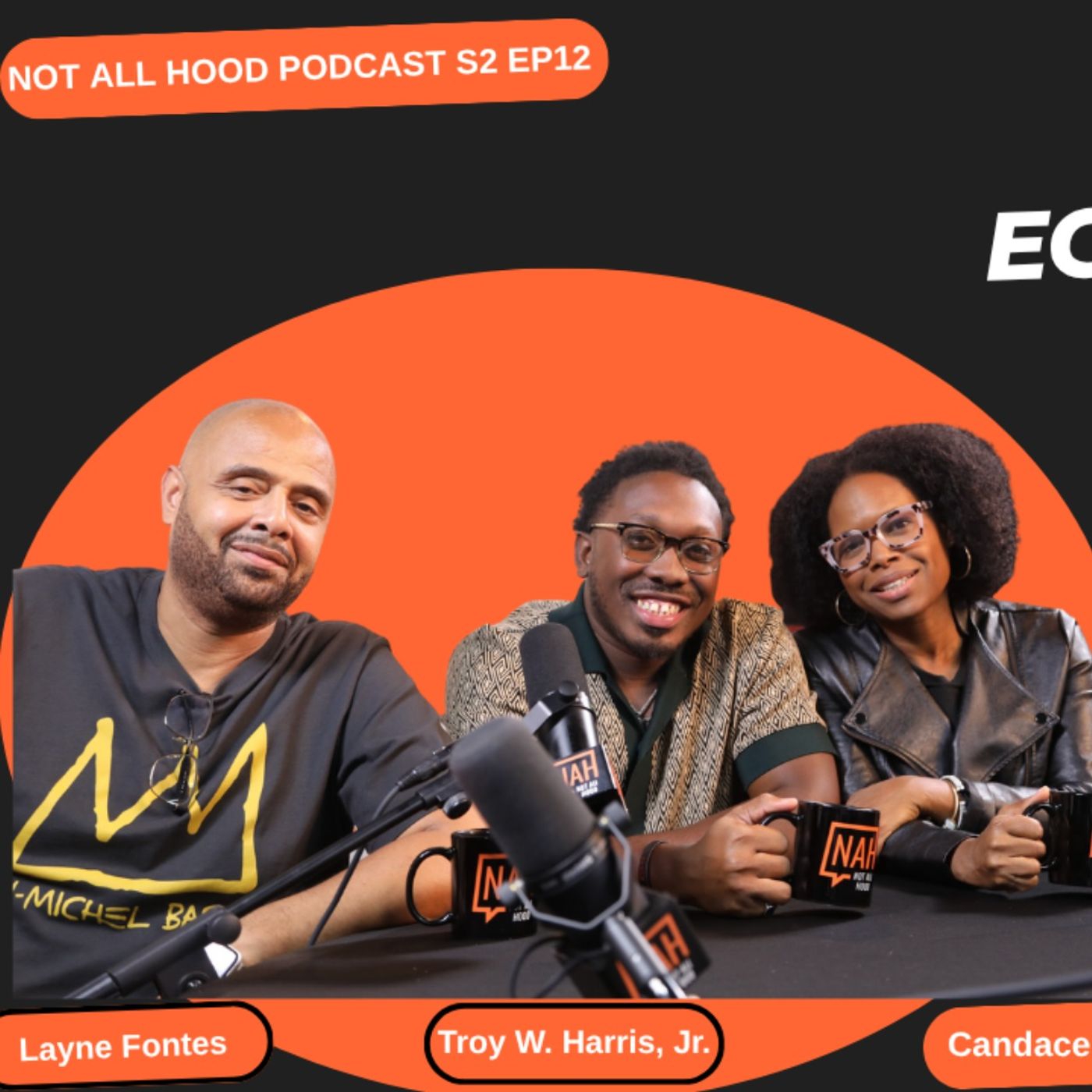
Not All Hood (NAH) with Malcolm-Jamal Warner & Candace Kelley
Eggs, Hustles & The New American Dream:Wealth, Work, and What Retirement Really Means
00:35:58
In this episode of Not All Hood, the group gets real about money, work, and survival in today’s economy—where inflation, layoffs, and corporate cutbacks hit Black families hardest. From $12 cartons of eggs to shrinking brand budgets, we unpack what “wealth” really means when the system keeps shifting the rules. Candace Kelley, Layne Fontes, and Troy Harris dive deep into the new economic reality: Why one job is no longer enough. The truth about “retirement” and why it might be a myth. How government funds for HBCUs are being reallocated — and who really benefits. Why more Black Americans are planning to live abroad — and what they’ll never give up about home. The tension between hustle culture, community, and rest. This conversation blends cultural commentary, economic insight, and lived experience to redefine what financial freedom actually looks like in 2025. Because it’s not just about how much you make — it’s about how much you keep. Not All Hood — where Black stories me...
Loading summary
Transcript283 lines
- [00:00]
Podcast Sponsor/Advertiser
This podcast is sponsored by Talkspace. You know, when you're really stressed or not feeling so great about your life or about yourself, talking to someone who understands can really help. But who is that person? How do you find them? Where do you even start? Talkspace. Talkspace makes it easy to get the support you need. With Talkspace, you can go online, answer a few questions about your preferences, and be matched with a therapist. And because you'll meet your therapist online, you don't have to take time off work or arrange childcare. You can, you'll meet on your schedule wherever you feel most at ease. If you're depressed, stressed, struggling with a relationship, or if you want some counseling for you and your partner or just need a little extra one on one support, Talkspace is here for you. Plus, Talkspace works with most major insurers and most insured members have a $0 copay. No insurance, no problem. Now get $80 off of your first month with promo code SPACE80 when you go to talkspace.com match with a licensed therapist today at talkspace.com save $80 with code SPACE80 at talk.
- [01:01]
Host 1
Comrades, welcome to not all hood. We all know the wealth gap hits black families harder. That's just the facts. But this makes it more important to have those honest conversations around money, where you stand financially, not just with yourself, but with the people that you love. The layoffs and furloughs, they're still coming. So we're doing a check in around money to help break the cycles that keep us stuck. It's not just about how much money you make, but really it's about how much you keep. Should you have a side check job? No matter what, should you keep a little money hidden from your spouse, that freedom fund? Well, it all depends. Enjoy the conversation.
- [01:42]
Host 2
But yeah, so in other countries, people would post out, you know, the cost of eggs and what it is, and.
- [01:48]
Host 1
You'Re like, how much were they there?
- [01:50]
Host 2
Like $2 and some change. When we were a dollar and some change, I saw eggs in Mexico for, they were like a $10 for, you know, 12 eggs. I'm like, wow, that's cheaper still cheaper than what we were paying. It is, yeah. And it was funny too, the way they kept the eggs, which I didn't know that, you know, we, we keep them cool, but they just keep them out because we wash our eggs.
- [02:14]
Host 3
So when we were paying 12, 15 and even more for cartons of eggs that they were 1 and $2 across.
- [02:21]
Host 2
East, yeah, they were like 1 and $2.
- [02:23]
Host 3
Wow. So now that it's going back to cheaper. Yeah, it has to be, because they're sending coupons. So they're like, oh, all these eggs are sitting. Get them out, get them out, get them out. So you think the economy is in a better place now or why do you.
- [02:35]
Host 2
I mean, not, not if. I mean, if you had to judge off of eggs, you'd be like, yeah, the economy is getting better. We good? But I don't. I don't think so. You know, that's not what I'm seeing you, you know. No, I don't know.
- [02:46]
Host 3
Yeah, I know. I know a lot of companies and brands have lesser budgets this year, too, is what I've noticed. When it comes to, you know, even film, like, people are paying less for films. It's harder for people to do things that they were doing already, like just two years ago.
- [03:04]
Host 2
Like what?
- [03:06]
Host 3
Like, I mean, when you're in experiential marketing. Right. So brands used to. I don't want to say brands because we don't have sponsors, but, you know, some brands would come and be like, hey, here's 200,000 to do this event. Now people are coming with like 30, 60.
- [03:22]
Host 1
Oh, I see. Their budgets are so much smaller.
- [03:25]
Host 3
It's. It's ridiculous. Like, brands, schools, you know, where. Where do HBCUs? I mean, the list goes on and on and on. It seems like things that people were kind of just throwing away. Oh, yeah, here's this much money. Here's that much money. Do whatever, I don't care. Now they're more strenuous when it comes to. To budgets and things didn't.
- [03:45]
Host 2
They said they were dropping a bunch of money in the HBCUs now and that it was the. It's. It was. We said they were taking money from black colleges, but they're actually putting more money into HBCUs.
- [03:58]
Host 1
Yeah, well, they are putting monies, taking them from colleges that according to the government, discriminates and putting it into HBCUs, which officially on record, HBCUs do not discriminate. They are not, you know, they do not have any quotas.
- [04:17]
Host 3
Yeah. They don't benefit just one group of people.
- [04:19]
Host 1
Yeah, you can be there and go, you know, I forgot you. I look at you and you, you have. In my head, you have gone to an hbcu. Like, I mean, like, it's all. But I'm like, zion, Ellie, you're here. I mean, really. But so the HBCUs. I went to school with white people in Howard. They do not discriminate. They do not in terms of discriminate as how the government looks at it. They don't have a DEI quota or component. And so that's why the government feels justified in saying, okay, let's give the money, which I think is 1.5 billion over, I don't know how many, to the HBCUs, because they don't quote, unquote, use quotas. So that's. So they've taken it from other schools that they have said have used quotas in order to get black folks in. So it's a very weird. Some people would say it's not a bad thing.
- [05:09]
Host 3
Yeah. But 1.5 across all HBCUs.
- [05:14]
Host 2
I would.
- [05:15]
Host 1
Have to look it up.
- [05:16]
Host 3
But I'm almost positive because my initial thought was.
- [05:18]
Host 1
And I'm not sure which HBCUs.
- [05:20]
Host 3
That's what I was gonna say.
- [05:21]
Host 1
Billions.
- [05:21]
Host 2
Yeah.
- [05:22]
Host 1
And I'm not sure which HBCUs.
- [05:24]
Host 2
Yeah.
- [05:24]
Host 3
Cause my initial thought was, okay, like, I know when I was applying to colleges, I got into pretty much all the schools that I applied for, but when it came to HBCUs, they didn't give me enough grants or scholarships. So my initial thought was, ooh, more people can actually benefit from this institution or this, like, group of schools. But when it's put through all of them, I guess I don't think HBCUs.
- [05:47]
Host 2
Really put out a lot on scholarships.
- [05:51]
Host 3
You think they're going to take it for, like, building changes?
- [05:53]
Host 2
Yeah, and I think that's what some of the money is for, for them to expand on their infrastructure and things like that. Not to give out scholarships or anything like that. I think it's to expand on buildings, infrastructure, you know, the way they do business, and not just bringing in more students.
- [06:12]
Host 1
I don't. I really can't. I really don't know. I got to say, I'm not sure. I just know the monies were allotted and it's, you know, it's just always such a fishy game, and you have to ask a lot of questions when that happens. You're like, you know, is it good? Is it bad? Is it good? Is it bad? I mean, that's where you really have to jump in. And look at all the fine line, you know, between the lines, read between. Look at all the footnotes. Who's, you know, sponsoring this bill? Who's giving the money? Who's doing all the things to figure out what is this really? And what is it going to be in the long run? So I need to do my research.
- [06:44]
Host 2
What's the end game?
- [06:45]
Host 1
Yeah, what's the end game?
- [06:46]
Host 2
What's the end game because you could give me this much.
- [06:48]
Host 1
Yeah.
- [06:48]
Host 2
And I'm like, oh, yeah, it's great. Because I saw somebody's post and was like, no, no, actually, it's great. And I'm like, is it great? Because I'm in my mind, Call me what you wanna. Anything that you wanna give to black people. I'm like, it's gotta be a catch. There's a catch, right? There's a catch right at the end of it. The. So spinning around, back on your thoughts about. So you're saying, so then there's not a lot of large brand spending, so they're cutting back. There are a lot of smaller businesses that actually that feed off of the large brands. Right. So there's. I know there's a large effect in the entrepreneurial space from there. I know there's been some recent conversations of somebody getting some. Some backlash from saying, hey, entrepreneurs, you need to, you know, hey, go get a job. You may need to go get a job.
- [07:41]
Host 3
Pack it up and go get a job.
- [07:43]
Host 1
Yeah, yeah.
- [07:45]
Host 3
I mean, I don't know personally, for me, as an entrepreneur, I feel like. Like I get why there's a conversation about it. I feel like as an entrepreneur, you kind of feel like I need to just figure it out. I can't go back. I need to dump everything into this. This is what I wanted to do, so I need to do it. So I kind of get that aspect. But then as far as, like, going to get a job, I don't know, I'm kind of on the fence a bit. I feel like there's ways that you can do it to where you don't necessarily turn your back on your vision or your creativity. But I think going 100% into, like a job, right? And yeah, a job. Yeah, into a job. I feel like I don't know if I would do that ever again.
- [08:32]
Host 2
A job's not 100% secure anyway, you know, but it doesn't mean. But if it's a secure line to paying your bills for right now, I think it's very secure versus going for maybe. Right. But entrepreneurial is about maybes. Yeah, right. But you just have a strong thought of going, no, it's not. Maybe I'm going to make this happen. Right. Where the other person who may not be as successful, they really go into it with a maybe I could. I could get this to. They may buy something from me. Right. And then. But when you get up with a strong entrepreneur, any good salesperson doesn't think like that. Right. That's part of the sales mentality. When you get the difference between strong sales and just salespeople who just like strong salespeople, they get up with the. When I talk to people, oh, they're going to buy whatever you're selling, right? Yeah, I'm close. Yeah, they're going to buy. I got it. You know, I'm coming with value. Right. So I know this is what's going to happen. I don't have a doubt that this is not going to happen. So then you wonder like, what's that magic that they have that they're able to do? That's because they just believe that that's what's going to happen.
- [09:41]
Host 1
Yeah. And nobody does just one thing. No, nobody. If you are a multibillionaire, in fact, you're a multibillionaire because you've done more than one thing. You don't just have a tech company. You have a tech company and have a space rocket company and a company. You have a car company, you have a company where you're investing in. You're investing in properties. Then you have a company that same company can start a music label. That same company is going to start merchandising based upon its product. Nobody who is in a position of power does just one thing anyway. Especially if they have a portfolio of real estate, which is a job too. You know what I mean? So when we think of a job, people have to think of a job in a way that's much different than our parents working at Bell Atlantic. If that's where your parents work for 40 years, J.P. morgan or J.P. morgan Chase, that probably isn't going to happen. But any think of any artist that you love, they do not just get on stage and sing.
- [10:39]
Host 3
That's true.
- [10:40]
Host 1
You have to have a partnership. That's right. You have to have a perfume company and you have to have a. In order to actually survive. Especially if you look at the record image.
- [10:48]
Host 2
Oh, you're not making money off.
- [10:50]
Host 1
Yeah.
- [10:50]
Host 3
Just dreams.
- [10:53]
Host 2
What you got a million streams is $4,000.
- [10:57]
Host 3
If even. That's what everybody is.
- [11:01]
Host 2
Crazy. That is.
- [11:02]
Host 1
It is. So. So you, you shouldn't pigeonhole yourself into one thing anyway because as soon as that job once you got gone, there is no loyalty. And there shouldn't be. Because when you signed up in that contract, you signed up to be someone that. That could go. Unless you're. Only thing I can think of is, you know, someone who's tenured someone. There's some jobs and even then, what if the university shuts down. Know what I'm saying?
- [11:27]
Host 2
Yeah.
- [11:27]
Host 1
Nothing is guaranteed, though being tenured does help. Or in other places where you're, you know, you're in a tenured position.
- [11:35]
Host 2
So that might have been. So that probably is still the culture in education, Right. But in the corporate world, honestly, I remember the switch of happening goes from when you had, you had too many jobs on your resume. It's like, oh, don't hire them. They don't. They quit fast. But then it moved into, I'm telling you, I remember the sharp turn where it was like, why have you been here that long? Right? Because everybody, hey, I'm here two years, three years. And I always say, you can't learn or do anything or make any differences in two or three years. But that's the culture. Two, two, three years, you move on. And that's how you make your money. Because that job is not going to give you more money from being there. You say, hey, I'm the VP of strategy here, right? I'm the VP of strategy here,' right? Oh, let me bring it back. Let me dial it back. I'm the manager of strategy here, right?
- [12:38]
Host 1
Right.
- [12:39]
Host 2
And then now, then I can go, hey, job. I'm gonna stay and be the manager for the longest. And I get a raise from them, I may get a promotion. They may move me up to the director of strategy maybe after five or six years. Right. But if I go, I'm the vp, I'm the manager of strategy over here at Chase, I can now move on to bank of America. And bank of America will pay me more. And they'll say, oh, we'll make you the senior vice president over here. Right. And give me more money. And people hop around. Title hop and dollar hop.
- [13:15]
Host 1
They do. Yeah, yeah. I mean, I can't be mad at them for that because at some point you have to say to yourself, okay, where and when am I going to make the most money? Because I can't. Some people want to work until they're 90. Most people, you're like, is not me. But most people that I know want to do what our parents and forefathers set up to do on their backs, which is, yes, in this America, let me have a proper retirement so that I'm not working to the bone. Or I see a lot of people retiring and I've seen a lot of very much older people. I mean, 80 in Panera or at the toll booth.
- [13:55]
Host 3
You don't have to bagging or checking receipts at the door.
- [13:58]
Host 1
That's right. At Walmart. Exactly, exactly.
- [14:01]
Host 2
So we still have people at the toll booths?
- [14:03]
Host 1
Yeah.
- [14:04]
Host 3
Okay. Some of them.
- [14:05]
Host 1
Some. Some.
- [14:06]
Host 2
I thought everybody got rid of their toll booths.
- [14:08]
Host 1
No, still. If you don't have the. If you don't have the easy pass, you still have the option of going through. It's not all the time, though. I would say it is turning over a leaf into almost, you know, 100%.
- [14:20]
Host 2
See, that used to actually be a decent paying job, especially over time. Working. Yeah. Working a toll booth. It's funny, in New York, you see the. The. So they had the brown shirts. I remember this. Right? And then they had. Who worked the toll booths? And. And they had the officers.
- [14:36]
Host 1
Oh, oh, really? Okay.
- [14:38]
Host 2
But it's funny because. And I do not make this up. The officers, you can see them doing things, and they have Rolexes on there. And I'm like, whoa, what kind of money they getting over here? But they. When that was. I was in the 90s then, you know, and seeing this, so. But now they got rid of that. They got rid of all those salaries. Really? MTA is just eating it up. Wow.
- [15:00]
Host 3
And it's crazy because I know. I wanna say last week or maybe two weeks ago, I was talking to someone about retirement. I was at the car wash, hand car wash, getting my car washed. Me and this other person, older person was there. And I don't know, I just felt like asking, right? Like, what does that even mean? Because I think, like, I told you guys the other day, I've been thinking about what the end goal is. What's.
- [15:24]
Host 1
What's look like? Where are you gonna be?
- [15:25]
Host 3
What does that even mean? So that to me was interesting too, right? Like retirement. Cause I always thought, yeah, you retired. But then I've always, like, you guys just said, see, older people, like, yeah, they retired, but now they're doing something else. They're wearing their soft shoes at Walmart, they're bagging up groceries.
- [15:42]
Host 2
You're.
- [15:42]
Host 1
Now. So I don't know if that's a necessity.
- [15:45]
Host 3
So that's what I'm wondering, right? So we say retirement. Do people really even know what that means? How many people do y' all know?
- [15:52]
Host 2
Right?
- [15:52]
Host 3
Like, my grandmother retired, and now I think she just kind of hangs out. She goes to the park.
- [15:57]
Host 2
Yeah.
- [15:57]
Host 3
But I don't know if, to me, if that's what retirement looks like.
- [16:02]
Host 1
I don't really know. It's just so, you know, go to church and bridge and, you know, talk on the phone to her, like, what does she do?
- [16:08]
Host 3
That's all she does.
- [16:09]
Host 2
She's busy. She.
- [16:10]
Host 3
She Hangs out. Right. She'll go outside of her house and sit on the bench.
- [16:18]
Host 2
Sure.
- [16:18]
Host 3
She'll call me, we'll talk for some hours. Yeah, she'll watch her other great grandchildren and just be. Watch her stories. That's what she does.
- [16:27]
Host 1
You watch those stories.
- [16:28]
Host 3
Like, whenever I go to New York, I'll just pop up on her and I know she's home. She's not doing anything or going anywhere. I just pop in.
- [16:35]
Host 1
I want you to ask her one day, do you think you'd rather be doing, having a little job? I'm just wondering what she says.
- [16:41]
Host 3
She might curse me out. That's right. Yeah. That's a black grandmother. She gonna be like, what? I did all that work and I did all of this.
- [16:48]
Host 2
Yeah.
- [16:49]
Host 1
So, yeah, I think sometimes it's not a matter of, all right, what am I going to be doing? But can I do exact. Can I do what I want to do? Whatever it is on any given day.
- [17:00]
Host 3
That'S what retirement is to you.
- [17:02]
Host 1
I mean, that's what retirement is to me.
- [17:04]
Host 3
Exactly. So when you retire, what's your plan? What does it look like?
- [17:09]
Host 1
Oh, I would, one, love to retire early, but two, get the money in order so that. That can happen. Three, scale down on the house. Like, when I clean, when I, you know, I'm wiping those walls. I'm wiping those walls for the next person who's buying that house. You know what I mean? I'm like this, you know, I don't want this to break. I don't want this to break. Let's get this. Because that's not. I am not going to live there for the rest of my life.
- [17:33]
Host 2
No, you're going to a tiny house.
- [17:35]
Host 1
No, I'll probably go. I don't know. Well, I'll do. But that won't be a van.
- [17:39]
Host 3
She'll go in a van.
- [17:40]
Host 2
She said it won't be a van. She said it will not be a van.
- [17:43]
Host 1
No, it won't be a van. It won't be a van. But, yeah, no, I check in, you know, every six months, see how much it's gone up. Because that's part of my plan for retirement.
- [17:51]
Host 3
Every six months.
- [17:52]
Host 1
That's right. Well, he's the. My realtor sends it to me.
- [17:56]
Host 3
Okay.
- [17:57]
Host 1
Yeah. So I open it up. So, yeah, I do check. But yeah, yeah, on purpose, it's okay. Yep. Because as soon as it hits a.
- [18:03]
Host 3
Certain number, you out of there.
- [18:05]
Host 1
It's. It's. Yeah, I'll have to work my. My plan and Absolutely.
- [18:09]
Host 3
See, even that's Interesting. I have a comment. But what about you? What does that look like for you? Traveling? I feel like you don't like to sit still.
- [18:16]
Host 2
I do want to sit still because I've been moving my entire life. Not moving.
- [18:22]
Host 1
Right.
- [18:23]
Host 2
Not physically getting up. Getting up early in the morning. I used to be a morning person. Right. It's funny, when Covid hit and no.
- [18:30]
Host 1
One was getting up early, you were getting up early.
- [18:32]
Host 2
No, I stopped and I actually shifted over and started waking up just a little bit later. And I was like, this is actually good, you know, going to school in New York. Do you remember what time we had to be in school? Yeah. The school of, like, first class. 7:15.
- [18:46]
Host 3
Yep. And, you know, still had to travel there, but wake up.
- [18:49]
Host 1
That means you were up at what.
- [18:50]
Host 3
Probably like five, six o'.
- [18:52]
Host 2
Clock. Yeah. So, you know, up in the morning is the. You know, and things in New York also, you know, and people get off a little earlier. Right. So your day is off. Why? Because then it gets dark early, too. Yeah. Four o', clock, it's dark outside. God bless you. You part of that darkness when.
- [19:11]
Host 1
Yeah, I get up early.
- [19:12]
Host 2
Yeah. And stay late. Yeah, stay late.
- [19:15]
Host 1
I am the early riser.
- [19:16]
Host 2
Yep.
- [19:17]
Host 1
I like that. Quiet.
- [19:18]
Host 2
Yes.
- [19:19]
Host 1
Yeah.
- [19:20]
Host 2
See, but for me, I would like to. Honestly, traveling is it. I want to live in. I want to go live in Colombia for six months. I want to go live in Lisboa for six months. I want to go live in South Spain for six months. I want to Thailand. And, you know, those places are great, too. They just feel so far off from me. It's like, far off from where?
- [19:49]
Host 3
Far off.
- [19:49]
Host 2
If I needed to come back here or something. Right.
- [19:52]
Host 1
Which, by the way, I have to say, whenever I travel, I can't wait to come back.
- [19:57]
Host 2
Yeah.
- [19:57]
Host 1
I don't know if y' all feel.
- [19:58]
Host 3
The same way, too, but depends on where I go.
- [20:00]
Host 1
Yeah. Maybe depending upon how long length. But I'm always ready to be like.
- [20:04]
Host 3
Yeah, let's get ready to America. Why, though? What are you rushing back to?
- [20:10]
Host 1
I am rushing back to mostly options and mostly options in everything because America really is the land of plenty. So that when you go abroad, it's just, you know, everything is different. Like, you know, when I went to Africa and you go to the grocery store, it's just different. You do not have. And you don't have to have 40 choices of salad dressing, but, you know, to have it. That is something that I'm used to. I appreciate coming back. I appreciate, you know, family, the community that I Have. I mean, a bunch of things I appreciate about America and the fact that my parents, you know, help make America what it is and my ancestors and all that. Like, there's a belonging that, that I feel, and there's an ownership that I have. So I do like coming back to what I know historically I own.
- [21:02]
Host 3
And then when you get back, you can't wait till you go again.
- [21:04]
Host 1
No, no. It's. Normally, I'm not probably a bigger traveler, as, you know, some other people. I, I. Yeah, you know, I like it here. I'll be back, but I can also, and I will also live abroad. Yeah. And that's, that's more than just, that's more than just plans at this point. I will be living abroad. Yeah.
- [21:24]
Host 2
Yeah. That's why I'm at, too, when I look at some of those things. But sometimes when I look at some things, I'm like, you gave up your citizenship? I was like, I don't know if I could give up my US Citizenship. That is a. Yeah. And maybe it could be. But just like, that's a stretch for me is like, I'm a US Citizen regardless. Right.
- [21:46]
Host 1
Yeah, yeah.
- [21:46]
Host 2
You know, you know, it's like being black. And, you know, we, we put ourselves outside of being black, first and foremost. We are Americans. I'm American. Right. You know, you know, good, bad, ugly. Right. We help, like you said, our people helped build. You know what I'm saying? Yeah. So I, I hold to that. So when I, like, you gave up your citizenship. I don't know that could go that far, but I could live in some. Not could. I am going to live in some other places and experience the world longer than two weeks.
- [22:19]
Host 1
Yeah, no, definitely.
- [22:20]
Host 3
So are y' all learning other languages to prep to be there?
- [22:23]
Host 1
Oh, no, we're going to. You don't have to. You don't have to. You're just gonna speak English. Yeah, they speak English and. Yeah, they have. I mean, I'm, I'm pretty. Listen, I mean, the problem is people don't know any of my plans. So that's why I'm like, ah, you know, But I know that I'm going to be living abroad, but not for, like, happier, but for some period of months. Sure.
- [22:48]
Host 2
When the time comes and I want to be in. That's why I want to go for it, because I want to be entrenched. I want to come back and be like, I have my friends here and these are my people here. And yes, to answer your question, yes, I used to get up and teach myself Portuguese every morning. Spend 30 minutes every morning teaching myself Portuguese.
- [23:06]
Host 3
Nice.
- [23:06]
Host 2
Yes, yes, yes. Don't. Let me tell you.
- [23:09]
Host 1
Don't ask you about the.
- [23:10]
Host 2
No, no. It is funny because when I went to Cape Verde and it was time to. You liar. And people. And then I was getting shamed, right? Because people like you don't know your language. You don't speak. Yeah. You don't speak real. I'm like. And they're like. And give me that look. And I was like, did you try to shame her? You know, but. And I could read it.
- [23:31]
Host 1
What do you speak in Cape Verde?
- [23:33]
Host 2
Creole.
- [23:34]
Host 1
Oh, creola.
- [23:35]
Host 2
Yeah.
- [23:35]
Host 1
Which is a cousin to Creole.
- [23:37]
Host 2
Well, it's the first Creole language. Right. So it's Portuguese, though. It's a Portuguese Creole, but it's the first Creole language.
- [23:45]
Host 1
Okay.
- [23:46]
Host 2
Yes.
- [23:47]
Host 1
And so you speak some.
- [23:48]
Host 2
I can say hello, say something.
- [23:52]
Host 3
Say one line. Your favorite line.
- [23:54]
Host 1
Also, like, bonjour is like, a little bit kind of married Of French at all, or.
- [23:58]
Host 2
No, no, it's.
- [23:59]
Host 1
No, it's.
- [24:00]
Host 2
It's. It's.
- [24:01]
Host 3
It's more Spanish.
- [24:02]
Host 2
No, you say that, but if you know Spanish, you can identify a lot of words.
- [24:07]
Host 1
Yeah.
- [24:07]
Host 2
Words. It is the. For me, it made it easier because I know some Spanish. Right. So I can identify and go through life. It made it easier. So there are a lot. So many similarities. But words pronounced the same. No, some words are different. They're just pronounced different. The language sounds different in. But even the Portuguese countries are a little different because in Brazil, they speak. It sounds different than it does in Portugal. Portugal, it almost sounds German. Right. You know what I'm saying? And then in Cape Verde, it sounds almost Italian to me. Right. It gives that. The way they speak the language feels that. Yeah. You know, so. So, yeah, I used to get up every morning and teach myself. I'm rusty now, but when I went over, I was able to read through things, understand things when I could sit there and listen to people talk. And I go, oh, I know what you said. Or at least I got. You said ten sentences.
- [25:09]
Host 3
I got one or two.
- [25:10]
Host 2
How? Ten? Worried. Yeah. Sorry. Yeah. Yeah. Broom.
- [25:14]
Host 3
Okay. Yeah. And it's funny that you guys said, like, you know, you have that affinity back here.
- [25:20]
Host 1
Yeah.
- [25:21]
Host 3
I don't know. I'm gonna have to let you guys know the next time I travel, which would be sad. Yeah. Yeah. Cause from what I recall, and I was just somewhere. I feel like in May, but I just don't remember if it's like, oh, I need to go back home. I need to go Back home. But oddly enough, I feel that way about New York.
- [25:39]
Host 1
Yeah.
- [25:40]
Host 3
More than anything, I feel that way about New York. Like, oh, my friends are there that.
- [25:43]
Host 1
You need to go back to New York City.
- [25:45]
Host 3
Yeah. And not when I travel even here. When I'm here in Atlanta, sometimes it's like, man, I can't wait to go back and see my grandmother. I can't wait to just spend some time with my cousins, my little cousins.
- [25:54]
Host 1
Those roots.
- [25:55]
Host 3
Yeah.
- [25:56]
Host 1
Yeah. Like, there's. Is there a sense of ownership that you have, like, and belonging that's unlike any other place. Right.
- [26:02]
Host 3
I don't know.
- [26:03]
Host 1
I feel like, all right, yeah, like, we have to check. We have to check in on you on this trip.
- [26:06]
Host 3
But I know when. When I go to New York, I definitely, like, I don't know, I just feel at home.
- [26:11]
Host 2
Yeah.
- [26:11]
Host 3
I guess that's it. I feel at home. Like, I feel like. I feel light. I'm just walking. I'm just being. And maybe that's the difference here in Atlanta. I drive everywhere. So there's no sense of just walking and just being psychic.
- [26:25]
Host 1
And a little connection, like, to the ground as you walk. And everything that you see is close up and you take in.
- [26:31]
Host 3
I think that's what.
- [26:32]
Host 1
And the people who are right there.
- [26:35]
Host 2
The energy, you know those people because you like. And you hit the same blocks. If you work on. In. Where's the. If you work in the Manhattan, right?
- [26:46]
Host 3
Oh, Times Square.
- [26:47]
Host 2
Times Square. Yeah. Let's say you work in Times Square. I'll say Rockefeller Center. Yeah. If you work in Rockefeller and you get off the train and you have fall crew, you're gonna see those people.
- [26:55]
Host 1
Yeah.
- [26:56]
Host 2
And if you have to walk to the train station to get to the train, wherever you live, Brooklyn, Queens, whatever, take the bus, you see those people and you have a connection to those people.
- [27:05]
Host 3
That's true.
- [27:05]
Host 2
Best community. You don't get that same feeling here. Yeah, right, Right. You may not even know your neighbor's year. Right. You may know a couple of your neighbors. If you're a real community person. Right. You may get to know. But for the most part, people don't know. And. And a lot of times they may stay here for five in a house for five years and may not know them.
- [27:26]
Host 3
Yeah.
- [27:26]
Host 2
And they sell it.
- [27:27]
Host 1
But you know your neighbors. You must know your. I know you know your neighbors.
- [27:32]
Host 3
I know most of my neighbors.
- [27:34]
Host 1
Yeah. I cannot imagine you not knowing your neighbors in pockets.
- [27:37]
Host 3
But I'm. I'm. Whenever I'm home, I'm working. And then when I'm I'm working, so I feel like it's just harder to. To see the people. But it happens. Like, when I'm going to get mail or if there's HOA meeting or something like that. We'll commune and see each other.
- [27:52]
Host 1
You know your neighbors.
- [27:54]
Host 2
I know, of course.
- [27:55]
Host 1
Like, on the other side. Yeah.
- [27:57]
Host 2
Like, I know quite a few of my neighbors.
- [27:58]
Host 3
You? Yeah, I do all of them.
- [28:01]
Host 1
I know a lot of. I live on a very small block, so. Yes.
- [28:04]
Host 2
So you know everybody on your block?
- [28:05]
Host 1
Yeah, I mean, it's very small. Yes, it's a very small block. It only has, like, you know, six houses.
- [28:12]
Host 2
Oh, yeah.
- [28:12]
Host 1
You cross over and opens up. But that's just something.
- [28:14]
Host 2
If we had a 6000 block.
- [28:16]
Host 3
Oh, I know.
- [28:17]
Host 2
You probably know two of your neighbors.
- [28:18]
Host 1
Yeah.
- [28:19]
Host 2
You might know the one. Maybe your next neighbor here. But if you're the last house, you might not know anyone.
- [28:24]
Host 1
And plus. Plus the neighbor, she. They. They have this large outdoor area, and they'll, like, roast a pig and they'll do stuff that. Where I'm like, what do I smell? You know, Like, I was like, you go out there? Yes, I was like, I've got to know those. They have locally, you know, lovely parties that they invite us over to. They do a lot of cooking. They do a lot of outdoor cooking and roasting of pigs and roasting of this, and you smell it throughout. And. Yeah, so I know those neighbors.
- [28:53]
Host 2
She lives in Hawaii, clearly.
- [28:55]
Host 3
Right. They just. On open flames and pits.
- [28:57]
Host 2
Drop this in a pit. Yeah.
- [28:59]
Host 3
Okay.
- [28:59]
Host 2
Okay.
- [29:00]
Host 3
I think, too, right here in Atlanta, at least, like we said. How is that? Like we said, like, people here are always, like, having multiple jobs and things. I think that's the other reason why it's kind of hard to know your neighbors. People are always on the move. People are always on the go. They're either home, and when they're home, they're trying to decompress or they're not because they're doing something. So I think for that reason, too, like, as we were talking, I thought about the neighbor that literally lives right next door to me. It's rare I see him, except maybe when he's cutting his lawn. And then we'll catch up.
- [29:33]
Host 1
Wow.
- [29:34]
Host 3
So I think that's the other thing. I don't know. I feel like in New York, at least when I was there, people have their job and that's it. There's not as many entrepreneurs because it's like, you have to do so much or you have to be super concise on what you're doing in order to afford to even be there.
- [29:53]
Host 1
Yeah.
- [29:53]
Host 2
When I was younger in New York, there were a lot of entrepreneurs. You could just go to the corner corners full of entrepreneur. So things of church entrepreneur in the same thing. New York, yes, it's great.
- [30:08]
Host 3
But that happened right after, like, you know, that around the 90s and, well, at least 2000, 2010s that ceased to exist as much. And it was more like, no, you need a, like a job. When things started getting more expensive, I think is when it happened where it's like, you kind of have to get a job, but then at that point when you have your job, you're only making enough to pay your rent.
- [30:31]
Host 1
Right. To live.
- [30:32]
Host 3
Then, God forbid you have a child or something. Now you need a roommate. Then you have another child, you need another roommate. Oh, no, you ran out of roommates. You need to move back in with mom, dad or granny.
- [30:43]
Host 2
Like, I've repeatedly said that same thing to kids. And I've said, because I always hate to hear when they, like, poor people are lazy. And I say the hardest working people on the planet are poor people. They work two, three jobs. They're always working. Right. The problem is that they're not in the right spaces or don't have the credentials or the education or whatever it is, or the opportunity to have better. But poor people I've always known to like, they work a lot of. They're hard workers.
- [31:23]
Host 1
I think that New York City is one of those places, though, where people want to live there so badly that they're willing to sacrifice anything when the truth may be, and I think you said this the other day or yesterday, that maybe you just can't afford that and that you need to be living someplace else. Now, I know that's easier said than done. And people have communities and you, you know, built in support systems and things of that nature. But sometimes that might be the case that maybe you just can't afford it. Which is why, you know, I'm not living in Los Angeles or I'm not living in New York City. In fact, I think it would be great to live in New York City. But would you live in New York? Yeah, I would.
- [32:03]
Host 2
Okay.
- [32:03]
Host 1
But I'm not going there.
- [32:04]
Host 2
Go see some plays and stuff like that every day. She'll be there. She's down at Broadway every day. Everybody knows Candace on that Broadway.
- [32:13]
Host 1
Right. But would it really make sense, sense to Pay, you know, $12,000 a month to, to, to live there, just to.
- [32:19]
Host 3
Say, I live there, and then all you'll have is this space right here, this small room right here.
- [32:23]
Host 1
Right.
- [32:24]
Host 2
Which is crazy. Somebody was like I sent some, I thought I heard a quote what a basement apartment cost. I'm like what? It was some crazy number. I can't remember. I'm not gonna quote it. Cause I don't remember it. But still. Anybody who knows the cost on basement apartments in New York City, post it and, and put it in there. And New York City put it on in there. Post it in the comments, let me know. For real. But I know it's crazy when I.
- [32:49]
Host 1
Think the average or median I have heard is 5,000 for. And I know there's, I know there's a difference between an avenue and a meat median, but I can't remember which one. So. But either way that's a lot.
- [33:01]
Host 2
That's insane.
- [33:02]
Host 1
Yeah, yeah. Because after taxes, you know you're going to have to bring home. I mean it's a lot of math. That is not math.
- [33:11]
Host 2
And as they say at all not to live in New York City.
- [33:13]
Host 1
Yeah. Because that means $5,000. You really making. Have to make what 7,500 or 8,000. Cuz you those, that's most that taxes. You have to make that in order to get that 5,000.
- [33:25]
Host 3
But then you have to make three times your apartment.
- [33:28]
Host 2
Whatever New York, in New York they, they want, I don't know now three months rent. They want, they want more because they want first month, the last, last month. Insecurity. Yep. Okay. But even, even years ago that used to be a lot. So like when you're asking someone, oh it's going to be $1,500 a month to me. So before I can go in this door, I got to have $4,500. That's a lot. And everyone, a lot of people don't have $4,500 just savings that they could just go I got to move 4500.
- [33:58]
Host 1
Now I do think it would be different if I was owning. You know, I would pay that much to own.
- [34:03]
Host 3
That's true.
- [34:03]
Host 1
But not to rent. It's the renting thing. It's the renting thing.
- [34:06]
Host 3
Even that, that house in New York isn't big. 5,000amonth.
- [34:11]
Host 1
No, no, that's not.
- [34:13]
Host 3
Yeah.
- [34:13]
Host 1
Oh yeah. I don't know where you're living for.
- [34:15]
Host 2
5,000Amile like you 5,000 and I wouldn't.
- [34:19]
Host 3
You smelling somebody basically.
- [34:20]
Host 1
Yeah, yeah, yeah. It's small.
- [34:22]
Host 2
Candace owns the basement.
- [34:26]
Host 1
And two other people own this. You're right, you're right. You know, 5,000. Yeah. It wouldn't be a. Wouldn't be a house.
- [34:31]
Host 2
Yeah, our house was. We. My. We had. Our house was split, like, so own the whole house, but then we rented the basement. We on the middle floor, and then rented the upstairs.
- [34:42]
Host 3
In Queens.
- [34:43]
Host 2
Yep. But all basement had everything in the kitchen, bathroom, all that other good stuff. Middle floor and then upstairs had kitchen, bathrooms, all, you know, all that other good stuff.
- [34:54]
Host 3
So they all had their own entrances, or you got it.
- [34:57]
Host 2
All had their own entrances.
- [34:58]
Host 3
So it's like a three family house. I thought it was one like a brownstone where you kind of still see everybody.
- [35:07]
Host 1
Oh, right, right, exactly. Unless you come out in the basement.
- [35:11]
Host 3
You have a entrance.
- [35:14]
Host 2
Wow.
- [35:15]
Host 1
Whoever has a brownstone, you're good to go.
- [35:19]
Host 3
In New York, there was a. Like, downtown Brooklyn after they put Barclays center there. They were offering people over a million dollars for their brownstones. Right, Downtown Brooklyn.
- [35:29]
Host 1
Yeah. And now it's even more.
- [35:30]
Host 3
I can imagine.
- [35:31]
Host 2
That's a shame, because now we're priced out of areas that we lived in forever. Historically. Yeah, Yeah.
- [35:39]
Host 1
I said that is now. We can't end on that. No, wait, I'm sorry.
- [35:43]
Host 2
Yes.
- [35:45]
Host 3
Well, we were talking about the state of the economy.
- [35:47]
Host 1
No, we were. We were.
- [35:49]
Host 3
That's kind of where we are.
- [35:50]
Host 1
But then again, the takeaway, too, is side gig, y'.
- [35:55]
Host 2
All. Yeah.
- [35:56]
Host 1
And I don't. And I don't know if it's a side gig, if it's another job. People call it a different thing, and I think that that kind of identifies how you feel about it. Side gig is different than, in my mind, someone that is working three jobs.
- [36:10]
Host 3
Yeah.
- [36:10]
Host 1
Like, it sounds different to me, like someone working three jobs and has two sides. So whatever works for you. You should not have one stream of income at all.
- [36:21]
Host 3
And I know my mom used to always tell me, don't wait on money. Like, always have something going on so that there can always be something coming in if you're waiting for something you've already lost. Because what happens? Like you said, if something happens, company shuts down. This. That, like, you know what I mean? So just multiple moments. My mother was a serial entrepreneur, so, yeah, I 1,000% agree with that.
- [36:45]
Host 2
Which goes back to where we started from. Eggs in a basket. Exactly.
- [36:52]
Host 3
Don't put all your eggs in one basket. All your one basket, no matter the price.
- [36:59]
Podcast Sponsor/Advertiser
Why does every recipe I try need 18 ingredients, including a jar of something paste I'll never use again, but will sit in my fridge for nine months? I just want dinner in the oven fast. That's why I love Blue Apron's new one, Pan Assemble and Bake Meals. They send you fresh ingredients that are already chopped. All you do is put it all together and bake. That's it. No chopping, no weird leftovers. Just delicious, easy to make meals get 20% off your first two orders with code apron20. Terms and conditions apply. Visit blueapron. Com terms for more.