← Not All Hood (NAH) with Malcolm-Jamal Warner & Candace Kelley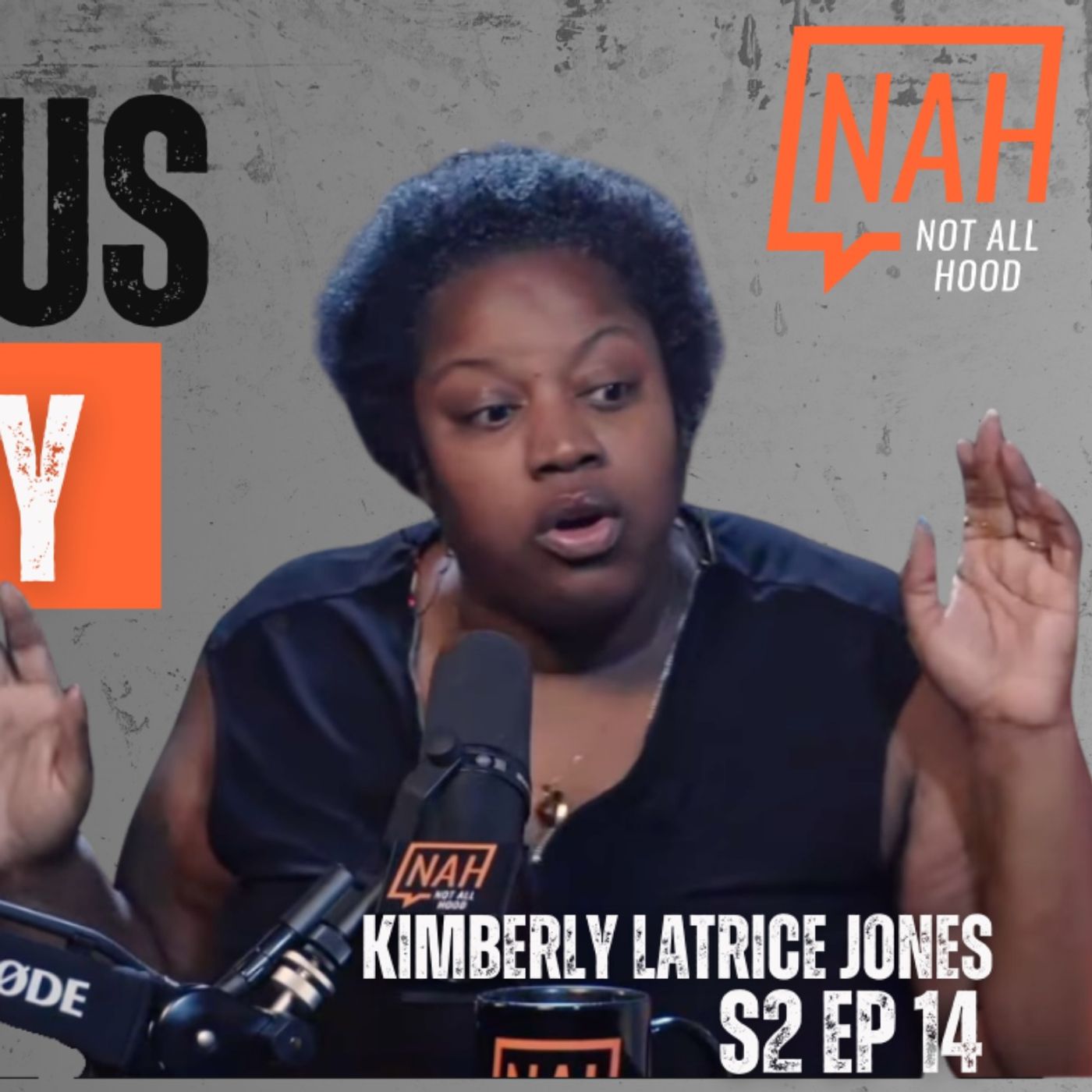
Not All Hood (NAH) with Malcolm-Jamal Warner & Candace Kelley
How to Save Our Kids: The Crisis No One Wants to Talk About
00:23:43
In this explosive and deeply human episode, Kimberly Latrice Jones breaks down one of the most urgent crises facing Black America: the collapse of structure, accountability, emotional intelligence, and real support for our boys and young adults. Jones goes beyond headlines and politics to expose the developmental science behind teen decision-making, the dangers of treating 14-year-olds like adults, and the generational trauma shaping today’s youth. She also reveals powerful, practical strategies — from voter engagement events to mentorship models — that actually work to pull young people back from the edge. The conversation explores community correction, righteous anger, family structure, accountability culture, emotional intelligence, and the essential role of fathers and uncles in shaping young men. This is not a rant. It’s a blueprint — for parents, educators, community leaders, and anyone who wants to help save a generation.
Loading summary
Transcript74 lines
- [00:00]
Monarch Advertiser
Most people don't know how many financial accounts they have or their net worth. And when you're not paying attention, you're leaving money on the table. The solution is Monarch, an all in one personal finance tool that brings your entire financial life together in one clean interface. On your laptop or phone in just minutes, link all your accounts for a complete picture of your financial health. You'll never need a spreadsheet again. Get 50% off your first year. That's just $50 total@monarch.com with code audio. That's monarch.com promo code audio.
- [00:30]
Capella University Advertiser
@ Capella University, learning the right skills could make a difference. That's why our business programs teach you relevant skills you can take from the courseroom to the workplace. A different future is closer than you think with Capella University. Learn more at Capella. Edu.
- [00:45]
Podcast Host
Comrades, welcome to Not All Hood. Sometimes the best conversations are the ones you don't plan. This episode honestly wasn't even supposed to happen. I mean, not like this. But when activist Kimberly Latrice Jones continue talking after the show, we kept the cameras rolling as she talked about a plan for black America. She shared her wisdom and her heartfelt emotions about who we are as a people. For those of you who are watching this, at several points, Kim doesn't even look at the camera because she wants to include the producing team in on the conversation. We all really wanted to engage in this eye opening talk. So what you're about to hear is unfiltered and unplanned, which honestly made it even better. Enjoy the conversation.
- [01:30]
Kimberly Latrice Jones
When we had a local election, I think it was like two years ago. Yeah. And we needed. We had no youth vote. Like young people were not registering to vote. Right. I went to mtv. I went to all these different places. I raised about $300,000. I threw a Gucci concert that you could only get in with your voter registration card. Could buy a ticket. You couldn't buy a ticket. You couldn't win it on the radio. You couldn't do any of that. I had Gucci headline. I had. I had. What's the girl? It's not Atlanta. What's her name?
- [02:04]
Podcast Host
I do not know.
- [02:04]
Kimberly Latrice Jones
Amaretta. Okay. Amaretta. Amaretta. I had Ti's son, Damani. And then I did a talent show for HBCUs. I brought out every music executive I know in town. I had Ray Daniels there. I had Jazzy Faye. I had Prosset. Had every major, every major music executive in town come out for the talent show.
- [02:26]
Podcast Host
Yeah.
- [02:26]
Kimberly Latrice Jones
Then I had Damani, Amaretta and Gucci. But you could only get the ticket. Your voter registration card was the only way you could get the ticket. So once I get them all in the room, then I put Alfred Shivi Brooks, who is on the school board here. But you know where they know Shivy from? They don't know Shivy from being on the school board. They know Shivy cause he won freestyle Fridays at 106 and Park. So then I had Shivi explain to them why it was important. I had Drew Ski come up there and explain to them why it was important. Uh huh.
- [03:02]
Podcast Host
Speak that language.
- [03:03]
Kimberly Latrice Jones
People thought it was a misuse of $300,000. I thought it was a perfect use because I had 10,000 kids in the building under the age of 25. The second thing is I talk to them in their language. I make it fly and sexy for them. I don't talk to them the way that I. I'm I'm 49, almost 50 years old. I don't talk to them about the things, the way it matters to them. I talk to them in their language. You know what I do? The girl who owns the cupcake business.
- [03:27]
Podcast Host
Yeah.
- [03:28]
Kimberly Latrice Jones
I talked to her about how she has to get in bed with the commissioners and stuff, because there is government funds and contracts that can help her business grow. But in order for her to understand where that money's coming from, how it's coming, she gotta go to commissioner's meetings. Come with me, little sis. I'm gonna take you down here. They getting ready to have a mixer. Every year, the lieutenant governor invites me to his black history event. I take 10 girls in their 20s who own small businesses with me and I put them in the room where they walk away with money. Now they understand what Ms. Kim is saying.
- [03:59]
Podcast Host
Money talks.
- [04:00]
Kimberly Latrice Jones
Money talks. Money talks. I keep telling them your legislator's second biggest job is budget. And I break down for them. When you go on a legislator's website and they're explaining to you, I did this, I did this, I did this, I did this, I did this. They ain't did none of that. They funded the people who did it. So if I say I service 30,000 kids with after school programs as the state rep, I didn't fund 30,000 kids. I fund three organizations that did it for 10,000 kids and I gave them the money to do it. So I teach them, I teach them from a selfish perspective. Let me show you how to get this money, this money on. Go ahead. Let me show you how to get money for your business, for your nonprofit, for your whatever, and I promise you, you put them in a room there, then they're hearing all the other conversations. They get savvy because then, I mean, they got hearts. So while they're in the room trying to get money, they're hearing about the daycare of the road that's getting ready to get closed and how they're trying to pass an ordinance to keep it open. And they're saying, hey, I got my clothing business up the street. Now they feel obligated. I'm gonna donate 20. You gotta make it, you gotta, you gotta. We gotta stop wanting a 24 year old to have the same understanding and capacity as a 44 year old. Because this is why I've been fighting so hard to get juvenile court to go up to 25. Up until they're 25, their little brain ain't even developed. And you got that right. Mm. The prefrontal cortex is not fully developed. What does the prefrontal cortex manage? Decision making and risk assessment. So that part of their brain is not functioning properly yet.
- [05:57]
Podcast Host
So of course they're making bad decisions.
- [05:59]
Kimberly Latrice Jones
Bad decisions. Of course. This is why we shouldn't be imprisoning 20 year olds.
- [06:03]
Guest/Commentator
Of course this is why somebody went out with an AR15 and shocked the hook.
- [06:09]
Kimberly Latrice Jones
His brain ain't developed. He doesn't understand how to manage his emotions. Particularly if he doesn't have a. Come on now, let's talk real. Especially if he ain't got no man in his life. If he manages decisions the way he saw his mama manage, decisions would just crash out.
- [06:29]
Podcast Host
And young boys mature differently.
- [06:31]
Kimberly Latrice Jones
They listen. I tell the Jill this all the time. People didn't understand why I did. When my boys was 13 and 12, I took them to their daddy house and left them. I'm done. Yeah. Nothing I'm gonna do for you right now is gonna make you be great. The only reason I would've kept my boys with me. Come on, sweet spirit. The only reason I would've kept my boys with me was to be selfish. Was to look in my boys for a love that I didn't get for my mate. That was their daddy's job at that point. And let me tell you where my kid's at now. My 19 year old is on a full academic ride on a track to be a lawyer. My 18 year old is a bomb builder for the Navy. My boys both got cars. Legit. Will tell you. You know why both of my boys got cars? Cause they daddy taught them everything on a car. My sons went and bought, worked for a summer, went and Bought four cars. They bought two cars, each of the same. One had good body, one had a transmission. My sons dropped the transmission in each other's car. Their daddy taught them that. And you're saying all that, and they just lowered the chrono age to 14 in B.C. charged at an adult. And I'm saying post adolescence is 18 to 25. So I'm talking about that prefrontal cortex not being developed at 18 to 25. At 14, the sensors in your head don't communicate with each other. You know what that means? The part of your brain that tells you not to do something, and then the part of your brain that does it are not yet talking to each other. So at 14, even if my instincts tell me don't do something, it doesn't communicate to that part of my brain that's telling me to stop. I was scared by our boys. And I know sometimes this passion that I have, it comes off aggressive. But I understand the state of emergency we're in, sitting in those meetings and hearing what they got planned for our boys. It is a genocide. It is a genocide. It is slavery by a new name. Are we worried about young thug saying whoop de do?
- [09:22]
Podcast Host
But your passion is loud and clear, and your voice makes people listen. And that's why you keep on getting invited. Right? Because we want people to know, learn, and grow more from people just like you. So your passion is not aggressive. In fact, aggressive is what we need for people to actually listen. That's how kids talk. That's how adults talk.
- [09:50]
Kimberly Latrice Jones
That's how they get it. Yeah.
- [09:51]
Podcast Host
That is how they understand it. So your language is a language that people actually understand.
- [09:58]
Kimberly Latrice Jones
You know what's so funny? Full circle. I remember when I was on CBS Mornings with Gayle King, and I was referred to as angry. Obviously not by Gail, but we know who was referred to as angry. And it took me about 10 seconds to respond. The only time I ever took. You know, I've been on all the talk shows, Breakfast Club, Daily Show. Never takes me too long to respond. Right. I remember that being called angry on national TV Took me a second. Sarah's Vine. And my first instinct was to say, I'm not angry. But you know what I realized in that moment? It's funny because it's what we was talking about earlier with Dr. Black. I realized that you were not going to demonize my anger for your comfort. And so I turned and I looked and I said, maybe, but it's righteous anger. It's righteous because sometimes we are so focused on being Right. We ain't concerned about being righteous. There's a difference. You can be right and not be righteous. And I hope that that is my legacy that I leave when I leave this earth is to get these kids to be more focused on being righteous then, right? Cause righteous don't always look cool. Righteous might make you look like a simp. Righteous might make you look like a fool. But I'm okay with not being right as long as I know every day I get up and I try to be righteous. And that's why I have so much love and light for this man, because he always encouraged me as a friend to be righteous.
- [12:26]
Podcast Host
Your message is needed. We appreciate and love you. We do. We do. And you know, the emotions that we feel, especially as black women, that they don't allow us to feel. It's like we're almost not even allowed to be angry.
- [12:43]
Kimberly Latrice Jones
Why can't we have that?
- [12:45]
Podcast Host
And shouldn't we be the angriest of them all?
- [12:48]
Kimberly Latrice Jones
I will never ever again make anybody make me feel bad about being righteous because. About being angry. Because I can't remember exactly what the quote is. And I wish I could remember who said it because I like to cite people because people steal from me all the time. And no sight. So you won't be fair. But go ahead, go ahead, go ahead. It probably is a Baldwin cooler. I steal a lot from both. I sell a lot from Baldwin. But you know, at the end of the day, the bottom line is, as a community, forget what's happening in the exterior world. The one thing that we need to practice is love. Yeah. It is bold. It's the one thing we haven't tried. Love is love. I love y' all and we love you. That's right, we do.
- [13:51]
Podcast Host
We love the love you give. Yes, we love who love you, dear. It's funny. Most. Most of the things that people really value and desire are really free for you to give up. Love, respect, time, your ear, conversation, a hug. Most things that people really want, at the end of the day, even if.
- [14:15]
Kimberly Latrice Jones
They'Re sitting in a million dollar mansion, if they're in there alone, they want somebody to be miserable. If you're in there alone.
- [14:22]
Podcast Host
That's right. All the stuff that they want from people really is stuff money can't buy. That's why I always like to give it. I'll tell choice. Well, it's free, you know, I don't mind giving it, you know what I mean? Especially if it's gonna make somebody better. Cause sometimes people don't know how to Ask for it.
- [14:39]
Kimberly Latrice Jones
Yeah.
- [14:41]
Podcast Host
And it doesn't take that much from me to give up myself. And you give up yourself in so many ways. And it makes a huge difference because people are wondering who's listening to me. And you obviously are.
- [14:54]
Kimberly Latrice Jones
Hey, I. I don't. You know, I've got to the point where I don't care how many people listening, just that somebody's listening. Because I'd rather have 10 lions than a million sheep. Get way more done.
- [15:12]
Podcast Host
We like your roar.
- [15:15]
Kimberly Latrice Jones
We like your work, Kev. Thank you.
- [15:24]
Guest/Commentator
If there's an advice that you can give to the youth, knowing what is coming for them, what would you. Or maybe.
- [15:36]
Kimberly Latrice Jones
Collaborate. Stay together, y'. All. Stronger together. And hold each other accountable in righteousness and love. Pull your homie's coat. Tag like your coat. Pull your homie's coattail when he's doing wrong. Tell him he's doing wrong. And create a culture where it's received, where it's like, all right, I might be wilding. I'm tripping. I'm going, all right, y'. All. My bad. Lost it for a second. You know what I'm saying? Like, let's create a culture where we autocorrect each other. Because then when we do that, the judge don't get to correct you.
- [16:22]
Podcast Host
Oof.
- [16:23]
Kimberly Latrice Jones
The police don't get to correct you. The jailer don't get to correct you. The principal don't get to correct you. The. The hospital don't get to correct you. Oof. We gotta correct each other.
- [16:39]
Guest/Commentator
I think in our community, in our schools, that we should have some focus on emotional intelligence, for sure. And financial literacy. I would push the financial literacy.
- [16:52]
Monarch Advertiser
Yeah.
- [16:52]
Kimberly Latrice Jones
Of course.
- [16:52]
Guest/Commentator
We need it. Right. But emotional intelligence is what we need first.
- [16:56]
Kimberly Latrice Jones
Yeah. Because I'm Gen X. I. There are very significant things about my generation that I miss. Listen, I tell people this story all the time. I'll never forget. One day, I was being disrespectful to my mother. Uh. Oh.
- [17:11]
Podcast Host
Who got to you, man?
- [17:13]
Kimberly Latrice Jones
My sister took me in my room and folded me like a pretzel. Right. You my big sister.
- [17:21]
Podcast Host
Yeah.
- [17:22]
Kimberly Latrice Jones
I thought I could take a incorrect.
- [17:25]
Podcast Host
Is this the nurse?
- [17:27]
Kimberly Latrice Jones
No, this is my adoptive sister, Tamika. And my sister beat me up so bad. Oh, my God. But you know what? I took that butt whoopee and went on and lived another day. I never thought about loading up a weapon. Mm. You know what I'm saying? Right. Right. I never plotted. I didn't hate her.
- [17:51]
Podcast Host
I didn't.
- [17:52]
Kimberly Latrice Jones
You know, and this is not about the condoning violence. What I'm saying is I needed to be corrected in that moment. And I had hurt my mother so bad that my mother couldn't even look at me in the moment. My uncle got my nephew like that. Like, I mean, got my cousin like that. Yeah. My cousin disrespected his mother. And my uncle said, that's your mom. Oh, Lamont said that? Lamont. Sounds like Lamont said that when he was on this show. Yeah, yeah.
- [18:26]
Guest/Commentator
My uncle caught me in the basement one time with the same thing.
- [18:29]
Kimberly Latrice Jones
And I.
- [18:30]
Guest/Commentator
So when Lamond said it, I was like, you in the basement with it.
- [18:35]
Kimberly Latrice Jones
We ain't have enough uncles. We need some uncles. Real uncles. What's up?
- [18:40]
Guest/Commentator
My uncle says, that's my sister. I don't love you more than I love my sister. I said, damn, that's powerful. At the time I thought about that. I was like, why would you Listen.
- [18:51]
Kimberly Latrice Jones
The one time my son really, like my oldest son really hurt my feelings. He. We sent. You know, we sent him to boarding school for high school.
- [18:59]
Podcast Host
Oh, did you?
- [19:00]
Kimberly Latrice Jones
Yeah. And so.
- [19:01]
Podcast Host
Well, New England somewhere.
- [19:03]
Kimberly Latrice Jones
Pennsylvania. No, he was. He was. He was at the all boys boarding school in Chattanooga. McAuley.
- [19:07]
Podcast Host
Oh, okay.
- [19:08]
Kimberly Latrice Jones
So I went up there for a parents weekend, and he hurt my feelings. And that's my sweet baby. So he had never hurt my feelings before. He was. I got in the car, I called his dad. I called, and you know, I'm a tough girl. So I called his dad, and I broke down on the phone. I cried. His dad said, you still up there at the school? I said, yeah. Now, keep in mind, we in. He in Atlanta, Chattanoog to our giraffe. He got in his car, he told my son, that's my partner, not you. If your mother ever call me again sounding like she sound, I'mma forget you, my son. That one ain't never said that one more again. Cause he know he don't want no smoke with his papa. And we don't have enough of that accountability. I know we hear the clickbait word of accountability all over the Internet. And it's. You know, it's boiled down to black women don't hold themselves accountable. Black men don't hold themselves accountable. We as a community don't hold ourselves accountable. Cause when I. We. We have lost that. But part of why we have lost that is everybody's accessibility to a weapon. Cause it's. Cause let me tell you something. If the OG checked you at the grocery store when I was a kid, you weren't Gonna do anything but concede respect. Yeah. OGs don't wanna check you people blame the OGs. OGs don't wanna check you at the grocery store. No anymore. Cause the YN might come back and shoot the OG. I saw some YNs in the video yesterday. The police officer was sitting there like on the corner and the yns turned the corner and what I tell you, they pulled guns out, pointed at. And the officer was just sitting there and the people said, you're not going to do nothing, officer. And the guy said, I wouldn't do nothing either. Let them in and they could. No, they, no. The police officers were scared of the whitefully so. But the reason these, these boys have so much anger, angst, all this stuff built up inside of them. Kids like structure. Yeah. Like we're pretending like they don't. Their homes are not structured, their lives are not structured. The reason why we're wondering why our girls have prioritized their sexuality above their respect. The butts and the lashes and all of that and like the twerking online and all of this stuff and everything that's going on is because they also lack structure. And kids need structure. Kids need kids. Kids. La Jeel got me watching all these crazy white reality shows, right? I be like, what are we watching today? She'd be like, now this one called Arranged and she has me watching this show. If y' all get a second to watch it, I'm telling you, go watch it. Go watch season one. Just watch season one. I don't need you to watch. Nothing else is all about arrang. People in America, modern day, who their families are still arranging marriages, right? You know what I'm saying? Gypsies, There's a Romney family, a gypsy family. They married them at 18. At 17 they start letting people know this one available, kind of grooming them. We trying to match this one. Right. But here's the cold case about it. Say Troy and his wife, right, they're having an issue and then she leaves. Yeah. That would never happen in real life, but she leaves.
- [23:01]
Podcast Host
Yeah.
- [23:01]
Kimberly Latrice Jones
Yeah. Right. Well, first they gotta live with the parents. You gotta live with the parents. The first years of your marriage, you're not allowed to go get a house by yourself. Those first years of your marriage, a suite has been made for you and. And you're supposed to stay there until you have your first child. Because the mother, the grandmother's supposed to be there to train the wife.
- [23:24]
Podcast Host
She's really supervising the marriage as it grows.
- [23:26]
Kimberly Latrice Jones
She's supervising. And the father too. And the father too. But like, let's say his wife does something. Yeah. Lane can't talk to her. Me, you legil the women of the family. We go sit and talk to her. Uh huh. If he does something, the men sit and talk to him and then like say they decide they want to act real crazy. Right. And she leave and she go to Lane house and she like, I'm not coming back. The family council calls a meeting with the deacons and, and, and everybody in the council starts talking about, here's the important part, what steps we need to do to keep this marriage together.
- [24:09]
Podcast Host
And this is the gypsy.
- [24:11]
Kimberly Latrice Jones
This is the Romney culture.
- [24:12]
Podcast Host
Romney culture.
- [24:13]
Kimberly Latrice Jones
Yes. The whole family comes together and the whole family, when you listen to them talk, this is the part that made me fall in love with them. When you listen to them talk, the whole family's ambition is to keep y' all together, right?
- [24:28]
Capella University Advertiser
At Capella University, learning the right skills could make a difference. That's why our business programs teach you relevant skills you can take from the courseroom to the workplace. A different future is closer than you think with Capella University. Learn more at capella. Edu. Did you know that parents rank financial literacy as the number one most difficult life skill to teach? Meet Greenlight, the debit card and money app for families. With Greenlight, you can set up chores, automate allowance and keep an eye on your kids spending with real time notifications. Kids learn to earn, save, and spend wisely. And parents can rest easy knowing their kids are learning about money with guardrails in place. Sign up for Greenlight today@Greenlight.com podcast.