← Not All Hood (NAH) with Malcolm-Jamal Warner & Candace Kelley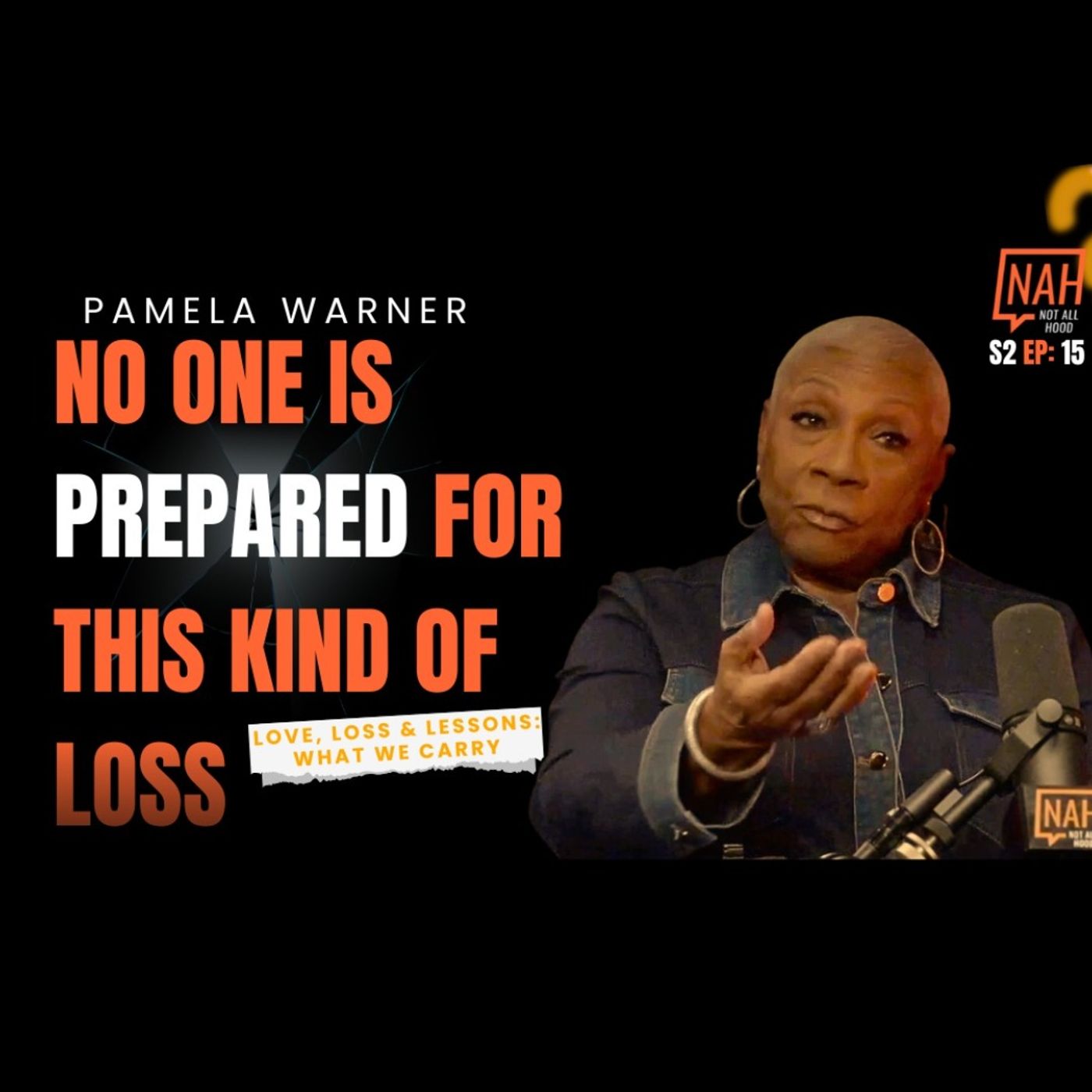
Not All Hood (NAH) with Malcolm-Jamal Warner & Candace Kelley
Love, Loss & Becoming Your Name: Pam Warner on Grief, Growth & Malcolm’s Legacy
00:52:04
This is one of the most intimate conversations ever recorded on Not All Hood. For the first time, Pam Warner , the mother of Malcolm-Jamal Warner, sits down and shares the real story behind the man the world loved. She opens up about Malcolm’s childhood, his love of music, his spiritual evolution, the co-parenting journey, and the final conversations that brought her peace after his passing. Pam talks about: • how Malcolm fell in love with acting at age 8 • how music shaped his early life and adulthood • the great relationship his father has with them • the truth about grief, healing, and acceptance • the conversations she now recognizes as “goodbye moments” • what she wants the world to understand about her son • the lessons she believes every parent, artist, and human should learn This episode is emotional, raw, wise, and deeply human. It honors Malcolm-Jamal Warner’s life , not just as an icon but as a son, a friend, a father, an artist, and a man committed to evolution and i...
Loading summary
Transcript233 lines
- [00:00]
Pam Warner
At Walgreens, we know flu season can feel a little chaotic, so we're going to give you our flu info in.
- [00:07]
Interviewer
A meditation keeping you calm, just like a certified Walgreens pharmacist will do if you're a little needle nervous. So walk in or schedule an appointment and Walgreens will handle the rest.
- [00:22]
Pam Warner
That's the human kind of help.
- [00:25]
Interviewer
Walgreens vaccines subject to availability, state, age and health related restrictions may apply.
- [00:30]
Capella University Announcer
At Capella University, learning the right skills could make a difference. That's why our business programs teach you relevant skills you can take from the courseroom to the workplace. A different future is closer than you think with Capella University. Learn more at Capella.
- [00:44]
Interviewer
Edu Comrades, welcome to Not All Hood. Malcolm's mother, Pam, co hosted three episodes with me with such grace. She sat in the seat her son once occupied and shared intimate stories about Malcolm's life and generally generously invited us into her own story. This was part of an incredible recording session the NA team produced that celebrated Malcolm. We invited all of our past guests as well as family and friends, and so many people showed up. All three of the podcasts Pam recorded were really moving, and her presence alone helped us transform grief into life. On a lighter note, we all found out what Malcolm's parents were going to name him, but really he could have only ever been the Malcolm.
- [01:25]
Pam Warner
Javon Warner.
- [01:26]
Interviewer
Enjoy the conversation. Just don't. So you know, you were telling me that growing up, Malcolm listened to a lot of music. You had him listen to a lot of music. What was that like? Because the fact that he played an instrument and was learning more, I think that took a lot of people by surprise. A lot of people didn't know that part.
- [01:45]
Pam Warner
Yeah, he music was always in my house. I was a young mother and so I was, you know, always had had music going and I think that and his father was into jazz, his dad was into jazz. So in both of the households he music was, was an influence. I so he was always around it. It was always part of his, part of him growing up. And I think he was about maybe 9 or 10 and I decided that he was going to have music lessons. I didn't have a piano.
- [02:22]
Interviewer
Honey, I love you.
- [02:24]
Pam Warner
Right. And so I had one of my good girlfriends, she had a piano and it was kind of sketchy when she could get to practice. But they said he did very well. His timing was just off because he didn't, didn't have exposure, a place to practice, but he still did very well. Wow.
- [02:46]
Interviewer
So he played piano too Growing up?
- [02:47]
Pam Warner
Yeah. Yeah. Not for long. Not at all, because we didn't have ongoing access to it. A piano. So music was always, always in his life and around. And then at about 24, 25, he decided he wanted to play bass. So. And that was kind of came out of. Out of, I'm saying, nowhere, but it was probably always there at some point in time. You know, I guess him being who he was, I guess his spirit was. Was expanding. And so he wanted something else besides, I guess, just the acting. And so he picked up the base at 25, which is ancient for a musician just to try to start a career.
- [03:31]
Interviewer
But I mean, to see him on stage, it was just so natural. And I mean, Malcolm had a lot of happy spaces, but he was happy on that stage. And I think, you know, when I saw him at Buteco and that's down here in Atlanta, I thought, that's amazing. He's up there in the space and he didn't have to be in the front. I mean, people loved to see him up there. But he and his bandmates, they were just so.
- [03:53]
Pam Warner
They worked so beautifully together. I think a lot of that has to do with his career starting on stage. I had him in children's theater before he became. Before he became. Before he became an actor. Actor. I put him. He was about 8 years old and I put him in a children's theater group. And there's such a. There's this total different energy and work, how you approach your work when it's live and you're on that stage. And I think that's where he first got the acting bug on stage. And I think it carried through to him being able to perform live, you know, with the musicians. So I think that's part of what you were seeing was just that thrill of being. That thrill and that energy of being. Being live and on. On. On stage.
- [04:50]
Interviewer
And you love the stage too. Even when it came to acting on.
- [04:54]
Pam Warner
Stage, on stage, because that's his first love. That was his first. His first. His first introduction into acting was theater. And so I think it. It was a through line throughout of his. Throughout his career. And the prep for it is much different than prepping being in front of the camera. It's something very different. So I think that those early skills really helped him and supported his acting abilities and his. He had a fabulous memory. He could remember stuff. Unbelievably so. And so I think all of that helped. The early stage work had a lot to do with what we saw later on in his life.
- [05:37]
Interviewer
You know, I think what's interesting, you told me this. I don't know if folks know this, so y' all listen up. But so we know he has talked about his name, Malcolm Jamal Warner.
- [05:47]
Pam Warner
Yes, yes.
- [05:48]
Interviewer
But at one point, that was not.
- [05:49]
Pam Warner
Gonna be his name. That was not gonna be.
- [05:52]
Interviewer
When you told me this name, I said, I don't know about that name.
- [05:56]
Pam Warner
His name, originally, I was naming him after the maternal and paternal grandfathers. My father's name was James and his father's name was Robert. And so he was going to be James Robert jr. And even some of my friends from college, you know, still kind of would refer to him as that because that was. That was going to be his name. But his father came up with the name Malcolm Jamal, which was after Malcolm X and Ahmad Jamal and never, never who he became. He became his name.
- [06:35]
Interviewer
He did. Like that was inevitable with those two strong names.
- [06:38]
Pam Warner
Absolutely. He became his name. And that's the genius of his father, you know.
- [06:44]
Interviewer
Yeah. And, you know, I love that you can. There are some women who will not be able to have genius in any line having to do with an ex husband. And I think what's amazing are the lessons that you have talked to me about in being divorced, but then coming to more than a happy medium in raising a child and more than co parenting, doing something more to make sure that everything stayed intact as a family.
- [07:13]
Pam Warner
Absolutely.
- [07:14]
Interviewer
How did you get there, though?
- [07:17]
Pam Warner
Um, well, I was determined that even though we were no longer in a marriage, I was determined that he was going to have a relationship with his son. And I worked very hard at that. It wasn't easy at all, particularly in the early years. It was very difficult, but I was persistent. And he will tell you, you know, he will tell you that he, at some point he kind of was giving up, but I wouldn't give up. I was very tenacious and I was just, no, you're going to be here. And this is, you know, you're going to do this. You know, look, you got to tell him you will do this. He's going to do.
- [07:56]
Interviewer
So you mean, for example, what you're going to call him every week or like, you're going to do what physically?
- [08:03]
Pam Warner
It wasn't so much that, but I can't really tell you what my protocol was around it. I just knew that whatever I had to do to keep him, you know, in touch with his son and to keep him in his son's life, I was more than willing to do it and just making sure that he was. That he Was there. It wasn't a big push and pull, but initially he was hurt, you know, and we were divorcing. And so he was like, how people, they just want to walk away. And I just know you're not going to walk away. And he's very, very, very, very grateful that I didn't. And I am, too, because we have. In addition to Malcolm having his father in his life, I have my best friend, you know, my very, very best friend. We have a fabulous relationship. And I love him dearly, and he loves me dearly, and he's my friend. He was my friend. And we were. We were. My aunt and his mother and three sisters were young women in the church. So he's like family. He's like family.
- [09:21]
Interviewer
Right.
- [09:22]
Pam Warner
And so. And also, I have to give credit to his wife, Carol, who never, ever interfered in that. You know, she never interfered in our relationship.
- [09:31]
Interviewer
Pam, that's a big deal.
- [09:32]
Pam Warner
It's a big deal because we've got.
- [09:35]
Interviewer
Some Lifetime movies out based on her. Based on that scenario right there.
- [09:42]
Pam Warner
She was just. She was all. As far as I know.
- [09:45]
Interviewer
Yeah, yeah.
- [09:46]
Pam Warner
As far as I know. She was always gracious. She was always. She just. She was never. She never. There was just never an issue that I. That was ever brought to me about it. She was always just very, you know, she named me her sister. Wife. Like I said, that's on tv. Right, Right. And she will refer to our husband and as you'll say, our husband, X, Y and Z. Oh, yeah, yeah. She's quite a woman. She's quite a woman. You mean to be able to be that generous and not personalize it and understand. In fact, one of the things she was very insistent upon is that, you know, with the tragedy with Malcolm, you know, you and Bob need to be together. You two need to be together. You need to commiserate together. You need to be, you know, you need to be together. I made a trip back east and I was supposed to go and visit them. I wound up having to come back home. But her whole thing was, I, you know, you two need to be together. Yeah. Yeah. You know, what kind of. What woman does that?
- [10:52]
Interviewer
Yeah, no, what woman does that?
- [10:54]
Pam Warner
You know, I mean, that's a lot.
- [10:55]
Interviewer
Of patience, communication and care.
- [10:58]
Pam Warner
And care. Her concern was her husband and her concern was me because of our relationship. And she felt and saw the need that we should be together. We should be together. And he is here. He's in Atlanta. Oh, he's in Atlanta.
- [11:17]
Interviewer
Which I find interesting. And tell me if I'm wrong. Because you have been out there with Malcolm over the years. I don't see him as much. So for him to be here, and that's lovely, right?
- [11:30]
Pam Warner
He wasn't. He's. He's not one for the bright lights, being in front of the camera. He's not. But he was always there. Always. He was always, always present. Always present. He was never not there.
- [11:47]
Interviewer
You know, you mentioned the tragedy with Malcolm. I am wondering, first of all, day by day, how do you rise to your day?
- [12:05]
Pam Warner
Each day is different. There's some days that are more difficult than others. My work and the work of continuing his legacy and the business with dying, it's a business, you know, I mean, there's a lot of business that you have to take care of and all that keeps me busy and distracted, basically. Distracted. And figuring out how I'm going forward and what my life will look like, I spend time doing that as well. And I just. I keep myself distracted, I think, more than anything.
- [12:39]
Interviewer
You know, when I met you, I said, wow, she is quintessential mom. You didn't have to tell me. You probably talked to him every day or every other. Like, I could see that in you, and I can imagine that. I mean, for any mother, it's got to be painful. But you are carrying this and responding to other people as well. Now, I had it in a little bit because people, they sent me notes, they wrote me stuff, like handwritten stuff, and that was just little old me. And I'm thinking, my God, for you, it must have been just a massive communal response. Yeah, and that's also takes a different. That takes emotion, too, but kind of in a different way.
- [13:25]
Pam Warner
Yes, I just move forward with it. Just move through it and move forward. Some things I responded to, but most I didn't. Immediately, I took my time, and when I was ready to respond, I responded. But the outpouring of other people's grief. Other people were very. Were also very devastated. And them wanting to express their love and their grief was a lot. It was a lot. I understood it, but I was faced with what I was faced with, and I couldn't immediately respond. But once some of the smoke cleared, I was able to respond to people. There's some people I just didn't want to do. There was only a very few people that I really was comfortable enough interacting with. Most people, I just. I couldn't. Not that I didn't love them or care about them, but the window of being able to absorb other people's energy was very, very small. I just didn't have the capacity to absorb others grief or their expressing their love, which is all beautiful, but I didn't have the window or the capacity to really receive it. I couldn't receive it.
- [14:46]
Interviewer
Oh, I understand. You know, I've talked to you before about how after my father passed, I took bereavement and that was five years ago.
- [14:54]
Pam Warner
Yeah, you told me.
- [14:55]
Interviewer
And it was during COVID and I was grateful so I didn't have to interact physically with other people.
- [15:01]
Pam Warner
Wow.
- [15:02]
Interviewer
Because it's that thing you're talking about, you're going through it your own self, you know. And then other people, they are very well intentioned, but then they pour on and you're like, now I'm dealing with this over here. Let me just say for you, I'm dealing with this over here.
- [15:17]
Pam Warner
I've had people call me and it's like a run on for at least 20 minutes. I'm saying, wait, you haven't even asked how I'm doing. You haven't even asked how are you doing? There's a thing they want to get there and it's all in love.
- [15:31]
Interviewer
It is, but it is.
- [15:33]
Pam Warner
It just kind of. It's like, okay, how long are you going to. How long are you going to go on with this? Right. How long? And one. It was 20 minutes. I'm looking at 20 minutes. I'm like, okay, never asked me how.
- [15:46]
Interviewer
Never asked.
- [15:47]
Pam Warner
It's all about. And this is something that I've learned, I've learned this about people. Well, I've never experienced this before, so I didn't. I never knew that people did this. You know, they really get caught up in their own grief and they don't. Their vision becomes very narrow. And it's about them. And it's all love.
- [16:06]
Interviewer
It is, yes.
- [16:07]
Pam Warner
It's about them expressing how deeply hurt they are. Well, you could never touch the depth and the breadth of my grief and what happened to me. You can never, you can't touch it, you know, unless you've also lost a child. Right. So I have to take that into consideration. I do. And I give them grace. I understand it, I really do. But it was a quick and really quick hard lesson that I had to learn on this journey of grief and losing my son.
- [16:39]
Interviewer
Yeah. And you know, we go through life and we're trained in a lot of things. We're trained, you know, you could take a financial course, you could take a course on asi, but there's really no course on when someone passes or grief. It's just as you go I told you, when it happened to me, we were a whole Tyler Perry movie. And we are not that type of family. Whole Tyler Perry, like maybe part one, part two, like. And I was like, what is this?
- [17:07]
Pam Warner
You just. You don't know until you're in it.
- [17:10]
Interviewer
You don't know until you're in it. No one can explain it to you. It's kind of like marriage. No one can explain it to you.
- [17:17]
Pam Warner
It's system. It's a customized situation.
- [17:20]
Interviewer
It is. It's a customized situation. When you're in it, you, you learn the lessons. And I think for myself, I learned in dealing with my grief. All right, maybe I know how to respectfully deal with other people's grief when it happens, but I didn't know until I was in it.
- [17:37]
Pam Warner
Right.
- [17:37]
Interviewer
And responding to other people's. But again, I was in Covid. I wasn't physically having to run into someone at the store, which. And people weren't coming over, dropping off hams and chickens.
- [17:47]
Pam Warner
Right.
- [17:48]
Interviewer
Didn't want that.
- [17:49]
Pam Warner
I didn't want it either.
- [17:49]
Interviewer
Yeah, I didn't want it either.
- [17:51]
Pam Warner
Yeah.
- [17:51]
Interviewer
Leave the ham. No, I mean, you know, and again, I know people doing.
- [17:54]
Pam Warner
In love, it's all love. But, but how much of an appetite do you have exactly with this, you know, with this food you have? You just, it's, you know, you, you, you don't feel like eating. You don't. And not, not all that goodness that they bring you. Right.
- [18:07]
Interviewer
And then, and not trying to be funny, but then now I'm left with all this food.
- [18:10]
Pam Warner
I gotta figure out what to do.
- [18:11]
Interviewer
With it after you have left.
- [18:13]
Pam Warner
Right.
- [18:13]
Interviewer
And I have 12 caps rolls exactly.
- [18:15]
Pam Warner
Well, what I did was I invited my. All the people that, that, that brought the food. I invite them over. Well, okay, let's eat the food.
- [18:21]
Interviewer
Let's eat the food.
- [18:22]
Pam Warner
Yes. Because I wasn't going to eat it. Yeah, I was going to eat it. And we had a good time. Oh, it was a good time. It was a tough time. How did you deal with your grief with your dad? What did you do? It took a period of five years.
- [18:34]
Interviewer
Yeah.
- [18:35]
Pam Warner
Did you take a class or did you. What did you do?
- [18:38]
Interviewer
So after five years, after half a decade, I realized you still do not have this down. You should, you should see somebody for something. I mean, there were just some days I would be so mad. I'm like, ooh, that is not me.
- [18:53]
Pam Warner
Were you angry at death or angry at your father or what were you. What was the anger?
- [18:58]
Interviewer
Oh, I was just so angry that he was not There. And I had to adjust. Now, Pam, William. No, wait, Pam, you done switched the script. Pam isn't switching.
- [19:10]
Pam Warner
It is a conversation.
- [19:10]
Interviewer
Yes, it is a conversation with the purpose.
- [19:13]
Pam Warner
And we're having that conversation.
- [19:15]
Interviewer
We are, we are. You know what? I was just so mad that he wasn't there. You know, it's a lot of adjustments. So it would be mad, you know, you could be doing one thing and then one day, oh, man, he's not there. And then it'd just be all the. All those processes of grief that they talk about would just kick in. Right, right. So I took this class and it was supposed to be a lot of people, but apparently for that time, nobody signed up but me. So it was just this.
- [19:38]
Pam Warner
You had a one on one.
- [19:39]
Interviewer
I had a one on one.
- [19:40]
Pam Warner
I have. It's been suggested that I. That I do some grief counseling. I don't feel it right now. I feel it perhaps later down. Later down the line and. But right now I feel I have a sense of peace with it and acceptance. I've accepted it.
- [19:58]
Interviewer
When did you accept it? Because, I mean. So we're recording this, right?
- [20:03]
Pam Warner
Right, right.
- [20:04]
Interviewer
And you know, we are in mid October.
- [20:06]
Pam Warner
Right.
- [20:06]
Interviewer
And still. So I don't know when it's coming out. This is July.
- [20:09]
Pam Warner
July.
- [20:10]
Interviewer
I didn't. I'm not even sure if I've come across the word peace with my dad. I gotta be honest. Peace, Peace. Peace.
- [20:17]
Pam Warner
Well, the peace comes with acceptance. Yeah, the peace comes with acceptance. And I had to accept it because there was no alternative. Sure, there was no alternative. I had to accept it and I had to accept everything that went along with that. And so. And because I did not feel guilt, I did not feel, as the term goes, shoulda, coulda, woulda. I should have said this. Possibly I could have done this. I wish I would have done the other. See, I don't feel any of that. I just. That that part is, you know, maybe with time, maybe something will come up. I don't think so. Yeah, because we. The way just we had these really fabulous conversations that we did not realize were goodbye conversations. And in some of those conversations, it really elevated. There was a sense of spiritual elevation in these conversations. So that I felt. And as I had said to him, we talked about safety, children and safety. And he was sharing with me a video, a conversation between two therapists. And the female therapist had had a trauma. And the other, the male therapist said, well, did you talk to your mother about this? And she said, no, I couldn't. And so he said that's where the trauma is, because you had no safe place to go with this, with what happened to you, you had no safe place to go. And so we had seen. I had seen this before, but when Malcolm brought it up, I think we even talked about his daughter. When he brought it up, I saw it differently, because I did see this. I saw the same thing he was talking about, but I saw it differently. And I asked him, did you feel safe? I don't know. Was it any part, anytime that you did not feel safe with me? And he said, absolutely not. He had felt. He always had felt safe with me and that. We went on to talk about other things, but that resonated with me to my soul. And I wrote him a text, and I said to him, one of the things I said to him, I said, you feeling safe with me as a child means more to me than all of the love and respect I know you have. For me, that was paramount, that a child feels safe with its parent. So that. That was a goodbye conversation. That was a goodbye conversation. I didn't know that. Because to be left with that, knowing that how he loved me and respected me, but felt safe with me. I'm good. I'm just good. My spirit, my soul is good. It's good. So that's where my peace comes from. You know, we had this, and then prior to that, we had a big. I was in D.C. and I hadn't told him I was going to D.C. and he happened to. Toward the end, I began to really kind of wait and let him call me, because I knew when he called me, he had space and time to talk. Me calling him, I don't know what he's doing. And so. And so when I got the phone call, I was on my way to the African American Museum, and he wanted to know, who are you with? I'm not with anyone, he said. He asked me a couple of the questions. It was always either, no, I'm here by myself. And he paused and he said, you know, I've known you for a very long time. And we cracked up. Cause that was like, I know you're not telling me the truth. You know you're not telling the truth. I mean, we holler at just the way he said it. He said it like a father would say to him, you know, I. You know, I've known you for a very long time. Look.
- [24:31]
Interviewer
And young lady, you are not telling.
- [24:33]
Pam Warner
The truth that we cracked up. It was just. It was so. It was so wonderful. So. So I think that combined with that Conversation about being safe with your parent. That was, you know, I'm good.
- [24:48]
Interviewer
Yeah, I'm good.
- [24:49]
Pam Warner
I'm good. Now maybe something will knock me in the head a couple of months from now. I don't know. But right now I'm good. And I can come on this show. A show that he wanted me to be on.
- [25:02]
Interviewer
That's right.
- [25:02]
Pam Warner
That we never got a chance to do. I can do the Tamron hall show. I can do the Robin Roberts show. I can do these shows and really be okay about it, you know, because I am okay. I am okay. And I have. There are people in my life, I have three. Three particular friends who, you know, one of my friends came in and just started cleaning up my kitchen. She just came in, start cleaning the kitchen, wash the dishes, putting the dishes up, you know, And I. And I. And the other one came and was on a business trip and came right from her trip to my house and had her back at the door, and she came in and she, you know, was there for about 45 minutes or so, and I'm like, okay, well, it's time to go. And she said, I'm not leaving. I'm not leaving. And she stayed for three days. And then I had another friend who was coming to visit anyway and just extended her stay and was with me for 10 days. And so those were very crucial moments in time where I. Where if I. If I would recognize or acknowledge that I needed. Needed someone with me, they would. My friends were there, you know, and so that. I'm good. I'm an only child, and so I process. I've learned to process alone. Yeah.
- [26:20]
Interviewer
You know, when I met you before, when I first met you, it was over.
- [26:24]
Pam Warner
Zoom. And even then. Right. Right.
- [26:26]
Interviewer
I was like, oh, okay. We could be out on the porch all night talking.
- [26:30]
Pam Warner
Oh, girl. Yes. Yeah. I'm like.
- [26:32]
Interviewer
I did. I'm like, oh, I. Like, I saw so much Malcolm and you, and vice versa, really. I don't know who learned from.
- [26:40]
Pam Warner
Yeah, we learned from each other.
- [26:41]
Interviewer
Yeah.
- [26:42]
Pam Warner
Learned from each other when I was. Because I was a young woman, and as I learned my life lessons, I would share them with him. And some of them. I'm sure he went over his head, but I was compelled to explain or to share with him something that I learned, you know, because it would be monumental. I'm like, in my 20s, you know, and he was. At 8 years old, he became my friend. At 8 years old, I was able to have fairly adult conversations with him, and he could have an input, and he would. We could, we could have these conversations. So about eight is when we, you know, we. The parenting. I'm still parenting, but it very, it suddenly moves into friendship with a friendship between a parent and child starts developing, which is essential. Sometimes it doesn't, it never doesn't happen. But I think for. I would, ideally for me, that a friendship is formed. Some people feel that my children are not my friends, but that's untrue. Because when you become aged and fragile and frail and you need someone to wipe your behind, you need a friend.
- [27:53]
Interviewer
You need a good friend.
- [27:54]
Pam Warner
And what better friend than your child will do it with love and honor and respect? And that was not my goal because I'm twinning my 20s. I'm not thinking that. But as I look back in retrospect, I think that is very important that, that, that, that there's a friendship and honesty and, and that you become the place that your child can go no matter what with, with who they are, who they're becoming. And there's no judgment but being embraced and loved and cared for and maybe given some advice, you know what I'm saying? So that friendship was forming. It started about that, you know, he was about 8 years old when I could really talk to him and get a response, get an intelligent response, you know, worked year old.
- [28:43]
Interviewer
Is your lessons, are they something that. Were your lessons, something that you got from your parents on how to live or did that come from you being the young mom?
- [28:58]
Pam Warner
No, my parents, my mother died. Died as I had just turned 13 when my mother died and my father, God bless him, was just not capable of teaching any lessons, not sitting down and talking from his behavior. I learned lessons. My lessons were life lessons. My lessons were lessons that you learned while you're growing up. While you're growing up and while you.
- [29:31]
Interviewer
Were growing up a little bit, you were helping someone else grow up.
- [29:34]
Pam Warner
That's right.
- [29:35]
Interviewer
So I'm wondering about those lessons, what you can impart, especially for a young mother or young mother who has a child who wants to be on tv because everybody does, everybody wants to be a star. You know, I'm sure you have so many lessons from when he wasn't, you know, on air or on stage to when he was. Let's first start with just, you know, the life lessons that have nothing to do with, you know, the acting part, but just being and self aware and value system.
- [30:06]
Pam Warner
Well, those lessons as a 20 year old are those lessons, you know, Do I remember them all? No, I, I'm not going to say that I can. And as you grow, you learn, you learn more lessons and other lessons. And the lessons that I'm learning now are different. They're different lessons, you know, they come about differently. Can I be very specific? That was a good one. You got me on that. You got me on that one. I think overall it's to be present in your life. Just be present, be present and. And try to understand who you are and your behavior, how you go through the world. Love yourself. You know, that was a very. That was a lesson that took years to learn and to appreciate and reside in is loving yourself and not comparing yourself. We're all custom made. You know, what works for you will absolutely not work for me and vice versa. And you have to find your own lane. You have to find your own comfort zone with yourself. And you must do some inward examinations of yourself and what's going on. You have. Introspection is very important so that you can check yourself, you know, and how you're going through the world. A lot of us is zoom, zoom, zoom, and we never. We don't even know who we are. We don't even have a clue who we are. But to ask the question and to learn who you are, because that affects your relationships with people. It affects how you go through the world, how what energy you draw, you know, comes to you, and just knowing who you are. I believe that we're here not for fun and games. I think that we are here. We're here to. This is life school. And this is for our souls to learn the lessons that we need to learn so that we can be not so much better people, but so that our souls have peace and that we can go on into a peaceful situation if we have to come back. At least those lessons we've learned, we don't have to keep relearning the same thing over and over and over and over again. And it's important that you. That you make that connect. I believe it's important that one makes that connection with themselves. And when things keep repeating in your life, understand that you're the common denominator. It's not them, it's you and who you're drawing. You know, the same women have the same relationships over and over and over. Why can I get a good man? Why does it always end like this? Because you're picking the same man. You're picking the same man, or you're picking the same woman over and over and over again. Then maybe you need to look at your choices and how you're choosing these people to be in Your life. Not just husband or wife or romantic relations, but just friends. Just friends. And you're the common denominator. It's you. It's not them. It's you.
- [33:35]
Interviewer
Would you say that when you did shift and say, all right, more than Hollywood bound, we're here. How did you have to. Did you have to adjust in any way? How did you figure all of that out? Being thrown into a world where you knew nothing about, you knew nothing about.
- [33:54]
Pam Warner
And didn't care about. See, this is the other thing. I didn't care about it. I did not get into the business to be in business. I got into the business and I didn't get into the business. I put my son into theater because I tried other things. I believe that children should need extracurricular activities so that they can learn how to manage their time. They can prioritize and have other things going on besides school and going outside and playing. They need other. Other. Other enrichments, I believe. And so I tried different things and nothing took. Sports was. He didn't. He had. No, no, we didn't. We didn't want. He didn't like to be touched. He didn't like, you know, what happens in football or basketball. No, he didn't like that. You know, I truck. I said, I tried piano, but I didn't have. I mean, tried piano less, but I didn't have a piano.
- [34:50]
Interviewer
Yeah.
- [34:50]
Pam Warner
And so then someone suggested taking him to this. To this. To the Inglewood Playhouse. And I did.
- [34:57]
Interviewer
Oh, the Inglewood Playhouse.
- [35:00]
Pam Warner
Inglewood, California.
- [35:00]
Interviewer
Oh, Inglewood.
- [35:01]
Pam Warner
Okay.
- [35:02]
Interviewer
Because at one point you were in New Jersey.
- [35:03]
Pam Warner
Malcolm was born in New Jersey.
- [35:05]
Interviewer
He's born in New Jersey. New Jersey, yes.
- [35:07]
Pam Warner
And at five years old, we went back to California. Okay.
- [35:09]
Interviewer
Okay.
- [35:09]
Pam Warner
So which is my home, Where I was born.
- [35:11]
Interviewer
Okay.
- [35:12]
Pam Warner
And so I took him and he had to audition to be in the. In the. In the workshop. In the. With them. And he won his audition. And that took. That took. That was. That was it. That was that. That was what resonated with him. And they would have productions and after the first production and he. He got that. That audience applause. Now, he's also a Leo.
- [35:41]
Interviewer
Okay, uh. Oh, break it down.
- [35:42]
Pam Warner
Yeah, he's also a Leo.
- [35:43]
Interviewer
Tell me about the Leo.
- [35:44]
Pam Warner
Yeah, well, that would appeal to their personality.
- [35:48]
Interviewer
Okay.
- [35:48]
Pam Warner
The. The applause and the accolades. And he knew at 8 that this is. And he said, this is what I want to do for the rest of my life.
- [35:57]
Interviewer
At 8.
- [35:58]
Pam Warner
At 8 years old.
- [35:59]
Interviewer
And he has said that.
- [36:00]
Pam Warner
He has said that at 8 years old, it became a Self fulfilling prophecy. And this is all he's done all of his life is acting. And then later on, in his, you know, middle 20s, he became a musician. So he knew it resonated with him. This is what resonated with his soul. And like I said, I wasn't Hollywood bound. That was not. I had to become, I had to be in the business once the Cosby show happened. Because now we're, you know, we're, we're in high cotton now. We're in, we're at the big time. And so I had to learn very quickly what to do. And I. There was no one to say, hey, do this, do that. That's why I wrote my book. Right?
- [36:46]
Interviewer
Yes.
- [36:47]
Pam Warner
So that parents could at least get the basics. At least the basics. It's not the seminal book on children in Hollywood because now Hollywood has changed totally, totally different landscape now, of which unfortunately is not in the book. I didn't address the current situation, I didn't address current media because even with that, the basics are still the same. You still, particularly parents who are managing there's, it doesn't matter the vehicle, it's the basis, how you operate within, within that structure, which is important, which is, first of all, why do you want it? Why are you doing this? Why are you, why do you have your child in this? And why are you, what is your interest in this? And that has to be very, very clear. Because if it's not clear, you have a parent coming in doing this because they have unmet needs, because maybe they wanted to do it or they see it looks like fun. It looks like something. I have the cutest child in the whole wide world to me, sound like.
- [37:53]
Interviewer
You were thinking about somebody.
- [37:55]
Pam Warner
And so I want to put my child in this and we're going to make a whole lot of money and my child's going to be a star. Now if this is your motivation, then don't do it. And I say it, don't do it if this is what you're thinking. Because first of all, who says your child's gonna be a star? That's not for you to determine. The money is not what you think it is at all. It is not what you think it is. And if this is something that you want to do as a child, then pursue it as an adult. Don't put this on your child because your children want to please parents. And whether they want to do it or not, and the parent is pushing a child to do this, a child will go along with it. It doesn't mean that that's what they want to do. It doesn't mean that they even like it, but they want to please their parents. And depending on how strong and how much pressure the parent puts on the child, the child will go along with it. And so then when they become an adolescent and those hormones are bumping all over the place and they start acting out, then you went, well, why? Well, because you put them in a situation that they were not meant to be in because of what you wanted, not what the child wanted. Does that make sense?
- [39:14]
Interviewer
Sound makes a lot of sense.
- [39:15]
Pam Warner
Yeah. And that's why I wrote that book, because you need to know what you're getting into. I had no clue. I did not know. I had no clue. And I really don't want other parents. I would not like for other parents to. To have that same experience.
- [39:30]
Interviewer
I think that you also have a certain disposition. You personally, as you say, we're all custom built. Your custom built is. And don't mess with me.
- [39:40]
Pam Warner
You're like.
- [39:42]
Interviewer
You're like that spam. Yeah. And I think that that is very powerful. And when I think. When I've thought about Malcolm and then how he was seen through his whole life, I also think about you and how you were always there. And that was also part of. It's like it was a package deal.
- [40:04]
Pam Warner
You know what I mean?
- [40:05]
Interviewer
So that you know that don't mess with me, don't mess with my son. I'm sure that that had a lot of weight or currency in Hollywood because your disposition in and of itself is do not f with me.
- [40:19]
Pam Warner
Right. In addition to that, my concern and my focus and my int. Was all about his welfare. It was all about his welfare. Was he comfortable? Was he okay? Was he content? Was he getting what he needed to be an actor to do this? That was my focus. It wasn't about anything else but that. That was it. And I think that. And yeah, no, don't. Don't do that. Because that's not gonna bode well for you to, as you say, f with me. Yeah. You know, it's just not going to. You know, I'm not always. I have a friend who's always very, very calm and very, very, you know, things just don't really shake her, you know, and she can. I'm not that person. You step on my toe and I'm going to holler and I'll probably punch you in the throat, you know.
- [41:13]
Interviewer
Can you take. Let's go back. Wait a minute now. Let's go back. Pam, can you take us as generally as possible to perhaps a time where you said, oh, you know, we're not doing that. And you had to show someone who you are. Shall I say take.
- [41:29]
Pam Warner
You know what? I can't remember them. They exist because people come back and say, remember, blah, blah, blah. You know, I can't pull that out. No problem. Because I don't. You know, as I got older, I don't dwell on that stuff. Right. None of it was attractive.
- [41:49]
Interviewer
Look, when you redo your book, dig deep for us.
- [41:55]
Pam Warner
That'll be in the memoir. That'll be in the memoir. Please.
- [41:59]
Interviewer
We want all of that. We want all. Because, you know, my generation, all we see is the Charlie Sheen horror stories, right? Like the fallout from those particular years. So to have someone like you and Amalcom and other people that, you know that have done well and have overcome it really is remarkable. And lest we forget, you're black doing it.
- [42:24]
Pam Warner
Yeah.
- [42:25]
Interviewer
I'm just saying, you know, and female. Female, yeah.
- [42:29]
Pam Warner
It trickles down.
- [42:30]
Interviewer
Yeah.
- [42:30]
Pam Warner
The parents are not stable. If the parents are all geeked out over it, if the parents think it's really about them and the kid, then it trickles down to the child. And the very basis of it that people really don't want to hear is that it's just a job. See, it's just a job. It doesn't determine who you are. It says that you have this particular attribute, and the director or the producer wants that particular attribute. That's all it is. I mean, that's the lowest common denominator with this thing. It's not. It's not about you or your child. Even. Even. Even adult actors, you know, there's a particular type they're looking for. Height, weight, color, blah, blah, blah. And if you have one of those or two of those, maybe you'll get an audition. But it's not about your. That you're really a great person and you're really a great actor, and, you know, you're loving and you're kind. They don't give a crap about that. I have a role that I need to. I need a person for this role. Do you have these? Can you do this? That's all it's about. Does that make sense?
- [43:53]
Interviewer
It does. Because what's coming to mind is that the bigger part is. And you've said this before when we chat is, you know, who are you when the phone isn't calling, when the phone isn't greeting?
- [44:02]
Pam Warner
That's the other part. That's the other part of it. That's the other Part of it, who are you? And so people get it. I believe they get it. They get it mixed up and it becomes about them. It's not about them. It's really about even your seasoned actors, even your big time actors after a certain point. It's not about casting. It's about them developing their own projects for themselves. That's right, because the casting directors are casting directors. They're the gatekeepers. And when there's a production that is on, they're very specific. And even this great actor, whoever he may be, may not fit that. May fit that. So they're not going to call them.
- [44:48]
Interviewer
So they create their own jobs.
- [44:49]
Pam Warner
They create their own jobs and that's the end result. That's where you want to go to. That's the position you want to be in. And you create their own jobs, you create your own script and your own productions and people buy it because you are this. You know, you, you'll bring in $10 million to the box office. Now, that script they may not have had, but you create, you have to create the synergy. You have to create it for yourself. That's, that's, that's, that's the end result, not being a, a gun for hire, which is what you are, you know, if you're not creating your own projects.
- [45:26]
Interviewer
You know, that makes a whole lot of sense. Yeah, yeah, I know that. Even after the resident Malcolm was telling us and the crew, you know, Lane and Troy, just about other things that he was getting into, speaking to large audiences about kind of transforming who you.
- [45:44]
Pam Warner
Are to be transformational. Coaching is what he wanted to do and that was where he was moving into because he felt that people can make a change. A lot of times people don't know how to change. A lot of times people don't even know that they need to change. And with his, with this coaching, it was also an extension of him of who he was and how he went through the world, you know, and he was very, very, very. Not so much quick. But if he saw where he needed to make a change within himself, he was, he was humble enough to do it. You know, he wasn't stuck on much of anything. He go move forward. Moving forward. Moving was, was what Malcolm was about, very much so.
- [46:28]
Interviewer
I can remember him saying, hey, you know, I said this earlier today and I was just wondering, when I said it, do you think that it, you know, it came off this way or that he would check in, he would want to make sure that people understood that. I mean, he didn't, I mean, he never came off as full of himself. But he wanted to make sure that, that, that. He wanted to make sure that that was in place. He wanted to make sure that something wasn't misunderstood. He was really good about that.
- [46:51]
Pam Warner
That checking in came from childhood, really. And what would happen, the kids would be out playing, you know how kids do. And something happens. And they'd all come to my door, knocking on my door, four or five of them. They all point at each other, you know. And I would say, okay, so the one that was doing the most pointing and most talking, I would say, well, what did you do? How did you contribute to it? And I would make them accountable for themselves. And sometimes it was Malcolm doing the pointing. Okay, what did you do? I never. There was no favor. Just because he was my son, all of them got it, you know, and I would. The point was, yes, that happened. But how did you contribute to that? And so that started early on and it was always a look at yourself. So how did you contribute? As he got older, you know, in situations, how did you contribute to the. And that was always my thing, you know. Yes, this is what it is. But where's your place in this? And so I'm glad to hear that he carried that, that on. And he would say, he would self check himself. Oh, he. Which is what we all. That's. Once again it's about introspection. And this is what we have to do as adults. We have to. How did we participate in this awful. This fifth marriage? That's awful. That's going down the sink. How do we participate? It's not just him. Right, right. How did you participate in it? You know what I'm saying? So we have to do that self reflection. It's very important.
- [48:19]
Interviewer
Yeah. And when you come to a point where you say to yourself, I've learned enough about myself and had enough self reflection that guess what? I can teach other people. That's a good spot.
- [48:30]
Pam Warner
Yeah. He was in a good place. He was in a good place to be able to do that. And also the love of humanity and wanting to be able to take his lesson and share with other people or situations to share with other people to make them better. So they would be better people.
- [48:48]
Interviewer
Absolutely.
- [48:49]
Pam Warner
Yes.
- [48:49]
Interviewer
Yeah. And I think people would be very happy to know that what they saw or what they thought is actually what it was. Now that is not always the case. You know, you see somebody on TV or you see somebody that you admire, they don't have to be on tv, then you meet them in person and.
- [49:05]
Pam Warner
It'S like, oh, my God.
- [49:06]
Interviewer
My favorite group was men Conditioning. And so I remember someone's like, oh.
- [49:09]
Pam Warner
I've got these backstage.
- [49:10]
Interviewer
I said, you know, I don't want to meet them because I want to keep them here. I didn't know what it would be like. I didn't want to hear their song after and feel like, oh, I met him and then they did this.
- [49:21]
Pam Warner
Yeah. Yeah.
- [49:21]
Interviewer
But, you know, Malcolm really was. He really rose to the occasion, if there was one.
- [49:26]
Pam Warner
What you saw. What you saw is what you got.
- [49:29]
Interviewer
What you saw is what you got. I found that to be remarkable.
- [49:32]
Pam Warner
Such a wonderful guy.
- [49:33]
Interviewer
He was.
- [49:33]
Pam Warner
He's ridiculous and gorgeous and sweet and carries. He was just. He was just phenomenal. He was. Yeah. He was just a phenomenal human being.
- [49:44]
Interviewer
Yeah.
- [49:44]
Pam Warner
Yeah.
- [49:45]
Interviewer
That must give you comfort at night.
- [49:46]
Pam Warner
Oh, it does. It does. It does. And his father will say, you know, he was just a different cat. He was just a. That's what his father says. He's. He. He was just different. That was just a different cat. Just different. Yeah. That.
- [49:59]
Interviewer
That, that sounds like, you know, that sounds like. I'm thinking about the time period of where one would say the word cat and. But that's so cute. That makes sense.
- [50:07]
Pam Warner
Right? Right.
- [50:08]
Interviewer
He was doing that, Right.
- [50:09]
Pam Warner
Yep. But that's what they said.
- [50:10]
Interviewer
That's what they said. That. That was someone that was this mad, cool, different cat, different brother.
- [50:15]
Pam Warner
Really, really different brother.
- [50:17]
Interviewer
You know, I want to end on this. People know you.
- [50:20]
Pam Warner
Yes.
- [50:20]
Interviewer
But then they don't know you because you really have been out there.
- [50:24]
Pam Warner
Yes.
- [50:25]
Interviewer
Like I said, you thought of Malcolm. People know Pam Warner.
- [50:28]
Pam Warner
Yes.
- [50:29]
Interviewer
What do you want people to know about you? And it can be anything. It could. I mean, you know, you know, just getting to the heart of who you are. Because obviously you passed that down. Well, I saw how much he respected you. The world did. And vice versa. You see how much you respect him. It's just really a lovely example for people to see.
- [50:54]
Pam Warner
Yes.
- [50:54]
Interviewer
But I do want to know about Pam Warner. What do you. You know, just who are you? Like, what do you do to kick back a little bit? I don't know your hobbies. I understand you can make some mean collard greens, some amazing macaroni and cheese.
- [51:08]
Pam Warner
Not macaroni and cheese.
- [51:09]
Interviewer
No, he's not. Mac and cheese.
- [51:10]
Pam Warner
Ok, I make it, but I just don't eat it when I. That was my response. Okay. I think more than anything, I want people to know that while this was a tragic and momentous situation that happened, There's something to be learned from this. There's something, there's nothing. I don't believe in happenstance. I don't believe that things just happen. There's a reason for everything. This is my life and my journey and this happened while I'm on this journey. So there's something that I have to learn and take away from this. And that's what I'm doing. Processing this and figuring out the lesson. Figuring out the lesson here. What is the lesson here? What am I supposed to learn? And one of the things that I used to would always say to Malcolm was, if you have a lemon, make lemonade. I got a big fat lemon and I'm going to make the best pitcher of lemonade ever. And I am moving forward with my life. Being grateful, being just. Being grateful for him. Being grateful that he chose me to be his mother and to go on with my life and to. To make the best of it. To make the very, very best of it.
- [52:43]
Interviewer
We love you for that. We loved your son for that.
- [52:45]
Pam Warner
Thank you so much. Thank you. Thank you.
- [52:50]
Interviewer
What do you think makes the perfect snack?
- [52:52]
Pam Warner
Hmm, it's gotta be when I'm really craving it and it's convenient.
- [52:56]
Interviewer
Could you be more specific?
- [52:57]
Pam Warner
When it's cravinient.
- [52:58]
Interviewer
Okay.
- [52:59]
Pam Warner
Like a freshly baked cookie made with real butter, available right down the street at am, pm. Or a savory breakfast sandwich I can grab in just a second at am, pm.
- [53:07]
Interviewer
I'm seeing a pattern here.
- [53:08]
Pam Warner
Well, yeah, we're talking about what I.
- [53:09]
Interviewer
Crave, which is anything from am, pm.
- [53:11]
Pam Warner
What more could you want? Stop by AMPM where the snacks and drinks are perfectly craveable and convenient. That's cravenience. Am, pm Too much good stuff.
- [53:20]
Capella University Announcer
At Capella University, learning the right skills could make a difference. That's why our business programs teach you relevant skills you can take from the course room to the workplace. A different future is closer than you think with Capella University. Learn more@capella.edu.
- [53:35]
Greenlight Infinity Announcer
Did you know 39% of teen drivers admit to texting while driving? Even scarier, those who text are more likely to speed and run red lights. Shockingly, 94% know it's dangerous, but do it anyway. As a parent, you can't always be in the car, but you can stay connected to their safety with greenlight. Infinity's driving reports monitor their driving habits, see if they're using their phone, speeding and more. These reports provide real data for meaningful conversations about safety. Plus, with weekly updates, you can track their progress over time, help keep your teen safe. Sign up for Greenlight Infinity at greenlight. Com Podcast.