← Not All Hood (NAH) with Malcolm-Jamal Warner & Candace Kelley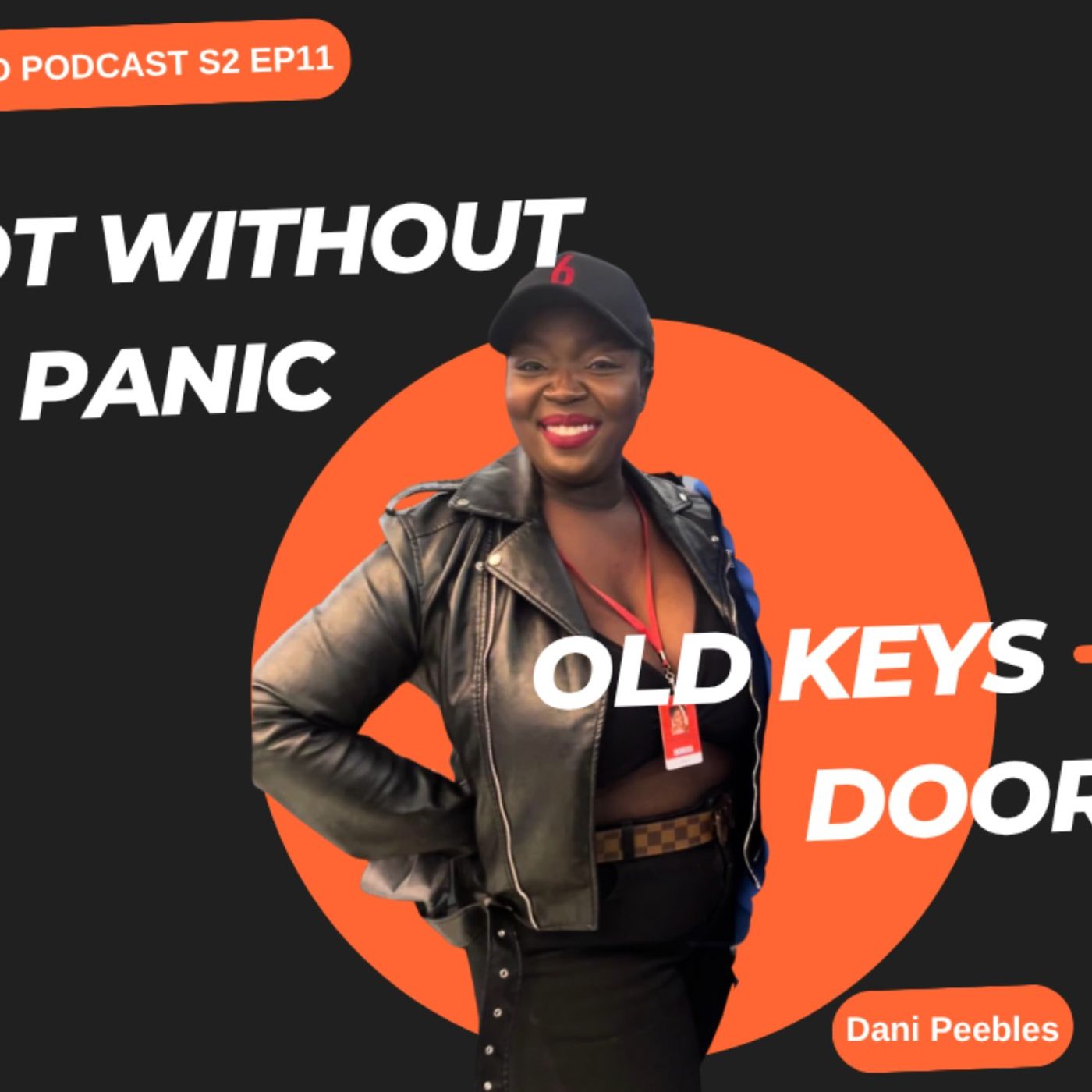
Not All Hood (NAH) with Malcolm-Jamal Warner & Candace Kelley
Old Keys Don’t Open New Doors: Dani Peebles on Grief, Growth & Reinvention
00:57:07
In this powerful episode of Not All Hood, Emmy-nominated journalist Candace Kelley, and cultural commentator and professional makeup artist Dani Peebles explore how loss can become the ultimate teacher. From navigating grief and divorce to redefining womanhood, creativity, and purpose — this episode dives deep into what it truly means to start over. Dani shares her emotional journey from heartbreak to healing, revealing how she found peace through faith, gratitude, and radical self-awareness. With honesty and humor, the conversation unpacks the power of letting go, the beauty of new beginnings, and why “old keys don’t open new doors.” Whether you’ve lost someone, left a relationship, or outgrown a version of yourself, this episode reminds you that reinvention is possible — and necessary.
Loading summary
Transcript290 lines
- [00:00]
Wix Advertiser
Your business is one of a kind, so your website should be too. With wix, it's easy, almost too easy to create a website that's perfectly yours. Just tell AI what kind of site you want to build or choose from thousands of templates, change whatever you want, whenever you want and get everything you need to start running your business your way. No matter what you sell or what you aspire to be, you can do it all yourself on Wix. Go to wix.com for 140 years, MultiCare has been in Washington prioritizing long term.
- [00:33]
Dani (Makeup Artist)
Solutions, partnering with local communities and expanding access to care.
- [00:38]
Wix Advertiser
Together, we're building a healthier future.
- [00:41]
Candace (Interviewer)
Learn more@mycare.org all right, let's roll, let's roll. You know why I love having you on?
- [00:49]
Dani (Makeup Artist)
Tell me.
- [00:51]
Candace (Interviewer)
I love having you. Because me, Malcolm introduced us and he said, you gotta meet Danny. You're gonna love Danny. You gotta meet Danny. You're gonna love Danny. And he was right on all accounts.
- [01:02]
Dani (Makeup Artist)
When wasn't he right?
- [01:03]
Candace (Interviewer)
Yeah, yeah. You know, he was full of that knowledge. He really was. And that's another reason why I like doing this show, because you worked with him on the Resident for two years. Makeup artist. And we're gonna talk about a whole bunch of things. But I really wanna kind of just take us to the set of the Resident for a moment with you and Malcolm and everything that was going on there because I know it had to have been an interesting and good time. We know that when it comes to acting and the world of entertainment, things have changed. Yes. But when you were there. Good, good times.
- [01:38]
Dani (Makeup Artist)
Very good times. So the first time I met Malcolm.
- [01:42]
Candace (Interviewer)
Yeah.
- [01:42]
Dani (Makeup Artist)
Or just the working dynamic.
- [01:44]
Candace (Interviewer)
Yeah. When was the first time you met him?
- [01:46]
Dani (Makeup Artist)
So that was the first time that I met Malcolm. So for the Resident, it was season five and it was towards the middle of the season when I ended up meeting him. So I was actually taking over for another makeup artist. And so when I met him, he's always busy. I think he was like playing one of his instruments on one of them. Right, right. One of many playing one of his instruments. And so I was introduced to him by the department head. And so I was taking care of him. And he was very quiet at first, which we know that to be very different now, you know, very reserved, very professional, very nice. And so when I sat him in the chair, I told this story like earlier I was sitting in the chair with him and he's like, well, this is what I don't want. And I'm like, I Would appreciate, uh. Oh, if, you know, you would allow me to do my job, you know, allow me to service you in the way that, you know, my profession allows me. And so ever since that day, you know, we were very, very good friends. So.
- [02:45]
Candace (Interviewer)
Yeah. Yeah. And, you know, one of the things that we know about Malcolm even before he passed, was he was always in contact with people, giving advice, giving words of wisdom. He did that a lot with you.
- [02:58]
Dani (Makeup Artist)
Wealth of knowledge. A wealth of knowledge.
- [03:00]
Candace (Interviewer)
We're going to get into that. Take us to the resident for a moment, though, because I know that working with him was good. You have shared stories about him fighting for script changes, or you two just being on set. The dearth of minorities on set, too. All of that makes what it's like to be in your industry.
- [03:17]
Dani (Makeup Artist)
Yes. So especially being a woman of color, Black woman, you know, in the industry. So a lot of. A lot of facets are different, but the resident was very unique. So it probably. You probably can count how many, you know, people of color, how many black people were on this, on the set. Right. And so I would say less. Between 10 and 15 out of maybe 300. Oh, yeah, yeah.
- [03:43]
Candace (Interviewer)
Oh, y' all were looking for each other at some part of that day.
- [03:46]
Dani (Makeup Artist)
So you're like, there's one, there's one.
- [03:49]
Candace (Interviewer)
Yeah, yeah.
- [03:49]
Dani (Makeup Artist)
You pretty much can count it. But, you know, it was a space. It was a good thing because, again, it was a situation to where with Malcolm, you know, he was very pro culture, so he made sure that, you know, I would be the person that would, you know, take care of his makeup. Like, he created, like, opportunity. He very much was that as well. Like, making sure that people had fair opportunity, fair share, you know, making you feel welcome. That was. He was very good at that, making people feel welcome, making sure that, you know, everyone had the same, you know, level playing field. If he was able to assist you, he absolutely could and would. Right? Yes. So what else would the resonate? It was so many things. You know, you're able to work these long hours with, you know, people that really become family. So they start off, you know, as coworkers, but then they transition into family. That's what Malcolm was for me. Right. Again, often he would make sure that, you know, he's always doing something on set. You know, whether he's playing an instrument, maybe he's taking a nap. Right. Everybody's like, what do you think?
- [04:52]
Candace (Interviewer)
They were long days? Oh, yeah, they were real long. And I also think what is interesting about just the genre that you're in is that it is very hard, even as a makeup artist, to get in. And I know this from having makeup artists on set. They do not. And you hear a lot of actresses of color talk about the makeup artists. So the fact that you even got in, that's huge. You have to do a lot of things to get on the set of the Resident or movies, which we'll talk about all the movies. And you do, you know, you do this a lot. But to even open that door, it is terribly difficult, which is why so many women of color have. Have a problem finding makeup artists. I went on set once, and a woman you could just see, she came from cvs, she had one color in there. That was it. In fact, that's all she had for everybody.
- [05:40]
Dani (Makeup Artist)
But that probably was her demographic. But to your point, that does make a lot of sense, that quite often that often happens on set, unfortunately. So as black artists, we are conditioned to. We have to do everybody, you know, Right. Everyone, you know, all ethnicities, all textures, you know, all whatever. We have to know how to do it. But on the other side of the coin, it's really not that a lot of times when, you know, actresses that I have, both male and female actors, actresses, they come on set, they're refreshed when they see a black woman or someone that's able to do their makeup. Because we are faceted, like, we have to know how to do white skin, brown skin, Asian skin, yellow, whoever. But it's not the same standard expectation. Yeah.
- [06:27]
Candace (Interviewer)
Now in terms of getting on just quickly, because a lot of people do makeup and they're like, one day I'm going to work on the set with such and such. It's a process just in like a minute or less. What is that process for you to even get on the set of Mission Impossible or whatever.
- [06:43]
Dani (Makeup Artist)
So the thing is, I'm going to give you a formula.
- [06:46]
Candace (Interviewer)
Okay?
- [06:46]
Dani (Makeup Artist)
Right. So I do have a corporate background. Right. So a lot of people will not think that that plays key, but it does. So I would say, as an answer to your question, you have to make sure, like, if you're trying to enter in this industry arena, my corporate background means that I'm very strong in admin. That means that. Cause it's administrative things that we have to do. Read a script, break down a script. A lot of people are like, well, how does that translate? If you watch a movie or a program and you see a person that has a black eye? Well, the makeup department has to read that on the script and plan it so that they can, you know, put that. So you have the admin piece, you have days. So that's all an admin. Right. So admin is a big piece of it. The other piece of it is reputation. Right? Reputation and professionalism. I'll kind of band those together. So it's not that many of us, as we know, like in the business, but what can you do to set yourself aside? So that's something that I pat myself on the back on and that's how I was able to kind of in my career, making sure that I had a very good reputation. So what does that look like? That looks like professionalism. That looks like showing up. That means being on time, punctuality.
- [08:03]
Candace (Interviewer)
And do you have to get on a certain amount of sets before you advance to, like, the next bigger set?
- [08:08]
Dani (Makeup Artist)
Well, not necessarily, but union wise. So I'm in the makeup union here in Atlanta, so it's IOTC798 was really south, like, you know, on this side. So IC 798, it's a hair and makeup union. So you do have to have a certain amount of days to join a union. But Georgia is a right to work state. So that doesn't necessarily mean that you have to have those days to work on a set. Does that make sense?
- [08:32]
Candace (Interviewer)
Yes, it does. It does.
- [08:33]
Dani (Makeup Artist)
So, yeah. But yeah, in short, you definitely. For me, like, my personal success story is I honestly do believe that corporate structure helped me along because by me being strong in admin and Excel and these, you know, PowerPoint, I was able to use that to my advantage. And also, what was ever, you know, what's intrinsic about me? Like, what makes me special as a person. If I was able to identify that, that's what I would encourage for someone who is interested in being in the field. What's intrinsic about you? And then once you identify that, use that to propel you forward.
- [09:09]
Candace (Interviewer)
And listen, now, let's be real. What would you say is intrinsic about you? Let's let the guards down. Intrinsic about Dani is what? Like, come on. Come on, Danny.
- [09:17]
Dani (Makeup Artist)
Dani. So many things.
- [09:18]
Candace (Interviewer)
There we go.
- [09:19]
Dani (Makeup Artist)
That's a Dani I know, right there. So many things. It is. But, you know, I really do think that, you know, the fact that, I mean, use what you have. Yeah. Like, you know, the fact that, you know, if you're a pretty person, I would be. I mean, I'm an attractive person. You're an attractive person. Why, thank you. In this field, I think that helps.
- [09:34]
Candace (Interviewer)
Y' all gotta take up some of this side, right? We're all Attractive people. Okay, well, Dani will take that.
- [09:39]
Dani (Makeup Artist)
But it makes sense though. I really do mean that. So if you're in a forward facing, you know, customer facing, even if it's an actor to, you know, makeup artist, it's still a forward facing facet. So you have to be, you know, you can use that to propel your opportunity. If you're attractive and professional, if you lead with the things that.
- [09:58]
Candace (Interviewer)
That are strong.
- [09:58]
Dani (Makeup Artist)
That are strong. Right.
- [10:00]
Candace (Interviewer)
Strong suit. Right.
- [10:01]
Dani (Makeup Artist)
Because my grandmother would say, well, you know, well, you are easy on the eyes. It doesn't help, you know, it kind of helps you if you're easy on that. But you're professional, you're actual, you know, great personality, right? Yeah, you do a great job. You know, you have. Do you have great bedside manner. So it's a million and one makeup artists in Atlanta. But what makes you. What's intrinsic about you? What makes you special?
- [10:23]
Candace (Interviewer)
Absolutely. And let's break it down. A lot of it is. And I. Customer service, for lack of word.
- [10:28]
Dani (Makeup Artist)
You know what I mean?
- [10:29]
Candace (Interviewer)
Just that interaction. What is my experience? Because that is what will follow you.
- [10:33]
Dani (Makeup Artist)
How do you make them feel?
- [10:34]
Candace (Interviewer)
Yeah, how do you make them feel?
- [10:35]
Dani (Makeup Artist)
And then I actually, like, prior to me working in the industry, I had a lot of cosmetic, like corporate cosmetic experience, like field experience. So I've worked for like Chanel, you know, high end retailers, also worked for Mac. So with that being being said, how it's about client experience. It doesn't matter that it's on a set. It's about client experience. How does that actor feel? Like, how are you making them feel? It's not just doing makeup. It is basically, you have to adapt to how they feel. Like they may be. Women breastfeed their children while they're in the chair. They may be preparing, they may be nervous, they may be exhausted. So you have to adapt to that energy. And that's something that. It's kind of like reading the room. You would be surprised. A lot of people don't know how to read the room. So reading the room, I want to.
- [11:28]
Candace (Interviewer)
Talk about the transitions, because there are many transitions that you've gone through. So if we're talking about actors and actresses, anything that we see in the headlines, sag, aftra, the strike, even internationally in terms of actresses and actors going on, that affects you. It does. So post Covid. Right. All of that, all the work that was lost, depending upon where you live. And I know that there are a lot of transitions that you went through. How did you survive that? Because you had to Re. It's always good to reinvent yourself. Yes. But you have done it quite a bit.
- [12:06]
Dani (Makeup Artist)
I have.
- [12:07]
Candace (Interviewer)
So with that in mind, how did you survive that? And I also want to point out that because, you know, again, you were friends with Malcolm.
- [12:15]
Dani (Makeup Artist)
Yes.
- [12:15]
Candace (Interviewer)
You know, there are many times that he would text you through a process, whether it was that or divorce, which we will talk.
- [12:22]
Dani (Makeup Artist)
Talk about. Yes.
- [12:23]
Candace (Interviewer)
But there was that friendship, which I. Which I love.
- [12:28]
Dani (Makeup Artist)
So for me, how to transition, like, the best way to transition and how I was able to deal with it. Yeah. Is identifying what your anchor is. Most times when people have issues or troubles transitioning, there's an anchor that keeps them. So you have to itemize. What is your anchor? My anchor was comfort. Right. So that can limit me. So if I'm anchored, I'm like, okay, so I understand the industry is changing. So what am I going to do? What is your anchor? Some people's anchor could be mine was comfort. Some can be grief. You can grieve the industry. Right. You've been making thousands of dollars a week, and you're just going to. It just comes to a halt or a stop. You're making nothing now. It could be fear. Fear could be anchor as well. So for me, that's the answer, like identifying what your anchor is. So for me, it was comfort. So being able to say, hmm, what makes me feel, how can I. I'm not making the money that I used to. Or the opportunities are not as plentiful as they once were. What can. So the anchor is comfort.
- [13:37]
Candace (Interviewer)
Okay, so you were creative in ways to get yourself more money, or how did that happen where you stayed? I mean, listen, there were some big stars that would get online and say, I'm about to run out of money, or I'm about to, you know, my house is about to go into foreclosure during that time. So how did you transition to make that happen? Because if movies and TV pilots were happening, there were no makeup artists either.
- [14:00]
Dani (Makeup Artist)
That happening. Right, Right. Because we're. We call makeup artists and, you know, hairstylists. We're what's called below the. So again, identifying that anchor allowed me to say, okay, this is what would be comfortable for me. What would be comfortable for me is to live off savings and to wait on the industry to turn around. The industry doesn't have loyalty to anyone. So what I did was lean again back into what was intrinsic. Like, what can I offer or what did I do beforehand and can I now make that profitable? Like, can I do that? So what specifically? I Did was I did online seminars, like, for people who are interested in breaking into the industry, providing education. You know, a lot of therapy.
- [14:45]
Candace (Interviewer)
A lot of therapy.
- [14:47]
Dani (Makeup Artist)
A lot of therapy. A lot of prayer. But I think mindset is very important, too. But identifying. Do you have an anchor? Like, a lot of people don't like to look within. We allow external factors to kind of stifle us sometimes, like, oh, well, this is happening. What should we do? Identifying it and then being able to come up with an action plan to overcome it.
- [15:09]
Candace (Interviewer)
Yeah. You also went through a divorce during COVID Right. And now you're on the other side of it.
- [15:14]
Dani (Makeup Artist)
Yes.
- [15:15]
Candace (Interviewer)
And when we talk about transitions, that's a huge one.
- [15:17]
Dani (Makeup Artist)
It is.
- [15:18]
Candace (Interviewer)
You know, a lot of people, when they go through a divorce, they want a divorce, they know that it's coming. But then when it actually happens, it actually kind of mentally crosses you to another arena of your life. And you're like, wow, now you're on the other side.
- [15:32]
Dani (Makeup Artist)
Correct.
- [15:32]
Candace (Interviewer)
Now what do you do? Because even though that person, you really didn't want them in your life.
- [15:37]
Dani (Makeup Artist)
Yeah.
- [15:38]
Candace (Interviewer)
It is now just you solo. So how did you work through that? Because that took a big toll.
- [15:47]
Dani (Makeup Artist)
It did. But I had. Contrary to popular belief, you know, some people have really bad divorces.
- [15:54]
Candace (Interviewer)
Yeah.
- [15:55]
Dani (Makeup Artist)
So this was another thing that Malcolm helped me navigate through. So my divorce was. I felt like it was. It could have been a feeling. It could have been a thing. It was, like, two years long. You know, it's a lot of back and forth. And so I would come to set, and I would just be really quiet about it. But Malcolm was the person that was. He was very intuitive. Like, he'd be able to, you know, if you can tell if somebody's, like, energy is off, I would always have a, you know, professional face. And he's like, well, you know, what's going on today? Like, he would check in with you. What's going on today? I'd be like, oh, I'm just a little stressed. That didn't fly with him. You have to tell him, like, what's going on, you know, how you're feeling. Cause he cared about how you felt. But thinking about, like, the divorce process, he was the person that I think is like a model for, you know, the model husband, the model father, the model platonic friendship. Like, he was that person. Like, he's able to offer you wisdom. Like, when you're in a place where you're in need of it. You know, I didn't have. I have a very, you know, I'M a daddy's girl.
- [16:54]
Candace (Interviewer)
Yes, you are big daddy's girl.
- [16:56]
Dani (Makeup Artist)
So I have a big, you know, respect for men in my life, you know, so. But from the romantic facet, and if you're in a situation where you're coming from divorce, like you said, you're detaching from a situation that was once, you know, a duality. You're like, I'm stepping away from that. He was the person that was like, you know, it's okay to be vulnerable. Malcolm taught me vulnerability. It's okay to be vulnerable. It's okay to feel like, you know, this is to grieve a divorce. But what's your mentality? Are you going to carry what you lost, or are you going to use that as inspiration to press forward and pioneer something new? Yeah.
- [17:36]
Candace (Interviewer)
And also, are you going to share it with others? Because otherwise you live in a vacuum and think, I'm the only one.
- [17:44]
Dani (Makeup Artist)
Right.
- [17:44]
Candace (Interviewer)
You know, we were talking about this the other day because I'm the only one who's going through this. But then when you open up, you realize you really every. Everybody's gone through something in their relationship.
- [17:53]
Dani (Makeup Artist)
Yeah.
- [17:53]
Candace (Interviewer)
And that's where the wisdom comes in. When you open up that door, do you find that, you know, going through the process that you were able to be as vulnerable as you wanted to be, or what did that take?
- [18:07]
Dani (Makeup Artist)
I do. I do believe that. And because like I said, when somebody brings something to your attention that you were not aware of, it kind of makes you think, like, huh? Like, it makes you, well, me. It makes me think deeper and dig deeper. Right. So vulnerability taught me an array of things. It taught me to be safe. Like, you were safe. Like, no one. The way that we view ourselves, very different from, like, if you're in your mind about something, very different from how you're perceived. Right. Right. So vulnerability taught me, you know, it's okay to feel your feelings. Feel your feelings. And then again, it. It allowed me to pioneer, like, okay, so what am I going to do next? Because you can't stay here. It's okay to feel how you're feeling. But. And then I wasn't, you know, angry, upset. But you can grieve the loss of a spouse. Yes. Right.
- [18:57]
Candace (Interviewer)
Yes.
- [18:58]
Dani (Makeup Artist)
Or that loss of, again, comfort going back to anchor. Like, if you feel something and you're like, wonder why I feel this way, check in with yourself. So vulnerability taught me, basically wrote myself on a piece of paper and challenged me to press forward. Yeah.
- [19:16]
Candace (Interviewer)
What was that? Grieving, like, because that is off. Divorce is often Compared to that, that you grieve someone, but they're still here. But you're grieving the loss of a major relationship that you got a bunch of people together for. You made a commitment. You paid food, you paid drink, you paid the DJ and the photo booth. And now it's over.
- [19:35]
Dani (Makeup Artist)
So the agreement I made, I believe, and a lot of people don't agree, but I believe that marriage is a business. First rule of business is roi, return on investment. Right. So for me, I felt like, you know what? I'm checking this, you know, I'm checking all these boxes. And you're not a bad person, but you're not my person. You're not the, you know, you're not my person. So in the grieving process, it's adjusting, going back to the comfort, like the loss of comfort. Like, you know, it's two incomes, you know, there is, you know, another. Another counterpart. How do you navigate through the grieving process? Accountability, vulnerability, and making sure that you check your anchors. Why do I feel this way? Checking in with yourself, why do I feel this way? Like, what is it that I can do to navigate the situation and make it better? So it wasn't. I didn't. I wasn't one of those people like, oh, I don't. Oh, I don't hate my ex husband. Like, you know, it was one of those situations where I'm like, listen, I wanna do this, you're doing that, and that's completely fine. We don't have to be at odds. I think a lot of women get into that. Just cause you've had a bad experience or a poor experience with a person, that shouldn't define how you feel about men as a whole. Or, you know, it shouldn't lead you or encourage you to generalize people. And I think that often the culture does that.
- [20:59]
Candace (Interviewer)
Yeah, I think that often the culture will lead you to think that marriage just kind of works on its own, as opposed to the work that you have to put into it. It really is a date, it's a partnership, like you said. Yeah. And you have to intentionally do things. Did you do that, do you think, with your marriage, or do you. Are you looking back and saying, I actually didn't do that and I kind of could have done a better job?
- [21:24]
Dani (Makeup Artist)
That's the thing, I think, that people get so hung up on, you know, all of the pieces, the nuances, like, you know, what is this person's income and what is my income and what can my life look like? But really, you know, to your point, you should bridge it back to the basics, like how do I feel about this? The way that you feel about this person. Now you have to plan together. Am I going to feel the same way about this person in 5 to 10 years? What does that look like? Some people may say, well, how it's impossible to do that. It's really not. If I go back and reflect and think about the characteristics that were showcased, like, you know, in my ex husband, it would have made sense for me to say, you know what? This could possibly be an issue. A lot of women, myself included, you know, you feel that if you love a person, you can change them. And that's just not possible. People change themselves, you know, so you have to see if this is something that you're interested in, you know, in being into or is this something that can you live with this person? Right. Long term. And you know that from the signs.
- [22:26]
Candace (Interviewer)
And you know what you can put up with, right? Absolutely.
- [22:29]
Dani (Makeup Artist)
And different people have different thresholds, correct?
- [22:31]
Candace (Interviewer)
Yeah.
- [22:31]
Dani (Makeup Artist)
And so a lot of times, I'm just saying that it's not always the man is not always the bad guy. A lot of times you. What you see is what you get in a relationship. And a lot of times women will grow tired and then they'll say, then they'll blame their counterpart. That's not fair. It's not fair. This is something that you probably should have taken inventory from the beginning. Because when I think about the whole situation, you have to look at the entire person. Characteristics, behaviors, you know, intrinsic pursuit, their family.
- [23:06]
Candace (Interviewer)
Let me just.
- [23:07]
Dani (Makeup Artist)
Their family.
- [23:08]
Candace (Interviewer)
Your voice.
- [23:09]
Dani (Makeup Artist)
Okay. So you have to.
- [23:10]
Candace (Interviewer)
I mean, because you're not just marrying that person, you're marrying the whole situation. You're marrying everybody.
- [23:15]
Dani (Makeup Artist)
Yeah. And it's like, it doesn't. I want people to understand that it's not divorce. I do not promote divorce, you know, but for me, I promote what makes. What's going to put you in a good space. Right. I believe in love. I believe in marriage, you know, But I also believe in what does this serve you anymore?
- [23:37]
Candace (Interviewer)
You know, so we're down in Atlanta. If everybody doesn't know that. I will mention it often that this is where we shoot our show.
- [23:43]
Dani (Makeup Artist)
Yes.
- [23:44]
Candace (Interviewer)
Atlanta. It is a hotspot for. For shooting. I want to know first of all, what sets, what movie. Filming. Yeah. What have you. Yeah. Not shooting. Sorry.
- [23:56]
Dani (Makeup Artist)
Cause I'm like.
- [23:56]
Candace (Interviewer)
That could have went the wrong.
- [23:58]
Dani (Makeup Artist)
That could have went the wrong way and that could have.
- [23:59]
Candace (Interviewer)
She's like filming, filming. No bullets. No bullets. My bad, my bad. What we can do in post? Maybe, maybe not. But big place for filming, what have you besides the resident. Where have you found yourself in terms of being on set?
- [24:13]
Dani (Makeup Artist)
Oh, my God. I've done a little bit of this and a little bit of that. My first thing. My first major thing that. My first major feature was coming to America too. That's like kind of kicked my career off. So shout out to Troy and Trent and who else? Immerse everyone who gave me an opportunity. I've done so many different things. I've done Fight Night. I was telling you guys about that. Played on that I played on What? The Color Purple. I mean, I have over 37 productions. Okay, this is a trick question, right?
- [24:49]
Candace (Interviewer)
That says your family has to give it all. Okay.
- [24:51]
Dani (Makeup Artist)
The Wonder Years. I've done our kind of people. I've done a few Apple TV shows. I've done a ton of things.
- [25:01]
Candace (Interviewer)
You've done a ton. So what happened to the industry? What is going on right now?
- [25:06]
Dani (Makeup Artist)
A.I. mm.
- [25:09]
Candace (Interviewer)
More. Give me more.
- [25:11]
Dani (Makeup Artist)
So you have so many different facets. You have AI. You have a lot of the works, like Marvel contracts that were once here. They're outsourced and they're going overseas. Cause they're cutting costs. So when we think about the strike. So let's go back to the strike. Because the industry has taken a lot of blows, right? Yeah. So with COVID you know, everybody, of course, you know, everybody's safety was paramount. So that's one piece of it. Right. But then when we move past Covid, we get to the strikes. So that was 2023. I think it was like March 2023 when it started to happen. So studios stopped. They started scaling back on booking major productions because they knew when you're in a union, so whether it's, you know, dga, that's the Director's Guild, sag, aftra, that's, you know, the actors. And then IATSE is like my guild. So it's not just hair and makeup. It's teamsters, you know, camera. Everyone has their own guild or union. So what studios did was they knew that everything was scaling back and so they wouldn't book productions. Right. So when negotiations are up, when it's time to negotiate, they know this. And so people were fighting for, you know, better salary, better benefits, you know, better work conditions. The writers kicked off, you know, the strike because they're trying to get, you know, royalties. Imagine working on something or writing something and getting paid one time and getting paid pennies on a dollar for something that constantly syndicates. So streaming on, you know, you want to get stream something that you can see on Hulu or Netflix, and you only get paid one lump sum, or you're getting paid pennies on a dollar and they're making millions of dollars on something that you made something that you brought to life. Right, right. So that was the writer's aspect. Now, same thing for the actors. The actors were fighting so that. Against AI So that it. Well, one reason, right. Against AI so that their likeness wouldn't be replicated. So imagine, you know, acting for 20 years and, you know, your likeness. Studios are telling you, well, they want to scan an image of you and make it have likeness. Like basically replicate or clone you digitally and make money from that. And so that's one aspect of why the actors were fighting against AI and of course, television and film workers such as myself, well, on the hair side and the makeup side, we're fighting against. If everything can be digitally remastered or create it at the touch of a button, then we no longer. It's no use for us at all. Right?
- [27:54]
Candace (Interviewer)
Because the same way that, you know, you might facetune a picture and add blush, add eyeliner, add lipstick, you can do that in AI On a bigger screen, on a human that's not really a human, right? Cutting out every man and woman.
- [28:07]
Dani (Makeup Artist)
And that's everyone. That's everyone in the production lineup. So that's hairstylists. Why would they have a need for wardrobe? Why would they have, you know, there's no lint on a, you know, AI, you know, an avatar. So it's like no hair, makeup, you know, camera. You can do everything at the drop of a hat or touch of a button. What's the use? So that's basically what prompted the strikes. It's AI and then, like I said, productions are scaling back. It used to be a thing in the world where, you know, you would. What's called day play. Day play simply means it's a turn or day check. It just basically means you do not work on the set full time. So they'll invite you to come on. It's not just hair and makeup. It can be a teamster. It can be someone that works in PA background. It doesn't matter. So they would call you in to work. Well, they've scaled that back. The productions have scaled that back. They call that manpower or man days. So they've scaled it back because the productions have gotten tight on the budget. What they're doing is they're scanning the background. So let's say traditionally, prior to the whole strike maybe circa 2022 and prior, it will be maybe 4, maybe 2, 3, 400 background. What they're doing now is they may book a larger group, but they're only structuring. Like the manpower has significantly lowered. So they may be. I was on a project. I won't say what it was. Project. I won't say. I was on a project earlier this year, and it had about 350 background workers. So generally those are called mandates. Okay. So you can bring in all departments, not just hair and makeup. Every department can bring in a person, and then they'll help structure or help support and process the background. That's their hair, their makeup, their wardrobe. You know, the bandwidth of people back then, probably 15, like 14 to 15 artists. Like in the hair and makeup division, this production allowed two.
- [30:09]
Candace (Interviewer)
Oh, so that's very different.
- [30:11]
Dani (Makeup Artist)
Same processing time. You know, it's virtually impossible because what they're going to do is they're going to scan the audience or scan the background and make it look like a bigger crowd. So AI is costing people jobs.
- [30:24]
Candace (Interviewer)
So what do you do when you see your industry kind of being sucked away from you right in front of your eyes?
- [30:31]
Dani (Makeup Artist)
Pivots.
- [30:32]
Candace (Interviewer)
Pivot.
- [30:33]
Dani (Makeup Artist)
Mm.
- [30:34]
Candace (Interviewer)
How do we do that? What is your advice? Because you have done this many, many times, and a lot of people are pivoting right now. They have to because of a lot of reasons. The job market, AI another thing. And just the fact that we're living in a time where people need to do more in order to gain extra income, they are really making ends meet. They're like one. One bread. Lake. Bread. Bread. I say leg break away. You know what I was trying to say?
- [31:08]
Dani (Makeup Artist)
I know.
- [31:09]
Candace (Interviewer)
From being. From having nothing in their bank.
- [31:12]
Dani (Makeup Artist)
Yes.
- [31:13]
Candace (Interviewer)
So how do you pivot? What would you tell someone who sees it going that way?
- [31:17]
Dani (Makeup Artist)
Being realistic with yourself, being realistic, Then also going back to checking. Do you have an anchor? Right? Is your anchor. Do you have a personal anchor that is making it hard for you to transition to the next level? So what does that look like? Anchors could be, again, grieving the industry. Oh, I know. I used to make this. You know, they used to have that. This is something that is beyond your control now. So what is it that you can do that you can. So you can contribute and make a better path for yourself? And then if you have a family, you know, I just have a dog. I don't have children.
- [31:58]
Wix Advertiser
Right.
- [31:59]
Dani (Makeup Artist)
Okay. So with that, that's a social responsibility. You have a family, you know, you have children. What can you do to make things, make it profitable. And you have to really sit with that because some people have to do things that they don't really want to do. Like I had friends that are actresses that were like, do I go back to the bar? They don't know what they should do, you know, but we have to. I think it's a shorter list of saying what you can't do. So for example is the industry is unpredictable. We don't know if it's gonna turn around. They've been lying since the strikes commenced. They've been lying. They've been lying. Oh, it's gonna be back in June. Malcolm and I will always talk about that. Oh, it's gonna be back. They're saying it's gonna back. They say, they say, but when it doesn't come, what is your plan of action? You have to be real with yourself. So you have to look at, you know, some people. I've seen people get rid of, you know, subscriptions like that. That looks like re budgeting, right? Sometimes it looks like, you know, a work from home job. It just depends. Myself, I just took it back to the basics. I'm like, you know what? I know what I'm good at, which was for me, I just recently took a corporate. I went back to corporate. Some people don't have that advantage. So I'm blessed to be able to say that. But I really think people have to be realistic with themselves. Because if you're not realistic, you're going to lose. You can't continue to focus externally and say, oh well this is what I used to make or oh, this is hoping, hoping you're getting these different pieces but you're not making movements, right? It's only so much that the union can offer. They were offering grants. The people who have lost their jobs, they were offering different initiatives to. You can draw off your 401k with no penalty. But think about that. How many times can you do that? So maybe do it once or whatever, you know, whatever tickles your fancy. But what is your long term plan? I think a lot of people get rooted in comfort. A lot of people get rooted in grief, you know, over the industry. A lot of people take the identity. They made the industry, that's the thing. They made the industry their identity. That is the problem. Actors, you know, hair, makeup, you know, camera sound, these people made. That's one thing I did not do. So I think that that's kind of what make transition a little easier for me because I never made. It was something that I did, something That I loved something I still do.
- [34:26]
Candace (Interviewer)
Yeah.
- [34:26]
Dani (Makeup Artist)
You know, people, you know, call me to, you know, day player work, you know, here and there. You're basically a contractor. Right.
- [34:33]
Candace (Interviewer)
You'll be on set somewhere tomorrow.
- [34:35]
Dani (Makeup Artist)
Yes. You know, for a couple days.
- [34:37]
Candace (Interviewer)
For a couple days.
- [34:38]
Dani (Makeup Artist)
Come and play. But that's what I think the major issue is. One, people are rooted in comfort.
- [34:45]
Candace (Interviewer)
Yes.
- [34:45]
Dani (Makeup Artist)
Two, people are grieving the industry. And three, they made it their identities. Can you imagine doing something for 10 plus years? That's all you ever knew. That's all you ever did. You didn't make any residual investments in other things. And so how would that feel for you?
- [35:01]
Candace (Interviewer)
Right.
- [35:01]
Dani (Makeup Artist)
You don't know what to do, you don't know where to go.
- [35:03]
Troy (Creative Director/Producer)
And.
- [35:04]
Dani (Makeup Artist)
And you made this your identity. Right.
- [35:06]
Candace (Interviewer)
Instead of diversifying.
- [35:08]
Dani (Makeup Artist)
Right. What you are.
- [35:10]
Candace (Interviewer)
So, you know, Troye, he's a creative director and producer for this show. And Troy, I know that you're doing things technical over there, but his son is often on set. Troye, did you see a lot of people, a lot of movement in the industry too, where less work was coming for your children and. Yeah. So how did you deal with that? Or were you able to still find work for the kid? All the kids. He's got a baby who I just saw in a commercial.
- [35:35]
Dani (Makeup Artist)
So cute, so cute.
- [35:37]
Candace (Interviewer)
So cute. How was it for you?
- [35:39]
Dani (Makeup Artist)
Just keep on searching.
- [35:40]
Candace (Interviewer)
Just keep searching.
- [35:41]
Dani (Makeup Artist)
Keep on searching. Keep on applying. Keep on submitting. Just keep at it. If that's. What if it's something that they want to do and they can't afford, or, you know, as a child, if they're unable to pivot. Just keep on keeping.
- [35:55]
Candace (Interviewer)
Just keep on searching. Yeah, yeah. When we talk about pivoting too, what have you learned from your journey in terms of. Well, because now you're back in the dating world, and when you get a divorce and add Covid and Ag, Sag, Aftra, and you went through a lot.
- [36:13]
Dani (Makeup Artist)
I did.
- [36:13]
Candace (Interviewer)
And that's a lot happening. And as you said, it's out of your control.
- [36:17]
Dani (Makeup Artist)
It is.
- [36:18]
Candace (Interviewer)
And for someone like you, and we've talked about this, you know, we normally can keep things in control, and when it's not, it's like, what do you do?
- [36:25]
Dani (Makeup Artist)
It's like.
- [36:25]
Candace (Interviewer)
It's like six feet of snow. You actually can't do anything about that.
- [36:29]
Dani (Makeup Artist)
Right.
- [36:29]
Candace (Interviewer)
Especially not here in Georgia. We're prepared for it up in New Jersey. Bus. Anyway.
- [36:33]
Dani (Makeup Artist)
Here they're getting the sand.
- [36:34]
Candace (Interviewer)
Yes. Here. Yeah. Here's gonna be totally different. But the bottom line, it is out of your control. I am wondering how you look at dating now and still being vulnerable, but still making choices that are right for you. And what does that look like? How have you changed how you might have done with hubby number one. And I'm going to say hubby number two because you. You don't mind getting married again.
- [37:00]
Dani (Makeup Artist)
Could be. Could be now. Yes.
- [37:02]
Candace (Interviewer)
So what does that look like? What is going to be different?
- [37:05]
Dani (Makeup Artist)
So back to Malcolm. That was a key component. Like he was a wealth of wisdom. My mom would call him that. A wealth of wisdom. So vulnerability taught me to be able to. Well, remember how you were saying how I have an A type personality? Yeah. I'm just, you know, erratic, doing all this different stuff when things get in age. In wisdom too. You know, I just turned 40 last month.
- [37:32]
Candace (Interviewer)
That's celebrated in a big way.
- [37:34]
Dani (Makeup Artist)
Where did you go again? I went to go again.
- [37:37]
Candace (Interviewer)
Yes.
- [37:37]
Dani (Makeup Artist)
Saint Martin.
- [37:38]
Candace (Interviewer)
Yes. It was a girls trip.
- [37:39]
Dani (Makeup Artist)
It was a girls trip. It was. It was a girls go trip. But learning, going back to that anchor of vulnerability. Right. And if things are out of your control, there is nothing that you can do about it. So if you continue to fixate on it, you're wasting time. I hate wasting time. So there's nothing I can do about that. So what's different this time is grace. My daddy is teaching me grace.
- [38:03]
Candace (Interviewer)
Giving other people grace.
- [38:05]
Dani (Makeup Artist)
Giving people grace. Not too much.
- [38:10]
Candace (Interviewer)
See, they're laughing in the background. Explain, explain.
- [38:13]
Dani (Makeup Artist)
So being able to, I want to say also healing. I've had time to heal the right way, not the social media way. Like, oh, I went to a couple therapy sessions. No, Right. Like being able to take inventory on you as a person. Everything is not always the other person's fault. What part did you play in it? Because tolerance is permission. You tolerate something, it's permissible to you. Right. So being able to take inventory of yourself. And also, I was also just having this conversation with one of my very good girlfriends about. It's just so many social media has a thing, I take it with a grain of salt. Right. Because if you watch social media, they'll have you hating men, you know, saying how everything is so terrible and you can't do that. So people's social experiences, their, you know, what they've seen, their backgrounds, that kind of molds their perspective on things. Right, Right. So what I have done is with the element of healing and giving people grace and also being, you know, being aware, being cognizant of, you know, you can see signs, like if you date a person and then, you know, you be up. Be forthright, you know? Well, I don't like. I'll give you an example. Okay, I'll give you an example. So this last guy that I was dating, I did not like his. His style of communication. You know, I'm very, very busy. You are too. And so I'm not a texter back or for. That's just not me. I'm not gonna do that. So I was, you know, I told him that. I'm like, well, my preferred style of communication is I would prefer that you either send me a voice note or we can schedule a time to, you know, talk on the phone. He continued to text. That was the next.
- [39:54]
Candace (Interviewer)
He didn't get the memo.
- [39:55]
Dani (Makeup Artist)
Didn't get the memo. And that's okay. Listen to the ex. Right? That's okay. Right. So knowing boundaries, so being able to give a person grace where, you know, some of my girlfriends, they're like, he didn't do this. Let's assess it from all angles. Is this a person that is busy? Does he work in the industry? Industry doesn't have set hours. Right? Right. So you have to look at the person's full picture. Right. This is the person that you're talking to only at night, and they don't work in the industry. That could be something. Right? Red flag. Right. I can't talk to you certain times of day. Looking for patterns. But I really do believe that inside, like, looks like they could.
- [40:46]
Troy (Creative Director/Producer)
I can't talk to you after I get home.
- [40:49]
Dani (Makeup Artist)
Could be, how do you feel?
- [40:52]
Candace (Interviewer)
But how does that make you feel is what you're saying.
- [40:54]
Dani (Makeup Artist)
No, how do you make like how. What does your discernment say? That's what I'm trying to say. What does your discernment say? Because I think I dated a guy like that. At first, I'm like, mm, I only can't now me. No one's busier than me. No one. And I do mean no one. Right? But if you're talking to a person all the time, and you're right, Lane, you have to think about what that person's schedule is. Are they an entrepreneur? Are they a nine to fiver? If I think with this guy, he was. I think he worked at a hospital or something, but the shift that he worked, you couldn't talk to him at night. I'm like, no, I don't even know what's going on, but I don't like it. So now having options, giving grace a little.
- [41:41]
Candace (Interviewer)
I see what you're saying.
- [41:44]
Dani (Makeup Artist)
Just a little grace. Just a itty. Itty itty bit of grace. But I think healing is very important, too. Because you don't want to. If I hadn't taken the time to, you know, check in with myself, if I haven't taken the time to, you know, look at everything, everything as a whole, that can hinder you. You don't want to be jaded, you know, listening to friends that have never been married, friends, they, you know, hate men. I told my friend that the other day.
- [42:11]
Candace (Interviewer)
I'm like, you hate men, So I can't take advice from you.
- [42:14]
Dani (Makeup Artist)
I can't.
- [42:14]
Candace (Interviewer)
Right. Or people like you said, who stay on here and get what's in the algorithm advice.
- [42:20]
Dani (Makeup Artist)
This is what I'm telling you. Like, if you are a person that hates men or. This is what I told my friend the other day. I have excellent examples of leadership, like male leadership. My daddy's one of them. But, you know, in my family, like, my uncles are great, you know, I have my cousins of married great men. And I believe in love. I love love. I believe in love. So you can't let an experience. Jade, you something didn't work out that doesn't define you as a person. It's just something that you decided, you know what, maybe I can do this different and next time will be better.
- [42:54]
Candace (Interviewer)
Do you often lead with that, with men and like to know that you are a daddy's girl? I find that a lot of people who are daddy's girls, sometimes that intimidates men. Because you certainly aren't going to measure up. I mean, I'm just. Let me throw this out. I mean, do you often tell people you're a daddy's girl? Because that translates into a lot.
- [43:15]
Dani (Makeup Artist)
Well, not a front, but eventually they find out. Eventually they find out.
- [43:20]
Troy (Creative Director/Producer)
Yeah.
- [43:21]
Dani (Makeup Artist)
I don't lead with that, though. Like, your person is your person. Yeah, you got to think about, you know, people always. I think all of it is a sham. You know, people are like, oh, you should do this, you should wear that. You should do this. You mean to tell me out of all of these people that you don't have one person for you? One. So that's how I think about it. I think about the probability.
- [43:44]
Candace (Interviewer)
What's your next pivot.
- [43:47]
Dani (Makeup Artist)
As far as what?
- [43:48]
Candace (Interviewer)
Well, I know that you are working on yourself, you're working on the next glow, and I know that a lot of women do that in terms of changing how they look or kind of glowing it up a little bit. Yes. And especially after divorce, that seems to be the process. And being in the beauty industry, how do you feel about that when women do go and change themselves and huh. Reinvent themselves and reinvent themselves physically, internally and externally.
- [44:17]
Dani (Makeup Artist)
I think it's important. I think it's important to always be in tune with yourself. I think it's important to reinvent yourself, right? A new look, a fresh look. Because everybody, that's growth. That's a sign of growth, right? Wanting to look better and do better for you. That's the important piece. Doing better and looking better for you, for no one else but you.
- [44:38]
Candace (Interviewer)
But some people do take it too far.
- [44:40]
Dani (Makeup Artist)
We just talked about that. Okay. Can you.
- [44:42]
Candace (Interviewer)
I mean, especially being in the beauty industry, understanding what comes with that. Not everybody should be doing what's.
- [44:49]
Dani (Makeup Artist)
What's on ig, you know, it's all about balance and moderation. I'll say that. Balance, moderation. Like these people. We talked about this earlier, how people get these surgeries and they're looking crazy, you know, I'm a fan of Nip Tuck, as you know. Okay, Right. Like a little, you know, one, two, however conservative, I believe. But it's, you know, it's the industry and the industry, basically, they do what defines them. Me, I believe in. I believe in fillers. I believe in Botox. I don't personally have them, but if it's conservative and it's something that's going to make you look or feel better, I say go for it. I'm a girl's girl.
- [45:27]
Candace (Interviewer)
You're also someone who, as you said, you have a history in the beauty industry. Where are we right now and what is going on with the changes and the buts and the major nips? And it's like you get your Botox with fries at McDonald's these days, practically. It's, I mean, you know what I mean? It's very, very easy and accessible. I sat next to someone the other day and she said, I like your dimple. I got some dimples too. And I said, what do you mean? She said, I got them in. She physically. She went and changed her face and got dimples on a payment plan at the doctor.
- [46:04]
Dani (Makeup Artist)
Now, Candace, I know that was a lot.
- [46:06]
Candace (Interviewer)
I was like, what?
- [46:07]
Dani (Makeup Artist)
That's a lot. That was a lot. That piece. That was a lot. Did I get artificial dimples? Artificial dimples on a payment plan?
- [46:16]
Candace (Interviewer)
On a payment plan.
- [46:17]
Dani (Makeup Artist)
That's a lot.
- [46:18]
Candace (Interviewer)
She got the credit card right at the location.
- [46:21]
Dani (Makeup Artist)
That's a lot. I would say to that piece. As far as beauty trends, skin is in, right? So fresh skin, you know, plump, supple skin. That's what's in. But as I was saying, I was telling you earlier when we had that conversation, I believe that fillers and Botox was really made for projection, like, on camera. A lot of people would get it traditionally because they wanted profile or they wanted balance. Now, like many other trends, it'll be one person that does too much. You know, they will overfill, over plump. Right. And then it starts that it's like a trend of a trend of a trend of a trend. Does that make sense?
- [47:04]
Candace (Interviewer)
Yeah. Yeah.
- [47:05]
Dani (Makeup Artist)
But traditionally, back to the basics. It's literally supposed to be for balance and, like, it's supposed to be very conservative. But, you know, people do what they want. Yeah.
- [47:15]
Candace (Interviewer)
I want to end on Malcolm.
- [47:18]
Troy (Creative Director/Producer)
Yeah.
- [47:19]
Candace (Interviewer)
Yes. You know, this is really, like. This is the first time that we've come back this weekend to shoot, and of course, I'm going to bring everybody in this, but it's been really a journey. I can imagine. I know for us as a group and individually, and we had our moments here yesterday, and we see his picture here, and his picture's always popping up here. How are you doing?
- [47:46]
Dani (Makeup Artist)
I'm better now, so I'm better now.
- [47:51]
Candace (Interviewer)
I remember Troy did call me, and I don't think I've told this story before, but Troy called, and, you know, he gave me an idea that somebody had thought that Malcolm had passed. And then we waited, and I think when we officially knew. I don't know who called who.
- [48:13]
Dani (Makeup Artist)
I don't know who called who.
- [48:14]
Candace (Interviewer)
But then we got on the phone, and it was just unbelievable. We were just working through it.
- [48:20]
Dani (Makeup Artist)
Yeah. You know, one of my friends called me. One of my. Well, the whole industry called me.
- [48:26]
Candace (Interviewer)
Yeah.
- [48:26]
Dani (Makeup Artist)
Yeah. Cause everyone knew he was, like, a good friend of mine. And when they called, like I told you, when I was talking to my one friend, she thought she was like, you were in denial. Like, I was like, you're lying. Even when I talked to you, you were like, well, TMZ is reporting. And I was like, you're lying. So it took a bit. It was a lot to digest, especially from a person that, you know, you can call or, you know, text easily. So I think it was just a great loss.
- [48:54]
Candace (Interviewer)
Yeah.
- [48:55]
Dani (Makeup Artist)
Yeah. And then I still, you know, you deal with it, but at the capacity and if you knew who he was, which we all did, he wouldn't want people grieving over him. You know, just remembering and honoring the beautiful person that he is.
- [49:10]
Candace (Interviewer)
Yeah. Who's the guy that they used to say he even. He would say that they would get mixed up with him. On point Urkel.
- [49:19]
Dani (Makeup Artist)
Darius McCrary.
- [49:19]
Candace (Interviewer)
Darius McCrary. So this is funny because. And I mean, we were on the phone.
- [49:24]
Dani (Makeup Artist)
We were.
- [49:25]
Candace (Interviewer)
I don't see it either. I'm sorry, but if y' all remember back from the Urkel show, what was that phone?
- [49:32]
Dani (Makeup Artist)
Did he. Are they roughly the same height?
- [49:34]
Troy (Creative Director/Producer)
Yes.
- [49:36]
Candace (Interviewer)
Complexion, too?
- [49:37]
Dani (Makeup Artist)
No, they're not.
- [49:38]
Candace (Interviewer)
Uh, oh, someone who knows complexions. I have to go with you.
- [49:41]
Dani (Makeup Artist)
They're not.
- [49:41]
Candace (Interviewer)
She said, no, they're not.
- [49:42]
Dani (Makeup Artist)
That's what I'm saying. I do mouth. I do makeup. Absolutely not.
- [49:45]
Candace (Interviewer)
Absolutely not.
- [49:46]
Dani (Makeup Artist)
Okay.
- [49:46]
Troy (Creative Director/Producer)
The there is that. The feel is there. I can see when people do it. I go, okay, what is this?
- [49:54]
Dani (Makeup Artist)
Have we seen this on a side by side? What, What, what, what comparison that we have with this? See, I don't like this. I don't like where this is going. Right?
- [50:04]
Candace (Interviewer)
Yeah, yeah, that.
- [50:04]
Dani (Makeup Artist)
That would be.
- [50:05]
Candace (Interviewer)
That would be a problem. But what I remember when. I mean, we were just at our wits end because like you said, like, we were either just texting him or just talking to him a few days before. So how could it be that he's gone? And that's what people go through with death. And then. And then after it was all said and done, after we really. Do you remember? I said, well, you know what? It could be Darius McCrae.
- [50:28]
Dani (Makeup Artist)
I feel so bad for. I was like, it could be like, that was.
- [50:31]
Troy (Creative Director/Producer)
So I thought that too. I said, you know what? It might be Derek.
- [50:34]
Dani (Makeup Artist)
It's my last hope, you know, he moves around the world.
- [50:41]
Candace (Interviewer)
I know what happened, you know. No, I know I did not running, but I was just like, that's the only.
- [50:49]
Dani (Makeup Artist)
I.
- [50:49]
Candace (Interviewer)
You know, and obviously it wasn't that, but I do remember saying that and just being in grief with you and just sharing and getting to know you better, you know, and just going through this whole process. Grief really does bring people together in a very weird and strange way. Powerful way sometimes. It's always not where you're like, oh, my goodness, I bonded with you. And this is actually the friendship that he probably imagined.
- [51:18]
Dani (Makeup Artist)
Yes.
- [51:19]
Candace (Interviewer)
You know, I know when my father passed, I always tell people we turn into a whole Tyler Perry movie. I was like, what is this? What? So it's not always smooth sailing, but I definitely see why Malcolm said to me, you need to meet Dani. You're gonna really like her.
- [51:35]
Dani (Makeup Artist)
And I too. Yes, I too. And I do. I see why I said that.
- [51:38]
Troy (Creative Director/Producer)
Yeah.
- [51:40]
Dani (Makeup Artist)
I love Candace.
- [51:42]
Candace (Interviewer)
And might I add, and I ended on this, that you did my makeup. We had a photo shoot today, and Yes, I did everyone's makeup. Yes, you did. You did everyone's makeup. Photos coming. Look, you even did yours.
- [51:56]
Dani (Makeup Artist)
You know, people ask that you do.
- [51:58]
Candace (Interviewer)
Your own makeup, right? You do your own makeup. Yes, do your own makeup.
- [52:01]
Dani (Makeup Artist)
Who else is gonna do it, girl?
- [52:02]
Candace (Interviewer)
And who else is gonna do it?
- [52:03]
Dani (Makeup Artist)
Like, you look fantastic. Thank you. Lane and Troy, you guys are the, you know, backup dancers, but you look great.
- [52:14]
Candace (Interviewer)
Do we have questions where we want to go? Anything that. Because. Because what we do is sometimes we ask questions, then we post it, and I mean, we just edit it all together.
- [52:22]
Troy (Creative Director/Producer)
Oh, you just called me on the spot just now.
- [52:25]
Candace (Interviewer)
I did. All right.
- [52:25]
Dani (Makeup Artist)
Anybody?
- [52:26]
Candace (Interviewer)
Anything? Otherwise, we're all good. Okay, Johnny, on the spot.
- [52:32]
Dani (Makeup Artist)
Old keys opening new doors. Yeah, I don't think we miss. What is it all keys open new doors. Old keys open new doors.
- [52:41]
Troy (Creative Director/Producer)
Old keys do not open well.
- [52:44]
Dani (Makeup Artist)
Yeah, well, that would make sense.
- [52:46]
Troy (Creative Director/Producer)
And, you know, really, really.
- [52:48]
Candace (Interviewer)
Like, it's old.
- [52:49]
Dani (Makeup Artist)
Right, Right.
- [52:51]
Candace (Interviewer)
You have to change your ways.
- [52:52]
Troy (Creative Director/Producer)
The theme of your conversation.
- [52:54]
Dani (Makeup Artist)
Yeah.
- [52:55]
Troy (Creative Director/Producer)
Pivoting.
- [52:55]
Dani (Makeup Artist)
Yes.
- [52:56]
Candace (Interviewer)
Yeah.
- [52:56]
Troy (Creative Director/Producer)
I just heard it over and over again in your conversation. It was like, pivot because it is hard for people to pivot because they do the same thing.
- [53:04]
Dani (Makeup Artist)
Yes.
- [53:04]
Troy (Creative Director/Producer)
They stay on the hamster wheel that go, this is what I think that life is supposed to look like. So, honestly, you put out a powerful message.
- [53:13]
Candace (Interviewer)
You know what I also want to say? And we're rolling. I also want to talk about this. The fact that we are hard on ourselves and trying to figure out who we are because everybody's watching. It's like, you go through this process of getting married and you have this expectation, and then you're like, wow, it can be kind of embarrassing that you didn't do it.
- [53:38]
Dani (Makeup Artist)
But see, that's the thing. So in my family, there are a ton. Everybody's married in my family. Right. But are those marriages, good marriages? Right. So me. You have to take a chance on yourself. I'm like, I'm young. I can get another husband. Right. So I'm sorry.
- [53:55]
Candace (Interviewer)
A little.
- [53:56]
Dani (Makeup Artist)
You like?
- [53:56]
Candace (Interviewer)
I'm.
- [53:56]
Dani (Makeup Artist)
Yeah.
- [53:56]
Candace (Interviewer)
Look, we could redo.
- [53:57]
Dani (Makeup Artist)
You'll be okay.
- [53:58]
Candace (Interviewer)
You'll be okay.
- [53:59]
Dani (Makeup Artist)
You know, I can get another husband. Is this a relationship that is sustainable and profitable for you? Profitable for you? Not monetarily, physically, emotionally, mentally. Like, is this the person that's going to, you know, contribute to you going forward? People can be in long term relationships all the time. But is that a situation to you, to your point, about people being embarrassed? That's something I thought that in the beginning. So I'm like, oh, well, you know, I've been married, like, you know, six years. Should I end this? But I knew that this is something that I wanted to do different. So that is a conversation that you have to have and you have to be. It takes bravery, takes courage to, you know, change, come out of comfort, the mold of comfort. The mold of, you know, like Lang was saying that gerbil wheel. Most people don't want to do that. Not just with divorce, just with things, period. You know, the industry is changing, and I listen to people, like, they'll reach out to you. People like to coattail, too, with pivoting. So coattailing. What pivoting should look like and what it is are two different things. So what pivoting should look like is what am I capable of doing? What's my game plan? If you don't know where to start? You can start with, what am I good at? What can I be good at? You know, you can. It's such thing as, you know, we're industry peoples. It's such thing as right place, right time. Just start, put your foot forward. You can't be afraid, because if fear is your anchor, you're not gonna be able to move too far. You know, you can't navigate forward. So if you take that chance, I'm telling you, like, everything will push you forward. That's the only thing I do. Oh, no.
- [55:40]
Candace (Interviewer)
What's the coattail part?
- [55:42]
Dani (Makeup Artist)
Coattailing. Coattailing is. Oh, well, she did it. Well, what did you do exactly? Word for word. But what I did may not be the same, you know, path that you have or the path that you're gonna take. Take the initiative to figure out what your T is, what your. What your structure is. What am I good at? What can I grow into? And not being afraid to start over, that's the thing, too. People let fear paralyze them. I wanna stay in this industry. I've been doing it 20 years. I've been doing it 30 years. That's all I know. Okay? It's dried up. You gonna lose your house, you're gonna lose your car because you are afraid to start in a new industry. You may have to start at the bottom of the industry. Right? If you. You mean to tell me that if you are in a business that's paying you $100,000 a year, you're not going to take something that gives you 85,000? Yeah, it's different. Yeah, it's a pay cut. But is that going to sustain you and your family? Are you going to be able to keep your car? Are you going to be able to keep your, you know, are your kids fed? These are the things. People refuse to do it because they have this pseudo mentality or this pseudo hope of the industry turning around. Maybe it will, maybe it won't. But what about today? You're gonna keep accruing debt. You're gonna keep. You know, you have to do something to propel forward. You have to take a chance on yourself. You have to. That's the only thing I did.
- [57:10]
Wix Advertiser
Say what you want about AI, but it's here and it's helping businesses get more done in a day. Wix's website builder is infused with AI so you can stay ahead. Create a beautiful, functional website just by describing your idea. Track how your site appears in AI search results, create custom images on demand, or launch an entire campaign in a matter of minutes. WIX gives you AI wherever you need it. Try it now for free@wix.com Went to.
- [57:38]
Candace (Interviewer)
Rome I thought that my boyfriend was going to propose to me. He wasn't. I did use my sapphire reserve for the flight, so the points did make up for the whole no proposal. Earn 8 times points when booking through.
- [57:46]
Dani (Makeup Artist)
Chase Travel with Chase Sapphire Reserve now even more rewarding.
- [57:48]
Candace (Interviewer)
See More rewards@chase.com Reserve IT cards issued by JP Morgan Chase Bank North America member FDIC subject to credit approval terms apply. When too much work bogs you down.
- [57:55]
Dani (Makeup Artist)
Asana helps you handle it.
- [57:57]
Candace (Interviewer)
AI makes it easy to hand off routine tasks and stay focused on important work. That's how work gets handled. Visit us@asana.com.