← Not All Hood (NAH) with Malcolm-Jamal Warner & Candace Kelley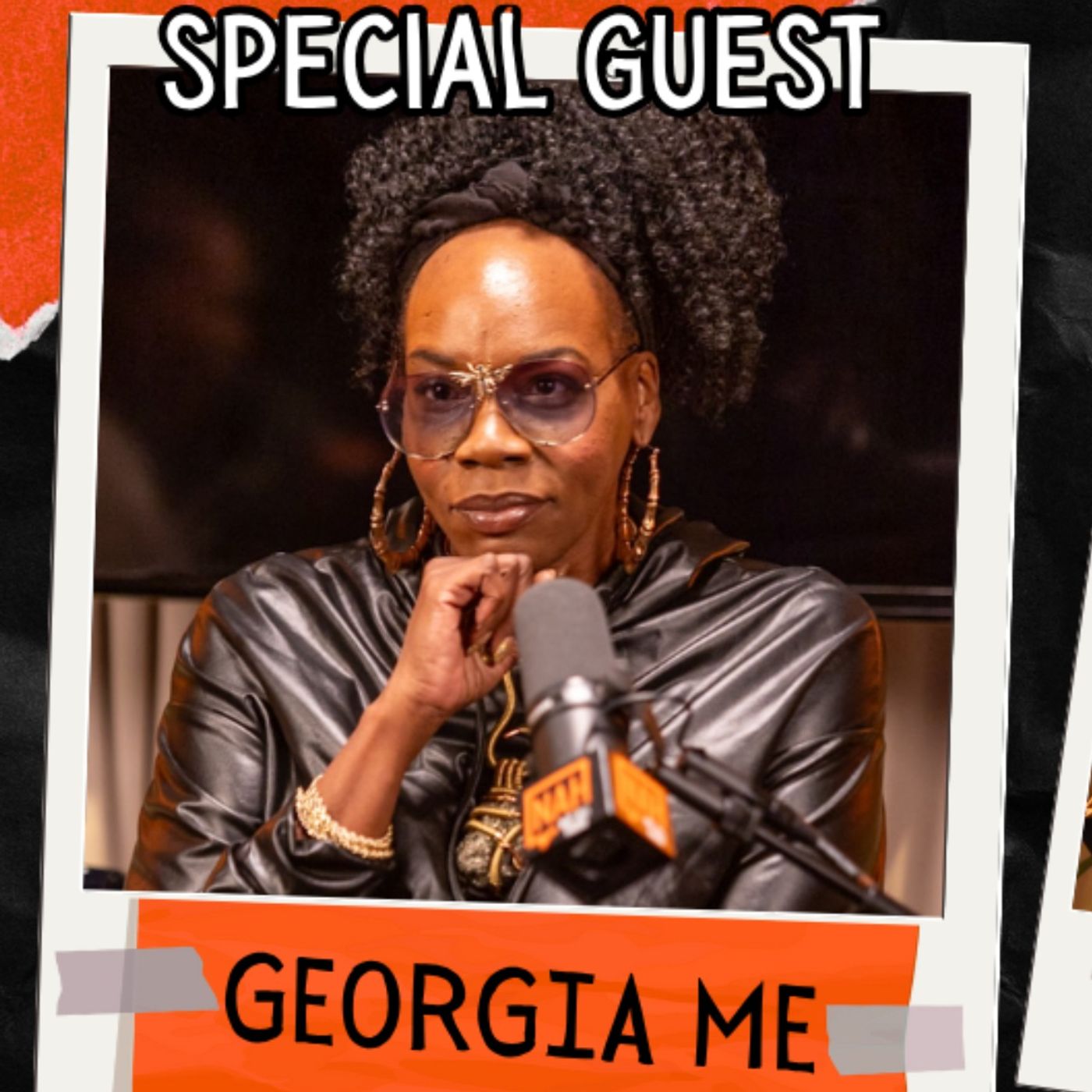
Not All Hood (NAH) with Malcolm-Jamal Warner & Candace Kelley
S2 E003 Why the Hood Deserves More Respect Georgia Me Speaks the Truth
01:07:31
EP 3 In this explosive episode of NOT ALL HOOD Malcolm-Jamal Warner and Candace Kelley sit down with the unapologetically brilliant poet, actress, and activist Tameka "Georgia Me" Harper. Known for her commanding presence from HBO's Def Poetry Jam to Broadway, Georgia Me shares unfiltered truths about Black excellence, systemic exclusion in the arts, being blackballed in entertainment, and the cultural erasure of poetry. This episode is a masterclass in radical self-love, hood pride, and the resilience of Black creativity. Georgia Me unapologetically uplifts the hood as a sacred space of community, survival, and joy. She also delivers powerful insight on the gentrification of Atlanta, the misrepresentation of Black stories in media, the commodification of struggle, and the need to honor working-class Black Americans. Hilarious, heartbreaking, and healing all at once—this is one of the boldest conversations Not All Hood has ever hosted. From P-Valley to power dynamics in poetry,...
Loading summary
Transcript361 lines
- [00:00]
Georgia Mee
Nothing brings us together like Eglin's best eggs. Always so fresh and delicious. Plus superior nutrition. Like 6 times more vitamin D, 10 times more vitamin E, and 25% less saturated fat compared to ordinary eggs. For us, it's eggs any style as long as they're the best.
- [00:17]
Harper
Eglan's best Better taste, better nutrition, better eggs.
- [00:21]
Georgia Mee
Visit eglansbest.com to learn more. Need to restock inventory, cover seasonal dips, or manage payroll? OnDeck's small business line of credit provides immediate access to funds up to $100,000 exactly when your business needs it. With flexible draws, transparent pricing, and full control over repayment, you can tackle unexpected expenses without missing a beat. Apply today@ondeck.com and funds could be available as soon as tomorrow. Depending on certain loan attributes, your business loan may be issued by On Deck or Celtic Bank. On Deck does not lend in North Dakota. All loans and amounts subject to lender approval. Think about it. I didn't. I don't look at it as a subset. I look at it as special. Because excellence. White people. Mediocre. Always have been. They don't have to try as hard. They don't have to because somebody else will come clean it up. We've never had that, that, that luxury. We've always had to be twice 10 times as good. So black excellence is better. It's just what it is. We just put black on it because it is. We've had to always be that. We've never, no matter what we've done and even when we're better than them, they still will find a way to put somebody over us. That's just what it is. So I man everything black. Everything black black black black.
- [01:32]
Tameka
Comrades, welcome. Now this just may be our most lively, not all hood episode to date. For those of you who don't know Tameka, Georgia, me, Harper, you are in for a ride. She is a force and she's also a true spirit. From HBO's Deaf Poetry Jam to performing on Broadway and on global stages, Georgia Mee has always led with her truth and authenticity. And whether you agree with her perspectives or not, what cannot be denied is that she is a lesson in self acceptance. Radical. And she's an inspiration. To being unapologetically and unabashedly true to self. She reps the hood through and through and reminds us that even in the hood, we are not a monolith. Enjoy the conversation even through what may be uncomfortable.
- [02:15]
Georgia Mee
I had got a call about being on Jeezy album and so I was like, yeah Then I ain't hear nothing about it. Then Jessica's on it.
- [02:23]
Tameka
Care more. Yeah, uh huh.
- [02:24]
Georgia Mee
And let me tell you about that. When me and Jessica did the interview, I was like, I was so proud to have poetry on Jeezy album. And Emerald Green said, girl, you can't do nothing on TV cause your face say everything. Jessica said, I had to google Jeezy. When she said she had to Google Jeezy, my face just said, bitch, my face just said, are you fucking kidding me? You know what I'm saying? But that went away. Then I got a call about Siha the prince, to be on his album, to do this song with him in New Africa. So I'm in la, I done wrote it, I'm finna record, I'm recording something for a children's book. So I'm like, I'm at the studio so I can get this done. They don't hit me back. So I'm like, what's going on? Then Ernestine Morrison is on the song New Africa saying, wife's. Does wife exist? There's no such words. But anyway, I'm just a hood bitch. I don't know that. Anyway, so then I got a call from Ludacris people. And then my friend who's the DJ for Ludacris told me, no, Mickey, they changed their mind because you blackballed. And that's when I believed it. Cause I didn't believe it before.
- [03:28]
Tameka
So why did they say blackball?
- [03:31]
Georgia Mee
They just said Russell had blackballed us or whatever. I think it was because we had power. He wanted the thing that happened with Def Comedy. He made sure wasn't gonna happen with Def Poetry because everybody went off and made money and they didn't get a piece of it. So after we did Deaf Poetry, they grabbed the top nine people and put us together and put us on the road and kept us for four or five years. You feel what I'm saying?
- [03:51]
Harper
I do, I do.
- [03:52]
Georgia Mee
And so then when it was done, it was done. And then they decided they was doing Brave New Voices, which catapulted everybody who was in Brave New Voices. Because if you look at Def Poetry, Def Poetry wasn't on demand or anything. You still had to pay with Brave New Voice, it was on demand. The kids, the Internet time. So the kids are popping on Twitter and all of that. So it diminished us to as far as branding, but not our impact. You see what I'm saying?
- [04:17]
Harper
I do, yeah.
- [04:18]
Georgia Mee
So the control, he wanted control. He wanted to be like, I have control over this but it really. He couldn't control us. And you really can't control poets who are authentic. You can control people who can be bought. We can't be bought. And we wouldn't do nothing they wanted us to do. You know what I'm saying? Like, we just ain't gonna do shit to do it. You. You know what I'm saying? Not. I'll never forget when we had the commercial for deaf poetry. They brought in an advertising agency and they was like, this show was so amazing, and we wanna. We don't know what to do, but, you know, it's like, party with Words. We're not gonna call it that. And what the hell. The advertiser Party with words. Wow. Wow. Shout it. It was an experience. I learned so much. And then I just. I always think, damn, I didn't enjoy it. You know what I'm saying?
- [05:03]
Harper
Like, when are you looking back on it?
- [05:05]
Georgia Mee
Oh, man. I didn't enjoy it. Like, I could. I'm on Broadway. Y. You know what I'm saying? Not for eight weeks. Eight months. We supposed to be there eight weeks. And we was there for eight months. Standing ovations every night. You know what I'm saying? The first show in the history of Broadway to be written and performed by its players. Yeah. And that's what I'm saying. It should be more impactful in the history of black people, of our culture. We didn't get a reunion. We didn't get a 25 year. We didn't get nothing. It's like no acknowledgement of something that beat Jay Leno. Every Friday night. Every Friday night, we beat Jay Leno. So it's like, okay, all right. Y' all just act like it wasn't nothing, but I know it is. Cause everywhere I go, I get those testimonies. Right?
- [05:45]
Harper
Right.
- [05:46]
Georgia Mee
You know what I'm saying?
- [05:46]
Harper
But you know what? That helps make sure that history is preserved, though. You know what I mean? Just you even talking about it right.
- [05:51]
Georgia Mee
Now, that's what we doing. We doing a show. I want all the poets. I'm calling you, too. Cause I want people to talk about their experiences in poetry and what brought them to poetry and the lives we live. Cause if the prostitutes got documentaries on YouTube, I think poets deserve it.
- [06:05]
Harper
You got that right. HBO. H the Ma'. Am. Oh, yeah.
- [06:11]
Georgia Mee
And I just think that poets are always treated like the parsley on the plate instead of the steak. And I'm here to say we the steak. Shouting. And not no strip chateaubriand. Okay. Filet mignon. Okay. $400. Okay. So that's my big thing in the game, period. I know. We got to start talking to talk.
- [06:28]
Tameka
We started.
- [06:29]
Harper
Yeah, no, we rolling.
- [06:30]
Tameka
Tabika Georgia B Hawker coming in hot. Coming in hot with the hot ass leather.
- [06:36]
Georgia Mee
She coming in hot by man, I.
- [06:41]
Tameka
Love you so much.
- [06:42]
Georgia Mee
I love you too.
- [06:43]
Tameka
For years upon years upon years upon years. And one of the things I love about you so much is your spirit. And last month we were doing a poetry set and we were at a.
- [06:56]
Georgia Mee
Sold out three shows that Malcolm Jamal Warner sold out at City Wide with a waiting list.
- [07:05]
Tameka
But we met backstage and we were talking about, we're talking about the podcast. And I was, you know, podcast is called, you know, not not all hood. And I couldn't even finish my sentence. Just like, ain't nothing wrong with the hood. Ain't nothing wrong with the hood. And it made me, it made me realize that there could be a misconception that we're saying not all hood, saying that the hood is bad, but the concept is like what the media shows us is one side of, you know, black culture. And it's the hood side and the hood side, you know, ultimately, historically is what has always created American culture.
- [07:43]
Harper
Sure, right.
- [07:44]
Tameka
It gets co opted from the hood and then it becomes mainstream.
- [07:47]
Georgia Mee
Exactly.
- [07:47]
Tameka
But I just loved your, I just, I loved your take and your reminder that the hood should be as celebrated as the rest of the lanes of black culture.
- [08:01]
Georgia Mee
I feel like people feel bad about where they are in the world or what their, their, their current situation is. And I'm like, if you have life, you're winning. And to be black in America and surviving, and not even surviving, we thrive because there's devised plan for our demise every day. So for you to still smile, still find ways to make it. And then in the hood, we help each other. Poor people help each other more than rich people all day. In my neighborhood, my whole life growing up, we don't just borrow some sugar. It ain't no thing to borrow no sugar. I might borrow a whole chicken from Ms. Ada across the street, make a whole dinner and bring her a plate. You hear what I'm saying? That's my hood. I don't come from. My hood protected me. Like when Lauryn talk about how the hood protected her, I was a ghetto princess. They didn't let me be on the corner after a certain time because I was a smart, respectable young lady. They exist in hood. Okay? It ain't. I'm not gonna say I'm not ratchet. I'm ratchet because I love that. Cause I read too. But I love every aspect of me. And the thing about we don't applaud the bad. We don't applaud the killers. Excuse me, I applaud a killer. I hate a murderer. Killing is necessary. I wish we had more. These murderers are something different. We don't applaud thieves. 50 Cent is cool, but I never liked him because he was a stick up kid who is. Well, I'm like somebody who steals, you feel me? We don't applaud. Now I ain't gonna say nothing about drug dealing because drug dealing is business. You don't say nothing about eli Lilly and GlaxoSmithKline. So why you gonna say something about Rodriguez or Rallo? I'm just saying everybody make their own choices. You don't say nothing about the big looker companies just keeping it real. Now there are ways that people maneuver in the hood to do those things and that's why they do it. Nobody I know want to sell drugs. They want to provide for their family. And we were tricked by, some would say bourgeois black people who thought working was beneath them. And we lost a whole generation of trade that other people came in and took that money and made millions off of that. We were the ones that Booker T. Washington, my high school, Booker T. Washington, empowered these people with these trades to go back and empower their community and be the best at that. But then we got tricked. You don't wanna be that kind of black person working. We through with slavery. Like there's no honor in work. I love a garbage man. Oh, he get up every day, he makes sure my streets is clean. And he gonna smell good. Cause he be riding that shit all the time. So he gonna come home, take three, four baths, you know what I'm saying? Ain't gonna be fresh by 6 o'. Clock.
- [10:43]
Harper
Listen and listen. Don't we wish we had a trade? Every time you hire a plumber or someone to come and fix your sink.
- [10:48]
Georgia Mee
Don'T you wish that or somebody in your family. It used to be somebody in everybody's family that would work on the plumbing. House could work on electric. I still have that in my family. Thank God. I thank God. Shout out to Fernando, who do the electricity. Shout out, Cali, who do the plumbing. I have a 10 bedroom house. Stuff break down all the time. And I just think that we have to get back there. I'm trying to get my son and my nephew to get a trade. I don't care what it is, just to have that Skill. And I just remember a time when I was growing up, every man. Every man would at least pretend like they would, oh, this too big of a job for me, baby. We gonna have to call somebody in. They would at least phone me, fold me, lift the tub back up. Oh, this is too much for me. I'm gonna have to get somebody. Open your car and then fix it. Just lift the car up. Just trick me. Let me tell y' all a quick story. So my car was sitting in my driveway for a year.
- [11:41]
Harper
Okay.
- [11:41]
Georgia Mee
Okay. And I did the Tonight show with Killer Mike. Shout out to Killer Mike. And the guy who sold me the car was, like, called me to congratulate me. Like, I seen you on the Tonight Show. Oh, I'm so proud of you. What you doing to celebrate? I said, if I could get go somewhere, I would say, what you mean? I said, my car ain't working. He said, your car ain't working? I said, my car ain't work. He said, send it to me. I sent it to him. He called me back the next day, was like, I'm coming to get you. I said, for what? He said, in your car. He came and got me. I took him back to the shop. There was a Mexican man there. And the Mexican man said, you have men in your life? I said, yes. He said, you have no men in your life. All it was was the fan belt.
- [12:27]
Harper
If any man would have just looked.
- [12:31]
Georgia Mee
But our black men don't even do that no more. It's like, I get somebody to handle it. What, you ain't gonna try? You ain't even. You don't even care.
- [12:38]
Tameka
So where do you think that breakdown.
- [12:42]
Georgia Mee
It became when we started dogging the working man? When the working man wasn't great enough? That's when it started. When we started, you know, just when not us. Only the media popularized this certain image of the player, pimp, street hustler. And that's the only image that a black man can be. And if you not that, you lame. Remember Rock?
- [13:06]
Harper
Yes.
- [13:06]
Georgia Mee
Rock was one of the most outstanding shows of character and integrity. You feel me?
- [13:13]
Harper
Yeah.
- [13:13]
Georgia Mee
And I want that image, and I want to. That's why we have all this. I don't watch any bmf. No Canaan. I don't watch none of it. Uh. Oh, I'm sick of those stories. I live it. They don't live. And none of these people are hood. For real. Let me say that to y'. All. These folk out here playing hood cosplaying hood, nigga, they are not. They Are not so.
- [13:31]
Harper
Okay, let's go back. No shows, no the raising, none of that.
- [13:37]
Georgia Mee
No snowfall.
- [13:38]
Harper
Why?
- [13:38]
Georgia Mee
Why? Because we have other stories. Why is that the only story that they will tell?
- [13:43]
Harper
There are many other stories that are out there, though. There are.
- [13:46]
Georgia Mee
Okay.
- [13:46]
Harper
But I do think that those stories are well written too. That, you know, when we get into anything, the power. The power book, they're good. And I think that people crave a. Well, I get your point, though. But I think people crave a well written story.
- [13:58]
Georgia Mee
I don't take nothing from the actresses or the writing women.
- [14:02]
Tameka
You want different stories.
- [14:03]
Georgia Mee
I just want some more complexity in it. You know what I'm saying? Like, it's always the same to me. Like, we don't have no options. All of us don't choose to sell drugs.
- [14:14]
Harper
That's true.
- [14:15]
Georgia Mee
I'm just saying, like, tell the other. What about them lady next door that ain't said, can she be part of the arc in the story at some point? The good, honest working man down the street, who y'. All, who the young men do admire. They exist. So I just want those stories to be told also. Like, no shout out to power. I love P. Valley.
- [14:35]
Harper
Oh, P. Valley. You love P. Valley.
- [14:37]
Georgia Mee
I love P. Valley. I love P. Valley. Uncle Clifford. That's my nigga. Right? But, you know, I mean, I get it, you know what I'm saying? But the reason why I like that is because it's more nuanced. To me, it is. It's not just about the strippers. Is about the lives they live. That's.
- [14:51]
Harper
No, I see where you're going.
- [14:53]
Georgia Mee
You know what I'm saying?
- [14:53]
Harper
I do.
- [14:54]
Georgia Mee
So, like, what was that with the one with Mary J. Blige? What redeeming character. I watched that whole thing, which I just hate myself for a second, and.
- [15:00]
Harper
I did not watch that whole thing.
- [15:01]
Georgia Mee
With Tariq when Tariq was the main boy.
- [15:04]
Harper
Yeah, the son.
- [15:05]
Tameka
Oh, the power. You mean the power boy.
- [15:07]
Harper
After.
- [15:07]
Georgia Mee
After Omari died, right?
- [15:10]
Harper
He died. No, I'm playing. You gave it away. You gave it away.
- [15:13]
Georgia Mee
And then I'm not racist. I'm prejudiced. So I never watched Power. And I love Omari. Omari's a poet from Atlanta. Know him, you couldn't tell it, but know him. And of course, I'm sitting there watching it, I'm like, yeah, this is my boy from Atlanta. And when his wife came on that screen and said, where's that drug dealer I knew from back in the day? And I'm like, this his wife? And then he's in love with this rice and beans bitch. Oh, no. I'm not watching this shit no more. Not watching it. And I ain't watched this until the last season when it was great when they had each story. Each person had a story. I watched that. And when Kendrick was on now. Yeah, that's it, though.
- [15:58]
Harper
Yeah, yeah, he was on.
- [15:59]
Georgia Mee
That was it. And I'm. That's just how I am, my son. I'm really. I'm crazy. I remember when I found out that Jamie Foxx and Katie Holmes was dating, I cried, right? Cause I love Jamie Foxx. I cried. And so my son. Somebody came in my room, and I'm. I'm like. They're like, what's wrong? He's like, nothing. She's crying over nothing. But that's how I feel when it's good. Black men.
- [16:25]
Harper
Hold on. So let's go back. Let's go back. You have put so much on the table.
- [16:29]
Georgia Mee
I'm sorry. I'm sorry. I talk like that. I talk like that. Whoa, whoa.
- [16:32]
Harper
Let's just chronologically. So Jamie Foxx dated Kenny Holmes.
- [16:36]
Tameka
Oh, can I go back further than that?
- [16:37]
Georgia Mee
Oh, you can.
- [16:38]
Harper
Okay, Okay. I was starting most recently, but go ahead.
- [16:41]
Georgia Mee
Yeah.
- [16:41]
Tameka
Cause I meant to stop you back before we lost some people. I admire killers. We need more of them.
- [16:53]
Georgia Mee
Can you unpack that in the original Hebrew script is thou shall not murder. Killing is necessary. Some people got to go. If it between me and you, I just met you. I love you, but you got to go. It's just what it is. And I wish black people were more like. They need to be scared. That fake fear. I don't want the fake fear. Have real fear that if you do wrong, there are repercussions. That's what I want. So. And if. Oh, I wish. I just want to get to all the gang members and, you know, give them real direction.
- [17:22]
Tameka
So what's the fake fear?
- [17:23]
Georgia Mee
The fake fear is what they've. The propaganda, you know, throughout our whole existence in America, from Reefer Madness to Birth of a Nation, all of the propaganda to make white people scared of black people. People and increase that fear. Even with television, you know, it's always a surly black man that the image is. Or. And if it's not a surly black man, it used to be Italians, you know what I'm saying? That's how, you know, they used to.
- [17:56]
Harper
Pit people against each other and stereotype.
- [17:59]
Georgia Mee
And that's what. It's fake. It's not real. Because ain't no more the most loving People on the planet are black Americans, period.
- [18:07]
Tameka
And patriotic.
- [18:08]
Georgia Mee
Oh, beyond patriotic. We love our country because we don't really have no choice. Most. Most black people don't get out of America. Most people don't travel 30 miles from where they originate.
- [18:17]
Harper
And we built this country, and we.
- [18:18]
Georgia Mee
Built it, but we don't even take the pride in it like that. We don't even walk with that. If I. If I pray every day that my people discover the God in them and walk in and not just the fake Christian crap that they be doing. You don't really. Yeah, none of y' all ain't really Christian. For real. Not the way you live, not the way you believe. You can't be. So that's bull. You know what I'm saying? But if you really find your divinity, you really understand that you are God, you are a creator. Oh, my God. If you take, I have the highest self esteem because I'm black. How you gonna feel bad about anything when you a black American? You built this. You've overcome everything. Everybody wanna be like you. You. You truly are God. You make it out the mud. You know what I'm saying?
- [19:01]
Harper
But I think it goes back to what you were saying earlier and that the stories that are not being told is making people feel that way. They feel like they are not a part of this narrative because they're changing history. People are changing history. They're changing the books. They're throwing them away. They're burning the books, they're changing the.
- [19:18]
Georgia Mee
Curriculums, but they weren't reading in the first place. Everybody with all this fake outrage, nobody can't stop me from learning.
- [19:27]
Harper
That's true.
- [19:27]
Georgia Mee
Everything I've learned, I didn't learn in no school or nobody made me learn it. I stopped. I stopped college with my second year. And what I learned there, I didn't. That. That makes me love myself. I didn't learn there. I thank God. Shout out to Ms. Smith. Jabari Smith Jr. Who's on the Houston Rockets. His grandmama, my favorite teacher in the world. Ms. Smith gave me Zora Neale Hurston. Ms. Smith gave me Mark Mathabain Cafe. Boy. That's not in the correction. Oh, Nicky giovanni was at 8 years old and summer camp. Camp, best friends. Thank God. You feel what I'm saying? I'm a student of my community. I'm a child of the community. For real. And I'm public school. I am. Oh, she's so smart, you know? So I had a little white Jewish teacher who just called me her Barbara Jordan because I Love Barbara Jordan. Since I was 10 years old, I found Barbara Jordan on my own. Nobody didn't show me her. I just seen a big black woman talking. I was like, whoa, I like the way she sounds. I need to see who she is.
- [20:24]
Harper
Right. Looking kind of familiar with people I know.
- [20:26]
Georgia Mee
Come on.
- [20:27]
Harper
That's true. That's true.
- [20:28]
Georgia Mee
Darker than a paper sack. Won't talk about that. They don't let no niggas be on TV unless they light it in a paper sack.
- [20:34]
Tameka
It's funny, I was talking, having a conversation with, again, my thread.
- [20:39]
Harper
Yes.
- [20:40]
Tameka
Of people. And there's a guy in our thread is a brother. He's more conservative leaning. And we were talking about the Arlington Cemetery, and you know how they're scrubbing the. The history of, you know, a lot of those soldiers. And his take was, well, you know, if they were just considered American soldiers and not black soldiers, then they wouldn't have to scrub their history. And I said, but if you take away the fact that they're black, you're taking away the whole history of. At a point where they wouldn't let black men become soldiers.
- [21:16]
Harper
Hello.
- [21:16]
Tameka
You're taking away everything that black soldiers had to do to persecut. Persevere.
- [21:21]
Harper
Yeah.
- [21:21]
Tameka
You're taking away the fact that again, black, Black soldiers are the hands down, the most patriotic people walking this earth. Because black soldiers, black military, these people are fighting for freedoms that they don't.
- [21:39]
Harper
Even get to usually in spite of so much.
- [21:42]
Georgia Mee
To go to another country, fight, and then come home and be treated like you're not of this country. Right. Yeah.
- [21:47]
Tameka
And it was that conversation. So before I, you know, I have a thing we talk about a lot of time. I have a thing about black excellence. And like black love. Like you, when you, when you put black in front of, makes it a, A subset of that thing. But then when I started, you know, having this argument with him, not argument was discussion about the history of black soldiers for the first time, it made me think of black excellence in a different way.
- [22:14]
Georgia Mee
Right.
- [22:14]
Tameka
Like the, the. The. Because black excellence now is attributed to fame and money.
- [22:21]
Georgia Mee
Never.
- [22:21]
Tameka
So that's been my, my issue.
- [22:23]
Georgia Mee
Never for me.
- [22:24]
Tameka
But now when I'm looking into the story, like black. Black survival in end of itself is black excellence.
- [22:33]
Harper
Because we've always had to supersede, do better. And more things have been put in our way to cross over and see.
- [22:39]
Georgia Mee
The thing about it. I don't, I don't ever look at it as a subset. I look at it as special because excellence. White people mediocre always have been. They don't have to try as hard. They don't have to because somebody else will come clean it up. We've never had that, that. That luxury. We've always had to be twice, 10 times as good. So black excellence is better. It's just what it is. We just put black on it. Cause it is. We've had to always be that. We've never, no matter what we've done, and even when we're better than them, they still will find a way to put somebody over us. That's just what it is. So I man, everything black. Everything black. Black. Unapologetic. Lemon. Shout out to Brooklyn. Lemon. Puerto Rican Norwegian poet. You know Lemon.
- [23:21]
Tameka
No, no, Lemon.
- [23:21]
Georgia Mee
Yeah. You say, Georgia, you like to make white people uncomfortable. If my blackness makes them uncomfortable, good. I don't have no problem with that. And then my mentor, Father UMD of the Watts Prophets, he says, he said, you don't just scare white people people, you scare black people. Good.
- [23:44]
Tameka
Scare black people. Make them scared of coming into their own.
- [23:48]
Georgia Mee
I think that because I'm so unapologetically me, and sometimes I've had people say to me, I love you, Georgia, but. But I hate the way you glorify the hood, the ghetto that I love where I'm from. I love who I am and the people that surrounded and love me. I'm sorry for you, not for me. And I don't make no apologies for it. And the thing about it is being born and bred in Atlanta, Georgia, I'm around. My best friend went to Georgetown, speaks three languages. As a professional academic from 23 years old, three 23 years old on, she's made over a hundred thousand dollars a year learning. She get paid to learn. My other best friend grew up. Mama worked at the varsity. Varsity is a hot dog historical place here in Atlanta. She had five kids right down the street. This is the hood, west side. He's a doctor, his brother's an engineer. His two sisters are RNs, and the other one, I think he's a professor. All from this hood. You feel what I'm saying? So Martin Luther King raised his kids in the same neighborhood I'm from. You feel what I'm saying, right? So when people say these things who are black, to me, it's like you. How do you have such a limited view of your people, right?
- [25:00]
Harper
Because this is where your people are from.
- [25:02]
Georgia Mee
So many. And we. And the thing about Atlanta is Atlanta showed me everything. I had my friend Marita, who. I'm talking about her Mother was a professor at Morehouse and her dad worked at Lockheed. They lived in the swats. I went to school with Bo Young. That's Andrew Young's son. My classmate was John Lewis Jr. This is Atlanta, so we don't do all that. All the other people came with all that mess. It didn't matter where you was from. It matter how fly you are, it matter how smart you are, it matter how good you are, how sweet you are, how kind you are. That's what it matters, matter. All the rest of that is lame. Autumn. Lame ducks who came here and messed up our club scene with the Sections. Nobody. Don't dance no more and have fun. I hate you. I hate you so bad.
- [25:41]
Tameka
You messed it up for everybody.
- [25:43]
Georgia Mee
I hate them. I ain't gonna say y' all name because y' all might have to, you know, promote one of my tours one day. Oh, my goodness.
- [25:48]
Harper
Don't. Don't you blackball yourself. Don't do it.
- [25:51]
Georgia Mee
God got me. Because like I said, even in being blackballed, I didn't know. I. I just hustled. I didn't know. I just worked.
- [25:57]
Harper
That's how you overcame it.
- [25:58]
Georgia Mee
Exactly.
- [25:59]
Harper
Didn't worry about it.
- [26:00]
Georgia Mee
I didn't know we was doing Educated Gangster 101 shout out spoken word hip hop musical created by Tommy Bottoms and Malik Salon. Yeah, yeah, yeah, yeah. And we did that. Amazing. And I just. Things just kept coming. Then Ms. Gia sky asked me to go on tour. She didn't know about the black ball, so she took me out on the road. And just different opportunities came. Still, despite whatever that's supposed to be, you know what I'm saying?
- [26:22]
Harper
Yeah.
- [26:23]
Georgia Mee
So I just. I'm gonna always speak my truth. I'm never. I think that's what scares people. Like, what will she. If something goes on that I don't like, I'm gonna say something.
- [26:32]
Harper
I love that.
- [26:33]
Tameka
So I wanna go back in case we haven't lost all of our white viewers or listeners.
- [26:40]
Georgia Mee
They love me. Real white folk love me. Shout out to the good white folk.
- [26:43]
Tameka
Right?
- [26:44]
Georgia Mee
Right. John Brown.
- [26:47]
Tameka
So that's what I want to get back to that. Because I just want to take a moment to unpack and make sure. Because I could hear. I envision a white person hearing that white people are mediocre and they take offense to that or get defensive on that. And I want to be really clear that we are talking about a playing field that has historically been uneven. So again, back to our excellence. Everything that we have had to do to play on this uneven playing field when the playing field was set up for them. And it's not been set up for us. It's been designed for us. We live in a system that's been designed for us to be second class. So everything that we have to muster all of our resources, whether it be spiritual, whether it be relational, whether it be political, to whatever extent, everything that we have had to muster just to play on this playing field is what makes. Is what makes us rich as black people, as black culture. So I guess I'm trying to. I'm trying to put more.
- [28:10]
Harper
The context of it.
- [28:11]
Tameka
More context? Yeah. Because again, it's not a. It's not a. It's not a racist statement. It's not a prejudice statement, but it's an opinion.
- [28:24]
Georgia Mee
And it's based off of. I know, all white people aren't mediocre.
- [28:28]
Harper
Right?
- [28:29]
Georgia Mee
Okay. It's based off the fact that so many times a black person. And I ain't saying a person of color, a black person, has been qualified, overqualified for a position or job and was overlooked for someone who was someone who didn't earn. And that's just what it is. And so if that wasn't the case, nobody would ever say that. But that's what we deal with all the time. There's a hundred yards on the football field for Black people. It's 150. Cause you always moving it. You're always changing the game. And I wish we would have listened to Booker T. And just did for us and established us. Us and have our own playing field. Y' all won't come over here. We'll let y'.
- [29:09]
Harper
All.
- [29:09]
Georgia Mee
Let me tell y' all something. I'm saying this publicly. Martin Luther King, when he said, we will all join hands and sing a Negro spiritual, he didn't say a Lutheran, Hannah, more a Catholic song. It meant to the soul of the world. Who are black people? Ain't nobody like black. We are the chosen one. Tribe of Judah said, you'll be taken from your land and put into 400 years of internment. Who else is that. That on the planet that don't describe nobody else but transatlantic slaves in America, period. So I just want us to revel in us. Loving me don't mean I hate any white people. I love the good white folk. Thank God for the good. And I have to say good white.
- [29:47]
Harper
Folks, because there's a difference.
- [29:49]
Georgia Mee
It is because I used to think that was more good white folk in America than not. Now I don't. That has changed. And it's not just because of Donald Trump. It's not.
- [29:56]
Harper
Not.
- [29:57]
Georgia Mee
It's because they don't love themselves. They vote against themselves. Especially these white women. I feel so bad for them. They. Y' all get your sisters. Get your sisters. Because, I mean, I. I ain't got nothing else to say to Ms. Millie. And none of them, because they're gonna do. They. They've always done it. Bill Burr explains it so beautifully about how white women are co conspirators and act like they're not in the demise of black people. The only thing white women adore about black. Black people is black men's penis. Other than that, they intimidated by everything else. They loved Oprah. But when the millennial Mamie went out of business, that was it for America. Because she. She was their consciousness. She told them what to do. She told them to feel. She made it okay for them to feel what they. She raised these people for 25 years, and then she went away. And then here come Wendy Williams. Ah, just mess us all up. It's just the truth.
- [30:56]
Harper
Lord have mercy.
- [30:57]
Georgia Mee
Am I lying? Why? Let me tell you. I. I watch television. Your show, one of the most impactful shows in the history of television. Because it showed black people in every way to me. Especially when they brought cousin Pam on. You know what I'm saying? Because you supposed to lift up your cousin. A lot of us stayed with our cousins who were. A lot of people stayed with me, my family, you know, that's part of our.
- [31:21]
Harper
Especially those summers come up come the summer from the South.
- [31:24]
Georgia Mee
If you not he. He bad. I need to send him to you.
- [31:26]
Harper
That's right.
- [31:27]
Georgia Mee
That's right.
- [31:27]
Harper
That's what we do.
- [31:29]
Georgia Mee
And the culture that was presented that we never would have knew about. The art, everything we've had, shows that influence us in the best ways. The reason why I didn't feel bad so bad about being a big girl. Cause I knew Nell Carter. Mm.
- [31:44]
Harper
Give me a break.
- [31:45]
Georgia Mee
I'm just saying she was pretty and talented. Lucky friend couldn't get a man. That's sure.
- [31:50]
Harper
Yep. Yep.
- [31:51]
Georgia Mee
That's what I seen. So all this woe is me. I'm big. First off, big people don't talk like that. That's asthma and bronchitis. Y' all going. Y' all gonna stop putting that on us. Okay, but.
- [32:07]
Harper
But now some people say Wendy Williams broke through. She broke through a lot of media. She broke through. True.
- [32:13]
Georgia Mee
No, she's wonderful. I'm just saying that.
- [32:15]
Harper
You're just saying that's not.
- [32:17]
Georgia Mee
What did she break through?
- [32:18]
Tameka
What did she Break through media.
- [32:20]
Harper
She broke through media. Glass ceiling. She broke through television. She broke through radio. She broke through her circumstances. She broke through a lot. She did break through a lot of things. And a lot of people would say.
- [32:31]
Georgia Mee
That, I love Wendy.
- [32:33]
Harper
Go to the comments.
- [32:33]
Georgia Mee
I love Wendy. Wendy, the homegirl you hang out with twice a year, but not all the time. You can't deal with that because she got low self esteem, period. Anybody who had a butt, if you had a butt, Wendy was hating on you, okay? Like, she was gonna talk about you in a bad way. And I was like, oh, man. She just go get you a job done. You really got a problem with this? I'm telling you, go watch the shows. But I love Wendy because I did her radio show in what, 2003. That's how long ago it's been, 2003. And I went on her radio show and she says, georgia, me. You like the Mary J. Blige of poetry. I was like, oh, thank you. She say, but Mary has a big house in Jersey and a Bentley. What does Georgia have? I said, well, I would never buy a Bentley because it depreciates as soon as it comes off the lot. I would never buy one of those expensive houses in Jersey to be around white folk. And I would take my money to help the elders in my community who are losing their houses because of taxes and, you know, the price. But I'm happy Mary got a Bentley in a big house. And she was like, I like you. And then she started talking straight to me, you know what I'm saying? Right, right. And she called me the queen of spoken word. That's why I call myself the queen of spoken word. Because when she said the 20 million people, I said, okay, I'll take it. You know what I'm saying? Co sign. So I just, you know. But as a woman, I understand what she went through. She grew up in a. In a white environment.
- [33:59]
Harper
Yeah.
- [33:59]
Georgia Mee
So she was never enough. She was never enough. No matter what she did. She might be smart, she might be cool, but she's not one of those white girls, one of those Italians that they adore, you know what I'm saying? And that was her life. And then she got into the music in the radio world, and she loved it. And she. As a woman, you still gonna come up against it. It. Because you a woman. So I give her a credit for, you know, all that she endured dealing with Puffy, getting fired and sending her to Philadelphia.
- [34:27]
Harper
Philadelphia.
- [34:28]
Georgia Mee
You know what I'm saying? Like, she. She went through some things. So And I feel bad for her and what she's going through now.
- [34:34]
Harper
Right.
- [34:34]
Georgia Mee
But at the same time, I'm like, girl, you talk so bad about people. So when I was growing, it wasn't gossip wrong, right?
- [34:41]
Tameka
Yeah.
- [34:42]
Georgia Mee
Wasn't it? Now what's the T? We don't made things. That was wrong, right?
- [34:47]
Tameka
We had another episode. We were talking about normalizing low vibration.
- [34:52]
Harper
Oh, that's become.
- [34:54]
Georgia Mee
It's something. It's where a lot of people dwell and stay. And oh, my God, all this trauma bonding ain't no solution.
- [35:02]
Harper
We have a lot of trauma bonding.
- [35:04]
Georgia Mee
I go through trials and trauma, but I have triumph. Where's the celebration? Y' all just stay in hell. Heaven. And hell is a choice. I ain't waiting to die to have heaven. I have heaven by my choices on a daily basis. And that's not. We're not empowering each other to be like. You have the power to change your whole circumstance. How you feel, what you're going through. We don't. We're not. We just like, oh, oh, God. All the. My mama wasn't this mama who mama was like, what is wrong with y'? All if your mama was. If you didn't get the love?
- [35:33]
Harper
Be the love, be the love. Learn something and be better.
- [35:36]
Georgia Mee
I'm like, come on. I'm sick of all the excuses for your bad behavior and bad choices. No accountability. None. Oh, my God. And we just applaud raggedy hoes all day long. I just. I just be like, dang. Being a good girl don't get you nothing. Don't get you nothing.
- [35:54]
Tameka
So. So other than the milk. Nell Carter, where did you get your self esteem and confidence?
- [36:02]
Georgia Mee
Barbara Jordan, Nell Carter.
- [36:04]
Tameka
Years old.
- [36:05]
Georgia Mee
Yeah. Oh, early. All my life. Nikki Giovanni. Nikki Giovanni. I read ego tripping at 8 years old.
- [36:11]
Harper
Yeah.
- [36:12]
Georgia Mee
I turned myself into myself and was Jesus, men and tone, my loving name. All praises, all praises. I am the one who would say, man, oh, my God. So black people get me off. I'm sorry. I just. I just always had that. Just like, I just love us and my mama rest in peace. My mama loved black people. Light skinned lady with gray eyes and hoes. Just hated on her her whole life. They thought she thought she was all that and she didn't. She loved black people. The darker you were, the more she loved you. But they just saw a light skin, a red with gray eyes. You know what I'm saying? They did not. So I, I just. My mama put that in me.
- [36:47]
Harper
Yeah.
- [36:47]
Georgia Mee
My mom put that in me. Like, strong. And then Just being here in Atlanta, like, I went to Pain Forest Elementary School. I thought that all schools did what we did. I didn't know that because Andrew Young's son and John Lewis son and all these lawyers and doctors in the swats, they kids went there that we got this special stuff. I didn't know. I thought all kids saw Roots. We saw Roots in school. I was like six, seven, maybe five, I don't remember. But we all watch Roots. We had a dance program, we had a music program. When I went to middle school. Cause I didn't go to the same middle school I was supposed to go to. I went to a school in the hood. Hood. We went from the Southwest woods to the west side of Atlanta, the Bluff. If y' all don't. People in. In the world don't know about the Bluff. The Bluff is a neighborhood here in Atlanta where a lot of kids were snatched during the missing and murdered children of Atlanta. My best friend, Tonya Bell, her brother was one of those kids, Yusef Bell. So that's where I. I went from Pain Forest to Kennedy, where in Pain Forest we had six fights in the whole six years in the whole school that I was there. I went to Kennedy, where I had six fights before lunch in my cluster. Okay? Like, it was a whole different experience. I got off a crack my first day of school. You understand me? So being in the Bluff is different, you know, so just the experiences of. I had all this exposure at Paint Forest, and then I'm over here and they ain't got the same. They don't get the same. They don't. Why? It just made me recognize the differences and access. And by me being smart, how I had more access. Like even being at Kennedy, they had to start a whole class for me because I was a grade level head reading. So they had to create a class for me in my grade level. And as time went on, there were different things that I wanted because my head friends at Southwest, so I'm like, they doing this at Southwest, Why we ain't doing it? And it would make them see about it, you know, but that's the hood. Nobody, if they don't have anybody fighting for it, they're not gonna get anything. Nobody's gonna. So I just. I just noticed the difference young. So it made me, you know, like really look for examples and, and of. Of blackness. And like, oh my God, like Michael Jackson is everything to me. Like Michael Jackson, the first man I ever loved, not my daddy. I kissed Michael Jackson every night on the poster and he was just the most magnificent person of love. That's how I always seen him. So that was a big influence on me. Real big. Like, I love and. And Goody Mob.
- [39:27]
Harper
And Goody Mob.
- [39:28]
Georgia Mee
Goody Mob, Goody Mob, Goody Mob. I'm a pocket knight too. But the reason I am who I am is because of GMO B. Goody Mob taught me that I could be hood, be an intellectual, be a revolutionary and be God fearing and God mastering and knowing my divinity. I love the GMO B. Shout out to Cedo Cujo, Tebo and df.
- [39:48]
Harper
So this voice, this strong voice developed over time or, or at 8 years.
- [39:54]
Georgia Mee
Old, I always sound like a man.
- [39:57]
Harper
And I don't mean your literal voice, I just mean your disposition and the fervor and the fire.
- [40:03]
Georgia Mee
I think so. I think so.
- [40:05]
Harper
You were like. When you imagine yourself as you remember yourself as an 8 year old, is it just a smaller version of what I'm seeing here?
- [40:11]
Georgia Mee
Basically.
- [40:12]
Tameka
So did you ever have like, like that period of insecurity?
- [40:15]
Georgia Mee
Always, always. I've been over £200 since I was 11. So, you know, I got joined in the hood. What you think broke out all that? But what I had was this intellect and this spirit so that couldn't be broken. And whatever you say, you can say whatever you want after a while. This would always happen. People would bully me and then they would get to know me and love me and then they would fight the bullies who would try to fight me. That's what happened. That's my life, like. And if I had a bully, I fought them. And if you was a bully and you was, and if you was a bully and you was picking on somebody smaller, I'mma fight you because you ain't got no business doing that. That's wrong. I've always been like that. I've been a bully buster my whole life. I don't got my ass beat now, but I ain't never afraid, ever.
- [40:59]
Harper
A bully buster.
- [41:00]
Georgia Mee
A bully buster. I ain't got no problem with it. I bring all the smoke. That's another reason why this industry have an issue with me. Because I don't play the radio. You are not gonna do nothing around me that I deem is wrong or I feel is not right. And I'm not gonna say nothing. And I don't mean I'm gonna blow up the spot. It just means that I don't allow injustice to happen around me. I'm a child of King. Martin Luther King is also one of my biggest, most influential. He's the greatest spoken word artist ever, period. But King says injustice anywhere is a threat to justice everywhere. I live by that ceasefire. You know, we know it in Zionism. We have to speak on it. That's why I'm kind of mad at a lot of people right now. I'm like, y' all be talking about all this, but how y' all not saying about Palestine now? The Sudan is a bit much more and the Congo is a bit much more. Because it'll require everybody to give up these for a minute or not update it. I can do it, but I don't know if everybody else can do it.
- [42:00]
Harper
They would all implode and die, you know?
- [42:02]
Georgia Mee
So I'm just saying, like, those influences make me who I am. Like, I, I, I, I love me some Martin Luther King. I I Barbara Jordan just made me so happy. I I and then looking at the history of my people, Fanny Lou, you know what I'm saying? Like, oh, God, Zora loving her people unapologetically. The way she. She wrote. I write the same way. Like, I was at the University of Virginia. No, Virginia Tech. A girl came up to me and she was like, I love the way you write. I said, thank you. She said, because you say the. And she see it in my writing. I'm intentional about that. Sometimes it's duh, Sometimes it's duh on purpose. Shoal will come out. Not should not. You know, the dialect of my people. You know what I'm saying? It's all in there together. Cause that's who I am. And I want black people to not be afraid of any aspect of who they are. Be appropriate for the occasion.
- [42:57]
Harper
We were talking about that earlier. Right? Right.
- [42:59]
Georgia Mee
You know what I'm saying?
- [42:59]
Harper
Pivot when you need to.
- [43:01]
Georgia Mee
I'm never out of pocket. Cause I was raised where. Okay. But I waited too long to be grown for somebody to control me, period. So I'm big on that. Don't hide your. Don't, don't. Don't tone down your blackness. Don't tone it down. Don't do that.
- [43:16]
Harper
Right.
- [43:17]
Georgia Mee
That's never gonna happen for me. You know? And white people love me. Like, they love me because I'm real and authentic.
- [43:26]
Harper
Yeah.
- [43:27]
Georgia Mee
While the cow, you know, the brown noses think that's the way to be. It's not. You're not respected. And I don't want to. I don't want to be in any environment where I can't authentically be me, period.
- [43:37]
Harper
And we've had this conversation before.
- [43:39]
Georgia Mee
I love your hair, too.
- [43:39]
Harper
Oh, why, thank you. Thank you. I would really rather know who a person is so I don't have to figure it out. Even if you're a racist, just let me know so I can know how to deal with it. Or if you are a type of person that I may want to or not be bothered with. I'd rather you put it all on the table, then I can make the decision. Otherwise, we're just playing games. I don't know who you are. You're putting on face.
- [44:01]
Georgia Mee
Face.
- [44:01]
Harper
I'm putting on face. Who has that time?
- [44:05]
Georgia Mee
I'm like, be racist.
- [44:07]
Harper
Yeah, just let me know.
- [44:09]
Georgia Mee
My thing is, I don't infringe on my civil liberties. I don't care what you do. We ain't got to sleep together. We ain't got to eat together. We ain't got to go to church together. We gotta do none of that. Don't infringe on my civil liberties. Don't infringe on opportunities that can come to me. That's it, right? All the rest of that. Nobody ain't trying to hang with y'. All lame. Y' all know what the fuck you talking about. Like, that's what made me mad. When black people, like, I wanna be with them. If they don't wanna be with you, why would you wanna be with them? Now, the good white folk come on over. You know what I'm saying? They have a good time. The ones that we know invited to the cookout, but everybody shouldn't be invited to the cookout either. But that's nothing.
- [44:44]
Harper
I think part of the be with them. I wanna be with them is because if I am with them in their neighborhoods, in this system, education is going to be better. If I am with them in their particular neighborhoods, like, I can see that line of thought. Well, then they're going to have better grocery stores. If I am with them, you know, and I'm, you know, working in their spaces, I might get that loan because they know me. So I can see the line of thought is all I'm saying.
- [45:14]
Georgia Mee
But. And even with being with them, we still get denied all the day.
- [45:17]
Harper
We ain't lied yet.
- [45:17]
Georgia Mee
So.
- [45:19]
Harper
That's true. That's true.
- [45:20]
Georgia Mee
That's what I'm saying. We can have our. And then look at this. This will, this made me mad. The hood being gentrified while we couldn't have did it. All these men, all these football players, all they could. I had a campaign. I just wish I had a bigger voice. I used to be like a Bentley. Buy a block. I Said that damn near 15 years ago and kept saying it, but I just don't have a loud enough voice. Just think about all the athletes that they would. Instead of getting that Bentley bout a block in they hood. Where they from? It's a white man in my neighborhood who owned 32 houses. Wow.
- [45:51]
Tameka
In your neighborhood?
- [45:51]
Georgia Mee
In my neighborhood, he owned 32 houses. Some of them houses he bought for less than $5,000. They have houses on the court steps that black. Let me tell you something black people did that is disgusting. We got to get from the hood. We got to run. We got to go to the suburbs. We got to go. So you left these homes that your grandmother worked hard for. Nobody kept it up. And it went over to the state, went over to the city. Yeah. There's a black man in my neighborhood. He was a journalist for the Atlanta Journaling concert. The first black sports journalist for the Atlanta Journal Constitution. His grandson had the house. I went in the house. I mean, we talking Muhammad Ali memorabilia, Jackie Robinson, all kinds of stuff. He left that house. He left it, didn't sell it, nothing. Somebody moved in as a, you know, squatter, and then the city took over. Now they have it. And I think about all those valuable. Oh, my God. Memorabilia that's in that man house. I don't understand why we don't love us enough in my neighborhood. Now my house is worth $700,000. 700. White boy across the street paid for his straight cash, 21 years old. His mama started him investing when he was 8. Paid $499,000 for it. Straight up. Up. I didn't have white neighbors. Now I got one in front of me, one on the side. But they good white folk because if I don't like them, they got to go. I. I don't made them leave. Was a white girl who wouldn't speak to none of the women in the neighborhood. You got to go, ho. You only talk to the men. You got to go. I am not. I'm not. I don't deal with it nowhere. It was a white man down the street who was selling drugs, selling heroin. I told on him. Black people snitching is when you're involved in the crime. Otherwise you're a great citizen. You are not a snitch. Don't them fools make you believe that? If I see you running down the street with a tv, I'm calling the police. The hell you talking about? I wouldn't want nobody. That's crazy the way that they have brainwashed our whole community and made people scared Grown people stand up. Are you grown? Y' all act like y' all scared of the children. I'll slap the out of these kids. I don't care. You're a child. You a child. Young person, you don't know enough yet. I know you think you know. I'm gonna listen, but that's it. Unless it's valid. No, but we've given up everything to the criminals. Never. I don't do that. I just. I don't believe in that. Like I said, I don't believe drug dealers are criminals unless they do the other stuff. I believe they're businessmen and women. That's how I see it. I'm sorry, but everything else, if you're stealing, if you murdering, if you scamming, frauding people, any of that. No, you're not of God, so why would I associate or valid give you none of that? I just don't get it. Like the drill music, the kill music. Come on, man. Not listening to none of that. I'm not. And I come from an era of, you know, slob on my knob like corn on the cob. Checked in with me, you know, hey, so I love it, but certain things don't feel good to my spirit. That's all it is, and it's not for me. And I pray that those people wake up and understand. Damn, this has been killing us. Especially people in Chicago. Prayers for my people in Chicago. When I go to Chicago, I cry when I watch the news. And my people be like, they so desensitized to it. They just used to it now. They used to. Grandmama's getting killed at the Laundromat. No. On a daily basis. Babies getting murdered.
- [49:29]
Harper
What?
- [49:30]
Georgia Mee
And this is in Chicago. And that's another thing about America that we act like it's not true when you. In these neighborhoods, we do have PTSD. I seen a person get killed when I was 12 years old, walking to the train station. Scariest moment of my life. Me and my. I'm walking Tonya Bell to the train station. I had a sleepover and at the train station, and we running, thinking, hopefully we'll make it to the house. Yeah, it's part of the. You know. And then I was in LA at Taraji P. Henson's birthday party. Some club we all. Me and my girl, we smoking the best weed in the world with Lil Kim. Album just came out. Shut up, bitch. We just. We just crunk. We said. I said, oh, we didn't have to pay for this. Are we gonna valet? We pull over for the Valet pop. My friend say, I've been shot. I'm like, we high. So I'm like, girl, quit tripping. She's like, no, she's screaming, somebody done shot straight through the back window. I look forward. The back window shattered, but not out. And there's a bullet hole. A bullet, but it didn't go through the front. It went back in the car. If I would have did like this or she would have did like this, we would have got shot in the head. But me being hood, when I realized it was some shooting going on, whether it's Atlanta or Afghanistan, get low. That's what I did. I opened the door, rolled out the car, got on the ground. She's still there screaming. I just. When I realized my friend, I thought she was hood. She wasn't hood at all. She went straight Valley girl on me.
- [51:05]
Tameka
I'm too like.
- [51:06]
Georgia Mee
I was like, girl. I was like, bitch, get down. Get down. She just would not. She just still screaming. But that's what we're used to. So we're not scared. We're not. We just prepared. We're not. And it's unfortunate, but that's also America. It's not just the hood. I was watching a show, and a young man, he moved from America to Australia when he was 10, and he talks about the trauma of being in America and the shooting drills. Now we are the generation. Only thing we had was fire drills and tornado drills.
- [51:32]
Harper
That's right.
- [51:33]
Georgia Mee
But these kids over the past 20 years have had shooting drills.
- [51:37]
Harper
Yeah.
- [51:38]
Georgia Mee
For a mass shooter. This is what they live with. The rest of the world don't live like that. And we act like it's okay.
- [51:45]
Harper
Yeah, it's just us.
- [51:46]
Tameka
Yeah. The PTSD is real.
- [51:47]
Georgia Mee
It is. And we don't. We don't address it. We don't want people to acknowledge it. They need to do things for their own healing, willing to overcome it, even. We ain't no better than the people in Palestine. That's why I always say, my high school teacher, the one that put me on, she was like, nobody in the world got it worse than a. Other than a Palestinian. And I was like, what's a Palestinian? This. When I was in hospital and then one of my best friends, Suhail Hamad, I learned the plight, I learned the life. And it just gave me a different perspective. And I think that if black people understood that we don't have the patent on struggle, we would live better.
- [52:28]
Harper
Where's the collection plate?
- [52:34]
Georgia Mee
It's the real. That's why we don't Process. We like, we post war. No, you are conquerors. You are the most jubilant, amazing, joyful, accomplished people on the planet. Real talk. Fault everybody else. They get it. But like, come on. The inventions of black Americans in America. In America. Come on now.
- [52:54]
Harper
Everything I. I see your glasses with the B and other symbols. I think around you are all these meaningful.
- [53:00]
Georgia Mee
No, okay, that was just.
- [53:03]
Harper
Look just at the corner store.
- [53:04]
Georgia Mee
I think these are some, some Gucci knockoffs. I didn't even know it was Gucci. To somebody said, there's some good Gucci knock. I said, Gucci? I don't do no Gucci. But yeah. And this is gemstone Drift. Let me shout out. Benjamin Devine, a poet and a craftsman. He makes the most amazing custom made jewelry. Gemstone dripping. You can find him on IG and everywhere. Like, he got. He'll do a piece for KRS. Dr. Umar. We're talking about Dr. Umar.
- [53:30]
Harper
She said, I'm gonna throw it out there. Can I throw it back?
- [53:32]
Georgia Mee
Okay.
- [53:33]
Harper
Anyway, because the bee, they say, you know, it, it lifts up the weight of its body. That's why I thought it might have.
- [53:39]
Georgia Mee
Been like that other than me being, oh, we ain't gonna be y'. All. He sent a message to y' all over there.
- [53:44]
Harper
Oh, oh, oh, okay.
- [53:46]
Georgia Mee
Thank you. You know, I love Beyonce, so that might be, you know.
- [53:50]
Harper
There we go, There we go.
- [53:51]
Georgia Mee
There we go for all the beehive people. And I do love Beyonce and she's. She has. I wanted to quit the game and Beyonce brought me back on my mama. And I just started feeling like not loving the game. Like, man, because if you ain't on Twitter, if you don't got a hundred thousand followers, like, you know that that means something. So I just didn't want to do it. No. I was like, dang, I'm done. I had an event the next day, I go to it, and a bitch see me. My friends know when I'm not right. So a bitch say, what's wrong, nigga? And I say, I just ain't there. He say, feeling Lauryn Hill. I say, yeah, you know, when you just done with this mess, you. You know what I'm saying? Wow. And so that night, he said, we left the event. He said, you need to look at your girl. I said, nah, I can't even watch. He said, nah, I'm telling you. So I watched the Beyonce, Jay Z special that they had when they was in Paris or somewhere.
- [54:47]
Harper
Yes, yes.
- [54:49]
Georgia Mee
It was amazing. It just changed me up. My whole spirit, my whole. It Just made me become reinvigorated and like, yes, I'm. Yeah, Jay, I was J and B. You understand me? Like, and I just so. I love Beyonce for her work ethic, for her vision. Don't like that cowboy Carter, but that's just me. Everybody else, y' all love it. You know, Beyonce do albums for certain people. These last three albums ain't been for me.
- [55:13]
Harper
So it's okay, right?
- [55:14]
Georgia Mee
I'm still on. Not everything is for everybody, you know, still on lemonade. You know what I'm saying?
- [55:20]
Harper
But we love you and you love Jamie Foxx. So let me go back.
- [55:24]
Georgia Mee
Jamie Foxx.
- [55:25]
Harper
I love Jamie Foxx, but you don't like Jamie Foxx. And what was Jamie Foxx and Katie Homes.
- [55:30]
Georgia Mee
I. Any. Any black man that I like, adore.
- [55:33]
Harper
Yeah.
- [55:33]
Georgia Mee
That's how I feel. I ain't even going to say what this. Me and this man went through.
- [55:37]
Tameka
Please do.
- [55:37]
Georgia Mee
Please. You got. So when I. We was at Juneteenth, okay. And Malcolm and his beautiful wife came in.
- [55:46]
Harper
Uhhuh.
- [55:47]
Georgia Mee
And I was happy, right? So he's like, you never met my wife. I said, no, I just happy she black. And when I tell you the way he looked at me, like he could have slapped me, he said, I'm mad that you thought she wouldn't be. Y' all just don't know what I've been going through.
- [56:06]
Harper
I know if that says more about you, about you, it's what you know.
- [56:11]
Georgia Mee
It'S like the success package.
- [56:13]
Harper
Uh huh. Uh huh.
- [56:14]
Georgia Mee
I made this money. Let me get this rice and bean duck sauce or corned beef hash. You know what I'm saying? I ain't messing with no fried chicken. No collard greens. You feel what I'm saying? Like, this is what you're going for. For. So that's what happens. So when I see brothers who have made a commitment to loving black, I appreciate it.
- [56:31]
Harper
Yeah.
- [56:31]
Georgia Mee
Because I know he get a lot of thrown at him. This is Theo from the Cosby Show. You know these white. Come on now. He can't go nowhere.
- [56:37]
Harper
We didn't see that part on the Cosby show. But okay, I see what you're saying. Okay.
- [56:42]
Georgia Mee
So. But he.
- [56:42]
Harper
He's all quiet now. I can't even look at him. Let's. Should we look at him?
- [56:46]
Georgia Mee
No, but I just see the man is so. I just am so happy that he is the way he is.
- [56:54]
Harper
Uh huh.
- [56:54]
Tameka
Bless you.
- [56:55]
Harper
Yeah, yeah. So I see you, you. But you know, it's a math thing. I mean, it just so happens that if A black woman, especially wants to get married. It's probably not going to be with another black man.
- [57:10]
Georgia Mee
The journalist at photographer. Beautiful black woman with a Diana Ross real head. Have chocolate. Oh, just gorgeous. She spent a day with me because they were doing a story on me in the paper.
- [57:22]
Harper
Yeah.
- [57:22]
Georgia Mee
And at the end of the day, she says, I want to show you a picture of my family. I'm like, okay.
- [57:27]
Harper
I'm afraid.
- [57:28]
Georgia Mee
And it's her and this white man, her little baby. And she said, a black man is not gonna appreciate you. I said, well, I ain't gonna be with no white man. And that just went well.
- [57:37]
Harper
And that was it.
- [57:37]
Georgia Mee
That was. That was what I've had. I've had beautiful white men shout out to y'. All. I just ain't finna touch your sallow skin, bro. I ain't finna be. I'm sorry.
- [57:48]
Tameka
I'm not even a man who falls into the good white people category.
- [57:55]
Georgia Mee
You know, the thing about it is. Oh, man, I had a reading, and the lady told me I wasn't gonna be with a white man. She said, I mean, with a black man. She said I was gonna be with a German or Italian or something like that. Cause when she said he wasn't gonna be black, I said, what you mean, he gonna be Jamaican? Cause I just thought she meant, like, American. I just thought she meant American. You know what I'm saying? Oh, Lord.
- [58:15]
Harper
I know the skin color is black, but.
- [58:18]
Georgia Mee
No, no. And even that means me being by myself. My mom was by herself for 40 years. I mean, I do it. I just love my brothers. I love black men. If they. I would prefer a black American, but if, you know, I am international. So if I have dated Maori brothers, brown. Okay. Especially when I go overseas, like, you know. But God always sends black penis to me. I remember I was in Scotland, and it wasn't any penis nowhere.
- [58:48]
Harper
That's not a sentence I thought I'd hear today. Just when I got up.
- [58:53]
Georgia Mee
My God loves me, won't he do it? What are the desires of my heart? I'm a good child. Okay. Everything I desire.
- [59:01]
Tameka
Okay, so look. So. So how is. So how is. I wouldn't date. I mean, I wouldn't marry a white man. Not racist. Just for some of our listeners who don't really know what to do with that.
- [59:14]
Georgia Mee
The same thing they say is preference. It's just my preference. It's your preference. I would never hate or infringe. Racism is infringing on someone's civil liberties and rights. That's racism. You not liking that's preference.
- [59:26]
Harper
I see. So you know what I'm saying?
- [59:27]
Georgia Mee
You might not love white people, but if I choose not to date one one like people say, you can't help who you fall in love with. You can help who you date. That ain't even a possibility.
- [59:37]
Harper
If I don't date you, like you know, you may not also date someone that's 5:1.
- [59:42]
Georgia Mee
Exactly. Even though I love short men, I got a George Jefferson complex. I just love me somebody they can't help. They stop growing.
- [59:48]
Harper
That's another sentence I never thought.
- [59:49]
Georgia Mee
I mean just the real they can't help. They stop have the best conversation and then sometimes they have that third leg. Don't think because a seven feet tall he got that sword. He don't okay but shouted compact. I'm telling you. I'm just saying. That's my experience. God has blessed me. That's all I'm saying.
- [60:11]
Harper
Oh, wow.
- [60:13]
Tameka
I told you, Georgia. I told y'.
- [60:16]
Georgia Mee
All. You told me?
- [60:18]
Harper
Tell me.
- [60:18]
Tameka
I told y'.
- [60:19]
Georgia Mee
All.
- [60:20]
Harper
Oh, you said some words, but you didn't tell me. Hey, hey.
- [60:25]
Georgia Mee
This is the truth. I love George Jefferson with everything to me. He was from the hood. He made it out the hood through hard work and vision and determination. He loved his family. He was according. He get Mr. Wendell. Yeah, Mr. Windell. But let him get out of pocket, honky. It was coming. You feel me? Don't get out of pocket. That's what I want. I want a man know how to be appropriate. Let somebody get out of pocket. I'm bust your ass. I need that. I need that. That's what I'm going to revere. So that's just me, right? Right. But you got to love yourself and be confident. You can't be no short man that's insecure. You got to walk like God. You got to them. I can't help you stop growing. Who? Anybody who discriminates against people for that type of thing. You're. You're. You're. You're shallow and vapid.
- [61:03]
Harper
Isn't it crazy though how people are going different places and getting different inches? Like growing three inches.
- [61:08]
Georgia Mee
That's crazy.
- [61:09]
Harper
And their pegs and the connections in their legs so they go from five three to five six.
- [61:14]
Georgia Mee
Wow. That's amazing. I just hope you ain't lame. That's all that matter. It don't matter how tall you are, how short you are. If you lame, ain't nothing going to say savior.
- [61:23]
Harper
They love you abroad, don't they? The men I to go back. I'm sitting with the men. I know they do. I can tell by the look on her face, they love you.
- [61:31]
Georgia Mee
I remember years ago, I'm not like this anymore now. Okay, but years ago, I remember I called home and I said to my best friend Taz, I said, am I a hoe? Cause I fucked three niggas in 12 days. She was like, no, it's overseas, it don't count. I said, okay, all right. You know what I'm saying? And it was great.
- [61:47]
Harper
So the answer is yes.
- [61:48]
Georgia Mee
Oh yeah. They love me. They love me. They love me. Thank you. You, thank you though for breaking it down. Real talk. Men love me no matter where I go. Like if they get a piece of me, they get to spend any time with me. Yeah, yeah, they want to experience. And then you're not going to get to experience that, but you get to experience my spirit and my love and my vision. Cuz I have that for everybody.
- [62:10]
Harper
Yeah.
- [62:11]
Georgia Mee
So yeah, I'm, I'm grateful.
- [62:12]
Harper
I'm just thinking about that 11 year old self that you say, hey, you know, I've been over £200 since I've been so young. What would you tell that 11 year.
- [62:20]
Georgia Mee
Old, start working out Cause I do Pilates now. I'm just saying, like for health reasons though. For real.
- [62:32]
Harper
That's true.
- [62:33]
Georgia Mee
For real. That's true. But like I said, I was 11, but I was when I graduated high school, I got most popular.
- [62:39]
Harper
Uh huh.
- [62:40]
Georgia Mee
See I was never that like that girl. That was just like I was captain of the dance squad.
- [62:44]
Harper
Yeah.
- [62:45]
Georgia Mee
I was a cheerleader, you know what I'm saying? Like I just didn't let anything stop me based on this physical thing of being big. And in the hood it's always somebody bigger.
- [62:58]
Harper
Yeah.
- [62:58]
Georgia Mee
You know what I'm saying?
- [62:59]
Harper
No, no, that's true.
- [63:00]
Georgia Mee
That's just the real of it. So you just keep it moving, you know. And then some people don't even see you as big. Like this is big to me. Like I'm over £230, whatever I am. It's been like, you ain't big because I ain't £600. That's why you say I ain't big.
- [63:13]
Harper
Well, well, that's how they have us trained. My 600 pound life.
- [63:17]
Georgia Mee
Yeah, I gu.
- [63:17]
Harper
That's what it is.
- [63:18]
Georgia Mee
And then shout out to Lizzo for being naked and big out here and.
- [63:22]
Harper
But getting smaller by the minutes.
- [63:23]
Georgia Mee
Oh yeah, they all do. That's why. Because they think that's a lot. Now that's the thing too. When people Be like, I'm. I'm. I'm happy to be. I was always happy to be me, but I wasn't happy with the weight.
- [63:33]
Harper
Right, Right.
- [63:34]
Georgia Mee
You feel what I'm saying? Because it stopped certain things.
- [63:36]
Harper
That's a really good distinction.
- [63:38]
Georgia Mee
It's the truth. It's like, because planes, different spaces, you're too big. You know, like the girl that they had on the Breakfast Club with the little lift.
- [63:47]
Harper
Yes. She got up there. She couldn't get in there.
- [63:48]
Georgia Mee
I wish somebody would have slapped the out of her. Cause I was like, you delusional heifer. You're big is fine. But it can be inconvenient for other people. That's a reality. So you have to be aware of that. I remember one time I was on a plane, and I was spilling. I was bigger, probably about 280 at that time.
- [64:11]
Harper
And how tall are you?
- [64:12]
Georgia Mee
I'm 5 10.
- [64:13]
Harper
Okay.
- [64:13]
Georgia Mee
Okay. So I was spilling over. I was in the middle seat. And I felt so bad for the people on the side of me. That's why I always try to get a window seat or exit row seat, because I just infringed on them. They didn't have no choice. And you got to be aware of that. I'm not saying that we should be discriminated against or anything like that, but you got to be aware. Don't be delusional. Like, she. Like, that man said, no, you ain't going to mess up my shoes. Get your ass out my car. It's the truth. Like, come on, you need a truck hoe. You need somebody. You need to get Uber xl. Okay. Like, see, I do it, but we can't. But when we tell the truth, and it's just. It's just to make you better. It's not to dog you or demean you or make you feel bad. Like, when I was in high school, shout out to my crew, my best friends, Amira, Sean and Patricia Priest. Amira, she got me a membership to Run and Shoot. Run and Shoot was a place people went to work out and play basketball. And she was like, I know you not comfortable. This is my friend. That's what friends do. Now, did I go? I ain't go. That was on me.
- [65:24]
Harper
But she tried.
- [65:25]
Georgia Mee
She tried. That's how she made the effort.
- [65:27]
Harper
Yeah.
- [65:28]
Georgia Mee
So I just, like. Just be honest and be honest with yourself, you know? And I try to be honest with my. I'm not try. I ain't nobody gonna be more honest with me than me. Yeah, I mean, like, I'm hard on Myself, I. Everything that happens in my world, I did it. No matter what anybody else did, I did it. I created it with my thoughts, with my actions, I allowed it, period. And when people start taking accountability for everything that happens in their life, they'll live different. They'll be better. Then they know, oh, I am the master of my faith. They don't believe that for real. So, yeah, I'm just grateful. Like, you know, a lot of people when I. Different things that don't happen in my life, a lot of people like, no, that wasn't your fault. I'm not saying it was my fault, but I played the biggest part.
- [66:13]
Harper
Got that right. I hear you on that. Yeah, I hear you on that. Especially when you come through life and some of the same, the pattern happens. Like, well, I'm a consistent thing in that.
- [66:21]
Georgia Mee
So I gotta learn. You ain't learnt the lesson.
- [66:25]
Harper
The lesson.
- [66:26]
Georgia Mee
And that's why I'm like, oh, God. That's why I hate, like, with and male, female. Because I'm like this. I'm intimidating to a lot of men, but I'm a flower for a man that knows his divinity. It's so easy. But you got to know who you are. And that's what women too. You give your power to what someone thinks about you when it doesn't matter what anybody think. No matter what, you know, that's the. That's it. It don't matter what nobody think about you. It matters about what you know. So. So I just thank God that I had my mom. I had. I had the uncle shout out, my uncle Cecil, I had. I just got it. People said they got out the mud. I got it out. The love. Yeah. I come from a house full of love. Every day before I left my house, they was like, you look good, Mimi. That's a good outfit, Mimi. Like, my family is so, so country. Like, I make broccoli cheese rice and they're like, oh, Mimi, make that fancy rice. I'm like, it's success rice. It's not that big of a deal. Deal. But I love them, they love me. And I'm just so grateful that I come from that. And I realize a lot of people don't come from that. That's why I love the way I do. I love so hard. I love. Man, you can ask the stories about me picking up people off the street, taking them home, but washing them, feeding them, give them somewhere to stay. It's. That's what God would do, that what I do. So. And I try to and hopefully influence people to be the same.
- [68:15]
Harper
Sam.