← Not All Hood (NAH) with Malcolm-Jamal Warner & Candace Kelley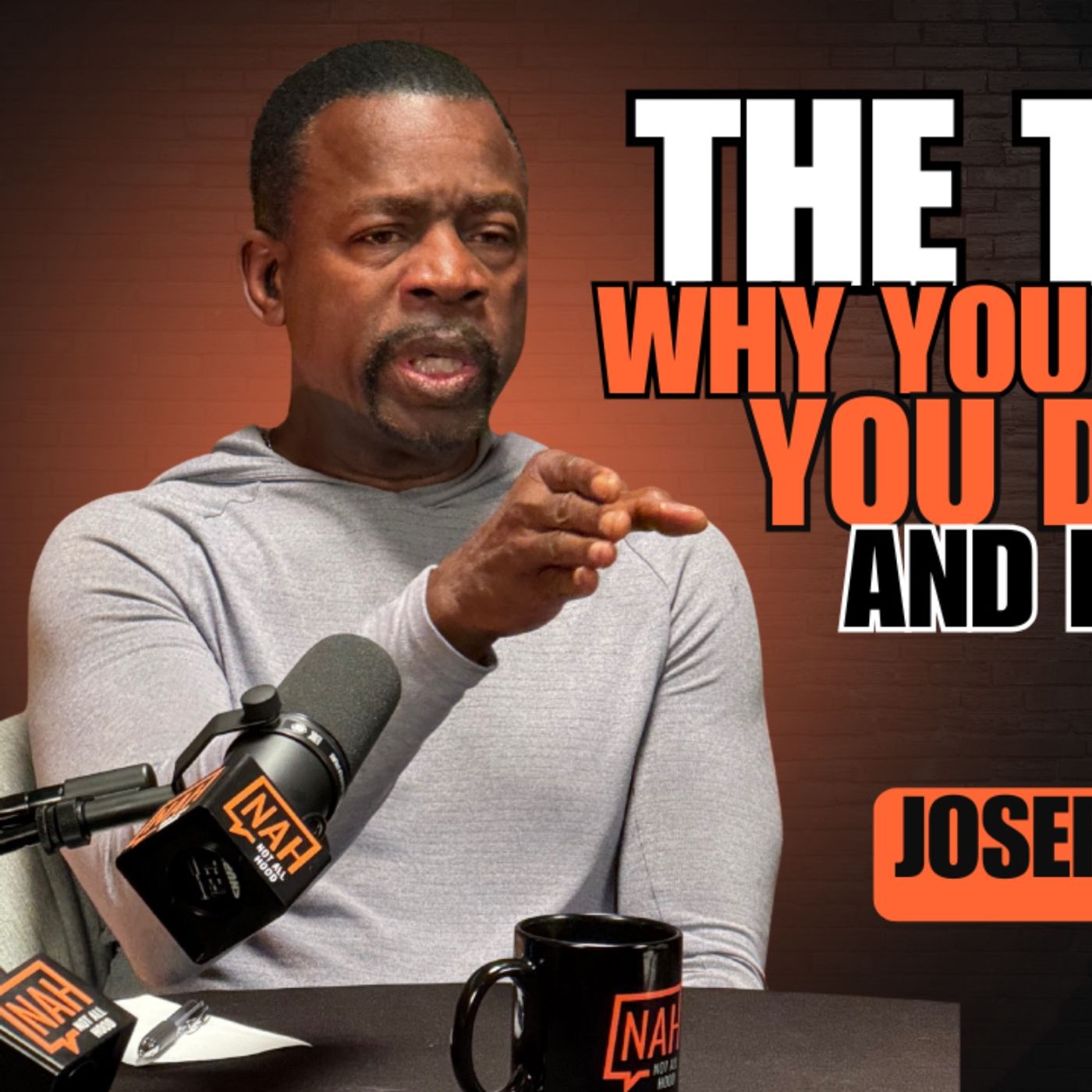
Not All Hood (NAH) with Malcolm-Jamal Warner & Candace Kelley
The Toxic 10:Why You Attract What You Don’t Want (And How to Stop It)- W/Dr. Joseph McClendon
01:29:27
Malcolm-Jamal Warner and Candace Kelley sit down with world-renowned neuropsychologist and New York Times bestselling author Dr. Joseph McClendon III. Together, they unpack the psychology of fear, family trauma, and self-sabotage while exploring Joseph’s groundbreaking method of neuroencoding—a science-based approach to rewiring the brain for success. The trio explores how communication is either a cry for help or an expression of love, why people often attract the very things they don’t want, and how to snap out of fear and stress almost instantly. Dr. McClendon introduces the “Toxic 10”, ten hidden fears like procrastination, hesitation, self-doubt, and imposter syndrome—that quietly steal dreams. Through storytelling, personal breakthroughs, and raw reflection, this episode teaches how to reframe negativity, build options, and transform setbacks into growth. Listeners gain real-world strategies for breaking destructive thought patterns, recognizing toxic influences, building dis...
Loading summary
Transcript560 lines
- [00:00]
Host
Whirlpool what's ickier than a guy who wears shoes with toes? A front load washer without the fresh flow vent system. It's a trio of features that help keep your clothes and washer fresh. Whirlpool Everyday Care Do Crohn's disease symptoms keep coming back. Tremphya Giselcomab May help at 12 weeks. Rapid symptom remission was achieved in most patients taking Tremphya and some experienced visible improvement of their intestinal lining. At 12 weeks and 1 year. Individual results may vary. Tremphya is a prescription medicine used to treat adults with moderately to severely active Crohn's disease. Serious allergic reactions and increased risk of infections and liver problems may occur. Before treatment, your doctor should check you for infections and tb. Tell your doctor if you have an infection, flu like symptoms or if you need a vaccine. Explore what's possible and ask your doctor about Tremphya today. Call 1-800-526-7736 to learn more or visit.
- [00:57]
Joseph McClendon III
Tremphyaradio.Com Communication is about two things. It's either a cry for help or an expression of love. And you can certainly there's subsets, but somebody will come to you and they're fearful. That fear is a cry for help, help me get out of this or or I don't want to be this way. And it's not, not necessarily they're crying that help for help from you, but they're crying out to somebody and it can be something that can have been happening. You know, we were talking earlier about, you know, family trauma. You know, somebody in our family made them feel bad, mother, father, sister, brother, aunt, whatever made them feel bad. And to be freed from that lifelong emotion and that addiction, to keep going back to that. And even though it gets buried inside our unconscious, it becomes who we are. And if somebody is overacting and they're angry and they're frustrated and they're frustrated with you, it's not about you, it's about them.
- [01:49]
Host
Comrades, welcome to Nah, Not All Hood. On more than one occasion, Malcolm mentioned that a Dr. Joseph McClendon helped people retrain their brains to achieve ultimate success. And Malcolm would say, listen, my life is so enriched, I'm so grateful. I want to help others by sharing my journey. So he Learned from this Dr. McLendon and at times he joined this renowned neuropsychologist and New York Times best selling author to help explain to audiences how to break bad habits. And he wasted no time starting with a session with me right in the Studio. Enjoy the conversation.
- [02:31]
Malcolm
So I don't know if. And this really might be working backwards because we haven't talked enough for people to be fully invested in this part of a conversation.
- [02:41]
Joseph McClendon III
Right. So.
- [02:42]
Malcolm
So this could be Patreon.
- [02:45]
Host
Sure, sure.
- [02:46]
Malcolm
But. But, you know, as. As we work together.
- [02:52]
Joseph McClendon III
Right.
- [02:52]
Malcolm
In transformation coaching. I. And as we were talking earlier, I was thinking about. And I guess personal question for you, like, how do you. How you. What's the word? Deal with. For lack of a better word right.
- [03:11]
Joseph McClendon III
Now.
- [03:14]
Malcolm
Being able to help so many people, but then when there are people close to you that you can't help in the same way, like, because I'm kind of either a couple instances myself.
- [03:30]
Joseph McClendon III
I think it first comes down to. For myself recognizing that I'm not the end all and be all. I don't have all the answers. So I got to get my ego out of it. Even though sometimes I know that I can help somebody, I know I have the answers. I'm not always the person to give that. That lesson to, for lack of a better term, I. E. Like, for example, I can say something to my son, for example, closest person in my life. I can say, hey, A, B, C, D. And he can't hear it from me. He won't do it. He'll just ignore it. And then a couple weeks later, he'll go, dad, guess what I just heard? And I'll go, what? And he goes, A, B, C, D. And in that. Right. But the truth of the matter is, had to remove my ego and go, I don't care where it comes from, as long as you got the lesson. So how I deal with it is. I'm kind of. We were saying this before. I'm willing to have that hard conversation if it needs be. And if it's not heard or if it's not taken the way that I want it to be taken, then I remove myself from it and just go, I did my piece. And then if you want my help from it, then we'll come back to that. But have to remove my ego, having to feel like they got to see it my way, and it's got to be done right now. And that allows me to just kind of let it go.
- [04:45]
Malcolm
Okay. Okay, that's good.
- [04:48]
Host
It seems like letting go, in a sense, is part of what you teach people in terms of making sure that they're not stuck. To move from a place and realize that there's more. Because when you're stuck, you're just not going to move anywhere.
- [05:03]
Joseph McClendon III
It is a form of maturity. Lane And I were talking about this earlier. It is a form of maturity, is the quicker you're able to let it go or snap yourself out of that ego, that it's got to be this way or I've got to make this person understand right now, the quicker you're able to let it go. Because oftentimes they need time to percolate, they need time to let it resonate with them and all those things to come around till they finally make a decision. It sometimes it just moves the needle a little bit. If it moves towards what you think is the best thing to do, then that's great. And if it doesn't, then that's their lessons that they've got to learn. The hard part is watching them sometimes self destruct. Yes, that's the hardest part. And then oftentimes when you jump in there while they're self destructing, you can actually help them just self destruct even more. Yeah, yeah.
- [05:51]
Malcolm
So I guess with anything, at least what we experience and also teach is getting to the reframe.
- [06:00]
Joseph McClendon III
Yeah. Quicker, Quicker.
- [06:03]
Malcolm
Right. Not. Not being stuck in this one idea of how it should be or this one feeling of where I am now, it's like, let me recognize it, let me reframe it in less time.
- [06:15]
Joseph McClendon III
And it helps to have a process and a tool belt of different types of reframes, pre framing, reframing and even deframing so that you can come to it in a bunch of different angles with this caveat. What's going to help any of those kinds of conversations is connection with that person. Because oftentimes when, when two people meet and we have said, like, if you want to help somebody and that person has an ego about I need to do it on my own, or like we're talking about families, who are you to tell me you grew up the same way? You know, I don't want to hear it from you. So there's that, that kind of friction. So one of the first things to do is to break down that friction through connection. Let them know that you love them. You let them know that you're coming from a place of love and let them know that I may not be right in what I'm going to be, what I'm saying. And I'm open to your suggestions as well. And that kind of pre frame actually kind of lowers, helps them lower their guard and ourselves as well so that we can have a better conversation to.
- [07:12]
Malcolm
The extent they can lower their guard to the extent.
- [07:14]
Joseph McClendon III
Yeah. Very well put, very well put. Because sometimes, you know, and sometimes it's.
- [07:20]
Malcolm
Even our own refrain, like being able to just like having to step back and let go or even like. I love what you say about people. There are no fearless people. There are people who fear less.
- [07:38]
Host
That makes sense. Yeah, I can see that.
- [07:40]
Joseph McClendon III
Yeah. And to clarify that the fearless doesn't mean quantity, because the fear may still come up. The fear less is the amount of time that you spend in that, that fear mode, if you will. Because when something happens that triggers you to go into fight or flight, you know, your, your sympathetic nervous system, that part of your brain goes, I gotta defend myself. I gotta either get up out of here or I gotta defend myself. And it doesn't allow. And when we're stuck in that, it doesn't allow us to have other options. And so the reframe or the pre frame is to interrupt that pattern of that fear and take them out of that. So people always ask me, they always go, if you could teach your younger self, if you could tell your younger self something that would have changed your life and made your life even better, what would it be? And my answer is always the same. To learn the skill of snapping out of it quicker. That's it. So when frustration, fear, whatever comes up, we're in that sympathetic nervous system, we're stuck there, and then eventually it's going to go away.
- [08:45]
Host
But, you know, sometimes a fear or a situation comes before you and then you're in it. For example, you have someone who might be born into a family, born into poverty. Let's say, for example, mother and father are alcoholics, brother commit suicide, they have to take care of their older parents, and now they all live in a house. I mean, I'm giving extreme circumstances because someone in that situation, it would be very hard to see some light and kind of think about reframing when they may not have a job and the house is about to be foreclosed upon. All of that. How would you explain to someone, oh, well, just not just, but reframe, reclaim, you know, that's very. It seems like that would be a very difficult process.
- [09:29]
Joseph McClendon III
It's. First off, don't try and explain it to them. Because as soon as you try and explain it, especially those types of situations, those are, are. They've got a huge, huge wall that's in front of them saying, there's no way I can get past this and there's no way any of this is good. There's no, there's nothing beyond this that is good. Everything in my life is bad. Yes. No way.
- [09:51]
Malcolm
You can possibly understand exactly what I'm.
- [09:53]
Joseph McClendon III
That's why I said in the very beginning, you got to have that kind of connection with them to be able to help them, help them feel like I have compassion for you. I don't know everything about you. What can you teach me about this? And let them teach you. Let them tell you all of those things, that here's the way things are. Because if you don't, then you're pushing up against them, and you're always going to be pushing because just like you said, you don't understand. And they may not be saying that out loud, but they're definitely thinking that.
- [10:19]
Host
Exactly.
- [10:20]
Joseph McClendon III
And then when you're pushing against somebody, they're going to push back. So instead, don't push. And so we call it align and redirect. So I could say to you, so you're coming to me. You may be coming to me and saying, I got this. I got this going on, going on.
- [10:33]
Host
Right. And I want your help. So then where do we go from there?
- [10:35]
Joseph McClendon III
Well, if it's there and they say, I want your help, and you got. Then they're open to it. Yeah. Yeah. Even though they say it, and so they're open to it a little bit. So I would reiterate. Do you really want my help? Do you really want my help? So I want to say, first off, I understand how you feel. I may not, you know, I can't fathom exactly how it is in your life, and I feel for you, and I appreciate that you're sharing that with me. And, you know, I'm going to do my best to share with you some things that maybe I can help. But if I. If I oppose you, please understand, it comes from a place of love, that kind of thing. And then that conversation right there helps the person kind of recognize, wait a minute. Let me let my guard down. Because I can trust this person, that they have my best interest. And the concept is feel, felt, found. I understand how you feel. A lot of people felt that way, and you must have felt this way before. And here's what we found is that then you can present what it is. What we found is that there is a way. We found that even as bad as things are, there is light on the other side. As bad as things are, there is a way to get to optimism. And optimism doesn't just mean every cloud is a silver lining and every glass is half full. Optimism means what the word says optically. You see more options, and you have infinitely more options than you have the trap that you're in and the world that you're in inside your mind.
- [11:58]
Host
I love the options.
- [11:59]
Joseph McClendon III
Yeah.
- [12:00]
Host
Love the options.
- [12:01]
Malcolm
I kind of liken it to the phrase seek to understand before seeking to be understood.
- [12:08]
Joseph McClendon III
Beautiful.
- [12:08]
Malcolm
Right? Because you're always talking. We always, like. I want you to understand what I'm talking about.
- [12:12]
Host
Right.
- [12:13]
Malcolm
Coming from my point, my perspective. But if I'm so busy trying to get you to understand without me first understanding your frame of reference, that you're.
- [12:22]
Host
Never going to meet.
- [12:23]
Joseph McClendon III
Yeah, yeah.
- [12:24]
Malcolm
So I always encourage people, like, figure out the. The lens or the filter through which they're seeing it, because then it gives you.
- [12:34]
Joseph McClendon III
You.
- [12:34]
Malcolm
You can find the entryway, you know, so it's not just a battle of, you know, you need to understand where I'm coming from. You know, let me see where you're coming from. And then I can. That way, once I understand where you're coming from, then I can figure out how to express myself, how to. How to get my point across in a way that's going to be productive.
- [12:55]
Joseph McClendon III
And not combat, which again.
- [12:57]
Host
Yeah.
- [12:57]
Joseph McClendon III
I always like to look at it, like, just to add to what you're saying. Let me understand where you're coming from. And then together we can. A, B, C, D. Because then they feel they're a part of the solution as well. I was saying this to you earlier, and you and I have talked about this before as well. If I tell you something, then you might believe me.
- [13:14]
Host
Yes.
- [13:14]
Joseph McClendon III
But if you tell you something, then you will believe me. So if I can help you get to the place where. Because people step in front of me all the time and they say, I have this problem. I need your help with this. Well, even though I might know the answer, and oftentimes I do, I know what they really want. If I ask them, what do you want? And they say, I don't want to be fat anymore. I don't want to be miserable anymore. I don't want. I know that they're looking at what they don't want. That's why they have what they want. But if I just say straight up, listen, here's the problem, here's a situation, here's what you need to do. They've got. Just like with the family situation you were just talking about there, they've got those years and years of references that are true, and that's what's going to cloud their judgment. But if I say, you tell me, what would you do? What would you tell me? And let them at least go in and say, well, I would do this, this and this, and then I can add to it. I'd say that's great. And what about this and what about that? Because now they're participating in their own rescue.
- [14:04]
Host
Right.
- [14:05]
Joseph McClendon III
Versus me just telling them what to do. And if I just tell them, then they're going to keep on pushing.
- [14:09]
Malcolm
Can you expound upon, I think you said something really important that a lot of people don't necessarily get when people talk about, when they focus on what they don't want. And that's why they end up with the very thing they don't want.
- [14:23]
Joseph McClendon III
Yeah. It's not only a psychological phenomenon, it's a physical or I say a psychophysical phenomenon. And I use the. The. You've heard this ad nauseam before. I grew up in a town called Lancaster, California. You know where that is? Yeah. And it's out there where they used to land the old space shuttle. So it's flat desert for 50, 60 miles once you get out of side of town. And you would drive on these straight roads and there was nothing except for telephone poles on either side of them.
- [14:52]
Host
Oh, okay.
- [14:52]
Joseph McClendon III
And. And people would. And I was. I was probably in my teens when I first noticed this. Like three or four times a year, it'd be on the news, it'd be in the newspaper that somebody be driving out there and they'd run off the road and they'd run into telephone poles. And I couldn't figure it out. Telephone pole is only this wide and they're 30 yards in between each other.
- [15:10]
Host
Right.
- [15:11]
Joseph McClendon III
And if they lived, the people. The people always said the same thing. Last thing I saw was a telephone pole. And then. And I couldn't figure it out. And they did aerial photographs, and they did the aerial photographs of 90% of the skid marks that went off the road went right into the telephone pole. And I remember asking my father, why, if you had 30 yards to miss something that was going to wreck your day, why do they hit the pole? And he didn't know. And later on, as I started studying psychology, it is wherever you look is where you're going to go. And so if they're looking at the pole, even though they don't want to do that, even if their brain is going, don't hit the pole, don't hit the pole, don't hit the pole. It's going, pole, pole, pole. And they drive right into it. And so it's psychological, meaning that's what they're thinking in that moment. The pictures they're making, the images they're making and what they're literally seeing, but it's also physical because, like, for example, if I have you imagine licking a lemon or biting a lemon, your mouth will water because your brain and body cannot tell the difference between what's real and what's not when you vividly imagine it or even see it. And so that image makes them feel that way, and they physically go into it, so their brain makes them do that. So when somebody tells me, I don't want this, I don't want to be broke anymore, I don't want to be overweight, I don't want to be miserable anymore, they're looking at the telephone pole.
- [16:33]
Host
And their body is connecting to those thoughts and all. As opposed to the opposite.
- [16:37]
Joseph McClendon III
Yeah. What. It's the cortisol and the epinephrine, all the drugs, all the chemicals that our bodies produce that keep us in that fight or flight that's coursing through their body. And it's hard. Well, it's not hard, but for most people, they don't know the process of being able to snap out of it, to get that. To switch it so that now you have endorphin, dopamine, and oxytocin going through your system, whereas before you had all those things that were stress.
- [17:02]
Host
That makes sense.
- [17:04]
Malcolm
I think that's the key part that a lot of people don't get to. Right. Like, because we. Everything works on energy, and we continue to attract those things that we don't want. We don't want to be around negative people, but we tend to have negative people in our midst.
- [17:24]
Joseph McClendon III
Yeah.
- [17:25]
Malcolm
All the time. Because we're focusing on. On that. On that.
- [17:28]
Joseph McClendon III
Things.
- [17:28]
Malcolm
Like, I remember when we first started, when I got my first Harley.
- [17:32]
Joseph McClendon III
Yeah. Right.
- [17:33]
Malcolm
And you know, when you're. When you're on the bike, it's really the same thing. If you see a pothole and you're. You don't want to run into the pothole, but you're looking at the pothole.
- [17:45]
Joseph McClendon III
So you go to the pothole and like.
- [17:47]
Malcolm
Like your bite, your handlebars literally go.
- [17:49]
Joseph McClendon III
Wherever you're left where you're looking.
- [17:51]
Host
Yeah.
- [17:52]
Malcolm
Like, trying to make sure.
- [17:53]
Joseph McClendon III
Trying to turn.
- [17:54]
Malcolm
That was the best.
- [17:55]
Joseph McClendon III
Yes. It's like you cannot, you know, look at the handlebars and turn like that. You got to look where you want to go. You got to look at that space and look over here, and the body would do. I had an interesting. Just real quick, I had an interesting experience. I went. Did something called air combat school, where you actually got to get in the you had a pilot next to you, but you got to fly the airplane. And what they taught you was these airplanes fly so fast that if you try and fly it with your hand, if you do the. If you. If you turn the stick that much, the plane will flip over. If you go like that, it'll dive into the ground. You go like that. So you can't do it like that. They go. You look where you want to go. But I didn't. And I teach this stuff. But when I got in the airplane, I didn't remember any of that stuff because as soon as those wheels folded up and he goes, the plane is yours. I grabbed that stick, like, and I was trying to fly, and it was all over the place. And I was getting. I was feeling like I was going to throw up because it was up and down. And then he said, look where you want to go. Remember your lesson. And it was interesting because to look where you want to go when you're flying an airplane, you just look at the horizon. If you want to fly the plane level. If you want to go up, you look up. You want to look down, you go left or right. And so. But I got in the airplane and the airplane is going like this because I'm looking up. I know I don't want to go down, so I'm not going to look down. So I'm looking up. But then there's a problem in that, because if the plane goes this too much, it'll stall out. So then I know I don't want to do that, and I bring it down like that, and I'm going up and down, up. And like, I'm getting sick. So he goes, look at the horizon. But I realized something that I didn't realize when I got in the plane. I was too short to see over the dash. I couldn't see the horizon.
- [19:28]
Host
Well, that's a problem.
- [19:30]
Joseph McClendon III
But he. What he did was he grabbed my helmet and goes, just imagine it. And it. Because you don't have to see it. Your brain can't tell a difference. And I did imagine it, and I leveled it. And not only did I level it out, but I calmed down, and then I could fly the plane. It wasn't. I was too short. It was just the airplane was, you know, Right. But that lesson was. It exemplified what I. What I like to teach. And that is in life. You know, this is, you know, in response to the question that you're asking where people say, I don't want this in life, that's one in neuroencoding. That's the very first question they ask them, what do you want? Because that person tells me what they don't want, then I'll keep asking the question, what do you want? What do you want? Till they finally get to the place where I just want to be happy.
- [20:13]
Host
And. And you said the word neuroencoding, which is really what we're talking about in terms of training your body to do something different. So it has an ultimately different reaction.
- [20:21]
Joseph McClendon III
Yeah. To train your body to automatically.
- [20:23]
Host
Automatically, yeah. So we're talking about. So a lot of people have a religious preset.
- [20:28]
Joseph McClendon III
Sure.
- [20:28]
Host
And I'm wondering, where does that fit in? Because, you know, you meet someone and they say, how you do. I'm blessed. Well, you know, well, that's. That's kind of a. A way to tell your body, I'm blessed. I'm blessed, I'm blessed. I'm good. I'm blessed. And highly favored. Yes, I am. So at that point, you are talking to your. Your body, and things are happening scientifically, I would imagine. So where does that fit into what you are explaining?
- [20:52]
Joseph McClendon III
Because what I'm explaining is that everybody wants something different. When somebody says they're blessed, in that moment, they are. And if I dig deeper and I say, is there anything in your life that you would want to change, that you would want better? That is when you open the door, because then they start to go. Then they got to go deep, and they got to go real. And it always comes these three things. We call it being wealthy. Wealthy means to be healthy, happy, and financially abundant. Now, all of the subsets of all of those things. But as Malcolm and I, we. We have a. A, A course, if you will, that we teach monthly, and it's called make it Matter. And the things that matter are those things that you want. Healthy, happy, financially abundant. And all of the subsets, what do you want? And if you're not. See, we all are on some level healthy because we're on this side of the dirt. We all are, in some. Some level, happy because we can at some point, even if we're distracted by watching television or watching, you know, scrolling our phones or looking at our kids, we can access that happiness. So we've got some level of that. And in most cases, we are on some level financially abundant because we're eating every day, you know, and that costs money. So if you can get people to make that shift into recognizing, okay, I want something else, then the next question is, what. What stops you from having it? And there's only 10 things. And those 10 things are the toxic 10. And they. And I like to do this. Anybody that's listening or watching this. Yes.
- [22:20]
Host
All right.
- [22:21]
Joseph McClendon III
You already know this, but I'll do it with you.
- [22:23]
Host
Okay.
- [22:23]
Joseph McClendon III
Okay. And then this is what come across. And it's just real. Okay. It's just real. I'm going to tell you what these 10 things are. I call them the toxic 10. And they are the thieves of our dreams.
- [22:31]
Host
Do I need my pen?
- [22:32]
Joseph McClendon III
And pen?
- [22:33]
Host
Okay. All right, all right.
- [22:34]
Joseph McClendon III
You just need your hand.
- [22:35]
Host
Just need my hand. All right. All right. I'm a prepare. All right.
- [22:38]
Joseph McClendon III
So when I go through them, and you guys back there as well, we're seeing the. The guys that are running the av. When I go through these, when I get to one that either is currently hindering your life, slowing you down or stopping you, or has in the past and the result of it is still evident today, raise your hand.
- [22:58]
Host
Well, let me just put my hand up. That's everybody. Okay, here we go. Here we go.
- [23:03]
Joseph McClendon III
By the way, this is the process that we have with people, because like you said, you know, we want to get real. We want to get people to go.
- [23:09]
Host
And I'm not allowed to justify. Explain.
- [23:11]
Joseph McClendon III
It's justification, because the justification doesn't make them. The justification keeps you in the toxic tent. Here they go. Procrastination, hesitation, fear of failure, fear of success, self doubt, self loathing, imposter syndrome, stress, overwhelm, and fear of rejection. So you raised your hand on four of them. Did I?
- [23:32]
Host
Okay.
- [23:33]
Joseph McClendon III
Yeah. There's six you missed. Yeah, six you missed. And here's what I'm going to say. First off, you know, if you'll allow me to compliment you on this, you are just. And don't ask me how I know.
- [23:44]
Host
Okay?
- [23:45]
Joseph McClendon III
But you are advanced in those in the area of being able to, like. Like you said when I said imposter syndrome, you didn't raise your hand because you've got a great belief in yourself. Okay? And that gets evident. Okay. But the other ones, that's there. They actually have an effect on everything in your life.
- [24:05]
Host
They do. I know that. Okay. All right.
- [24:07]
Joseph McClendon III
The one you didn't raise your hand on, that I'm going to challenge you on.
- [24:10]
Host
Here we go.
- [24:11]
Joseph McClendon III
The last.
- [24:11]
Host
Now, I already gave my answer.
- [24:13]
Joseph McClendon III
Yeah, I know. But I'm just going to challenge you, okay? If this works for you, that's great. And if I'm wrong, I got no ego about it. I could.
- [24:19]
Host
Okay. And no one's helping me back there, y'. All Know me. Y' all can't. Okay.
- [24:22]
Joseph McClendon III
But.
- [24:22]
Host
Okay, come on.
- [24:23]
Joseph McClendon III
We're still settling in County.
- [24:24]
Host
I know.
- [24:26]
Joseph McClendon III
I can't see him, but I didn't hear. I didn't see any ends go up. We only have a couple of these. Because I. Listen, I've been doing this work on myself for the lab. There you go. And that's the difference.
- [24:36]
Malcolm
And I'm eating here, going, yeah, I.
- [24:38]
Joseph McClendon III
Look at everybody else every day, and.
- [24:44]
Host
There goes my memory, because. What was the last one?
- [24:46]
Joseph McClendon III
Fear of rejection.
- [24:47]
Host
Fear of rejection.
- [24:51]
Joseph McClendon III
Now, okay, so let me ask you a question. You look very, very nice today. Why did you dress yourself up?
- [24:57]
Host
Um, you. Why did I dress myself up? Because we're having a guest today.
- [25:03]
Joseph McClendon III
And what does that mean?
- [25:05]
Host
That means that I thought, I don't want to put on my sweatshirt for this guest.
- [25:11]
Joseph McClendon III
Why?
- [25:12]
Host
Because we were having a. It was like having company in the house.
- [25:15]
Joseph McClendon III
What would happen if that company looked.
- [25:17]
Host
At you and went, you know, and the company isn't, you know, someone who. I knew you weren't going to, you know, be dressed in a sweatsuit. So I was like, well, you know. Oh, yeah, you did shock me, but that's another story. No, I'm like. I was like, what? I could have worn my sweatsuit. But yeah, you know what? You know what? Yeah. Don't you dare. And don't you explain anything to him.
- [25:40]
Joseph McClendon III
See, he's.
- [25:40]
Host
He's got. That was.
- [25:44]
Joseph McClendon III
That was wrong.
- [25:45]
Host
If we had a commercial break, the.
- [25:47]
Joseph McClendon III
Reason why we got dressed was because. What, because you're having a guest?
- [25:53]
Host
Yes.
- [25:53]
Joseph McClendon III
And if that. What did you want that guest to believe about you?
- [25:57]
Host
About me? Well, I think about the show in its entirety, that we were a put together outfit. No pun intended.
- [26:06]
Malcolm
It's a fleet.
- [26:06]
Joseph McClendon III
And if I didn't, what would that mean?
- [26:10]
Host
Absolutely nothing to me.
- [26:11]
Joseph McClendon III
Nothing at all.
- [26:12]
Host
No. Not since COVID Not since. And let me tell you why. Because Covid was a. You know, someone has told me you mentioned Covid all the time. That's because Covid was a transformative experience for me. And time. And that time I realized really what mattered and what didn't. And there was a lot of stuff that didn't matter that I was worrying about that I was able to let go of. Cause I had so much time to be with myself and come up with some answers. So honestly, it was really, really just since COVID Right. And then after my father passed, I didn't.
- [26:45]
Malcolm
Yeah, yeah.
- [26:45]
Host
I didn't give a. I. I really. Less. A whole lot less.
- [26:50]
Joseph McClendon III
So here's what's really great about you, you've got a very, very strong sense of who you are, and that's really great. And fear of rejection doesn't just mean fear of rejection from me and Malcolm and Lane and everybody else here. Guess who else is in the mix?
- [27:03]
Host
Me.
- [27:03]
Joseph McClendon III
Yes.
- [27:03]
Host
Yeah.
- [27:04]
Joseph McClendon III
Okay, now reconsider what you talked of, what you just said there.
- [27:08]
Host
Okay. Fear of rejecting myself, because you did.
- [27:10]
Joseph McClendon III
Raise your hand on one other thing.
- [27:13]
Host
Stress, which I try to minimize. Like, I don't rush. I'm just late.
- [27:18]
Joseph McClendon III
You are advanced.
- [27:19]
Host
You know what I'm saying? I do not. I'm just late.
- [27:21]
Joseph McClendon III
I know, I know. You said at the beginning of this, no justification. Right.
- [27:25]
Host
Okay. Yeah. I'm sorry.
- [27:26]
Joseph McClendon III
No justification on the good stuff either.
- [27:28]
Malcolm
Okay, good.
- [27:28]
Joseph McClendon III
Okay. So on the stress, do you know what you raised your hand on the other. Tell me what you believed. You raised your hand on the others.
- [27:34]
Host
That's just a memory thing. I can't remember.
- [27:36]
Joseph McClendon III
Okay.
- [27:37]
Host
Yeah.
- [27:38]
Joseph McClendon III
So I'll go through them again.
- [27:39]
Host
Okay.
- [27:40]
Joseph McClendon III
See, we go. So procrastination, hesitation, fear of failure, fear of success, self doubt. So.
- [27:48]
Host
And I can't remember. And I'm like any of them now.
- [27:51]
Joseph McClendon III
You want to know?
- [27:52]
Host
Because I can't re up. I can't even. Here's the reason why, because that's. Did this session just work? Did I miss something that was good? How much do I owe you, sir?
- [28:01]
Joseph McClendon III
You owe me this. You are paying me right now in having this conversation with you.
- [28:06]
Host
Oh, gosh. Oh, gosh. Yes.
- [28:08]
Joseph McClendon III
The second time around, you're not raising your hand on any of them.
- [28:11]
Host
Yeah, I'm not.
- [28:12]
Joseph McClendon III
Yeah. And. And you. Because you. Because your. Your brain goes. And a lot of people like this. Your brain is going, I'm good. You know, and I'm a good person. I'm successful and all of those things. And here's the rub. When this is over and you're driving away from here, you're going to think about this and you're going to go, no. Well, maybe this is just. There's one of these things. There's that there.
- [28:32]
Host
Yeah.
- [28:33]
Joseph McClendon III
If I'm real with. See right now.
- [28:35]
Host
Yeah.
- [28:36]
Joseph McClendon III
Take this the right way.
- [28:37]
Host
Yeah.
- [28:38]
Joseph McClendon III
You're not being as real with us as you will be with yourself.
- [28:42]
Host
True. No, that's true.
- [28:43]
Joseph McClendon III
And that's the thing. Guess what that is.
- [28:47]
Host
Fear of rejection and self doubt. Look, the 10 things. Now, I told you at the beginning. I said it'd probably be all those 10. Oh, no justification. It is okay.
- [28:54]
Joseph McClendon III
With all of us. With all of us. It is the 10. It's just how much of each one. Like I said, you're a very self aware person.
- [29:00]
Host
Yeah.
- [29:00]
Joseph McClendon III
And at this table right now, what's really great is I'm with some stellar human beings here in behind there as well. And I mean that. I'm not saying that because I, I have the privilege, if you will. I do consider it a privilege of being in the midst of a lot of different types of people.
- [29:14]
Host
Yeah.
- [29:15]
Joseph McClendon III
You know, from the sublime to the ridiculous, from the, from the poorest of the poor to the richest of the rich, from the scaredest of the scared to the most courageous of the courageous and everything in between. So I get to see all different kinds. And I do know this, that when the doors close and we're by ourselves, we have a different conversation oftentimes than we do well in public.
- [29:33]
Malcolm
And here's an important thing. How many of those toxic 10 do you still deal with? All of them.
- [29:41]
Joseph McClendon III
And that's not my ego saying it, it's all of them. It's because I know it and I recognize it. And I can tell you stories of just recently things coming up. I'll tell you one real quick. But the difference is in what you just said before, the toxic 10, those are all fears. All of them. And fear is not designed to. Or we're not, we're not after trying to get rid of fear in our lives. If you get rid of fear, you'll be dead in a week. Because fear is designed to warn you. It's a warning signal. Fear isn't, isn't what we call an action signal to make you pay attention and then make a choice on what to do. It can be, excuse me, a conscious choice or it can be an unconscious choice. Either way it's going to be a choice of what to do. So when those things show up in my life now I have because I've neuro encoded myself. I always say this, you've heard me say this a bunch of times. I don't teach theory and that is I practice what I preach and I teach it to other people as well. So I've conditioned myself to default to snapping out of that fear into something else.
- [30:42]
Malcolm
So, so you spend less time.
- [30:44]
Joseph McClendon III
That's the, that's the rub. It's like, yeah, I spend less time in it. And I'll give you an example. Just being straight up with you. I just, I just bought my dream house in, in Laguna Niguel. I love it. And my house, ocean view, it's like everything I dreamt of. I love the House. And my house is the small, one of the smallest houses in this gated community. My neighbor across the street, his house is about 7,500 square feet. His pool house is about 5,000 square feet. His three cargo and all these other beautiful houses around. Well, I bought the house and as you know, I was traveling a lot for the last six months and I hadn't stayed there a lot. And I decided one day I'm going to walk the dog and I'm going to go to all of the other houses around and these are mansions and I'm walking around now. My house is beautiful. I love my house. And I'm walking around and I'm looking at all these houses and I remember thinking, my house sucks. And in that moment, that is me. You know, all of those fears, that's some of the toxic tin coming back. That's my imposter syndrome. That's my sure fear of rejection. Because what would they think of the. He's the guy with a little house on the block, you know, and, and it hit me and I remember feeling that moment. But then what automatically came over me was I defaulted to, isn't that I caught, Isn't that funny that I caught myself. I'm the great Joseph McLendon III who teaches all this stuff, and I caught myself. So I defaulted to laughter. And then it allowed me to go to my options which were realize that I don't need it, nor do I want a big house like that.
- [32:17]
Host
Right.
- [32:18]
Joseph McClendon III
You know, and all those options that I came to, that made me feel better. But that, that's, that's one way it came up.
- [32:24]
Host
Okay, but in looking at this, let's say that, so what does that translate into? Let's say that you did feel a little bit of self, you know, imposter syndrome, and then you got off it quickly. I guess my question is, so what if you stayed in that a little bit? Ultimately that means what, what, what if you stayed in six of those things longer than need, than you needed? And I want to know when you're talking about a turnaround of how quick to move from stress or self doubt, how quickly are you talking about?
- [32:55]
Joseph McClendon III
It can, it's almost instantaneous.
- [32:58]
Host
Okay.
- [32:58]
Joseph McClendon III
Depending on how deeply you got into the trigger.
- [33:02]
Host
Okay.
- [33:02]
Joseph McClendon III
In other words, when, when I saw somebody that had something bigger and better than what I had, it made me feel like. It made me feel less in that moment for whatever reason, for all, you know, my upbringing, the, you know, childhood traumas and all those things, it brought back some of that and so had I have stayed in it longer, I just would have been miserable longer.
- [33:23]
Host
Right, right.
- [33:23]
Joseph McClendon III
That's it. That's it. And. Well, I shouldn't say that's it. I may have done something. I could have done something different, you know, if I was. If I drank alcohol, I may have gone home to ease that pain, to get out of that. Drank alcohol or smoked weed. If I did that, that kind of thing, or felt bad for myself for longer than I needed to be, there's no staying in that state. And that emotion. There's no benefit in that. None of it. The benefit is in snapping out of it and going to something else. I forgot your second question. The first question is had I've stayed in it longer and what does that ultimately mean? What it ultimately means is the quicker we get out of it and we put ourselves in an optimistic stamp and the quicker we get to find a way of justifying our feeling good and justifying what we have done and all those things. But I think more than ever, it gives you the opportunity to now have that as a reference. I snapped out of that and now I can do it even sooner.
- [34:23]
Host
Right.
- [34:24]
Malcolm
Recognizing that really the big picture of what we're talking about is these toxic 10 getting in the way or sabotaging something.
- [34:32]
Host
Ultimately. Yeah, but that you do that.
- [34:34]
Malcolm
Exactly. If we're talking about we want. We want to be healthy, we want to be wealthy, we want to be financially abundant. If we're stuck in any of those toxic tin for too long.
- [34:44]
Host
Right.
- [34:46]
Malcolm
Inhabits.
- [34:47]
Host
Yeah.
- [34:48]
Malcolm
Getting to those and whatever, whatever our path is to getting those three things, we can. They can slow our process. If I'm so stuck in one of these toxic tendencies, fear based. The things that bring me negative energy and bring me down. Well, that's taken away from my happiness.
- [35:08]
Host
Yeah, yeah, perfect.
- [35:10]
Malcolm
It's taken away from my physical.
- [35:13]
Host
Right.
- [35:14]
Malcolm
Whether I can see it, see the connection immediately or not. Those are the things that drain us from our light, from our strength, from our confidence, and also our clarity.
- [35:26]
Host
Yeah, yeah, absolutely.
- [35:27]
Malcolm
Because at the end of the day, it's the clarity that we. That we want and that we need.
- [35:34]
Host
In order to move on.
- [35:35]
Joseph McClendon III
Yeah.
- [35:35]
Host
Or else things are literally foggy. Like you can't see.
- [35:38]
Malcolm
Yeah, yeah. The moving on is just.
- [35:40]
Joseph McClendon III
You're just.
- [35:41]
Malcolm
You're moving, not necessarily moving on.
- [35:43]
Host
Right, right, right, right.
- [35:44]
Joseph McClendon III
Well put. Cause you could be moving in the wrongs.
- [35:47]
Host
Yeah, yeah. Your 10 things do make sense. I will say there were rapid fire and that's why I'm trying to think, okay, what you Know what? What was that all about? Like, okay, then I kept it down. And so I wrote a few things and I said, okay, I know it's going to eventually get to this. Like, what? And one of the things I had on here was have options. Like, that's how I've all went to get out of those particular modes that you're talking about. And I think that that's. That's the biggest one for me. But I was raised that way with those exact words, always make sure you have options. So it was a seed. So I was just blessed to have that in my life. But, you know, it is also one of those things that, yeah, you can find yourself being in that place, especially things that you haven't experienced before.
- [36:30]
Joseph McClendon III
You haven't experienced it maybe in real time, but maybe you've experienced it in your mind and maybe even another way, something that was similar to it. Oh, definitely heard the same thing.
- [36:40]
Host
Yeah. In fact, the anticipatory grief that I had before my father died, it was almost as overwhelming as when he did. But I did that to myself. I don't know why was I thinking he was sitting there in the living room. Why am I having this grief? I mean, he was sick, but it was so much. It was overwhelming, and I was just wasting time causing myself.
- [37:01]
Joseph McClendon III
You know that now. And when you were in. And that's why I say, people always say, well, had I. It's in this situation, if you had to do it again, would you spend that kind of time in that anticipatory grief?
- [37:12]
Host
No.
- [37:12]
Joseph McClendon III
No, because you know better. But while you're in it, it's just like, okay, I'm in it. And now going forward, if that situation happened again, heaven forbid, happen again.
- [37:20]
Host
Yeah.
- [37:21]
Joseph McClendon III
Somebody else in your life now, you know.
- [37:22]
Host
Yeah, that's true.
- [37:23]
Joseph McClendon III
You would go, wait a minute, let me snap out of it. And that's the equivalent of or similar to the question that you asked me about when I felt that way about the house, I snapped out of it. Well, the next time I'm walking around, I see these houses and that trigger may start to come up, and I'll go, oh, okay, I'm catching me doing it again.
- [37:40]
Host
Right. And you're not in it.
- [37:42]
Joseph McClendon III
I'm not in it at all. But more specifically, I catch. I'm triggered to catch myself. See, yours was done without, even though I would label it neuroencoding. You didn't know it, that you. Now, you learned from that lesson.
- [37:55]
Host
Yeah, I did.
- [37:55]
Joseph McClendon III
You've programmed yourself to. When that feeling comes up again. Now you go, oh, well, wait a minute. There's that feeling again. And now I have a choice. I can do something else.
- [38:05]
Malcolm
I think going back to what you said, the great example of the aerial simulation. Right. Because I love the idea of look where you want to go, but in your case, you couldn't see it, so.
- [38:19]
Joseph McClendon III
You had to imagine, Imagine it.
- [38:20]
Malcolm
And I think a lot of times we get, you know, we can get caught up in not being able to see it, but part of the tools is you can imagine it.
- [38:29]
Joseph McClendon III
Right.
- [38:29]
Malcolm
So if, if, if at this point, I can't necessarily see a way out.
- [38:34]
Host
Yes.
- [38:35]
Malcolm
I can't necessarily see it. Well, I can see it in my mind.
- [38:37]
Host
Yeah, yeah.
- [38:38]
Malcolm
Right. There's a, there's I, I, I can visualize options. Like the whole concept of visualization, like it makes complete sense.
- [38:47]
Joseph McClendon III
Yeah.
- [38:48]
Malcolm
Even if you can't see it physically, if you can see it in your mind, if you can visualize it, you can get there.
- [38:54]
Host
So I understand at one point you were homeless, am I correct? So with all of these tools that you hadn't have been developing. I know these weren't developed at that.
- [39:02]
Joseph McClendon III
Time, no matter what, it took years.
- [39:04]
Host
Yeah. So. But during that time, what was going through your mind that kept you where you were before? I understand you got a book from someone and they helped you, but during that time, what do you think, what scientifically and neurologically was happening to you when you were in that space?
- [39:23]
Joseph McClendon III
Let me dovetail on something he said, okay, and then I'll come to that. So remember the question, okay?
- [39:28]
Host
Oh, remember that. I will.
- [39:30]
Joseph McClendon III
You, you hit on something that I wanted to really make sure that everybody gets. And that is the process, because that's one of the things what we teach is there's a process to be able to arrest that feeling that comes up, arrest those things and, and change yourself. Those toxic 10. That's the first part of what we're doing. We're going through each and every one of them, and not only are we going to talk about and explain what it is, each one of those, but we also give a tool for you to use for that entire month so that you start to mitigate that procrastination so that you do something about it. And to your point, it is not just knowing it. It's not just because we can, you know, talk stuff all day long and people will go, yeah, I understand it. I get that when I say this. People that want to lose weight don't lose weight, not because they don't know how to Lose weight. So putting so much food in this hole and move your body and you'll lose weight. That's it. It's physics. But they don't do what they know because of all those other things that are coming along. So what we do and make it matter, the things that matter are what you can do about the things that stop you and what you. So to mitigate the things that stop you and to enhance the things that help you go forward. Your question was.
- [40:44]
Host
Question is.
- [40:47]
Malcolm
Just want to add to that that the all of those toxic 10 also have a complete opposite.
- [40:53]
Joseph McClendon III
Yeah, exactly.
- [40:54]
Host
I see.
- [40:54]
Joseph McClendon III
Right.
- [40:55]
Malcolm
So procrastination is action.
- [40:57]
Joseph McClendon III
Right, Right.
- [40:57]
Malcolm
So for each of those, there's there, there is a. A complete. A 180 degree reframe.
- [41:04]
Host
So for the stress it would be Tommy.
- [41:10]
Joseph McClendon III
Exactly.
- [41:10]
Host
An action.
- [41:11]
Joseph McClendon III
Oh, no. Most of us don't know because most of us go, we know the stress, what stress is. But what is the antithesis of stress?
- [41:18]
Host
Well, what I do is I try to remove the stress altogether.
- [41:21]
Joseph McClendon III
No, no, I'm asking.
- [41:22]
Host
Yes.
- [41:22]
Joseph McClendon III
What is the. If you were to have one word or one phrase, what is the opposite of stress?
- [41:27]
Host
Joy.
- [41:27]
Joseph McClendon III
Joy. So for you, now you got it right. Because I just took you through a process. I just. And I didn't say what it was.
- [41:35]
Host
Right.
- [41:35]
Joseph McClendon III
I said it was joy. As you said, you said joy. And when you did, I'm watching your physiology, you went, joy, can't do it. Right now was when I asked you before, you just said stress. And then I do this, I do that. But when this is a part of helping people figure out exactly what it is that they want.
- [41:50]
Host
But I actually. But me, the joy comes when I remove that stressor.
- [41:54]
Joseph McClendon III
Then comes. Now you're justifying it.
- [41:58]
Host
No, I'm telling you my process.
- [41:59]
Joseph McClendon III
I didn't ask the process.
- [42:00]
Host
Oh, okay, okay.
- [42:04]
Malcolm
The moving over moving is the process.
- [42:06]
Joseph McClendon III
To get to this.
- [42:09]
Malcolm
One of the reasons why what we do is make it matter is not just a one size fits all. Because the opposite of stress for you is joy. Opposite of stress for Lane or Troy could be something else.
- [42:22]
Host
Right. That's true.
- [42:23]
Malcolm
So, so, so those.
- [42:25]
Host
It might be solitude.
- [42:26]
Joseph McClendon III
Yeah.
- [42:26]
Host
Or something. Right. It could be anything.
- [42:28]
Malcolm
They're individual.
- [42:29]
Host
Yeah.
- [42:30]
Joseph McClendon III
You have a process, which. I would never say that that's a bad process. Would you be interested in a quicker process?
- [42:38]
Host
Sure.
- [42:42]
Joseph McClendon III
Because there's a part of you that doesn't want to let go of that. But watch this.
- [42:44]
Host
Yeah.
- [42:45]
Joseph McClendon III
How do you experience joy right now? If I was to say experience joy.
- [42:48]
Host
Right now, be with people who I.
- [42:49]
Joseph McClendon III
Love and continue with no people around.
- [42:52]
Host
I'd be by myself.
- [42:53]
Joseph McClendon III
How would you experience joy right now?
- [42:57]
Host
Singing aloud.
- [42:57]
Joseph McClendon III
Okay, so great. So watch this. I'm going to teach you one, and you're going to go as soon as I do it, and you won't be able to argue with it. That's just because I'm bad at what I do. Okay.
- [43:05]
Host
Okay.
- [43:06]
Joseph McClendon III
So watch this. Here's how to. To. To how to feel joy right now. And this. You asked scientifically. Okay, watch this. It's very complicated. Watch.
- [43:16]
Host
Right. That's true. Yes. Yes.
- [43:20]
Joseph McClendon III
You know why? Here, scientifically, when we smile.
- [43:22]
Host
Yeah.
- [43:23]
Joseph McClendon III
It forces our brain to tell our body to release dopamine, oxytocin and endorphins in our system. Your body gets flooded with that. You cannot feel bad with a smile on your face. You can't do it.
- [43:35]
Host
Yeah, that's correct.
- [43:36]
Joseph McClendon III
So whatever your method is, start there. As soon as you start to feel stress, go and start there. And then you'll. Then you'll have that. Then your body is with that. You've interrupted the pattern and your body is with that. And now you're on that path. And then you can start to. And then, of course, once you've done that and you realize you're out of it, go, I just took myself out of it. Praise yourself, and your body is going to go, where did all that good feeling good, good juice came from? Your brain is always looking for what just happened right before either pain or pleasure. And if it was pleasure, you're going to go, brain's going to go do it again. So next time, and we learn those lessons quicker. Okay, your second question was.
- [44:16]
Host
My second question was, when you were homeless, what. What scientifically was happening to your body to keep you in that state? You think?
- [44:27]
Joseph McClendon III
Yeah, the antithesis, the opposite of it. And I will say this. Here's what kept me there. Because. Because I always feel like when I'm talking with Malcolm, Malcolm's going, I know this is. Yeah, because we do, you know, this is what we teach to bring forward. Yeah. It wasn't just. Just, you know, for. For context. When I was 17 and a half years old, three grown men tried to take my life because of the color of my skin. And it wasn't just the beating. It was the things that they said to me. And those things epigenetically, meaning that if you got brown or black skin, DNA type of deal, we already feel these things are part of our lives anyway. So the things that they said to me just reinforced it. And it was, we call se significant emotional pain, physical pain. Whenever there's significant amount of emotional pain or physical pain, that which is happening in that moment goes deep into our nervous system, becomes part of our identity. And so I believed those things about what they said. And so it was going through my mind up until the time that it changed was all of those things that. That those men said and all of the things that I'd seen about myself on, you know, being a black man in. Or black young man at that time in this world, and that my worth was not as much, you know, and. And all those things, those are the things I was thinking about. Yeah, they're right. Yeah, they're right. And it destroyed me. It destroyed me. And then what happened was another significant emotional event. I'm getting emotional about it now. Somebody that I didn't know had no reason to care about me at all, gave me the book Think and Grow Rich. And I always say to people, you know, most people have read the book because it's the number one book of all times in terms of personal development, things like that. But the book had things to do in it, which is why what we do is give you something to do. And I read the book and then I did the exercises in the book. And since then I've evolved it. That's where neuroencoding. I would say that that is the genesis of it, because that book was written in 1937. And so obviously things have changed. And I like to say that I've. Not necessarily. I don't want to say that I've improved on the book. I have improved on the processes to be able to get us out of it. I read the book, did what the book said, and I immediately started. I didn't know I was programming my brain to think in possibilities and options, but I did, and that changed. And I'll say this. The reason I get to do what I do right now is because when I went back to the guy that gave me the book to thank him and I said, you know, you've changed my life. What can I do for you to repay you? What he said to me, he goes, joseph, you do the same thing that I've done for you for as many people as you can for the rest of your life. I was 19 years old when he said that. But that's been my life's purpose now. And. And to partner with this guy here who. He has that as well. You know, he's got a. He's just an amazing, amazing man. Amazing Successes for the better part of his life. He doesn't have to reach back and help other people, but that's where his heart is. And so our connection in doing that, that's. That's why we do what we do is because it is about that, you know, that whole. Each one reach one and teach one. So if I. If I help somebody else, then they're going to. Even if they don't do what we do, their example of who they become is going to impact somebody else. So long answer your question.
- [47:54]
Host
Thank you, though. Thank you.
- [47:55]
Malcolm
One of the things I really love about Joseph is. And what I've gotten from him is like getting to the tools and the process quicker. Like, for me, I'm. What Joseph, you say sometimes I can get paralysis of analysis.
- [48:14]
Joseph McClendon III
Really.
- [48:16]
Host
Is that small. Thank you. We've never thought such a thing.
- [48:21]
Joseph McClendon III
Wow.
- [48:23]
Host
It's not true, Steve.
- [48:24]
Joseph McClendon III
No. It's coming out. Breathe. Breathe into the feather. Breathe into it. It's going to be okay. All right.
- [48:33]
Host
No, not Malcolm.
- [48:34]
Joseph McClendon III
It's the theater. So even.
- [48:37]
Malcolm
Even as an actor, right, like.
- [48:39]
Joseph McClendon III
Like you're.
- [48:40]
Malcolm
You're constantly analyzing, like one thing. One of the things you learned. Like in acting 101, you already. You're looking at a scene.
- [48:47]
Host
Yeah.
- [48:48]
Malcolm
What do I want in the scene? Right. And then you come up, you know, I want this person to give me the. The keys to, you know, this car. Well, why? Well, because.
- [49:00]
Host
Oh, that's that whole. What's your motivation?
- [49:02]
Malcolm
There's a whole. Yeah, but, but, but. So there's surface motivation.
- [49:05]
Host
Okay.
- [49:05]
Malcolm
And then to get beyond the service motivation, you have to keep asking why? And you keep asking why until you get to the core of. Of what the emotional connection is to that motivation.
- [49:19]
Host
Yeah. Look, I need this paycheck.
- [49:22]
Joseph McClendon III
It always comes from this acting gig.
- [49:28]
Host
That's right. That's the ultimate why I'm just being. Let's be real. But go ahead with you.
- [49:34]
Malcolm
But if you like you see years.
- [49:39]
Joseph McClendon III
Super.
- [49:40]
Malcolm
There's a pedal at smile.
- [49:42]
Joseph McClendon III
It's the safest Smile, baby. It's the picture. Sure, there's the picture.
- [49:48]
Malcolm
I can ask Malcolm the why.
- [49:52]
Host
I.
- [49:53]
Joseph McClendon III
Really want this gig.
- [49:53]
Malcolm
Well, why do you really want this gig? But in terms of scene and in terms of as you're breaking down character breaking down the scene, there's a whole series of analysis that you. So you're not just pretending. You're making it real for yourself. So one of the reasons teen.
- [50:07]
Host
Okay, okay, okay.
- [50:09]
Malcolm
You know, I'm constantly analyzing things because I don't necessarily want to have a Knee jerk reaction.
- [50:15]
Host
Right.
- [50:15]
Malcolm
And as you guys know, team I.
- [50:17]
Joseph McClendon III
Have a knee Jessica action.
- [50:19]
Malcolm
And if I don't analyze jerk reaction, then I can be difficult to work with.
- [50:25]
Host
I did not say that.
- [50:26]
Joseph McClendon III
She didn't hear you said.
- [50:28]
Malcolm
My point is, if I don't, if so, if we come up with something.
- [50:31]
Joseph McClendon III
I'm like, no, fuck that.
- [50:33]
Malcolm
And there is no analysis. Is no, no cool for the conversation, then I'll become a dick to work with. Or rather a different kind of dick.
- [50:44]
Host
Now, I will say I've never used those words. However, I do. No, no, no. You. I do recognize. I do recognize that you. That you do analyze, but I like the thoughtfulness in it and that you ask questions and you ask more questions and you ask more questions after that. But then we come to, you know, then you give it some time sometime, and then you might send a text. Like, it's a process. And now I know it. At first, you know, when we were first met last year, all of us were trying to figure each other out. So then, like you said, there's a trust, and then you're able to open up more.
- [51:19]
Joseph McClendon III
You know, I would. I would have to say in meeting everybody that I've met so far in here, this is a nice data bank, or shall I say a nice hub of the right kinds of people to do what you're doing here, to bring this stuff forward.
- [51:33]
Host
Yes.
- [51:33]
Joseph McClendon III
Because otherwise. Because you can be around if you put somebody that does not have the type of compassion and passion about what we're doing, which is putting something out, which is helping people, and they're just here to get a paycheck.
- [51:45]
Host
Yeah, yeah.
- [51:46]
Joseph McClendon III
They may feel like this is a difficult group. When is my coffee break? When's my check? And they're not going to put the heart and love into what it's going to take to do this. So I would say just, you know, I'm just you and you and you. This family, this group of people, you guys complement each other with, you know, your passion, with what you want, your intelligence and all those things as well. And it makes him easier to tolerate.
- [52:10]
Host
Yeah, and we say the same thing out of each other's presence. I just said that to Troy yesterday. I was like, I really love working with this group. I just really do. But. But okay, so you're an actor, though. And one of the things I have in terms of how I live is some things are out of my control. But when you're an actor, there's so much that's out of your control. In other words, you can go audition but it's left in somebody else's hands. How do you take these 10 tenets that you've talked about and figure that into something that's like the weather, can't control it. How, how do you navigate that? Because so much rests on in your audition and then somebody on the other side, his mood, does he like you? Has he read about you? Has he read that comment? Like you don't know and it's out of your control. So how do these tenets fit in with what you do?
- [52:59]
Malcolm
I work a great question. I work within what I can control.
- [53:04]
Host
Okay.
- [53:05]
Malcolm
So like if I spend, if I spend the energy focused on what I can't control, then that puts me in a dark, helpless, powerless place. The opposite of that is, well, what can I control if I have this audition? I can't control if they're going to like what I do. I can't control if I'm going to get this job, but I can control what I'm going to bring them. Right. I can control like Bryan Cranston. I love his approach to auditions and he approaches, I guess when you used to audition, right?
- [53:39]
Host
Right.
- [53:39]
Malcolm
So you would approach audition. I am here to help you solve a problem.
- [53:45]
Joseph McClendon III
Ooh.
- [53:46]
Malcolm
As opposed to audition. I really want this job. I really want you to hire me. No, I'm here. Your problem is you need an actor to fill this role. I'm going to solve that problem for you. So for me I can't control if.
- [54:01]
Joseph McClendon III
I get the job or not.
- [54:02]
Malcolm
But what I can control is I'm going to bring you a bomb ass execution. Now whether it's what you are looking for or not, that's not up to me. But I know what I'm going to, I know I'm going to bring you. There are a perfect example. People versus oj. I actually auditioned for the Chris Darden role, ok. And it was one of my best auditions like ever. Like casting emailed my agent an hour and a half later was like, was awesome, Sterling.
- [54:40]
Joseph McClendon III
Right?
- [54:41]
Malcolm
So you know, three months go by, three months go by, I don't get, you know, I don't hear anything. So I'm like, okay, it's, it's done. Then I get a call from Ryan Murphy's office. They offer me the role of AJ Cowlings based on my audition for Chris Dart. Now of course when I saw starting I was like, oh yeah, that's Sterling was made for that role. Right. But it wasn't. I need this, this Chris Darden role. It was, I'm Going to deliver you a bomb ass execution in this audition. So though I didn't get the role that got me the agent role for something I didn't even have to audition for.
- [55:20]
Host
Sure.
- [55:21]
Malcolm
Right. So I say that to say that I can only control what I can control.
- [55:27]
Joseph McClendon III
Okay.
- [55:27]
Malcolm
So I don't let myself get bogged down by the stuff I can't control.
- [55:34]
Joseph McClendon III
Are you saying. I'm asking that if you are bogged like, like you said earlier, you go, I really need this role. You don't come that way. But does somebody that does affect everything.
- [55:46]
Malcolm
Else around because you smell the desperation. Right. So when someone. I was going to say when someone comes into the audition room, when we used to have a audition room.
- [55:55]
Host
Right, right.
- [55:55]
Malcolm
Self tape. But you know, being on the other side of casting where I'm a director and, and I'm casting the role, when someone comes in and you can tell that their next month's rent depends on whether they book this role or not, you can smell the desperation and it's a very uncomfortable feeling. So that. And whatever that feeling, wherever in the toxic tin that actor comes in, whatever those things are, that actor comes in, it weighs down a performance and it gets in the way. It sabotages the very thing that you. That do.
- [56:36]
Host
Yeah, but I think that's. Well, I see it as that there's so much currency in the trauma that I could see why someone would lean into. I mean look at everything that people do on social media or even at the end of a semester when a student who's at a D minus wondering their grade and they come with me with all the stories because they think that the trauma or they think that the emotions will. But there is a lot of currency in that. So I can understand why. Listen, it's kind of like American Idol when people audition and they really sound a different way when you hear that they're a single mom living in a trailer and you're like, oh my goodness. But there's a lot of currency in that and we are trained to be a part of that process.
- [57:17]
Joseph McClendon III
You just hit on something that take this off in the left field in a second. Because when somebody's. And I love this and we're talking about auditions and people putting it out there, which is based, you know, my going forward is based on whether you like what I did and it fits with what you. With what you want and you'll pay me.
- [57:35]
Host
Yes. Right.
- [57:36]
Joseph McClendon III
So when somebody steps in. It's been my experience that when somebody steps in front of somebody, I. E. The. The American Idol is. She is the person that steps up there that has had all of this trauma, you know, homeless and all these things in the past. They're not. They're not showing that. It's been my experience that when they do that audition, they're not bringing all that with. With them going, feel sorry for me. They're singing that song with joy, or they're doing that. That audition with. With the fervor of whatever that character is. They're not. They're not desperate, is what I'm talking about. They're not desperate. If you don't. If I don't get this, then, you know, my life ends or I go back to where I was in the moment. They're like, just. They're free of all that stuff that makes sense.
- [58:20]
Host
It's true. But then I find that some. A lot of them, when they stop singing, they do resort to. I hope I get this because I need this money for my Whatever. Or my father's out there, and I'm leaving out his dream. The story.
- [58:33]
Joseph McClendon III
Yeah, I'm sorry. Go ahead.
- [58:34]
Host
The story helps.
- [58:34]
Joseph McClendon III
Yeah, it does.
- [58:35]
Malcolm
But that's also television.
- [58:37]
Joseph McClendon III
It's gonna say things. Know that story before.
- [58:41]
Host
Yeah.
- [58:41]
Joseph McClendon III
And I would even. I don't maybe, you know, I would even guess that even the panel knows that story.
- [58:49]
Host
Yeah.
- [58:49]
Joseph McClendon III
It's not their first time hearing. Absolutely.
- [58:52]
Host
You're right.
- [58:52]
Malcolm
Them on camera talking about that backstory, they're also probably being fed.
- [58:55]
Host
That's true.
- [58:56]
Joseph McClendon III
Yeah.
- [58:56]
Host
And for. To get to that piece of information, to get more.
- [58:59]
Joseph McClendon III
Make it more dramatic.
- [59:01]
Host
Right. Because then you do need a story if they move on to the next.
- [59:04]
Joseph McClendon III
Yeah, yeah.
- [59:04]
Malcolm
But I guarantee you, those who have come in the part that you don't see or the people that you don't see are the people who come in that first step of that audition, and they bring all that angst and all of that toxicity and desperation with them. Those are the ones you never see.
- [59:24]
Joseph McClendon III
Right.
- [59:25]
Malcolm
Because it gets in the way again, it gets in the way of the great thing.
- [59:28]
Joseph McClendon III
It gets in the way of a great TV show.
- [59:32]
Malcolm
He produce around that.
- [59:33]
Host
Right, right. I have a friend who says, you know, they should just. And because she's a woman, I'm going to speak about men. She said, you know what? They should just. Men. They should come out and they should have all their weaknesses all on their arm. That would just make it so much easier. We could just look and say, okay, you're a cheater. You're a liar. And I'm wondering with these 10, you know, what are you calling them the toxic 10? How do you identify someone? Can you identify someone that's toxic in a way where you can say, what I am going to eliminate you as if it was written on your sleeve? Can you. Are you good at identifying that?
- [60:11]
Joseph McClendon III
I am. And are you saying as?
- [60:13]
Host
And what are the signs?
- [60:15]
Joseph McClendon III
Well, because the way they talk, like if I ask, you know, what do you want? And they go, I don't want to be this anymore. Here's what I know. And if they. If they say that, I know that it's not just one. It never is just one. Because like I said, when you go away, you're going to start going through that and you're going to go, yeah, it's this, this, and this. On whatever degree. Okay, I know it's all of them. I know it's all of them in everybody. It isn't me.
- [60:36]
Host
Yeah.
- [60:37]
Joseph McClendon III
What I'm good at is picking out which one is the one that's triggering the most that's doing this. So that's the one I can go after. And I will say this, that when. When people show up, oftentimes people are trying to put their best foot forward to get them to think, to get you to have this opinion that they feel you should have.
- [60:57]
Host
That's right.
- [60:58]
Joseph McClendon III
And so that sometimes. And it can surface in a bunch of ways, but that type of imposter syndrome or fear of rejection or whatever, when it shows up. Here's the rub. When it shows up, I embrace it. I don't. Even if they come to me and they go, I need your help, whatever is showing up in that moment, as cliche as this is going to sound, and it's going to sound like rainbows and crystals and unicorns and things like that, love them, just love them in that moment. Because that's what they're looking for. They're looking for acceptance. They're looking for just acknowledgement that they're hurting or there's something that they. And they need help. Who is it? I forgot her name. The lady. Years ago, she actually ran for president. I want to say Louise. Hey. Or forget her name. But she said life is only two things. A cry for help or a expression of love. And life is about two things. It's either communication is about two things. It's either a cry for help or an expression of love. And you can. Certainly there's subsets, but somebody will come to you. And they're fearful that fear is a cry for help. Help me get out of this. Or. Or. I don't want to be this way. And it's not, not necessarily they're crying that help for help from you, but they're crying out to somebody and it can be something that can have been happening. You know, we were talking earlier about, you know, family trauma. You know, somebody in our family made them feel bad. Mother, father, sister, brother, aunt, whatever made them feel bad. And they want to be freed from that lifelong emotion and that addiction to keep going back to that. And even though it gets buried inside our unconscious, it becomes who we are. And if somebody is overacting and they're angry and they're frustrated and they're frustrated with you, it's not about you, it's about them.
- [62:48]
Malcolm
Now, were you asking from a. Asking doses from a coaching perspective or from a woman relationship perspective when they meet men, seeing how do you slide it?
- [63:00]
Host
Both. Relationship. But then just in relationship, even if you meet someone who you're like, oh my goodness, that person's toxic, what are some of the signs for someone to maybe look for if they are not trained as well as you to know who's toxic? So you can really kind of remove them before they get entrenched in their, in your life?
- [63:18]
Joseph McClendon III
That's why I said what I said love them first. Love them first because then, then you are going to become more aware of those things. Because see, when we're in that place of what's going on here like that, our, our sensory acuity, our ability to be aware of things is smaller when we love them. We take in that whole human being and we, and you said this before, that energy and that smell of desperation comes out. Well, desperation is another word for, you know, fear of failure, dear. Fear of rejection, things like that. So you will be more, you know, this is a short answer to, to your question. You will become more aware of those things that, that would trigger you if you're loving that person versus being suspect or something. And, and I also say that if you are looking for what's wrong, you're giving up that energy and that person's going to feel it and they're gonna, they're gonna go deeper into their stuff. And now you got two people pushing against each other.
- [64:14]
Malcolm
But I would, I would add to that though. But cava caveat. Some of those people you may need to love from afar.
- [64:22]
Joseph McClendon III
I'm waiting.
- [64:23]
Host
I'm like, well, we haven't gotten rid of him yet.
- [64:25]
Joseph McClendon III
Just come on in the kid.
- [64:26]
Malcolm
But if you like to bring home stray dogs and you getting stray dogs.
- [64:32]
Joseph McClendon III
Energy from the, in our world, well, I Mean, Yeah.
- [64:36]
Host
And the answer might be the same. But if I put it this way, how do you exercise and bulk up your muscle of discernment? Would the answer still be the same when it comes to people? Okay. All right.
- [64:47]
Joseph McClendon III
The muscle is not. The muscle is. I use the term sensory acuity, meaning being able to notice things about people. What we do and we train in Neuro Institute is facial cues. The way that they're breathing, the words that they're saying, the way that they're moving, all of these things. I'll give you a good example. And people get nervous when they learn this about me, that I'm doing this. But I do have a switch to shut off, so I'm not analyzing people all the time. That's out the window, because I can't live like that. Because then you're just this side of judgment. If somebody comes to me and, Nicole, I need your help with this, then I can turn that switch on.
- [65:33]
Host
Okay.
- [65:34]
Joseph McClendon III
And for example. Oh, gosh. And maybe we'll feed it into here. I don't know. I have an example of a woman who. We do these zoom calls, and I do coaching on these calls so that my students can see what I'm doing, and it's nothing different than what I teach them. So this woman calls up and she's. She's manic, meaning that she's. One minute she's laughing, one minute she's crying, she's stammering over her words. Her eyes are all over the place, and she's. She's got glasses on, and she's. She's very, very nervous and can't get her thoughts out. So I took the time to love her first and help her feel okay in this moment. Long story short, she had. Had a traumatic brain. She had a. A car accident where crushed, she says, three lobes of her brain. And. And in the end of it, I have a video of this. Her. I have a video of this that I'm telling you about, that she says, you know, I just need somebody to hold my hand. I just need somebody to coach me because I've lost all of my memory. She said that. That crushed me. I've lost all my memory. Now I say all of that to this as I was watching her because of. Of my profession, for lack of a better term, of being able to notice those things about her physiology, about the words that she's saying, the way that she's holding her body, one of the main things. And when you see the video, her eyes are like this. They're all over the place. Okay, now here's what I know your eyes are. They have to be in a certain area of your head for you to. To think. When you look up, you're making pictures. Specifically when you're looking up to the left, you're remembering pictures to the right. You're creating pictures to the left, right, sideways sounds down as feelings. So if I'm going like this, I know it's called trans. Derivational search. She's confused. She can't find. She's searching for. For him. So very long story short, I, I said, I will work with you, but you have to agree to let me film it. And she says, of course. So the next thing that you see, this is after I, I worked three sessions with her, a half hour each session. The next thing is, she got a big smile on her face, no glasses on, her eyes are pointing straight forward, and she says these words. She first is saying, thank you, my life has changed. And all those things, and I'm sharing all this for a reason. And she says, you said something to me. She said, no. First thing she says is, you know, when you help me realize what I was really afraid of. She said that the physicians and all the physicians that you work with, there's, There's a term for it. I forget what it is, but that when you have that type of injury, your life expectancy is like a year. I want to say year, two years, something like that. And she said, I was afraid that I was going to die because that suggestion was in my mind. She didn't know that she was afraid of that, but that was what was ruling her life. Imagine how your life would be if you were thinking you're going to die. That's why when you tell a cancer patient that they're going to. That they have terminal cancer and you get two months to live, they die oftentimes on the day or really close to that day. That's the power of suggestion. Because that suggestion states in her mind. And so here's what she said. She goes, you. She called it auto suggestion. She said, you did this auto suggestion with me, and you told me you're going to be okay. And she said, for some reason I trusted you. For some reason, I believed you. The truth of the matter is I didn't tell her that at all. Just like I was saying to you, if I tell you something you might believe, because think about how many people have told her, you're going to be okay. It's okay. It's a. Everybody says that, but if I Say it. She's not going to believe it. So in the, in the process of getting her eyes down and focused and all those things and then having her tell herself that then, and I'm not saying that, you know, what I teach is going to, is going to heal traumatic brain injury. I am going to say this, that, that when you give the body and the brain the tools that it needs, whether it's to see it, to feel it, to say it, to, you know, all those things, the, the over five senses, then it has everything that it needs to get the best possible outcome that it can with everything it has. Your body know if you cut yourself, you don't have to go heal. It knows what to do. It's this innate intelligence that's inside of it. So in the end she goes. And it made me think of something that Les Brown said to me years ago and he said this, this, this and this. She has her memory back and she didn't even realize it. And, and here's the best part about it, is that she did it, not me. She did it. That's what neuroencoding is to have that toolbox of questions to ask other people. Reframing, as you said, to reframe other people and for yourself as well. So then we have this. We can cause ourselves to default to optimism. So I forgot what your question was.
- [70:25]
Malcolm
But I think to your point about discernment.
- [70:29]
Host
Yeah. That's what it was. Building the muscle.
- [70:31]
Malcolm
Yeah. And I think when you're, and especially when you're, I'm assuming the sermon, when you're inviting people to your life, that's it.
- [70:40]
Host
Period. Yes.
- [70:41]
Malcolm
Part of that is also listening to yourself because we know this energy.
- [70:50]
Joseph McClendon III
Right?
- [70:50]
Host
Yeah. Yeah.
- [70:51]
Malcolm
If you ask anybody who's been in a fucked up relationship, we can go.
- [70:56]
Host
Back and say, did you know? Look, so you saw the sign and ignored.
- [71:02]
Joseph McClendon III
Yes.
- [71:02]
Malcolm
So the important thing is when you get that feeling and when you want to bypass that feeling because of the other things that person makes you feel.
- [71:12]
Host
Right. Right now he really don't really ask.
- [71:14]
Malcolm
For yourself, like, what is it, what is it that I need from this person?
- [71:20]
Joseph McClendon III
Right.
- [71:20]
Malcolm
And is that need worth ignoring this feeling.
- [71:27]
Host
Right.
- [71:27]
Malcolm
That I hate? Yeah. Because you, you, you like.
- [71:31]
Joseph McClendon III
I mean, I've talked to women who.
- [71:33]
Malcolm
Like, they walk down the aisle. No, no.
- [71:37]
Host
Well, listen, once the invites are out, you can't tell a woman that that wedding is not happening. I just want you to know that the invites are out. But yes.
- [71:48]
Malcolm
Is that thing that you're getting from bypassing the Thing.
- [71:53]
Joseph McClendon III
Now, later on when you're going through divorce or you're going. I should have rescinded those invitations if I had to do it again a little bit deeper.
- [72:07]
Malcolm
But I think what we tend to do, I think the whole concept of being still.
- [72:13]
Host
Yeah.
- [72:14]
Malcolm
Visualizing what you want. I think we tend to bypass those things because we're distracted with all of the things coming at us. Not just the toxic 10, but all of the things like man, but. And I guess for me, the older I get. And I think this is also why, you know, one. Being mentored by Joseph for the last 12.
- [72:39]
Joseph McClendon III
Yeah.
- [72:42]
Malcolm
And because I'm getting older, I recognize that there are all of these things that I have that I now feel compelled to share.
- [72:52]
Joseph McClendon III
Yeah. And that's the beauty of you. Ma'. Am.
- [72:54]
Malcolm
Yeah. I just talked about, you know, you mentioned earlier, you know, having 40 Christmases left.
- [72:58]
Host
Right. Right.
- [72:59]
Malcolm
You know, like, when you really start feeling.
- [73:01]
Joseph McClendon III
Thinking about.
- [73:02]
Malcolm
My mother used to say this a lot, which really bothered me, but now I get it. When you realize that you lived longer than what you have ahead of you.
- [73:13]
Joseph McClendon III
Yeah. Right.
- [73:14]
Malcolm
Then you. So. So I'm in a place where I feel compelled to. To. To share my tools, to share whatever I can that has, you know, led me down this path and. And this. This beautiful journey of life. Like, I want to share, like, all of that stuff. So what I realize the older I get is the importance of being still, the importance of going inward, the importance of. Of not just discernment when you're looking at other people, but discerning what's happening within yourself. Right. So if this person is giving me a certain feeling, whether good or bad, let me sit with that. Let me explore that feeling. What is it. What is it that the inner me is needing from this person?
- [74:08]
Joseph McClendon III
Right.
- [74:08]
Malcolm
You know, what, what. What inside of me do I need to protect from the energy this person is sending me? And a lot of times we get so caught up in fulfilling a certain need, you know, that, you know, either I can't give myself or I don't believe I can give myself and this person can give me that. So, you know, there's a give and take. So I'll take this. This negative energy because I want this. I love the way this person makes me feel.
- [74:42]
Host
Right.
- [74:42]
Malcolm
And right now I'm going to bypass this and just, you know, feed myself. This thing that I don't believe I can feed myself from this person that I don't believe I can feed myself, you know, or from someone else.
- [74:57]
Host
Right. I think I would imagine that it's harder for you, both of you. Right. Because when you go out and people see you and they, they know you or they think they know you ahead of time, they act a lot differently. Like, no one you know is coming up to you if they didn't know you and just scream, oh my gosh, I love that Cosby Show. That's not happening. But that's what they're doing. So you're getting a different you. And especially in your particular state, you're getting a different version of a person. You know what I mean? I would imagine that that must be hard to discern, too. Does that make sense? Like you're, you're getting a lot more. You're getting a lot more love than a normal person. You're getting a lot more pretense, perhaps, than a normal person because people don't know you, but they are acting in a way where they think they do because they have a relationship with you in their minds. So now you have to discern and figure all of that out. I don't know if I'm asking, is that true? Look, is that true? Is that. Am I right?
- [75:56]
Malcolm
So for me, yes, it's true. And you know, I'm 50 something years old, so I've been doing this like, literally all of my last. So at 6, like, the discernment comes.
- [76:09]
Host
I see. So it's gotcha.
- [76:12]
Malcolm
But even, I think even as a teenager, if you come at me with that, I'm already recognizing.
- [76:18]
Joseph McClendon III
Yeah, yeah, yeah, right.
- [76:20]
Malcolm
The energy that you're coming, you're coming to me as energy because this is a person you've seen on television.
- [76:25]
Host
Yeah.
- [76:25]
Malcolm
Then I already understand where we're, where we're coming from.
- [76:30]
Host
I see, I see.
- [76:31]
Malcolm
That's why it's easy for cats to be with groupies and whatnot, because they don't have to work hard for it.
- [76:37]
Joseph McClendon III
Right.
- [76:38]
Malcolm
And they're not necessarily caring for the substance. Yeah, right. So if these groupies are going to give me, they're going to give me, Right, Right. I'm going to tell you. Right. Because I know, but, but trust me, a cat knows, you know, what you can do with certain people.
- [76:57]
Joseph McClendon III
Right.
- [76:58]
Malcolm
And I say, for as a guy, you know, as a guy, you know, there's some women you can act a certain way with, and there are some women who, you know, are not going for that ship.
- [77:08]
Host
Right.
- [77:09]
Malcolm
So you act accordingly. So for me, I've always figured out, like, okay, if, if you're coming, if this person's coming to me with that energy, as if they already know me.
- [77:20]
Host
Right.
- [77:20]
Malcolm
They don't know me.
- [77:22]
Host
Or even if they don't show it, they probably know you and they might be putting on a mask and that's more discernment for you. Does that make sense? Yeah. Yeah. So, I mean, I just wouldn't want to be in that position. I said this seems like it's tough.
- [77:35]
Malcolm
No. To know at some point.
- [77:37]
Host
Yeah, yeah.
- [77:38]
Malcolm
So at some point, for me, it kind of became automatic.
- [77:40]
Host
I got you.
- [77:41]
Malcolm
Like, okay, so the one who's not coming at me with that energy.
- [77:47]
Host
Yeah.
- [77:47]
Malcolm
Okay. Let me be a little bit more on the ball. Let me take a little bit more time to see, because she may be like. Like. I've always had this philosophy that the average woman is more clever than the average man.
- [78:01]
Joseph McClendon III
Without question.
- [78:02]
Host
True. We can just stop rolling. Yes. That was it. Yeah. That was the whole thing. Yes, the whole thing. One hour, 60 minutes in was just to get to that.
- [78:13]
Joseph McClendon III
Right.
- [78:13]
Host
Thank you.
- [78:14]
Malcolm
So I consider myself more clever than the average man, which means the woman that's going to get my attention is going to be more clever than me.
- [78:24]
Host
Sure.
- [78:25]
Malcolm
So I have to allow for that. And now. Now I take my time. I feel energy, I feel discerning because this is. This individual is worthy of my discernment. That's already interesting.
- [78:40]
Host
Right, right.
- [78:41]
Malcolm
So now let me see what's. What's behind the veneer.
- [78:45]
Host
Gotcha.
- [78:45]
Malcolm
If there is a veneer, and that kind of. That takes time. But again, I've been doing it for so long, then at some point, it's. It's become automatic. The time has lessened. Time for the price.
- [78:58]
Host
Discernment has lessened.
- [79:00]
Joseph McClendon III
I will say this. And I certainly don't have anywhere near the level of recognition and. And praise that you're. I got some. Okay.
- [79:08]
Host
I mean, because. Yeah. When you're in front of an audience of 10,000 folks are coming up to you after and it's.
- [79:13]
Joseph McClendon III
They're things.
- [79:14]
Host
They're different.
- [79:15]
Joseph McClendon III
First off, I think you put more work into it than I do. You do? Because here's. Here's with me. It is just like, first off, my discernment filter comes through like this. I know whoever approaches me, that's not the real person.
- [79:30]
Host
Right, right. That's what I'm trying to say.
- [79:32]
Joseph McClendon III
Yeah. I know, and I don't know what the real person is yet, but I know it's not the same person. That is when they take their makeup off of their home and they're. They're alone and, you know, in their sweats and that Kind of thing. Yeah, Even that person they avoid. So I know that what I'm seeing is not real. So here's. Here's all the work I put into it. I love what you said. I'm not inviting them into my life. I love them from. From afar. And then I'll. What you said, then I'll be silent with it. Then I'll step away. So said differently, if there is somebody that piques my interest, whether it's, you know, in a romantic way and. Or a business way or anything that I want, that I feel that kind of energy from, that I might want to continue that, then I generally will have my assistant and I'll go give your number to my assistant, that kind of thing. And it kind of ends the conversation because then I'm not having to deal with that. That frenetic energy that's going on, you know, and nowadays it's because people will.
- [80:27]
Host
Then you go home and do a Google search.
- [80:29]
Joseph McClendon III
There you go. Because to be silent with me and go, okay, is. Was this attraction, whatever. It was something that, like you said, fulfilling a need or this person give me something that I, you know, have not given to myself or whatever that comes later. Because in the moment, it's just too quick. It's too quick. And I'm assuming it's the same with you as well, that when somebody approaches you, there's somebody behind them and there's somebody behind them. And nowadays it's like, can I get a selfie? You. Can I get this? Yeah, I think so. It's not that time. So I just choose to just love them. Just, you know, just give that out there with this caveat. Love them. It's just like this. I love you, but, you know, stay there.
- [81:09]
Host
Right?
- [81:09]
Joseph McClendon III
There's that vibe I like to give off. So whatever's going on and then later on, then I can evaluate me and them and maybe approach another I have on here.
- [81:19]
Host
Be kind. I think I'm gonna translate that as. As love. I'm trying to see what I'm already doing and need to add based upon. So I got a little bingo card here. So you are 72. Can we just sit on that for three seconds?
- [81:34]
Joseph McClendon III
It does well, right? I will be 72 in November, so I'm 71 then.
- [81:39]
Host
And you mentioned romantic life, so I'll just have to. Since the door is open.
- [81:43]
Joseph McClendon III
I didn't open the dance door.
- [81:44]
Host
You said romantic.
- [81:45]
Joseph McClendon III
Yes.
- [81:46]
Host
If you want to witness Stan, I would say he said the word romantic, which means he wants to talk about it. So when it give me some of your trauma. So I am wondering if in your dating life, what are some of the rules that you have?
- [82:04]
Joseph McClendon III
I don't call them rules. I call them attributes.
- [82:08]
Host
Okay.
- [82:08]
Joseph McClendon III
That I, when I look at somebody and I guess, you know, that's my word for it. Kindness is number one. Is number one. If somebody is not. And I can see, see it in their eyes. You can see the way they treat people. Kindness and gratefulness and things like that is number one. Obviously, physically, physical attraction has to be there. And I'm at a stage in my life. See, I had my son and my only child at 54 years old. And so I have been from that time. I've only had a couple of. I was married for seven and a half years and I'm somewhat of a serial monogamist. It's like I'm, I'm a one one woman man. And so, but when he was born and my ex wife and I divorced, I dedicated my life to him. So for. It's not to say that I haven't had relationships in between there and my, my time, my energy, my efforts and all those things was to raise the best human being that I possibly could. Till he was 18 years old. Then he got to go. Okay, and he's turning 8. He just turned 18. He graduated next week. So that kind of thing. So my life gets to open up more now. So to answer your question, you know, it's the same thing. It's just like I look for somebody that has those qualities that, that bring joy in me, that brings joy in them, you know, kindness, that they're, they're, they, they want to. And have a passion for helping other people and that kind of thing. And they're just polite and kind.
- [83:31]
Host
And if you were looking back at your relationship, the tools that you have now, would you have said to yourself, oh, had I had these tools, I might still be married?
- [83:41]
Joseph McClendon III
I had those tools.
- [83:43]
Host
You had those. Yeah, those tools that.
- [83:44]
Joseph McClendon III
It's just I didn't have them at the level that I have right now. Okay, say that and I'll say what, What Malcolm has said is true. I, because I'm human, contrary to popular belief, I overlooked some of the things that, as I look back on it now, I don't think there's anybody. I think you said it this way. Anybody that looks back and goes, I knew this was, I knew it when it was there and, and if I recognize it now, I definitely would have done things different. But, and, and I justify it by saying how to have done Things different. I wouldn't have my son.
- [84:11]
Host
I see.
- [84:16]
Joseph McClendon III
Anything more. Doctor.
- [84:18]
Host
Wait, look, do I get my certificate?
- [84:20]
Joseph McClendon III
Hold on.
- [84:21]
Host
I got. Do I fully have to go through the program or does this work?
- [84:25]
Malcolm
So I think it would be, you know, as I said, Joseph has been a mentor of mine for going on 12 years now. And as we've talked about, we have a coaching program to make it matter.
- [84:39]
Joseph McClendon III
Yeah.
- [84:39]
Malcolm
Membership. We do monthly coaching calls and just for, you know, listeners or viewers who have enjoyed Joseph and enjoyed this conversation and some of the things we've talked about, they can, you know, please reach out to us.
- [84:53]
Host
Yeah. And that means in a sense that somebody needs help and anything that I guess anything in their life that through this program they will get. What?
- [85:04]
Joseph McClendon III
What, like this it is. I'm just this side of a need for both of us to do this. This fulfills that place in our life where we get to give back. Both of us are very busy now. I will say this, Malcolm is such an example of that is that most people don't have the opportunity to. To be in the vicinity of. Be coached by. Listen to people of his caliber. And at the risk of sounding arrogant, mine either, you know, it's busy and I'm at this stage in my life where I'm doing other things. I don't coach my individuals anymore. So proximity is power and don't do it alone. Don't. The long way is to. Is to go through the school of hard knocks and try and learn these things on your own. Most people don't know what to learn nor how to. To how to don't have the process to be able to change what they need to change to get what they want. So what we did was we sat down and it's not just the toxic 10 that's just, that's just part of it is once a month you have the opportunity to sit with this great man and not just. And we're here not just to tell your stories and to give you examples and to teach you things. We're here to give you. Here's. Here's. Here's what the challenge is. Here's what this might be for you and here's what to do to change it. And so we're always going to give you something to do so that through time then as you do these things and it's like if you do the things we've already started to see the results. If you do these things for that month, at the end of that month, you're going to be a different human Being. And the way that it works is we will teach for about 45 minutes and we'll talk about a topic. In this case right now, we're taking the toxic 10. Each and every one of those go through and. And then we. And then we give them something to do. We explain the exercise. Here's what you do, here's the time that you do it every day or every five days or whatever. And then we open it up for Q and A, which is where the beauty is. Yeah.
- [86:59]
Malcolm
Because again, what we do is not a one size fits all. So in the Q and A, people have individual obstacles, if you will. So we get to take time. After we do our teaching and getting on the tools, we get to take time to show people how this particular tool will work for their particular situation. Situation.
- [87:18]
Joseph McClendon III
Right. And it's a. It's a beautiful thing. It fills our hearts because at the end of it, you know, and even during it, you see people go, well, this I just never realized. It changed my life. And to hear Malcolm, the way that he teaches. We have different teaching styles, we have different communication styles. But, but the amalgamation of it is that, is that everybody gets something that they can, can use that's going to help change their life. And the beauty of it to me, and I know Malcolm as well, is I have a saying. And that saying is that those of us that dare to dream while the rest of the world is having a nightmare, we're not only going to create the abundance that we want for our own lives, the things that we want, and in a quicker fashion, we're also going to be shining examples of what is possible for other people and other people just by doing these things. It already happens. Doing these things, their life changes and then as a result, they influence somebody else. And it's each one reach one, teach one. So there's a beauty in it. So if I say, yeah, I know you're interested in it, come. You know, I'm assuming we'll put it in the. In the.
- [88:21]
Host
Well, what is it? Do you go to your website or do your.
- [88:24]
Joseph McClendon III
Yeah, you have a website. It's called make it matter. And I think it's even make it Matter not dot com. By now. I'm not sure. Okay. But either way, we'll put it in the description.
- [88:31]
Host
Okay.
- [88:32]
Joseph McClendon III
Come see us and just come check it out. It's dirt cheap. In other words, that's the other thing we want to make. It is ridiculously so successive.
- [88:39]
Host
Yeah.
- [88:39]
Joseph McClendon III
So everybody can do it. And it is not like what you said, it is not one size, fit all, fits all. But.
- [88:46]
Host
And you wouldn't call it therapy, you would call it coaching.
- [88:49]
Joseph McClendon III
Coaching.
- [88:50]
Host
Yeah.
- [88:50]
Malcolm
And also part of it for me is being able to, as I talk about earlier, about sharing. Being able to, you know, share, you know, a cat who has mentored me.
- [89:02]
Host
Yeah.
- [89:02]
Malcolm
For, you know, this, this last. So this most recent chapter of my life, if you will. So there's so much. There's so much that I've learned from him and, and tools that I've, you know, gotten from him. But it's also good to also be able to hear it from.
- [89:17]
Host
Yeah.
- [89:17]
Malcolm
From the actual source.
- [89:18]
Host
And is there a tool that you can say that, hey, I. I got this from him over this past 12 years and this is where it's made an impact in my life. Is there a tool that sticks out?
- [89:30]
Malcolm
I think the. One of the biggest things is when it comes to myself, keeping me out of paralysis, of analysis, the act of taking action, procrastination and hesitation have been big obstacles of mine. And Joseph has helped me learn to take action much quicker than just sitting around and overthinking. So I've been, I'd say being able to take action in a much quicker fashion has helped me in a profoundly significant way.
- [90:14]
Host
Is my session done?
- [90:16]
Joseph McClendon III
No. I'm knocked up, paid for.
- [90:27]
Host
At Capella University, learning the right skills.
- [90:30]
Joseph McClendon III
Could make a difference.
- [90:31]
Host
That's why our business programs teach you.
- [90:33]
Joseph McClendon III
Relevant skills you can take from the course room to the workplace. A different future is closer than you.
- [90:38]
Host
Think with Capella University. Learn more at Capella Eduardo.