← Not Dead Yet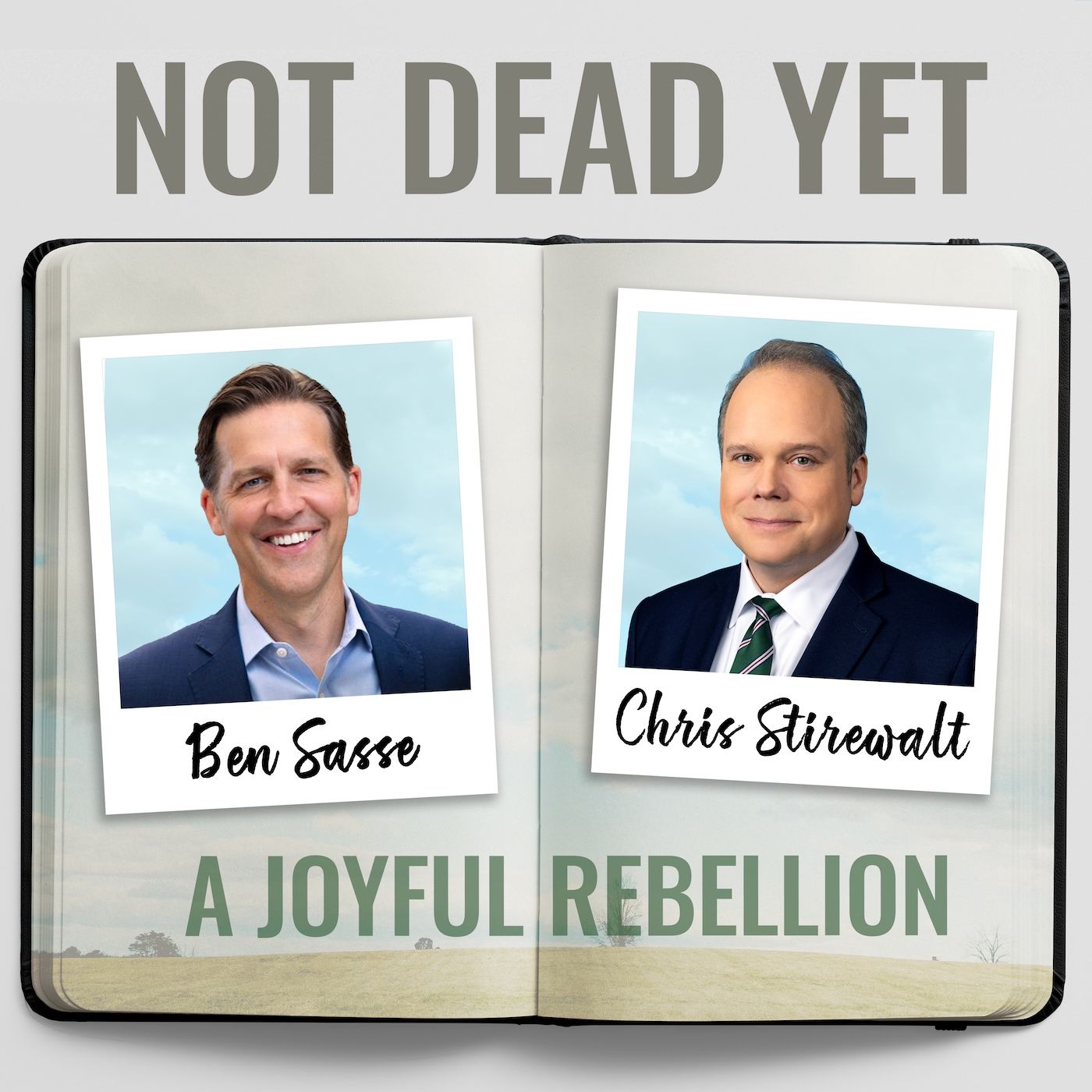
Not Dead Yet
Clint Black
01:12:56
Singer, songwriter, musician, actor, and record producer Clint Black joins underachievers Ben and Chris. The gang talks about country music, writing, parenting, career choices, and gratitude. How much does art depend on lived-experience and pain, or...
Loading summary
Transcript117 lines
- [00:00]
A
Foreign. Hi, I'm Ben Sasse.
- [00:09]
B
And I'm Chris Dyerwald.
- [00:10]
A
And this is not dead yet. We're all dying, but only some of us have been brought face to face with that reality.
- [00:17]
B
However long each of us have to do it, though, we all want to
- [00:20]
A
live a good life, one with meaning, love, and joy. And our guests are here to help us do exactly that.
- [00:27]
B
All right, Ben Sass, you are coming to us live from inside the cabin of a car in a parking lot waiting to pick your wife up at the airport. So no diagnosis, however terminal, will take a man out of his husbandly duties. And I think this is to be commended. I think this is to be commended.
- [00:49]
A
I am excited to see my bride. I am excited that I am in the middle of a five day run of not having to check into any hospital in Houston. And so my wife is going to get off a plane and I get to pick her up and she's going to be real excited to see me for 45 seconds and then she's going to realize I drove one of our cheap old beater cars that has no ac and the love for Ben will be over.
- [01:12]
B
So you, decisions were made, choices were made.
- [01:17]
A
I love the environment just like you do. And yes, there was a good part of American life 20 or 30 years ago when you could know a guy and for 100 bucks, you could get some Freon and you could make your AC work for another six or eight weeks. And I don't know that guy anymore. I think they've all been crushed by the epa.
- [01:39]
B
I, when I bought the first car that I had that had the sealed engine, my, my current car, a 2018, but that had the sealed engine that was new.
- [01:49]
A
You're driving a late model.
- [01:51]
B
I know. And so I went, I was like, well, I got to get the oil changed and I took it to someplace to get the oil changed. And they were like, yeah, it's 10,000 miles and we can't really get into this engine and what are you doing here? And I stood there as the world laughed at me because nobody, you have to take it basically to the dealer and have them hook it up to the thing and do the thing. And I, as, as a person who drove many cars, several cars that cost less than certainly $3,000, I, I, I was, I was not equipped. So I, I feel you. And I, I know what it is to go to Gene Henry's gas station, or as they would have called it, a filling station, and see the guy who would top off your Freon. Sorry, Ozone enthusiasts.
- [02:39]
A
Yeah, Yeah, I miss those guys. Okay.
- [02:42]
B
You know what they were probably listening to at Gene Henry's gas station? Clint Black were probably listening to Clint Black. Clint Black is the paragon. He and Alan Jackson. Garth Brooks is a controversial figure the Chris Gaines era. So I think we would say Alan Jackson and Clint Black are The apogee of 1989-1990-2000, really of the, the new old country sound that dominated the country airwaves that was playing everywhere in Ohio County, West Virginia. That was the, the, the counterweight to the Shania Twain world.
- [03:27]
A
What.
- [03:28]
B
What is Clint?
- [03:29]
A
Who.
- [03:29]
B
Who was Clint Black to you?
- [03:31]
A
Well, first of all, just let's pause. I feel like somebody ought to make a counterweight Shania Twain joke, but I don't have it. At least not that would be appropriate. Of the other two you mentioned, Alan Jackson gives one heck of a concert, man. For anybody who's never heard Alan Jackson outside, he, you know, he's sick. But he's performing again in Nashville one time next month. I am pretty sure that our surprise baby, who's a decade younger than big sisters, was conceived after an Alan Jackson concert, but we'll just leave that where it is. Garth Brooks gave the first big event in America when COVID lockdowns ended. Nebraska sold out the football stadium at 85,000 or concert setup is a little different than a football game, but it was ballpark 85,000 attendees as the first big public event after Covid. And we were all so euphoric to be with friends again. And Garth Brooks can also give a heck of a concert. Even if you don't like Garth Brooks, he, he works it and he'll cover tons of other songs that are stadium songs from other artists that you want to sing with 84,999 of your closest friends. And so I was pressed into service. I was still serving in the Senate at that time and I vended in Memorial Stadium for sporting events a lot. And so during that Garth Brooks concert, I sold beer in the stands for like an hour of the three and a half hour concert and sweat like a pig selling beer up and down the aisles. And then I thought, that dude is fat and he's performing for three and a half hours doing harder work than I'm doing. So anyway, both of those guys, really impressive concerts. Clint though is my friend and so I am so excited that we together get to spend time with Clint Black, who I've been friendly with for eight or nine years. And I think he's a heck of a storyteller and there are some things that I kind of want to fight with him about a little bit as well. So I'm looking forward to this time together.
- [05:29]
B
Okay, just very quickly to state the obvious, Clint Black is of the many, many distinctions he has as the multi platinum country music star that he is, he. And we'll talk to him about this. Recorded four straight number one hits off of his breakthrough album, Killing Time in 1989. A better man, nobody's home, a good run of bad luck, nothing but the tail lights. He is. He has been a juggernaut, a hit machine throughout his career. So let's listen to Clint Black.
- [06:05]
A
Clint, it is good to see you. Thank you for making time for us. Chris St. Walt is the wisdom on this podcast and I promise that multiple times he will interrupt and pretend to be asking a delic, delicate question, which is really a way of coaching me that I just led us astray from what we were supposed to be talking about. But we think that Clint Black is a wise man who's made a bunch of really interesting choices over managing work, home, balance, kinds of stuff over 37ish years. And we want to tease some of that out of you. So we'd love it if you'd start at the beginning. What in the heck happens when a guy has his first debut album appear and four songs in a row go to number one? How does that happen? And how do you not become an.
- [07:01]
C
Yeah, that's the danger was there. It was always present and I knew it. And my friends who believed in me when I was a teenager told me over and over, you're going to be a big star one day and don't let it ruin you. And that was drilled into me. And so I was afraid of being ruined. That was one of my fears is, you know, it's one thing to be spoiled, but then to start to smell bad because of it, you know, you just can't, you can't live with that. So I was, I was worried about it and I set out with some parameters. Just be a professional, do what's expected of you, have a good work ethic, and try to be nice.
- [07:50]
A
How old are you when Killing time comes out?
- [07:53]
C
27. 20.
- [07:55]
B
Oh, wow.
- [07:56]
C
27. Yeah. And I'd, I'd already played the bars for 10 years, you know, eking out an existence, subsistence, you know, living. And, and so, you know, when, when that happened, when that year happened, you know, I, I had already just sweated through and stressed over and all of this stuff. So my Dreams were coming true. It was easy to be humble, but there's, there's no way to handle it, you know, really. Well, I used to joke that, you know, I, I would look back, I looked back after five years of that and, and I said, you know, that, that was, that was really hard to, to, to walk through, but I got it down now. And then five years would pass and I go, you know, I really didn't have it down then, but I do now. And about every five years I'd go through that again and go, now, now I know what to do now. I've got it. And I'm 64 years old and I'm still figuring it out.
- [09:14]
B
Okay, so you. Is it true that you and you played in a band with your brothers, that, like, you started out, this was in the blood in the family, musical family, that this was something. I guess the question is, were you a teenager who thought, I'm going to make it big one day. I'm going to be a heartthrob, I'm going to be a music star?
- [09:38]
C
No, no, no. And I didn't like the term star. The people that I loved were singer songwriters, and that's what I wanted to be in the, in the band with my brother Kevin. I played bass guitar and mostly sang back up for him. And, and I wanted to be an astronaut. I was either going to be an astronaut or, or do this. And I had singer's grades, so I wouldn't. My plan to join the Air Force and work my way into the space program was flawed. And so, and so when I made the decision, when I was about 17 or 18, I think 18, that was the first year of registering for the draft. And I remember thinking, you know, I'm not going into the Air Force. They wouldn't take me. So it's, it's music. And however it goes, if I spend the rest of my life playing in bars, I'm doing what I love to do, and that's what I'll do. And I read every book I could find on the music business and, and just tried to figure out how to. To get into it. This enigma seems so strange and hard to understand.
- [10:53]
A
Since you said the space program, I assume that's because you're a boy of Houston, you're from Katy, Texas.
- [10:58]
B
Right?
- [10:59]
C
Well, it's really because when the moon landing in 69, you know, my dad got us all in there to watch the tv and we're watching this happen and, you know, the excitement, you know, I would have been feeling around me I was probably five, six years old. Six years old. And, you know, and I could sense the excitement and just the, the mystery of it all. So I think that's really what did it. You know, I never went to the Johnson Space center or anything like that, but. Yeah, and, and just I. Maybe Star wars helped it a little bit too, you know, the idea of traveling through space.
- [11:48]
B
So I, I grew up in a house. I grew up in the. In the town of the Jamboree USA in Wheeling, West Virginia. And I grew up in a house where we revered George Jones above all others and Willie Nelson on the. And all of that. And I remember my father, who was a purist, a hardcore purist about what country music was and what country music was not. And when you and your contemporary Alan Jackson arrived, I remember my father saying, finally somebody is going back to playing actual country music again, not this western star spangled pop synthesizer, blah, blah, blah, blah, that it was real country music. And it occurred to me as I was getting ready to talk to you, thinking about talking to you. This is always the story of country music. Country, the story of country music is always people saying that what is available now is not real and we've got to get back to the real thing. But obviously your success and Alan Jackson's success too would have to speak to a craving in the world of country music fandom for something that sounded like George Jones and sounded like Merle Haggard and sounded like the good old stuff. Is that right?
- [13:09]
C
Yeah, my dad was right where your dad was. Alabama's not country. You know, let's just take a look. Old Flame, you know, Gotta have a fiddle in the band. Yeah, well, there's two, you know, and so, you know, when I was writing my songs and playing them on the acoustic guitar, he thought it was kind of like elevator music, folk. But he couldn't hear what I was hearing in my head. So when I got the first demos done of Nobody's Home, Nothing's News, some of the hits on my first album, he started to, to recognize that I'm country. And. And through tears one day he told me, I think you could save country music. And he believed that.
- [14:03]
A
And what, from commercialization?
- [14:07]
C
Just from going the wrong direction? Just from, you know, we went through that period in the, the late 70s where it was very. A lot of poppy stuff. When Skaggs and, and Reba and George Strait, Randy Travis came along in the 80s, it was shifting. It was shifting back to the, the neo traditionalists. And then that big success I had right out of the Box. We went from six major record companies in Nashville to 26 in about five years. And there was a lot of more traditional country in there.
- [14:47]
B
And the idea of getting back to something suggests that there is. Well, let me just ask it this way. What makes country music country music? Why it. You know, the old joke about, you play country record backwards, you get your dog back, you get your house back, you get your wife back, you get your job back.
- [15:03]
A
What.
- [15:04]
B
What is it that makes country music country music?
- [15:07]
C
First, it's the poetry. The lyrics have to be simple enough to make a point a third grader can understand and deep enough that someone who's lived as long as we have can find some meat left on the bone. You also have to be able to understand the lyrics. So, you know, for traditional country music, it's the style of the singing. So if you're chewing your words and slurring it out and. And. And being stylistic in that way, the traditional listener, a fan, is going to tune out. The melodies and the instrumentation have a ton to do with it. You know, you don't have to have a fiddle every time, but you need to get around to it. You know, that will steal guitar. You get around to having that in there, you can mix it up. But I think first and foremost, it's the poetry and that it has to have the heart in it that a mature person can feel something. But it has to be simple enough, you know, that, like when I was a little kid, I've got a tiger by the tail it's plain to see. You know, to a grown up, you know, this is a woman that's wearing a guy out for however she's going about it. To a little kid, you know, I'm thinking of a tiger. And that was fun. So country music has always collected you when you're, you know, old enough to hear it and. And move around to it until you die. We've gone through periods where you lose some of that audience, and then you. You gain them back.
- [16:53]
B
And I want Ben. Ben has a very good question, but I Just to follow up on the theme. It is. It also is willing to talk about life being hard. Right. And that a lot of pop music is about, ooh, girl, I love you Ooh, ooh, ooh, girl no, no, I love you. Or sometimes a breakup song. But leaving aside the country music that is like just, I'm getting drunk and on a. I'm on a boat, which we can talk about. But when I think of the wheel.
- [17:25]
C
Right.
- [17:25]
A
Ben, I was just going to say I want. I mean, Toby Keith is going to have to come to us from the grave, but Kenny Chesney is a future prospective guest, so be careful. Starwall.
- [17:35]
B
Yes, I'll tread lightly on the I'm drunk on a boat genre, but not
- [17:41]
C
that there's anything wrong with that.
- [17:42]
B
Not that there's anything wrong with that, but what traditional country music does that most music does not do is it gets into the hurt. It gets into the hard place. D I V O R C E A two story house Golden Ring we could go down the list of the great country songs that. About Blue Eyes, Crying in the rain, if that doesn't break you down and stop you in your tracks. So it is the hurt. Talk about writing. You're different in a lot of ways from other people in your industry, but maybe the biggest way is that you insisted on being a writer, that you weren't just gonna be a mouthpiece and you wrote your own stuff and you had a very good collaboration with a writing partner and charted all these songs and did all that. But talk about the importance of writing and how you approached wr country music versus other kinds of music.
- [18:37]
C
I've. I've tried my hand at writing other kinds of music because I love other kinds of music. And I think the. The process is always the same. It's just like a recipe. You know, am I making stew or am I cooking a steak? And, you know, I think, you know, having. It's. Usually it starts with a hook. It's. It's an idea. And either that hook is not strong enough and it ends up being a fragment of. Of a song, or it is strong enough and you build the whole song around it. You know, I hope the big wheel in Nashville starts turning soon because this killing time is killing me. This was. This was a frustration of how long it was taking for, you know, the release of my first album to happen. But we decided to look for something deeper and write the song about a character who was going through. Through those feelings because of love, lost love. And. And I think, you know, to really do it well, you have to feel something. And if it's not your own life and you're not feeling it, then what I liken it to is an actor reading a script and trying to get the. The meat of the idea. And what am I supposed to be feeling? And what would I have had to go through to be feeling that? And. And how would I be expressing it? Would I be trying to hide it? Would I be trying to be really honest and open about it and you go through all of these things that actors go through when they're trying to figure out how they're going to perform in a scene. And if you can. If you can get there and figure out what that is and then start feeling those feelings, then words will come out and the words will. Will give someone else that same feeling. So, you know, whether it's we're. We're out on the boat, you know,
- [20:40]
B
or,
- [20:42]
C
you know, or it's, you know, one day things are going to happen for me, you know, and when my ship comes in, I'm going to sail out of Colorado where things aren't going well. And, and, and so, you know, it doesn't. It doesn't necessarily have to be this deep heartache, but it needs to be relatable. Somebody else is going to feel what you're trying to make them feel. State of Mind was a song I wrote in my teens, and it was because of a guy I knew who. A song would take him back to being on the boat up on the lake and, you know, in Minnesota or wherever he was, Michigan, you know, and. And he'd hear a Bob Seeger song, and, oh, God, he was right back there having that great time, you know. And it's funny how a melody can bring back a memory, you know, is. Is the. The lyric. So after writing so many songs, my head jumps around to all the different feelings and meanings, but I. But I think it starts with, you're making yourself feel something. You know, a song like he. He said, I love you till I die. Oh, brother. Bobby Braddock, if he wasn't thinking about George Jones and Tammy Wynette when he wrote that doesn't matter, because that's what we all see, you know, as that song came out, it was, you know, oh, he's still hurting over Tammy. Yeah. Okay,
- [22:19]
A
so crosswalk. That question Chris just asked with aging and with becoming more successful, which seems like it could satiate some of that yearning and that ache and that hurt of when Killing Time comes out. You're 27. Is that what you said? And you have four number one hits on the album right after that. How did you decide when you're going to write again? When do you write? In the day, in the week, in the month? And how tempting was it to become a performing artist instead of a singer songwriter? Because I imagine everybody's coming to you saying, you ought to sing this.
- [23:03]
B
Buy this.
- [23:04]
A
I got this one. That's already done for you. You got a brand now. Just stand up on stage, stand at the mic Go into the studio and record this thing. You don't have to write stuff. How do you write then when it's easy not to?
- [23:17]
C
Well, I saw an interview with Reba before I made it, and right about the time my deal was on the horizon seemed like it was. And. And that she was talking about, she doesn't write songs. And she was saying, you know, I listened to about a thousand songs to find 10 that I want to record. And to me, that sounded grueling. That sounded a lot harder than writing the songs. So I. Really Interesting, yeah, myself into writing and trying to get ahead of myself. I knew, if I have my way, I'm going to be needing these songs. So I got out ahead of it. And every time I went in to make another record, I had three records written. I had three albums written. So about 30 songs in my satchel. Every time I went to make a record, the pressure from the record company was, don't insist on writing your own songs. Now, my attitude was, yeah, but the guy who wrote the songs on Killing Time did pretty well. We should keep him, you know, So I insisted on keeping my job. And. And so I always had that surplus of songs so I could put together the. The. The ten that worked the best together. But I was not doing it all the time. I. I was afraid if I just kept writing all the time, I would dry up. I felt like I had to go out and live, get some experiences, you know, into, you know, my brain tissue, and then. And then write. And. And so Hayden Nicholas, my lead guitarist, and I, we'd go away to a cabin somewhere for five days or a week, and we'd write five new songs and. And then don't try to do it. Just don't keep trying to do it. Go live. And then you might have enough to say the.
- [25:18]
B
A lot of people believe in. Speaking of George Jones, that hard living, bad living. Hank Williams Sr. Dead at 2829 Oak Hill, West Virginia. That that sort of hard, bad living is what's necessary to feel the creative spark and sort of this. And there's a rock and roll version of it. There's the Jim Morrison version of it, too. That does not seem to be the Clint Black story. So the Clint Black story seems to be like, you've had no doubt adversity. But in your professional life, you've been where you're supposed to be, how you're supposed to be. Your marriage is celebrated in Nashville as a great partnership. You and Lisa Hartman Black are celebrated as all of this. You tour with Your daughter. You're like, I don't, I don't see the wreckage on the road in, in your story. Is that. Am I getting that right? Number one and number two, great question. If so, if so, how did you, how did you avoid that?
- [26:34]
C
I'll tell you. I think the three, three things will illustrate how. When I was 18, playing in my brother's band, I was playing bass in the center position. I was singing lead on a song. People were sending us up drinks all the time, and we were drinking them. And Kevin, my brother, I think, had gotten to him a few more times that I had. And I saw him in my periphery going by me back here, you know, at an angle of about like this. He was in the process of falling, but still trying to get his feet under him. So he was accelerating as he went and just crashed into the drinks. And, And a shower of, you know, Wild Turkey and Coke just sprayed over this, this immaculately clean drum set. And at that point, I was 18. And I said, if I don't stop drinking at these shows, I'm going to end up like George Jones. So I never drank on stage again when I was. I tell this story in the show with Nothing's News. I told my dad. He really believed in me as a singer, but as a songwriter, not so much. I told him I wanted to write my own songs, and he said, good grief, you just haven't done enough living to write real country songs. He thought, you need to be like Harlan Howard. You know, I wake up in the bushes every now and then, you know, and write a song. And I say, you know, I was 22. Unfortunately, my dad didn't know exactly how much living I had done. Thought it was enough. So I wrote Nothing's News to try to prove him wrong. Just about three nights ago, I was on stage in the Northeast, and in between songs, a guy comes up to the stage with a woman in tow. They both had trays of beer cans and, and shot glasses, and he started putting them on the stage. And I said, oh, hey there. How you doing? Please don't put those there, number one. You don't want them there to get spilled onto your gear. But he, he, he spread drinks across the entire lip of the stage. And I, and I told him, I said, you know, we're not going to drink those. You know, this is your party and we're going to keep it together and try to entertain you. And, and. But he insisted, ah, you know, you're having these drinks. And. And I said, I said, I haven't had a drink on stage since I was 18. And the audience cheered so they understood what I was saying and not being, you know, ingratious. But. I interviewed Trace Atkins. He was on my talk show talking in circles. And we were talking about this very thing. And he said that he was cured of drinking on stage because his manager one night played him a board tape. A very unforgiving format, you know, it's, and, and said here's you after drink on stage. And it. And Trey said I'd never drank on stage again. It just doesn't work, you know, I mean, maybe a shot or maybe a beer spread out over an hour and a half works. But I have a bottle of Wild Turkey, so it's a serious, it's a serious business to me. And every show is the World Series. Every show is my chance to, to be at my most excellent, you know, And I, and I'm trying still, I'm still trying to get better. I'm, you know, and I mean, if I'm sitting around at a party with friends, just sitting around somebody's living room playing songs on the acoustic guitar, and I have a little bit of wine or a beer, I can't remember the words. I guess I'm too practiced at doing it sober that I start going off the, to a trail somewhere and doing something else.
- [31:00]
A
I feel a little bit like this is an intervention, since I always do. Not dead yet high on morphine. But anyway, talk a little bit about work, home balance for you. When your daughter was born, Chris mentioned that you get to tour with her. But you made a big decision early in your career at a time when there were big, big venues wanting you every night. You made, you made some, you know, counterintuitive decisions. Walk us through it.
- [31:29]
C
Yeah. When I dropped out of high school, it took me about a year to realize what a waste that time was. And so I started reading every non fiction book I could get. Self help books, books on psychology, studying punctuation. I just was desperate to make up for all that lost time. And so I got in the habit of finding books on whatever it was I needed to fill a gap. And when we found out we were going to have a baby, I got a book on parenting. And one of the key things that stuck with me first, Billy Joel in an interview talked about being gone too much and coming home and feeling like Uncle Daddy. And that stuck with me. So when this time came around and I read this book, they referred to that secure attachment. If you want to be a secure attachment for Your child, you have to be really present in the first three years. That's the development period during which they attach to you so that if there's thunder and lightning, will they reach for you or will they look the other way because you're not quite enough yet, you know? And so that did it for me. And so I took, with very small exceptions, I took the, the first three years of her life off and was there and boy, it paid off. It was bad for my career. I, There were, there were, there were signs that, that it had a negative impact on that, but that, that wasn't nearly as important.
- [33:14]
B
Well, that was just because you quit wearing the hat. That's what that was all. That was only because you gave up the black hat. They were mad at you for giving up the cowboy.
- [33:23]
C
I did do that one year. I, I, I decided to have a contest. I think I got this, I think I got a really good haircut. I liked, I never liked my hair. And so I got a haircut. I was like, I like this haircut. You know, here's a good idea. Let's do a contest where people get clues and they have to go find my hat somewhere in their town, and then they can bring it backstage at the show and I'll sign it for them. But I was in the middle of a lawsuit with my first manager, and I think he had a guy spreading the rumor that I was going Hollywood. So the combination of those two things, I know you're just kidding, but it was serious. It was, you know, my mother in law is controlling me now. My wife and my mother in law are controlling me. And I think it all just stemmed from a good haircut. People who saw me may not agree. That was a good something that we,
- [34:21]
B
we talked to Conan o' Brien about this, we talked to Chris Pratt about this, we've talked to other people about this, which is how to remain your own person in a world that is trying to sort of cage you up and make the kind of music you want, in your case, the kind of music you want to make, the way you want to make it, when you want to make it, to keep your as, as we've talked about, continue to write your own music, to do all of these things. I have to think that there's a connection between being a professional, as you said, being on stage, on time, sober, delivering the albums when they're supposed to be delivered, and all of that stuff. But I imagine, you know, when you fought your manager, your former manager, when you found yourself stuck in these legal Battles. When all of these things were going on, you must have thought from time to time it would be a lot easier if I just rolled over and did what everybody told me that I was supposed to do and sort of let the system control me.
- [35:25]
C
I knew it would be. And so I made the conscious decision, I'd rather die by my sword than theirs. And I really felt like in Damn the Torpedoes, you know, I'm gonna do this. And it's, it really, you know, the idea of making decisions based on commercializing or capitalizing was abhorrent to me. I really wanted to be like my musical heroes and make music for music's sake first, and then if you benefit from it, that's, that's a plus. And so it wasn't a, it wasn't a hard decision, but, but it, you know, it did create a lot of, a lot of issues, a lot of, you know, very contentious relationship with the record company at times. But I wanted to look back on a body of work that I was proud of. And, and I know, you know, I, I, I don't think I'm going to be ever lying in my. Beth dead, Beth dead, my deathbed. I used to be the king of spoonerisms. Now they're the king of me. I don't think I'll be lying there thinking, you know, if I only had more awards, you know, if you think about a carpenter, you know, would they let someone else do their work? You know, it's not, it's not the, the fame and the success and the money. It's the work, you know, love what we're doing.
- [37:15]
A
How do you decide how much to tour, then?
- [37:18]
C
I decide by the, the people I work with and how much they need for their lives and their families. And we've arrived at a number because they're day players, but basically they get that, get paid by the, by the show. And so the minimum number is 70 cities. And, and we do about 80 to 85. Used to do more, but my agent said, you know, we're really having to take some offers that you, you don't, you're not happy with, you don't love. I, I want to be in a venue that's comfortable because that's our home for the day. And so when I put my crew in a, in a, into a situation where they're home for the day is really uncomfortable and difficult, and it's not great for the audience. You know, we're asking our audience to come there. And so, so I came up with these parameters of, you Know, this is. This is what we consider a good day. And so, you know, he said, you know, you're saying yes, too much for us to be able to make that happen consistently. So what are your.
- [38:36]
A
What are your three or four favorite venues? And then I'll. I interrupted Chris there. Sorry.
- [38:41]
C
You know, it's really the type of venue I love, the performing arts centers. I love theaters that were built well for music where you have an intimacy with the audience. David Crosby put it this way. You know, when you're. When you're in these types of venues, you can work in smaller brushstrokes so you don't. You don't have to big things up to make them entertaining. And I like the in between songs as much as I like the, you know, playing the songs. You know, I have funny little things about songs and, you know, things that get laughs, and I enjoy making an audience laugh. So those are the best venues for
- [39:25]
B
that, which is why you were the. Were the cameo king on television. You would. You would show up. I think I remember you in a Wings episode. You, you, you, you would. You would pop up on these TV shows. And you, you, you played an excellent straight man. You had an excellent deadpan.
- [39:42]
C
I told. So I did the Hope and Faith show, and it was so much fun. The director was so fun and relaxed. And I told her after that, I said, you know, I think I would do anything short of prison time to do comedy.
- [39:59]
B
Oh, I see.
- [40:00]
C
Love it.
- [40:00]
B
Yeah, I see. I see. I want to ask you about your book. We're running out of time. I want to read your book, and I think it's cool that you wrote one. But before Ben takes us to the Landing Strip, you talk about, it's not the fame or the money. It's the work. And what I hear there is. There's a word that is little known in my business or Ben's former business or your business. People have lost the meaning of it, which is enough that you could have enough money or you could have enough celebrity or you could have enough of these. Of these things. And the desire for more becomes consuming and ultimately destructive to the work underneath. How did you decide that the work was more important than the things that come from the work? When did you know that? When did you know that was true?
- [41:01]
C
I don't know. I always thought of myself as lazy. And I told my dad, and he's. He started recounting all of the things that I had done and. And the. The work that I did for very little money when I was making $50 playing in a bar. And I was proud that he didn't think I was lazy, but I still thought I was lazy. And I think essentially I am lazy. And, and, but, but when it comes to the, the work I love to do, I'll work as hard as I have to to get to do it. So there's no one who can outwork me. Unless you want me to dig a ditch or go back and be an iron worker again, I'll just. I'll. I'll work anyone under the table. Doing the creative work. I did all the content for my stage video screens. It was long and hard writing this book, 10, 11 hours a day at the computer because I. I loved it. I wanted to do it. I wanted to tell my stories and, and, you know, the songwriting or the recording and how much time in the studio and. But, but all of the other stuff that you have to do to be able to get to do that, you know, all of the travel, all of the practicing, it. It's. It's just the payoff is so great, you know, But. But I. I still think I'm. I'm lazy. I just. Will. I always joke with my manager and people thank me for doing things. Thank you so much for being here. And I'll say, you know, I told my manager I'll do anything I can't get out of. You know, I. I want to be able to. I want to be able to have someone else doing the stuff that, that I'll do what only I can do, and I'll work as hard as I have to and hope that I can have enough people around me to do the other stuff that maybe I don't have to do.
- [43:05]
B
That's awesome.
- [43:06]
A
This is not exactly the same question as Chris saying, how did you decide what you were in love with was the work rather than the fruits and the spoils that come from the work. But you've said this lazy point, this, I'm not a profit maximizer point, multiple times. You fought with your record label and you didn't like the way they wanted it to be built, so you went and built a record label, which seems like dealing with the means to the end because you didn't like the means that you were having to swallow. I guess it brings us back to where we started, which is a number of the artists we've talked to have said that you need pain to make true poetry, to do the songwriting, and you're talking about it as a straight joy. So there's the. The three chords in the Truth point. But what is it that you want your audience to walk away from a show with? And to what degree do you think you needed pain when you said 30 songs to make, to craft the right 10 or 12 into an album? How much pain is required to get to the place where, where you can do the work that creates that moment?
- [44:19]
C
I don't think any, I don't think an actor needs to have experienced pain to portray it. And I think it's the same for us songwriters. Now you may be able to remember a feeling, something you went through. It's very, it's very hard to be going through pain. When I lost my dad, I couldn't have written a song in too much pain. And when you're having a whole lot of fun, you can't stop then, you know, and it. Maybe someone can. I can't. So, you know, you, you just have to, to have your experiences. And then when you have an idea for a song, you know, is this profound? Can I build a song around it? What would I feel? How do I, how do I feel enough to write this song? And I don't think it's hard. I'm a very empathetic person. If I watch AFI honoring someone for their life's work, you know, I'll cry, you know, because.
- [45:23]
B
Me too.
- [45:24]
C
So great to watch these lives and how they unfolded and, and, and imagine, you know, their feelings. I, I just, I feel it. So I think that that's how you write songs that will make other people feel things. I can't remember the other part of your question. I was too busy feeling that.
- [45:49]
B
No help. You guys are no help at all. No help.
- [45:52]
A
I mean, I'm going to need to reflect on this longer because I, I think of. We interviewed Jonah Goldberg, a friend of ours, a few weeks ago, and he was talking about, you know, 30 years ago when he became a twice weekly columnist. He was talking to George Will and he said, how am I going to come up with enough material? And he said, aren't you pissed off at least twice a week? There's your two columns.
- [46:12]
B
George Will did not say pissed off. Let's be clear. Don't put that calumny on George Pistol. And I think a man, a man
- [46:19]
A
with a bow tie, defends the vernacular of another man with a bow tie. But it feels to me like there's grit as somebody who can't do what you can do, but has to find, you know, both the rudder and the sailor for creative work that I have to do sometimes. And usually the energy for it is in some passion project for good or for ill. There's something I'm, I'm making sense of. I'm problem solving. There's a riddle I'm trying to make sense of because of something I'm frustrated about or I want to be able to explain to somebody else. Something else that I think is true and they don't seem to think is true. And so you're, you're leaving me, as we finish here, you're leaving me with a big problem, which is kind of fun, which is you seem really scar tissue free to have produced dozens of number one songs in chart top. How many albums do you have? 10, 12.
- [47:15]
C
12, maybe.
- [47:17]
A
Yeah. That's a lot of output. And you're like, yeah, I'm pretty happy and chill and I, in every light
- [47:25]
C
the rain does fall. And I've, I've had my share of it and losses and, and heartaches and frustrations. I don't think my life's any different that way. But I'm a very optimistic person and I've, and I'm very, I'm a very grateful person. And I think, you know, being a, a Christian, you know, I, I, I, I have to keep reminding myself to walk in gratitude. And the more I do that, I think, I think just like trying to solve a problem, a riddle, an issue with your life, we build the neural pathways that we're reaching for. We're like the, the baby reaching for the keys. You know, if you, if you keep trying, your brain will form the pathways that help you make that connection. And it is true of being grateful. The more that you do, the more happy your outlook is. You know, I think Dennis Prager wrote a book called Happiness is a Serious Problem, and in that he talks about the missing tiles. And if you spend your life focused on the missing tiles, the ones that fell off, you'll be a lot less happy than the person who looks at the ones who didn't, you know, or Charlie Daniels said, don't pay any attention to the empty seats. You know, so it's, what do you think you deserve? You know, I think I have more than I deserve. I'm going to be grateful for it. And therefore, no matter how many spine surgeries I've had to have matter, you know, I'm grateful that the doctors had something they could do about it. And, you know, you know, no matter how often the pain comes back, you know, that's, I just, you know, and I know you're dealing with that. You know, you're, I was I thought I was going to be in a plane crash once and I had the presence of mind to say, I've been lucky. I've had a good life. And I'm going to go out with, with a, with my consciousness, you know, on high alert to, to, to not be in a blur, a state of blur, you know, when we hit the ground, you know, it's. I, I don't know how I thought I was going to die before I was 16 years old and then, okay, but 18, all right, but I won't make it past 21. This is how I lived my early years and finally decided I better start flossing because, you know, 25
- [50:19]
B
better start. You better start flossing because you're not dead yet. That's the, that's the name of the podcast.
- [50:25]
A
Nice. Thank you for that hymn to gratitude.
- [50:27]
B
That's awesome. Ben Black, I look forward to reading your book. I am super grateful to you and what you've meant to me in my life. A soundtrack certainly for some, some key years there growing and you're awesome and it's awesome to talk to you.
- [50:44]
C
Thank you so much. It's good to meet you and Ben, we're all pulling for you, buddy.
- [50:50]
A
Thanks, brother. Thank you for, for making time for us. Enjoy this tour and congrats that you get to do it with your daughter.
- [50:57]
C
Thank you. Thank you. And, and, and remember, there's methadone, you know, once you don't need the morphine anymore. And Wild Turkey for Ask James Taylor about that. And, but listen, thanks. Thanks for having me on. This was, this was fun and the emotions are running deep with me and try to keep buoyed and just think good thoughts for you.
- [51:26]
A
Thanks, brother. Hope to see you again soon. Be safe.
- [51:30]
C
Thank you, guys.
- [51:31]
B
Well, yeehaw, Professor. What did we learn today?
- [51:35]
A
There's so many places that yeehaw could be viewed as a modifier in that sentence. So I kind of want to diagram it, but I want to get Clint a little bit inebriated and then I want to fight him a little bit more. This idea that you can. I like the idea of no grievance, no whining. You can be chipper and cheery, but I'm still kind of of the Johnny Cash school that there needs to be some sort of hole in your heart when you're writing really good music. I think about the Drew Holcomb line about yearning or want to or ache. I think ache was his main term, but he tried a bunch of things when we had him on and I like Clint's music and I like Clint. This theory, I'm not fully persuaded that you can be. Life worked really, really well for you and still be a heck of a good storyteller as a musician. What do you think?
- [52:30]
B
I think that the thickness of the membrane is the question here. And this is something that you and I, to different degrees and certainly different from Clint Black's experience, have to wrestle with, have wrestled with in our public lives, which is how much is it about me? And this is a motif I come back to again and again in these podcasts. Which is work first or me first? First. How much of me do I want to put in it? And I think you mentioned Johnny Cash. I think for Johnny Cash his life was over. Right. He was in a cave waiting to die. He had so been crashed upon the rocks that for Johnny Cash his personal struggle was there was no separating the him from the work. I assume Clint Black told us a little bit about his experience in the legal battles of the aughts. Told us a little bit mentioned in sort of in passing the back surgeries that he has been through and all of that stuff. But Clint Black strikes me as a person who has a thick membrane between who he is and the person he presents to the world. And what I heard from him was a guy who is a consummate professional and a consummate entertainer when he talked about every show is the World Series, right?
- [54:08]
A
Yeah.
- [54:09]
B
That this is like he feels like he owes the audience something and that is not working out his own personal problems with them. So I just don't think he'd be a person who would be very forthcoming about that stuff.
- [54:23]
A
That's interesting, you little Straussian interpreter. Interpreter of singer, songwriter.
- [54:30]
B
Well, how do you. How.
- [54:31]
A
How do you do that? Well, what do you mean?
- [54:34]
B
So you're doing it, right? You're doing what is. Strikes me as impossible right now, which is you, who is a private person and you're living. You're like. You're like doing it in public. You're talking to the world about it. You're carrying this message. You're doing all of this stuff. But you know, you. You've had to have your membrane be a lot thinner, more, more permeable than it was when you were segmenting your. When you were a public person before. Right.
- [55:05]
A
Okay, fair. I mean I. One of my. The pet peeves is way too casual or colloquial word. But one of the things I don't like is when either non Christians or Christians think that Christians are self Righteous when we explain what we believe. Because going back to Johnny Cash again, I believe that with Paul, you have to conceive of yourself as chief of sinners, or Jesus saying, I came, I'm a great physician. I came for the sick, not for the well. And what he really means is not for the deluded who falsely claim to be well. We're all the sick. And so a Christian is not somebody who says, I got it all together. It's somebody who says, hey, I'm a beggar. And I can tell other beggars, here's where I found some food.
- [55:47]
C
Come with me.
- [55:48]
A
Not that I accomplished anything. And so in a way, suffering a little bit in public wasn't something I chose to do so much as explaining why you weren't mad at God when people thought you would be mad at God because you got a terminal diagnosis. It just doesn't make any sense to me. And so defending that is a. Is a proposition that just feels like even I've used the word vocation calling many, many times. And so it's just that. But it's not like I'm trying to go out and tell creative news stories. I feel like I'm playing defense, not in a defensive, panicked way, but like I'm just answering a couple of questions that are recurring. A musician is writing some new songs that allow us to have Aristotelian catharsis about sharing in their experience because they give ear, give word, give voice to things that people are feeling but don't know how to talk about. So three chords in the truth seems to me to be. There's a lot of people, all of us, that have had marital problems, right? Like, not everybody has the, the. The brokenness that gets to finality. But we, we all have a broken soul. And that means that our communication and our empathy and our loves are broken and imperfect. And so there's something really useful in a musician telling that story for us. And it seems like Clint has to have some reservoir to draw on. And I'm with you. It can be different fields you could probably get to talking about. Better man is a great example. You can get to that as a 20 something, maybe if you've had back surgery, because you can transpose that emotional energy.
- [57:31]
B
When I was young, when I was certainly in college, the song By Hank Williams Jr. Family tradition was a favorite, right? It was a drunk and disorderly. And the, the message of the song, Family Tradition, right, was I can't help it. This is how I am. I'm like, I'm. I'm like my daddy, right? And there, there was this, there was this thing about it that was, that was very appealing. There was a, A, a tragic rebellion in it. And as I got older, I came to see that as a very sad song. Right? Now when that song comes on, it makes me sad. It doesn't make me feel rebellious and joyous. It makes me sad because I think about Hank Williams Jr. Trying to live out his father's tragic existence, right? That The Hank Williams Jr. Story, the Hank Williams Sr. Story is a sad story, right? It's not beautiful to me anymore. It's a sad story. It's a sad story. And it's sad that his son felt the pressure to live out the depredations, the degradations that his father lived out. And what I heard from Clint Black was something very encouraging. You know, when I was young, I thought Ernest Hemingway, man, like that's how the newsman that's, you gotta have all this, you gotta have all this tragedy, you gotta have all this wreckage. And the thing that I didn't understand, I took for granted that the, the good life part of a good life that I saw in my parents and I saw in their family and all, I took that for granted. I was focused on career success, I was focused on doing all that stuff. And I only found out when I was in my 40s that the hardest but most important part of life is the living a good life part, right? And I think what I heard from Clint Black was you can be super successful in a creative field without ever having to be a heroin addict. You can be super successful in a field and live a good life. And I think that's a lot better than the Hank Williams Jr. Approach. But that just identifies me as a 50 year old square and a dork.
- [59:53]
A
No, there's so much good stuff. I know we got a wrap, but the two things I want to at least name as trails we could go down from here. One is this whole new world of no alcohol. I think it's a terrible mistake. Even if the data shows that at a health alone standpoint, alcohol messes up your sleep or does this, that or the other thing. It also is affordable, fundamentally social instrument that brings people together in the moment. It centers folks. I'm not, you know, doing three cheers for alcohol, but definitely 1.9 plus cheers for a bottle of wine and over a good dinner with six or eight or ten friends. And I thought coming out of college that you probably wanted to never drink alone. And then to your Hemingway point, I realized writing My dissertation, I usually wrote early in the morning, but sometimes I do long synthetic pieces or edit big chunks of it in the evening. And I realized Hemingway style, there's just something different that focuses you if you got, you know, one bourbon with you while you're writing that versus writing alone along synthetic passage.
- [61:08]
B
So. But I can tell, I can. I can tell you the truth, though. Do you know what the truth about Ernest Hemingway was?
- [61:14]
A
No.
- [61:14]
B
So when he was good, what he would do, and you can read about this in a movable feast, he would get up and he would write. And the most productive, most prolific, the period of when he wrote up in Michigan, when he wrote. The Sun Also Rises, when he was really nailing it, he would get up in the morning and he would write, and he would write all morning. And this continued even when he was a sloppy old drunk. But he would write in the morning, and then he would go for a long walk in Paris before he ever sat down. And then he writes about the taste of the crisp wine with the salinity of the oysters and all of that stuff. But that was for him. He had to get it done in the morning because once he started having daiquiris, he was no good.
- [62:04]
C
Ah, okay.
- [62:05]
A
I didn't know that. Well, we gotta. I gotta revisit my theory. The other trail, which we won't. We won't do for now, is comedians, right? Like Steve Martin, John Mulaney, who knows if the recovery works? But there was a phase of life where substances were a huge part of. Allowed them to get a different perspective. And then they had to. They had to get their crap together. Chevy Chase clearly never got it cleaned up. If you think about the non substance abusing side of comedy, I'm just making it out, but I assume Nate Bargazzi, like, he's a really funny dude to me. Will it be funny for 30 or 40 or 50 years without something that feels deeper, like the Johnny Cash hole, than the theory that Clint was advancing today? I'm not sure it'd be fun to do. Conan kind of, you know, joined your team of calling me a nerd square. Non funny, non rhythmic. I think. What did he say? Analyzing. Analyzing comedy was like asking the smell of architecture, which, by the way, architecture does have a smell. So I'm back on the winning team. But it does feel like it's worth parsing different types of comedians to get at some analog to this question of whether you need Johnny Cash. Fulsome prison ache. You've told me a story before about, you know, suburban Kids trying to rap and then being told they were part of a community that wasn't theirs and feeling cool all of a sudden. I think there's something about Johnny Cash, not as an inmate, being accepted by the inmates that allowed him to feel like he was telling the truth about the depth of his sin, even if it hadn't been convicted. Felonies.
- [63:47]
B
Yes. And we should have another comedian on so that you can further exsanguinate comedy. You can, you can, you can. You can really get it down and choke it out. But I, I think, I think I would just say for young people, for everybody, it.
- [64:08]
A
Your.
- [64:08]
B
If you're doing something creative, your trip is your trip, right? You don't need to be on anybody else's trip if it works for you to be this way or that way or whatever. But I think the. I'm gonna. I'm gonna stand firmly on Team Square and say that if that's not what you want, you don't. A young person starting a creative endeavor, a creative life, does not need to court tragedy in order to be creative. They can just be creative. And I think that. I like that. I thought that was a. Call me Richie Cunningham, but I thought that was nice.
- [64:54]
A
I'm going to call you Eddie Haskell, but we're out of here. Thank you.
- [64:58]
B
Okay, he's right. That's it for this week's episode. We hope you'll like review and subscribe and tell a friend. Feel free to email us with your thoughts, corrections, questions, or whatever else is on your mind. Please write us@sassandstirewaltgmail.com Please do. We are going to get to. We're going to do a. We're going to do an a Q A show. I promise. This podcast was produced by Scott Immergut with the help of our colleagues at the American Enterprise Institute. The music is from Drew Holcomb and the neighbors. Thanks for listening and keep living the good life.
- [68:10]
A
M.
- [68:36]
C
Ah, okay.
- [68:37]
A
I didn't know that, but we gotta. I gotta revisit my theory. The other trail, which we won't. We won't do for now, is comedians, right? Like Steve Martin, John Mulaney. Who knows if the recovery works. But there was a phase of life where substances were a huge part of allow. Allowed them to get a different perspective. And then they had to. They had to get their crap together. Chevy Chase clearly never got it cleaned up. If you think about the non substance abusing side of comedy, I'm just making it up. But I assume Nate Bargazzi, like He's a really funny dude to me. Will it be funny for 30 or 40 or 50 years without something that feels deeper, like the Johnny Cash hole, than the theory that Clint was advancing today? I'm not sure it'd be fun to do. Conan kind of, you know, joined your team of calling me a nerd square. Non funny, non rhythmic, I think. What did he say? Analyzing comedy was like asking the smell of architecture, which, by the way, architecture does have a smell. So I'm back on the winning team. But it does feel like it's worth parsing different types of comedians to get at some analog to this question of whether you need Johnny Cash. Fulsome prison ache. You've told me a story before about, you know, suburban kids trying to rap and then being told they were part of a community that wasn't theirs and feeling cool all of a sudden. I think there's something about Johnny Cash, not as an inmate, being accepted by the inmates that allowed him to feel like he was telling the truth about the depth of his sin, even if it hadn't been convicted. Felonies it. I'm going to call you Eddie Haskell, but we're out of here. Thank. You, Mailbag. Mailbags. I wasn't fast enough, but, man, I should have said Scott Emmer. Sam.