← Not Just the Tudors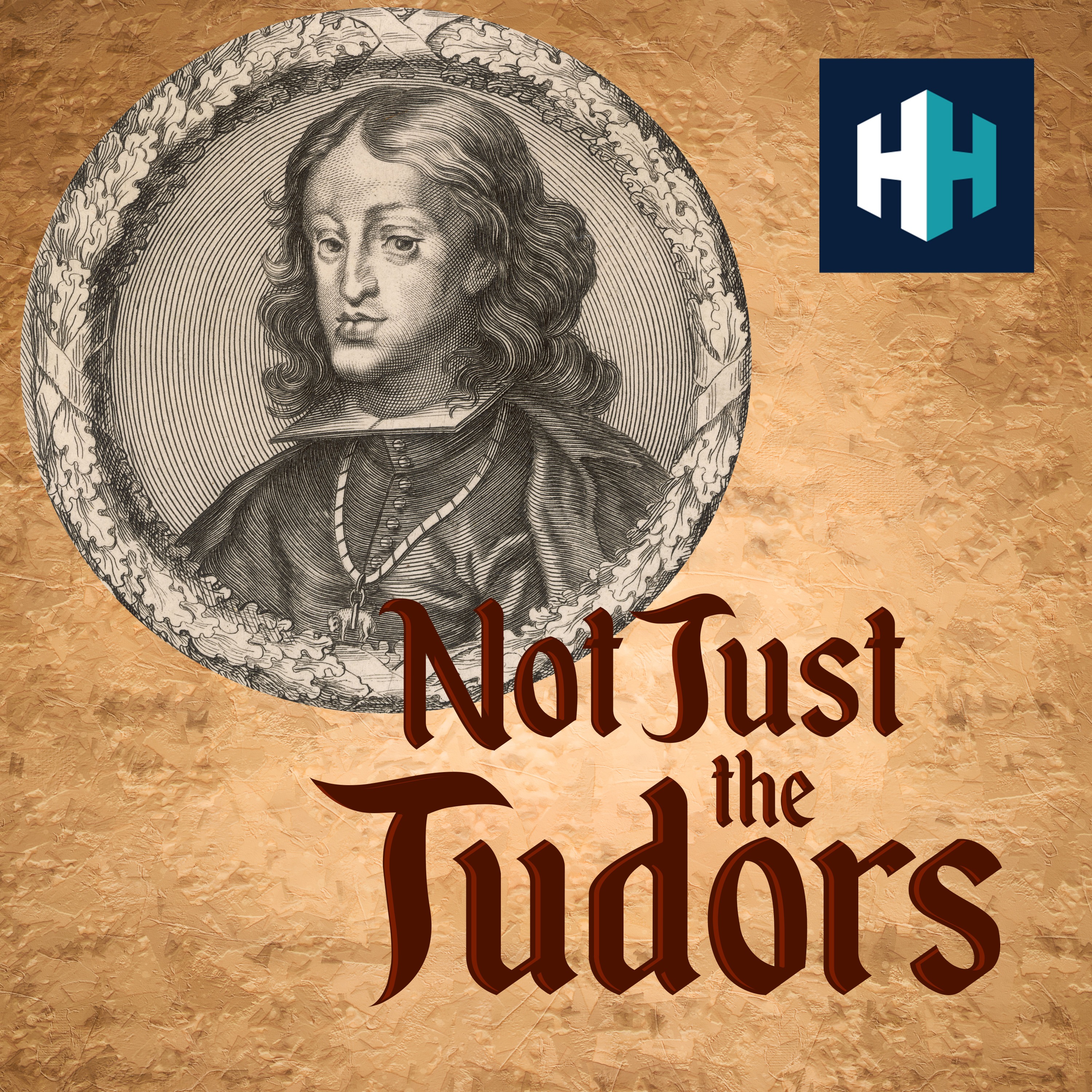
Not Just the Tudors
Charles V, Habsburg Holy Roman Emperor
00:48:04
How did the "Monarch of the World" define 16th-century Europe and shape the course of history?
Loading summary
Transcript46 lines
- [00:00]
Professor Susannah Lipscomb
Hello, I'm Professor Susannah Lipscomb. If you'd like Not Just the Tudors ad free to get early access and bonus episodes, sign up to historyhit with a historyhit subscription. You can also watch hundreds of hours of original documentaries, including my own recent two part series A World Torn the Dissolution of the Monasteries and enjoy a new release every week. Sign up now by visiting historyhit.com subscribe.
- [00:33]
Chumba Casino / Oregon Home Care Jobs Advertiser
You can make a difference in someone's life, including your own, with a job in home care. These jobs offer flexible schedules, health care, retirement options and free training. They also provide paid time off and opportunities for overtime. Visit oregonhomecarejobs.com to learn more and apply. That's oregonhomecarejobs.com Riley Herbst from 2311 Racing checking in. Got a break in between team meetings? Sounds like the perfect time for some fast paced fun at Chumba Casino. No waiting, just instant action to keep you going. So next time you need a pick me up, fire it up and take a spin play now@chumbacasino.com let's Chumba. No purchase necessary. VGW Group Void where prohibited by law CTC's 21+ sponsored by Jumba Casino.
- [01:33]
Geoffrey Parker
Hello.
- [01:34]
Professor Susannah Lipscomb
I'm Professor Susannah Lipscomb and welcome to Not Just the Tudors From History Hit the podcast in which we explore everything from Anne Boleyn to the Aztecs, from Holbein to the Huguenots, from Shakespeare to samurais, relieved by regular doses of murder, espionage and witchcraft. Not, in other words, just the Tudors, but most definitely also the Tudors. In 1611, a Spanish writer described Charles V as the monarch of the world. It wasn't just poetic license. By the time he Abdicated in 1556, Charles ruled an empire unlike any seen Saint Charlemagne, stretching across Europe and the Americas from the Netherlands and Spain to Naples, Austria and Peru. As Holy Roman Emperor, King of Spain, Archduke of Austria, Duke of Burgundy and Lord of the Netherlands, Charles titles captured only part of the story. His was a reign of breathtaking scale and profound contradiction. This is the second episode in our special series on the Habsburgs. Last time we explored how a minor Swiss noble house rose to dominate Europe through strategic marriages, dynastic alliances and imperial tenacity. Now we turn to the Habsburg, who inherited the fruits of that empire building Charles V. He attempted the impossible to govern a patchwork of lands that spanned continents, languages and faiths, all while defending Catholic Europe against Protestant reformers, Ottoman expansion and French ambitions. Charles was both the embodiment of Habsburg grandeur and a deeply troubled figure his vast empire brought him unmatched prestige, but also paralyzing complexity. His attempts to unify Christendom under a single imperial crown were ultimately doomed, torn apart by religious wars and dynastic fragmentations. Yet even in failure, Charles left a legacy that shaped the politics, religion, and borders of Europe for centuries. To talk about Charles V, I was joined on Not Just the tudors back in June 2021 by Geoffrey Parker, Distinguished University professor, and Andreas Dolan, professor of European History at Ohio State University and a Fellow of the British Academy. He has written, edited or Co edited 40 books, many of which have been translated into multiple languages. He's one of the leading lights of early modern European history, and it was an extraordinary honor to speak with him. Now, among his many books, he has written a brilliant biography of Charles V. It is a work of profound scholarship. He draws on an almost unimaginable volume of documentary evidence. When I was flicking through it again, one of the subtitles, the Emperor Strikes Back, made me chuckle out loud. And it's also an epic masterpiece. It runs to 700 pages. So my starting point was perhaps a little cruel. But I began by asking Professor Parker if he could give me an elevator pitch on Charles V in a few sentences. What should we know of him and his achievements?
- [04:58]
Geoffrey Parker
I thought you were going to ask me. Why bother to write another book about Charles V? And so I did what everyone would do. I looked at Google and found there were 11 million hits.
- [05:09]
Professor Susannah Lipscomb
11 million.
- [05:10]
Geoffrey Parker
And depressed by that, I then went to my second research tool, which is World Cat, and saw there were 500 books about Charles V published this century. So obviously some people want to know about him. And I think there's two reasons. First of all, yes, he's a dead white European male, but he is unique. He rules over more people for longer than anybody else I can think of. He rules for 40 years. He loses nothing that he gains. And he manages to acquire not one empire, but two. One in Europe and one in America. And he hangs onto it. So that's one reason why you want to know about this guy. He's born in 1500 in the Netherlands. He dies in Spain in 1558. So he dies a young man, but he does rule for an extraordinarily long period of that lifespan. And the second thing is, any human being is interesting, but this man leaves such an enormous record behind him. It ranges from documents to. He probably signed 100,000 documents in about, I think, five languages that I could count. He writes out position papers, pros and cons. Should I Do this. Should I not do this? He writes a lot of advice, often in his own hand. And then we go from documents to digits. In the 19th century, during Spain's Glorious Revolution in 1868, the new government decided that they would open the tombs of dead Habsburgs. And they open Charles V's tomb, and they find that his body has been embalmed and is perfectly preserved. And one visitor, of course, a foreigner, snips off his little finger, and 30 years later, it's returned. In the 2000s, a medical expert in malaria gets permission to have it analyzed. And that digit tells us two really important things about Charles. First of all, he's a world class whiner about pain. But the digit shows that he had the most terrible arthritis, that it had more or less eaten away the joints in this finger. And secondly, he died of malaria. He has a double dose of malaria, which kills him really quickly. So I have a corpus of evidence that goes from digits to documents and back again.
- [07:38]
Professor Susannah Lipscomb
That is amazing. And I think we should talk in a bit about how he coped with his illness. But first of all, let's think about how he managed this vast empire. How did he do it?
- [07:50]
Geoffrey Parker
Well, it's a particular challenge for him because it's new. Nobody else has ruled the transatlantic empire before him. He acquires both empires in the same short period between 1519 and 1521. He gains what he calls New Spain, which we call Mexico, and later it expands into Peru. He also acquires the area that today we would call Germany, and certain areas beyond what is now the Czech Republic, parts of Hungary, they all become part of the Habsburg Empire, and there are no precedents for this. He looks back to Charlemagne in Europe and decides that's not terribly helpful. So it's really trial and error, and there are some terrible errors that he makes, but it's remarkable that he manages to survive so long. Along with those two empires, he acquires two new problems. And one is, what do you do with this new enormous set of resources in America? It's eight times the size of Spain. How do you rule it? And secondly, Protestantism, what do you do with the Protestants? He has a number of strokes of luck that he's also able to apply the resources of America to solving his European problems. So, for example, he manages to suppress the Protestants in Germany in 1546 and 1547 with the gold of Peru.
- [09:18]
Professor Susannah Lipscomb
Yes. So he's using one part to help rule another. But it still suggests an extraordinary mind to encompass that much information and to manage it. Does he Do a lot of delegating or is he a micromanager?
- [09:33]
Geoffrey Parker
He's both. I mean, he tries a number of strategies. He assumes power in 1515. He abdicates in 1555. And over that 40 year period, he goes from Lord of just a few provinces of the Netherlands. I mean, his first title is Duke of Luxembourg. If you look at the records, it says the Duke of Luxembourg did this. The Duke of Luxembourg rolled around in his little go kart, and then he ends up as Holy Roman Empire, King of Spain, King of Naples, King of Sicily, Ruler of the Americas. And in between those two dates, he tries a number of strategies. He is a micromanager. He also is quite good at delegating, particularly to members of his own family. Reluctantly, he delegates most German affairs to his brother Ferdinand, and he delegates the Netherlands, first of all to his aunt Margaret of Austria, and then to his sister Marie of Hungary. And he delegates in Spain, first of all to his wife, Isabella of Portugal, and then to his son Philip ii. But he then nags them endlessly about what they ought to do and can't you find some more money? Show me what a good son you are. He writes to Philip, don't let your father go down, because you can't send me that last hundred thousand that I need. He really is a terrible man to deal with. There's an interesting parallel, if you like, with Winston Churchill, who believed during the war that there were certain problems that only he could solve and he would go off. I forget how many hours he spends traveling, but he travels all over. He travels to see Stalin, he travels to meet Roosevelt. He goes to Italy, North Africa, he goes to all the major theaters of operation because he believes that only he can get things moving. And Charles V is the same. He spends his whole life on the move. There's a survey called the Itineraries of Charles V which has worked out that he visits a thousand different places. Okay? Some of them he goes to several times. And he says himself, you know, I'm coming to see you, because only I can figure out this problem. And by golly, sometimes this is true. Being on the spot is a really useful asset in the era before the Internet and the telephone, because we have so much material on Charles V, because he wrote things down, partly because he travels so much, he has to conduct a lot of business by letter. Also because he's an emperor, he has a large cohort of ambassadors who travel with him, and all of them write back detailed reports. Sometimes you can work out hour by hour where he is and what he's doing. And you can see the extremes of someone who is, forgive me, a real shit, especially towards members of his family. And at the other hand, is a charismatic figure, figure who inspires incredible loyalty. They say no man is a hero to his valet, but when Charles V dies, his valet says, this is the greatest man who's ever lived or ever will live. It's an extraordinary expression from someone who had been by his side for 20 years. I mean, my goodness, I don't think I'm going to inspire that sort of loyalty in anybody. We have pictures of him working the room. Not particularly friendly. Ambassador says they've watched Charles going round talking to people, shaking their hands, a word here, a gesture there, and he says at the end of the meeting, we were all his slaves. So he clearly has charisma. And on the other hand, when you look at the correspondence, I mean, I think the most egregious cases is Mother Joanna, often called Joanna the mad. Obviously a difficult lady, but made much more difficult by the fact that Charles has her locked up in a palace with no windows, and he only visits her irregularly, usually when he wants something from her. When he visits, he steals from her. When his sister goes to get married in Portugal, he raves his mother's wardrobe and takes out her wedding dresses and everything, gives it to her sister. And even worse, he then puts bricks in the containers so that his mother won't notice that things have been taken. And then when he's done that, he rides away before she finds out that her daughter is going away to get married, so he won't have to face the rage and fury of Joanna. So, yeah, he's a moral coward. He shows great physical bravery. Lots of accounts of him in battle again, going round under guns, going round under fire. And when one of his courtiers says to him, you should take shelter, these guns can kill you. And he turns to him and says, no emperor has been killed by an artillery round so far. And he just goes on. So, you know, there's this physical bravery and yet there's an element of moral cowardice. Like us all, he's a very complex character. It just happens. There are so many people watching him. But we know an awful lot about Charles V and I think that's one of his fascinations.
- [14:55]
Professor Susannah Lipscomb
Yes, that he was capable of this extraordinary cruelty as well as courage and charisma. It does make for a potent mix. But without wishing to psychoanalyze from a distance of 500 years, do you think that we can put some of this down to the dysfunctional family into which he was born.
- [15:13]
Geoffrey Parker
Yes, no question he has a dysfunctional family. I mean, many aristocratic families and royal families in the 16th century are dysfunctional. But Charles V's family is unusually dysfunctional. His mother is already giving trouble before she and her husband go off to Spain. Charles is age 5 when his mother and father leave and he never sees his father again. His father will die in Spain, he won't see his mother for 12 years. But he is lucky in that his father's sister, Margaret of Austria, comes over to take charge of him and his sisters, and they all call her mother, they all regard her as a mother figure and she turns out as one of the great sympathetic figures. I think of my biography in that although very hard driving and ambitious woman, she's nevertheless a very caring and loving person and she gives them stability in her palace at Mechele in Belgium. The other stabilizing figure is his paternal grandfather, who's Maximilian of Austria, who again, is a very complex character. But he does, I think, come in and become the role model for Charles, sometimes in good ways. For example, Maximilian stresses the need to learn lots of languages and said, if you're going to rule, kiddo, you've got to learn the languages of your subjects. Don't depend on Trump. And on the other hand, he also pursues his policies, which are far more expensive than he can possibly afford, and he reneges on his debts and his promises. And Charles follows in his steps there too. So, yes, it's dysfunctional, but there are elements of stability and I think if you compare it with, I don't know, Queen Elizabeth, who sees her mother executed, two of her stepmothers executed, another one expelled and is put in prison. She spends her time in the Tower. She has a terrible, terrible upbringing. Charles, really, this is not so bad.
- [17:17]
Professor Susannah Lipscomb
He seems to have been a very pious man, but as you say, he had to deal with the Protestants. He met Martin Luther. What did he make of Luther and how did he handle these religious divisions?
- [17:29]
Geoffrey Parker
Well, just as I said that Charles evolves over time, we have to remember that Luther evolves over time. And a lot of the sources I used in my biography were, as we say, hiding in plain sight. That's to say they were printed sources, but sometimes they're rather difficult of access. In the 19th century, the Bavarian Royal Academy starts printing the Reichstag act and different protocols and documents considered by the German Reichstag and the one on the Diet of worms in 1521, the editors went round all the archives. They could think of to find ambassadorial reports on the Diet. So we have a lot of information on the first confrontation between Charles and Luther. But if you look a little further back and look at the correspondence of the electors of Saxony, where Luther comes from, you'll find that there's an attempt to buy him off. Charles confessor, a man called Jean Glapion, is first of all sent to elector. Frederick Glapignon is a Franciscan. And the elector says, I'm not talking to a friar. You go. And he sends his chancellor. The chancellor therefore has to write a report to Frederick saying, yes, well, I met with Glapion and he said, look, if Luther could just stick at the Babylonian captivity and say, you know, I wrote, Remember at Worms, the books are put on the table in front of him, and he's asked, did you write all these books? When that happens, says Glapion, if you'd only say, yes, I did the captivity, I did this, I did that. But then all the rest know someone else wrote those, not me. We could let him off. We could come to an accommodation. We rather agree with him about indulgences. But of course, Luther says, no, I wrote all these books. But there are actually two attempts by Charles to find an accommodation. And it's only when Luther defies him at the and makes his speech and says, no, I wrote all these things. And he makes a big mistake from Charles's point of view of saying, not only has the pope made a mistake, but so have general counsels. And really, you can't be a Catholic and think the general counselors are wrong. So at that point, Luther and Charles become sworn enemies. And I think it's important that there are some areas in which they have common ground. I mean, the history of Europe would have been very different had Luther backed down and said, okay, okay, maybe I went a little too far. Maybe some of those statements were a bit extreme. I could walk those back. But he doesn't. And so from this point onwards, Charles is fairly intolerant towards Protestantism. But he has a problem, and that is that as Luther is speaking at Worms, the Ottoman Turks are advancing up the Danube. 1521, they take Belgrade. 1526, they take Budapest. In 1529, they lay siege to Vienna. Charles cannot mobilize enough resources without the Lutheran princes of Germany, and they know it. And there's again, in the published correspondence of Luther, it's there, hiding in plain sight. The leading Lutheran general, Philip of Hess, writes to Luther and says, hey, Master Dr. Luther, we have a wonderful chance here. We are not going to release our troops until Charles grants us toleration. And in the end, Charles says, all right, all right, I'll give you toleration for five years. So he hates the Protestants. He really, really would like to screw them and extirpate them. But with the Turks threatening southeastern Europe, his land, he simply cannot afford to. So on the one hand, you have the Turks prospering because the Protestants divide Germany. On the other hand, you have the Protestants surviving because the Turks are threatening Germany too. And again, this is a problem no ancestry of Charles has to face. You can make a difference in someone's life, including your own, with a job in home care. These jobs offer flexible schedules, health care, retirement options and free training. They also provide paid time off and opportunities for overtime. Visit oregonhomecarejobs.com to learn more and apply. That's oregonhomecarejobs.com.
- [22:06]
Shopify Advertiser
When you think of skyrocketing brands like Aloe, Allbirds or Skims, it's easy to credit their success to great products, sleek branding and brilliant marketing. But here's the overlooked secret. The real magic lies in the engine behind the scenes, the business powering their business. For millions of brands, that engine is Shopify, making selling seamless for them and shopping effortless for us. Upgrade your business and get the same checkout Alo Yoga uses. Sign up for your $1 per month trial period at shopify.comretail all lowercase go to shopify.comretail to upgrade your selling today. Shopify.comretail Summer's heating up, and so is.
- [22:50]
Chumba Casino / Oregon Home Care Jobs Advertiser
The action with chumba casino and 2311 racing. Whether you're trackside with Bubba, Riley and Tyler or cooling off at home, the fun never stops at Chumba Casino, the online social casino packed with free to play games like slots, blackjack and more. Jump into summer@chumbacasino.com and score your free welcome bonus 2 million free gold coins and 2 free sweeps coins. No purchase necessary. VGW Group Void where prohibited by law. CTNC is 21 + sponsored by Chumba Casino. In the ancient world, disaster was always lurking. Earthquakes and volcanoes flattened and buried mighty cities in an instant. Drought and plague wiped out civilizations without mercy. This month on the Ancients From History hit the podcast that brings the distant past roaring back to life. You'll discover how disaster reshaped civilizations and the world itself. Listen now on Spotify or wherever you get your podcasts.
- [24:03]
Professor Susannah Lipscomb
That's fascinating because it squares the circle of this pious emperor, nevertheless tolerating what he considers to be a heresy, but because he's making a practical decision about continuing to maintain his empire.
- [24:17]
Geoffrey Parker
Yep, and we have some interesting sources on that. Charles has a confessor, and as with most confessors, you do your confessions in private, either in your private study or in a sort of confessional. And in 1529, Charles goes to Vixenby with his confessor, of whom he's got a little bored. The man is called Garfier de Loysa. Charles has obviously decided that the time has come to find someone else who is less annoying. However, Loaisa then writes to Charles between 1529 and 1533, and the letters between them are absolutely fascinating, because this is exactly what Charles and the confessor discuss by letter. Again, the fact that Charles is always on the move is fantastic, because Loaisa will say to him, you know, sire, forgive me, but you really have no choice. You're going to have to make concessions to these Lutherans. I hate them as much as you do, but the defense of Christendom is more important. So, yeah, it becomes a political issue. The Reformation as a political phenomenon, in my view, has not been given sufficient attention. Louise's letter to Charles have been published. In fact, they've been published in two different places, one of them in a Spanish text. They write to each other in Spanish, but it's been published in Spain, also in Germany. But Charles's letters to the confessor had never been published. I had to find those for myself in Simancas and between them. As I say, it shows you the dilemma he faced. You really see the guy struggling with the political problems of the Reformation.
- [25:51]
Professor Susannah Lipscomb
And it's true, I think we have been so keen, rightly, to focus on the religious aspects of the Reformation that sometimes we overlook these practical concerns. I suppose another combination of religion and practicality comes when we're thinking about Charles's reign being one in which the Spanish are invading and conquering the Americas, and the purpose of that is partly about spreading Catholicism and it's partly about money and glory. Do you have any sense how Charles thought that ought to be done?
- [26:21]
Geoffrey Parker
Forgive me, but I think it's what one might call sub imperialism. That's to say, the decision to take down the Aztec empire is not approved by Charles at all. It's done by Hernan Cortes, who operates pretty well illegally. He goes ahead, he takes Mexico City, and then he loses it and has to go again. And the reason he gets away with it is that it happens during a period of rebellion in Spain called the Comoneros. And in that period, the government in Spain, for the only time until the 19th century, has no idea what is going on in America. It loses contact. If you look, as I have at the registers of the Council of Castile, which at this point is dealing with American affairs, there is nothing about America in the record. They simply don't know. So they get the news simultaneously that Cortez has lost Mexico City, and he's got it again, and so he survives. Charles will eventually reward Cortez, and then he will fall out with Cortes, but he does not, in fact, tell him, go conquer me another empire. But Cortes, who's a very skillful politician, writes back to Charles and says, you know, you, Majesty, I just heard you became emperor of Germany. Well, I have wonderful news. You're also an emperor of America. Oh. And I think we should call it New Spain. Later, his colleague Pizarro goes off to invade Peru. And although he does get a license to do that, it's not to take down the Inca empire. I mean, who would have thought fewer than 200 Spaniards could defeat an empire of 8 million people? But Pissarro manages it. And so I think it's rather like Lutheranism, you know, it's rather like Protestantism. Charles is faced by something which is happening far outside his control, and he does his best to get on top of it. You asked me about his attitude. So what does he do when he finds out? Well, he. I think he has three roles in America, three interests in America. The first, of course, is money. And Cortes, just like Christopher Columbus, realizes that what will get investment in America, which is what they want, is to say how much there is it for the crown. So Cortes sends back these wonderful gold and silver treasures which he finds when he gets to Tenochtitlan. And Charles is absolutely captivated and says, okay, you know, good boy, and I'll send you more money, and I'll send you more settlers. So the first interest Charles has is money. How to get the resources of America, how to deploy them for his various campaigns. His second interest is, in fact, in the flora and fauna. Cortez sends him back a number of quite interesting animals, and he also brings back a number of Native Americans. When he meets Charles for the first time in 1529, there's a German artist there who sketches all these Mexica who come back. And Charles is clearly captivated by this and becomes very interested. And he collects articles from the Americas. Of course, if it's gold and silver, he has them melted down to make money. But if he can't melt them down, he keeps them and he's surrounded by them. When he goes to Yuste in 1556, his daughter Joanna, who's the regent of Castile at the time, gets hold of one of these lovely Aztec flags, feather blankets and gives it to her father and says, look, dad, this will keep you warm. And Charles looks at him. Really? Daddy said, oh, yeah, that's pretty good. Can you get me another one? So there's an interest there in the flora and fauna. He writes about it, he shows a practical interest in it. But the third thing he's interested is in the people of America. And there are three different categories. First of all, of course, to the colonists and keeping control of them. Charles V knows the problem of gun control. And in order to have a gun, you have to have a license. In order to have a dagger, you have to have a license. He really, really controls movement and he controls firearms. It's a very tightly controlled colonial society. So that's the first group. The second group are the African slaves. Charles has absolutely no concern for them. He sells licenses to import slaves almost as soon as he gets to Spain, he sells licenses for his courtiers to take African slaves out to America. And he never, ever shows any concern about their fate. The fact that they die working in the mines. I've never seen a mention in his correspondence about them. But the third category is the Native American population. And there he becomes aware of the massive mortality of the Native American population after the first contact with the Spaniards. And there are various documents in which he talks about his conscience or a scruple. And it took me a long time to figure out what he means by that. But in the end I did find a document in which one of his confidants writes to a group of columnists and says, look, guys, you're still sending these Native Americans to the mines and it's got to stop. His Majesty is never going to change his mind about this because he really believes that if he does not protect the Native Americans, his soul will go straight to hell. And I thought to myself when I read that he's afraid that if he does not protect these newly discovered peoples who are not Africans, who are traditionally slaves, as far as Europeans are concerned, they're not European colonists. They're a special category and they deserve to be protected. And I think the reason he does so, and he is the only 16th century rule who does so, is because he's afraid he's going to go to hell.
- [32:01]
Professor Susannah Lipscomb
Yes, a slightly more serious scruple of conscience than his contemporary Henry viii, of course, he was also very much concerned with scruples.
- [32:11]
Geoffrey Parker
I think probably everyone had more concern for scruples than Henry viii, but you would know more than that than I do, Susanna.
- [32:19]
Professor Susannah Lipscomb
Actually, he also reminds me of another Tudor monarch in that he's concerned, like Elizabeth I, with the killing of another monarch when it comes to Atahualpa, isn't that right?
- [32:30]
Geoffrey Parker
Yes, but it's not the same. She certainly knows Mary Stuart is on trial for treason and for plotting against her. And she must realize, because she sees the warrant and she even signs the warrant. Atahualper is quite different. Francisco Pizarro, who I mentioned, manages to get on top of the Incas because they are already divided. He arrives by an extraordinary stroke of luck for him. In a period of dynastic war, two Inca claimants are fighting each other. And Pissao arrives just at the moment when the victor, Atahualpa, is about to celebrate. And he manages to corner him, taken by surprise, and says to him, your money or your life? And so Atelhalper says, okay, I'll take the money. And then he said, did I say your money or your life? Slip of the tongue. I meant your money and your life. And then he has him strangled. And when Charles I find this out, he's absolutely furious and says, you can't go around killing kings like this. It's just not right.
- [33:31]
Professor Susannah Lipscomb
So tell me what he was like as a military leader.
- [33:34]
Geoffrey Parker
He does not have any military experience. He has a lot of experience with weapons and foreign ambassadors, One of my lead sources, I must confess, they all say that he has extraordinary facility with arms, agility, stamina, all of these things. He challenges Francis I to a duel a number of times, and Francis I backs out every time. He says, well, you know, maybe not. Let's see. Charles does not command an army until 1529. He doesn't go on a major campaign until 1534 5, when he leads an army to Tunis, financed, I may say, by the first infusion of money from Peru. As soon as the treasures of Atahuallpa arrive at Seville, Charles says, right, seize it all. Turn this into coins and send it to Barcelona so that I can get my expedition together. Logistically, it's an extraordinary feat. He gets one army from Italy, another from Spain, they link up in Sardinia, and then they head straight to Tunis, and they land not very far from Carthage, in fact. But then Charles makes a number of terrible mistakes. He doesn't reckon for the shortage of water, the intense heat. But the enemy, the Muslim rulers of Tunis make even more mistakes. And so he succeeds. He is not lucky at all at Algiers, the second African campaign in 1541, which he undertakes in October, November, which is just crazy. And everybody tells him that this is a terrible time to undertake an operation because it's likely you're going to get torrential rain which will ruin your campaign. And he goes off, he says, you know, God will look after me. And off he goes. And torrential rain absolutely destroys his army. He's very likely to escape with his life. His third major campaign is in Germany in 1546-47. And there he does pretty well. He scouts himself. He rides at the head of his troops again. Said she goes round and refuses to be intimidated by gunfire. I would say his tactics be something to be desired, but in terms of strategy, he's pretty good. And he is always prepared to listen to the experts. He is aware that he has not grown up in military experience. He hasn't served with armies, but he marches with his men. He shows great personal courage. And in terms of charismatic military leadership, he leads from the front, and I think he does that very well. But in terms of tactical things like particularly the weather, perhaps, we're not going to give him a 10 on it.
- [36:13]
Professor Susannah Lipscomb
You can make a difference in someone's life, including your own, with with a job in home care.
- [36:19]
Shopify Advertiser
These jobs offer flexible schedules, health care.
- [36:22]
Professor Susannah Lipscomb
Retirement options and free training.
- [36:25]
Shopify Advertiser
They also provide paid time off and opportunities for overtime. Visit oregonhomecarejobs.com to learn more and apply.
- [36:35]
Professor Susannah Lipscomb
That's oregonhomecarejobs.com.
- [36:41]
Chumba Casino / Oregon Home Care Jobs Advertiser
Bubba Wallace, here with Tyler Reddick. You know what's more nerve wracking than waiting for qualifying results? Waiting for the green flag to drop? Instead of pacing, you rev up with Chumba Casino's weekly new releases. It's like a fresh set of tires for your brain. Play for free@chumbacasino.com let's chumba no purchase necessary vgw group void we're prohibited by law. CTC's 21 plus sponsored by jumba Casino.
- [37:19]
Professor Susannah Lipscomb
Would it be fair to say of Charles that he had a kind of messianic vision?
- [37:25]
Geoffrey Parker
Yes. He certainly prepares for things like the campaign in Tunis, the campaign in Algiers, the campaign in Germany. But when his advisors say, you know, Sire, this is not a great idea, there are certain problems. And he said, no, God will not allow this venture to fail. And you see at a number of points that he's clearly a deeply religious man. He says his prayers every day. We know that he kneels Every morning, the ambassadors tell us. So he goes on a retreat every Holy Week. He refuses to transact any government business. At one point, the secretary who's trying to hold the fort thinks this is a crisis which needs His Majesty's attention. Only His Majesty to deal with this. So he sends a package of letters the monastery where Charles has gone into retreat. And Charles sends it back and says, basically, confessions and counsels do not go well together. Don't you ever do this again. God will not allow catastrophe to happen when I am in retreat and talking to him. So it's not quite messianic. But the idea that somehow God will fill in the gaps between what he Charles can do and the outcome he desires, I think that's definitely there, but I'm not sure it's much different from Elizabeth, from Henry viii, from Francis I. They all really believe that God's looking after them.
- [38:45]
Professor Susannah Lipscomb
I'm aware that he really cared about how he would be remembered.
- [38:50]
Geoffrey Parker
Yes. See, he does something again. He's never ruled an empire that has a precedent. You need to look a very long way back to find an emperor who abdicates. He himself thinks it must be Diocletian more than a millennium before. And first of all, he resigns his Netherlands possessions in September 1555. He would like to resign his Spanish possessions, but he wants to get back to Spain to do it. But he doesn't have enough money to get the frit together to take him. And so he stays on and he abdicates his Spanish possessions early in 1556 by letter. He signs documents and sends them to Spain. But he has decided that he has to divide his empire and that Ferdinand, his brother, will succeed in Germany. And Ferdinand says, please, please don't abdicate yet, because as long as they think you're there, I'm not going to come under pressure. As soon as they know I'm the new emperor, I'm going to come under all these pressures. So please hang on. So he doesn't impact abdicators emperor until early in 1558, but to all intents and purposes, he sheds his load of administration late in 1555, and he starts talking about his reign in the past tense. He will say ennitympo. In my day, we used to do so. And so, or people will ask him for a favor and says, I am no longer emperor. I gave all that up when I abdicated. And he then starts thinking very carefully about how he will be portrayed. The second thing he tries to do, where other people write histories of Charles, he tries to edit them. So there's an Italian called Paolo Jovio who writes a history of my own times in which Charles has a starring role. And Jovio writes to Charles and says, you know, your majesty, obviously Jovio wants a promotion of some sort. He wants something. And so he says, you know, I'll change anything you want sign sending you this book. And Charles takes this very seriously and sends it back and says, well, I don't think you are entirely fair to my heroic leadership in defeating the German Protestants. I think you should give me more attention. And Jovio basically won't do it, but there's that interest in how he will be perceived in future. He also, of course, writes his memoirs. There's been some discussion on whether or not they're genuine, because we only have a copy made in Portugal, which I've examined. It's in the Bibliotheque Nationale, Paris. And I tried to trace the provenance because it's only a Portuguese text. It's a translation of Portuguese. The memoirs we know were written in French. Charles Wright's Martin French. And this is a Portuguese translation made in Madrid in 1620, so 70 years after, in Portuguese. Is it genuine? And the librarians in the WFAT national are very kindly check the watermark for me, and it's compatible with the date. And I looked at the various details and it seems to me that they are things which Charles would have known. We know he wrote memoirs. It's the sort of thing he would have written. The style, even though it's Portuguese from French, the style of repetitiveness. Charles never uses one word where he could use 10. So it's always, I ordered and commanded, I saw and took in, and they're there in the Memoria of Charles I, written in Portuguese. I think it's genuine. So we have all these sources in which clearly he tries to shape the way he will be viewed. Whether that is unique or not, I don't know. But I think in order to do it, you have to have abdicated as he did. I mean, we do have ministers who fall from power who try to shape their legacy the way they'll be viewed because they're out of power. Very few monarchs abdicate and Charles does, and so he probably pays more attention to that than anybody else does.
- [42:48]
Professor Susannah Lipscomb
Do we have any idea of how he coped against a background of being in pain for much of his life or ill? And should that really change our idea of him, do you think, in some way?
- [42:59]
Geoffrey Parker
That's a great question. I had thought of it because I'm speaking to you now from a wheelchair. I also have had my pain problems. When I have pain problems, I just pop a painkiller. But there's nothing like that open to him. So he does whinge a lot. He is something of a hypochondriac, but as the detached digit shows, he's not making it up. He really does have agonizing pain from arthritis. And I think the question is, how typical was he? Was this not something that all of them had? All females obviously have terrible time with childbirth. You know, there's no epidurals, but all guys probably have problems. Charles falls off his horse at one point. He's out hunting, and the lasso with which he's trying to get a stag gets tangled around his horse's legs and he's thrown and lands very, very heavily on a rock and badly injures one of his legs. And you know this is serious because when his sarcophagus is opened in 1868, 1870, they notice that wall at his legs is shorter than the other. And he clearly was in pain from that too. And so I think we have to factor that in. But maybe the pain threshold was higher in those days because everyone had more pain to put up with. But there's no question that he's in pain a lot of the time. And I'm sure that sometimes affected his decision making. And I don't think we give enough credit to that difference between us living in the 21st century and them living in the pre painkiller era.
- [44:33]
Professor Susannah Lipscomb
Yes, we have it good by comparison, don't we? One last thing I'd like to talk to you about, which is how do you write a biography like this? I have it here. It's a couple of inches deep. We don't even need to measure it in pages. How did you manage to marshal the vast number of documents on which this biography draws? How did you manage to do it in so many languages? I am blown away by it. Tell us your secret.
- [45:02]
Geoffrey Parker
Well, part of the secret is being in a wheelchair. You have more time to read. And there are so many sources online now, and even Covid has not been a universal disaster. As you probably know, the National Archive in Kew allows you now to download every document they have digitized free. You enter an account, you get your little cart, you put the documents you want in it. The charge is £0.00 and you can download it within two minutes. It's just fantastic. So some extent the Internet has made that book possible. There's no way I could have gone to all the archives myself. Let me back up. How did I write the book? Well, I first came across Charles V when I was at school. We had exchanges. One of the exchanges was to a French speaking country to improve our French. But 1957 France was regarded as being far too dangerous for boys from Nottingham, so we went to Belgium instead. And so at one point I was taking on the ruins of Bash to the south of Brussels because my exchange student I was staying with his grandparents came from Bar. And so I saw Mary of Hungary's castle, which Charles V stayed in. Philip II visited, sorry, maidenhood. And then I started work on the reign of Philip the Second. Second. And Charles was an ever present person in that story, so I was aware of him. And then in 1996 or seven, I think, a Belgian entrepreneur, the editor of Mercator Press, decided he wanted to do a large glossy book on Charles V for 2000, the 500th anniversary of Charles I. And he said, would I write an essay on Charles II and pon fiction that was about 100 pages. So there I have the outlines. But what really made me think I wanted to write another biography of a Habsburg. And done. Philip II was looking around for archives and documents I hadn't seen. And I happened to go to the Hispanic Society of America, a fantastic collection of all things Spanish is north of Harlem in New York City. And they have a terrific library and a lot of very, very precious documents. One of them listed in the cathlog was Instructions of Charles v to Philip II, 1543 copy. So, you know, it was the end of a long day and I thought, well, I may as well just look at it. And as soon as it came up with a gorgeous red morocco binding and golden edging and so on, and I opened it up and I saw the horrible handwriting of Charles V and I thought, this is not a copy, this is the original. And that moment I thought, right, I'm going to have to write a biography of this guy. Because the text was known. There were various editions of the text. I mean, there were some words that earlier scribes didn't manage to decipher, but because they were copied, it was assumed that someone had written it for Charles V, that perhaps it was dictated. But no, here was the original. And not only had he written it out in his own hand, he had spent a lot of time correcting it, adding to it, subtracting from it. I'm pretty sure there were some pages he rewrote. And the reason it was so interesting was because it's not one instruction, but two. Young Philip II is 16. Charles V is going off to Italy to fight the French and he thinks he's never going to come back. And so he leaves Philip as regent. His wife is dead, she previously had served as regent. Philip II is having to do the job. And at age 16, what are the problems he's going to face? Charles writes two instructions. The first one is a semi public one. He says, here, you are kidding, here's what you have to do. Read it out in the presence of your leading advisors. And he names them and it's full of what great chaps they are and how difficult it will be. And be a good boy, hold audiences, always be respectful, never interrupt people when they're talking to you. Say your prayers every day, right? Yours sincerely. You're all right. And then two days later he writes another one, says, right kid, that's the one that you read out this one. Nobody is deceived. Burn it if you feel sick. Do not ever let it form into other hands, because I'm going to tell you the real problems you're going to face. The Duke of Alva, what a bully. He's great on the battlefield, he's just terrible in council. He tries to bully me and I'm older than him. What's he going to do to you? Don't trust him an inch. And he goes to all the councillors, including the ones he's just excited, scold, and says, this is what you have to be careful of, son. And then he says, now let me tell you what the strategy is here. I'm going to Italy now and I may never come back. But you need to know what my plan is. If I fall, if worst of all, I'm captured by the French, this is what you have to do. And I thought to myself, as I looked at this document in his own handwriting, heavily corrected, I thought, how did you get to be so clever? How did you get to know all this and to be able to put it down in a foreign language? I mean, the guy can't even speak a word of Spanish when he gets to Spain in 1517, and yet in 1543 he's writing a 50 page holograph letter. And I thought, okay, here's my next topic. And so I did that. And then I started looking at other things. But that was really the moment at which I decided I had to start. And then I had the good fortune to come across a book in German by someone called Anne Marie Schlegelmilch. On young Charles. And you think my book's big. You look at Schlegelmilch. It's about the first 20 years of Charles's life and she found fantastic sources, all of which I was able to follow up. But the first part of my biography owes a great deal to Anne Marie Staggmont and never met her, but she's a wonderful historian. So from there I worked through the sources online and then I went to the archives for the interesting things that I couldn't find. For example, the correspondence of Charles to his confessor Garcia de Loisa between 1529, 1533, and some of the other things. It was a cumulative project and you could say I've been sort of working on it since 1957, so. So it's really a wonder that I managed to make the book so short.
- [51:43]
Professor Susannah Lipscomb
Let no one be put off by its size. It's a wonderful read. And I have to say, when you talked about that document, I really did have that moment that we get. We don't necessarily talk about as historians, but that sort of shiver down the spine moment that we get when we're faced with a manuscript. I could talk to you for the rest of the day, but I'm sure you've got other things to do. You talk in one of your videos about how you've always been a historian who wanted to touch the hem of the robes of other great historians. And I feel like you've let us do that today with yours. So thank you so much for your time.
- [52:18]
Geoffrey Parker
Been a pleasure. Thank you so much.
- [52:21]
Professor Susannah Lipscomb
Thank you for listening to this episode of Not Just the Tudors from History Hit. Thank you also to my researcher, Max Wintool, my producer Rob Weinberg, and to Amy Haddo, who edited this episode. We are always eager to hear from you, including receiving your brilliant ideas for subjects we can cover. So do drop us a line@notjusthetorshistoryhit.com and I look forward to joining you again for another episode. Next time on Not Just the Tudors From History. Hit.
- [52:57]
Fin AI Advertiser
AI is transforming customer service. It's real and it works. And with fin, we've built the number one AI agent for customer service. We're seeing lots of cases where it's solving up to 90% of real queries for real businesses. This includes the real world complex stuff like issuing a refund or canceling an order. And we also see it when FIN goes up against competitors. It's top of all the performance benchmarks, top of the G2 leaderboard. And if you're not happy with will refund you up to a million dollars, which I think says it all. Check it out for yourself at Fin AI.
- [53:27]
Trimble Advertiser
Every day there's a new challenge to face. So meet Trimble, the technology company that connects your physical and digital worlds, allowing you to make decisions and take intelligent action to get the hard work done. And the best part? You can do it all faster than you've ever thought possible. Check them out@trimble.com you ready to turn data points into decision points? Or turn deadlines into finish lines? How about turning possibilities into profits, then turn to tremble.