← Not Just the Tudors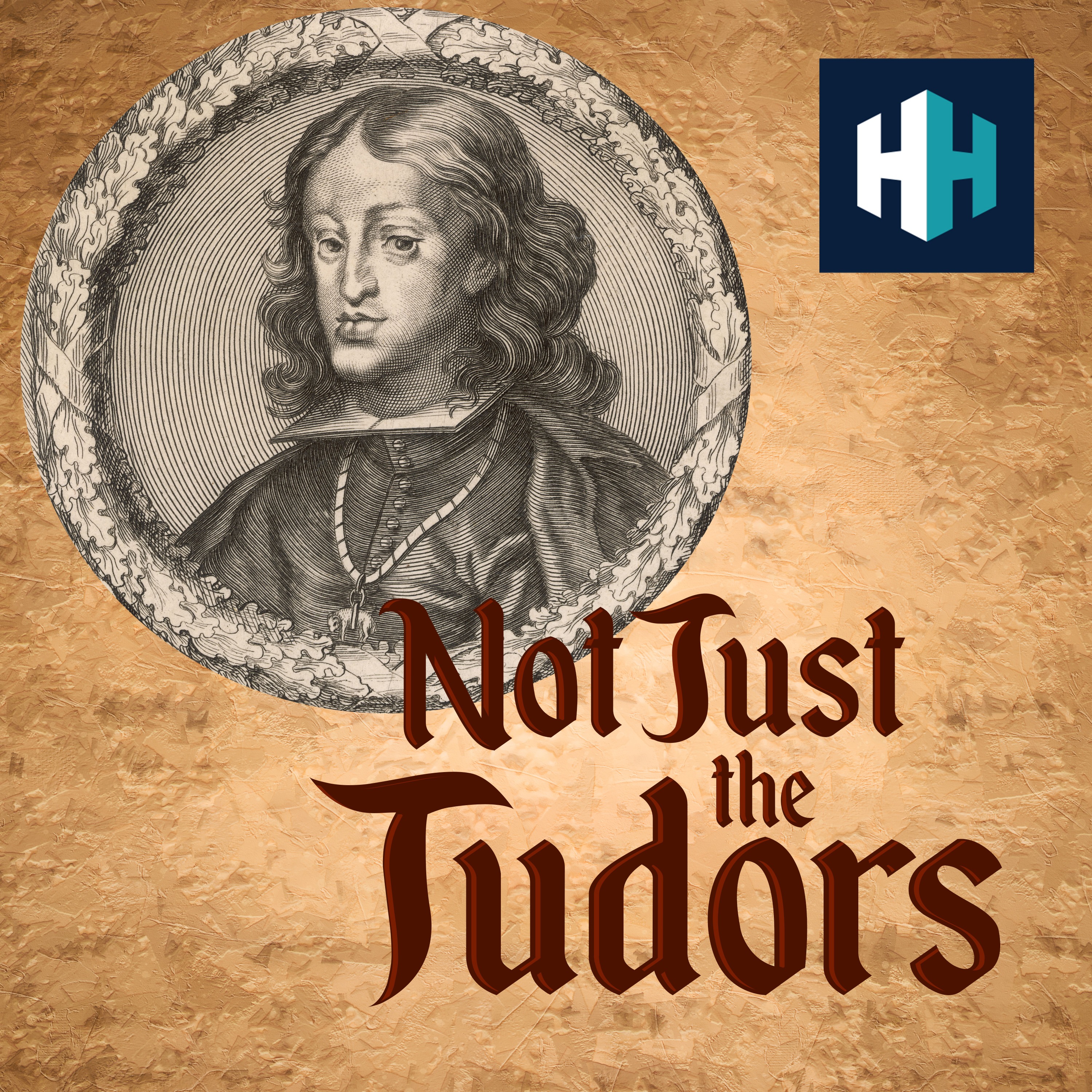
Not Just the Tudors
Rudolf II, the "Mad Habsburg Emperor"
00:50:51
Professor Suzannah Lipscomb investigates one of the most fascinating and misunderstood rulers of early modern Europe
Loading summary
Transcript69 lines
- [00:00]
Professor Susannah Lipscomb
Hello, I'm Professor Susannah Lipscomb. If you'd like Not Just the Tudors ad Free to get early access and bonus episodes, sign up to historyhit with a historyhit subscription. You can also watch hundreds of hours of original documentaries, including my own recent two part series A World Torn, the Dissolution of the Monasteries and enjoy a new release every week. Sign up now by visiting historyhit.com forward/subscribe.
- [00:32]
Upwork Advertiser
The market's uncertain, revenues tight and hiring on hold. That's why results driven companies are using upwork to keep work moving. Go to upwork.com today and start hiring proven freelance talent Fast. No bulky overhead, no rigid long term contracts. Just the right expert right when you need them. Work smarter and faster with Upwork. Go to Upwork.com now and find your freelance expert. That's Upwork.com post a job for free and get started Today.
- [01:03]
Instacart Advertiser
A PSA from instacart It's Sunday 5pm you had a non stop weekend. You're running on empty and so is your fridge. You're in the trenches of the Sunday scaries. You don't have it in you to go to the store, but this is your reminder. You don't have to. You can get everything you need delivered through Instacart so so that you can get what you really need. More time to do whatever you want. Instacart for one less Sunday. Scary.
- [01:32]
Herobread Advertiser
We're here Fall is all about cozy comforts, but when you're prioritizing your health, it's easy to feel like you're missing out. With herobread. You can enjoy all your fall favorites because they're made with herobread sliced bread loaves, tortillas, bagels, dinner rolls and more. Try their all new hero noodles with 12 grams of protein and just 80 calories. So skip replacing every carb with cauliflower and indulge in your breakfast, lunch and dinnertime favorites while still hitting your goals. From breakfast, bagels and meal prepped enchiladas to mouthwatering burgers and cheesy noodles you won't believe. Herobred's options have 0 to 5 grams net carbs and are high fiber from the taste and texture. They've even got small batch drops of indulgent favorites like the popular Hero Croissant. And right now, Herobread is offering 10% off your order. Go to Hero Co and use code fall25 at checkout. That's fall25hero co. All figures are per serving of HeroBread contains 2 to 18 grams of fat per serving. See the product Nutrition Panels on Hero.co. for more information.
- [02:38]
Professor Susannah Lipscomb
Hello, I'm Professor Susannah Lipscomb, and welcome to Not Just the Tudors From History Hit, the podcast in which we explore everything from Anne Boleyn to the Aztecs, from Holbein to the Huguenots, to from Shakespeare to samurais, relieved by regular doses of murder, espionage and witchcraft. Not, in other words, just the Tudors, but most definitely also the Tudors. In our final episode of this series on the Habsburg dynasty, we turn to the most enigmatic of rulers, Rudolf ii. Last time, we explored the women of the dynasty, figures who so often stood just off stage, yet whose influence shaped court politics, dynastic strategy and religious life across Europe. Now we end with a ruler who seems to have vanished from the center of the Habsburg stage altogether. Rudolf II, Holy Roman Emperor from 1576 to 1612, remembered, if at all, as the mad emperor who withdrew from politics and lost his grip on power. But was Rudolf truly mad? Or has history misunderstood him? This episode reconsiders Rudolf's reign not as a slow slide into dysfunction, but as a bold, if eccentric vision of imperial rule. He inherited a fractious empire at the height of the Counter Reformation amid Protestant uprisings, Ottoman pressure and dynastic rivalries. Yet rather than rule from Vienna or Madrid, he moved the imperial court to Prague and built a world in his own image, a glittering centre of art, science, alchemy and astrology. His court attracted astronomers like Kepler, painters like Archimboldo, and collectors, scholars and mystics from all over Europe. Rudolf's reign may have ended in political crisis, stripped of power by his own family, but his cultural legacy reshaped the image of central Europe and left a deep image imprint on the imagination of the early modern world. Joining me today to discuss Rudolph II is historian Professor Thomas Kaufmann, Frederick Marken professor of Art and Archaeology at Princeton University, and the author of a new book, Rudolph II the Life and Legend of the Mad Emperor. I'm Professor Suzanne Lipscomb, and this is not just the Tudors from history hit. Professor Kaufman, welcome to the podcast.
- [05:11]
Professor Thomas Kaufmann
Thank you.
- [05:11]
Professor Susannah Lipscomb
Can you start by giving me an idea of the reputation of Rudolph ii?
- [05:17]
Professor Thomas Kaufmann
Yes. I think not just the Tudors is a good place to start, because in a way, what happened to Rudolph is what happened Richard iii. If we believe what the sources are about Richard iii, namely that he was defamed by his successors, that is the tutors, in particular their historians. And there were good reason to do that. And it seems that something very similar happened with Rudolph in that the rumors and the slanders that were created about him actually seem to stem from his brothers and his cousin, who were the people who, as you mentioned, ultimately got rid of him, disposed him and took away all his titles and powers, and did leave him isolated in the Prague Castle. But that was not necessarily the case of things that happened. In addition, the voices of ambassadors who failed to achieve their ends used him as an excuse. But many of the things that were said about him are really not correct. However, these legends extended, and it's a much better story, in a way, about the Mad Emperor than really about what one needs to think about how he ruled and what he chose to do.
- [06:48]
Professor Susannah Lipscomb
So, I mean, how has his interest in the arts and sciences, for example, been connected to his downfall as a ruler?
- [06:55]
Professor Thomas Kaufmann
Well, as you suggested, that the thought is what people said anyway, is that he withdrew from the world of states, from active political engagement in favor of dabbling in the arts and the occult and to a degree in the sciences, and he shut himself up in the Prague Castle. And these were taken and actually by, you know, really the most distinguished historian, Quay, Historian on the topic, that is to say, Robert J.W. evans, who was Regis professor of History Emeritus from Oxford, who wrote, you know, really a. A landmark book on Rudolph ii. But nevertheless, although in his first book he was very moderate in his approach to Rudolph, what seems to be one of his ultimate statements in biographical notice of 2005, he says that these are signs, that is to say, an interest in art and, and an interest in magic, that. That there's signs of increasing madness. Basically, it comes to that, so that many historians, and, you know, there's a book by another distinguished historian called, you know, the Mad Princes of Renaissance Germany. So this is a way of regarding.
- [08:20]
Professor Susannah Lipscomb
Well, by that measure, to quote Alice in Wonderland, we're all mad here. So this has kind of been what you've described as a black legend.
- [08:27]
Professor Thomas Kaufmann
That's correct.
- [08:28]
Professor Susannah Lipscomb
Why did it take historians so long to challenge this view?
- [08:33]
Professor Thomas Kaufmann
Well, I think there are a couple of things going on. First of all, as maybe you've discussed, and I don't know what Professor Parker said in talking about Charles V, that the Habsburgs are not very popular in the English speaking world. And there's good reason for that because one of the, well, great events of English history, of course, is defeat of the Spanish Armada. And so from the Spanish side, even though Philip II was in fact King of England, that's sometimes forgotten, I guess, in the 1550s, you know that, but it's not generally known. And Queen Mary is also not Very popular in favor of Elizabeth. The fact that there was talk of Elizabeth marrying Rudolph is not taken into account so much. And Rudolph's failure to marry is taken as something negative, whereas Elizabeth, you know, is the great Virgin Queen and all of that. So they're contemporaries, exact contemporaries, but treated very differently. In addition to that, I think that Central European history, that is to say the German speaking and the Slavic speaking lands, is not very familiar as a whole. Except for the 20th century, one might say, except for the world wars and the Holocaust and so forth and post war. So it's really this earlier period, although they're very good historians in England and elsewhere who deal with this art history and cultural history. Not so familiar, you know. And I think that's generally the case. And in handling the Habsburgs, I think it's the case, which is why I was asked now to write a general history book on the Habsburgs. So I'll do that next, which will emphasize much more the centrality and the importance of the arts.
- [10:22]
Professor Susannah Lipscomb
And you alluded to the fact that like Richard iii, his reputation was immediately trashed. What did contemporaries gain by criticizing Rudolph?
- [10:33]
Professor Thomas Kaufmann
Well, they had a reason then to oppose him. And in fact you can see that the sources, as I say, come from these people from the other archdukes. And they actually convened, they had a meeting in Vienna in which they actually plotted. And there's a protocol of this to get rid of him. And some of the things they say are directly related to this. Oh, that he's, you know, you can say he's possessed by the devil and he's made a pact with him and you know, he gets more and more mad basically every day and you know, this waste interest in the arts and so forth, it's all bad. And so they gain that. And the ambassadors, those who aren't successful, as opposed to those are. Well, that's a pretty good excuse. You can say, oh, well, the mad emperor keeps ships himself shut up and he doesn't want to see anybody. And that's, you know, he's neglecting affairs of state, so that's what they gain.
- [11:34]
Professor Susannah Lipscomb
So let's go back and talk about Rudolph's upbringing, which was at the Spanish court. How did this influence his approach to rulership, do you think?
- [11:45]
Professor Thomas Kaufmann
Well, that, that is a key question here. I think a number of things may be said about that. He was kept very close by Philip II in Spain and it was noted at first that he reacted to that and he seemed rather stiff and they even said he was what we would say, Hispanulated and he seemed very Spanish when he came back. The first observations of him were like that. And how his upbringing would have affected him, at least in Spain, were in a number of ways. First of all, Philip II really introduced or perfected to develop what Charles V had introduced, which is this kind of Burgundian court ceremony we're getting in court. And among other things that involves not only manner of dress, but it also involves the idea which is, you know, an ancient idea of keeping people away, of having a whole series of steps by which you need to go to approach him. And if you think of Philip ii, very remote in a certain way and deliberately so. And Philip, of course, ultimately withdraws to the Escorial. Not to say, you know, it's easy to get there now, but not so easy in the past. And it was in the middle of, you know, wasteland basically outside of Madrid and not in the center of. And people would have to come to him or whatever to visit. And you know, that is a model. And in fact, at the end of Rudolph's life he also thought of withdrawing, but interestingly enough to Linz, not to Prague, so going back in an isolated place. Secondly, of course, the other aspect of the Burgundian heritage which he would have gotten through the so called Austrian hat Briggs as well, is the use of splendor in the arts, showing off magnificence. This is an Italian Renaissance idea which also Philip would have had, but he would have definitely seen that because this is a time not only in which Philip is building the Ascoria Island. Rudolph would have been on site because Philip was often on site, but also the Titians are coming, all the great paintings that are in Spain. Rudolph. Oh, that's an idea. That's how one rules third, which is also forgotten and it's been brought out now, although one thinks of, oh, you know, the great Catholic king and ruler and you know, you yourself have written about witchcraft and all this is bad and devilish. Philip was intensely interested in the occult and in alchemy and astrology, which are all interests which are standard in a way for many Renaissance rulers. But Rudolph picked them up as well. Now, the other side of things, I think were communicated through the model of his father. Now, he was only like young when he at first, but he had five years back in Vienna until he became emperor. And there he sees Maximilian ii, however, not behaving like Philip II in terms of education. This is education of how he went as a prince. In other words, trying to be conciliatory. And not orthodox, not suppressing, as Philip II did, everyone who is a particular kind of very orthodox Catholic. And Rudolph certainly is unorthodox, as far as one can tell, in his beliefs.
- [15:15]
Professor Susannah Lipscomb
Yeah, right. So that explains why he in the end differs from the sort of very hard line Catholic Counter Reformation that we see with people like his uncle Philip.
- [15:25]
Professor Thomas Kaufmann
It's also practical. I mean, as you would have heard, Charles V did not succeed in crushing the Protestants. And Rudolph realizes, yeah, that's not going to happen. Secondly, given the constitution of the Holy Roman Empire, he needs the support not only of the three archbishops who are pushing him in the Catholic direction, but. And he has a position as King of Bohemia, but he also needs support from whatever other moderate sources he can get. And he has relations and personal relations and close relations with several of people who were Protestant, of both Lutheran at least, particularly the moderate Lutheran side, and even to a degree Calvinist, which is maybe surprising, but it's, it's true. And in addition, of course, he does not, and this is different from Maximilian II or from Willa ii, take a antagonistic position towards the Jewish community, which is another important point and very unusual.
- [16:32]
Professor Susannah Lipscomb
At that time, one would have to say. I mean, you know, this is a period where for the previous century, Jewish people have been expelled, confined to ghettos, treated with harshness across Europe. So this is particularly unusual, isn't it?
- [16:48]
Professor Thomas Kaufmann
Yes. And this is why this is a golden age of Prague and why people go to Prague. I mean, we're interested in Jewish history and Jewish culture because besides the medieval synagogue there, there are a couple that you're built during Rudolph's time in, you know, what you can say, a Renaissance or even Italian at Renaissance style. And there are. Yes, and I think the ritual baths are from this period and also the cemetery. And it is true that he did meet, I don't know whether it was face to face or through a curtain or whatever, with the famed Rabbi Lov of Prague, what is he called? The Maharaj.
- [17:29]
Professor Susannah Lipscomb
So is your assertion, in other words, that rather than seeing Rudolph as a neglectful ruler, someone who shows mental instability, withdrawal, et cetera, in actual fact, what we can see is evidence of prudence, tolerance that perhaps were just so unfamiliar to people at the time that they look like madness?
- [17:55]
Professor Thomas Kaufmann
Yes, I would say that. And the first thing you mentioned, prudence is in fact an idea very much associated with Philip ii, which he took over. And this idea of prudence is very much political. Prudence is something that he, he did adopt, I don't mean to say that Rudolph wasn't ill. He was ill, but many Habsburgs were ill. Rudolph had particular ailments which it seems did him in and also might account for some of the reactions that people noticed. And of course, when you know, you get sick, well, you tried to hide yourself, you know, as people do now. I mean, Rudolph had immense problems with circulation and he died ultimately of some kind of cardiologic problems, that's clear. And he may. Which other rulers did he. He may also have suffered from tertiary syphilis, which also would have affected his judgments and so forth. So ultimately, 25 years on from his having gone, you know, these kinds of things are. Yeah, those, those are real. But what is not real is the idea that an interest in the arts is, you know, a sign of madness. I'd also say that another reason why these things are not regarded as normal, and that's important for your podcast and all the rest, is that a ruler who is successful in war and is very warlike, those are the people regard as heroes, someone who keeps the peace, which he did, more or less. He had to fight the Turks who were aggressive and attacked, but besides that, no major conflicts within Christendom, at least in, you know what he could deal with the Netherlands, he tried to intercede, he tried to calm things down when Philip was trying to push him the other way, and he sought for a truce. And the other side of things, people don't get credit who for being great patrons. I mean, Louis XIV does, but not many people do.
- [20:05]
Professor Susannah Lipscomb
That's so right. It's so interesting. You're right that our ideas of people as heroes often has to do with the fact that they killed lots of other people. If they're great warriors, then we think they're great. So thinking about the arts then, there's been a sort of long standing debate about how we can reconcile Rudolph's intense focus on collecting things with his role as an effective ruler. And I wonder how you think modern scholarship has shifted the perception of Rudolph's collecting from being a sign of eccentricity to being a deliberate expression of imperial magnificence.
- [20:45]
Professor Thomas Kaufmann
Yes, well, my whole. I guess, you know, my. I mean, it's. One interest I've had is Rudolph II and the Habsburgs. I have lots of other interested art history history. But one thing that I noticed from the beginning, and it's not exclusive, is the role of collecting and patronage as, as you say, a form of magnificence and representation. And I think, although there's still resistance to that and still misunderstanding that I don't think that's an exclusive reason. We get into what other reasons. That has indeed shifted my lifetime, as you say, in that direction. And I've been certainly pushing for it. And now the Austrians who thought, oh, it was obvious, now they push it. And you know, it's. It's generally accepted, although not everyone not and. And people still want to fight this idea, I think, you know, and one thing that actually someone who was a partially a student of mine, who's a professor of history, found or pointed to was actually one of the first treatises in German, which was a translation of the political treatises on rules. And an adaptation of this from, you know, from the Italian sources was Bornitz, Yakov and Bournitz. And I think it's indisputable. Now he actually, in his treatise on how. How you rule and how you govern and all that, has a whole chapter on. Well, it's a book in Latin and he uses a Greek word, but he then uses the German for this phenomenon on the Kunstkammer and how the Kunstkammer is important specifically, he says, specifically to display your magnificence. And also two other things which are important that we don't think of so much for the polity, for the development of civil society. In other words, encouraging the arts and sciences, which is something that we think of. Rudolph Louis XIV realized this greatly. But you know, it's there with Rudolph too originally. And that is not just a particular view. And Bournitz was. He knew what was happening. He mentions a number of different courts and he worked for Rudolf. I mean, he's a. Not the right. He's one of the imperial servitors. And these ideas were being taught directly, which can also demonstrate at. Not by Rudolph, by somebody else. They had these princely academies, princely schools, you know, finishing schools for princes at this time. They know these ideas were taught and they were disseminated. So this is a widely shared view. But you know, people think, oh, the arts, you know, that's still a prejudice, of course, that, well, it explains, you know, this is something. Well, you learn in course of things, which is why, yes, at your university, it took quite a long time till the later 20th century to have a professorship in art history in Cambridge, maybe slightly better, but not, not, not really. You know, that's why the court told in London was established because, oh, art history, that's not a serious field. That's not serious. Arts aren't serious. That's something we do on our holidays or when we take a grand tour, when we go to the Continent or whatever.
- [24:16]
Professor Susannah Lipscomb
So in other words, by collecting, he's very much reflecting the political and cultural ideas of Renaissance kingship. Can you give me a bit of an idea about the Kunstkammer and the nature of his collection? What did he have?
- [24:34]
Professor Thomas Kaufmann
Well, Kunstkammer, he had the biggest one first of all, at this time, and in it are various things that we would consider works of art, particularly small sculpture, really refined pieces of goldsmith's work, all kinds of objects made using precious stones, rare items or they would regard as rare, like safe shell nuts, coconuts, nautilus shells, mother of pearl, et cetera, all kinds of things combining materials together with gold mounts. And the rest objects that you're. We would call exotic. They didn't necessarily. They did not have that word, but, you know, we could regard it as such, including early examples of Chinese paintings, Indian, that is to say, Native American feather painting, other objects from South Asia fans, Sri Lankan ivory carvings, this kind of thing. And also the raw materials out of which these things are made. And in addition, stuffed animals, birds and the rest, plus books on them and then other books of drawings and the rest. That's what's in, at least as far as we know, part of the Kunstkammer. And how they were displayed is another matter.
- [26:04]
Professor Susannah Lipscomb
Well, let's talk a bit about that then. How were they displayed?
- [26:08]
Professor Thomas Kaufmann
Well, this has also led to certain kind of a confusion and discussion about how it could not be possible as representation and all of that. The important thing is that the objects were there. But it's very much, and it's indeed like what is going to happen in certain ways in. In many museums that you have a lot of things that are in storage and you have only a few things that are on display. And of course that makes sense. You can't have everything out. But in Rudolph's collection, a lot was kept in cabinets, cases, and the rest, however, on the other hand, and it's said that this is for ornament and it's a. Passages picked out, there was a considerable amount, There were a considerable amount of small sculptures and some important sculptures which were on display that you could see. And also marking sort of points of contacts, even in the painting galleries were key sculptures. So that in fact you walked and he walked past Charles v and Rudolph II's own bus was in the midst of everything. And then there were also ways of. He's focused on his image. And the smaller sculptures, of course, were prized objects. So those are placed on the tabletops and on top of the cabinets. And then if you wanted to See something and there are many collections that are like this now. You can think of drawings collections, but also storage collections. I don't know if the Pitt Rivers Museum is like this, I think but certainly the new storage facilities at Yale University are like this. You go in and you pull open the, pull open the shelf or pull open the cabinet and there are objects that you could have on display. I mean they're the quality of or interest of the things that are on display. So that's so I think what was going on to a degree. Now it's also a misunderstanding to think of the Kunstkammer as a museum because it wasn't. The public museum is creating like the British museum of the 18th century or the, the picture Gallian Castle, the earliest or you know, the Ottoman and opening collections that also is of the 17th century more and not, you know, you, you could see this. There wasn't. It's in the castle. So you know, just as now you don't have security measures, but also the matter of keeping things separate and apart. Only selective people got in to see it. It's not for everybody. And that's another instance why we think this is all secretive and. Yeah, well this is the nature of early as you know, I mean of early modern European society.
- [29:16]
Mario Lopez
Hey, what's up? It's Mario Lopez. Back to school is an exciting time, but it can also be overwhelming. And kids may feel isolated vulnerability that human traffickers can exploit. Human trafficking doesn't always look like what you expect. Everyday moments can become opportunities for someone with bad intentions. Whether you're a parent, teacher, coach or neighbor. Check in, ask questions, stay connected. Blue Campaign is a national awareness initiative that provides resources to help recognize suspected instances of human trafficking. Learn the signs and how to report@dhs.gov blue campaign.
- [29:53]
Upwork Advertiser
The market's uncertain, revenues tight and hiring on hold. That's why results driven companies are using upwork to keep work moving. Go to upwork.com today and start hiring proven freelance talent fast. No bulky overhead, no rigid long term contracts. Just the right expert right when you need them. Work smarter and faster with Upwork. Go to Upwork.com now and find your freelance expert. That's Upwork.com post a job for free and get started today.
- [30:23]
Herobread Advertiser
Fall is all about cozy comforts. But when you're prioritizing your health, it's easy to feel like you're missing out. With Herobred, you can enjoy all your fall favorites because they're made with herobread, sliced bread, loaves, tortillas, bagels, dinner rolls. And more. Try their all new hero noodles with 12 grams of protein and just 80 calories. So skip replacing every carb with cauliflower and indulge in your breakfast, lunch and dinnertime favorites while still hitting your goals. From breakfast, bagels and meal prepped enchiladas to mouthwatering burgers and cheesy noodles, you won't believe. Herobrad's options have 0 to 5 grams net carbs and are high fiber from the taste and texture. They've even got small batch drops of indulgent favorites like the popular Hero croissant. And right now, HeroBred is offering 10% off your order. Go to Hero Co and use code Fall25 at checkout. That's Fall25. HeroCo. All figures are per serving of HeroBread contains 2 to 18 grams of fat per serving. See the product Nutrition Panels on Hero.co for more information.
- [31:23]
Numerica Credit Union Advertiser
Meet Olivia.
- [31:24]
Herobread Advertiser
Hey, what's up?
- [31:25]
Numerica Credit Union Advertiser
Olivia dreams big.
- [31:27]
Herobread Advertiser
I want to go back to school.
- [31:28]
Instacart Advertiser
And get a pet and buy a house and save for retirement and travel the world.
- [31:33]
Numerica Credit Union Advertiser
That's quite the list.
- [31:34]
Instacart Advertiser
Thank you.
- [31:34]
Numerica Credit Union Advertiser
Numerica Credit Union is the perfect partner to help turn Olivia's dreams into reality.
- [31:39]
Herobread Advertiser
Really?
- [31:39]
Numerica Credit Union Advertiser
Yep. We're all about helping our members create a life that feels like theirs. And we have the tools, expertise and guidance to make it happen.
- [31:47]
Instacart Advertiser
I'm in. Let's get started.
- [31:50]
Numerica Credit Union Advertiser
Money where it matters. Federally insured by ncua.
- [32:06]
Professor Susannah Lipscomb
So can we talk about Rudolph both as a patron and as an artist himself? How did his personal involvement as an artist influence what was being produced at his court?
- [32:16]
Professor Thomas Kaufmann
Well, we do know at least one object that's signed by him and. Or it has a signature on it and that's a gold mounted turned cup from Rhinoceros Horn, which is in Copenhagen. I think it's in Rosenborg, but it was in the Royal Danish collections. So it was most likely a gift. Indeed, it's significant, a gift to the Lutheran king of Denmark, Christian iv, who's another great patron of the arts. And Rudolph is said to have been a goldsmith and a stone cutter. Well, we have this instance working on the lathe is very much something that everyone does at this time. There's one princely lathe, though, that which belonged to the friend of the elector Saxony, August, and that can be seen in the Museum of the Renaissance in AKU on in France. So all of them were, you know, they. All these princes worked on the lathe. In addition to that, he probably hammered and sized things. Goldsmith's work. Said that he worked as a jeweler may have worked and said that he worked in these stone cutting and putting together things in the so called mosaics out of semi precious stones which are called comes in pietra dure. And we still have the Pietro Dure museum in Florence for evidence of that. And it's said that he painted well, he certainly watched his painters paint and told them what to do. And he may have done that. And he, he probably learned, as everybody did, how to draw. Although we don't have any drawings or paintings by him, we do have some paintings by other of his friends and contemporaries and that should be noted in fact by two of his closest associates. So we can imagine that this is a myth. So, so he did that, but we don't know how they looked.
- [34:17]
Professor Susannah Lipscomb
And in what ways does his patronage reflect his political ambitions, his ideas about rulership?
- [34:25]
Professor Thomas Kaufmann
He didn't start this, of course, but there are many images that are allegories which are on his glory, his power, his patronage and so forth. You know, and particularly he gets these ideas and Pari has it himself. But just as Charles V and I don't know if Professor Parker mentioned this in your podcast, he actually brought along Fermayan on his so called crusade to Tunis to draw what was there and to make tapestries. And Rudolph later on in his life, in a period when she lost it, actually commissioned a set of tapestries also to be executed in the place where they were made in, you know, Brussels. And also commissioned one of his court artists, Hans van Aken to do the drawings for that. And we do have drawings for Hans van Aken which are on Rudolph's supposed great victories against the Turks in the so called Long Turkish War from 1593 to 1606, which the Habsburgs fought with the Ottomans. And those are replicated in drawings and in small paintings and then are combined in the relief which is now in Vienna, which is by Adrian de Fris. On the other hand, you know, we have the glories of war, but we also have, you know, the, the two sides of the emperor, as it said, the ex utrios gave Kaiser the arts patronage of the arts. And again by Defries, by the way, Rudolph is said to have been the inventor of the Defries relief on the Turkish wars. We do have. And you can see it not far from you in, well, I don't know what room it's in there, but you can sometimes see it in Windsor Castle there was in the, in the royal collection, in the King's collection, there is the Defries allegory on the Arts Entering Bohemia. So there's that. So there are these kinds of things. He celebrates his rule in many ways. And then there are other things that he also patronizes which are related. If you're talking about the arts, which I think you asked me about, there is the patronage of nature studies. That's quite important, that he sent several artists out to depict the rare wonders of nature and it said that. And that leads to some of the first actual landscapes that are based on the study of actual trees and rocks and things like that. Because we have the drawings and we have the paintings by Savari and Paula Sunfehanen, although some things may have been done earlier, but there's some of the very first. We have some of the very first still lives by northern artists, and we have the first surviving still lives by Italian artists, which are the invertible heads by Archimboldo. And they're done significantly, I believe, first under, at the time of maybe slightly earlier. But the ones that are successful and are coherent, it still lies that we have surviving. And not just maybe around time of maximum ii, but certainly the ones that you can see are the time of Rudolph. And also in regard to Arjun Boldo, whom we think of as this fantastic painter, there are lots of actual studies of animals and so forth, and many of them have dates of the reign of Rudolph.
- [38:16]
Professor Susannah Lipscomb
Yes, it's fascinating. It shows a real interest in the world beyond religious art, which of course is so important in contemporary Spanish Habsburg art. Can we talk then about what we consider science and also consider superstition? So, you know, Rudolf has a reputation as having a relationship with the so called occult sciences, you know, alchemy and astrology and magic. Is that reputation deserved?
- [38:45]
Professor Thomas Kaufmann
Yes, but I should say something about that and I should also get back to the religious question, very different from the Spanish asterisks, because he says specifically, and this is borne out by what he actually commissioned and what he owned. Yes, he owned some religious paintings, but that's because of the painters who did them. But he says when he commissions a work by Federico Barocci, of which a copy or a second version exists in the Borghese in Rome, he says he wants a work not of religion, but of another taste. So he specifically does not want from this very important painter of religious works and portraits of religion. And so what does he get? Aeneas fleeing from Troy? Well, of course, those who've read, and probably most people watching this podcast, have the. The Aeneid will know that this is the origins of the. Of Rome, of the Roman Empire. And therefore of the Holy Roman Empire, and therefore, you know, Rudolph's claim. So it's right there. Now, as far as the other things are concerned, well, natural magic is connected with natural history. Same people, practitioners and astrology, astronomy, two sides of the same coin, alchemy and chemistry. Now we get into philosophy and history of science, if you will, here. Things that we regard as pseudosciences are in some instances really the outmoded sciences of the past. And our beliefs, which they are now, are going to be regarded as equally fantastic. Now, that's for sure, because how many people, you know, believe in phlogiston or whatever, these things are the other kinds of rays that were supposedly created and so forth. And also, as far as things that are occult, nobody has seen a string. The string theory, which is at the basis, is really great mathematically, but it's undemonstrable. It's completely unempirical. So. And it comes in part because of the shift which has occurred in the history of science to the importance given to the mathematical sciences from the late 19th into the 20th century versus the empirical and observational ones. So these things, like alchemy and the rest were indeed. Alchemy is a very good example. It is now demonstrated that what they're talking about is empirical and does lead to results. It just says, you can't make gold out of lead. But all the other things that they're describing you can make. It's just that instead, and this is one of the debates at the time and is not resolved until the 17th century, they believed in another form, another symbolic language which was not numerical, so that you have symbolic representations instead of numerical representations of phenomena. Quantification is certainly there. Quantification is involved by Kepler. And that's what leads him in a certain way to what we regard as the important discoveries of laws of physics, which we have to remember were made in Prague under Rudolph's. But they're for the purpose of casting horoscopes. So astrology is something which also faded from view. But alchemy was serious pursuit. Isaac Newton spent oodles of time on that. And Rudolph also is definitely someone, if you had heard about empirical, is interested in observational science. It's Rudolph. He read Galileo before Kepler did. And Kepler says, rudolph, this is something, you know, when he's supposed to be crazy, has the spirit of curiosity and of Galileo, He's. Kepler says that about him. And he's capable of talking with these incredibly intelligent people like Kepler. And he said, well, you know, can you see this? And he lends him a telescope. It's very frustrating because it's not very good. And not until Kepler gets a good one can he actually confirm what Galileo is seeing. So that's something that needs to be kept in mind. So there is this whole way in which, you know, the idea of the sciences at this time needs to be considered. Why are they occult? Okay, how are they a cult? Well, they are things, first of all, that sometimes cannot be seen. Okay, well, there are things that cannot be seen but nevertheless exist. One example of this, which we still haven't, by the way, come to a complete understanding of is magnetism, things that active force at a distance. Okay, that's a good example. Well, they were bothering and thinking about the moon's effect on the tides. That happens, but you know, or the sun's effect on things. We know that those are true, but you know, they had other ways of describing them. We have different ones now and you know, gravity is still not, you know, we still haven't met. My six, seven houses from where I live was where Einstein lived and you know, Einstein didn't work it out either. So the unified field theory. Unified theory.
- [44:21]
Herobread Advertiser
Only.
- [44:21]
Professor Susannah Lipscomb
Boost Mobile. Boost Mobile will give you a free year of service. Free year when you buy a new 5G phone.
- [44:26]
Upwork Advertiser
New 5G phone, enough. But I'm your hype man. When you purchase an eligible device, you get $25 off every month for 12 months with credits totaling one year of free service. Taxes extra for the device and service plan online only. The market's uncertain, revenue's tight and hiring on hold. That's why results driven Companies are using Upwork to keep moving. Go to Upwork.com today and start hiring proven freelance talent fast. No bulky overhead, no rigid long term contracts. Just the right expert right when you need them. Work smarter and faster with Upwork. Go to Upwork.com now and find your freelance expert that's up W o r k dot com, post a job for free and get started today.
- [45:17]
Professor Susannah Lipscomb
You know, once, once you start thinking about things like this, then you realize that if alchemy is thought to be a genuine field of knowledge and to produce potentially results, then it really matters to keep trying to do it. And actually we can put his scientific interests in a kind of broader dynastic and economic context and think about why he's supporting things like alchemy. And there is a kind of economic and political purpose there as well, isn't there?
- [45:51]
Professor Thomas Kaufmann
Absolutely. That's completely correct. Economically, it's a way of. Alchemy would have been how do you purify gold? How do you eliminate the dross from the. The gold? And that's something which is absolutely going on and very important, particularly as a way of getting more species, particularly after the New World, you know, the Americas, the discoveries of silver and so forth there, and of gold, you know, how do. What do we do here when we don't have access to it? That's number one. And yes, the other side of things is, as you say, the political and control over nature and the other reason for why things are occult. They're not for everybody. Knowledge is power.
- [46:41]
Professor Susannah Lipscomb
And I suppose everything we've said so far about his sort of economic horizons here, about his collecting practices, all of these things challenge the myth of him as an isolated ruler, don't they?
- [46:55]
Professor Thomas Kaufmann
Yes, absolutely. And he wasn't an isolated ruler up until the end, or almost the end. He was continuing to see people or sending out ambassadors to seek people to match his cause. They were not necessarily people who won out. And of course, history is written by the winners, not by the losers generally. And he, he lost. So, you know, he lost the political, the, what's called and very intelligent and fine play, the, the fraternal struggle within the Habsburg, the Buddhist fist and Hapsburg, which is a fan play by Grill Parts, who's a Austrian dramatist, whose day job was an archivist. So he knew what was happening and he was very insightful of what happened, although he has his own views of the 19th century.
- [47:58]
Professor Susannah Lipscomb
So in the end, why does Rudolph fall? I mean, if all of these reasons that have been given for his decline, his demise, his lack of authority, his eccentricity, if these don't really hold, and actually we can see, see that these are ways, are things that other rulers are doing, that they're demonstrating the ideals of Renaissance rulership, etc. What happens to him?
- [48:23]
Professor Thomas Kaufmann
Well, first of all, he doesn't have the support of the major forces on the Catholic side, that is to say the King of Spain. Yeah, well, he'd like Rudolph to marry his daughter. And then when Rudolf, sort of renegades, he marries, he marries his daughter to Rudolph's brother. Secondly, by not actively promoting the Counter Reformation, as it's called, or the Catholic Reformation in Central Europe, he doesn't have the backing of the Pope, So that's two sources of power. Third, he does issue a Letter of Majesty which advocates toleration in Bohemia, reissues it, but he's kind of forced to do this. And also the disaster occurs with his successors. The very people who plot against him are the Ones who actually bring on the 30 Years War. But they're very clever, you know, conniving. You could say that. And completely hypocritical. Undercutting Rudolph and you know, Matthias particularly, who was a complete failure when he was governor in the Low Countries. Failure and as a military leader in Hungary. But he manipulates the Hungarian estates. He's actually someone who is an arch Catholic and when he takes power, he's really on this hyper Catholic side. He promises the largely Hungarian estates freedom of religion and he has them around and then he has them make him king. Rudolph Germany, by not making a successor, he's leaving things open. Well, if he'd chosen a successor, the war would have come much earlier. And it's a time in which the armed camps begin to assert themselves. So he's caught out in a way with that. And then he did make one mistake. He misplayed his hand in Bohemia. So that's one of the things that happened by kind of encouraging again another cousin who's another Archduke, Archduke Leopold whose troops were brought in, they were ultimately due involve a succession crisis elsewhere in Germany and they run wild in Bohemia and attack Prague. And so Rudolf loses his credibility and Matthias again conniving, manages to get the Bohemian states to depose Rudolph and make Matthias king. So that's basically that what happens. But that's the end of his life and that's the last couple of years and that's what happens then.
- [51:12]
Professor Susannah Lipscomb
So is it fair to say that there are some strategic mistakes there at the end? Yes, but that perhaps before that point, the main problem is that he is too tolerant. He's not antagonistic enough. Is he a man out of time?
- [51:27]
Professor Thomas Kaufmann
Well, he's not. He's not tolerant of Muslims and he's certainly fighting the Turks. And that again, because he does see both the honor and also. But that's also. He's thinking of the defense of Christendom and the defense of Europe. You know those. Well, you know, that's resonates in unfortunate ways now, but those are notions that he has. And that's why he doesn't give up fighting the war. And he also saw it as a way of unifying Catholics and Protestants against the common enemy, which we often have as a. As a tactic. And again, Matthias undercut him there by making a peace which he was not authorized to do, and undercut Rudolph and forced, you know, guy who's a. Rudolph's kind of blackmailed into authorizing and having to sign this treaty with the Turks. Although there's certain things that he gets that are favorable in others. They're finally treated as if they're an equal and they're recognized in a certain way. Rudolph is also, however, negotiating contacts with Persia and with Russia. So on the other side. So it's not necessarily a toleration, but, you know, it's an extremely difficult situation. And with the conflicts within Europe and, you know, even in the east and the threats of. And he comes to terms with Poland and Russia and they're on the border and he doesn't work out with the Turks, although pieces ultimately made there, however, in the longer run, and this is. Was recognized as well, but at least in the 17th century, basically from Birkin, which is a quotation I conclude with in this new little book, he does have a long and peaceful reign and Maximilian second and Rudolph ii. And if you continue back to the last years of. Of Ferdinand I, there's peace in Europe largely from 1555 to 1618. And that's a long stretch in European history. The only stretch is perhaps longer is from 1815, although we have the Crimean War and we have the wars of Independence in Italy and so forth, and the Franco Prussian War, you could say from major conflict 1815 to 1914. But Rudolph, I mean, the Habsburgs have a better stretch of than this in the 16th, 17th century. So that's something we recognized. And at the same time, all the art and science that's going on to end then.
- [54:18]
Professor Susannah Lipscomb
Professor Kaufman, in your work on Rudolf, what has most surprised you?
- [54:25]
Professor Thomas Kaufmann
That's a good question. The way in which the occult and natural sciences can be reevaluated. That is something that has happened because also in the last 20, 30 years, people all whom I know actually, or many of them I know, have reevaluated alchemy. And there's been somewhat of a reevaluation of astrology so that we can look at these things in a different way and look at supposedly the dabbling in the occult as something else than, you know, the way we regard it now as rather silly. And yeah, I think that is what's, you know, kind of been surprising. This psychological thing one had expectations about. And I just had a personal note. The idea that he should be crazy, of course, isn't, as I pointed out in the book, is not only a violation of the American psychologists and psychiatrists statements about how you cannot say that unless you've examined the person. But Freud says that himself that you have to examine the person before you can come to a judgment. I should say that I was put on to that particular argument, Freud by my daughter, who's a psychoanalyst. So using it in the house. But I don't know. She should certainly say, yeah, you can't say Rudolph's crazy because you can't have him on the couch. And then as I add in the book, but I don't know if people caught this unless you do what he's accused of doing, that is to say, bringing the dead back to life.
- [56:11]
Professor Susannah Lipscomb
What a note to end on. Thank you so much for your insights into this extraordinary character. It's been a real pleasure to talk.
- [56:19]
Professor Thomas Kaufmann
With you and a pleasure to talk with you as well, ma'.
- [56:21]
Professor Susannah Lipscomb
Am. Thank you, thank you, thank you for listening to this episode of Not Just the Tudors From History Hit. Thank you also to my researcher Max Wintle, my professor producer Rob Weinberg, and to Amy Haddo, who edited this episode. We are always eager to hear from you, including receiving your brilliant ideas for subjects we can cover. So do drop us a line@notjusthetorshistoryhit.com and I look forward to joining you again for another episode. Next time on Not Just the Tudors From History Hit.
- [57:01]
Herobread Advertiser
Fall is all about cozy comforts and with herobread you can enjoy all your favorites and still hit your health goals. From breakfast, bagels and meal prepped enchiladas to mouth watering burgers and cheesy noodles you won't believe Herobread's options have 0 to 5 grams net carbs and are high fiber from the taste and texture. And right now Herobread is offering 10% off your order. Go to Hero.co and use code fall25 at checkout. That's fall 25 Hero Co all figures are per serving of Herobread contains 2 to 18 grams of fat per serving. See the product nutrition panels on Hero Co for more information.
- [57:31]
Western States CAT Advertiser
Big jobs demand big performance and Western States CAD delivers whether you're buying new or used. Our machines are equipped with money saving technology, built tough and ready to tackle anything. And when it's time for maintenance, our expert service teams keep your investment running strong. From new and used equipment purchase to equipment rental, parts and service Western States cat used, your partner wherever you build, visit western statescad.com today. Together we build the future.