Podcast
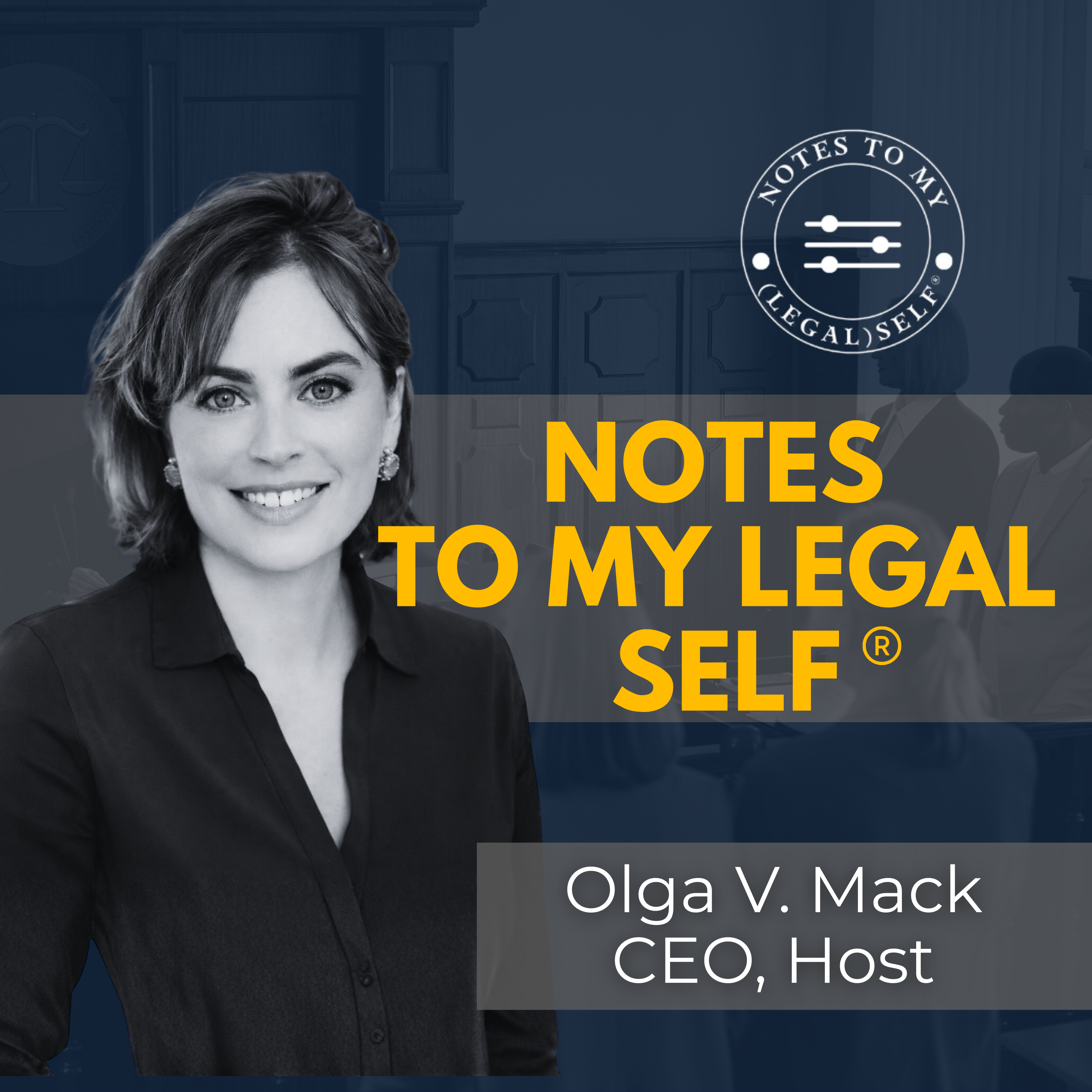
Notes to My Legal Self®
Hosted by Olga V. Mack · EN
Notes to My Legal Self® is a podcast for lawyers who want to think better, lead better, and practice with judgment, not just knowledge.
Hosted by Olga V. Mack, the show explores the real decisions lawyers face but rarely talk about openly. The gray areas. The tradeoffs. The moments where legal advice shapes business outcomes and trust.
Each episode blends candid reflection and conversations with experienced legal leaders who share what actually works in practice.
This is not about memorizing rules. It is about developing legal judgment, clarity, and confidence over time.
34episodes
Episodes
Newest firstAll episodes
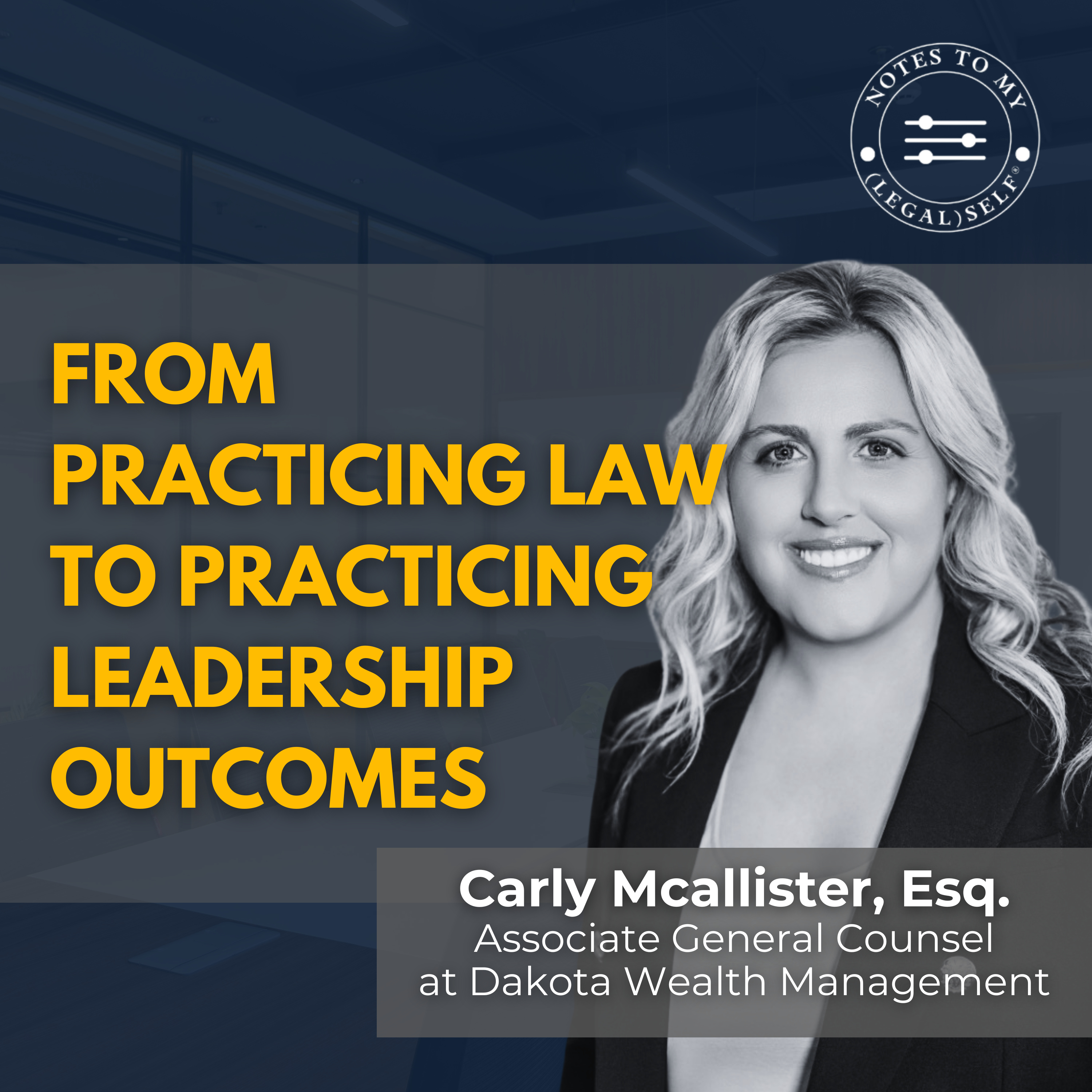
From Practicing Law to Practicing Leadership (Carly Mcallister) NTMLS S15E5
1w ago00:40:13Tap to summarizeWelcome to Season 15, Episode 4 of Notes to My (Legal) Self, where Olga V. Mack sits down with Carly Mcallister to explore what it means to move from practicing law to practicing leadership.Together, they discuss why the best in-house lawyers do more than manage risk, they build trust, empower business partners, and create possibilities.Carly shares how her transition from litigation to financial services taught her that technical legal excellence is only the beginning of becoming an effective in-house leader.Drawing from her experience in litigation, judicial work, and financial services, Carly explains why understanding the business, investing in yourself, and developing sound judgment are essential to legal leadership. She also explores why, in an AI-driven world, human judgment, communication, and connection will remain among a lawyer’s greatest competitive advantages.You'll discover:• Why moving in-house requires shifting from legal expert to business partner• How legal teams can create possibilities instead of simply managing risk• Why great in-house lawyers look for responsible ways to get to “yes”• How understanding the business builds trust and strategic influence• Why listening, humility, mentorship, and continuous learning strengthen judgment• How personal development can make you a better lawyer and leader• Why collaboration across teams creates better business outcomes• How legal departments can empower people through thoughtful governance• Why AI can amplify legal work but cannot replace human judgment• How lawyers can evolve from risk managers into leaders who create possibilitiesWhether you're considering an in-house career, growing as legal counsel, or leading within an organization, this conversation offers practical insights on business partnership, judgment, personal development, and creating value beyond traditional legal advice.If you've ever wondered how to become a more trusted, strategic, and human-centered legal leader, this episode is for you.Takeaways:• Technical legal excellence is the foundation, not the finish line.• Great in-house lawyers create confidence and possibility.• Understanding the business is essential to becoming a trusted partner.• Judgment grows through experience, humility, listening, and continuous learning.• AI will transform legal work, but leadership and human judgment remain essential.S U B S C R I B E!Want to be a guest on NTMLS or know someone who should be? Reach out! Self-nominations are acts of courage. Engage with us below, like, comment, and subscribe to follow the future of in-house law!Thank you for watching!Like, Comment, Subscribe, and hit the bell so you never miss an episode!Subscribe to our channel: @NotesToMyLegalSelfINTERSECTION OF LAW AND FUN®#LegalLeadership #InHouseCounsel #Leadership #CareerDevelopment #GeneralCounsel
Transcribe →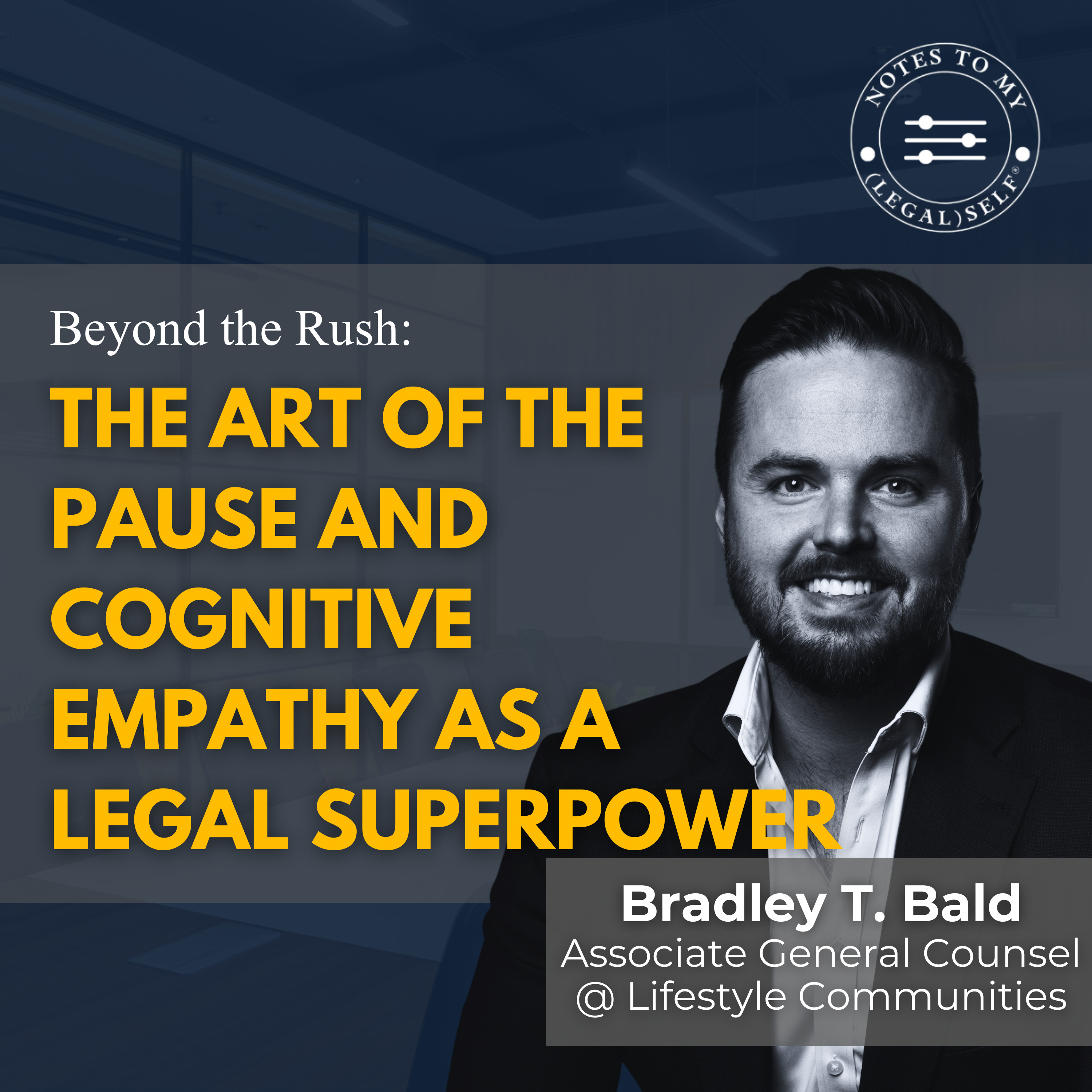
The Art of the Pause and Cognitive Empathy as a Legal Superpower (Bradley Bald) Notes To My Legal Self S15E4
2w ago00:36:11Tap to summarizeWelcome to Season 15, Episode 4 of Notes to My (Legal) Self. In this thought-provoking conversation, host Olga Mack sits down with Bradley Bald, In-House Counsel at Lifestyle Communities, to explore how taking a pause can become one of the most powerful leadership tools in a lawyer’s toolkit.Together, they discuss the realities of burnout, the courage required to take a sabbatical, and why cognitive empathy may be one of the most underrated superpowers for modern legal professionals. Bradley shares his personal journey from private practice to in-house counsel, the lessons learned during a career pause, and how listening, reflection, and emotional intelligence can create stronger relationships, better negotiations, and more impactful leadership.Bradley Bald serves as In-House Counsel for Lifestyle Communities, a nationwide mixed-use multifamily real estate developer focused on creating wellness-centered communities. With experience spanning private practice, real estate, business development, and in-house leadership, Bradley brings a unique perspective on career growth, resilience, and the evolving role of legal professionals.Key insights from this episode:• Why the most enduring regrets often stem from inaction rather than action• How taking a sabbatical can provide clarity, prevent burnout, and create space for personal growth• The importance of embracing discomfort during career transitions• How the “power of the pause” can improve communication, negotiations, and conflict resolution• Why cognitive empathy helps legal leaders understand others without absorbing their emotions• How modern in-house counsel can add value beyond legal advice by becoming proactive business partners• The role of self-awareness, reflection, and emotional intelligence in effective leadershipWhether you're navigating burnout, considering a career transition, building your influence as in-house counsel, or looking to become a more effective communicator, this episode offers practical insights and meaningful perspective for legal professionals at every stage of their careers.About the Guest:Bradley Bald is In-House Counsel at Lifestyle Communities, where he supports a vertically integrated real estate development organization spanning development, construction, property management, hospitality, and lifestyle brands. With a background in private practice and over a decade of experience in real estate, Bradley is passionate about leadership, psychology, cognitive empathy, and helping legal professionals build careers that align with both purpose and well-being.Takeaways:• Taking a strategic pause can create opportunities for long-term growth.• Burnout prevention requires intentional reflection and self-awareness.• Cognitive empathy strengthens relationships while preserving objectivity.• Great legal leaders are valued for influence, not just expertise.• Listening often creates more impact than speaking.• Emotional intelligence is becoming a critical leadership skill for modern lawyers.• Career success is not only about advancement, it is also about alignment.S U B S C R I B E!Want to be a guest on NTMLS or know someone who should be? Reach out! Self-nominations are acts of courage.Engage with us below, like, comment, and subscribe to follow the future of in-house law!Thank you for watching!Like, Comment, Subscribe and hit the bell so you never miss an episode!Subscribe to our channel: @NotesToMyLegalSelfINTERSECTION OF LAW AND FUN®#InHouseCounsel #CognitiveEmpathy #LawyerWellBeing #BurnoutPrevention #CareerGrowth
Transcribe →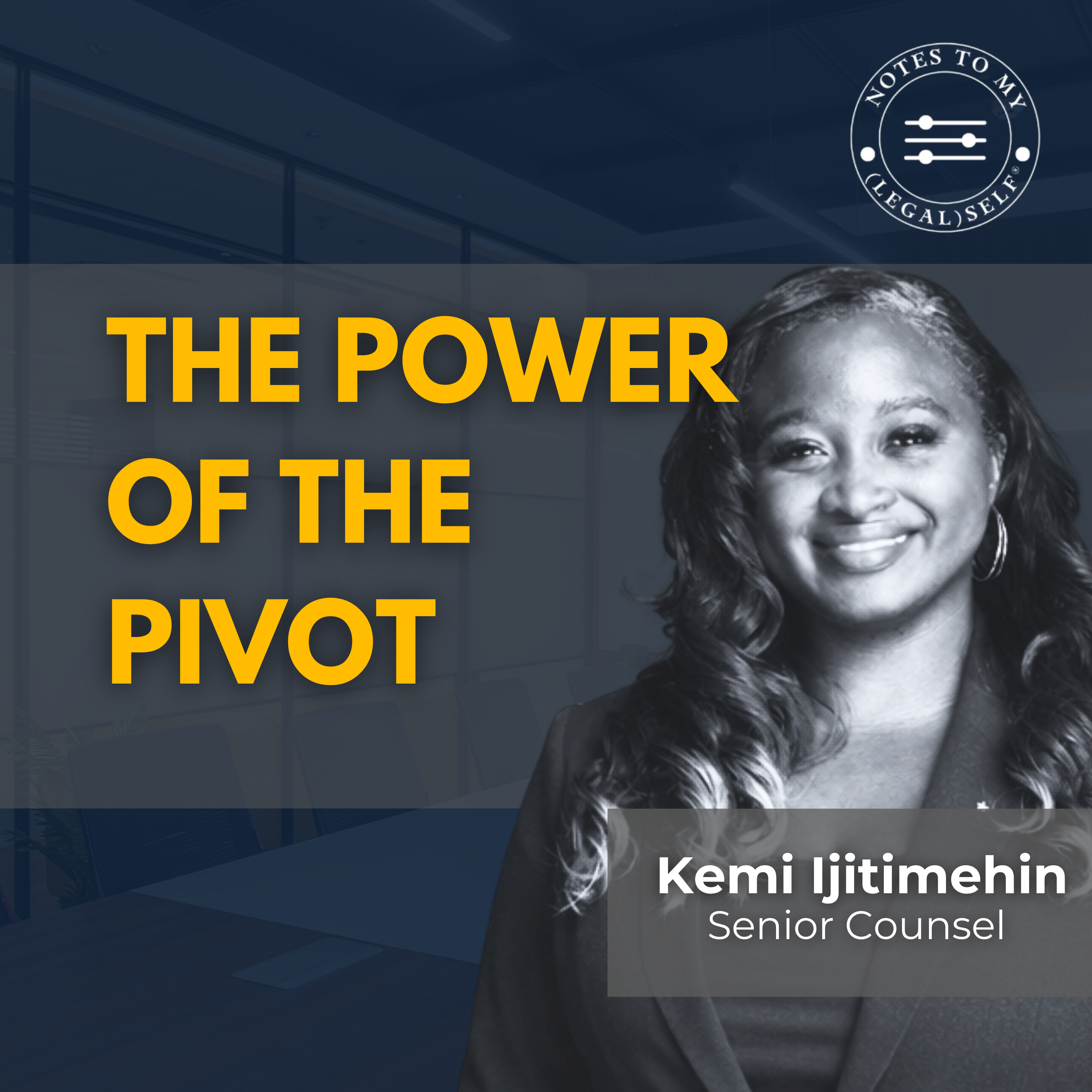
The Power of the Pivot (Kemi Ijitimehin) NTMLS S15E3
3w ago00:34:54Tap to summarizeWelcome to Season 15, Episode 3 of Notes to My (Legal) Self, where Olga V. Mack sits down with Kemi Ijitimehin to explore why the most meaningful careers aren't carefully mapped, they're built through courageous pivots.Together, they discuss how trusting your instincts, embracing creativity, and investing in relationships can transform not only your legal career but the businesses and people you serve.Drawing from a career that spans public policy, the federal government, and the technology sector, Kemi shares how every unexpected turn prepared her for the next opportunity. From navigating rejection and career transitions to becoming a trusted business partner, she explains why curiosity, authenticity, and human connection remain every lawyer's greatest competitive advantage in an AI-driven world.You'll discover:• Why "pivoting is a vibe" and how trusting yourself can unlock unexpected opportunities• How family history, resilience, and adaptability shape long-term career success• Why rejection is often redirection toward a better opportunity• How creativity is one of the most underrated skills in modern legal practice• Why product counsel requires lawyers to think beyond legal answers and help build businesses• The importance of curiosity in learning your business and becoming an indispensable legal partner• Why relationships and trust matter more than always having the perfect legal answer• How authenticity helps lawyers build credibility across cross-functional teams• Why AI can improve efficiency, but judgment, empathy, and human connection remain irreplaceable• How today's lawyers can evolve from legal advisors into strategic business leadersWhether you're an aspiring lawyer, an experienced in-house counsel, a legal operations professional, or a business leader navigating constant change, this conversation offers practical insights on career pivots, business partnership, leadership, and the uniquely human skills that define exceptional lawyers.If you've ever wondered how to embrace uncertainty while building a meaningful legal career, this episode is for you.Takeaways:• Career pivots are often driven by purpose, not perfect planning.• Curiosity is one of the most valuable skills an in-house lawyer can develop.• Strong relationships create trust, and trust creates better business outcomes.• Great lawyers don't just solve legal problems—they help build businesses.• AI will continue to transform legal work, but creativity, empathy, and judgment remain a lawyer's greatest strengths.S U B S C R I B E!Want to be a guest on NTMLS or know someone who should be? Reach out! Self-nominations are acts of courage.Engage with us below, like, comment, and subscribe to follow the future of in-house law!Thank you for watching!Like, Comment, Subscribe, and hit the bell so you never miss an episode!Subscribe to our channel: @NotesToMyLegalSelfINTERSECTION OF LAW AND FUN®#InHouseCounsel #LegalLeadership #CareerGrowth #BusinessPartner #ProductCounsel
Transcribe →
The Soft Skills That Power In‑House Law (Elizabeth A. Colombo) Notes To My Legal Self S15E2
4w ago00:37:31Tap to summarizeWelcome to Season 15, Episode 2 of Notes to My (Legal) Self, where host Olga V. Mack sits down with Elizabeth Colombo, Associate General Counsel at Vendavo.Together, they explore why great negotiation is about more than contracts. Beth shares practical lessons on empathy, business judgment, communication, and how in-house lawyers can become trusted business partners in an AI-assisted world.In this episode, you'll learn:Why negotiation is about people, not just paperHow empathy leads to better business outcomesWhy lawyers must embrace calculated riskThe difference between being a referee and a decision architectHow "embedded humanity" creates value AI can't replacePractical communication strategies for cross-functional teamsWhy human judgment remains a lawyer's greatest competitive advantageWhether you're an in-house lawyer, legal leader, or aspiring counsel, this episode offers actionable insights on leading with trust, business acumen, and humanity in the modern legal profession.INTERSECTION OF LAW AND FUN®#InHouseCounsel #LegalLeadership #GeneralCounsel #Negotiation #NotesToMyLegalSelf
Transcribe →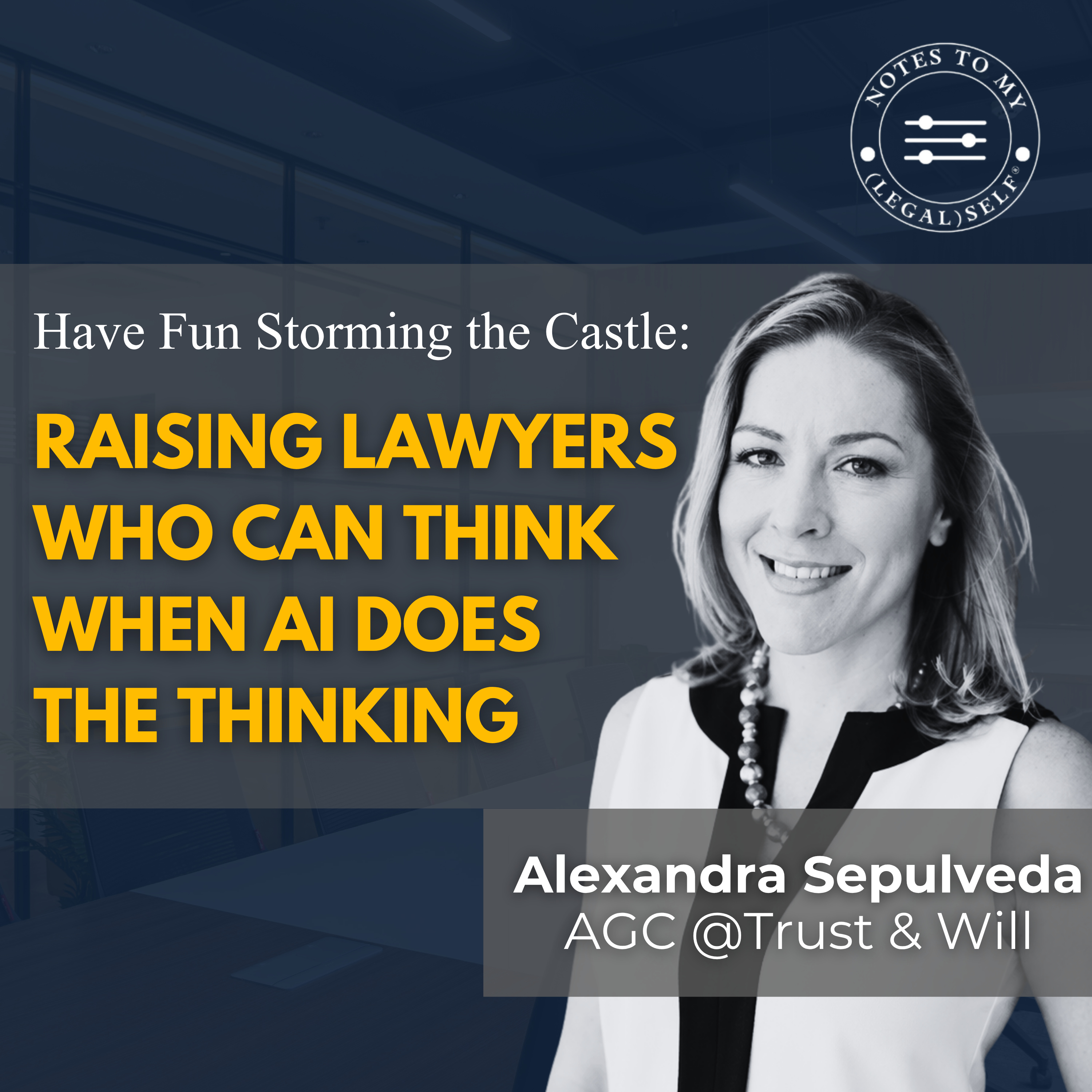
Raising Lawyers Who Can Think When AI Does the Thinking (Alexandra Sepulveda) Notes To My Legal Self S15E1
Jun 2900:46:13Tap to summarizeWelcome to Season 15, Episode 1 of Notes to My (Legal) Self.Olga Mack sits down with Alexandra Sepulveda, Associate General Counsel at Trust & Will, to explore one of the biggest questions facing the legal profession today: How do we raise lawyers who can think when AI does the thinking? Together, they examine why judgment, not just knowledge, will define the next generation of legal professionals and why curiosity, mentorship, and real-world experience matter more than ever in an AI-assisted future.Alexandra brings decades of experience spanning litigation, commercial contracting, startups, and in-house leadership. From patent litigation and General Mills to high-growth technology companies and Trust & Will, she shares how her unconventional career shaped the practical judgment that AI cannot replicate and why developing legal intuition has never been more important.In this episode, you'll discover:• Why AI can generate answers, but not legal judgment• How junior lawyers can build intuition when AI handles routine work• The "Oreo Cookie" approach to using AI: Human → AI → Human• Why the most powerful negotiation tactic may be the purposeful pause• How in-house lawyers should invest AI's time savings into stronger business relationships• Why mentorship and your personal "board of directors" matter more than ever• How law schools and legal organizations should rethink training for the AI era• Practical habits that help lawyers sharpen judgment, curiosity, and critical thinking every day.Whether you're an aspiring lawyer, an experienced in-house counsel, a legal operations professional, or a leader preparing your team for the future of work, this conversation offers practical insights on developing the one capability AI cannot replace: human judgment.If you've ever wondered how lawyers can remain indispensable in an increasingly automated profession, this episode is for you.Takeaways:• AI can accelerate legal work, but it cannot replace human judgment.• Purposeful pauses and thoughtful questions are often more powerful than immediate answers.• Legal professionals should use AI to amplify, not outsource, their thinking.• Developing judgment requires deliberate practice, mentorship, and business context.• The future belongs to lawyers who stay curious, adaptable, and deeply connected to their organizations.S U B S C R I B E!Want to be a guest on NTMLS or know someone who should be? Reach out! Self-nominations are acts of courage.Engage with us below like, comment, and subscribe to follow the future of in-house law!Thank you for watching!Like, Comment, Subscribe, and hit the bell so you never miss an episode!Subscribe to our channel: @NotesToMyLegalSelfINTERSECTION OF LAW AND FUN®#InHouseCounsel #LegalLeadership #GeneralCounsel #ProfessionalDevelopment #NotesToMyLegalSelf
Transcribe →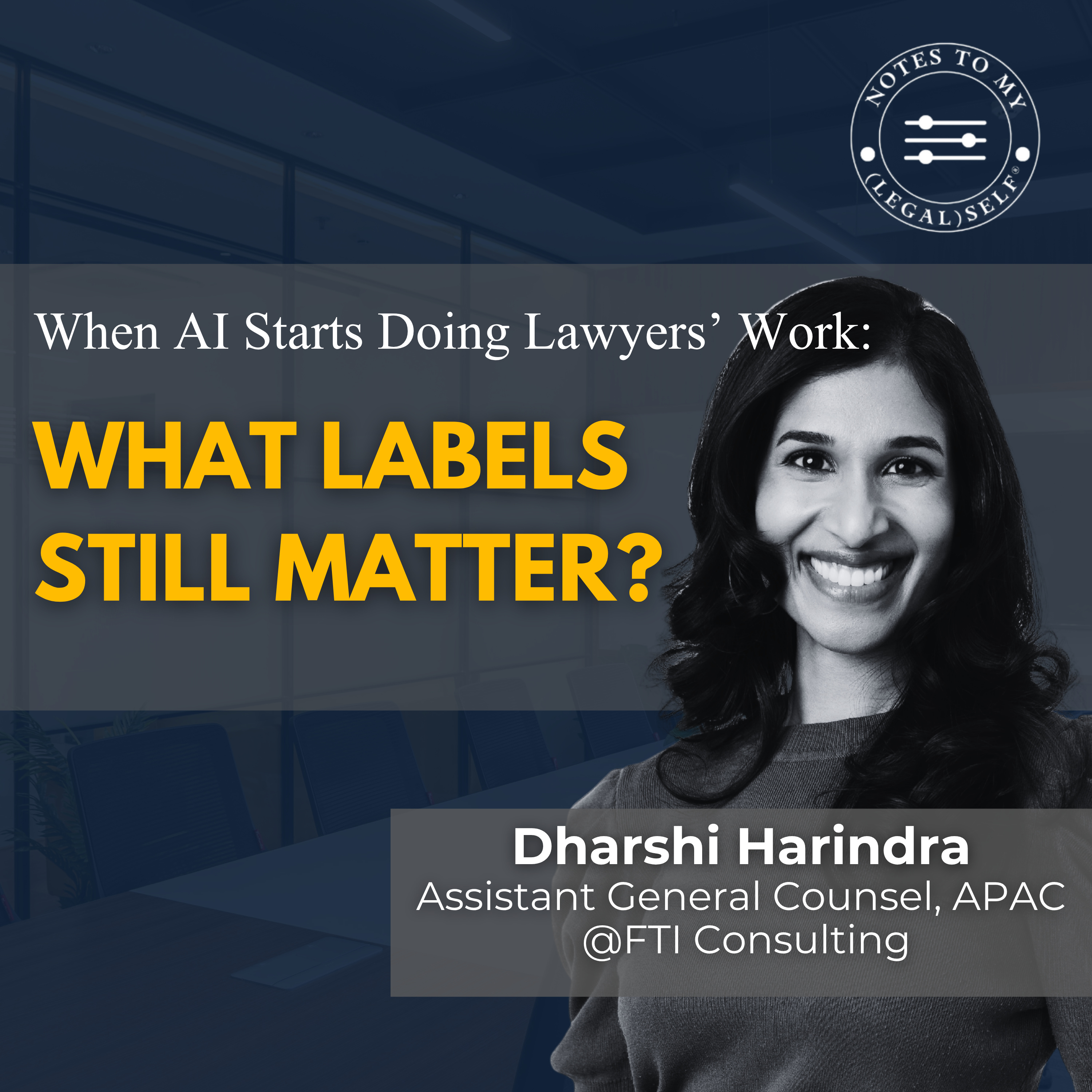
When AI Starts Doing Lawyers Work, What Labels Still Matter? (Dharshi Harindra) Notes To My Legal Self S14E10
Jun 2200:47:56Tap to summarizeWelcome to Season 14, Episode 10 of Notes to My (Legal) Self®. In this thought-provoking conversation, host Olga Mack sits down with Dharshi Harindra, Assistant General Counsel, APAC at FTI Consulting, to explore one of the most important questions facing the legal profession today: When AI starts doing lawyers’ work, what labels still matter? Together, they examine the evolving role of lawyers in an AI-enabled world and why judgment, not just technical proficiency, may become the profession’s most valuable skill.Dharshi brings a unique global perspective shaped by nearly two decades of experience spanning the UK, Australia, Dubai, and Singapore.With a background in technology, media, telecommunications, data privacy, executive coaching, and inclusion leadership, she offers a nuanced view of how AI is transforming legal work while simultaneously revealing the enduring importance of human reasoning, accountability, and ethical decision-making.Key insights from this episode:• Why the phrase “AI won’t replace lawyers, lawyers using AI will” may oversimplify the future of legal practice• How AI acts as a mirror that reflects and amplifies existing human judgment• Why legal value is shifting from information access and technical precision to decision-making under uncertainty• The growing importance of accountability, context, and strategic wisdom in legal counsel• How bias, labels, and assumptions can be reinforced through AI systems, and what lawyers must do about it• Why asking better questions may become a defining legal skill in the age of AI• How lawyers can help organizations deploy AI responsibly while preserving human oversight and judgmentWhether you're an in-house lawyer, law firm leader, legal operations professional, legal technologist, or simply curious about the future of the profession, this episode offers practical insights into what legal excellence will look like in an era where information is increasingly abundant but judgment remains scarce.Takeaways:• AI can accelerate legal work, but it cannot replace accountability.• Human judgment remains the critical differentiator in legal decision-making.• The future lawyer will be valued less for information retrieval and more for wisdom, context, and strategic guidance.• Bias doesn't disappear with technology, it can be amplified by it.• Great lawyers will combine technological fluency with strong ethical reasoning and business judgment.• The ability to navigate ambiguity may become more important than having all the answers.S U B S C R I B E! Want to be a guest on NTMLS or know someone who should be? Reach out! Self-nominations are acts of courage.Engage with us below, like, comment, and subscribe to follow the future of in-house law!Thank you for watching!Like, Comment, Subscribe and hit the bell so you never miss an episode!Subscribe to our channel: @NotesToMyLegalSelfINTERSECTION OF LAW AND FUN®#NotesToMyLegalSelf #LegalInnovation #LegalTech #FutureOfLaw #LegalLeadership
Transcribe →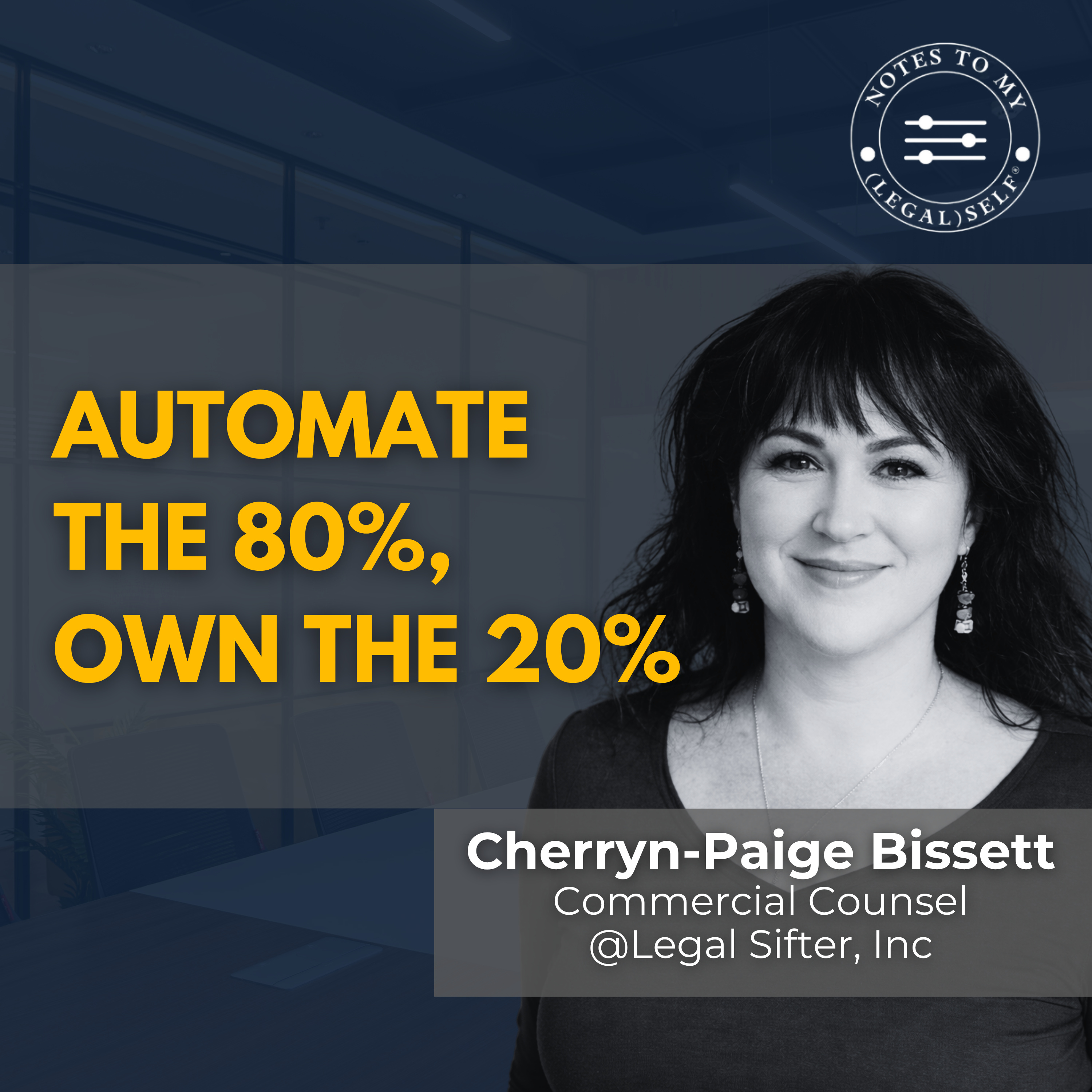
Automate the 80% Own the 20% (Cherryn-Paige Bissett) Notes To My Legal Self, Season 14, Episode 9
Jun 1500:25:45Tap to summarizeWelcome to Season 14, Episode 9 of Notes to My (Legal) Self. In this episode, host Olga Mack sits down with Cherryn-Paige Bissett, commercial attorney and Internal Commercial Counsel at LegalSifter, to explore how legal professionals can leverage AI without sacrificing human judgment. Together, they discuss the practical realities of contract automation, the role of playbooks, and why the most valuable legal skill in the age of AI is knowing when to step beyond the process and make a judgment call.With more than 20 years of experience as a commercial attorney, Cherryn-Paige has spent her career helping businesses navigate legal, operational, and commercial risk. As both a customer and now a leader within LegalSifter, she brings a unique perspective on how AI can help legal teams move faster, reduce contract noise, and focus on the issues that truly matter.Key insights from this episode:• Why lawyers should automate the routine 80% and own the critical 20%• How AI helps eliminate contract noise and improve consistency• The difference between applying a playbook and applying judgment• Why legal teams must balance commercial, operational, and legal risk• How to determine when a contract issue truly deserves escalation• The importance of understanding business objectives before negotiating risk• Why possibility and probability are not the same thing• How AI can accelerate contracting without replacing lawyers• The skills that will define exceptional in-house counsel in the years aheadWhether you're an in-house lawyer, legal operations professional, contract manager, or legal technology enthusiast, this episode offers practical insights into how legal teams can work smarter while delivering greater strategic value to their organizations.Takeaways:• Automate repeatable work so lawyers can focus on strategic decision-making• AI is most effective when guided by clear legal playbooks• Human judgment remains essential in complex negotiations• Strong lawyers prioritize the risks that truly matter• Understanding your business is critical to effective legal advice• The future belongs to lawyers who can combine technology with sound judgment• Possibility alone should not drive legal decision-making, probability mattersS U B S C R I B E!Want to be a guest on NTMLS or know someone who should be? Reach out! Self-nominations are acts of courage.Engage with us below, like, comment, and subscribe to follow the future of in-house law!Thank you for watching!Like, Comment, Subscribe and hit the bell so you never miss an episode!Subscribe to our channel: @NotesToMyLegalSelf#NotesToMyLegalSelf #LegalInnovation #ContractManagement #CommercialLaw #LegalOperations
Transcribe →
Good Legal Judgment is Built the Hard Way (Matthew Thomas) Notes To My Legal Self Season 14, Episode 8
Jun 800:41:21Tap to summarizeWelcome to Season 14, Episode 8 of Notes to My (Legal) Self.In this episode, host Olga Mack sits down with Matthew Thomas to explore one of the most valuable, and often misunderstood, skills in legal practice: judgment.Together, they discuss how good judgment is developed through experience, mistakes, mentorship, and perspective. From navigating complex negotiations and managing risk to leading through personal adversity, Matthew shares practical lessons on decision-making, communication, resilience, and the human side of legal practice.Matthew Thomas is Senior Corporate Counsel at Elastic, where he advises on procurement, vendor relationships, commercial transactions, and strategic business initiatives.Having worked across industries including oil and gas, mortgage servicing, fintech, and technology, Matthew brings a uniquely broad perspective on risk, leadership, and legal decision-making. Following a leukemia diagnosis, his perspective on work, life, and leadership has evolved in profound ways, insights he shares candidly throughout this conversation.Key insights from this episode:• Why good judgment is built through experience, not textbooks• How mistakes become the foundation of better decision-making• The importance of understanding risk without overreacting to it• Why communication is often the key to resolving conflict and negotiation breakdowns• How empathy and emotional intelligence improve legal outcomes• The role of mentorship in accelerating professional growth• Why perspective matters when evaluating pressure, risk, and leadership decisions• How personal adversity can reshape professional judgment• The connection between resilience, humility, and effective leadership• Why the human element remains essential in an AI-powered future.This episode is for in-house counsel, legal leaders, law firm attorneys, legal operations professionals, and anyone looking to strengthen their decision-making skills. If you've ever wondered how experienced lawyers develop judgment, or how life experiences shape leadership, this conversation offers practical wisdom and a refreshing perspective.Takeaways:• Good judgment is often the result of learning from mistakes• Experience teaches lawyers which risks truly matter• Strong communication prevents many problems before they escalate• Empathy creates better outcomes in negotiations and relationships• Perspective helps leaders make better decisions under pressure• Resilience and adaptability are critical professional skills• The future of legal practice will require both technology and human judgmentsS U B S C R I B E!Want to be a guest on NTMLS or know someone who should be? Reach out! Self-nominations are acts of courage. Engage with us below, like, comment, and subscribe to follow the future of in-house law!Thank you for watching! Like, Comment, Subscribe and hit the bell so you never miss an episode!Subscribe to our channel: @NotesToMyLegalSelf#NotesToMyLegalSelf #Leadership #ProfessionalDevelopment #DecisionMaking
Transcribe →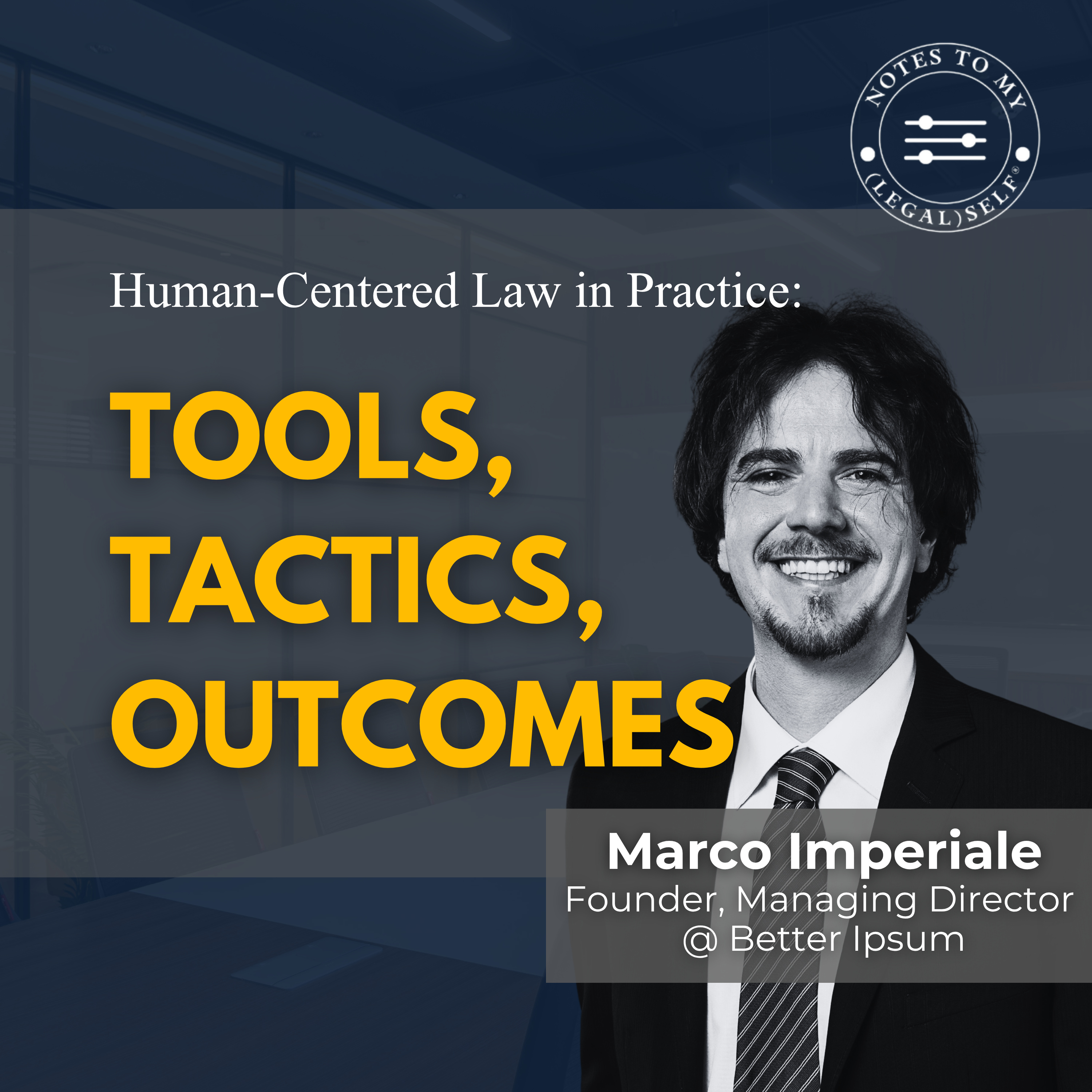
Human-Centered Law in Practice: Tools, Tactics, Outcomes (Marco Imperiale) Notes To My Legal Self Season 14, Episode 7
Jun 100:40:51Tap to summarizeWelcome to Season 14, Episode 7 of Notes to My (Legal) Self. In this episode, host Olga Mack sits down with Marco Imperiale to explore a fundamental question: Do lawyers truly understand the people they serve?Together, they examine how legal design, curiosity, communication, and human-centered thinking are reshaping the future of legal practice. From client engagement to innovation, Marco challenges long-held assumptions about how lawyers work and why many legal processes remain disconnected from the people they are meant to help.Marco Imperiale is a legal innovation leader, legal designer, entrepreneur, author, and founder of Better Ipsum. A former lawyer and one of Italy's first Heads of Innovation for a law firm, Marco has spent years helping legal departments, law firms, and institutions rethink legal services through design thinking, legal operations, and human-centered approaches. He is also the author of *Practicing Legal Design*, a practical guide to implementing legal design in real-world legal environments.Key insights from this episode:• Why legal design is about much more than visuals and simplified contracts• The importance of listening before advising• How curiosity creates better outcomes than certainty• Why engagement drives understanding and trust• The role of play, experimentation, and prototyping in innovation• How lawyers can better understand clients, customers, and stakeholders• Why humility may be one of the most important leadership skills in law• The connection between legal communication, accessibility, and inclusionThis episode is for in-house counsel, law firm leaders, legal operations professionals, legal innovators, and anyone interested in creating more effective, human-centered legal experiences.If you've ever wondered how legal services can become more engaging, accessible, and impactful, this conversation offers practical insights and a fresh perspective.Takeaways:• Curiosity is often more valuable than expertise alone• Great legal service starts with understanding the client experience• Legal design challenges assumptions about how legal work should be delivered• Innovation requires experimentation, testing, and feedback• Play can unlock creativity, engagement, and breakthrough thinking• The future of law will be increasingly human-centered• Less ego and more humility can transform professional relationships
Transcribe →
How Stories Can Help You Reach Compliance Compromises (Angela Madathil) NTMLS Season 14, Episode 6
May 2600:31:10Tap to summarizeWelcome to Season 14, Episode 6 of Notes to My (Legal) Self. In this episode, host Olga Mack sits down with Angela Madathil for a thoughtful conversation on compliance, AI, storytelling, and the future of legal leadership.Angela shares how her experience supporting technology initiatives inside the trucking industry shaped her approach to compliance, product counseling, and responsible innovation. From AI transparency challenges to understanding the daily realities of truck drivers, this episode explores how empathy and storytelling can help legal teams build trust and drive better business decisions.Key insights from this episode:• Why compliance works best when embedded into the business• How storytelling helps legal leaders influence stakeholders• The importance of understanding the end user experience• Responsible AI adoption and transparency considerations• How in-house lawyers can scale trust through principles and alignment• The role of empathy, listening, and harmony in legal leadership• Using AI tools to improve legal efficiency and negotiation outcomesThis episode is for in-house counsel, compliance leaders, legal operations professionals, technology lawyers, and anyone navigating the intersection of AI, business strategy, and legal innovation.Takeaways:• Compliance is most effective when it becomes part of company culture• Legal storytelling creates alignment and trust across organizations• AI should enhance human connection, not replace it• Understanding user pain points leads to better legal and business outcomes• Emotional intelligence is a strategic advantage for modern legal leadersWant to be a guest on NTMLS or know someone who should be?Reach out! Self-nominations are acts of courage.Engage with us below, like, comment, and subscribe to follow the future of in-house law!Thank you for watching!Like, Comment, Subscribe and hit the bell so you never miss an episode!Subscribe to our channel: @NotesToMyLegalSelf#LegalInnovation #InHouseCounsel #LegalLeadership #Storytelling
Transcribe →