
Podcast
Novara Media
Hosted by Novara Media · EN
Media for a different Politics.
28episodes
Episodes
Newest firstAll episodes
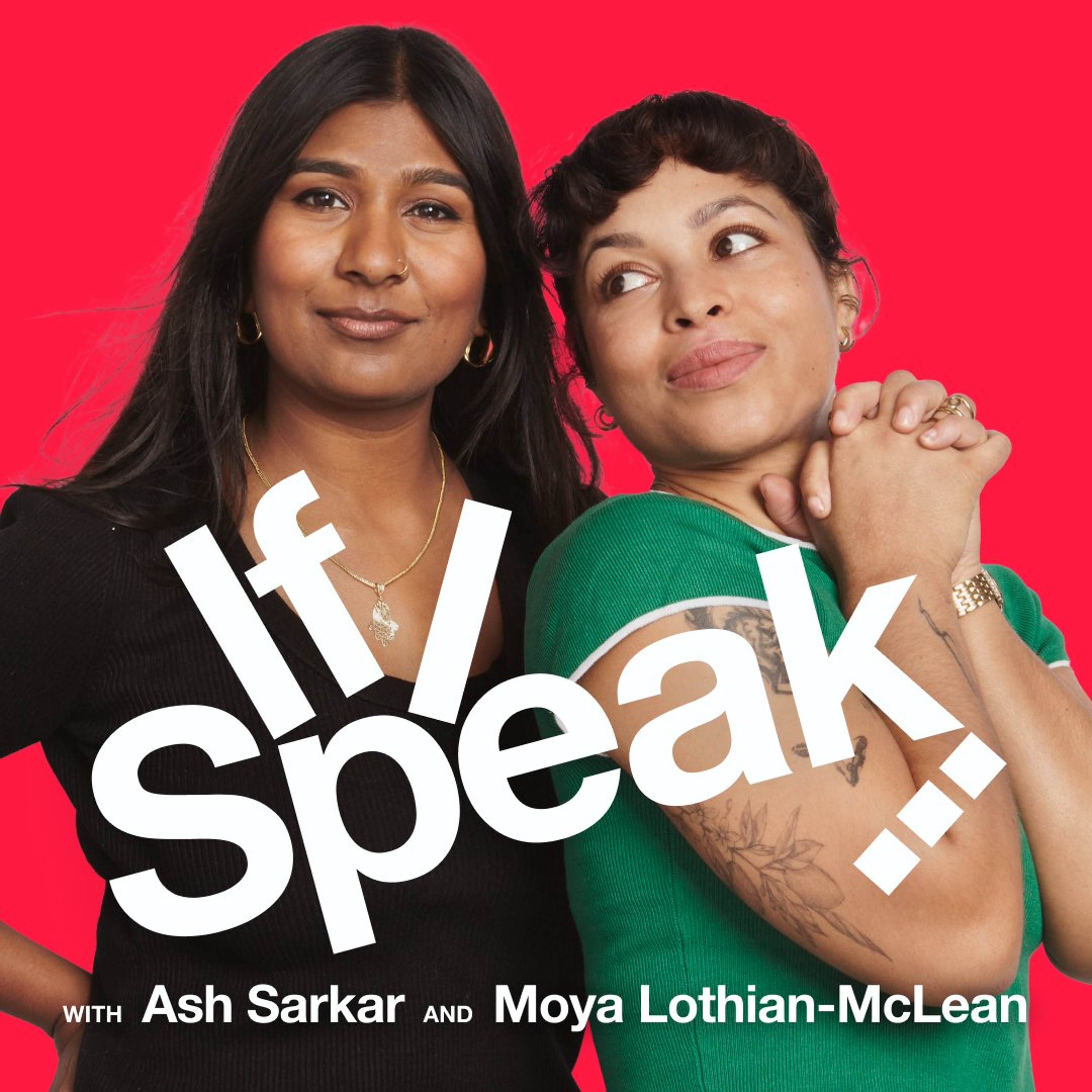
125: Is the era of conspicuous consumption nearly over?
3d ago01:01:38Tap to summarizeHave we finally had enough of hyper-consumerism? Moya and Ash confront the political crises that are changing our attitudes to spending, and what that’s got to do with the World Cup and cerulean sweaters. Plus: what to do when you've lost all motivation. Read the Vulture article about lifestyle influencers mentioned in the show: https://www.vulture.com/article/influencer-recession-audrey-peters-interview.html Send us your dilemmas: ifispeak@novaramedia.com Music by Matt Huxley.
Transcribe →
Downstream: Ex-Oil Engineer Turned Climate Whistleblower: "We Face Collapse" w/ Kevin Anderson
4d ago01:46:49Tap to summarizeThe summer of 2026 will go down in history books as the hottest, driest and most deadly set of heatwaves Britain has ever experienced. This weather isn’t normal – but it is predictable according to a global consensus of scientists. And yet this summer, according to the science, will be one of the coolest summers we ever have again. Things will only get hotter from here. Beginning his career as an oil-rig engineer before retraining as a climate scientist, Kevin Anderson’s career has been an extraordinary journey. On Downstream this week, Aaron Bastani sat down with him to discuss what has become his life’s work: sounding the alarm on man-made climate change, and on the fossil fuel industry that gave him his start. Just how much has the planet heated, and why? Is the Paris Agreement’s aim of keeping heating to beneath 1.5°C still achievable, or delusional cope? What are the political obstacles to tackling the issue? Having worked with Andy Burnham in Manchester, what does Kevin think he will do on climate, as PM? Is avoiding catastrophe still possible, and if so, how much time have we got to act, before it’s too late?
Transcribe →
ACFM 62: The Beach
5d ago02:06:02Tap to summarizeNadia, Keir and Jem wonder why humans are drawn to the beach, in a weird-left conversation about geological deep-time, the birth of surf culture, the politics of faded seaside towns and more, plus music from 808 State and The B-52’s. Find the books mentioned in the show: https://novara.media/acfm Sign up to the ACFM newsletter: https://novaramedia.com/newsletters Follow our ever-expanding playlist on Spotify by searching 'ACFM'. Help us build people-powered media: https://novara.media/support
Transcribe →124: Are you afraid of being ordinary?
1w ago00:59:46Tap to summarizeTrapped in the attention economy, Moya wonders if our reading habits are affecting our sense of self, and Ash offers a feminist analysis of ‘main character’ versus ‘NPC’. Plus: what to do when your politics drift away from your friends'. Send us your dilemmas: ifispeak@novaramedia.com Music by Matt Huxley.
Transcribe →Downstream: The West is Over. Here's Why w/ Pankaj Mishra
2w ago01:38:19Tap to summarizeIn the years since October 7th, the world has been bitterly polarised over how to make sense of the violence. While polling shows that a majority of people do believe Israel’s actions amount to genocide - having witnessed it with their own eyes via their smartphones - it has been woefully hard to find mainstream media outlets in the West prepared to use this language. On Downstream this week, Aaron Bastani sat down with Indian essayist and novelist Pankaj Mishra. His most recent book, ‘The World After Gaza’ takes stock of a world order shattered by the genocide, and a media class unprepared to recognise the truth. In response to these crises, Mishra and colleagues have just launched Equator magazine, pulling together leading writers from across the globe who are unafraid to tell the truth. When did the so-called West first begin to lose standing in the eyes of the rest of the world? Why is the British media class positioned so uniquely close to power, so delusional, and so compromised over Gaza? Will China replace America, in the coming century, as the new hegemonic power? Has it already?
Transcribe →
Do Your Own Research: Is This Podcast the Problem? w/ Joshua Citarella
2w ago01:20:01Tap to summarizeJoshua Citarella built his reputation by mapping synthetic e-deologies of terminally online politics, expressed in memes, micro-disputes and merch drops. Now the artist, Doomscroll host and Do Not Research founder has come to a blunter conclusion: it's time to lock in. Behind the seeming diversity of online politics, one ideology has already won: the technolibertarianism of the platforms and supply chains that actually make it all run. So maybe it's time to get serious, tune out the noise, and get back to basics: workers versus capital. This episode is the finale of Do Your Own Research Series 1. We’ll be back soon. Get the map: novaramedia.com/dyor Music by Iglooghost.
Transcribe →Do Your Own Research: What JD Vance and Tucker Carlson Actually Believe w/ James Pogue
2w ago01:38:00Tap to summarizeThe American empire is in crisis – and there is a new generation of more vocal critics coming from the right. So what do JD Vance and Tucker Carlson actually believe about American power? James Pogue has reported on empires and their decline for years, from West and Central Africa, where Wagner Group picked over the corpse of French neo-colonialism, to California's secessionist fringe and the absurdities of Washington. He also happens to be one of the closest observers of JD Vance, who is just a heartbeat from one of the most powerful positions in the world. The president's real job is keeping the machine running: asset prices up, markets juiced, the war economy fed. Can anyone actually change that? And would we even want them to try, if it's as ideologically peculiar and dangerous as Vance? Get the map: novaramedia.com/dyor Music by Iglooghost.
Transcribe →Downstream: Who Profits From Genocide? w/ Andrew Feinstein
3w ago01:32:41Tap to summarizeA new consensus has emerged in Westminster, seemingly overnight: we need more defence spending, and we need it now. But the Ministry of Defence has a record for waste that would put Tony Soprano to shame. £13 billion down the drain, since 2010, at the very least. Aircraft carriers that come in late, overbudget, and beset by mechanical failures. IT systems that cost millions, and are wildly out of date. No other government department could get away with it. But the arms trade spends billions of dollars on greasing the wheels of political consent. They employ armies of lobbyists, print reams of analysis, and bribe politicians the world over to keep the war machine funded. The result isn’t just a crisis of corruption. It’s a threat to our survival as a species. Andrew Feinstein is a former-minister in the South African government, turned investigative reporter. He is the executive director of Shadow World Investigations, and serves on the board of Declassified UK. And in 2024, he stood against Keir Starmer in Holborn and St Pancras. He joins Ash Sarkar on Downstream to lift the lid on how the arms industry really works, and tell us about his political journey.
Transcribe →122: Can you change who you're attracted to? w/ Annie Lord
3w ago01:07:06Tap to summarizeFormer Vogue agony aunt Annie Lord joins Ash and Moya to talk about what happens if you let go of your ‘type’ and allow your romantic ideals to change. Her debut novel, The Project, is out now. (NB: Annie recommends Sharon Olds’ poetry collection Stag’s Leap.) Plus: advice for a man who’s feeling romantically jaded. Send us your dilemmas: ifispeak@novaramedia.com Music by Matt Huxley.
Transcribe →Downstream: You Will Rent Forever. Here’s Why. w/ Peter Apps
4w ago01:47:59Tap to summarizeWe live in times of crisis. But perhaps none of the crises affect so many people in the here and now, as the housing crisis. Solving it could provide the skeleton key to unlocking so many of society’s problems. Despite this, decades of successive governments in the UK have failed to bring housing under control. The social contract which told us that if we worked hard all our lives, we can own a home and be secure in retirement, has been completely broken. To discuss the crisis in Britain and beyond, Aaron Bastani sat down with Peter Apps. He is an award-winning journalist who knows the field of housing – its failures and its potential fixes – better than almost anyone. He wrote an article about the threat of flammable cladding a month before Grenfell caught fire. How has housing policy shaped Britain in the last 50 years? Who did more to damage the housing system, Labour or the Tories? Is more housing supply always the solution? And why is no one talking about the crisis facing our ageing population, one million of whom will be in housing insecurity and poverty by 2030?
Transcribe →