← NPR's Book of the Day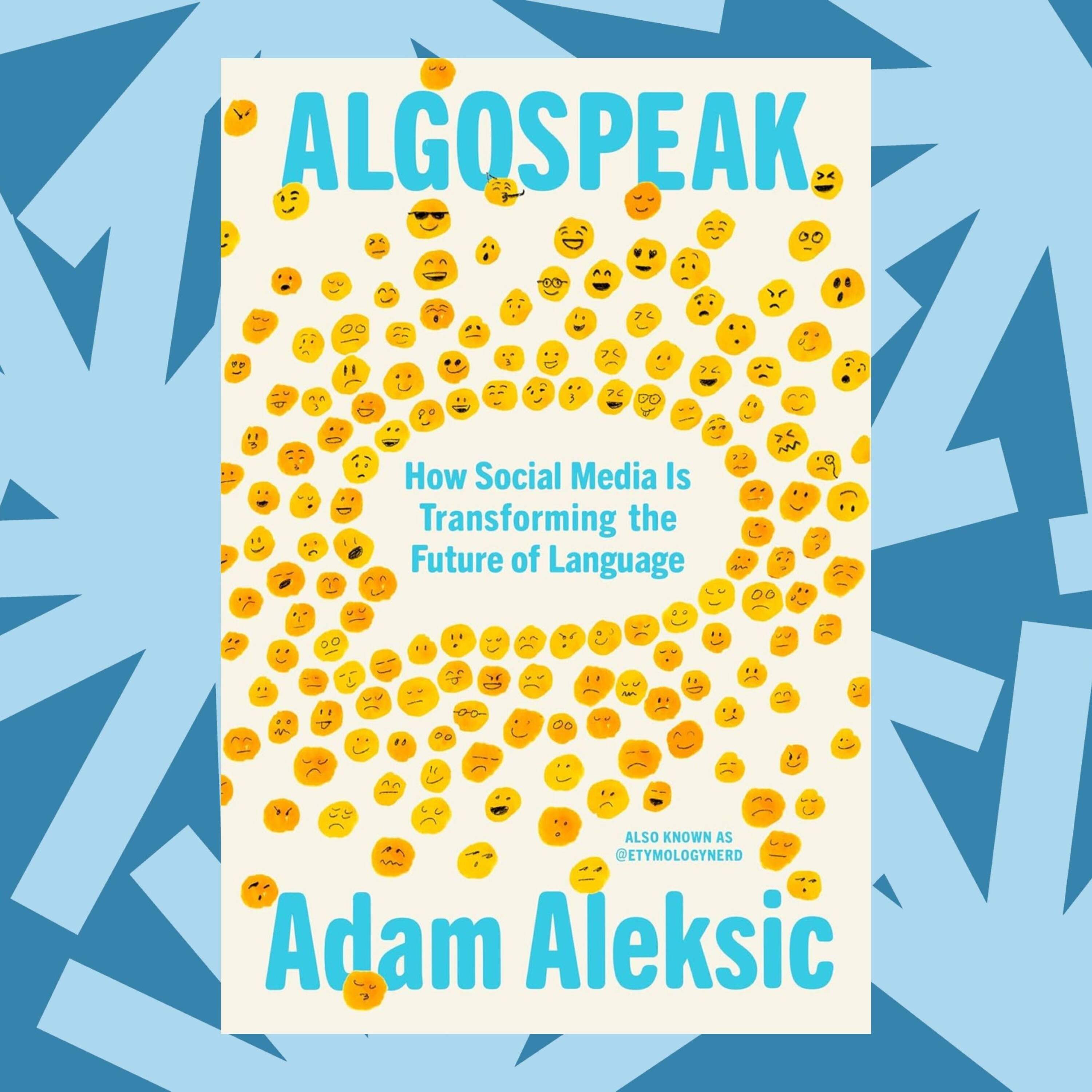
NPR's Book of the Day
‘Algospeak’ looks at algorithms' transformative impact on how we speak on and offline
00:08:50
Loading summary
Transcript37 lines
- [00:00]
Progressive Insurance
This message comes from Progressive Insurance. Progressive makes it easy to see if you could save when you bundle your home and auto policies. Try it@progressive.com Progressive Casualty Insurance Company and affiliates. Potential savings will vary. Not available in all states.
- [00:18]
Andrew Lembong
Hey, it's NPR's Book of the Day. I'm Andrew Lembong. The way I talk here to you into this microphone is different from the way I talk to my friends, my wife, my colleagues, et cetera. But it's not a hard line. Sometimes language and cadence does bleed through from one zone in my life into another. Today's book is about that happening en masse. It's by Adam Aleksic, titled Algospeak. And it's a look at how the way content creators speak on the Internet shapes how the rest of us talk, whether we like it or not. But he tells NPR's Adrienne Ma that this isn't inherently a bad thing. That's coming up.
- [00:58]
Amazon
This message comes from Amazon. Have you ever gotten sick on a very expensive, very non refundable family trip? AmazonOne Medical has 247 virtual care so you can get help no matter where you are. And with Amazon Pharmacy, your meds can get delivered right to your hotel fast. It's kind of like the room service of medical care. Thanks to Amazon, Healthcare just got less painful.
- [01:24]
Progressive Insurance
This message is from Synchrony bank, who wants to remind you to stay flexible, not the yoga bending circus performing kind of flexible, financially flexible, like with their high yield savings account. Stay flexible@synchrony.com NPR member FDIC.
- [01:41]
Adrienne Ma
One of the beautiful and sometimes bewildering things about the English language is that it's always changing. I mean, take the words riz or skibidi or even the expression to cancel. It was fairly recently that we started using cancel to mean withdrawing support or denouncing, and of course, riz meaning charisma, or skibidi meaning, well, nothing. Those words didn't even exist just a few years ago. Now they're used and understood by millions of people.
- [02:16]
Now, don't worry if you do not.
- [02:17]
Count yourselves among them because our next guest argues that the way we speak on and offline is evolving at an unprecedented pace. He's Adam Alexik, who's a creator that posts online under the name Etymology Nerd. He's got a new book called Algospeak.
- [02:35]
And he joins us from our bureau in New York. Adam, thanks for talking with WEEKEND edition.
- [02:39]
Adam Aleksic
Hi Adrian. Excited to be here.
- [02:42]
Adrienne Ma
So you say there are these inflection points in history that have had a Huge effect on the way people communicate. There's the invention of writing and the printing press and the Internet. Now you say we are living through another inflection point shaped by algorithms. Can you give us your argument in a nutshell?
- [03:01]
Adam Aleksic
Of course. We have all these algorithms shaping in groups and echo chambers and where words come from, how words spread, how trends get popularized, how some words are censored, and we have to find ways around that. So one example I start the book with is the word unalive. The word kill is suppressed on TikTok, so many creators have turned to say on alive instead. And now we have kids in middle schools writing essays about Hamlet on aliving himself. And that's an example of social media algorithmic speak bleeding into the mainstream. And that's traditional algo speak. But in many ways, algorithms are now shaping every aspect of how we communicate. The underlying process is not new. We've always had fads, for example. But algorithms compound how trends get spread online in a way that makes language words appear faster than in the past.
- [03:39]
Adrienne Ma
Language has the potential to go viral in a way that it didn't before.
- [03:43]
Adam Aleksic
Look at the word riz, which started out in 2022 in the back corners of the Internet. Kai Sanat popularized it on Twitch. By the end of 2023, it became the Oxford English Dictionary word of the year. I think it might have taken a word like rizz maybe a decade to become popular in the past. But because of how algorithms amplify trends, they incentivize creators to use trending metadata because that's a way that creators tap into ongoing fads and stay relevant. Then these words get pushed further and. And the word riz entered what I called the engagement treadmill, where some words get pushed more because they are trending.
- [04:11]
Adrienne Ma
But it's not all about trends spreading words. Sometimes these, these new words serve a genuinely useful function. Like you talk about the example of the phrase canceling somebody, which didn't exist that long ago and now everyone knows it. It kind of fills this semantic gap in our language. Can you talk about some other examples of these gap filling words and how they spread through social media?
- [04:36]
Adam Aleksic
Right. An important thing to remember is that words are memes and they get tied to meme lifespans. If there's no natural reason to keep the meme around, it dies. One usual reason memes do die is because they get used by this out group that no longer feels like it's funny or cool. If your grandmother starts saying skibidi, skibidi is going to die out. I'M a strong believer that in about a year, skibidi is going to be out.
- [04:54]
Adrienne Ma
Okay, you heard it here first.
- [04:56]
Adam Aleksic
But cancel is going to stay around because that's a useful term for this new Internet concept that we have. Same with like ghosting or selfie. These words that emerge, like, let's say selfie emerged around the same time as yeet and on fleek, and yet we don't use those words anymore because they were tied to this obtrusive meme that sticks out. It was perceived as a meme. However, selfie also being a meme, it just has a longer tail because it's now applying to this lexical gap. Hmm.
- [05:20]
Adrienne Ma
So there's the usefulness that helps kind of these new words that really percolated on social media stick around. But social media and algorithms, you say, also influence the way people talk, like.
- [05:31]
Their pacing and their tone.
- [05:33]
Can you talk about how that happens?
- [05:36]
Adam Aleksic
Yeah. One chapter of the book focuses on the influencer accent. So I talk quickly in real life, clearly.
- [05:41]
Adrienne Ma
Okay, I was going to ask you about that. Are you, Are you in sort of teaching influencer mode or is this the way that you are when you're hanging out with your friends?
- [05:49]
Adam Aleksic
There's some intermediate thing. Right. Every person will accommodate their communication for their expected audience. Right now I'm trying to cram in a bunch of information so people will buy my book. However, if I'm talking to my friends, I'll use a more laid back pace because I'm not trying to sell them anything online. Everybody's trying to sell you attention all the time because the platforms bake in attention incentives. So that they're trying to sell you things, they're trying to commodify your data, they're trying to keep eyeballs on the app as long as possible. They make it incentivized to grab your attention. So creators replicate that because we're just trying to earn a living. And then we have all these attention grabbing tactics replicate. And one of them is the accent. I'll talk faster and I'll stress more words. That's my educational influencer accent. You also have like the stereotypical lifestyle influencer accent, which is good at grabbing attention for a different kind of audience. Like the hey, guys, welcome to npr. You have rising tones which make it sound like something's always coming next. So you keep listening.
- [06:36]
Adrienne Ma
I'll have to try this out. Yes, right.
- [06:38]
Adam Aleksic
Yeah. It also prevents dead air, which is like so bad for the algorithm. So there's new ways of communicating that have emerged. Floor holding is a concept in linguistics that people need to make sure people keep listening to them. And we've had attention. If you're a teacher in a classroom, you got to make sure kids are entertained. In another way, though, algorithms, like, really amplify that natural human behavior.
- [06:55]
Adrienne Ma
I can see all the utility of this, but I have to admit that, like, I can feel my blood pressure rising as we're having this conversation, just because it feels like we're going faster and faster. Can you talk about why, at the top of videos, sometimes using, say, like, grammatically incorrect phrases, like, no, because, like, why does that work so well in engaging people?
- [07:17]
Adam Aleksic
Well, it's, you know, grammatically incorrect in Standard English, but that actually does come from African American English. But, yes, it sounds compelling because it's confusing. And. And the. No, like, it doesn't indicate opposition to anything. This is just a way of starting a video. But at this point, it's a grammatical feature that people are saying offline. I think it emerged because influencers say it so much to start videos as a confusing way. By the time you're done figuring out what no because means, the influencers already hooked you in. You've watched past the first second where 50% of viewers will scroll away. You've watched past that now because they use this interesting phrase that you haven't heard before. And this is one way that language replicates through confusion.
- [07:50]
Adrienne Ma
You know what's interesting to me about this is that, on the one hand, social media is very democratic. Anyone can publish anything they want anytime. And yet, like you say, the way algorithms incentivize certain kinds of posts, the way they drive people to maybe gravitate towards certain accents and certain ways of talking, it kind of also flattens the.
- [08:17]
Adam Aleksic
Way people talk across these platform trends. There are words that get pushed because they are kind of broadly appealing. And once you put yourself in a box as well, it can narrow your scope of what you're saying. And in the same way, there is a broadly homogenizing trend, even though it seems like we're getting more specialized. And a common theme of algorithms is that there's something kind of paradoxical to it. It does, like you said, elevate more voices in the way that we haven't had before, but at the same time, it's prevents those voices from being heard unless they conform to platform incentives.
- [08:48]
Adrienne Ma
So when you put it that way, it does seem to kind of cast a slightly negative light on the fact that social media and algorithms are shaping the way that we talk. Is that how you think about it.
- [09:00]
Adam Aleksic
I don't think there's anything ever wrong with language per se. Language is a way that humans relate to one another. I think language is a proxy for culture, and by following the conduits of language change, you can sort of understand more of where we're heading as a society. I do think the fact that these platforms are commodifying retention, that seems bad. And you can see that happen through language. But the way we're communicating with one another is just, again, us reflexively adapting to a medium to be heard. And I don't think that's actually bad.
- [09:22]
Adrienne Ma
Okay, well, we've been speaking with Adam Alekseik. His new book is called Algo Speak. Am I doing It Right? The Influencer Voice.
- [09:30]
Adam Aleksic
Perfect.
- [09:32]
Adrienne Ma
How Social Media is Transforming the Future of Language. Adam, thanks again for being with us.
- [09:36]
Adam Aleksic
Us. Thank you for having me.
- [09:49]
Amazon
This message comes from Amazon Pharmacy. When you're on hold with the pharmacy and you hear your call is very important, after the 10th loop, you start to doubt that Amazon Pharmacy delivers meds to you fast. Without the hold music, Amazon Healthcare just got less painful.
- [10:07]
Progressive Insurance
This message comes from Mint Mobile. Mint Mobile took what's wrong with wireless and made it right. They offer premium wireless plans for less and all plans include high speed data, unlimited talk and text, and nationwide coverage. See for yourself@mintmobile.com Switch this message comes from Warby Parker. What makes a great pair of glasses at Warby Parker? It's all the invisible extras without the extra cost. Like like free adjustments for life. Find your pair@warbyparker.com or visit one of their hundreds of stores around the country.