← NPR's Book of the Day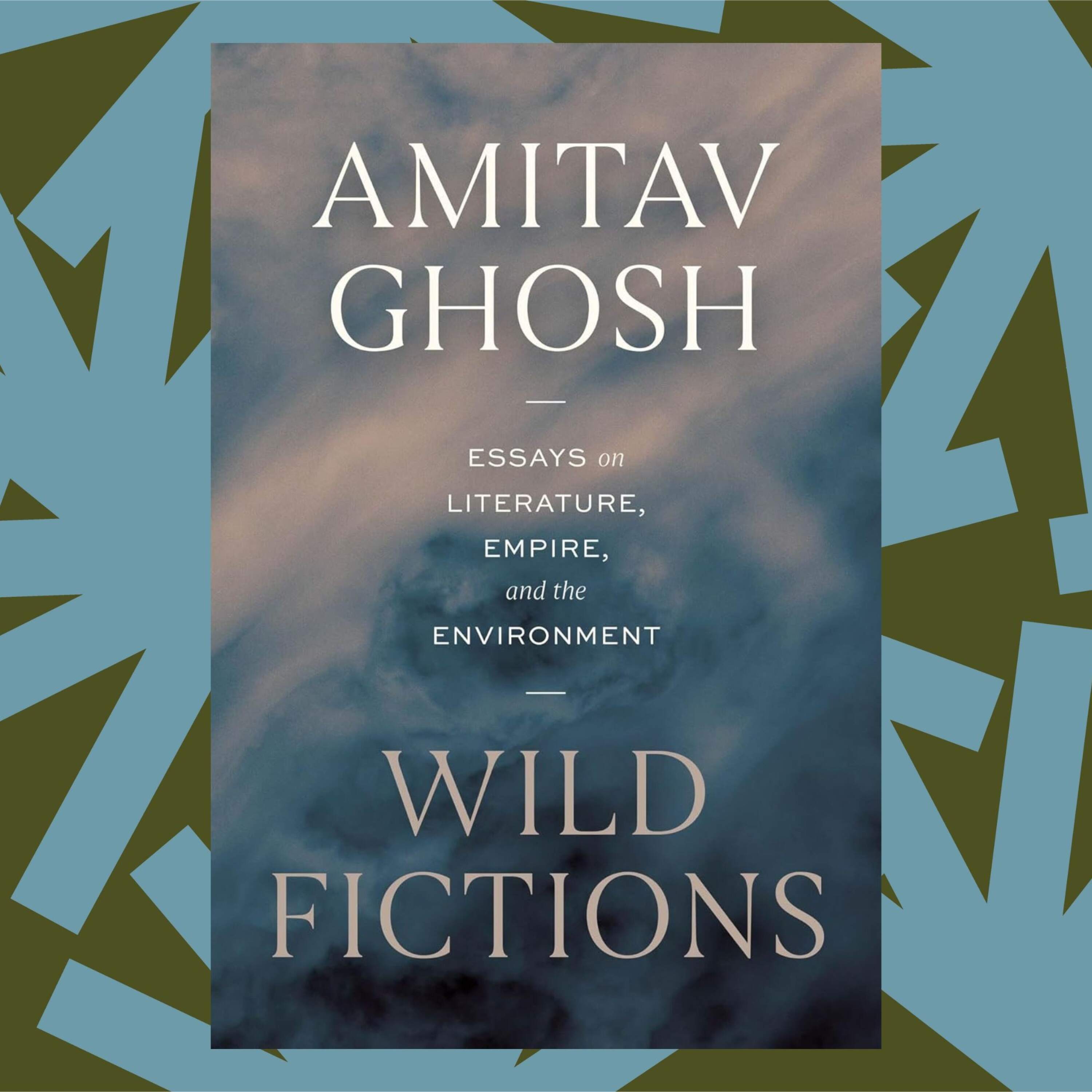
NPR's Book of the Day
Amitav Ghosh’s 'Wild Fictions' gathers essays on empire and the environment
00:06:41
Loading summary
Transcript24 lines
- [00:02]
A
Hey, it's NPR's Book of the Day. I'm Andrew Limbong. Do you remember being a kid and learning about the environment and how interconnected everything was? How, I dunno, bees spreading pollen was in some way related to your breakfast that morning? It's one of those facts of life that's mind blowing when we learn about it. But I'm not sure how many adults spend their day to day thinking about the ecosystem, but maybe we should be. Amitav Ghosh's new essay collection is titled Wild Essays on Literature, Empire and the Environment. In the book, he talks about everything from migration patterns to 911 to the Indian Ocean. He talks to NPR Scott Simon about how we are responsible for caring for the entities around us because we are dependent on their survival.
- [00:48]
B
After the break, this message comes from Wayfair. The new year is here. Wayfair's huge selection of home decor items makes it easy to elevate your space and find exactly what's right for you. From bedding and mattresses to storage solutions for every room in the house, Wayfair is your one stop shop. Get organized, refreshed and back on track this new year. For way less, head to Wayfair.com to shop all things home. That's W A Y F A I R.com Wayfair Every style, every home.
- [01:24]
C
This message comes from NPR sponsor Shopify. No idea where to sell? Shopify puts you in control of every sales channel. It is the commerce platform revolutionizing millions of businesses worldwide. Whether you're a garage entrepreneur or IPO ready, Shopify is the only tool you need to start, run and grow your business without the struggle. Once you've reached your audience, Shopify has the Internet's best converting checkout to help you turn them from browsers to buyers. Go to Shopify.com NPR to take your business to the next level. Today.
- [01:53]
D
The new book asks, among many provocative questions, is the elevation of human above all other species, indeed above the earth itself, responsible for many of earth's problems? Amitav Ghosh, the Indian Bengali writer whom Foreign Policy magazine has named one of today's most important global thinkers, has collected some of his most striking essays from over the past 25 years. His collection is called Wild Fiction Essays on Literature, Empire and the Environment. And Amitavgos joins us from the studios of member station WVTF in Charlottesville, Virginia. Thanks so much for being with us.
- [02:35]
E
Thank you so much for having me.
- [02:37]
D
You believe that what we call the climate crisis at its heart is a political crisis?
- [02:43]
E
Yes, it's certainly political, but it's also, I would say, cultural and imaginative. I mean, it's very hard for us today, after, you know, several centuries of Moder, to recognize that the world is in a sense, animate, that it's actually an actor. And this actor is now sort of lashing out against us.
- [03:05]
D
Lashing out against us?
- [03:07]
E
Yes, absolutely, yes. Reacting to, you know, our greenhouse gas emissions that human beings have put in the atmosphere. Absolutely.
- [03:17]
D
You have a different view of what many in the west call a migration crisis.
- [03:23]
E
Yes.
- [03:24]
D
Help us understand your point of view.
- [03:27]
E
Well, my point of view, I have to say, is largely sort of based upon the European Mediterranean experience. I did do a lot of research in Italy, especially during the height of the so called European migration crisis. And that was when I realized that, you know, what is actually driving these journeys is not just political or economic. There is also a very important factor is really modern technology, especially modern communications technologies. Every bit of these journeys, you know, they occur through the cell phone. So it was a really sobering realization that, you know, this modern communications technology is really one of the drivers, in my opinion, of this enormous movement of people that we are now seeing across the planet.
- [04:19]
D
As you note, you're Bengali and you see the migration kind of fitting a historical tradition of young Bengalis going far across the world.
- [04:30]
E
Yes, absolutely. It's a little known fact that during the age of sail, a very large percentage of the world's seamen were actually from Bengal. So what happens with these migrations is that they set up networks. You know, people write back to their villages. That creates, as it were, a sort of model of aspiration. You know, so for the young kid in the village, he thinks, okay, my cousin or my grandfather made this journey, so maybe I should set off on this journey as well, just as happened with Europeans in the United States. You know, I mean, these networks become really an engine for moving people. And essentially I think this has become also these pre existing networks are a very important element of the migrations that we are now seeing.
- [05:21]
D
We cited the afterword in introducing you because it's a thought that really shook me up when you say it is the elevation of human above all other species, indeed above the Earth itself, that is responsible for our current planetary crisis. How so?
- [05:37]
E
Yes, you know, our culture has become more and more anthropocentric that is centered upon human beings to the point where we really don't even recognize that other forms of sentience might exist. But recent work in botany, for example, shows us that trees communicate with each other, that they have languages, that they work as communities, that a forest is much more than just a collection of trees, that it's a living entity which makes history, which adapts to changes of various kinds. And I think we are beginning to see increasingly more and more kinds of ascensions, you know, in the world around us, more and more kinds of consciousness.
- [06:21]
D
This is a question I can't even believe I'm even posing. But should we put our human species and our survival, our welfare above that of, well, fill in the blanks. Animals, plants.
- [06:34]
E
Well, what we know about life now is that it's a very complex web, so that everything is dependent on everything else. For example, if we do end up exterminating all the bees, all our systems will collapse, all our food systems will collapse. We know that now. So it's not really a question of even out of just the purest self interest, we find ourselves in a position of care, where we must care for these other entities all around us because our own lives absolutely fundamentally depend on them.
- [07:06]
D
Amitav Ghosh is new collection of essays, Wild Fictions. Thanks so much for being with us.
- [07:14]
E
Thank you for having me.
- [07:16]
A
And just a reminder that signing up for book of the day plus is a great way to support NPR's book coverage and public media. And you'll get to listen to every episode sponsor free. So please go find out more@plus.NPR.org BookOfTheDay.
- [07:44]
B
This message comes From NPR sponsor 1Password. Anyone else feel like 99% of your emails and texts are password reset codes trusted by millions of users and over 175,000 businesses? 1Password lets you skip the resets and sign in securely with strong, unique passwords that auto fill across all your devices. You can safely share logins, store cards and files. And finally, stop using your pet's name as a password. Try it free for two weeks at 1Password.com NPR this message comes from Prolon.
- [08:21]
C
Feeling heavy and depleted after the holidays, Prolon's five day Fasting Mimicking diet aims to make it easy to reset your body habits and energy heading into the new year. Developed at USC's Longevity Institute, the goal of Prolon's nutrition program is to rejuvenate you from within by working at the cellular level to support fat loss, glowing skin and Sharper Focus. Get 15% off plus a bonus gift when you subscribe at prolonlife. Com npr.