← NPR's Book of the Day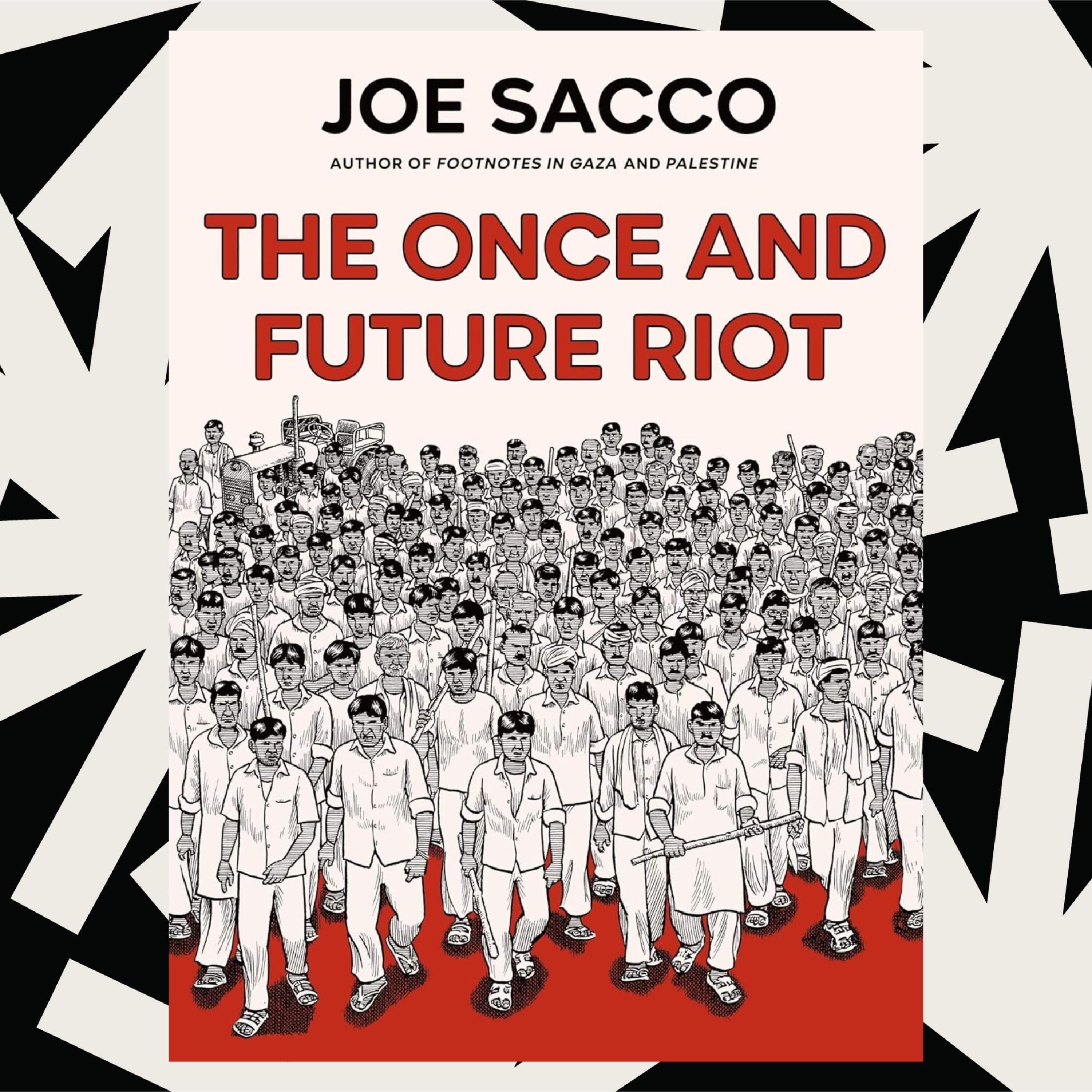
NPR's Book of the Day
Comic journalist Joe Sacco on his portrait of deadly riots in Uttar Pradesh, India
00:08:55
Loading summary
Transcript23 lines
- [00:02]
Andrew Limbaugh
Hey, it's NPR's Book of the Day. I'm Andrew Limbaugh. People like to see themselves as the hero in their own story. That's just a natural thing, but it can lead to distortions in reality. This is something that journalist Joe Sacco wanted to explore in his latest book, the Once and Future Riot. In it, he examines a small moment of violence in 2013 India that led to a string of riots and violence between Hindus and Muslims. And while this book is about India in 2013, I think the lessons he gleaned from his reporting could be applied to any conflict, including the ones we've got here in the US My conversation with Joe Sacco after the break.
- [00:44]
Commercial Announcer
This message comes from Charles Schwab. When it comes to managing your wealth, Schwab gives you more choices like full service, wealth management and advice when you need it. You can also invest on your own and trade on Thinkorswim Schwab. Visit schwab.com to learn more. This message comes from Progressive Insurance. Progressive makes it easy to see if you could save when you bundle your home and auto policies. Try it@progressive.com Progressive Casualty Insurance Company and affiliates. Potential savings will vary. Not available in all states.
- [01:14]
Andrew Limbaugh
In 2013, two young men, they were cousins, killed a man. This was in a rural part of Uttar Pradesh, a state in northern India. The cousins were Hindu, the other man was Muslim. What followed was a series of alternating violence in the region between Hindus and Muslims. Joe Sacco's new book, the Once and Future Riot, is about that violence, but it's less about the ins and outs of what happened and more about the stories people tell themselves about what happened.
- [01:44]
Joe Sacco
Because ultimately, I think everything's about story. It's how you categorize your enemy. You want to diminish any role you might have had in the violence, and you want to foist something else on the antagonist. And I think that's the way stories are constructed and that's how you can build a political movement.
- [02:05]
Andrew Limbaugh
Sackle is arguably one of the biggest names in comics journalism. He's reported on a lot of violent conflicts throughout the years. He won an eisner Award in 2009 for his book Footnotes in Gaza. I had a conversation with him about his new book, and he told me why, in this instance, he was so interested in examining the myth that was overshadowing.
- [02:26]
Joe Sacco
Well, because I've done a lot of books about violence and I've become sort of interested in human nature and what makes people tick and how they justify what they do that was the idea, is to have a look at their stories. And then the journalism part of it was to see if those stories matched up with the facts.
- [02:45]
Andrew Limbaugh
Yeah. It's interesting because there are multiple scenes in this book where someone is telling you something and then you depict yourself sort of walking away from that interview going like, that wasn't true. Right. So talk us through how you separated fact from fiction.
- [03:00]
Joe Sacco
Well, some things just seemed ludicrous on their face. For example, I talked to Muslim villagers, village chief, and Hindus. Jat Hindus had gone through the villages on a convoy, and they were attacked and some of them even killed. And I was told that it was children who threw the stones. Children, sometimes women. Those things seemed quite ludicrous to me. There were other instances in a Jat Hindu village where I was told that no one was harmed, but I knew that 13 people were missing and presumed dead. And what I was told was that the Muslims had left at night, for example, and no one had noticed over three days that they left the village to sort of escape this forthcoming violence. You know, your journalistic spidey senses just come out and you begin to sort of think, this just doesn't pass the truth test at all. And then, of course, as a journalist, it's incumbent on you to see if you can find out what the facts were. And that's what this book is. I mean, to me, this is a book of, in some ways, pure journalism, where you have she said, he said, and then you actually try to ascertain what the facts are rather than just letting people say what they think or what they say happened.
- [04:20]
Andrew Limbaugh
You often report on events from the past. I read it as a way to think about the present. Right. You did the brunt of the reporting for this book back in 2014. So why publish the book in 2025?
- [04:32]
Joe Sacco
You know, I started working on this book right after I did the research in 2014, and truth be told, I was kind of sickened by it. I wrote the script and I drew about 14 or 15 pages, and I just had to stop. I've spent so much time writing about violence and drawing it. It was just getting to me. So I started another book. I did a book about Canada and indigenous people, which I thought would get me away from writing and thinking about violence. But that turned out to be a book about violence, too. I mean, it turned out to be a book about residential schools and what happened there, the violence against the children there. That made me realize maybe I can't get away from violence. So after I finished the book On Canada, I returned to the India book partly because I thought, you know, I've troubled people for their stories. I've spent a lot of time making them go over these traumatic events. And I have to honor that somehow.
- [05:31]
Andrew Limbaugh
Was there a bigger story for right here? Like, there's these relatively small scale riots, but do you think it told a bigger story, not just about India, but about global conflict?
- [05:40]
Joe Sacco
Right now, I think it's a story about democracy in a lot of ways. I mean, India has drifted into autocracy, and I believe the United States is drifting in the same direction. And a lot of that has to do with finding the enemy. I mean, there's that famous phrase that politics needs an enemy. And in India's case, it happens to be the Muslim population. And in the United States, Muslims have been the enemy too. But it's also, at this point, it's immigrants and it's been black people. It's like the other, for example, painting immigrants as rapists and murderers. You know, you can drum up fear. And fear is, I think, one of the primary reasons why people flock to certain politicians that stoke fear and tell them they'll have security. So it is a bigger story. It really has to do with democracies and how they've eroded and how unfortunately, they can drift toward autocracy.
- [06:41]
Andrew Limbaugh
You've had a long career in comics journalism, and a lot of it involves sort of drawing yourself into your books. Why do you think it's important to include that in your stories? You know, there with like a notepad, you got your glasses asking the questions, like that sort of thing.
- [06:57]
Joe Sacco
I came out of an autobiographical tradition, so drawing myself in my stories was something I just naturally did. And I didn't think very much about the consequences of drawing myself in a journalism story, which I know is kind of odd from sort of the American journalism point of view where you remove yourself from the story. But I think it's worthwhile putting yourself in the story because often there are interactions with people on the ground that bring out a lot about culture, about hospitality and all those sorts of things. The other thing is it sort of lets the reader know that this is from one person's point of view, that I'm actually a human being conducting this journalism. I'm not, you know, all powerful, all knowing journalism, God hovering above everything. You know, I make my mistakes. I can be manipulated. I mean, all those things can be shown. In other words, I like to emphasize sometimes some of the seams of journalism and how it's gathered.
- [07:59]
Andrew Limbaugh
You've reported on a lot of conflicts around the world and obviously a major conflict on people's minds right now is the one in Gaza. You've been reporting on the Palestinian people for decades now, right, like long before October 7th and the escalating war that followed. And I'm just curious, what, where do you think the Israeli Palestinian conflict is heading?
- [08:21]
Joe Sacco
Well, I'm not sure if it's heading to a good place. I think ultimately Israel would prefer to completely subjugate the Palestinians or cleanse them completely from the territories. And I think they, they went for it until this last week. You know, the Palestinians need to have self determination and without that, on some level the conflict is going to keep going on.
- [08:46]
Andrew Limbaugh
That's journalist Joe Sacco. His new book is the Once and Future Riot. Joe, thank you so much.
- [08:51]
Joe Sacco
Thank you very much.
- [08:59]
Andrew Limbaugh
Hey, Andrew here, The host of NPR's Book of the Day podcast. And yeah, I love new books, but there's just something about rereading an old favorite. On our new limited series, Books We've Loved. We're revisiting some classics from Pride and Prejudice to Dune to Everything in and talking about why they're worth reading today. Listen to NPR's Books We've Loved right on this podcast feed every Saturday on the NPR app or wherever you get your podcasts.
- [09:26]
Commercial Announcer
This message comes from the Council for Interior Design Qualification. Interior designer and CIDQ President Siyavash Madani explains the value of having an NCIDQ certification.
- [09:38]
Siyavash Madani
An NCIDQ certified interior designer must complete a minimum of six years of specialized education and work experience and pass the three part NCIDQ exam. All three exams emphasize and focus on health, safety and welfare of the occupants. It's really about the implementation of design. Good design is never just about aesthetics. It's about intention, safety and impact. We take the responsibility of protecting the public seriously. The space needs to be functional, safe and accessible.
- [10:13]
Commercial Announcer
To learn more about NCIDQ certification or to hire a Certified Designer, visit CIDQ.org NPR this message comes from Grainger. For the ones who get it done, Grainger offers access to over a million products and the scale to deliver when and where you need them. The right tools and supplies are never far away. Call clickgrainger.com or just stop by.
- [10:35]
DSW Advertiser
This message is sponsored by DSW, the birthplace of the humblebrag, full of all kinds of shoes that get you at prices that get your budget and when there are never ending options. For every style, mood, occasion and budget, there is unlimited freedom to play. And that's something to brag about. So go ahead. Stock up on fresh sneakers from your favorite brands. Or try those boots you always secretly knew you could pull off. Find the shoes that get you at prices that get your budget dsw. Let them surprise you.