← NPR's Book of the Day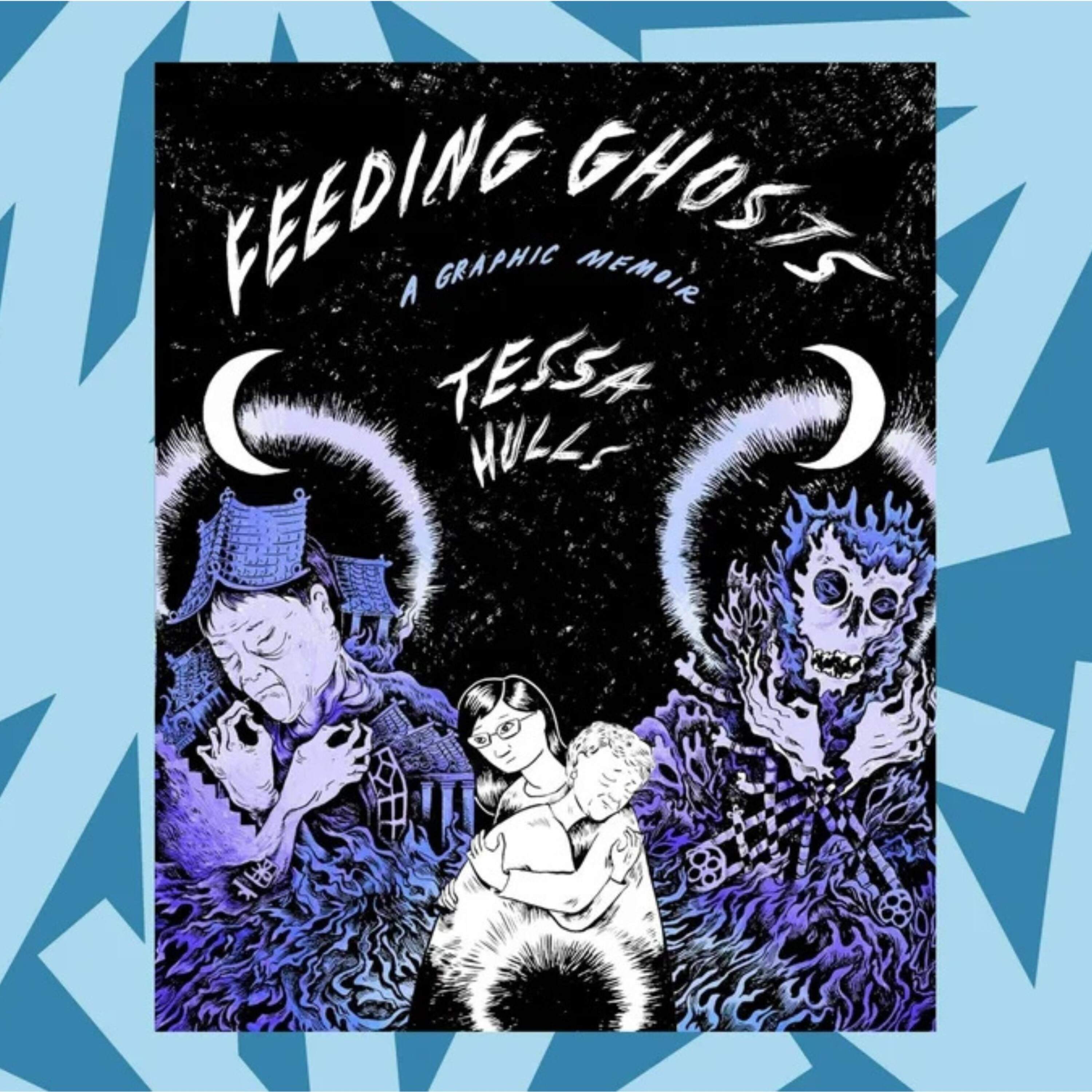
NPR's Book of the Day
'Feeding Ghosts' is a graphic memoir grappling with generational trauma
00:10:35
Loading summary
Transcript37 lines
- [00:02]
Andrew Limbong
Hey, it's NPR's Book of the Day. I'm Andrew Limbong. When you undergo a project that involves looking back into your family history, asking questions about who these people were that came before you, you kind of have to be prepared to not like them or at least come away with a more ambivalent idea of them. Right. Unless you're only interested in hagiography, which you know you do. You. But if you are looking for truths in, you'll probably come across some unpleasant ones along the way. That's what happened to comics artist Tessa Hulse, who's got a graphic memoir out called Feeding Ghosts, where she examines the impact of China's Cultural Revolution on her family. And in this interview with Here and Now, Scott Tang, she talks about certain calculated decisions that her grandma made that gave her a more nuanced view of her grandmother. That's ahead.
- [00:51]
BetterHelp Announcer
This message comes from BetterHelp President Fernando Madera shares BetterHelp's commitment to expanding access to therapy.
- [00:59]
BetterHelp Representative
Our State of Stigma report helped us understand that believing in mental health is easy, but asking for help is not. Now, with the report on our hands, we can work to make mental health care more accessible.
- [01:16]
BetterHelp Announcer
To get matched with a therapist, visit betterhelp.com NPR for 10% off your first month.
- [01:23]
Scott Tong
How do you tell a story of.
- [01:24]
Narrator/Host
Painful losses and trauma that goes down through generations? Well, for artist and author Tessa Hulls, you write a graphic memoir which not only tells how her mother and her grandmother went through China's Cultural Revolution, but also lets us see their pain through her drawings and her own legacy of trauma. The book is called Feeding Ghosts, and author Tessa Hulls joins us now. Welcome to Here and now.
- [01:48]
Tessa Hulls
Thanks so much for having me.
- [01:49]
Scott Tong
Help us understand the title Feeding Ghosts. What are the ghosts and what are presumably you feeding them?
- [01:56]
Tessa Hulls
Well, I grew up within this family where I knew that my grandmother had been driven to madness in Maoist era China because of what happened to her as a dissident journalist. And I sort of knew that this negative space was devouring my family. So to me, these ghosts were the unfazed past that lived within my family. And I felt like my role as an author and as an artist was to give them nourishment by bearing witness and listening to this story and finding out what it was that they had to say.
- [02:27]
Scott Tong
Yeah, you start the journey when you're about 30 years old and as you say, finding your way home after running away from it and running away from your mother for years. And on one page you write it was the Only adventure I truly feared. What did you fear?
- [02:44]
Tessa Hulls
Oh, I think I feared the vulnerability that I knew opening myself up to this past was gonna create. You know, I kind of became a hyper independent cowboy. And when I say I ran away, I went to extremes with it, going to Antarctica, Alaska. And I knew that there was going to be just a painful and rewarding softening that would come if I turned and faced my mother and faced my grandmother and really looked at what had hurt us all.
- [03:10]
Scott Tong
I have to say, your story, your chase, your family past, it rhymes so much with my own. I'm Chinese American and have family. And the places you go to, it so intersects. But let's talk about your journey to Suzhou in China. Beautiful city where I also have some family. Your grandmother was born there. Tell us about that.
- [03:31]
Tessa Hulls
She was the second oldest of five children, and she was fiercely independent and so made her way to Shanghai and became a female journalist reporting from the front lines of China's civil war. And so she kept writing as the Communists took Shanghai. And her memoir, which she wrote upon fleeing to Hong Kong, is a record of those years of being put through thought reform campaigns and essentially documenting what would be the prelude to her own mental collapse.
- [04:01]
Scott Tong
Yeah, and let's talk about this. I mean, as you say, the Communists take power finally in 1949, you know, after World War II, when the Chinese fend off the Japanese with help from the US and other countries, and then the Communists take over. And this happened in so many Chinese families, including mine. You know, your grandmother became stained for her previous work. Right? Persona non grata. And when a family member is outcast, all of the relatives cut off contact to survive and to protect themselves. But as far as you learned, what happened to her?
- [04:34]
Tessa Hulls
My grandmother ended up having a fling with a Swiss diplomat. So she ended up a single mother raising a mixed race bastard child. While all of this was going on and my grandfather was never in the picture, my mom never met her father. So she kind of had the black mark of both her political affiliations, but then also having a mixed race child. And eventually she was able to smuggle herself and my mother out of the country just before the Great Leap Forward, and they fled to Hong Kong beneath the false bottom of a fishing boat. And once my grandmother got there, she started writing a memoir called Eight Years in Red Shanghai. Love, starvation, persecution. And my mom talks about remembering her writing during those periods, and it was just this single minded, obsessive focus. And it turns out that it was probably the first occurrence of what would be a Lifelong series of mental breakdowns. And my grandmother ended up institutionalized at Castle Peak, which was Hong Kong's first mental hospital, leaving my mother to basically be raised as a charity case orphan by dgs, an elite colonial boarding school in Hong Kong.
- [05:37]
Scott Tong
The diocesan girls school that your mother went to. My mother went to.
- [05:41]
Narrator/Host
And, you know, the hard part about.
- [05:43]
Scott Tong
Digging up these things is we're expecting these hallmark moments or something, and they're not right. When we learn about difficult things. And you learn, as you write, that your grandmother might turn out to be a very difficult person.
- [05:57]
Tessa Hulls
Yeah. I think before I read my grandmother's memoir, I viewed her as a much more sympathetic character. But there are ways in which she made very morally ambiguous and, quite frankly, calculating choices that I really tried to reconcile in the book by allowing my reader into my own confusion as to how to portray her as the complicated character she turned out to be.
- [06:21]
Scott Tong
Yeah. And can I ask you to talk a little bit about some of those decisions she made?
- [06:26]
Tessa Hulls
My grandmother was known to be quite beautiful, and she absolutely leveraged that to basically sleep her way into the power structures of whiteness. And in some ways, my mom was a token of her success. And because Shanghai was such a deeply racially segregated city, my grandmother was very much trying to court the semicolonial lifestyle of basically the white expatriates who were living there.
- [06:52]
Scott Tong
Yeah. And how, as you think about it, does her story connect to her daughter, your mother, and to you?
- [07:00]
Tessa Hulls
I think in different ways. Both my grandmother and my mother had to sever their ties with the outside world. And I realized that I was on a very similar trajectory, but had taken it in an American direction where I was severing ties because of this embrace of a really pathological notion of freedom. And. And I think I saw how I was on a really isolating path where the echoes of this generational trauma were going to lead me to the same place that my mom and grandma had ended up in, where we basically couldn't connect with the broader world because we didn't know how to be close to.
- [07:37]
Scott Tong
Other people and just help us understand. Do you glean that as far as your relationship with your mother? She struggled to connect with her own mother and others, and that's one reason, perhaps, that she struggles to connect.
- [07:52]
Tessa Hulls
Well, my mom was about 10 years old when her mother lost her mind. And so she really spent her entire life as the caretaker for her own mother. And so there's a way in which her understanding of what a loving relationship is was really trapped within this cycle of Crisis and salvation, where she didn't know how to experience a love that didn't have some sort of damage at its core. And I think when I was born, she was really terrified that I had inherited her mother's disease because she was convinced that my grandma had lost her mind because she was a writer and the creative temperament. So from a place of deep love and deep fear, my mom tried to keep me safe from what she saw as my grandmother's mental illness lurking within me. And that ended up really driving us apart.
- [08:39]
Scott Tong
So how's your relationship now? Since this book project has come and completed, has it changed anything?
- [08:47]
Tessa Hulls
Absolutely, yeah. My mom and I worked together closely on this book and actually went on multiple international research trips together. And so I traveled to China with my mom and met my family for the first time with her serving as my translator. So it's been really powerful. And I think it brought us to a place that seemed previously impossible, where we're able to understand that although we have these fundamental differences in the cultural systems in which we were raised, both of our versions of love and morality and duty can be real.
- [09:20]
Scott Tong
Yeah. There's a line I find really powerful, and I presume, you know, this goes to how you kind of go about your life today, having been to China, having undergone this project. You write that China was both distant and omnipresent.
- [09:36]
Tessa Hulls
I think for those of us who are born in the US to immigrant parents, there's a way in which we're both completely severed from our parents culture and yet also defined by that absence. And for me, coming to understand my own family meant that I really had to come to understand China in a different way. Because the way in which my mom and grandma had become severed from that context and that fabric, it did dominate my childhood. So a huge part of this journey was coming to understand the negative space of this thing that I had grown up with, which was China.
- [10:09]
Scott Tong
Yeah. Finally, Tessa, you describe yourself at the start as a cowboy who's gone on all these adventures. When you come on out on the other side, are you still a cowboy? How do you describe how you changed, if you changed?
- [10:25]
Tessa Hulls
I think I am a reformed cowboy. I still have that same quest for the frontier. But I also understand how much of that was always an illusion and was coming from a place of really deep pain. And I think now I'm trying to find a way to have a life that carries those freedoms and that sense of exploration, but is also really tied to other people.
- [10:49]
Narrator/Host
Tessa Hulz is the author and artist.
- [10:52]
Scott Tong
Behind the memoir Feeding ghosts. Tessa Hulz, thanks so much.
- [10:56]
Tessa Hulls
Yeah, thank you so much for having me.
- [11:07]
Leesa Announcer
This message comes from Leesa from Night One. You'll feel the difference. Premium materials that deliver serious comfort and full body support. Go to leesa.com for 25% off mattresses, plus get an extra $50 off with promo code.
- [11:23]
Michelle Martin
NPR hello and happy New Year. It's Michelle Martin from Morning Edition. Thank you to everyone who donated during our end of year fundraising campaign. 2025 dealt a big blow to NPR and local stations with the loss of federal funding for public media, but we are so heartened by the outpouring of support and we will get through this together. Thank you for keeping NPR strong, moving into 2026 and beyond.
- [11:49]
BetterHelp Announcer
Are you thinking about making any changes in the new year? The Life Kit podcast is here to help. In each episode, we have research backed strategies and expert advice on everything from meal prep to strengthening relationships to paying down your credit card debt. Make your resolutions stick. Listen to the Life Kit podcast on the NPR app or wherever you get your podcasts.