← NPR's Book of the Day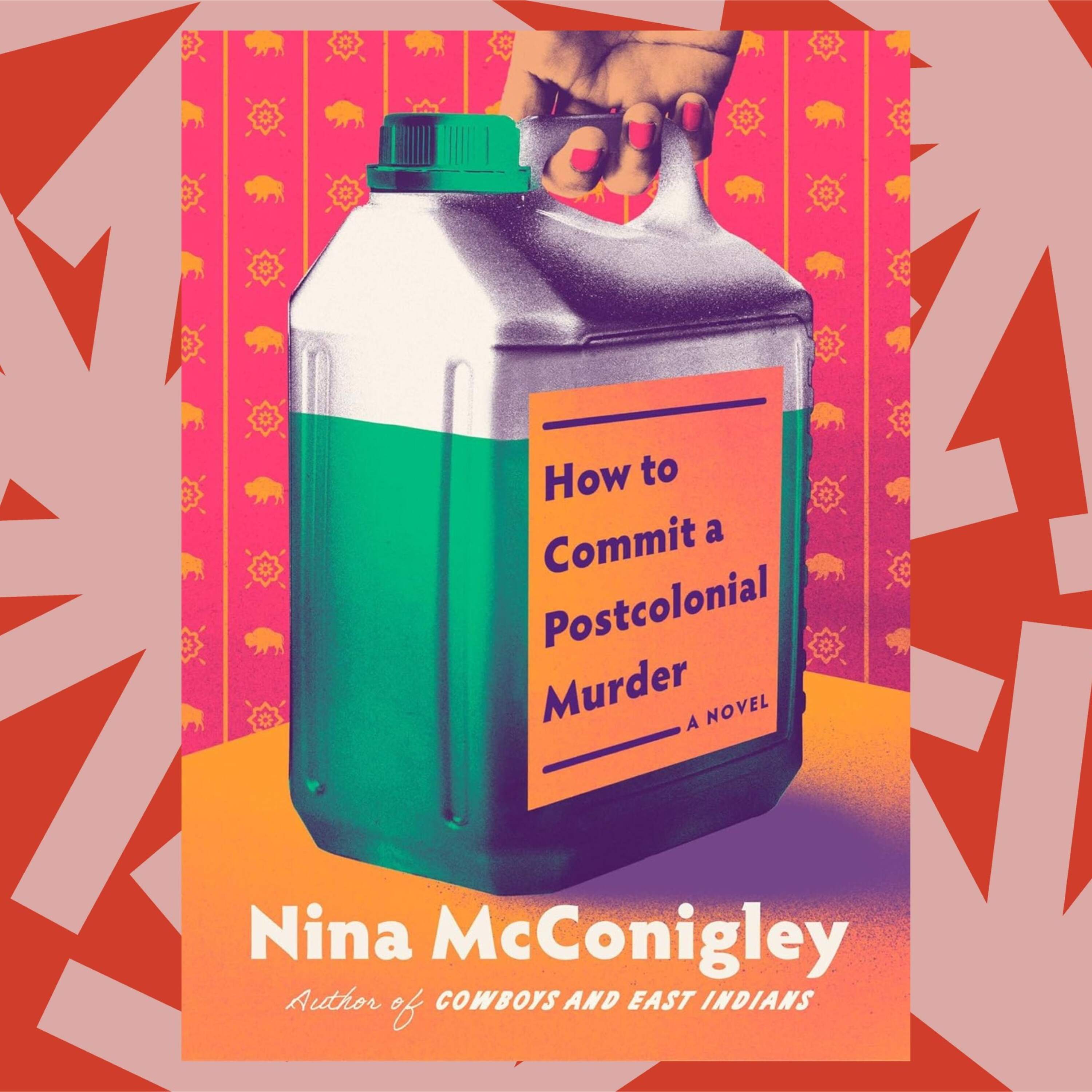
NPR's Book of the Day
'How to Commit a Postcolonial Murder' is a dark new novel about sisterhood
00:09:15
Loading summary
Transcript31 lines
- [00:02]
Andrew Limbong
Hey, it's NPR's Book of the Day. I'm Andrew Limbong. When you and your sibling decide to do something bad together, a bond forms. You are more than just siblings now. You are partners. Now. The bad thing I have in mind is along the lines of lying to your parents about a party or something. But the sisters in the novel how to Commit a Postcolonial Murder have something more serious serious in mind. Author Nina McConaughey talks to NPR's Asia Roscoe about how the book was inspired by a few other great sister novels, Middlemarch and the Color Purple, and how she just wanted to write her own sister book. That's after the break.
- [00:42]
NPR Sponsor/Advertisement Voice
This message comes from BetterHelp. February is full of flowers, candy and lots of relationship talk. It can feel like everyone has it all together in their love lives, but the truth is the they're still figuring it out. And whether you're married, dating or prioritizing being single, just remember you're right on time. Therapy can take the pressure off and help you feel lighter. Just a little outside perspective from a professional can lead to new understanding and a lot of progress. Visit betterhelp.com NPR for 10% off.
- [01:15]
Asia Roscoe
At the start of a dark new novel, Georgie Iyer Creel is looking back to the pivotal summer when she was 12 and her sister Agatha Krishna was 14.
- [01:26]
Nina McConaughey
Agatha Krishna said it started when they came, so that's where you could put the blame. But then she said we had to go further back than that. So we blamed it on Reagan. Everyone blamed him. That summer, the summer the country went into a bust, the summer we watched an exodus empty out of our town. Then I blamed the Cold War and Gorbachev. He had that stain on his head, and thus, I felt, couldn't be trusted. We blamed aids, which we didn't really get but thought you could get from the water fountain at the public library you stepped on with your foot. We blamed the Olympics and hated Sam the Eagle, their feathered mascot, who dressed like Uncle Sam in red, white and blue, though secretly I had a button of him with his sly smile and torch. We blamed it on my parents for moving to Wyoming in the first place, for settling in Marley. And then we just generally blamed them for everything. We thought they shouldn't have married, that they shouldn't have mixed us up, shouldn't have made us halfsies.
- [02:20]
Asia Roscoe
So the sisters ultimately settle on blaming the British, though acknowledging it's their Uncle Vinnie or Vinnie uncle who'll Pay. How to Commit a Post Colonial Murder is the debut novel of Nina McConaughey, who's with us now. Welcome to the program.
- [02:37]
Nina McConaughey
Thank you for having me.
- [02:39]
Asia Roscoe
Before we dive into talking about your book, I do need to let the listeners know that we will be discussing sexual abuse. That's at the root of why these sisters decide to take action. Tell us more about Georgie and Agatha Krishna and how their Indian born mother ended up in Marley, Wyoming.
- [03:00]
Nina McConaughey
Yeah. In the book, the girl's mother has met their father traveling, and he is a petroleum geologist. And as many people know, Wyoming is dependent on the oil and gas and energy industry. And so they try to make a life there. Though, for Georgie and Agatha Krishna's mother, it's a difficult transition because they're like.
- [03:21]
Asia Roscoe
Some of the only brown people in town and some of the only Indians in town, right?
- [03:25]
Nina McConaughey
Absolutely. And that is very similar to my growing up. I grew up in Wyoming, and we were definitely some of the only brown people and Indians in town through my whole life. And even now.
- [03:38]
Asia Roscoe
For Georgie, the book starts with her addressing the reader, the audience, and kind of anticipating their assumptions about Indian Americans, like whether they eat meat, the girls do, what their religion is. They're not Hindu or Muslim, they're Christians. Is Georgie trying to get it out of the way for the story that she really needs to tell?
- [04:06]
Nina McConaughey
I feel so. You know, I. As a biracial author, I felt like a lot of people want a certain story from you when you're a writer of color. I think I really wanted to subvert that when I wrote this book. And so for that reason, I thought, you know, why not just get it out of the way? Like, let's talk about mangoes and food and religion and poverty and saris and all the things people want to see in an Indian. I mean, it's a little cheeky, but I felt like I wanted to just say those things so I could tell the story in the way I wanted to tell it.
- [04:41]
Asia Roscoe
Georgie talks about their identities being split. Like, even though they were born in Wyoming, they're not seen as American, but they're not fully Indian either. She also brings up this notion of being split when it comes to the disassociation that happens to her when her uncle is abusing her, like she's being split from herself, split from her innocence. Why did you use this idea of separation or splitting for Georgie?
- [05:19]
Nina McConaughey
I taught at the University of Wyoming for a long time, and I taught a lot of Indian and postcolonial literature. And I feel like, as an Indian writer, the great split of India and Pakistan just looms in you, like you think about it, it's talked about. My mom was a child when India and Pakistan split. And so that was the first split I was thinking about. And then I thought about what are all the different ways that people split. I mean, I look at a state like Wyoming, we were split with the reservation and with the rest of the state, there's splits of girlhood into womanhood. I'm biracial. And so that split of being in the middle, of not really being Indian, not really being white.
- [05:56]
NPR Sponsor/Advertisement Voice
Yeah.
- [05:56]
Nina McConaughey
I just became really kind of obsessed with the ide of splits and how I could put that in the book in so many different forms.
- [06:03]
Asia Roscoe
The title is how to commit a Post Colonial Murder. How do you layer on the colonialism with what happens in the personal lives of these girls? Right, because it's a very personal story.
- [06:19]
Nina McConaughey
Yeah. I mean, I was thinking a lot about at its heart, what is colonialism? And I think it's extraction. It's taking something from a place, it's taking from a land, it's taking its people, it's taking its race. Then I started thinking about these girls and the ways that their bodies are literally, they're not in control of them with the abuse. And so I wanted them then to like, turn it around and say, how do we fight back? How do we say enough is enough? And, you know, from there the idea of murder was sort of born. I've never killed anybody in real life or done anything like that.
- [06:54]
NPR Sponsor/Advertisement Voice
Yes.
- [06:55]
Asia Roscoe
Yeah, that's good to make clear. I mean, the girls actually, they plan to poison Vinnie uncle with antifreeze, but then they delay it for a month or two to let them go to a Van Halen concert. Are they really holding off? Because they're conflicted about their plans and obviously their mother, his sister, loves them so much.
- [07:18]
Nina McConaughey
Colonialism is complicated. Of course, I can look at it from afar and say it was absolutely awful. I can't believe the British were in India.
- [07:26]
NPR Sponsor/Advertisement Voice
But.
- [07:27]
Nina McConaughey
But then there's aspects I look at my mom's generation where they really held up certain British things. My mom's a complete Anglophile when it comes to the royal wedding. And I wanted that mother in the book to sort of also love watching Diana and Charles. I wanted to show the complications of colonialism, that it isn't always as easy in black and white as it sometimes seems.
- [07:50]
Asia Roscoe
Why don't Georgie and Agatha Krishna go and tell their parents about Vinnie uncle's abuse? Because their par they do seem, you know, very loving and attentive.
- [08:03]
Nina McConaughey
Yeah, I mean, I think so many people who are victims of abuse, they're scared and there's a lot of shame around it and a lot of complicated feelings. And I think that for these girls, they know what will happen if they tell that the family will be split apart. And I think they know it would hurt their mother, even though of course, as an adult I can sit and say, of course tell your mother, of course tell a parent. On some level, they also love their uncle. I mean, he is family. And that makes things incredible complicated, I.
- [08:31]
Asia Roscoe
Think, to tell the murder plot against Vinny uncle. I mean, it stops the abuse. But there are these consequences. What does this secret that they have do to the relationship between the sisters?
- [08:48]
Nina McConaughey
As I worked through draft after draft, I thought to myself, you know, this really isn't a book about abuse and murder. It's really a book about sisterhood and how sisters bond and stay together and how do you stay close after you've done this sort of unspeakable act? And for them, it does splinter them apart, living with the guilt. And even though the abuse has stopped, I think they're very traumatized by what's happened. So much of the end of the book is just them trying to find their way back to each other. So many books that have meant so much to me have been books with sisters. And so, you know, from the Color Purple to Middlemarch. And so I just wanted to look back and sort of make my own sister book.
- [09:29]
Asia Roscoe
That's Nina McConaughle. Her debut novel is how to Commit a Post Colonial Murder. Thank you so much for being with us.
- [09:37]
Nina McConaughey
Thank you so much for having me.
- [09:49]
NPR Sponsor/Advertisement Voice
This message comes from Rosetta Stone. They have been the trusted leader in language learning for over 30 years. Their immersive, intuitive method helps you truly pick up your new language naturally. Access lessons from your desktop or mobile app whether you have five minutes or an hour. It fits your lifestyle with flexible on the go learning. Receive 50% off a lifetime membership with unlimited access to 25 language courses for life. Visit rosettastone.com NPR this message comes from Midi Health introducing Agewell Longevity Care, designed by women for women. Whether you're looking to prevent future health issues or just feel more like yourself, learn more@joinmidi.com that's joinmidi.com this message comes.
- [10:36]
Nina McConaughey
From NPR sponsor Capella University. Interested in a quality online education, Capella is accredited by the Higher Learning Commission. A different future is closer than you think with Capella University. Learn more at Capella Eduardo.