← NPR's Book of the Day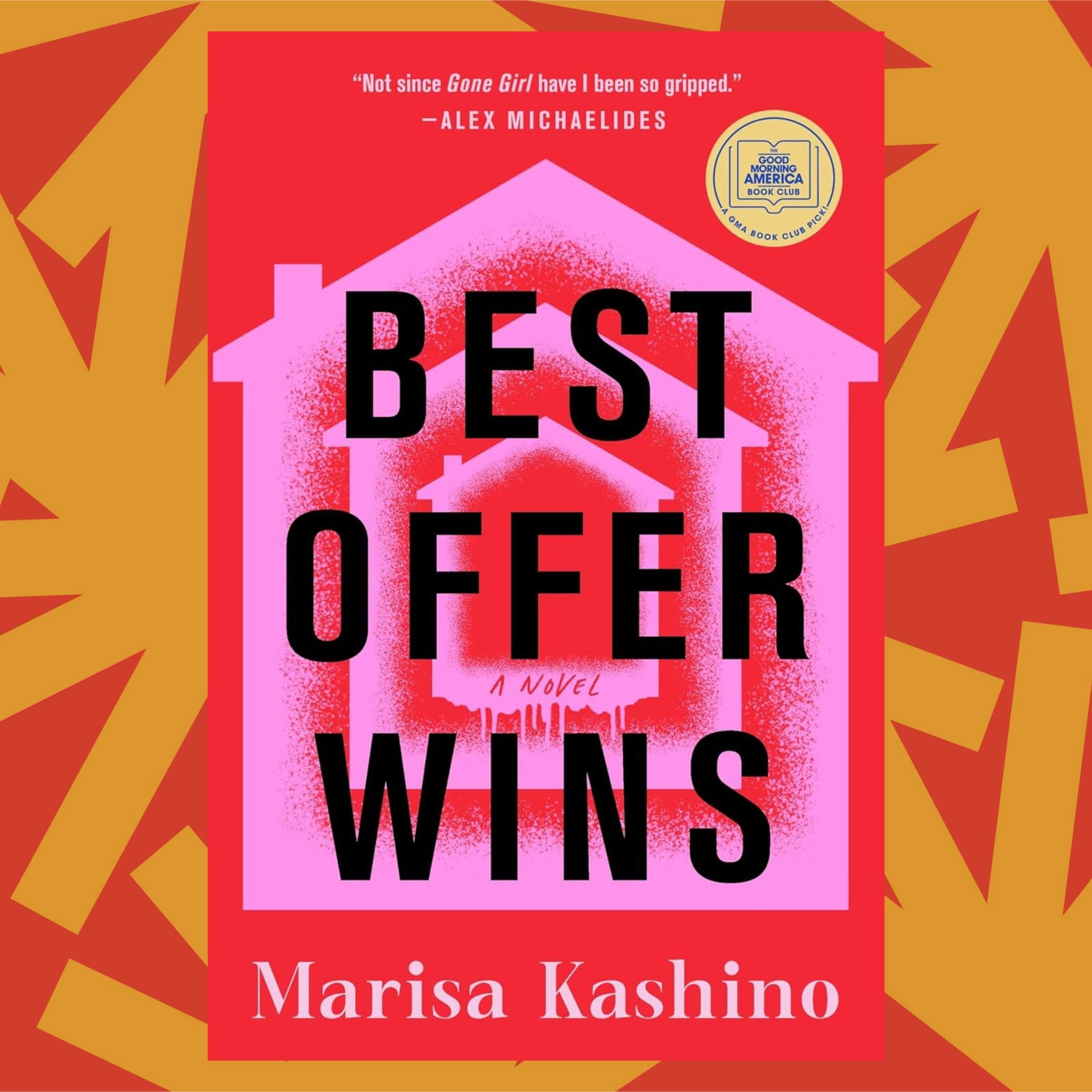
NPR's Book of the Day
In ‘Best Offer Wins,’ an ambitious millennial is driven mad by the homebuying process
00:07:14
Loading summary
Transcript26 lines
- [00:02]
A
Hey, it's NPR's Book of the Day. I'm Andrew Limbong. The disillusionment of the American dream is a pretty common theme throughout American literature. You know, a character goes on an arduous journey only to find that what was sold was a bill of goods. And that journey can take many forms. In Marisa Cascino's novel Best Offer Wins, that journey is buying a home. After the break, casino talks to NPR's Miles Parks about how what home ownership represents is changing and and why trying to find happiness in material things is a losing game.
- [00:36]
B
Support for NPR and the following message come from Warby Parker. The one stop shop for all your vision needs. They offer expertly crafted prescription eyewear plus contacts, eye exams and more for everything you need to see. Visit your nearest Warby Parker store or.
- [00:52]
C
Head to warbyparker.com this message comes from Progressive Insurance.
- [00:57]
D
Progressive makes it easy to see if you could save when you bundle your home and auto policies. Try it@progressive.com, progressive Casualty Insurance Company and affiliates. Potential savings will vary. Not available in all states.
- [01:10]
B
Buying a home is extremely stressful. It's often the biggest financial decision most people will ever make and that can make people go a little bit nuts in the process. Sound like you? Then you might have something in common with the main character of Marisa Cascino's new novel, Best Offer Wins. I spoke with Cascino and began by asking her about how reporting on the real estate industry in D.C. inspired her first novel.
- [01:35]
C
I thought of her as, I don't want to say typical D.C. but we are, you know, a city that's home to a lot of ambitious people.
- [01:43]
B
Strivers.
- [01:43]
C
Yes, striver is the word for her because she is also self made. I mean, she comes from very humble beginnings. That is also a big motivator for her because she looks around in some of the rooms that she finds herself in in D.C. and she sees a lot of people with trust funds and a lot of people who can bid all ca. And she is not one of them. And she feels she has worked 10 times as hard for everything she has as a lot of the people around her. So she really does believe that she has been pushed to a point now where she has to take matters into her own hands and life is not behaving the way that she thinks it should. So she is going to sort of bend it in a way that she thinks that she's earned.
- [02:21]
B
I will say for the first hundred pages, she's pretty deeply unlikable. It's pretty hard to at least I found her that way. There's a specific dinner party scene that I will think about and cringe probably for the next four weeks. But then there's a moment as I'm reading this book where I start rooting for her. And I don't think anything changes about her. I guess I'm wondering, why does that happen?
- [02:43]
C
I think even if her tactics appall you, even if some of her views appall you, I do think that her predicament is very relatable. And she is, in a lot of ways, an underdog. So I do think there is a human instinct to root for the underdog. I think the other thing that I hope is that she's funny. So even as she says or thinks terrible things and does terrible things, at least she's making you laugh. And I think in some instances, saying the quiet parts out loud that probably a lot of people think in their heads but are not able to express.
- [03:19]
B
Well, it's. It's interesting to hear you refer to her as an underdog because, to be fair, she makes a lot of money. I mean, these are. Her and her husband are offering more than a million dollars for these houses that they're trying to acquire, which is. I mean, that is an extremely privileged position, like the top 1% of the country of the world, probably. And yet she doesn't feel rich.
- [03:39]
C
Yes. And that was a really specific, purposeful choice that I made. She does have so much, but all she can see is what she doesn't have. I mean, if you're a millennial in a big city trying to buy a home, a million dollars is often the entry point. She's an underdog in the sense that. That she has worked very hard for everything she has. She doesn't come from a fancy school or a fancy family. She doesn't have a bunch of connections. She sort of built this career for herself. So she thinks she's earned the dream life, and the dream home is like the big missing piece of that puzzle for her. So I think underdog in comparison to a lot of the people around her who have had things she thinks, you know, kind of handed to them, sort of born on third base types.
- [04:21]
B
Will Margot ever truly be happy?
- [04:24]
C
I don't wanna spoil the end of the book, of course, but, yeah, I think probably not. I mean, I think when you put so much weight into material things as the things that are gonna make you happy and fulfill you, I think that's sort of a losing game.
- [04:40]
B
The other thing that this book gets at is this Very specific moment a lot of people experience in their late 20s, early 30s. Cause she's also trying to get pregnant throughout this book as well. And there's this moment in early adulthood where feeling this pressure of, like, everyone else is getting something or moving forward. And if you're not getting there, then it starts to feel sort of. The temperature starts rising internally for a lot of people. I mean, is this book about that period as well?
- [05:09]
C
Yes, and specifically that period as a woman. So she is feeling all of the pressures of, you know, a late 30s woman who thought by now she would have the house and the baby and all of these sort of kind of totems of an institution, perfect life. And it just has not fallen into place for her as easily or as quickly as she had hoped that it would. For Margot, that pressure cooker leads to a lot of internal rage. And this, like, simmering rage is an engine for her that propels her through the book to do a lot of despicable things. I will say that writing that part of the character was incredibly fun and cathartic for me because, you know, I think most women feel some degree of rage right now. I know I certainly do. And I think that piece of her character is something that will resonate for a lot of readers.
- [06:06]
B
Do you have any advice for people who don't yet own a home about navigating this? Because I will say it reads a little bit like a cautionary tale in terms of how people should think about it and whether they should think about doing this at all.
- [06:20]
C
Well, I'm so glad that you said cautionary tale and not playbook.
- [06:25]
No, because I will say, if you decide to use this as a playbook, I'm gonna wash my hands right now and say, not my responsibility.
- [06:32]
B
Not reliable.
- [06:33]
C
Yeah, right. You know, I think there has been a real shifting, or there is an ongoing shifting of what the American Dream entails. I think most elder millennials like me, we're at a point now where we're trying to hit these adult milestones. And for our parents, homeownership was sort of the centerpiece of the American Dream, and grandparents. And I think for a lot of this generation, that still has been very unattainable. So I think there is, like, a little bit of rethinking of what does. What does. What does homeownership actually mean? Is it that important? You know, and so I think we're kind of living that in real time, actually.
- [07:12]
B
That's author Marissa Cascino. Her new book, Best Offer Wins, is out now. Thank you so much for talking with us.
- [07:18]
C
Yeah, thank you. This was so much fun.
- [07:21]
A
And just a reminder that signing up for Book of the Day plus is a great way to support NPR's book coverage and public media. And you'll get to listen to every episode sponsor free. So please go find out more@plus.NPR.org BookOfTheDay.
- [07:49]
D
This message comes from Charles Schwab. When it comes to managing your wealth, Schwab gives you more choices like full service, wealth management and advice when you need it. You can also invest on your own and trade on think or swim. Visit schwab.com to learn more. This message comes from Mattress Firm Losing sleep When your partner tosses and turns, Mattress Firm sleep experts can match you with a tempurpedic mattress designed to absorb motion for deeper rest. For the great sleep you deserve, visit Mattress Firm. They make sleep easy.
- [08:21]
This message comes from KeyBank. This year, Key for Women is celebrating 20 years, two decades of empowering business leaders and strengthening communities together. Key for Women made an impact and they're just getting started. Learn more@key.com women.