← NPR's Book of the Day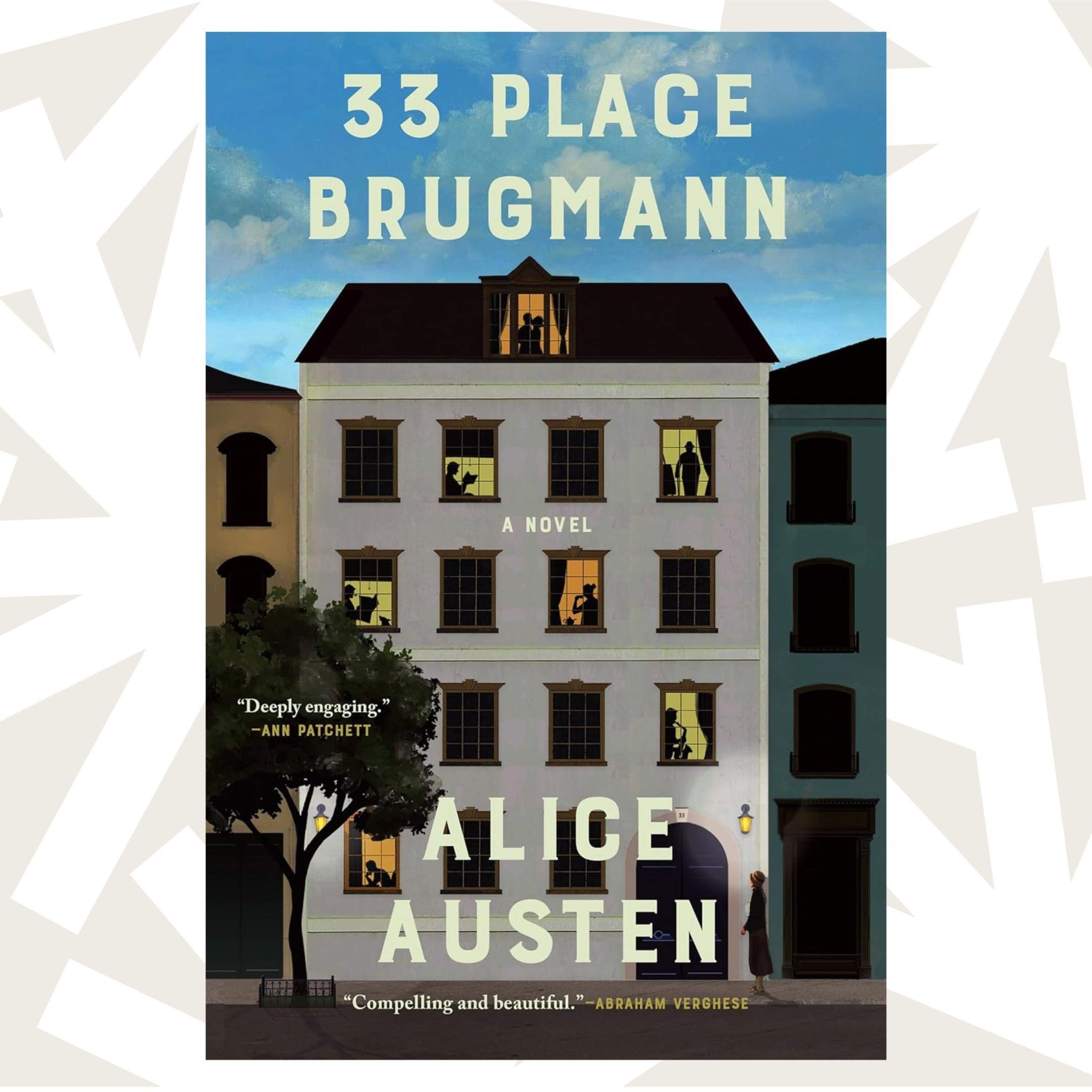
NPR's Book of the Day
In this novel, the residents of a Brussels apartment building brace for Nazi invasion
00:09:28
Loading summary
Transcript25 lines
- [00:02]
A
Hey, it's NPR's Book of the Day. I'm Andrew Limbong. There's something beautiful about living in an apartment building where the folks upstairs, downstairs, down the hall, whatever, they're all a part of your life. Yes, this can be very annoying, depending on your tolerance for sound, smells and small talk. But it's a microcosm of life, of society. The novel 33 Plas Brugmann is set in an apartment building in Brussels in 1939. If you know the slightest bit about history, you know what's going on. And in this interview with NPR's Scott Simon, author Alice Austin talks about how the bonds of society aren't tested by the people in power. They're tested by the normies, the regular, everyday people who live near each other in apartment buildings. That's ahead.
- [00:53]
B
This message comes from BetterHelp. The holidays are a time of traditions, like making your grandmother's pudding recipe or watching that movie you've seen a thousand times. Incorporating therapy into your life can help you take time for yourself during what can be a joyful but sometimes tough time of year. And by caring for yourself, you can show up more for the important moments. This December, start a new tradition by taking care of you. Visit betterhelp.com NPR For 10% off a.
- [01:23]
C
New novel, 33 + Bergman opens with a list of the residents of a Brussels apartment building. There are the savants, a widower and his daughter in Apartment 4 El, and across the hall, the Raphael family. But they've disappeared in the middle of the night. It's 1939. Germany's invasion of Belgium is on the horizon, and that list is signed as though ready to be handed over to authorities. The fates of the building's residents wind together in this first novel from Alice Austin, who joins us from the studios of W W M in Milwaukee. Thanks so much for being with us.
- [02:03]
D
Thank you for having me. It's such a pleasure.
- [02:06]
C
This is a novel, but a real address that you really know, isn't it?
- [02:10]
D
Yes. I lived in the building. I lived in Brussels for some time. I was commuting to Prague and working for Vaclav Havel's nascent democracy. Havel was the philosopher and playwright who became the leader of the Czech Republic after really being the genesis of the Velvet Revolution that led to a rejection of the Soviet system. And during the time I lived there, my oldest son was born and my first play was produced. So it was a momentous time for me. And my son, like baby Charlotte in the book, had terrible colic. And because of that, I got to know residents in the building, including two elderly residents who had lived there before and during the occupation, one of whom had a remarkable private art collection that inspired the art collection in the book.
- [03:12]
C
And you write in the book the building felt like a kind of fortress that I guess, might have made it feel impervious to the events of the world of the outside, at least for a while.
- [03:22]
D
Yes, it's interesting because these ladies would have us to tea. They loved having a baby in the building. And they would tell me stories of what had gone on during the occupation. And the stories were funny, they were heartbreaking, and above all, they were suspenseful. And what struck me about them is that here was the story of this community within this fortress that told a story of a country and a continent in one of the darkest times in modern history.
- [03:58]
C
Tell us about the Raphael family, because they leave overnight and the neighbors are pretty sure. Why, aren't they?
- [04:06]
D
Yes, the Raphael family is Jewish, and they're not assimilated. They're very comfortably, happily, beautifully Jewish in this building. Leo Raphael is an art dealer who sort of stays ahead of what's happening and gets his family out and the paintings disappear. And that becomes a subject of much speculation in the novel.
- [04:30]
C
And tell us about the Sauvins. Charlotte, the daughter, is an art student, talented painter, and her father, Francois, is haunted by memories of what we now call World War I, which was not that long ago, in 19.
- [04:49]
D
I am reticent to say that the characters have the advantage of looking back on this terrible war in the rearview mirror. That was not, you're right, that long ago they were aware of how dire things could become and how quickly things could turn. Still, I think there are characters who don't want to acknowledge that. And understandably, because I think it was such a terrible time.
- [05:13]
C
You have more than a dozen narrative voices in the novel. How do you handle that?
- [05:18]
D
I really wanted to capture the suspense of the situation in the building that had been communicated to me. And I actually tried an omniscient narrative voice. And then I came upon these different characters. And I'm a playwright as well. And actors have this wonderful expression, don't play the end. And every night they have to go out on stage and convince the audience not only that they have no idea what's going to happen, but they don't know what they'll do. I don't think my characters knew what they would do. We know the outcome of World War II. These are fictional characters. But I was really forced through the narrative to inhabit them, to smell what they smelled, to feel what they felt, to see what they saw and then to see what they did. And they constantly surprised me, but also it enabled me to really get into their heads. And their world is the world I saw when I wrote that section of the book.
- [06:21]
C
I'd like to ask you to read a short, really very startling paragraph from the book, and it's from Charlotte Sauvign.
- [06:29]
D
The occupation of Brussels was immediate, but the constraints, the impositions, the curfews, the ostracizing, the marking, the bans, the roundups, the deportations, the murders, these happened so gradually they might be called cunning. For just as you got used to one thing, there was another. It was always happening to someone else until it wasn't. And by then it was too late.
- [06:59]
C
Is that how a society has taken over?
- [07:02]
D
I think sometimes, yes. I had, as I mentioned, the extraordinary privilege of working for Vaclav Havel, and I always had great admiration for him. He has this notion of personal responsibility, the idea that the bonds of society are only strong if we all uphold our own part of it. And that the person who walks past a sign in a shop window that says no blacks or no Jews or no women or no gays is just as responsible as the shopkeeper who puts up the sign, who is just as responsible as the apparatchik who tells the shopkeeper to put up the sign, who is as responsible as the government official who decides that this will be done. And that has always had a very profound influence on me. And I ask myself, would I measure up to Havel's standard? Who does? How do we? And at what point do we understand that that is the metric?
- [08:11]
C
It strikes me, the story of the novel and all the ways in which the lives are intertwined is the challenge they have of surviving, but also helping each other. And those paths are not always clear, are they?
- [08:24]
D
No. Writing this novel, I always knew I would write it. It stuck with me the way stories I ultimately write do. It felt quite urgent. In our increasingly polarized world, where you see that people hold such strong opinions and they don't even entertain or listen to contradictory opinions, and yet very often they live in communities and neighborhoods with neighbors who hold those contradictory opinions. So what if you're dependent upon those neighbors for security or food, as the residents of Plas Brugman were? Who do you trust? What will you do? Who and what matters to you most? Are you willing to risk your life, the lives of your family? Why does art matter? These questions absolutely consumed me as I.
- [09:15]
C
Wrote the book Alice Austin's new novel, 33 Brugman, thank you so much for being with us.
- [09:22]
D
Thank you. It was such a pleasure.
- [09:31]
A
Hey, Andrew here, The host of NPR's Book of the Day podcast. And yeah, I love new books, but there's just something about rereading an old favorite on our new limited series, Books We've Loved. We're revisiting some classics from Pride and Prejudice to Dune to Everything in between and talking about why they're worth reading today. Listen to NPR's Books We've Loved right on this podcast feed every Saturday on the NPR app or wherever you get your podcasts.
- [09:59]
B
This message is from GiveDirectly, a nonprofit that sends cash directly to the world's poorest people. Pods Fight Poverty is supporting 700 families in Rwanda, with donations matched through December 31st. Visit GiveDirectly.org podcast.
- [10:15]
E
This message comes from Schwab. Everyone has moments when they could have done better. Same goes for where you invest. Level up and invest smarter with Schwab. Get market insights, education and human help when you need it. This message comes from NPR sponsor Rosetta Stone, an expert in language learning for 30 years. Right now, NPR listeners can get Rosetta Stone's lifetime membership to 25 different languages for 50% off. Learn more at rosettastone. Com NPR.