← NPR's Book of the Day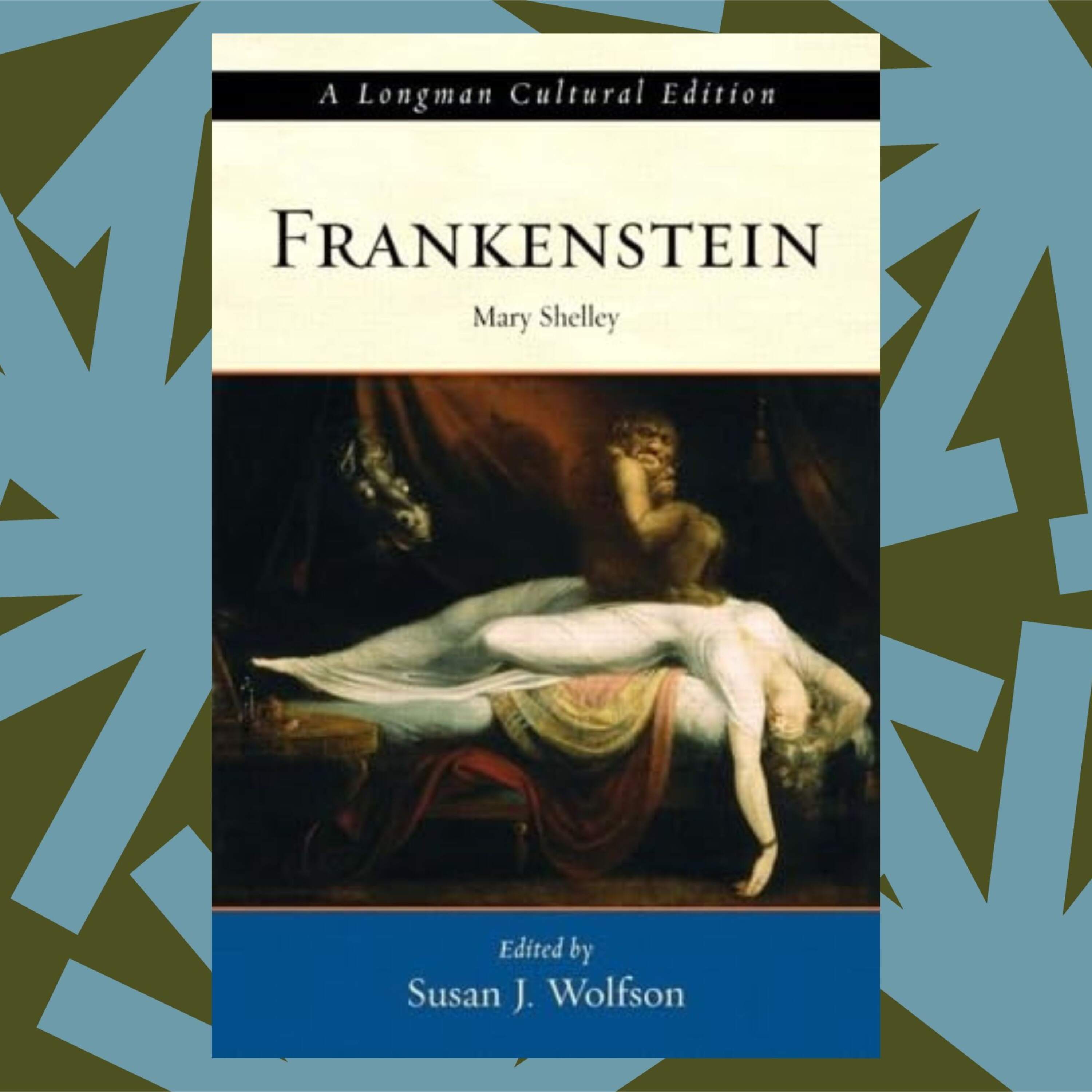
NPR's Book of the Day
Princeton professor Susan Wolfson on why we love 'Frankenstein' two centuries later
00:06:01
Loading summary
Transcript30 lines
- [00:02]
Andrew Limbong
Hey, it's NPR's Book of the Day. I'm Andrew Limbong. There's that new Frankenstein movie directed by Guillermo del Toro, about to come out on Netflix. It's got a pretty stacked cast. Oscar Isaac, Mia Goth Jacob Elordi is playing the monster. And it's worth wondering, what is it about this story that draws people to it, even today? Well, back in 2012, English professor Susan Wolfson edited an annotated version of Mary Shelley's original book. And she spoke with NPR's Rachel Martin about that exact question. Their conversation after the break.
- [00:37]
NPR Sponsor Announcer
This message comes from Schwab. At Schwab, how you invest is your choice, not theirs. That's why when it comes to managing your wealth, Schwab gives you more choices. You can invest and trade on your own. Plus, get advice and more comprehensive wealth solutions to help meet your unique needs. With award winning service, low costs and transparent advice, you can manage your wealth your way at Schwab. Visit schwab.com to learn more.
- [01:05]
Rachel Martin
There are some books that have saturated themselves so deeply into our culture and consciousness, we tend to believe we've read them even when we haven't. Mary Shelley's Frankenstein is one of those books.
- [01:16]
Susan J. Wolfson
It's alive, it's alive, it's alive.
- [01:20]
Rachel Martin
The Gothic horror tale written in 1818, is the story of Victor Frankenstein. He's an ambitious scientist in a quest to create life. And in that quest, he inadvertently creates a monster, the creature, in the name of God.
- [01:34]
Susan J. Wolfson
Now I know what it feels like to be God.
- [01:38]
Rachel Martin
Frankenstein, in its multiple incarnations in film and TV is all about the stuff that makes for a good tale on Halloween, the dark and stormy night, and of course, the terror unleashed at the moment of the monster's creation. But in the book, no lightning bolt, no thunder. Instead, Victor Frankenstein describes the moment this I collected the instruments of life around me that I might infuse a spark of being into the lifeless thing that lay at my feet.
- [02:08]
Susan J. Wolfson
We don't really know exactly what is happening other than that infusing of a spark. We assume that it's electrical.
- [02:16]
Rachel Martin
That's Professor Susan J. Wolfson. She edited a new annotated version of Mary Shelley's Frankenstein.
- [02:21]
Susan J. Wolfson
And one of the notes that we had fun writing was about the inventor of the pacemaker, the American doctor Gene Rosenbaum, who saw the James Whale 1931 film as a child. And it stayed with him powerfully. And he thought, oh, electricity. Infusing a spark into a dead body and bringing it to life. That's amazing. The next paragraph I think is really gripping because it describes the extreme disgust of the creator for his creation. And the disgust has to do with an unacceptable physical appearance.
- [03:02]
Rachel Martin
His yellow skin scarcely covered the work of muscles and arteries beneath. His hair was a lustrous black and flowing.
- [03:08]
Susan J. Wolfson
Which is not bad in itself, right?
- [03:10]
Rachel Martin
No, it sounds pretty good.
- [03:12]
Susan J. Wolfson
His teeth of pearly whiteness that you can see that Victor Frankenstein has designed this creature to be a beautiful man, and it hasn't turned out that way.
- [03:24]
Rachel Martin
Do you have a favorite representation of this story?
- [03:28]
Susan J. Wolfson
You mean visual representation?
- [03:30]
Rachel Martin
Favorite Frankenstein movie or TV representation?
- [03:34]
Susan J. Wolfson
Actually, I like the very first published image of Frankenstein. Let me see if I can find that for you. We have it. Here it is. It's on page 31.
- [03:45]
Rachel Martin
Okay.
- [03:46]
Susan J. Wolfson
And this was the first illustration when you look at the creature. Yes. There's a skull on the floor. There's a book open, but the creature has a ripped above.
- [03:57]
Rachel Martin
He looks nothing like the green monster with the bolts in his neck.
- [04:01]
Susan J. Wolfson
He's not a monster. I've seen undergraduates on Monday morning who don't look as good. He's, you know, he's dazed, he's confused. He is recognizably human looking. And that, I think, is a much deeper disturbance than, say, the kind of cultural processing of the creature, in which the creature very much looks like a deranged, horrifying, scary, dangerous madman. And that tells you what happened to the imagination of this creature across almost a century.
- [04:41]
Rachel Martin
I mean, reading this book with these notes, they just provide amazing texture to the experience. Most people know Frankenstein through its representations in popular culture, TV and movies.
- [04:54]
Susan J. Wolfson
Absolutely.
- [04:56]
Rachel Martin
Even jokes. I mean, right now on the east coast, where we are, we're starting to feel the effect of what some people have dubbed the Frankenstorm. So what do you think is the legacy of Frankenstein at this point?
- [05:10]
Susan J. Wolfson
Well, I'm glad you mentioned the Frankenstorm, because that's a kind of default prefix for any horrifying, alarming development in weather, in science, in fashion, in food, technology. And everybody knows what that means. The way in which idealism may not think through consequences. A human creation that has gotten out of control.
- [05:44]
Rachel Martin
Susan J. Wolfson, She's a professor at Princeton University. She and Ronald Levow edited a new annotated version of Frankenstein.
- [05:52]
Susan J. Wolfson
That's Frankenstein.
- [06:00]
Andrew Limbong
Hey, Andrew here, The host of NPR's Book of the Day podcast. And, yeah, I love new books, but there's just something about rereading an old favorite. On our new limited series, Books we've Loved. We're revisiting some classics from Pride and prejudice to Dune to everything in between and talking about why they're worth reading. Listen to NPR's Books We've Loved right on this podcast feed every Saturday on the NPR app or wherever you get your podcasts.
- [06:29]
NPR Sponsor Announcer
This message comes from NPR sponsor Rosetta Stone, an expert in language learning for 30 years. Right now, NPR listeners can get Rosetta Stone's lifetime membership to 25 different languages for 50% off. Learn more at rosettastone.com NPR this message comes from NPR sponsor 1Password. Protect your digital life with 1Password if you're tired of family members constantly texting you for the passwords to streaming services, 1Password lets you securely share or remove access to logins access from any device anytime. 1Password lets you securely switch between iPhone, Android, Mac and PC with convenient features like autofill for quick sign insert. Right now, get a free two week trial for you and your family at 1Password.com NPR this message comes from Bombas. You need better socks and slippers and underwear because you should love what you wear every day. One purchased equals one donated. Go to bombas.com NPR and use code NPR for 20% off.