← NPR's Book of the Day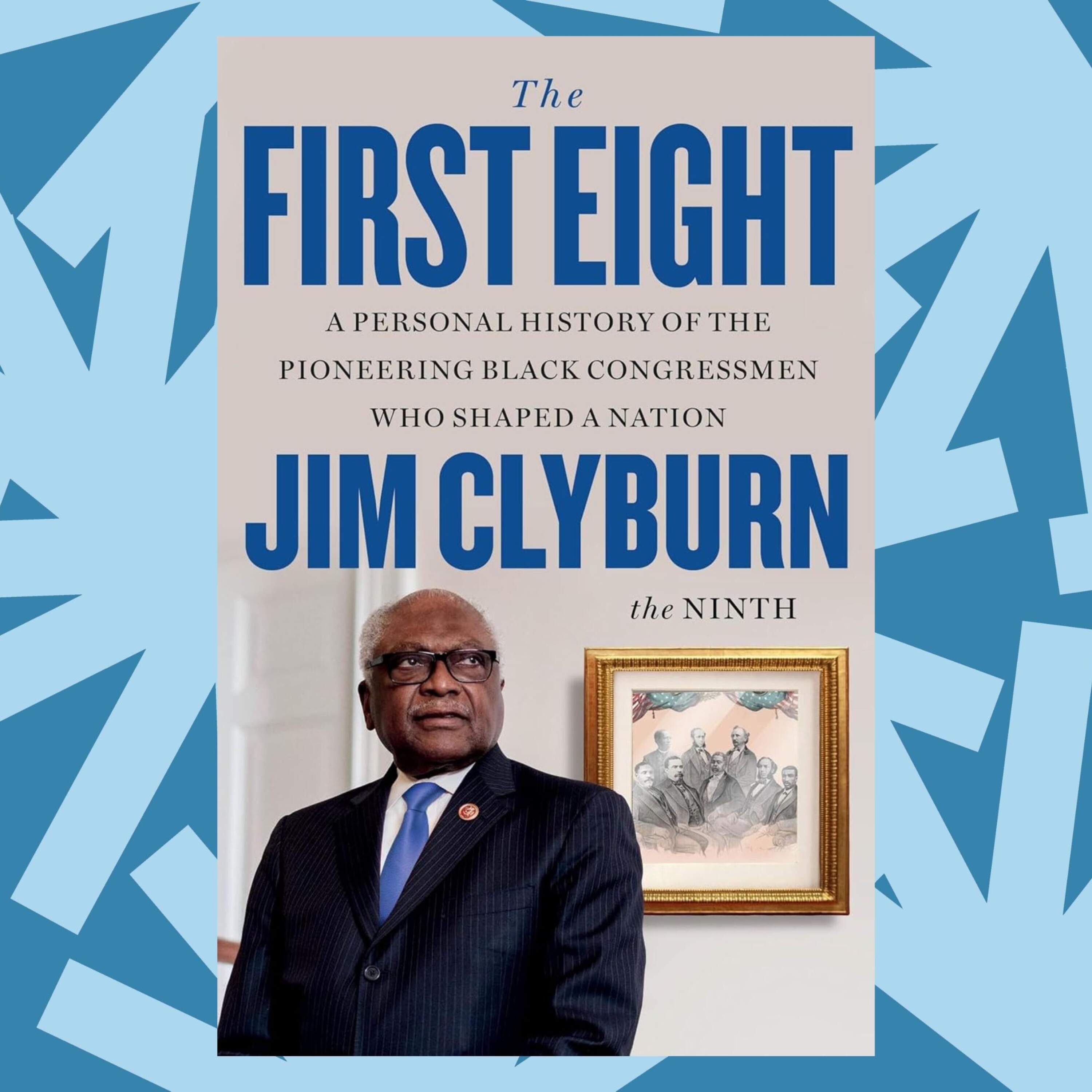
NPR's Book of the Day
Rep. Jim Clyburn’s new book 'The First Eight' traces the history of his predecessors
00:07:59
Loading summary
Transcript39 lines
- [00:02]
Andrew Limbong
Hey, it's NPR's Book of the Day. I'm Andrew Limbong. What happened before can happen again. That's a point Congressman Jim Clyburn makes in today's interview. His new book, the First Eight, is a look at the eight black congressmen from South Carolina who came before him. The book began as an exercise in history, a way of remembering the people who forged a path for Clyburn. But in this interview with NPR's Michelle Martin, Clyburn talks about how the direction of the book changed after the 2020 elections, from looking back in the past to saying something about the present. That's coming up.
- [00:39]
Congressman Jim Clyburn
This message comes from Schwab.
- [00:41]
Michelle Martin
Everyone has moments when they could have done better. Same goes for where you invest. Level up and invest smarter with Schwab. Get market insights, education and human help.
- [00:51]
Congressman Jim Clyburn
When you need it.
- [00:53]
Advertisement Narrator
This message comes from Progressive Insurance. You chose to hit play on this podcast today. Smart Choice. Make another Smart choice with Auto Quote Explorer to compare rates for multiple car insurance companies all at once. Try it@progressive.com, progressive Casualty Insurance Company and affiliates. Not available in all states or situations. Prices vary based on how you buy.
- [01:14]
Michelle Martin
After three decades in office, you might think you know everything there is to know about one of the Democratic Party's most influential lawmakers, Congressman Jim Clyburn of South Carolina. But one assumption many have about him is incorrect. He is the first black congressman from his native state. There were eight others before him. His new book, the First Eight, tells the story of these eight men who overcame incredible odds, from slavery to freedom to the bloody backlash of Reconstruction, and paved the way for him and others in American politics. And Congressman Clyburn is with us now in our Studios in Washington, D.C. congressman, thank you so much for coming by to see us.
- [01:50]
Congressman Jim Clyburn
Thank you very much for having me.
- [01:51]
Michelle Martin
I know that you were a history teacher before you entered politics, although you were always, you know, an activist. But so many of the people in your book, many people have never heard of. And I wondered, how did you know about them?
- [02:04]
Congressman Jim Clyburn
My daddy was a real stickler for education, and my dad thought that Robert Smalls was a great guy. He introduced me to Robert Smalls.
- [02:15]
Michelle Martin
Well, tell me about Robert Smalls.
- [02:16]
Congressman Jim Clyburn
Robert Smalls is.
- [02:18]
Michelle Martin
The story is incredible. I mean, the story. I mean, honestly, it's a movie.
- [02:21]
Congressman Jim Clyburn
Yeah. Robert Smalls was number six in this group. This is a guy who was born enslaved. His mother talked the master, their owner, into letting him go to Charleston and work on the waterfront. And while he was on that waterfront, people noticed that he had leadership skills. So he was kind of put in charge of all the other enslaved people on the ship. And the three guys who ran the ship, they had this habit of every Friday night they would leave the ship, go into town, would not come back until the next day. Well, one day when they were gone, Smalls smuggled his wife onto the ship and took off.
- [03:08]
Michelle Martin
So he smuggles a supply ship across Confederate lines into Union hands.
- [03:14]
Congressman Jim Clyburn
Yes.
- [03:15]
Michelle Martin
Amazing.
- [03:15]
Congressman Jim Clyburn
And his reward was his freedom. Everybody on the ship got their freedom. And he got 1500 bucks in cash and he became the first African American captain in the United States Navy.
- [03:29]
Michelle Martin
So let's skip through. We've already talked about Robert Smalls. Let's go to the 8th, George Washington Murray. Let's talk about him and the scheme to deprive him of his seat by the then governor, you know, Ben so called Pitchfork Tillman, who created the scheme of creating sort of a set of false electors or dual electors in order to invalidate the electors who had been selected by the voters, much like they're doing today. And I just was. I don't know if you grew up knowing about that, but when you came upon this information, I was just wondering how it, how it struck you.
- [04:05]
Congressman Jim Clyburn
Well, when I saw what was happening after the 2020 elections, someone had taken a playbook from the 1876 election. What was going on up in Michigan, trying to get these alternative set of electors. When this happened is when I changed the direction of the book. Because the book was going to be just to inform people about these guys. But then it got to the point where it's no, it's got to be more instructive than informant. And so I really almost started over with the book.
- [04:41]
Michelle Martin
One of the things about the book that's also interesting is you talk about obviously the obstacles that these men faced and you talked about obviously the intense racism that they all faced. But one of the other things that's interesting is you also talk about the way the color, colorism dynamics played into their careers. And that's. It's still a sensitive subject, I think, among a lot of some African Americans. And I was just wondering why it was important to you to talk about those things.
- [05:08]
Congressman Jim Clyburn
I thought that be real. My whole thing, that's the history. When I ran in 1992, it was an issue in my campaign. When I got to Charleston, I was told that I was a come here, not a been here, which was very important back then.
- [05:25]
Michelle Martin
A come here, not a been here.
- [05:27]
Congressman Jim Clyburn
Yeah.
- [05:27]
Michelle Martin
Which means you just showed up.
- [05:29]
Congressman Jim Clyburn
You just showed up a Come here.
- [05:30]
Michelle Martin
Not. I've been here. Okay.
- [05:32]
Congressman Jim Clyburn
And you were treated differently as a result of that. But the fact of the matter is you need to work through all of that, and you aren't going to work through it by avoiding it. All right.
- [05:42]
Michelle Martin
Have you made a decision about whether you're going to run for reelection?
- [05:45]
Congressman Jim Clyburn
I mean, not really.
- [05:46]
Michelle Martin
You know, Nancy Pelosi is only a few months older than you, and she's made the decision that she's not going to run again. Because, you know, the argument that some are making is that it's time for kind of a generational turnover. What are your thoughts about that?
- [05:57]
Congressman Jim Clyburn
Well, my family and I started meeting what we call our family summit every year. We started back in 1972.
- [06:05]
Michelle Martin
You've mentioned that to me before, that you have basically an accountability circle in your family where it is their responsibility to reflect on whether you're still capable of doing the job in the manner that you would all wish.
- [06:17]
Congressman Jim Clyburn
And we will have that meeting on the 20th of December. We'll stay together until New Year's Day. And during that time is when we go make a decision one way or the other. Yeah. Yeah. You know, I feel great. I still can play 36 holes of golf in Monday, and I can tell you, none of the voters down there are asking me to leave. In fact, just the opposite. They want the benefit of that experience.
- [06:45]
Michelle Martin
So again, before we let you go, when you look at the history of these eight men that you profiled, what do you draw from it?
- [06:52]
Congressman Jim Clyburn
I draw from that simply anything that's happened before can happen again. And so you cannot allow this president, with this majority in the Congress, to cause you to react to their foolishness, because that's what happened before. And it will happen again if you aren't careful. And we saw some of it in the last election when you got a big increase in the African American male vote, especially. And when you talk to them, oh, he's strong. In fact, I told Joe Biden the last time I talked to him about this, I said, you know what I used to say, there's no substitute for substance. But I don't say that anymore because people seem to be more attracted by style these days than substance. And so that's one of the things that I talk about in this book.
- [07:47]
Michelle Martin
That is Congressman Jim Clyburn. His latest book is the First A Personal History of the Pioneering Black Congressman who Shaped a Nation. Jim Clyburn, the Ninth. Congressman Clyburn, the ninth. Thank you so much for speaking with us.
- [07:59]
Congressman Jim Clyburn
Thank you very much for having me lift every voice and sing television.
- [08:08]
Andrew Limbong
Hey, Andrew here, The host of NPR's Book of the Day podcast. And yeah, I love new books, but the there's just something about rereading an old favorite on our new limited series, Books We've Loved. We're revisiting some classics from Pride and Prejudice to Dune to Everything in between and talking about why they're worth reading today. Listen to NPR's Books We've Loved right on this podcast feed every Saturday on the NPR app or wherever you get your podcasts.
- [08:36]
Advertisement Narrator
This message comes from BetterHelp. The holidays are a time of traditions like making your grandmother's pudding recipe or watching that movie you've seen a thousand times. Incorporating therapy into your life can help you take time for yourself during what can be a joyful but sometimes tough time of year. And by caring for yourself, you can show up more for the important moments this December. Start a new tradition by taking care of you. Visit betterhelp.com NPR for 10% off. This message comes from Saatva, the official mattress and restorative sleep provider for the U.S. olympic and Paralympic team. U.S. olympic cross country skiing athlete and Saatva brand ambassador Jesse Diggins talks about how sleep affects performance. When it comes to my athletic performance, sleep is everything. It is the most important factor in getting the most out of my training and being ready to race as fast as possible. Saatva believes you deserve that kind of restorative sleep, too. Visit saatva.com NPR to save $200 on $1,000 or more.