Loading summary
Transcript286 lines
- [00:00]
A
I think it's kind of a subversion in a lot of ways. Of the like 90s, quote unquote feminism. That was so focused on the male gaze. Right. It was like, well, it's empowering to be sexy. So, yeah, if you fit all these very narrow parameters of like, what's hot? Then you're empowering yourself. And that's feminism. But then Amy owns her rage from having to contort herself for so long.
- [00:22]
B
You're listening to books we've loved from npr.
- [00:24]
C
The book show where we reread old favorites. And tell you why they still matter today.
- [00:30]
B
I'm Andrew Limbong.
- [00:31]
C
And I'm BA Parker.
- [00:33]
B
What's up, Parker?
- [00:34]
C
Hi, Andrew.
- [00:36]
B
You have been talking about this book since like the first day we started this project. We made it. Congratulations. You did it. You've accomplished.
- [00:42]
C
First of all, thank you. Most importantly for your patience. And your tolerance of my fervor for this book. But first, can we get into who our guest is today?
- [00:53]
B
We've got with us Greta Johnson. Greta, co host the HBO's official Game of Thrones podcast. And the upcoming podcast, Happy to be here. Which is formerly called Nerdette. She also writes the Greta Graham newsletter on Substack. What's up, Greta?
- [01:08]
D
Hey. Hey.
- [01:08]
C
Hi.
- [01:08]
A
Andrew Hyde.
- [01:09]
B
Parker.
- [01:09]
A
I'm so glad to talk about this book with y'.
- [01:11]
C
All.
- [01:11]
A
This is gonna be fun.
- [01:12]
C
I'm sure you're happy to be here.
- [01:13]
A
I am happy to be here.
- [01:15]
B
You said that so maliciously.
- [01:17]
C
No, that was. No, that was. That was.
- [01:19]
A
No, man, I set that up.
- [01:21]
B
That was a very church nice.
- [01:23]
C
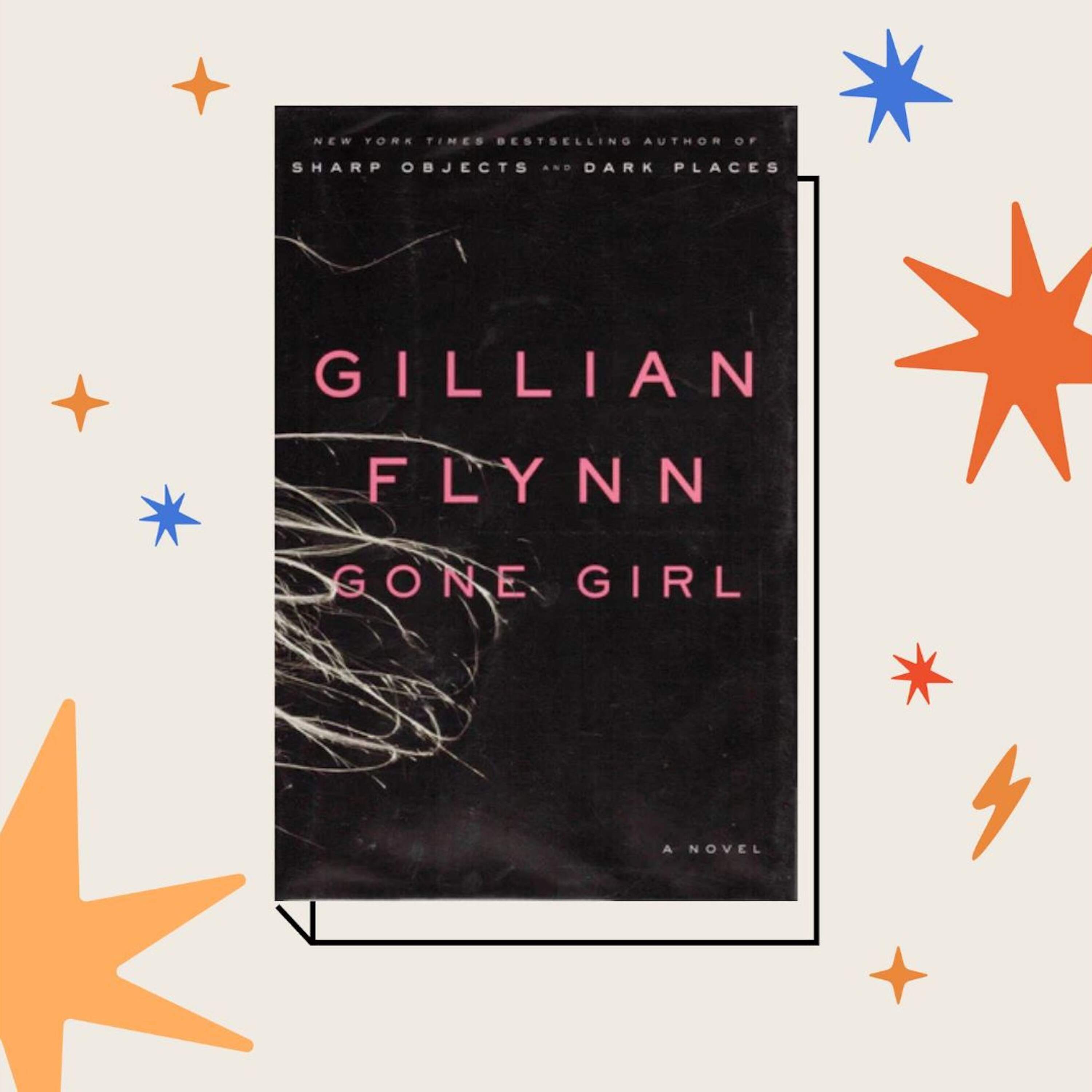
No, that was my inner Amy Dunn. No, Leave me alone. But okay, I guess we should say our book for today is Gillian Flynn's Gone Girl.
- [01:35]
B
Uh huh. A hefty one.
- [01:37]
C
Yeah. I mean, hefty. We got bigger books down the line. Don't you judge my Gone Girl. I would've been.
- [01:44]
B
Yeah. Yeah.
- [01:47]
C
Summary of Gone girl, published in 2012. We finally reached the 21st century on the show. Gone Girl is a thriller resting on the shoulders of Nick Dunne. Who is the primary suspect in the disappearance of his wife, Amy. The book alternates back and forth between the perspectives of Nick and Amy. To show the fracturing of their marriage. And that not everything is as it appears. And just a disclaimer. This conversation will discuss sex and sexual assault. And a very important spoiler. Because in order to get through most of the book. You have to deal with that spoiler.
- [02:30]
B
Yeah, but I feel like people know, right? Do people know?
- [02:33]
A
I have sort of like randomly been asking People if they know and it.
- [02:37]
B
Based on just like on the street.
- [02:38]
A
No, like friends.
- [02:40]
C
I have.
- [02:40]
A
I talked to two people who have neither read the book nor seen the movie, but they still knew what happened. So it's an extremely small sample size, but I do think this has reached like sixth sense level of just like everybody kind of knows what happened.
- [02:52]
B
Yeah. And you can't be mad at us for spoiling it, right?
- [02:55]
A
Yeah, exactly.
- [02:55]
B
She goes to space at the end.
- [02:58]
C
She was a mermaid the whole time.
- [03:00]
D
Wow.
- [03:01]
B
I can't believe the scales in the house.
- [03:03]
A
We never knew all those baths. It makes so much more sense now.
- [03:08]
C
Oh, my gosh.
- [03:09]
B
All right, so Parker, why did you pick this book?
- [03:12]
C
Okay, here's the thing. Gillian Flynn is my girl down. I randomly at a target like nine or ten years ago. I saw a box set of her three books. She's only made three. Side note. Gillian, please come back. The home misses you.
- [03:30]
B
Yeah, get back to that Google Doc.
- [03:32]
C
Get back to that Google Doc and write another book. Anyways, but it was a box set of Dark places, sharp Objects, and Gone Girl. And I got through that bad boy in a week and a half. Cause something about the female protagonist of that book that I guess in my 20s, really touched me that I had to consume everything and everything that she has made up to that point. Even like her short story, the Grown Up, I hadn't seen in literature at that point in my life. And it had a lasting impact on me and I guess on the culture as well, some would say for good or bad. But Andrew and Greta, what is your relationship to Gone Girl?
- [04:12]
B
I've never read it.
- [04:13]
A
Yeah, I had never read it. Oh, that's fascinating.
- [04:16]
B
This is the first time for me I saw the movie during COVID So not like when it came. I saw the movie within the past five or six years or something like that, but I'd never read it. But I'd always use this book and the movie as an example in my mind, as like the weird split in how the books world treats prestige versus the film world. You know, because, like, when people talk about like, God, Girl, the movie, it's talking about it as like a film, a serious, you know, artistic endeavor. And I feel like people unfairly treat Gone Girl, the book as like, I'm using heavy air quotes here, like just a thriller, Right. And I always thought that was kind of weird. And having read it, I feel even further vindicated as to what's going on. But this is a very. A wild read. I want to get more into it. So Greta, you read it when it came out?
- [05:09]
A
I read it. I believe it was right around when it came out. So I started keeping a little like book journal thing. And it's literally just like the month and year and then like title and author of books. And I started it in January of 2013. And so I looked back to see where Gone Girl was and I had already read it because it's not in there. But January of 2013, I did read Sharp Objects by Gillian Flynn and that was the January when I also read a bunch of Tana French. I had like just discovered her. She's a really amazing Irish, also literary, like sort of thriller, mystery author. And I was commuting a lot and I was reading a lot on my Kindle, which I had just gotten for Christmas that year. And I was in a very dark place. I rem finally getting to a point that winter where I was like, Greta, you gotta stop. Like it's getting too weird in your brain.
- [05:57]
E
So.
- [05:57]
A
So yeah, that's when I read Gone Girl. And I don't have any like super distinct memories of reading it except I do feel like there are kind of, to your point, Andrew, like certain authors that are that like do thrillers in like a very smart, interesting way. And then there's just sort of like the junk food thrillers. And I think there are a lot of people who have tried to mimic what Gone Girl did and very few have actually, if any have really pulled it off. I would say this is like an.
- [06:26]
C
Artisanal potato chip and.
- [06:28]
A
Exactly. Yeah. This is like the $10 bag of chips. You know.
- [06:34]
C
After the break we will have more. Gone Girl and its author, Gillian Flynn. So stay with us.
- [06:43]
F
Foreign this message comes from Schwab. At Schwab, how you invest is your choice, not theirs. That's why when it comes to managing your wealth, Schwab gives you more choices. You can invest and trade on your own. Plus get advice and more comprehensive wealth solutions to help meet your unique needs. With award winning service, low costs and transparent advice, you can manage your wealth using your way at Schwab. Visit schwab.com to learn more. This message comes from BetterHelp. This month, BetterHelp's encouraging people to reach out. Grab lunch with a friend, call your parents, or even find Support in therapy. BetterHelp makes it easy with its therapist match commitment and over 12 years of experience matching users with qualified professionals. Just like that lunch with a friend. Once you reach out, you'll wonder why you didn't do it Sooner. Go to betterhelp.com NPR for 10% off your first month. This message is sponsored by DSW, the birthplace of the humble brag. Full of all kinds of shoes that get you at prices that get your budget. And when there are never ending options for every style, mood, occasion and budget, there is unlimited freedom to play. And that's something to brag about. So go ahead, stock up on fresh sneakers from your favorite brands or try those boots you always secretly knew you could pull off. Find the shoes that get you at prices that get your budget. Dsw. Let them surprise you.
- [08:16]
C
We're back, but before the break, we talked about our personal connections to Gone Girl. But I'd like to zoom out and talk about Gillian Flynn. So Flynn was born in 1971 in Kansas City, Missouri, former writer for Entertainment Weekly. So Flynn based a lot of the character of Nick on herself as a Mazurin magazine writer. Im impacted by the recession. The true villain of this book.
- [08:45]
B
Come on now. Wait, there's one villain?
- [08:47]
C
The true villain of this book. I know you've got.
- [08:49]
B
I know you got your takes that you're gonna watch out.
- [08:51]
C
It's not Amy's fault. If Rich Short had screwed everyone over, she would not have had to do what she had to do. Anyways, Gillian Flynn wanted to write a whodunnit revolving around a marriage. And Gone Girl was in fact, like she says, the first book that she wrote out of the three, but it was the last to be published.
- [09:12]
B
Wait, was the three books that was that like box set that you bought?
- [09:15]
C
Yeah, yeah, yeah, that's it, man.
- [09:16]
A
That's it.
- [09:17]
C
We are starving. The culture needs her soul.
- [09:20]
A
She really has shifted to screenplays. I mean, that's what she's been up to.
- [09:25]
C
I learned that her dad was a film professor and her mom taught reading. And as being a reporter for Entertainment Weekly for all those years, she talked to all these Hollywood people and all that just meshed together. She wrote the adaptation of widows by Steve McQueen. And the biggest crime of the Academy is that she was not nominated for adaptive screenplay for Gone Girl, even though it's a perfect script and it won every other award. But that is neither here nor there. But I am calm. I'm calm, you guys. But right now she is in the midst of adapting her first book, Dark Places, which is already a movie, but not the best movie. But now which one was a HBO show?
- [10:09]
A
Was that Sharp Objects?
- [10:10]
B
Sharp Objects.
- [10:11]
C
Sharp Objects.
- [10:11]
B
That was a great show.
- [10:12]
C
Yeah, if you love Munchausen and Self.
- [10:15]
F
Harm.
- [10:17]
A
She might have just spoiled it, but that's Okay.
- [10:20]
C
I mean, there's so much more to the book.
- [10:24]
B
Can I ask Grant as a Midwesterner and I'm a coastal elite dirtbag, he's.
- [10:31]
C
Currently wearing a beanie with a suit. I want that to be known.
- [10:34]
B
I'm a coastal elite dirtbag. You know, born in Brooklyn. We know how I'm dressed.
- [10:38]
A
We know the vibe, we know the.
- [10:39]
B
Deal is this book, this book seems a little mean to the people of Missouri.
- [10:45]
A
I mean, I think those are mostly from the point of view of a elite, born and bred coastal elite who hates the Midwest. So I don't think it's like inherently Midwest, if that's what you mean.
- [10:56]
B
Yeah, no, I don't, but I feel like it was like coming at it from both like Nick and Amy where it's like there's this perception of like the big city New York and then, oh, Missouri in the Midwest.
- [11:09]
A
There is sort of like a provincial apologism to it almost. That is really interesting. I also, though, I don't know, it was really interesting rewatching the movie because what translated to me more than Midwestiness was actually Southiness of Missouri, you know, like, they've all got Southern accents. But yeah, either way, I mean, we're definitely in flyover country with this one.
- [11:30]
B
Yeah. Well, I think something about this book that's interesting to me is that it's. Obviously it takes place, you know, Pre Trump era, pre2016 election, but it does sort of get at the broader cultural divides that like the world is like fracturing into. And it is really self aware in, especially when it comes to men, like types of guys, taxonomizing dudes based on like, what they wear, how they like present publicly, what kind of job that they have, what kind of game, you.
- [12:01]
C
Know, I mean, Andrew, you are in this book. Like, you are.
- [12:05]
B
Listen. She starts making fun of some dude with a messenger bag and I'm like, bro, why you gotta. Why you gotta do me like that?
- [12:11]
C
I will say under that Midwestern Southern guise, there is this kind of like, plight of being Midwestern. Like Nick is such a product of where he's from, the Midwestern nice. That it bites him in the butt. So even if he tries to like averse himself from that community in certain aspects and be part of that coastal elite, there is that. I guess I gotta smile. I gotta be polite. And like being polite kind of bites you in the butt. Yeah, yeah. But I was curious about like how this book has shown up culturally because the movie came out in 2014 and it's also for better or worse, it did spearhead, like, this barrage of. They call it the Gone Girl effect of these, like, white women led crime dramas. You'd have, like, the Affair, Girl on the Train. I forgot what the stat was, but the amount of books that came out post this until, like 2023 that had girl in the title. Yes, I was after Gone Girl.
- [13:12]
A
Yes.
- [13:13]
C
Was like, astronomical. Like, it still has this impact, but also this idea of the kind of unlikable. Well, we say unlikable in air quotes. I don't.
- [13:24]
A
Unreliable, for sure.
- [13:25]
C
But yeah, unreliable, unsentimental female protagonist kind of bubbles up into the culture in a way that I hadn't seen before. And I think that was the kind of the lasting impact of it. Like, would we have a tar without Gone Girl? Or, like, would we have. Or would we have anything Nicole Kidman's been in in the last 10 years?
- [13:51]
A
Right, right.
- [13:52]
C
Without a Gone Girl, which are mostly.
- [13:53]
A
Like Leigh Anne Moriarty adaptations. But yeah, definitely the Client within that realm. Yeah, totally.
- [13:59]
C
Yeah. I just feel like it has had this lasting impact that I don't think we have truly appreciated reckoned with.
- [14:08]
A
I think you see it, its impact in the publishing world very strongly still. I mean, partly just because of all these other authors who have come up who write in similar genres. Like, literally yesterday I got a pitch for a book coming out next year that they compared to. They were like, it's a Gone Girl for the Luigi Mangione era. Like, it is still like it is that. There's just like. I think it is still one of the most used titles in terms of, like, a reference point for new books, and it's often misused horribly. But I think that's a really huge marker of its impact that people are still referring to it that much in the publishing world.
- [14:46]
B
There's also something about this book again. So it came out in 2012. Right. It's such a unique time. I think when I was reading it, I found it dated, but in a good way. It's very specific to this Obama era period of, like, culture. But it's right on the precipice right before, you know, Instagram, TikTok that it, like, the Internet really takes off.
- [15:11]
A
Right. It's still like, blog time.
- [15:13]
B
Yeah, it's still blog time. And we're still only very much relating to each other through the culture that we consume, though. There's a lot in this book about, like, being, like, certain pop cultures or, you know, acting the way certain people do. Actually. Gillian Flynn was on NPR in 2012 just talking about that.
- [15:30]
C
Yeah.
- [15:31]
A
You know, I was definitely playing with.
- [15:32]
D
The idea of how difficult it is.
- [15:34]
A
In this day and age to have an authentic self. We're into this barrage of pop culture, you know, tv, movies, the Internet. We become sort of creatures that we've made up. I mean, made up certain different flotsam from pop culture. And certain different Personas that are in style. And it was definitely playing with that idea of, what do you do when two people marry? They each have a certain Persona that they have created. And as that gets dismantled, what does that reveal?
- [16:05]
B
It's very common now to read books in a metatextual sense. Where, like, the characters themselves are aware of how media influenced that they are. But I think this was, like, a big one. That made it sort of its thesis statement. That we're all just made up of pastiches of the things that we enjoy.
- [16:22]
C
Mm.
- [16:23]
A
I love that. I mean, it kind of reminds me of another thing. She was quoted in Publishers Weekly. Gillian was talking about how marriage is a long con. And I think this. That has a very similar vibe to it. Right. That just that idea of, like, tricking someone into, like, making them think you are a certain way. And then, like, how long can you really uphold that? And at what cost, you know?
- [16:46]
B
Well, I think a few years.
- [16:51]
A
Yeah. How long have you been married now, Andrew?
- [16:52]
B
I'm still rocking it.
- [16:53]
A
We're doing good.
- [16:54]
C
Yeah. You know, Great.
- [16:56]
B
I want to Parker set the stage for you to gather up all your evidence for your Amy Dunne did nothing wrong. Here we go.
- [17:05]
C
Okay. We'll be right back.
- [17:15]
E
Support for NPR and the following message come from Rosetta Stone. The perfect app to achieve your language learning goals. No matter how busy your schedule gets. It's designed to maximize study time with immersive 10 minute lessons and audio practice for your commute. Plus, tailor your learning plan for specific objectives like travel. Get Rosetta Stone's lifetime membership for 50% off. And unlimited access to 25 language courses. Learn more@RosettaStone.com NPR okay, I want to.
- [17:44]
C
Talk, like, exclusively about the book. And pick apart bits and pieces of it. Because this is my time to shine and be like Amy Dunne.
- [17:56]
B
For all of us here, we have with us Amy Dunn's defense attorney.
- [17:59]
C
Look, do I agree with everything she does? No. Should she have falsified sexual assault more than once? No. That's a big. That's a big red flag.
- [18:12]
A
I'm glad we can all agree on that one.
- [18:13]
C
That's bad. However.
- [18:17]
A
Okay.
- [18:19]
C
You marry a man that you love. He moves you To Missouri, for your family. He spends all your money, leaves you by yourself. He spends time with his twin, like, a little too much, while also having an affair with the student. And if all you have is nothing but time, I guess I would plot a fake murder.
- [18:38]
B
Yeah. A girl could crash out. Yeah.
- [18:39]
C
This is Pete crashing out. Andrea. This is Pete crashing out. I mean, yeah, couple of things bad, but that little window of things she did to her husband, specifically valid.
- [18:52]
B
Is this a pro Amy or an anti nicktic?
- [18:55]
A
Oh, that's a great question.
- [18:56]
C
It's both. Why are you trying to create a binary?
- [18:59]
A
Okay, okay. Well, so then, Parker, you're arguing that you think Amy's falsified sexual assaults aside.
- [19:08]
C
Yeah.
- [19:09]
A
You think Amy framing her husband for murder is commensurate with what he had put her through?
- [19:17]
C
She just wanted to feel seen, man. Is she a good communicator? No, I feel like if she wrote all those limericks to let them solve the puzzle. And writing a diary, could she have focused that into, like, maybe a 10.
- [19:31]
A
Page letter or, like, learning a new craft or something?
- [19:38]
C
There's a moment around page 100 where she, like, lays it on stick of like, I do not feel safe. And you're like, oh, this is where the pivot is. And this is where she's like, setting him up. And, like, this is how I will destroy my husband's life. How do you feel, Andrew? You scared?
- [19:54]
B
So, as a man, good start.
- [19:56]
A
Good start.
- [19:57]
C
Love it.
- [19:58]
B
No, I mean, obviously. I don't know. It was like she was validated, I think. So the big thesis of her actions is that big famous speech she has, right? Or I guess it's a dire entry, right?
- [20:08]
A
The cool girl monologue.
- [20:10]
B
Yeah. Yeah. Should we get into it now? I think we can't talk about her intentions without her sort of explaining what her vibe is.
- [20:18]
C
Nick and Amy will be gone. But then we never really existed. Nick loved a girl. I was pretending to be cool girl.
- [20:27]
A
Men always use that, don't they, as their defining compliment.
- [20:31]
C
She's a cool girl. Cool girl is hot.
- [20:34]
B
Cool girl is game. Cool girl is.
- [20:37]
A
Cool girl never gets angry at her man.
- [20:39]
C
Rosamund pike did her big one. Like, that was. Yeah, that's so good. I will say, I think the monologue, the writing in the book is longer, so much more nuanced, like what the ideology behind cool girl is. But I still love it.
- [20:55]
A
Well, yeah, I think it's kind of a subversion in a lot of ways of the, like, 90s, quote unquote feminism that was so focused on the male gaze. Right. It was like, well, it's empowering to be sexy. So, yeah, if you fit all these very narrow parameters of like, what's hot? Then you're empowering yourself, and that's feminism. But then Amy owns her rage from having to contort herself for so long.
- [21:15]
C
You know, it's such a bizarre pocket to have to navigate. And I feel like, because Amy is kind of trapped in that world of trying to fit these narrow parameters. Cause she's also. Another aspect of the book is her parents were psychologists who wrote these children books called Amazing Amy, who. Which are basically her, but, like, an improved version upon who she is. So she is constantly being prodded and analyzed and feeling not good enough in all aspects of her life. And I feel like, again, terrible things she did, but it was her own. Like, it was something that she crafted for herself.
- [21:59]
A
It is interesting thinking about that being her like, one act of true, like, individual agency. It's still sociopathic, though.
- [22:06]
C
But, yeah, I will say that there has been also because of this book and because of, I think her previous two books, but, like, particularly Gone Girl, there was at that time this picking a part of that book as being anti feminist because it had this unlikable protagonist, which I think is unfair. I think Gillian very smartly at that time said, why can't a woman be these things? Even if they're awful things, then why can't a woman be awful? Like, she can make poor choices and that's okay. Like, how many noirs have we watched of, like, a detective or a man doing, like, an awful. Being kind of bad, but also being championed for it. But somehow, because Amy's acting out of pocket, it's now a downfall for all women everywhere.
- [22:55]
A
Yeah. Yeah. No, that's not reasonable.
- [22:57]
B
But yeah, just like, to go back to how ensconced in the 2012ness in the.
- [23:02]
C
Yeah.
- [23:03]
B
Are we leaning in at this point? Are we or have we not leaned in yet? Where are we in shell's that era of like.
- [23:10]
A
We're definitely girl bossing.
- [23:11]
D
Right?
- [23:11]
B
We're definitely girl bossing. Exactly.
- [23:13]
C
We're pivoting because Amy also had a job in the media. And towards the end of it, she knows how to manipulate the media in a way that works for her.
- [23:25]
B
Yeah.
- [23:26]
C
And she knows how she's gonna be perceived.
- [23:28]
B
She was definitely reading Exo Jane.
- [23:30]
C
Yeah. She knows, like, she knows how she's gonna be perceived. She knows how Nick is gonna be perceived. She knows how law enfor going to react or ignore. And I think for better or worse. That also feels very like 2025, because we're now so media groomed and so aware of, like, we all want to believe that we have PR training. When we don't, we all want to, like, go straight to the camera. Like, if this was 2025, Amy would have put out, like, a live stream and would have been like, this is how my husband did me. Dirty. And to fake my death to get him to respect me. If anything, it's gotten worse.
- [24:20]
A
Do you think citizen journalists would have found her, though?
- [24:22]
C
100%.
- [24:23]
B
But, like, I saw the couch and, like, from this angle. I'll Google bathroom. You're in the Ozarks.
- [24:28]
A
Yeah, Yeah, I just looked it up. Lean in came out in 2013. The book, for what it's worth.
- [24:32]
B
Okay, so we're about to. We're just about to lean in. We're close. Yeah.
- [24:35]
C
Gillian got in that window.
- [24:37]
A
Yeah, yeah. She was like, here's what to do with your Lean in. Lean into this.
- [24:45]
B
I think that's a good place to take a break. But when we are back, we're gonna answer the question, why does Gone Girl need to be read now? And we're gonna hear from another fan of the book. We'll be right back.
- [25:02]
E
This message comes from Saatva, official mattress and restorative sleep provider for Team usa. All athletes have to clear hurdles at some point, one of which is the need to get quality restorative sleep to perform at their peak. That's why Saatva is proud to be providing athletes with mattresses and bedding for the LA28 Olympic and Paralympic Games. You can enjoy that kind of sleep, too. Visit saatva.com NPR and save $200 on $1,000 or more.
- [25:30]
B
All right, so we're back. Greta, let's ask you the final question. Why does Gone Girl need to be read now, today, in this era?
- [25:38]
A
I think that's a great question. I think purely from a reader pleasure point of view, partly. What's so fun about this book is that both Nick and Amy's characters are so unhinged that, like, by the end of this book, it could go absolutely anywhere, and you would believe it. Which I think is, like, still difficult to pull off in a way that feels realistic. You know, it's one thing when you're just like, okay, this is just, like, out there. But this one, I think their characters are both painted realistically enough that you're like, who knows? And that's pretty fun as a reader.
- [26:16]
B
Mm.
- [26:18]
C
I'm thinking about, like, the impact that the book had on me just as, like, a reader. Just like when I'm nostalgic for a quick read, that has impact. I think the first experience I had of reading Gone Girl, it still. It still feels revelatory to me every time I read it. And I want other people to have that feeling.
- [26:40]
A
What do you think, Andrew? I've been thinking this book.
- [26:44]
B
My voice is going up right now because I'm just.
- [26:47]
A
I know how much his voice is going up.
- [26:48]
C
Andrew's in hater mode. Hold on.
- [26:51]
B
There's a lot about gender roles in this book that may be thinking, and I'm gonna bring this up later in my recommendation section, but thinking about, like, what being. Not just being married, but what, like, being a husband is and what being a husband, like, what is, like, that job. And especially as, like, roles evolve and, like, gender roles, like, sort of, like, change shape, like, how to position yourself as a good partner. I think that's essentially what this book is like, trying to, like, poke questions at. And I guess, like, the first answer to that is, like, don't cheat.
- [27:25]
C
Don't.
- [27:25]
B
That's probably great.
- [27:26]
A
Great.
- [27:26]
B
I'm really glad you got baseline don't cheat, and then take it from there. Yeah.
- [27:31]
A
Yeah. I mean, that is an interesting one because, yeah, he abandons most gender roles. Right? I mean, he's. And to your point, yes, they have evolved a lot, but he's certainly not providing for the household just so he tries.
- [27:43]
B
He wants to be there.
- [27:45]
C
Right?
- [27:45]
A
It is.
- [27:46]
C
The road to hell is paved with good intentions, Andrew.
- [27:49]
B
Yeah. Yeah, no, totally.
- [27:50]
A
So they say.
- [27:51]
B
So speaking of recommendations, you wanted to get to. If you like this, read that. I'll take it. Since I'll, like, segue into this.
- [27:57]
C
Go ahead, man.
- [27:57]
B
One of my favorite books from 2024 was Sarah Manguso's Liars. And that was another book written from the point of view of an unreliable narrator and writing about her husband cheating. Right. And it sort of, like, devolves from there. And I don't think it's displayed to say that the marriage sort of, like, dissolves. And, yeah, both books I started reading, been, like, thinking, I'm better than this guy. This guy sucks. What is this? And then towards the middle point, I was just like, oh, damn, I'm not that good. I need to be better. You know what I mean? It made me want to be a better husband, as corny as that sounds. And so, fellas, if you need some inspiration on what not to do, it's Gone Girl. And Sarah Manguso's Liars.
- [28:41]
A
That's so funny. Cause I tried reading that book. And I couldn't do it. Because my tolerance of that dude was so.
- [28:48]
B
And I don't know if that just.
- [28:49]
A
Speaks to, like, how well I've evolved in the past, you know, decade. Ish. But I was just like, I cannot spend time with this person at all. Oh, my God.
- [28:59]
C
My recommendation is I stuck with the idea of what happens when you have no other recourse but to support your volatile loved one. You end up becoming complicit in their behavior. And so I went with. It's also very pulpy. I picked My sister, the Serial Killer by Oyinkin Braithwaite.
- [29:20]
A
She has a new one coming this year.
- [29:22]
C
She does. I'm so excited. But it felt very like the sister that's not the serial killer felt a little like Nick Dunne to me. It's like, I guess I gotta deal with this.
- [29:32]
A
I could see that. I love that. That's a great.
- [29:34]
C
That's my recommendation, Greta.
- [29:36]
A
That's perfect. So mine is Fates and Furies by Lauren Groff. And it came out in 2015. But, yeah, I actually went straight from finishing Gone Girl to just, like, let's do Fates and Furies now. Why not?
- [29:48]
B
And, babe, you read it back.
- [29:50]
A
And. Yeah, I'm still reading it. And it is. I cannot speak to where my brain is at this moment in time, but.
- [30:00]
C
Can we hug you through the screen?
- [30:02]
A
That would be nice.
- [30:03]
C
Thank you, Parker.
- [30:05]
A
I think they're very similar in terms of, like, stories about marriage, husbands and wives. Where, like, you think things are a certain way. Because the husband thinks things are a certain way. And then in Fates and Furies, also, there's, like, a pretty significant POV shift from husband to wife. Speaking of the word fury. These books both are about, like, women trying to, like, mitigate. And then perhaps own their rage. Which is always kind of a fun time, I think.
- [30:38]
B
Damn. Being married rocks.
- [30:39]
C
We're all having such a good time. Greta, thank you so much for being here to talk.
- [30:45]
F
Thank you so much, Greta.
- [30:46]
B
This is a blast.
- [30:47]
C
Thank you.
- [30:47]
A
What a treat.
- [30:50]
C
And now, for this week's FONA Fan. I sat with author Andrea Bartz. Hey, Andrea.
- [30:57]
D
Hi. Thanks for having me.
- [30:58]
C
Thanks for being with us. All right, so we'll talk a bit about Gone Girl. Something about, you know, some distressed ladies causing havoc.
- [31:08]
D
Sign me up. Where do I sign?
- [31:11]
C
So, like, so with Gillian Flynn's Gone Girl. And I think with your book, We Were Never Here. Both feature unreliable narrators.
- [31:20]
D
Yes.
- [31:20]
C
Why do you think readers are drawn to that? Kind of storytelling.
- [31:24]
D
I think it makes the experience of reading a book interactive when you're also playing detective in a different way. You know, I. This book kind of changed the game for psychological thrillers, because before that, with some exceptions, but for the most part, like, what they were telling you is what you could believe what the narrator was saying was real. And suddenly this adds a meta element, you know, an additional dimension that what you are being told by the narrator might not be true. And that's so fun and exciting and makes you question it in a different way.
- [31:55]
C
Cause I love that both of y' all reveal, like, the darker sides of everyday relationships.
- [32:01]
E
Yes.
- [32:01]
C
I mean, I'm not gonna say, like, Kristen, I kind of get it.
- [32:08]
D
Me too.
- [32:10]
C
What do their stories suggest about the masks that people wear?
- [32:15]
D
Oh, I love that question. You know, what is so interesting about Gone Girl is that it sort of gives us this peek inside a perfect seeming marriage. And from the outside, like, Nick and Amy are so beautiful and so great together. And then we get led inside to the darkness and the dark stuff going on between them. And in a similar way in We Were Never Here, Emily and Kristen have this, like, really beautiful friendship and adore each other, but there's also so much more going on that's under the surface.
- [32:47]
C
Mm.
- [32:48]
D
And I think there's something really universal about recognizing, especially as women, that we have this, you know, external character that we present to the world. Right. This mask. And then underneath it, there's so much stuff that we're keeping inside. And so it's really fun and satisfying to read these books, especially first person, like these books or, you know, really close third. And to actually be let into the shame, the rage, the vulnerability, all this stuff that we're not allowed to sort of put on display in our daily lives and to experience it through these characters.
- [33:27]
C
That's interesting. Cause I'm also thinking about how both of you are Midwestern girlies, and there's a certain kind of expectation in that backdrop of, like, there is, you know, like, a kindness, there is a level of civility, and, you know, the beauty of America.
- [33:53]
D
Like, all of these Midwestern. Nice.
- [33:55]
C
I mean, but I think. So you're from Wisconsin. Flynn is from Missouri. But what is it about the Midwest that setting that you feel makes for a great backdrop to, like, paranoia and isolation in your novel?
- [34:13]
D
So growing up in the Midwest, I sort of learned from a young age, intuited that we all keep a stiff upper lip. If you have problems, you keep them to yourself. If you think a thought about someone that's not very nice. You keep that to yourself. In fact, you shouldn't. It's wrong to even have that thought. It's this civility above all else. So even if you're rightfully enraged about something. You keep that inside. You don't reveal it. And I think the reason that this isn't your question, but I think the reason that a lot of authors come from the Midwest is because, you know, even as kids, we develop this superpower of reading people non verbally and reading between the lines. If my mom says something that seems totally innocent and nice, I know if she actually means something much ruder. Whereas my partner, who's from the south, is like, what are you talking about? She just said xyz. So when you get that good at sort of putting yourself into someone else's shoes, Figuring out what they actually mean, really thinking through, you know, their motivations and their experience and their feelings. I think that really sets you up in a good way as an author. Especially for psychological thrillers. To really delve deep into the psyche of these fictional characters.
- [35:28]
C
Gosh, that's so fun.
- [35:29]
E
All right.
- [35:30]
C
Okay. Do you have time for a game?
- [35:33]
D
Do I ever.
- [35:34]
C
All right, so we're calling this game in or Gone Girl? I'll rattle off a list of famous literary killers in Femme Fatales. And you decide if they stay or if they're Gone girl.
- [35:44]
D
Okay, I'm ready.
- [35:48]
C
Tom Ripley from the talented Mr. Ripley.
- [35:50]
D
Oh, he's in.
- [35:51]
A
Agreed.
- [35:52]
C
Yeah. Okay. Good, good, good. We're doing all right. We're doing all right. Patrick Bateman, American Psycho.
- [35:57]
D
Oh, Gone Girl.
- [35:58]
C
Gone Girl. Same Annie Wilkes from Misery.
- [36:02]
D
Oh, Gone Girl.
- [36:04]
C
Gone Girl. Can't get close to her.
- [36:05]
D
There you go.
- [36:06]
C
That's too close to home.
- [36:12]
D
I don't know about close to home.
- [36:13]
B
But you know what?
- [36:14]
D
We're just not. We're not going anywhere near that.
- [36:17]
C
All right. Okay. Okay. Okay, okay. Hannibal Lecter.
- [36:19]
D
Hannibal, what is say in Cause if he doesn't have beef with me, he seems like a fascinating guy to keep around.
- [36:26]
C
That's so valid, right? He's so cultured.
- [36:29]
D
He knows his wines.
- [36:30]
C
I mean, he knows good meat.
- [36:32]
A
He knows.
- [36:34]
D
For the meat alone. For the dinner parties.
- [36:36]
C
For the dinner parties. Oh, my gosh. So much. So much culture. Amy Dunne. Gone Girl.
- [36:42]
D
Oh, in for sure. I want her to be my best friend.
- [36:45]
C
I mean, would she want to be our best friend? Probably not.
- [36:48]
D
Probably not.
- [36:49]
C
Or she would, like, sabotage us somehow. But I'd be like, you know what? That's on me.
- [36:53]
D
The irony is she's such a cool girl.
- [36:55]
C
She's such a cool girl.
- [36:56]
D
She's such a cool.
- [36:57]
C
Even if she doesn't want to. All right, our girl Kristin from We Were Never Here.
- [37:02]
D
Oh, our girl Kristen. I mean, in I still people can say what they want. I love the girl.
- [37:08]
C
I just want to say killing a guy so that you can like trauma bond with your bff. I see the vision. Wouldn't do it.
- [37:16]
D
Wouldn't do it. But I respect it.
- [37:17]
A
Wouldn't do it.
- [37:18]
D
I mean, what's the saying? Like, a good friend helps you move. A best friend helps you move the body.
- [37:24]
C
A word. Listen, on that note, thank you so much, Andrea. Really great talking to you. And be sure to pick up Andrea's latest book, the Last Fairy. Out out now.
- [37:37]
B
And that's the show. This episode was produced by Cher Vincent and edited by Mega Megan Sullivan.
- [37:41]
C
Engineering support by Robert Rodriguez. And our executive producer is Yolanda Sanguini.
- [37:47]
B
Thank you for listening to books we've loved from npr. We'll see you next time.
- [37:58]
E
This message comes from the Council for Interior Design Qualification. Interior designer and CIDQ President Siyavash Madani discusses why certified professionals know that good design is more than just how something looks.
- [38:12]
F
Being NCIDQ certified means you've qualified to protect the health, safety and welfare of.
- [38:17]
B
The public in the spaces that you design.
- [38:20]
F
Good design is never just about aesthetics. It's about intention, safety and impact. So an NCIDQ certified interior designer must complete a minimum of six years of specialized education and work experience and pass the three part NCIDQ exam.
- [38:36]
B
All three exams emphasize and focus on.
- [38:40]
F
Health, safety and welfare of the occupants. Being NCIDQ certified means that you've proven your knowledge and skills through rigorous exams and are recognized as a qualified interior design professional.
- [38:53]
E
Learn more@cidq.org NPR this message comes from NPR sponsor Veeam.
- [39:00]
F
AI promised intelligence, but it also exposed everything people couldn't see. Veeam and Security AI bring protection, governance and AI trust together to accelerate safe AI at scale. Learn more at veeam.
- [39:15]
A
Com.