Loading summary
Transcript208 lines
- [00:00]
A
What I was like as a teenager reading this book. I was not yet at a developmental stage of life where I was ready to consider that my mother was a full human being with a complex inner life and emotional baggage of her own and hopes and dreams.
- [00:22]
B
You're listening to books we've loved from.
- [00:24]
C
Npr, the book show where we reread old favorites and tell you why they still matter today.
- [00:30]
B
I'm Andrew Limbong and.
- [00:31]
C
And I'm B.A.
- [00:32]
B
Parker. What's going on, Parker? How you doing?
- [00:34]
C
I'm doing all right. How you doing, Andrew?
- [00:38]
B
Good, good, good. I stayed up late last night folding laundry and watching the movie version of the book we're about to talk about. So it was a really productive, solid sesh of rolling up socks last night.
- [00:47]
C
We love a multitasking king.
- [00:50]
B
Yeah.
- [00:50]
C
I am also super excited about our book selection, but more importantly, I'm excited about our guest today. Today we have Waylon WONG, host of NPR's the Indicator.
- [01:03]
B
Hey.
- [01:04]
A
Hello. Thrilled to be here. How are you guys?
- [01:08]
B
Pretty good.
- [01:09]
C
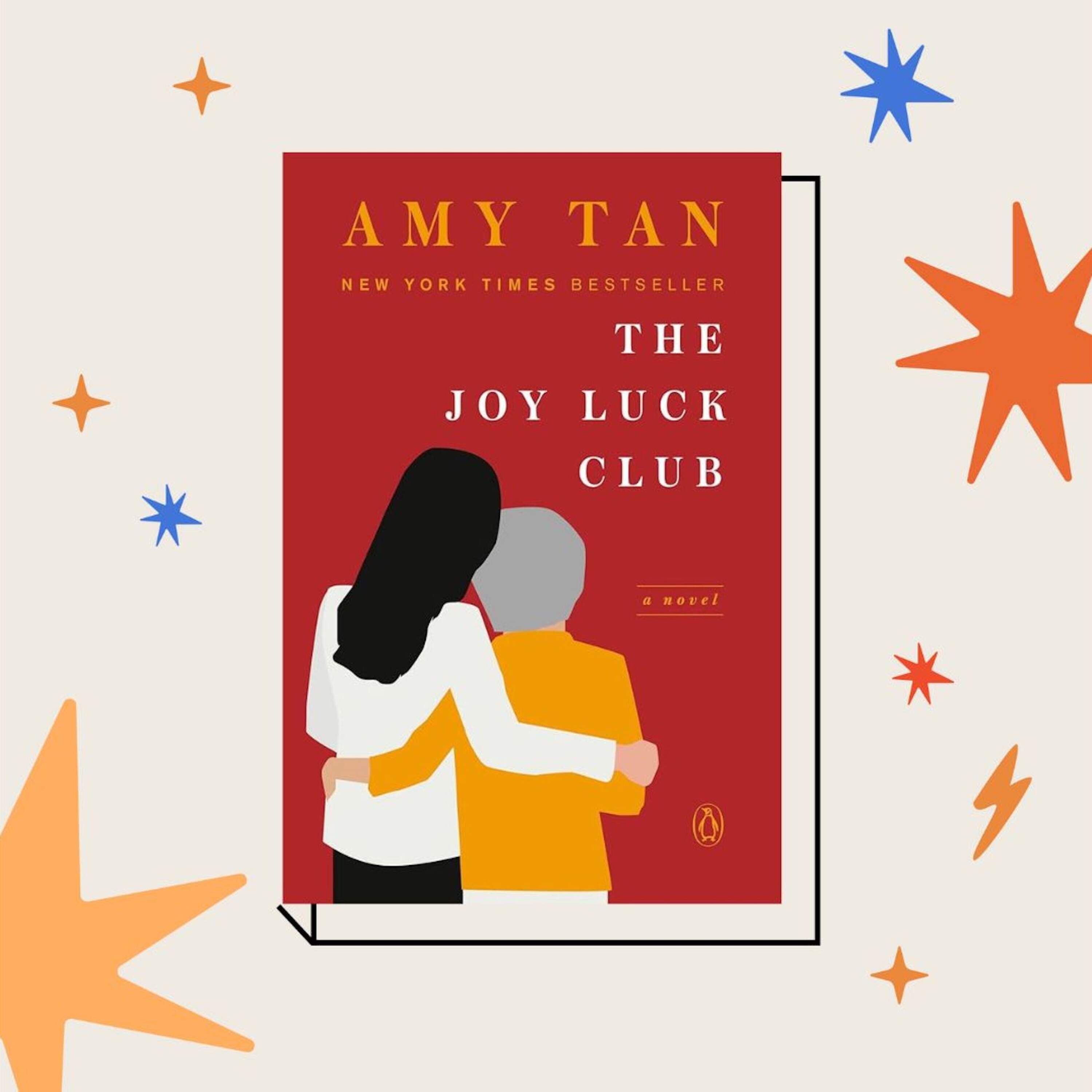
All right. I'm so glad to have you here with me because the book that we're reading for this episode is the Joy Luck Club by Amy tan. Published in 1989, the Joy Luck Club is about these shaky relationships between four Chinese immigrant mothers with their four American born daughters. And it's told through these interlocking vignettes that each story attempts to bridge the gap between generations. And I'm curious of what the two of y' all thought of the book. What was your relationship with the book?
- [01:40]
A
First of all, I first read this novel as a teenager, really? And I was reflecting on what I was like as a teenager reading this book. I was not yet at a developmental stage of life where I was ready to consider that my mother was a full human being.
- [02:02]
C
That's real.
- [02:03]
A
With a complex inner life. That's real and emotional baggage of her own and hopes and dreams.
- [02:10]
B
She's there for me.
- [02:11]
A
Yeah, she's there for me. So it was like really resonant to read this now as an adult when my mom and I have gotten a lot closer. I'm also now raising a tween. I have a 12 year old daughter.
- [02:22]
C
Fun.
- [02:22]
A
So now I'm in this sandwich generation thing where, you know, I was first generation born in the us I'm now raising second generation biracial Chinese American. So it's a lot, it's a lot to take in. But I loved this novel when I was little. It was really eye opening and it was very emotional to read it again.
- [02:39]
B
When you say you were a teenager. Are we talking like closer to 14 or 17? Cause I think that's a big difference. Like we're in that for sure.
- [02:46]
A
Closer to 14.
- [02:46]
B
Closer to 14.
- [02:47]
D
Okay.
- [02:47]
B
Interesting.
- [02:48]
C
That's too soon, Waylon. That's too soon.
- [02:52]
A
I mean, lots of stuff I definitely didn't pick up as a teenager, you know?
- [02:56]
C
Yeah. Oh my gosh. Now that you have a tween, in a couple of years, you're gonna give your kid Joy Luck Club.
- [03:01]
A
Well, she might wanna read it now, actually.
- [03:03]
B
At 12.
- [03:04]
A
Yeah. I mean, my husband and I are big proponents of kids reading books kind of before they're really ready. That's how we were. So I was encouraging her to pick it up now if she's into it. Yeah.
- [03:16]
C
And they could reread it as an adult and be like, oh, that's right. My mom is a person.
- [03:20]
A
Is a person, Is a person, is a person. I'm a human being.
- [03:25]
C
Oh my goodness. Well, what about you?
- [03:27]
B
And I'd never read this book before. I pretty much only experience of this book was like through the trailers of the movie. You know what I mean? And I thought that this was just some kind of saccharine, kind of overly sentimental movie about mothers and daughters who just get along and hold hands and everybody's in love and happy the whole time. And so I was.
- [03:50]
C
You were right in the first part, not the second part.
- [03:52]
B
Yeah, yeah. And so I was pleasantly surprised when I read it where it's like. It's a lot more realistic, it's a lot more true to life, and it's a lot harsher and harder than I thought it was gonna be.
- [04:02]
C
Really?
- [04:03]
B
Yeah. But Parker, you picked the book, right? This is your choosing, right?
- [04:06]
C
I did pick the book. I picked it mostly because I feel like it slipped through the kind of like 90s literary canon of my parents bookshelf.
- [04:17]
A
Isn't it so interesting how your inner life is shaped by what is on the bookshelves of your home growing up?
- [04:27]
C
The fact that like I read like the Color Purple or like Divine Secrets of the Yaya Sisterhood or just like all these big quote unquote women books. And somehow it's like the Joy Luck Club just slipped through that. Like I had seen the movie. Cause it was one of those that was like on TV a lot when I was a kid. So I know bits and pieces. Like there's like a scene, even as an adult when I on a date, like when the one daughter whose husband is very like, everything has to be equal. Everything has to be when the bill.
- [05:01]
B
Comes, you made you think about Harold.
- [05:03]
C
I think about Harold regularly more than I need to as an adult because of the Joy Luck Club. After the break, we will talk more about Amy Tan and the cultural impact of the Joy Luck Club. Stay with us.
- [05:28]
E
This message comes from Charles Schwab. When it comes to managing your wealth, Schwab gives you more choices like full service, wealth management and advice when you need it. You can also invest on your own and trade on think or swim. Visit schwab.com to learn more.
- [05:42]
D
This message comes from Babbel. Babbel's conversation based language technique teaches you useful words and phrases to get you speaking quickly about the things, things you actually talk about in the real world with lessons handcrafted by over 200 language experts and voiced by real native speakers. Start speaking with Babbel today. Get up to 55% off your Babbel subscription right now at babbel.com NPR spelled B-A-B-B-E-L.com NPR rules and restrictions may apply.
- [06:16]
E
This message comes from Progressive Insurance. Do you ever find yourself playing the budgeting game? Well, with the name your price tool from Progressive, you can find options that fit your budget and potentially lower your bills. Try it@progressive.com, progressive Casualty Insurance Company and affiliates price and coverage match, limited by state law, not available in all states.
- [06:36]
C
And we're back. So before the break, we talked about our personal connections to the Joy Luck Club. But I'd like to zoom out and talk about Amy Tan, the author, a little bit more. She was born in 1952 in Oakland and wrote much of the Jordy Luck Club while working as a freelance business writer. So all of us need to side hustle. She was ghostwriting for companies before deciding to try fiction. Hopefully she was a better writer than Jing Mei. And then the book started as a short story that like expanded into these interconnected tales. So Tan initially thought the manuscript might sell only a few thousand copies and then it became like this surprise bestseller spending over 40 weeks on the New York Times list. Yeah. Like is it not surprising? But this is like the because it is the template, the fact that it has gained so much traction so quickly. There's also with most things that become that popular, there is a bit of pushback.
- [07:51]
B
Yeah.
- [07:52]
C
Against that. And I wanted to talk about that pushback a little bit. I read that like in some instances the idea like Amy Tan's name has been shorthand for slur of like a certain kind of distinctive literature that some Feels betrays Asian men in some aspects.
- [08:15]
A
You know what's so interesting is I was talking to a friend who's Chinese American, and he said that his dad hates Amy Tan.
- [08:23]
C
Really?
- [08:23]
A
And it's because of this reason that, like, Amy Tan was, you know, portrayed Asian men in this really derogatory way. And this is something that his dad has carried with him for all this time, 35 years. I mean, and I was like, that is, like, powerful stuff, right? Cause I think the backlash, especially around the portrayal of Asian men and men in this novel, I think it started kind of immediately, right? And, like, some people still hang onto it, which is so interesting to me.
- [08:53]
B
Yeah. I went and read Frank Chin, who is a playwright and, like, a literary critic. He had, like, bones to pick with Amy Tan, Maxine Honkix and David Henry Wong. And his article was sort of, like, taking them down.
- [09:04]
C
He's got to pick a struggle.
- [09:06]
B
Yeah. I mean, I disagree with the article. I do love a professional hater, so I gotta respect him on that front. You know what I mean? This guy, when he's talking about Joy Luck Club in particular, I hope I'm characterizing his argument correctly. But I think his argument is, like, it sort of orientalizes China and mischaracterizes it in an inauthentic and insincere way. Which at first I was like, I don't. Because his bone to pick is, like, the way that Tan uses the short stories about the swans right. In the interstitial chapters isn't accurate to how Chinese people think of as swans. My gut reaction when reading it, I was like, I don't care. Like, it doesn't. This doesn't matter to me at all as a reader, as a person reading the book, like, how true it is to the mythology of China. It's like, I understand it, how it works, how it functions in the book. It doesn't matter to me. Like, the history. Right. But I know that because I'm a man in his 30s. I do love Internet dark holes.
- [10:05]
A
And so I have you go some Asian men's rights.
- [10:09]
B
Oh, brother. You don't gotta.
- [10:10]
C
You don't gotta woo.
- [10:13]
A
You just gazed right into the abyss.
- [10:16]
B
Yeah, you gotta.
- [10:17]
A
I'm getting a stomachache.
- [10:18]
E
Just.
- [10:20]
B
To be fair, I think their bone to pick, right. Is that many of the daughters end up with white guys, which, again, okay, cool. Like, love is love. Whatever. And that the depiction of Asian men is as villains paints Asian men in America in, like, a bad light. And I don't know, maybe this is me talking from the comfort of 2025, where not that baggage is over and done with or whatever, but it's like, maybe she just needed a bad guy for the story.
- [10:48]
A
To me, the villain in the story is not the men or any particular man. I think, if anything, to me, the novel read as indifferent to men's interiority.
- [10:59]
B
Oh, that's so much worse though.
- [11:03]
D
When.
- [11:03]
B
You stop caring about.
- [11:05]
C
Oh, no.
- [11:06]
A
I mean, I think, like, Amy Chan was not like, super concerned with what the men were feeling because this is a novel about mothers and daughters, right? And like, so this is how I read the novel. If there's a villain, the villain is the patriarchy, right? It's always about a system. To me, the villain is the patriarchy. Women, their options are very limited for marriage and for motherhood and how that informs kind of their relationship with their daughters down the line. And so to me, the villain is the patriarchy.
- [11:36]
C
But it's also okay. This is also like my pushback is like, this is a very specific type of genre of book. Again, like the Color Purple. All my life I had to fight. I had to fight my daddy, I had to fight my uncles, I had to fight my brothers like fried green tomatoes. If you ever touch her again, I'll kill you. Where like, a man has to be the bad guy in order for this book to thrive. And that bad guy tends to be of the culture that the protagonist is in. But then what you get because of the Color Purple Spike Lee made, She's gotta have it. Like, that was his response. He was so mad at the creation of the Color Purple and how it demeaned black men. That, like, this needed to be a response, I'm sure. Well, I don't know. Maybe now someone can respond to the Joy Lot Club in a healthy, mature, non hostile way in literature.
- [12:35]
B
But I wonder how much of this is the movie's fault. Because I watched the movie, right? It was like 1993, directed by Wayne Wang. And because it's a movie, it has to pick and choose.
- [12:46]
D
Da da da.
- [12:46]
B
All the most exciting stuff and all the most exciting stuff that happens, one would argue, is when dudes are being really bad to the women in the thing, right? And so it really showcases that whereas the book, there's all this interiority and you realize it is about the system and not about these specific dudes. And so I wonder how much of it is the fault of, like, the movie being popular and people not actually reading the book itself. You know what I mean?
- [13:11]
C
I don't know.
- [13:11]
B
I didn't like the movie? Very much, but yeah.
- [13:13]
A
You do like the movie?
- [13:15]
B
I thought the movie was what I thought the book was gonna be. You know, it was like. It was a bit too sacred for me. Too sentimental. Yeah.
- [13:22]
A
So it's me you're mad at?
- [13:24]
C
No, I'm just sorry that you got stuck with such a loser that I've always been so disappointing.
- [13:30]
A
What you mean disappoint?
- [13:33]
C
Piano, everything. My grades, my job, not getting married. Everything you expected of me?
- [13:42]
A
Not expect anything.
- [13:44]
C
Never expect.
- [13:46]
A
Only hope. Only hoping best for you.
- [13:50]
C
It's 1993. It has to be sentimental.
- [13:53]
B
Yeah. I mean, aren't they. They're making a new one, right?
- [13:58]
C
Or something.
- [13:58]
B
Or a hero.
- [13:59]
C
I mean, there's a script has been written for a sequel to the Joy Luck Club, which I don't.
- [14:04]
A
A sequel?
- [14:05]
C
I don't know what that would mean.
- [14:07]
A
Would that be like, the Next Generation down or something?
- [14:11]
C
I mean, God help him. Like, we're gonna relay all of your grandmother's grief.
- [14:20]
B
Yeah.
- [14:20]
C
And then you're gonna remember that now I'm a person.
- [14:24]
A
And now this cycle. The cycle, it's continuous.
- [14:27]
B
Yeah.
- [14:27]
C
But when we talk about in this book kind of like these generational stories and how that has kind of picked up in the zeitgeist, now I think about. With everything everywhere, all at once. I think about seeing Red, which stressed.
- [14:44]
A
Oh, I love that movie. Turning Red. Right.
- [14:46]
C
Turning Red. Turning Red was so cute, but also stressed me out. Mom had real lindo energy. And then.
- [14:53]
B
Wait, that movie, that was about, like, periods, right?
- [14:56]
C
Yeah, yeah. But, like, when your mom is, like. Is a little too controlling. You're like, ma, I need you to let go.
- [15:02]
B
I was thinking about the Farewell. Right. Do you ever see the Farewell?
- [15:04]
C
The Farewell? If you need a good cry, do a double feature.
- [15:07]
B
More recently, I watched that movie Dee Dee, a couple months ago.
- [15:11]
A
Oh, that one I haven't seen yet.
- [15:13]
D
That was.
- [15:13]
C
That was a rough one, Angie.
- [15:15]
B
I mean, as a. Yeah, that was.
- [15:17]
C
You are.
- [15:18]
B
I'd bones the pick about skater culture and, like, emo culture, but other than that.
- [15:22]
C
But I mean, I think because these stories now that they're more prevalent. We just named, what, 4, 3. That's still not a lot. But it has grown more so than from, like, 1993 or from this book in 1989. But do we feel like, because it was the only representation that existed at the time, that now there is space for more expansive stories? So now it's not like, oh, we're mad at the Joy Luck Club because this has to represent all Asian people in 1989.
- [15:58]
A
I think the blame, if you wanna call it that, gets a little bit misplaced, right? Like, I don't blame Amy Tan for creating a world in which it seemed like the only pieces of pop culture getting greenlit from Asian creators would have to be about intergenerational drama. I think this is a function of how cultural gatekeeping works, right? That publishers, movie studios, they think in terms of comp titles, right? They think of like, what does this new thing you're proposing, what does it resemble? And Jordlet Club did so well that they were like, well, more of that, right? And it's kind of like Maxine Hong Kingston, a woman warrior came out in the 70s. So it's like in the 70s we got one, then it was Abtan in the 80s. And so like if intergenerational immigrant trauma stories that, you know, like emphasize the otherness of the Chinese experience in America or whatever, if that's what proves popular, that's what the publishers will demand more of, right? Which is frustrating. It's not Amy Tan's fault, right. I think Cathy Park Hong talks about this in Minor Feelings, her essay collection. The constraints that this has put on like future generations of, of writers and Asian writers.
- [17:10]
C
And I feel like there's still like that pressure even when like an Asian film wins best picture at the Oscars. It's just like this has to represent all of these like a whole entire group of people.
- [17:23]
B
I did appreciate how mid the women are, right? Like I'm a big fan of low achieving Asians in media.
- [17:34]
A
Yeah. Asian mediocrity. We need to.
- [17:35]
B
Asian mediocrity.
- [17:36]
A
Asian mediocrity. Coming up, this version of Chinese culture that's presented in the novel that does ring true to me in a lot of ways. Like this idea of you're swallowing bitterness.
- [17:49]
C
Stay with us.
- [17:56]
E
This message comes from Paramount. Streaming November 16th on Paramount. It's the return of Landman from Taylor Sheridan, co creator of Yellowstone. Academy Award winner Billy Bob Thornton is back, featuring an all star cast including Academy Award nominees Demi Moore, Andy Garcia and Sam Elliott. Tensions come to a head as Thornton's Tommy and Moore's Cammy Miller struggle to maintain control of Emtech's oil Landman. New season streaming November 16th, only on Paramount.
- [18:27]
C
And we're back. So I want to talk about just like these larger themes that are in the book because there's a lot of stuff going on. I mean we've talked a little bit about the mother daughter relationship, but I don't think we fully discussed Just how, like, fully dysfunctional that it is that they are. Like, every pair of mother and daughter in this book feels like two ships passing in the night. Like, in a way that the mom feels like, through osmosis, my daughter is going to understand me. And then the daughter has, like, an outburst, and then she's like, well, why is my daughter mad at me? Why doesn't she get that I'm doing this for her?
- [19:09]
B
Mm. I think the way the book is structured makes it so that every interaction between mother and daughter is subtext that you know already. Right. So it'll give you the history, and then you bring with that all the baggage you understand, all the weight that everybody is dealing with, but you know that, and they don't know that. And I think that's what makes it work. It's like, oh, if only you guys would just know about this little tidbit from this other person's life. You guys would get along swimmingly. And I think that is one of the fun things about the architecture of this book that makes it really work.
- [19:43]
C
Yeah, there's this really fun dramatic irony throughout, but there was also a scene where was it Linda was getting her hair done and for the wedding, and daughter Waverley's getting more and more frustrated with her mom, and Linda's, like, trying her best. And I just want to leap through the book and be like, okay, here's what's happening.
- [20:09]
A
Like, you want to go in and, like, hold their hands and be, like, mediate a little bit.
- [20:13]
C
There's, like, a Dr. Phil inside of me that feels like I could fix this.
- [20:17]
B
I mean, I feel like the main argument for this book is that you should talk to your parents and ask them what their deal is.
- [20:23]
A
And that's so hard. Right? Like, and I think, like, a prevailing theme is the difficulty of that in Chinese culture. At least this version of Chinese culture that's presented in the novel, that does ring true to me in a lot of ways. Like, this idea of you're swallowing bitterness, you know, like, that's a phrase. It's like this idea that, like, horrible things happen or you have a lot of grief or things in your life that don't go your way, but instead of expressing them or, you know, burdening someone else with those things, you swallow all that bitterness and you internalize it. And you never learn how to talk to other people about what's going on with you. And sometimes that can turn into kind of, like, a slow poison. Right. That, like, poisons the relationships you have with other people. I have seen this kind of cultural generational inability to really talk about what's on your heart, you know, And I'm grateful that in my own family, I think we've kind of maybe adopted some more Western notions or some more modern notions of trying to be more open about our feelings. But it's. It takes work, and it's not. It's not a given.
- [21:30]
C
Yeah. You know when you're at, like, a dinner or something and an elder just casually drops the most traumatic experience of their life and just keeps it moving, and you're like, wait, no. What do you mean? You abandoned a group of some children back home, and now I'm your only child in America.
- [21:45]
B
And then they're like, oh, are there any more sodas in the fridge? Do you know, like.
- [21:49]
C
No, no. Circle back.
- [21:51]
A
Yes, exactly.
- [21:53]
C
I think also when it comes to, like, not understanding your. Like, the two ships passing in the night and, like, just not knowing, like, the fullness of your parents, in the case of this book, what also struck me is, I guess because it might just be because every scenario was so traumatic for the moms, you can feel the. The consequences of their decision making. Like, I've got to get to America. Somehow I'm going to have to abandon my kids. Or, like, I'm going to have to make these, like, really heavy decisions that feel, like, all encompassing. And I feel like we've reread a couple of other books this season where just, like, marriage is the thing, and it's like this flighty thing.
- [22:37]
B
I was going to bring up Pride and Prejudice.
- [22:39]
C
No, no, no, no. Please, please, please.
- [22:41]
B
Oh, yeah, I know. So, yeah, earlier this season, we were reading Pride and Prejudice.
- [22:44]
A
I love Pride and Prejudice.
- [22:45]
B
We're a big defender of Lizzie's mom, right? Who?
- [22:50]
A
Oh, yeah. Mrs. Bennet.
- [22:51]
B
Yeah. Ms. Bennett.
- [22:52]
A
She's just trying to secure her daughter's futures.
- [22:54]
F
That's what I'm saying, Waylon.
- [22:55]
C
Exactly.
- [22:57]
A
And her nerves are very fragile. If Kitty would just stop coughing for one second.
- [23:04]
B
Yes, exactly. And so, I don't know, I was thinking about Mrs. Bennet a lot in reading this book, which is kind of funny if you think about it for a second, where it's like, oh, I wish we got the Joy Luck club treatment for Mrs. Bennet. Right. Like to see what kind of what baggage she was bringing to the table.
- [23:18]
C
My cultural understanding of me. Just trying to figure out while reading the book, we talk about the villain and not the villain, like the bad guy of the book. And I feel like the bad guy is assimilation for me. That was the bad guy. It was because so much of the book, the moms have to think it's such a binary when it's like you're either Chinese or you're American. And I guess there's a part of me now in, like, the 21st century that's like, oh, no, baby, you can be all these things together. You can be all the things. And it's like, no, this smile is Chinese. This smile is American. There's, like, this great divide. And the daughters that they have here have to, like, absorb that. So that was something that I, as an outsider to that was trying to navigate and thought was really interesting.
- [24:07]
A
Yeah. And I think that this novel is important. Well, it's important for a lot of reasons, but I think one of the reasons it's important and resonant is because it maybe kind of introduced this idea to a mainstream audience when it was published, this idea that you have children of immigrants in the US who hold this duality, and it is a source of struggle for them. I wonder if for a lot of non Asian, non Chinese readers, if this was kind of the first time they had considered that kind of emotional experience for maybe people they knew in their life or were in community with. And I think that that's, like, the lovely thing about what literature can do. Right. And portraying that kind of interiority.
- [24:51]
B
Am I entering my old head era where I was, like, agreeing when the. What. What you were saying when one of the moms is like, you're either Chinese or you're American, you know?
- [25:01]
A
And I was like, yeah, it's like.
- [25:04]
B
I'm like.
- [25:06]
A
You have to pick one.
- [25:08]
B
Yeah.
- [25:08]
C
I don't know.
- [25:09]
B
I was like. I was like. I was feeling extremely, like, cranky reading this book, agreeing along with just the moms. You know.
- [25:19]
C
You also could just be a grump in some.
- [25:22]
B
Yeah, I might just be a grumpy guy. All right. That's as good as places, venue. We're going to take a quick break, but when we get back, we'll answer the question as to why we should rejoy Luck Club now. And then we're going to also do everyone's favorite segment, Phone a Fan, where we'll talk to author Jasmine Chan. Stick around.
- [25:48]
E
This message comes from BetterHelp President Fernando Madera describes how BetterHelp online therapy has helped him.
- [25:55]
B
For me, sometimes I just need to go and talk to somebody that is not going to judge me. Right.
- [26:02]
C
Is going to be there and going to listen to me.
- [26:05]
B
And I can't start just saying, look, I'm not feeling right today. And it feels natural. I love it.
- [26:12]
E
To get matched with a therapist, visit betterhelp.com NPR for 10% off your first month.
- [26:19]
D
This message is sponsored by DSW. The birthplace of the humble brag. Full of all kinds of shoes that get you at prices that get your budget. And when there are never ending options for every style, mood, occasion and budget, there is unlimited freedom to play. And that's something to brag about. So go ahead, stock up on fresh sneakers from your favorite brands or try those boots you always secretly knew you could pull off. Find the shoes that get you at prices that get your budget, dsw. Let them surprise you.
- [26:51]
C
Okay? So, Waylon, why should this book be read now?
- [26:56]
A
It is honestly just a great read and it's easy to read it. It goes down really easy. The fact that it's these interconnected vignettes, it's very digestible, it's very readable. And I think that oftentimes we're like, oh, you should read this because it's important, because it's like, dense. It'll make you feel smart and like, you know, this novel perhaps will make you feel smarter or more informed or kind of illuminate some portion of the Chinese American experience for you. But honestly, it's just a great, fast read. And I think sometimes we deny ourselves the pleasure of just like a really well written kind of mainstream novel that just clocks along and that has a lot of memorable moments. And so I think just as like a pure pleasure read, it's well worth your time.
- [27:44]
C
Andrew, what do you think? Do you think?
- [27:45]
A
Yeah, I think.
- [27:46]
C
You agree?
- [27:46]
B
I agree. You know, we've talked about this before. I think this is like the template for a lot of immigrant narrative stories. If you're gonna add another one to the pile, we have a lot already on the deck. But if you're gonna add a lot to the pile, you gotta shoot for like this or higher is what my thinking is.
- [28:03]
A
It's like the urtext.
- [28:04]
E
The ur.
- [28:05]
B
Exactly.
- [28:06]
C
Yeah, yeah, yeah. Fully agree. Loved it. I'm really disappointed that I hadn't read it earlier because it does like, it fits the mold of a book. I could talk to my mom about that. I really, I don't know, like, I've been annoying her with my takes on the Joy Luck Club for the past week. So it's been really, really good.
- [28:27]
B
She has been like the low key editor of this entire series.
- [28:30]
C
She has been all the books that were on the bookshelf when I was a kid that I like, pulled from her and my grandparents bookshelves. So this has been like. It's been really nice. This is also a side note that there's an audiobook I also listen to. Cause while I'm cooking, because sometimes, you know, nice. But like the actress Gwendolyn Yao putting in work.
- [28:50]
B
She did everybody. They didn't do the thing where they get different things.
- [28:52]
C
Everybody. She did everybody.
- [28:55]
F
Sheesh.
- [28:56]
C
All right, so now we're going to go to. If you like this, read that. If you didn't like this, try that. And we're going to put in our book recommendations. If you feel in the Joy Lit Club. Here's another option. Will anyone go first?
- [29:12]
A
Yes. My recommendation is the Fox Wife by Yang Si Chu. This was one of my favorite books from last year. It is historical speculative fiction is how I would describe it. It takes place in Manchuria in the early 1900s. And it's a detective story that's interwoven with Chinese folklore. And it's about motherhood and family bonds. And it's really evocative, really beautiful. I cried buckets reading it and just was really moved by it. And it also has such a vivid sense of time and place. So that is the Fox Wife by Yang Zi Chu.
- [29:51]
C
All right, Andrew.
- [29:53]
B
I was thinking a lot reading this book about. I did this piece a few years ago about this author named Anthony Wiesneseau. He died really young. He died at 28. But after he died, they posthumously released his first short story collection. It's called After Parties. And it's about essentially Cambodian Americans living in, like, a California suburb. What I was thinking about with this novel with Joy Luck Club is that it does have the baggage of, like, the parents history. And if you know anything about the history of Cambodia and immigration and all that stuff going on, but also it's just about dirtbags smoking weed and making out and stuff like that. I liked how it was pushing this narrative forward about what Asian American literature could be in thinking about this book. So, yeah, that's Anthony Beesensteau's After Parties.
- [30:39]
C
So I went with, like, another classic. I went straight for the generational trauma and being haunted by the past. And so I went with Toni Morrison's Beloved because I felt like it is in the vein of just like, mother who can't communicate because of the past, and like, daughters who have to endure because of it.
- [31:00]
B
Dang, I gotta call my mom now.
- [31:01]
D
Right?
- [31:02]
C
I feel like this is what the Joy Luck Club tells you at the very end. I feel like the last sentence Amy Tan wanted to write was call your mom.
- [31:09]
B
Call your mom.
- [31:10]
A
I literally, I had a very emotional call with my mom yesterday, and I think it's because I've had all of this, like, in my head.
- [31:18]
C
Waylon, thank you so much.
- [31:19]
B
Yeah, Waylon, thank you.
- [31:20]
A
Thank you. This was so fun.
- [31:24]
C
So let's hear my conversation with one of our favorite writers about the Joy Luck Club author, Jasmine Chan, for this week's segment of Phone a Fan. Hey, Jasmine.
- [31:36]
F
Hey, Parker. Thanks so much for the opportunity to be here.
- [31:39]
C
Are you kidding me? This is great. So for listeners who haven't read your debut novel, the School for Good Mothers is about how if you're labeled, quote, unfit mother, you're sent to a school to learn to be a good mother, so to speak. But you're under constant surveillance and your protagonist, Frida, is fighting to get out of the school to be reunited with her daughter Harriet. Is that succinct enough?
- [32:09]
F
Yes. I generally describe it as about a Chinese American single mom who has to spend a year at an imaginary government run reform school in order to get her toddler daughter back. And what I tell everyone for like the shortest elevator pitches, it's a little like 1984, but for moms.
- [32:25]
C
Geez Louise. I mean, accurate. That's right. So I wanted to talk to you because you are a big fan of the Joy Luck Club and you read the Joy Luck Club when you were a tween, right?
- [32:39]
F
Yes, when I was a tween a very, very long time ago. So the Joy Luck Club was really a foundational text, not just for my journey as an author, but also just a foundational text for just being a person. I mean, I read this book in the early 90s when I was in junior high. And the copy that I reread for this taping was actually my parents first edition copy from 1989 that has some of my mom's notes in the margins and has like an occasional, like, splash of food. So it was a really special experience to get to revisit a book that's so important to me.
- [33:15]
C
So now that you've revisited it, has the perspective shifted?
- [33:20]
F
Well, I think what was interesting in rereading it was how much of the book captured this story of my grandmother's and mother's generations because I'm the Gen X generation that came after the baby boom daughters in the book. And so the mother's stories in the book really reflect what my grandmothers went through. And then my mother is now around the same age that the Joy Luck Club daughters would be in 2025. And so it was certainly really eye opening and similarly profound to read it as a 47 year old mom of a biracial 8 year old daughter. And to really think about what my grandmothers went through and like surviving war and like how strange it must have been to come to America. And also the fierceness of the mother's love really like, is something I could only really understand now as an adult.
- [34:14]
C
Yeah, interesting. Okay, if Amy Tan's storytelling is about remembering the past and yours is about surviving the present, what do they both suggest about the future of motherhood?
- [34:29]
F
So I've been thinking a lot about freedom in relation to motherhood and also because we live about five minutes from the Broadview Detention center in suburban Chicago. And so I was reading this book that's so much about the American dream while military helicopters circle overhead day and night. And so I've been thinking a lot about the hope that these mothers have of coming to America and the lives that they want for their daughters. And so it's been kind of scary to think about how the current administration almost wants us to go back to this past vision of motherhood that occurred in China in the early 20th century and incurred all over the world of forced birth and wildly repressive patriarchy and girls and women having such limited options. So I hope the future of motherhood will be one of greater freedom than we have right now. And I think that what is exciting about the ability of books is to be able to help people stay curious. Like there's part of what is causing the societal breakdown is like a total lack of curiosity about other people's experience, experiences. And I hope that both books will encourage empathy because one of the things that I was reflecting on and thinking of the commonalities between the books is I think there is a thread of community and the importance of community and the danger of moms having to do it all alone. The friendships in the Joy La Clubarth I think were something that gave me so much hope reading about it as a lonely Chinese girl in the early 90s where I was like one of the only Chinese these kids around. And so it gave me this vision of this future where you're not just like all alone, but you're one of many.
- [36:08]
C
Jasmine. Okay, that was a perfect answer. Thanks so much, Jasmine. I'm so glad I could give you a ring. And be sure to pick up Jasmine's latest novel, the School for Good Mothers, out now.
- [36:24]
B
And that's the show. This episode was produced by Cher Vincent and edited by Megan Sullivan, Engineering Support.
- [36:30]
C
This week from Jimmy Keeley and our executive producer is Yolanda Sangweni.
- [36:34]
B
If you enjoyed our conversation, you should check out our episode on Pride and Prejudice with Pop Culture Happy Hour's Linda Holmes. We get into another mother daughter relationship. Lizzie and Mrs. Bennet, thank you for listening to books we've loved from npr. We'll see you next time.
- [36:57]
D
This message comes From NPR Sponsor 1Password Secure access to your online world, from emails to banking, so you can protect what matters most with 1Password. For a free 2 week trial, go to 1Password.com NPR this message comes from Vanguard. Capturing value in the bond market is not easy. That's why Vanguard offers a suite of over 80 institutional quality bond funds actively managed by a 200 person global team of sector specialists, analysts and traders. They're designed for financial advisors looking to give their clients consistent results year in and year out. See the record@vanguard.com audio that's vanguard.com audio all investing is subject to risk. Vanguard Marketing Corporation Distributor this message comes from Mint mobile.
- [37:49]
E
Starting at $15 a month, make the switch@mintmobile.com SW $55 upfront payment for 3 months 5 gigabyte plan equivalent to $15 a month. Taxes and fees extra first 3 months only.