Loading summary
Transcript152 lines
- [00:00]
R. Eric Thomas
I identified with Janie like I was like a 16 year old cisgender boy. I was like, I am this 37 year old woman. I am searching for love and identity.
- [00:12]
Andrew Limbong
You're listening to books we've loved from npr, the show where we reread old.
- [00:17]
BA Parker
Favorites and tell you why they still matter today.
- [00:20]
Andrew Limbong
I'm Andrew Limbong.
- [00:21]
BA Parker
I'm BA Parker.
- [00:23]
Andrew Limbong
What's up, Parker? You said that so like, you said that so sly.
- [00:28]
BA Parker
Why? I don't know. I'm in a sly kind of mood.
- [00:31]
Tayari Jones
I feel freaky.
- [00:32]
BA Parker
I feel beautiful. This is what the book makes me feel.
- [00:35]
Andrew Limbong
Yeah, that's what I was. Yeah, that's what I'm picking up. All right, I am very stoked to talk to you about this book. And with us today, we've got writer and Chicago Tribune columnist, R. Eric Thomas. What's up, man? How you doing?
- [00:47]
R. Eric Thomas
Hi. I'm excited to be here.
- [00:49]
Andrew Limbong
Are you also feeling sly and slinky?
- [00:52]
R. Eric Thomas
I feel like my delivery was not very sly and slinky. I'll try again.
- [00:55]
BA Parker
Hi.
- [00:56]
Andrew Limbong
Ooh. All right, now we're getting it.
- [01:00]
BA Parker
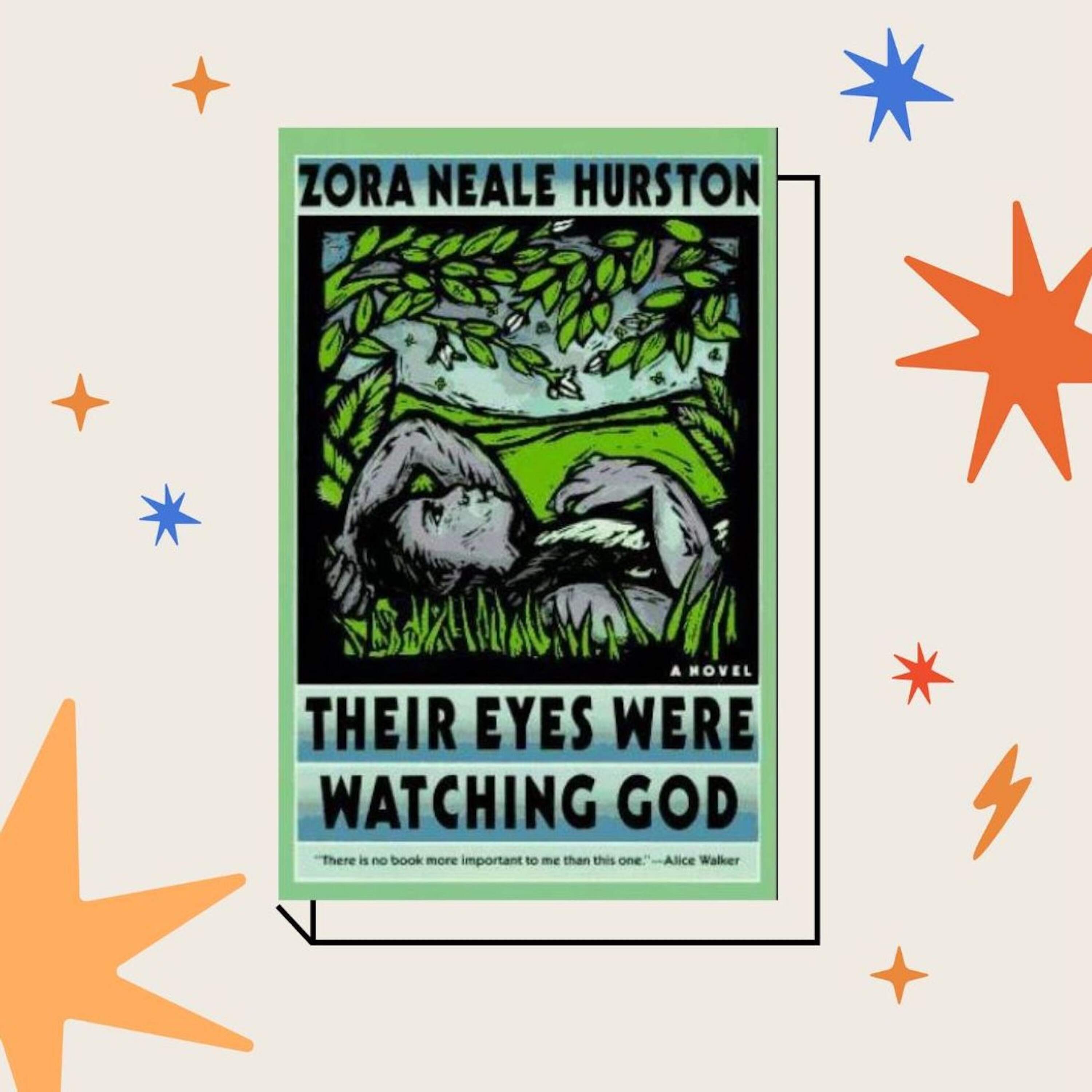
Okay, folks, we are reading Their Eyes Were Watching God by Zora Neale Hurston.
- [01:07]
Andrew Limbong
All right, let's go, let's go, let's go.
- [01:10]
BA Parker
Thank you. Let's go. Okay. Okay. Now let's get into the summary. First published in 1937, their eyes are Watching God is a coming of age story of Janie who goes through a series of marriages, but. But ultimately discovers who she is in Southern Florida. And like, I don't wanna give too much away, but I also feel like it's one of those books where I think you just need to savor it.
- [01:38]
Andrew Limbong
Yeah, I mean, the book is kind of structured around those three marriages. Right. First to a guy named Killiks, then to a more ambitious man named Jodie, and then to Tea Cake, who's young and hot. But I think it's fair to say he's a bit of a. I don't know, he's not the most responsible man. Right. Which I guess it's a good time to say we're gonna be talking about sex and sexual assault and gun violence. But, Parker, I'm interested in your framing this as a coming of age book, because in the book it's a big deal that she's 36. Right.
- [02:11]
BA Parker
But, like, she starts off super young. Like, it's a framed narrative. She's like coming of age.
- [02:16]
Andrew Limbong
Like coming of age shouldn't belong to 18 year olds.
- [02:19]
BA Parker
I also think 40 year olds come.
- [02:21]
R. Eric Thomas
Of age yeah, well, coming of middle.
- [02:22]
BA Parker
Age, I'm rooting for the middle aged people right now.
- [02:25]
Andrew Limbong
Listen, it's happening, right? It's happening.
- [02:27]
BA Parker
I'm advocating for those ladies who are like, you know what, maybe we need like a 25 year old man to feel alive.
- [02:36]
Andrew Limbong
Yeah. All right, so is that why you picked this book? That's because of your party platform?
- [02:40]
BA Parker
No.
- [02:40]
Andrew Limbong
Your pro cougar platform?
- [02:42]
BA Parker
Calm down, calm down. No. I loved this book. When I was a teenager, every summer I would be on my grandparents farm in North Carolina and I'd really just be in the feelings of that era. And it also seemed hopeful as like a young person. I mean, she goes through a lot of trials and tribulations, but there's like a liberation to it. And now that I'm reading it as an adult, it's still really liberating. How do you feel, Andrew?
- [03:10]
Andrew Limbong
I read this book. I was an adult. I was like a grown working person. And I read it because I knew it was like an important book, right? And I knew it was like a gap in my reading history. I was like, all right, I should get around to reading it. And I remember I didn't like it when I first read it, Andrew. I was like literally rereading like some of like the notes in my book because I was treating it like homework and it felt like I was trying to analyze like the dialogue and the history and it felt like a slog to get through. Upon rereading it this time, I was much more open to falling in and out of love with Janie. Much more reading it as a sensory experience. So yeah, I really appreciate giving it a second crack, I think, Andrew, every.
- [03:51]
BA Parker
Time I picture you reading a book, I picture you in a bar smoking a cigarette, being real judgy.
- [03:56]
Andrew Limbong
Yeah, I mean, I think so. I remember I imagined myself on my porch in Baltimore, probably reading this, shooting, blasting a dart, being like, hmm, I don't know about this.
- [04:09]
BA Parker
Okay, so Eric, what is your relationship to the book?
- [04:12]
R. Eric Thomas
I'm sorry, I'm just so stuck on this image of you, like smoking on a porch in Baltimore, being like janie girl.
- [04:20]
BA Parker
I don't know if Jodie's the one. Free yourself.
- [04:25]
Andrew Limbong
I was also like rolling my own back then too. So it's very like, you know, in tune.
- [04:28]
BA Parker
So cultured.
- [04:29]
R. Eric Thomas
Ghost of Zora is both judging and loving this. I'm sure celebrating my history also started in Baltimore. I was a high school student in Baltimore county and we read it in maybe 10th grade, 9th grade English class and I fell completely in love with it. I was in love with the language. I was in love with the story. So much so that I changed my first AOL instant messenger name was like teacake8 as if there were like other tea cakes.
- [04:58]
BA Parker
To be fair, he did eat. So like I love. Okay you know I love this.
- [05:03]
Andrew Limbong
That's also your like handle on DraftKings right now because lump gambling and like.
- [05:08]
R. Eric Thomas
I look back and I think even then I was like tea cake. I don't agree with most of the decisions that he made in this book. And then when I read it like three years later at Columbia, I was like yo, I'm judging him. We should cancel tea cake. And I realize now looking back, I identified with Janie like I was like a 16 year old cisgender boy. I was like I am this 37 year old woman. I am searching for love and identity. Which is wild cause Janie is framed by her neighbors and her haters as like a Jesuit oldest woman who has ever lived and how dare she pursue love or personhood. So I don't quite know what I saw in Janie other than somebody who was trapped in a circumstance that did not meet her internal desire. And I loved that.
- [06:01]
BA Parker
After the break, we will have more Their Eyes Were Watching God and its author, Zora Neale Hurston. Stay with us.
- [06:09]
Andrew Limbong
Foreign.
- [06:14]
NPR Announcer
This message comes from Saatva Getting quality sleep can improve athletic abilities, increase energy, and boost memory and learning. Saatva mattresses are designed to promote that kind of sleep. Save $625 on a thousand dollars or more at saatva.com NPR support for this podcast and the following message come from MIDI Health Women's midlife health issues have often been trivialized and ignored. It's time for a change. It's time for miti. MITI is covered by major insurance companies, making expert care accessible and affordable. Clinicians provide one on one consultations where they listen to your unique needs and offer data driven solutions tailored for you. MIDI works to make you feel seen, heard and prioritized. Visit joinmitti.com to book your virtual visit. MIDI the Care Women Deserve this message.
- [07:05]
Sponsor Announcer
Comes from wise, the app for using money around the globe. When you manage your money with wise, you'll always get the mid market exchange rate with no hidden fees. Join millions of customers and visit wise.com Ts and Cs apply.
- [07:21]
BA Parker
Before the break, we talked about our personal connections to Their Eyes Were Watching God. But I'd like to zoom out and talk about the myth, the legend miss Zora Neale Hurston now, she grew up in Florida, in Eatonville, one of the towns in their Eyes are watching God. And for the bulk of her writing this book, she was in Haiti for, like, in the span of seven weeks.
- [07:48]
Andrew Limbong
She was rising and grinding. She had work to do.
- [07:50]
BA Parker
She was rising, grind. And like Zora had once said that she felt pressure to get this book finished and wanted to rewrite it, but eventually felt that the final result captured her passion in the moment. I think you can feel that. I feel like Zora was an anthropologist and much of her storytelling was based in black folklore, including American and Caribbean. And I feel like that speaks to her fiction as well. Digging in the heart of it and the fact that Janie is kind of expressing herself in these interesting ways in the book. And you need to set aside the fact that Zora was a central figure of the Harlem Renaissance, how everyone knows her, including figures like, you know, Langston Hughes, Countee Cullen, Nella Larson. But the book only sold about 5,000 copies during its initial run due to some bad reviews. At the time, they were hating haters to the nth degree.
- [08:52]
R. Eric Thomas
And let me just say so one of those bad reviews was from Richard Wright, and it essentially killed this book. And if I ever see Richard Wright, it's on site.
- [09:02]
BA Parker
It's on site.
- [09:03]
R. Eric Thomas
On site. I love the work that he's done, but there is such beef. I also feel like Zora's legacy is one that is complicated. She had sharp elbows, which I don't think is a fault. She would later go on. No, of course. Yeah. But Richard Wright really undercut a beautiful and worthy novel because it didn't match up with the image. I think that he believed that should be put forth by black people. He was against the dialect. He was against the folkiness of it. But without cultural anthropologists like Zora Neale Hurston working in this form, we would lose this history. We would not be exposed to these people.
- [09:46]
BA Parker
But I also think it's so ironic because the does comment on the dangers of respectability, politics, and of colorism and all of these isms that are the bread and butter of the black community at that time.
- [10:01]
Andrew Limbong
Yeah, just so, listeners, I've got the Richard Wright review pulled up in front of me.
- [10:04]
BA Parker
Read it, Andrew.
- [10:05]
Andrew Limbong
There's a couple interesting lines. It's one of those reviews where he's reviewing two books. So he's also reviewing these Low Grounds by Walter Edward Turpin. And it's interesting how he doesn't like either book. So he's just straight up hating. But towards the end, he writes. Turpin's faults as a writer are those of an honest man trying desperately to say something. But Zora Neale Hurston lacks even that excuse. The sensory sweep of her novel carries no theme, no message, no thought. In the main, her novel is not addressed to the Negro, but to a white audience whose chauvinistic tastes she knows how to satisfy. That's crazy. Like, you cannot. Like, you cannot like this book. You cannot like this book. And it's fine. Right? I was mid on it when I read it. But to say that Terpin was a man who was trying to say something but failed in doing it, and Hurston has nothing to say, is vapid and empty and is trying to please white people. You gotta be like, what's the difference here?
- [11:02]
BA Parker
You know, there is just such a willful ignorance towards trying to even attempt to understand where she's coming from, which I find frustrating, but also apt of its time. I mean, the fact that, like even the Harlem Renaissance as we know it, its origins come from a book party for a female author. I think it was Jessie Fawcett's. There Is Confusion was the name of the book, and there was an opening for her book, but no one properly remembers that. They remember all of the men who were coming out that time as well. The fact that these women are immediately put in the margins of their own cultural moment is Zora Neale Hurston essentially died in obscurity. And it wasn't until Alice Walker, blessed to her, wrote about her pilgrimage to find Zora's unmarked grave in Florida for Ms. Magazine in 1975. And that gave her work a second life. So, I mean, I feel fortunate. Like, in my lifetime, I never knew that Zora Neale Hurston had been in obscurity because her books were everywhere in my life growing up.
- [12:16]
R. Eric Thomas
Yeah. It's also just unfortunate that there's this crabs in the barrel mentality which I think pervades a lot of marginalized communities, but that these male writers would see this door opening up for them and very quickly just shut it on Jesse Fawcett on Zona Hurston, on basically any female voice. And if there is a lesson to be taken from it, it's that, one, rising tides lifts all ships, but two, that we are only as great as a people, as a literary society, as all of our voices, as opposed to simply like the few that we select. So I'm very grateful to Alice Walker for bringing this book back.
- [12:58]
BA Parker
Thank you.
- [12:59]
Andrew Limbong
I think I'm interested in this criticism that, like you are writing for white people. Like, listen, catch me in a bar talking about certain writers, I'll probably throw that around, right? You know what I mean?
- [13:13]
R. Eric Thomas
Facts.
- [13:14]
Andrew Limbong
Upon reflection, upon a more sober moment, I'd be like, is that fair? Like, what does that mean?
- [13:20]
BA Parker
I think it's the fact that the book uses a lot of eye dialect. And I feel like it was during a time when using that kind of dialect felt like minstrelsy. And they'll be like, is it authentic then? But, like, if Zora is a part of that community, if Zora is, like, collecting their stories and their legacies and their voices because she had recordings of herself and of those around her, it's true to herself. So I think there's such a threat to respectability politics at that time. It is something where you can't have it both ways. You can't wanna be respectable for white people and then critique someone unwarranted and be like, well, you're performing for white audiences. And I'm like, richard Wright, the call is coming from inside the house. I do wanna, like, pause for a second because we have, like, this rich audio that I want us all to hear, because Zora was this anthropologist who would into, like, the woods of Florida and get these voices. And yeah, just think that it would be, like, really nice to show some of the aspects of, like, what she was bringing to the table that I don't think her critics fully appreciated.
- [14:45]
Zora Neale Hurston (audio clip)
I just get in the crowd with the people, and if they sing it and I listen as best I can and I start to join in with a phrase that. And then finally I get so I can sing a verse, and then I keep on till I learn all the sounds and all the verses, and then I sing them back to the people until they tell me that I can sing them just like them. And then I take part and I try it out on different people who already know the song until they are quite satisfied that I know it. And then I carry my memory.
- [15:12]
Andrew Limbong
I like that clip because it, like, just reinforces while we were still talking about the dialogue. It's like she was big on repetition and repeating, like, folk songs back to people. Just be like, am I getting this right? Do I have this right? Da, da, da. And so my feelings about, like, authenticity and whether or not that should even be a barometer for, like, whether or not a book is good aside, it's like, it's pretty clear that the musicality of the dialogue portions of this book are authentic. It's like, Richard Wright, this is just how people talk. I don't understand what your beef is.
- [15:42]
R. Eric Thomas
Yeah, yeah.
- [15:43]
BA Parker
But it's, it's also, I think Zora shows a level of respect for the culture, for the people, but it also like to like circling back to that point. It's the fact that it exists, that it embarrasses Richard Wright and that's why he wants to denigrate it. I find having gone through some of his work before, there's like a slight embarrassment.
- [16:09]
R. Eric Thomas
Right. Well, because, but that's, I mean that's, that's loving white people too much. You know, like, sorry, Richard, sorry. You know, like Zorich. Wrong.
- [16:24]
Andrew Limbong
We're gonna take a quick break right there and then when we get back, we're just gonna dig into this book a little bit more. Dig into the meat and bones of this book. We'll be right back.
- [16:33]
NPR Announcer
This message comes from Paramount. Now streaming on Paramount. Plus it's the return of Landman from Taylor Sheridan co creator of Yellowstone. Academy award winner Billy Bob Thornton is back featuring an all star cast including academy award nominees Demi Moore, Andy Garcia and Sam Elliott. Tensions come to a head as Thornton's Tommy and Moore's Cammie Miller struggle to maintain control of Emtech's oil Landman. New season now streaming only on Paramount plus, this message comes from NPR sponsor Shopify. No idea where to sell? Shopify puts you in control of every sales channel. It is the commerce platform revolutionizing millions of businesses worldwide. Whether you're a garage entrepreneur or IPO ready sh Shopify is the only tool you need to start, run and grow your business without the struggle. Once you've reached your audience, Shopify has the Internet's best converting checkout to help you turn them from browsers to buyers. Go to Shopify.com NPR to take your business to the next level today.
- [17:33]
Andrew Limbong
And we are back. All right, like I mentioned at the top, this whole book is structured essentially around three marriages. Right. And I did feel by like the middle of Jody. Right. When Jody. So Jody is the middle husband, he takes Janie and he ends up being like a mayor of like a small town.
- [17:50]
BA Parker
Right, Right. So Janie's first husband is this much older man named Killix whom she doesn't love and he don't love her. And then she runs off with Joe or Jody as she calls him, whom she thinks she loves and they run.
- [18:05]
Andrew Limbong
They run a general store. He gets sick, gets into some like maha agenda and refuses to take any medicine. Right. There is a moment where it's like knowing because the back flap tells me that there's a third husband on the way. It's like, there's a lot of husbanding going on here, dude, but what else.
- [18:23]
BA Parker
Is she gonna do?
- [18:24]
Andrew Limbong
It's like boom, boom, boom.
- [18:25]
BA Parker
Which is kind of why, like, the ending is a best case scenario.
- [18:29]
Andrew Limbong
It's a best case scenario.
- [18:31]
BA Parker
She ends up alone. But she had for a brief moment in time this great love, which at that time, especially in that kind of book, to get. That was a lot.
- [18:42]
R. Eric Thomas
Yeah.
- [18:43]
BA Parker
Again, like, trying to think of other books where it's like, sexually liberated woman who first off lives at the end.
- [18:53]
Andrew Limbong
Yeah.
- [18:54]
BA Parker
But, like, keeps her money basically and gets like autonomy. Like, in some ways this book feels like wish fulfillment.
- [19:05]
R. Eric Thomas
Yeah.
- [19:06]
BA Parker
In that regard, it's kind of the.
- [19:09]
R. Eric Thomas
Anti Hedda Gabler, but like, she has to do the same amount of fighting to get of this trap of womanhood in this time. And so I feel like I see the three husbands as this kind of matryushka doll of deeper levels of liberation. You know, like deciding that she didn't want to be with Logan Killiks, her first husband, is transgressive all on its own. And then, like, trying to express some autonomy with Jodie, who is, you know, very interested in just having like a dutiful wife who works in the back of the store and doesn't speak up. And that is transgressive. And like navigating her own finances is transgressive. And then sexual liberation, finding with Tea Cake a relationship that spoke to her body and to her wants and also challenged her to ask for what she wanted. And also think of herself as a financially liberated person responsible for her own money. I think that's just a whole nother level. And then she finally gets back home and she's only responsible to herself. And that is true liberation.
- [20:18]
Tayari Jones
Yeah.
- [20:19]
BA Parker
She don't have to cook for nobody but herself. She don't have to do any other thing. I think this is growth on my part. Remember as a kid hearing. Remember in the book she calls being with Tea Cake a self crushing love. And as a teenager being like, oh, that's so beautiful.
- [20:38]
Andrew Limbong
And now I'm like, and now if your friend came out to be like, I met this 25 year old, we're hitting it off. He wants to take me to a farm in Florida. We're picking up and moving. Are you gonna say, hell yeah, dude, go for it.
- [20:53]
BA Parker
You know what? If you like it, I love it. Times are hard.
- [20:59]
Andrew Limbong
There is a part, though, I feel like towards the end of the book, I guess, spoilers for this Book. So spoiler, spoiler. There's a flood, and Janie gets swept up in the water, and there's, like, a dog coming attacker. And TK Comes in and rescues Janie, but not before being bit himself. He gets rabies, and then he starts acting crazy towards her, and Janie ends up having to kill him, where it's like when he starts sweating in bed, and he's jealous that she can't sleep in the bed with him because that's what the doctor said. We're really putting her through the wringer here, dude. And there's a little bit of exhaustion of, like, she's going through quite a bit in her 36 years in life.
- [21:41]
BA Parker
I mean, this is also a side note, but I believe that Zora Neale Hurston was writing this after a breakup.
- [21:47]
Andrew Limbong
And she's putting it all out there. Yeah.
- [21:49]
BA Parker
Was inspired by her man at the time that they broke up. I think that's kind of beautiful, the fact that she created, like, this great love for this character. Shorty tried to stamp down who Janie was for years because she wanted to be independent. She wanted to be liberated. So the cost of coming out of her show was a couple hundred dollars.
- [22:21]
Andrew Limbong
Make it work. You can make it. You can land this plane.
- [22:23]
BA Parker
It's a gambling problem.
- [22:26]
Andrew Limbong
We all have our faults, I suppose. Yeah.
- [22:28]
R. Eric Thomas
You know, I wrote a daily advice column, and so once a day, I write to somebody, you should all just talk to each other. And that is my biggest concern with Tea Keg. Please, just talk to her. Treat her like, you know, treat her like the intelligent, independent, autonomous being that you know her to be. And I think the stealing of the money or the borrowing of the money by procuring is such a moment of such basic behavior from an extraordinary man, you know, And I think that's why he gets rabies.
- [23:06]
BA Parker
Okay, I want to ask. So the book begins and ends with a jury, and she's telling it to a friend. And how the audience can judge her but have a deep well of empathy for Janie. Do we have enough empathy for Janie?
- [23:23]
R. Eric Thomas
I would argue that one of the pristine challenges of this book is expanding your sense of empathy for this woman as main character. I think Zora Neale Hurston begins the book with this sort of chorus of dissent, this sort of spiteful tone as a way of, like, counteracting our own judgment. She's like, you're going to judge this person. You're going to think that she makes the wrong choices. And let me tell you, narratively, you're not on the inside. You know, we start off part of the chorus, we're looking at her, and then immediately the next chapter, we're brought into her inner circle. And I think what she's doing at the, like, textual level, but also at the sort of meta level is challenging both the reader in this time and the reader in our time to accept every single thing that Janie does as valid and as worthy of our empathy.
- [24:21]
Andrew Limbong
There's, like, a lot of inviting you to judge her, right? Because there's a lot of especially, like, prejudging her, right? Because there's the reason why she can't connect to the town, like, since the beginning, right? Is because the town thinks, like, the way she looks, right? And they're like, oh, you're snooty. You're just not going to be one of us. You're going to be like some other thing. And I think what she's doing is, like, inviting you to do that, to just, like, judge her a little bit. And then I know we've been joking about how her bad romantic decisions, right, and stuff like that, but to a certain extent, you do see what she's trying to do. You do feel this movement of, especially towards the end, you know, with tk, it's like she's finally in love and doesn't care about the judgment that happens. You know what I mean? And I think that's, like, the trick of the book is, like, you're at one end judging her at the beginning, and then you feel for her towards the end.
- [25:12]
Sponsor Announcer
Yeah.
- [25:13]
BA Parker
We're gonna take one more break, but when we're back, we will answer why Their Eyes Were Watching God should still be read today.
- [25:30]
Sponsor Announcer
This message comes from AT&T. AT&T believes that hearing a voice note can change everything. Sometimes a familiar voice can bring back a memory, a moment, or a feeling of connection. This holiday season, AT&T celebrates the voices that stay with you and the ones that continue to connect even when miles apart. Happy holidays from AT&T. Connecting changes everything. Support for NPR and the following message come from the Lemelson foundation, dedicated to improving lives through invention, innovation and climate action.
- [26:06]
Andrew Limbong
All right, we are back. Why do we think this book should be read today? Eric, you want to go first?
- [26:12]
R. Eric Thomas
Yeah. I think on a craft level, it's extraordinary at the sentence level, at the level of curiosity about a particular culture, and then at a larger plot level, it challenges us at every step, but also it embraces us, it welcomes us in. This book is an invitation, and it gives us a Crucial view of a part of American society, a part of American culture that I don't think we see overrepresented in the literary canon while still having resonance to who we are today.
- [26:51]
BA Parker
Yeah, I just think it is such. I hate when people say, like, a book is delicious, but I find it to be such a delicious book that fits into a pocket of the canon that I think Eric says is underrepresented, like, isn't too represented. And I think we're having conversations now about black female literature, that there is this very narrow realm of, like, where black female literature fits and, like, what bubbles up into the mainstream. What we have discussions about and Their Eyes Were Watching God feels miraculous. It still feels timely to me in a way that some of the literature that we've read this season has not.
- [27:39]
Andrew Limbong
I think something that we didn't quite touch on. But is that, like. Yes, the dialogue is very ear specific and very musical and lyrical. The stuff in between, it's interesting. She shifts in the prose parts into this gear where she, as a writer, just starts cooking. Right. And you could argue, I think at times it veers into maybe a bit, like, too flowery. But I think there's, like, some genuinely beautiful sentences in between the dialogue. And I think that going back and forth is hitting at the story from multiple angles.
- [28:13]
R. Eric Thomas
Right.
- [28:13]
Andrew Limbong
And I think, Parker, that's like. That creates that deliciousness that you're sensing. Right, because you see them talking, and then it goes into this, like, metaphorical language about, like, bees or like honey or. You know what I mean? Like, all of that stuff.
- [28:26]
BA Parker
Oh, yeah.
- [28:27]
Andrew Limbong
And then it goes back into them talking. And so you're constantly going between the metaphorical and the literal in an interesting way. And so I think on a craft level alone, that's what this book is worth revisiting.
- [28:37]
BA Parker
Make the kids read Their Eyes Are Watching God. Okay, now we're gonna pivot to a thing we call, if you like this, read that. If you don't like this, try that. We're gonna do some book recommendations. Eric, since you're our guest, what book would you recommend?
- [28:55]
R. Eric Thomas
If you like this book? I highly recommend Susan Laurie Parks's 2003 novel, Getting Mother's Body. Susan Laurie Parks, Right. A banger. A banger of a book. It's a sort of riff, a light riff on as LA dying. And it's set in 1963 and follows this family that has to go retrieve their mother's body after the body is buried, is sold, and being dug up. It has the same level of lyricism and the same love of black folk, black culture, black sound, and black womanhood that their eyes were watching God has.
- [29:32]
Andrew Limbong
I think my recommendation would be Tom Lake by Ann Patchett. I think if we're talking about a woman who is, like, telling her story. Right. Of we can call it sexual liberation in the face of judgment. Right. It's about a woman telling her daughters the story about how she hooked up with, like, a scummy dude while they were producing Our Town, which is another play about, like, a small town in judgment. And so, like, it's a really interesting parallel look at what it means to tell your story and to tell other people, listen, here's what happened. Here's what I did. Was I wrong? Maybe. Judge me if you like, but that's my story.
- [30:15]
BA Parker
Ooh. Okay. These are excellent picks. So I leaned more into the stifleness of respectability and societal and familial expectations. So I went with Like Water for Chocolate by Laura Esquivel.
- [30:31]
Andrew Limbong
Okay.
- [30:33]
BA Parker
Cause it focuses on, like, a magical realism, but there is, like, a woman, the youngest isn't allowed to marry, but she still has love, and the whole family puts all their expectations on her. And I remember reading it years ago and also having that feeling of just let her be free. It's not coming of age, but it is finding oneself through that very narrow cultural expectation lens.
- [31:07]
Andrew Limbong
You know, I read this in school, and I remember not liking it, but maybe I'll give it another shot.
- [31:11]
Tayari Jones
Oh, no.
- [31:11]
BA Parker
People are real hostile towards this book, and I understand why. Men in it are not great, but also the men in their eyes are watching. God, half of them, they're not great either. Eric Thomas. Eric. Eric. Oh, Baltimore accent. Calm down, Eric Thomas.
- [31:32]
Andrew Limbong
This is when it's appropriate.
- [31:33]
R. Eric Thomas
I welcome it. I welcome it.
- [31:35]
BA Parker
Eric Thomas, thank you so much for.
- [31:38]
Andrew Limbong
Being on the show today. Thank you.
- [31:40]
R. Eric Thomas
This was so fun.
- [31:42]
BA Parker
And on this segment of Phone a Fan, I called up author Tayari Jones about her love of Zora Neale Hurston. Hi, Jari.
- [31:51]
Tayari Jones
Hi. Thanks for having me.
- [31:54]
BA Parker
It's my pleasure. Are you kidding me? So you wrote the 2019 foreword to a collection of Hurston's work, Hitting a Straight Lick with a Crooked Stick?
- [32:03]
Tayari Jones
Yes.
- [32:04]
BA Parker
How did you see Hurston's legacy reflected in your own storytelling, particularly in how you write about the south in complex female characters?
- [32:14]
Tayari Jones
Well, one thing I will say that Hurston indeed demonstrates to us how to hit a straight lick with a crooked stick. And I don't know if people even still use that expression, but it's something that I Grew up hearing, which means, you know, what. How it's like, how you get to be a trickster, how you get to go the straight route you want to take, even though the system might be a little crooked, but you still get where you're going. And I think that that is part of what Hurston gives us. Like, she is able to tell a universal story using a language very specific, not just to the south, not just to Florida, but to her particular hometown. Like, just the way that she represents her home helped me in representing mine, because when I was coming up as a writer, you know, I moved to New York because that's where the business was, that's where publishing was. And I realized that I didn't have to run away from home to write about home. That writing about Atlanta, where I grew up, that is, in fact, an American story.
- [33:20]
BA Parker
Oh, don't let my mama hear this. Because she would have been like, why did you move to New York? You could have stayed in Baltimore to talk about your family. So Hurston often looked to folklore to preserve cultural memory. Do you see any modern equivalent in today's literature or in your own work that serves that same purpose?
- [33:48]
Tayari Jones
We kind of. Many of us turn to folklore. Like, we are now creating folklore, but we just don't know it's folklore yet. It's almost like after. It has to be, a certain amount of time has elapsed for when something goes from being said urban legend to folklore. But. And so I think that I don't know how much people are really leaning on the folklore exactly the way Hurston did. But, like, if you look at Dolan Perkins Valdez, she, like, in her book Take My Hand, I mean, she's looking at the recent past and the way that we tell ourselves the stories of our recent past. But even in her debut Winch, you know, she was making into modern fiction the stories we had heard about and passed down about, you know, the way that women. Women's lives were during enslavement. But I was at Spelman's homecoming this weekend. I've been out of college.
- [34:44]
BA Parker
Hello.
- [34:45]
Tayari Jones
It's my 30th anniversary at Spelman coming up. And they were playing all this old school hip hop, and I was, like, thinking, wow, is this folklore? Like, is rappers to light? Is that folklore? Oh. Cause that's full of stories true.
- [34:59]
BA Parker
And they are.
- [35:00]
Tayari Jones
They're spinating. Okay. Like, you think about, like, that kind of narrative hip hop, like in Rappers Delight, when he's talking about, have you ever been over a friend's house to Eat and the food just ain't no good, you know, goes over there. That. That would be a folkloric story.
- [35:14]
BA Parker
Oh, I guess I never considered it. Like, at a certain point, the tales that we told before now in modern times becomes folklore.
- [35:26]
Tayari Jones
Yes. All right. It has to age. You just gotta let it age. And if people are still telling that story, if it has stood the test of time, it becomes folklore.
- [35:34]
BA Parker
I have never thought of it that way, and now I'm looking at everything differently. Oh, wow. Okay. So if Zora Neale Hurston were alive today, which I know it's like we always say, like, I have these, like, heady questions, but what conversations do you think she'd be leading about art and race and womanhood?
- [35:56]
Tayari Jones
I think if Hurston were alive today, one, she would drive us crazy because she's. Hearst was kind of a contrarian. Like, it's so interesting how people are always. Because, you know, people ask me a lot about Hurston, particularly in February, and they're like, oh, I think, like, someone was saying, oh, I think Hurston would love Beyonce. And I'm like, no, she wouldn't throw hers and didn't like anything that's popular.
- [36:21]
NPR Announcer
Oh.
- [36:22]
Tayari Jones
Like, her whole way of understanding her role in the artistic landscape was to champion the underdog. So whatever Zora Neale Hurston would like, we would be probably like, I don't know, girl. I guess, like, she really, you know, she led the culture. She didn't follow the culture.
- [36:39]
BA Parker
I know that's right. That's a perfect way to end this. Thank you so much.
- [36:48]
Tayari Jones
This has been a pleasure.
- [36:49]
BA Parker
And be sure to pick up Tiari's most recent novel, An American Marriage. But she's got a new book coming out called Kin, coming out in March of 2026.
- [37:02]
Andrew Limbong
This episode was produced by Cher Vincent and edited by Megan Sullivan.
- [37:06]
BA Parker
Engineering support by Robert Rodriguez. And our executive producer is Yolanda Sangweni.
- [37:11]
Andrew Limbong
Thank you for listening to to books we've loved from npr. We'll see you next time.
- [37:15]
BA Parker
Bye.
- [37:23]
NPR Announcer
This message comes from Sony Pictures Classics. From Sony Pictures Classics and Fathom Entertainment, Merrily We Roll Along. Three best friends through two decades of time. Directed by Maria Friedman, starring Jonathan Groff, Daniel Radcliffe and Lindsay Mendez, by legendary composer Stephen Sondheim, and winner of four Tony Awards, Merrily We Roll along, playing only in theaters starting December 5th. Support for NPR and the following message come from Hydro. Don't let the holidays derail your fitness. Stay on track with hydro. 20 minutes rowing on a hydro targets 86% of your muscles. As Olympians guide you from incredible locations worldwide. GQ named the Hydro Arc the best rower of 2025. And every hydro comes with free shipping, a 30 day trial and warranty. Go to hydro.com code NPR. Save up to 600 bucks on your next rower. Hydro.com code NPR.
- [38:20]
Sponsor Announcer
This message comes from AT&T, the network that helps Americans make connections. When you compare, there is no comparison. AT&T.