← NPR's Book of the Day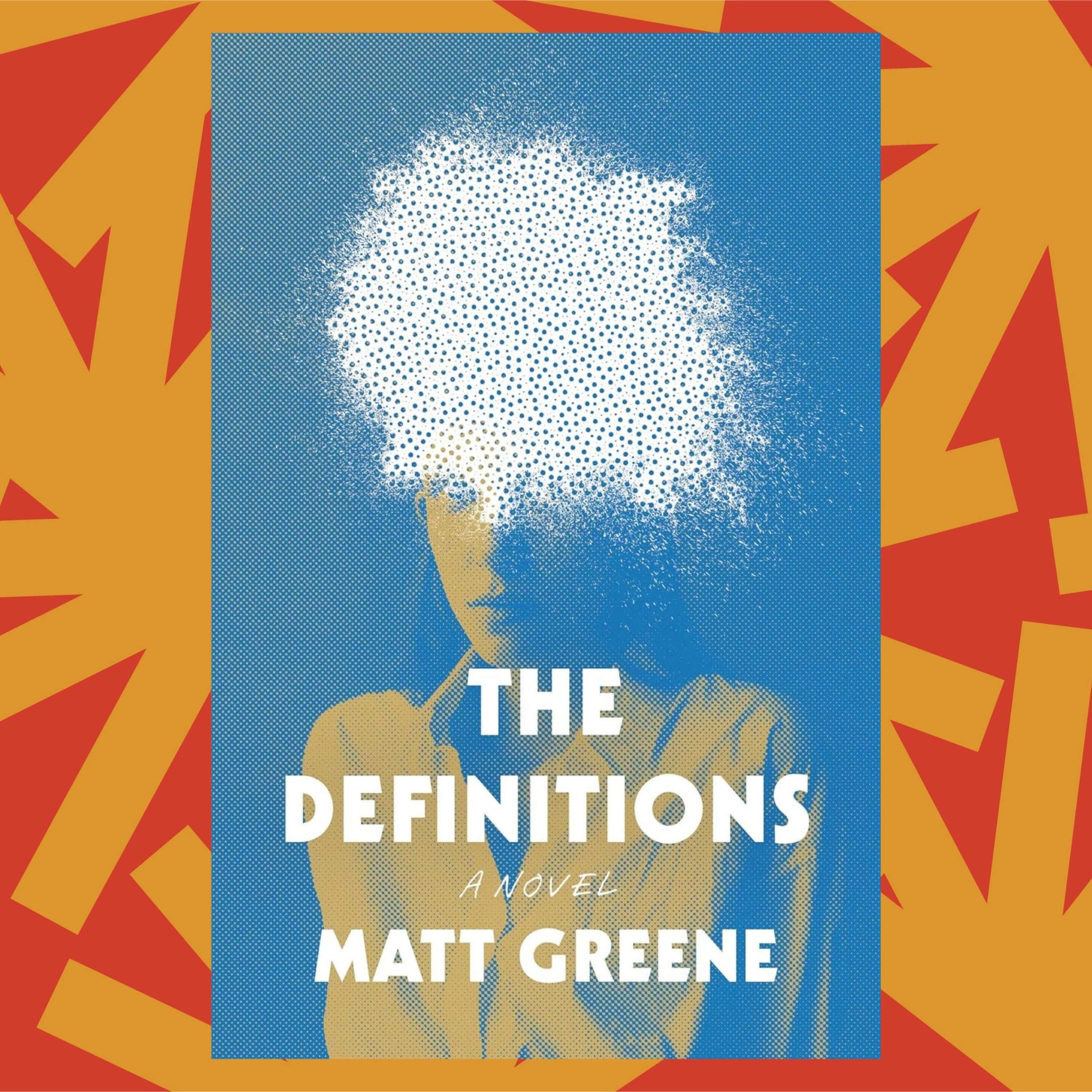
NPR's Book of the Day
'The Definitions' features dorm room conversation – with a dystopian twist
00:06:45
Loading summary
Transcript22 lines
- [00:02]
A
Hey, it's NPR's Book of the Day. I'm Andrew Limbong. One of the best privileges going to college affords is time. Yeah, sure, time to study and read books and stuff, I guess, but also time to, I don't know, bum around with your friends and talk about whatever. And interestingly enough, that's how you get to some deeper conversations about life and meaning and truth. Matt Green's book, the Definitions centers on some dorm mates who have these conversations, but with a dystopian twist. After the break, he talks to NPR's Lauren Frayer about how language is actually an imperfect way to communicate ideas and how he was inspired by sending his kid to school for the first time.
- [00:44]
B
This message comes from Wayfair. The new year is here. Wayfair's huge selection of home decor items makes it easy to elevate your space and find exactly what's right for you. From bedding and mattresses to storage solutions for every room in the house, Wayfair is your one stop. Get organized, refreshed, and back on track this new year. For way less, head to Wayfair.com to shop all things home. That's W A Y-F-A-I-R.com Wayfair Every style.
- [01:16]
C
Every Home Matt Green's new novel, the Definitions, starts with a simple, relatable scene. New dorm mates getting to know each other. It could be any college campus, but there is a dystopian backstory. These students are survivors of a virus that has erased memories. I spoke with Greene and asked what inspired him to write about people trying to navigate the world in this way.
- [01:41]
D
The sort of rush towards authoritarianism from electorates across the world was definitely a big consideration. The acceleration or hyper acceleration of our sort of disconnect between language and meaning and the industrialization of that post meaning landscape was definitely something that was playing on my mind. But the main thing probably was that my oldest son started school.
- [02:08]
C
What did you see your son going through that that prompted you to imagine this dystopian world?
- [02:16]
D
Well, I guess the big influence of the pandemic would be that my son was never in any childcare before school. It's fascinating seeing kids socialize and, and remembering the process of doing that and seeing how quickly these social hierarchies and structures develop.
- [02:34]
C
So tell me about the world that's inside this book. The characters are at a school that's called the Center. Who are the teachers? Who are the students?
- [02:43]
D
So the students arrive nameless and they acquire names from the cartridges that they are shown which readers will recognize. I won't give away exactly what they are, but they'll certainly recognize them.
- [02:56]
C
Rachel Chandler, Ross Chandley.
- [03:00]
D
And they've been stripped of their biographical memories. So they're essentially infantilized. They've been reduced to this childhood state. They are blank slates. And they're told that they're going to be reintegrated and they're going to convalesce in this facility while their memories return to them. What becomes clear is that this centre is less a medical institution and more of a re education camp. And they are being re educated in a very particular political ideology which may suggest something about the world they will be reintegrated into if in they are reintegrated into it.
- [03:38]
C
So the characters emerge from this virus with their ability to speak English intact, but they have to relearn vocabulary. Two of the characters debate the definition of a bench versus a chair. And I might just read a paragraph here. It's one of my favorite passages. The narrator says, in the end, we decided a chair was a chair if it was close enough to the image of a chair that we had in our minds when someone said the word chair. But this too, proved impossible to apply. Who was to say when Chino said chair, we were picturing the same perfect chair from which other chairs derived? Who was to say that my perfect chair wasn't really a bench or a horse or a bicycle? I mean, that was just straight out of my philosophy classes in college. That is Philosophy of Language right there. What are these characters trying to figure out here?
- [04:30]
D
I think what they're trying to figure out is the benevolence of the instruction that they're receiving. Given no context whatsoever, they're really unable to evaluate anything that they are being taught. So their intellectual curiosity really sort of falls on these words they're being given. What they seem to be realizing quite intuitively in that scene and maybe beyond, is that language is this really imperfect conduit. It aims to capture something that it cannot really capture. And at the same time, it offers them their most feasible possible opportunity for meaningful connection. If they can reckon with the inarticulacies of their language, they can hope to reach one another and reach outside of their circumstances. But at the same time, they have nothing but faith to take these definitions with. And as they start to realize, as you kind of see in that scene, is that nothing can truly be defined in an uncontroversial way. There's always some ideological input that is driving that.
- [05:42]
C
They take classes at this school on biology and grammar. But they also take classes called Politeness and Intermediate Subservience, which sounds like straight out of George Orwell's 1984 or Aldous Huxley's Brave New World. And most of the characters are kind of naive, maybe, with the exception of one, Chino. So what doubts do we start to have about this curriculum?
- [06:05]
D
I think our doubts certainly form before the matriculant doubts, which in some cases don't form at all.
- [06:11]
C
It's like we're watching them, knowing what's happening to them, and they don't know I want to. I'm screaming at them, you know, be cautious.
- [06:19]
D
Yeah. It's kind of like watching a horror film and watching them go down to the basement with the flashlight. Right. You know that something is afoot and they certainly don't. And that was important to me, that if I was going to write something that would be classed as a dystopia, that the characters within it wouldn't recognize what they were living through as a dystopia.
- [06:37]
C
I have so many questions about this book and I've read it.
- [06:40]
D
I'm very pleased to hear that. It's. Yeah. I was quite keen that the reader go away with some questions and I didn't want it to be something that it resolves for the reader in a way that they can then package it away and not reflect on it. My hope, and maybe this is pure hubris, is that they'll sit with the questions and arrive at their own answers.
- [07:04]
C
That's Matt Green, whose new novel is called the Definitions. Thank you.
- [07:07]
D
Thanks so much for having me.
- [07:20]
B
This message comes From NPR sponsor 1Password. Anyone else feel like 99% of your emails and texts are password reset codes trusted by millions of users and over 175,000 businesses? 1Password lets you skip the resets and sign in securely with strong, unique passwords that auto fill across all your devices. You can safely share logins, store cards and files. And finally, stop using your pet's name as a password. Try it free for two weeks at 1Password.com NPR this message comes from Sony.
- [07:56]
E
Pictures Classics with the Choral, directed by Nicholas Hittner. Written by Alan Bennett, starring Ralph Fiennes as a choirmaster in 1916. Yorkshire making music as war rages on. Now playing only in theaters. This message comes from Bombus. Your feet hit the ground an average of 2,000 times in a mile. Bombus sports socks are designed to support you every step. Sprint to bombus.com NPR and use code NPR for 20% off.