← NPR's Book of the Day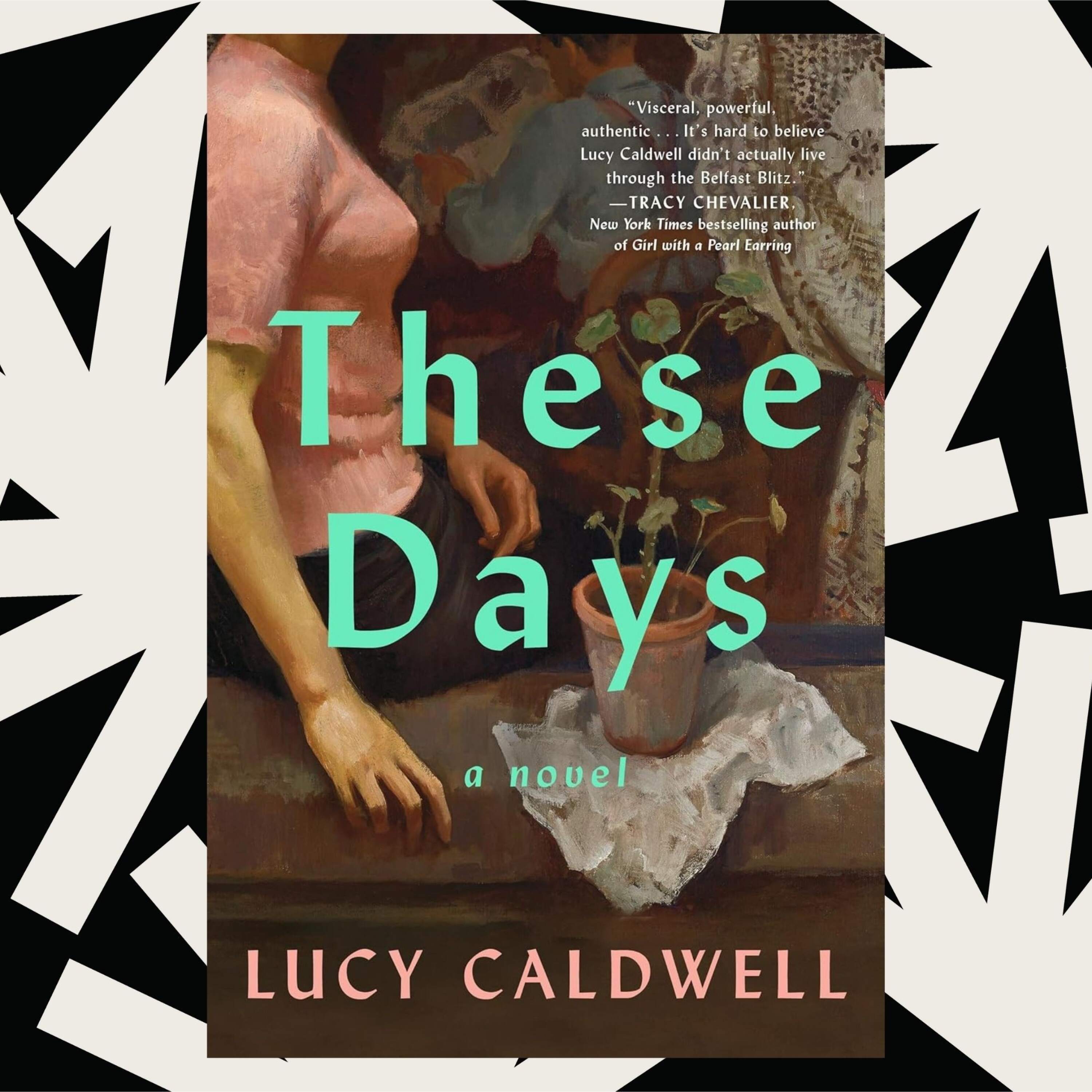
NPR's Book of the Day
The novel 'These Days' fictionalizes a lesser-known chapter in the history of Belfast
00:08:07
Loading summary
Transcript25 lines
- [00:02]
Andrew Limbong
Hey, it's NPR's Book of the Day. I'm Andrew Limbong. There's a beautiful lesson in today's interview about writing historical fiction. It's with Lucy Caldwell, whose book these Days takes place in Belfast in 1941. And in the book, she includes all these little details. And when NPR's Scott Simon asks her about it, she says this line about how getting just one detail right will allow a reader to believe the whole world. She talks about the source of some of those details, some personal, some arrived at through research.
- [00:33]
NPR Sponsor Announcer
After the break, this message comes from Wayfair. The new year is here. Wayfair's huge selection of home decor items makes it easy to elevate your space and find exactly what's right for you. From bedding and mattresses to storage solutions for every room in the house, Wayfair is your one stop shop. Get organized, refreshed and back on track this new year. For Way less, head to Wayfair.com to shop all things home. That's W A Y-F-A-I-R.com Wayfair Every style, every home.
- [01:09]
Scott Simon
In April of 1941, the people of Belfast, the capital of Northern Ireland in the UK and a shipbuilding center, knew the German bombers would soon strike their city and had been holding air raid drills. But how much can you really prepare for a blitz?
- [01:26]
Lucy Caldwell
Wake up. Wake up, everybody. A moment later, as if her cry has woken them to the siren sound. Oh, that unearthly wail of them rising and falling far and near and far, an ancient keening which seems to scoop something from the pit of your stomach. Footsteps, voices calling, doors opening, the rest of the family coming onto the landing. It's happening, Audrey says, her voice thin against the sirens. Is it really? Is it happening?
- [02:02]
Scott Simon
That's Lucy Caldwell reading from her novel these Days, which brings us into the lives of one family during the Belfast Blitz. Nearly a thousand residents of the city were killed that spring in German air raids. Lucy Caldwell joins us from Belfast. Thank you so much for being with us.
- [02:20]
Lucy Caldwell
Thank you so much for having me on.
- [02:22]
Scott Simon
Why did you want to set a novel during these times?
- [02:25]
Lucy Caldwell
It's a funny thing. I had quite a circuitous journey to it when he was a toddler. My son was obsessed with a children's book called Peepo, that's about a child's life against the backdrop of the London Blitz. And I had to read him that book every night for months. And I thought about how many of my favourite writers, Louis McNeice and Sylvia Townsend Warner and Graham Greene and Henry Green, they were all great writers. The London Blitz. And I started to think how there had been a Belfast Blitz as well. But it's such an undertold chapter in the fiction of my city. And so I started researching it, and I found enough stories, it could fill a dozen novels.
- [03:07]
Scott Simon
The level of detail is extraordinary. You write about a bombed house and talk about a looking glass on the half landing glinting blankly. The hallway glittered, the wallpaper, the walls were stuck with daggers of glass. You just don't say the house was smashed. Why were these details important?
- [03:27]
Lucy Caldwell
There's something that I always think of when I'm writing that Gabriel Garcia Marquez said, and he said, in journalism, one erroneous detail is enough to make the whole edifice crumble and the reader lose faith in the entire enterprise. But the converse is true in fiction. In fiction, if you can get that one detail right, then a reader will believe in the whole world.
- [03:51]
Scott Simon
And how do you know? Details like leaving a lump of coal in the crisper to help revive an old Leakin potato pie. Did you grow up here in them?
- [04:01]
Lucy Caldwell
Funnily enough, that was something that my grandmother always used to say. And my own grandmother lived through the Belfast Blitz. She would have been 19, 20 at the time. She was from quite a poor family. Her mother had worked in the sewing mills, and she would never talk about the Belfast Blitz. Anytime I asked her, she would always say, oxshaw, you want to know about that? For there's no good can come of talking of it. Quite often I would interview people about their childhoods during the Belfast Blitz, and they would always say, I've got nothing to tell you. And then it would be the details, it would be the things that they didn't necessarily think were important, exactly. Like that lump of coal in the lettuce crisper that I just knew I could make the world come to life with.
- [04:44]
Scott Simon
This novel revolves around two sisters, Audrey and Emma. And like a lot of sisters, they're different, aren't they?
- [04:50]
Lucy Caldwell
They're very different. I was interested throughout the novel in looking at people's public selves and their private selves and their secret selves and the extent to which these sisters really don't know each other. And their mother, their mother has these chambers that are inaccessible to anyone else as well. And I was interested in writing the ways that the Blitz brings people together in very, very intimate and very unexpected ways, and also the ways that it highlights between even those who should be closest.
- [05:22]
Scott Simon
At one point, Audrey takes her identity card out of her purse and Tucks it inside of her dress. Why?
- [05:28]
Lucy Caldwell
In case she is killed. So they can identify her body. There was one of the most harrowing pieces of research that I did was discovering that St. George's Market, where it's now a Saturday market, they have jazz, they have craft stalls, they have food stalls, they have fruit and veg. It was used as a temporary morgue at the height of the Blitz, when all of the city morgues were overrun. Audrey knows that she has to somehow put her identity card inside her brassier, inside her underwear, so that if she is killed, her mother and father will know that the body is hers. She's thinking very practically. But when you read the firsthand accounts of people trying desperately to identify the bodies and of people coming to the morgue desperately describing the child. For example, I found one account of a woman who's describing the clothes that her little son was wearing, and she's going round around all the bodies looking for the fabric of these trousers that will allow her to identify her son. There were some very, very harrowing stories.
- [06:28]
Scott Simon
To read this novel, of course, you're reminded all over again. This is before cell phones and text messages and after an air raid. Even if you survive, there's the anxiety over who you know and love, who may not have.
- [06:40]
Lucy Caldwell
That's right. I wrote the novel during our lockdown in Covid in the spring, in April to May of 2020, and there was a sense that you didn't know which of your loved ones were going to make it through. You might not be able to see them again. I was in London at the time and I wrote the novel. It felt a way of keeping close to my city and keeping my city alive.
- [07:08]
Scott Simon
You know, I must say, reading your novel reminded me of wars I've covered and cities being bombed and under siege. If you could somehow tell people just get through four days of bombing or four months or even four years, they can plan. But part of the terror is you don't know how long the terror will last, do you?
- [07:28]
Lucy Caldwell
Exactly. And that was at the start of COVID There was a lot of talk in the media in the UK of Blitz spirit, by which they meant stiff upper lip and keep calm and carry on. But I understood the provisionality of the Blitz in an entirely new way. And it was exactly what you say. You have no idea if there are going to be weeks of this or months or years. And I felt also the ways in which life has to go on, whether you're in the Belfast Blitz or growing up as a child in the troubles or living through Covid times. And it became the work of my days to plot a course through those horrors. You know, not stinting on the cruelty or the meaninglessness of so much of it, but showing how people survived and showing how irrepressibly life does go on and life has to go on.
- [08:22]
Scott Simon
Lucy Caldwell, her novel these days. Thank you so much for being with us.
- [08:27]
Lucy Caldwell
It was such an honor to bring this chapter of my city to your listeners.
- [08:41]
Commercial Announcer
This message comes from Sony Pictures Classics with the Coral, directed by Nicholas Hittner, written by Alan Bennett, starring Ralph Fiennes as a choirmaster in 1916. Yorksh making music as war rages on, now playing only in theaters.
- [08:56]
NPR Sponsor Announcer
This message comes from NPR sponsor Capella University. Interested in a quality online education. Capella is accredited by the Higher Learning Commission. A different future is closer than you think with Capella University. Learn more@capella.edu.
- [09:14]
Commercial Announcer
This message comes from Middie Health introducing AgeWell longevity care designed by women for women. Whether you're looking to prevent future health issues or just feel more like yourself, learn more@joinmidi.com. that's joinmidi. Com.