← NPR's Book of the Day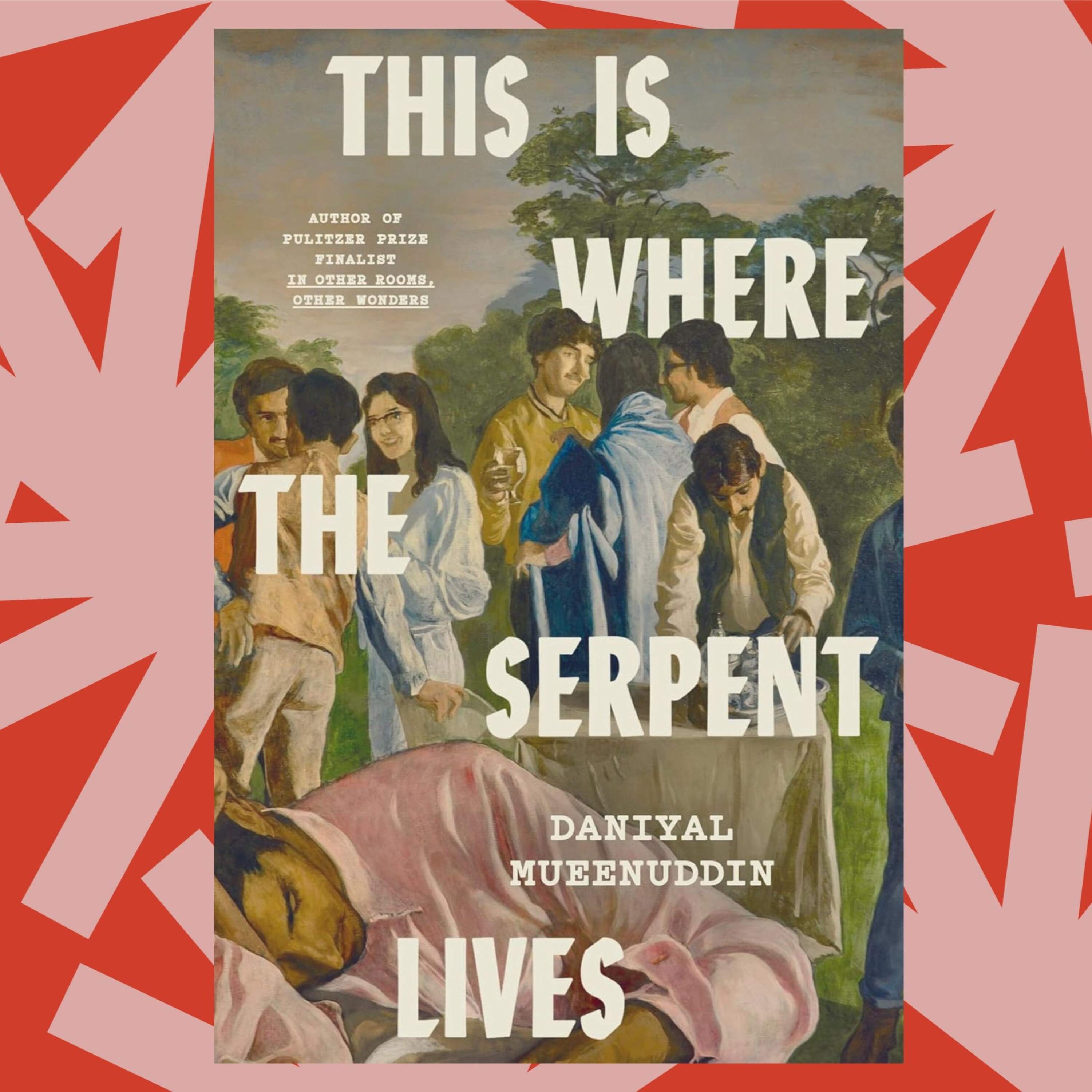
NPR's Book of the Day
'This is Where the Serpent Lives' is a sprawling debut novel set in modern Pakistan
00:08:54
Loading summary
Transcript32 lines
- [00:02]
Andrew Limbong
Hey, it's NPR's Book of the Day. I'm Andrew Limbong. Today's book is one of those big, ambitious literary novels that goes for it. You know the type, the ones that tell a long and epic story spanning generations. A quick scan of the reviews have people name checking Dickens and Chekhov, noting the novel's size and scope. Not bad for a debut, eh? The book is called this Is where the Serpent Lives by Danielle Moonadid. It's set in Pakistan and it's exploring class and family and crime and violence. In this interview with npr, Scott Sim Moonadin talks about how Americans should see it as a distorting mirror to help understand themselves better. And he talks about the novel he scrapped because he couldn't bear what he needed to say. That's ahead.
- [00:46]
NPR Sponsor Announcer
This message comes from Amazon One Medical and Amazon Pharmacy. Having a health issue that requires medication can be stressful. Are the meds going to get refilled on time? Do I need to renew my prescription? Do I need an appointment to get them renewed? And Amazon One Medical has 24. 7 virtual care and Amazon Pharmacy delivers meds to you fast, anxiety free. With Amazon Healthcare just got less painful. This message comes from it feels good to connect to your simpler side, simplifying Your wellness with Cacava's all in One Nutrition Shake feels good too, with 25 grams of protein, 6 grams of fiber, greens and more. No fillers, just the highest quality ingredients. Simplify your nutrition@cachava.com and use code NPR. New customers get $20 off an order of two bags or more now through January 31st. That's K A C H A V A.com code NPR.
- [01:49]
Interviewer
Bayezid has had a tough start in life. Doesn't even know exactly what it was.
- [01:55]
Daniel Moonadin
Bayezid never knew how he came to be a little boy alone in the streets of Rome. Raoul Pindi. He had a memory more of forces than of people. A crowd, a hand, a hand. No more. Yet the bazaars in those early 1950s were not so crowded as that. And Raul Pindi, a town small enough that a lost little boy should be found. That was a bitter day when he accepted years later that there might have been no hand, no desperate parent seeking him in the crowd. He might have been abandoned, not lost. Kareem Khan, the owner of the tea and curry stall where his known history began, could tell him only that he had been sitting in front of the stall on a fine winter day, three or four years old, wearing just the Shalvar Kamees, barefoot and clean holding a new pair of cheap plastic shoes tightly in his arms.
- [02:51]
Interviewer
That's Daniel Munoddin, the acclaimed short story writer, reading from his debut novel, this Is where the Serpent Lives. It's a sprawling novel that winds through families, decades, crimes, corruption and power in modern Pakistan. Daniel Moonaddin's previous collection of short stories, In Other Rooms, Other Wonders, was a finalist for the Pulitzer Prize and the National Book Award. He joins us now from Oslo. Thank you so much for being with us.
- [03:19]
Daniel Moonadin
Thank you for having me.
- [03:20]
Interviewer
What do those shoes in little boy's arms say to Karim, the owner of the tea stall who takes him into his life?
- [03:27]
Daniel Moonadin
Well, I think. I'm not sure what they say to him, but certainly they intrigue him. It's so odd that the boy should have the shoes and that they should be new. So I think it's just a question mark that is put in front of.
- [03:38]
Interviewer
Him and the tea stall becomes his school of life, doesn't it?
- [03:42]
Daniel Moonadin
Yeah, that's right. I mean, throughout the book, there are a number of schools that he passes through, none of them formal, but. Yeah, that's the first one.
- [03:51]
Interviewer
There's a startling scene where Bayezid deliberately, calculatingly plunges a knife into his own leg rather than to lash out at his bullies. What's the effect of that?
- [04:04]
Daniel Moonadin
Well, I think what it shows his buddies is A, that he's capable of violence and B, that he's able to control his capability. The threat was that he was going to stab his opponent. And by stabbing himself, he's proven how brave he is and yet has not gone to the extreme of hurting somebody, which would lead to trouble because he's the weakest member, he's the poor one, they are rich. And if he had hurt them, there would have been severe repercussions. It's a very smart move. The actual person upon whom Bayezid is formed, that's the one story in the book that actually is true from life. He told me that that happened to him when he was young, so I stole it lock, stock and barrel from him.
- [04:44]
Interviewer
Well, that's what novelists do.
- [04:46]
Daniel Moonadin
That's true.
- [04:48]
Interviewer
Tell us about the relationship between Hisham and Shehnaz.
- [04:51]
Daniel Moonadin
Yeah, Hisham and Shehnaz are, you know, they're these wealthy lahoris who, in the beginning, of course, it's romance. And at some point the marriage becomes no longer a romantic attachment, but a partnership. And these two are particularly partnered because they're running their business together. Hisham is this republic face and Shehnaz is sort of the brains I think you would say so. I think this is very common in Pakistan, that often, in fact, the women are the real. The ones who have the real power, but they exercise it through their husbands.
- [05:25]
Interviewer
And Hisham is a landowner. Help us understand what that means in their slice of Pakistan.
- [05:31]
Daniel Moonadin
Pakistan is sort of one of the last bastions of feudalism, although it's now much less now in 2026 than it was at the time when the books begin, certain in the 80s. And basically these are people who have hereditary land holdings. But what's different about being a farmer, as we call it in Pakistan, is that you're not just running a business, you're part of a very large connected community which you head and you have responsibilities which go far beyond simply paying a paycheck. When the people who work for you or who live on your land, when they get married, they come to you, and when they get buried, they come to you. So you are responsible not just for their wages, but for everything about their lives. It's like a family, but like a very dysfunctional family.
- [06:18]
Interviewer
Will you help us touch on the fact that you have a character, Rustam, who returns to Pakistan to run his family farm after he's been to boarding school and college in the us? This is a little autobiographical, isn't it?
- [06:35]
Daniel Moonadin
Quite right, yeah. I think he's the character who probably most resembles me, although I hope I'm not quite as clueless as he is, but, yeah, exactly. This is the one who's most like me. That's exactly what happened to me. After I finished college, I went back to Pakistan. I knew nothing about farming or Pakistan, for that matter. I'd been away for school since I was 13, and so I was thrown into the deep end, just as Rustam is like Rustam, my father, he didn't. Hadn't quite died, but he was very ill and my mother was in America. So, yeah, there is a lot of similarity between our stories.
- [07:06]
Interviewer
I have read that your next novel is set in Wisconsin and New York City.
- [07:10]
Daniel Moonadin
Yeah, that's actually not true. That's gone by the wayside. You know, I wrote that book, actually. I worked that for 10 years. That's why I haven't been published in so many years. My mother died in 2010 under complicated circumstances and I spent 10 years writing a book about her death and about her. She was from Wisconsin and lived in New York. I just could never quite get it home. And finally I put it in a drawer. They say that you put a book in a drawer and it either ripens or rots, so we'll see which way it goes. But I was hiding from the truth. I was hiding from what I needed to say. I couldn't bear to say what I needed to say.
- [07:52]
Interviewer
Forgive me. You couldn't dare to say what you needed to say in the book about your mother?
- [07:56]
Daniel Moonadin
Well, I mean, I might as well say my mother died by suicide, and it was very traumatic for me and I needed to be open and bare and frank about her in ways that I couldn't be. Because of that block of that emotion and that event and that experience. I wrote lots of words. The the book at one point was over 600 pages, and I think I was just sort of churning around and instead of actually getting close to what I was trying to say, I kept going around what I was trying to say. There's a whole deeper level of honesty that's required to write, and I could never be that honest about it. I think.
- [08:34]
Interviewer
Could that one day come out in another one of your novels?
- [08:37]
Daniel Moonadin
I think it will. My next book is going to be about her, but it's a love story. And I think that certainly all of the experience I have of having spent so much time thinking about her and writing about her and writing aspects of her character, I think all of that will go into the the next book, which is set in Pakistan.
- [08:56]
Interviewer
You know so many points in this Is where the Serpent Lives, you're struck by the enormous differences between rich and poor Americans should learn about Pakistan. But I wonder if American readers of this novel should see it as just a reflection of life in Pakistan or look a little closer to home, too.
- [09:16]
Daniel Moonadin
Absolutely. Without a doubt, I'll have failed miserably if readers don't see in this a great deal of themselves and of their communities and of the way that they engage with people and of the politics. Even so, I certainly hope that they will look at it and see it as a sort of a distorting mirror that allows them to understand themselves better.
- [09:36]
Interviewer
Daniel Moonadin, the acclaimed short story writer has written his first novel, this Is where the Serpent Lives. Thank you so much for being with us.
- [09:45]
Daniel Moonadin
Thank you very much. Foreign.
- [09:55]
NPR Sponsor Announcer
This message comes From NPR sponsor 1Password. Anyone else feel like 99% of your emails and texts are password reset codes trusted by millions of users and over 175,000 businesses? 1Password lets you skip the resets and sign in securely with strong, unique passwords that autofill across all your devices. You can safely share logins, store cards and files. And finally, stop using your pet's name as a password. Try it free for two weeks@1Password.com NPR this message comes from NPR sponsor Capella University. Interested in a quality online education. Capella is accredited by the Higher Learning Commission. A different future is closer than you think with Capella University. Learn more at Capella.
- [10:45]
Daniel Moonadin
Eduardo this message comes from Bombas. When you're playing sports, you're focused. Your socks should be too. Bombas engineers socks to fight sweat and cushion impact for every sport. Visit bombus. Com npr and use code npr for 20% off your first purchase.