← NPR's Book of the Day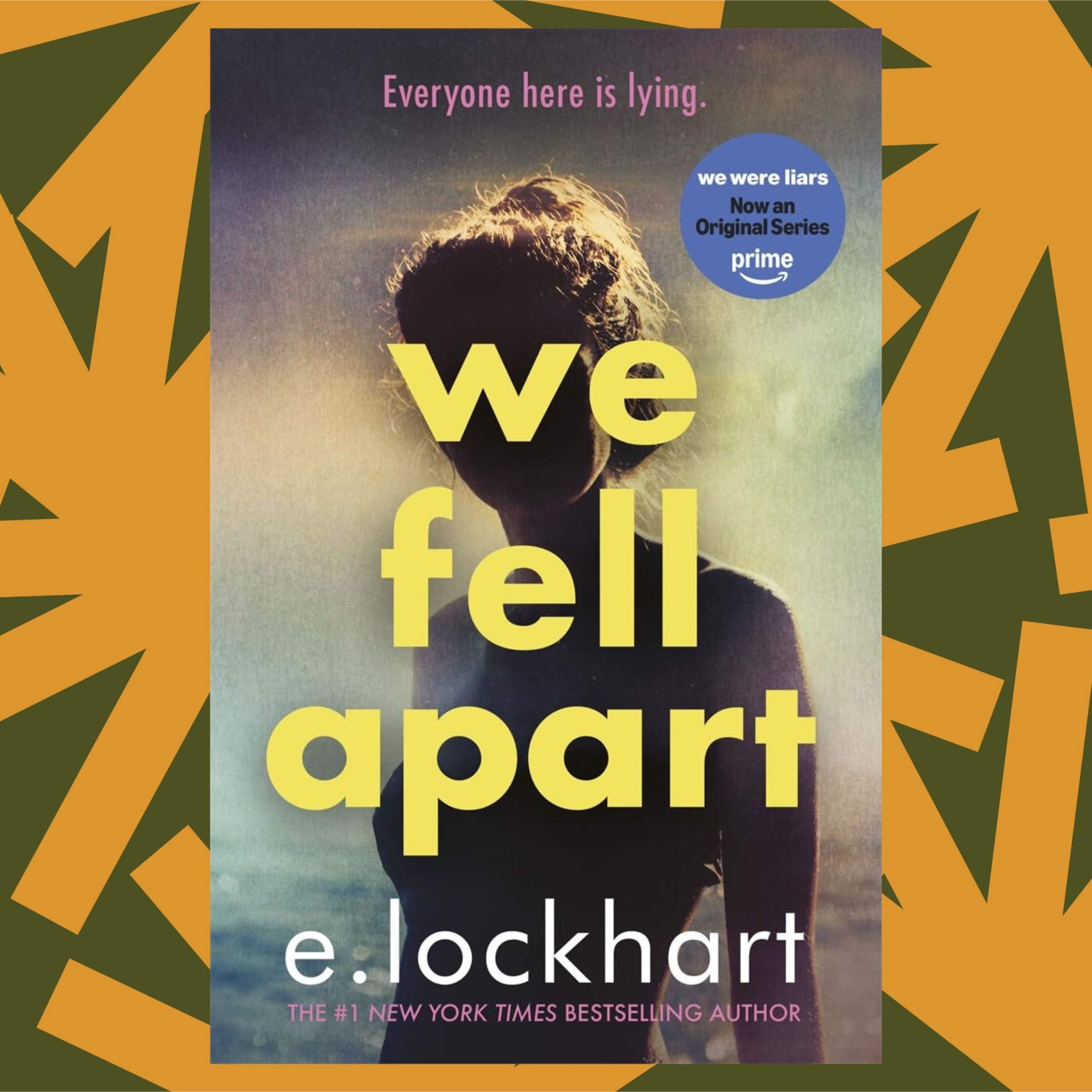
NPR's Book of the Day
'We Were Liars' author returns for more teenage catharsis in 'We Fell Apart'
00:07:49
Loading summary
Transcript23 lines
- [00:02]
Andrew Limbong
Hey, it's NPR's Book of the Day. I'm Andrew Limbong. What is it about teenagers that make them fascinating subjects for novels? How many of the great books that you've read focus on those awkward, scary, exciting years? E. Lockhart is a best selling author and she not only writes about teens, but for teens. Her latest novel is titled We Fell Apart. And in this interview with NPR's Juana Summers, she talks about not just what makes teens good characters but but also what makes them good readers. That's ahead.
- [00:35]
NPR Sponsor Announcer
This message comes from NPR sponsor Capella University. Interested in a quality online education. Capella is accredited by the Higher Learning Commission. A different future is closer than you think with Capella University. Learn more@capella.edu this message comes from Bombas.
- [00:55]
Sponsor Advertisement Voice
Treat your feet right this season with merino wool, cashmere, long staple cotton and more premium materials. Better basics. Visit bombas.com NPR and use code NPR for 20% off your first order.
- [01:10]
Juana Summers
You may know author E. Lockhart from her bestselling novel, We Were Liars. It came out back in 2014 and the young adult novel became a bestseller. And the story about an affluent family who spent every summer on a fictional island off of Martha's Vineyard gripped new audiences through its Amazon prime series adaptation, which got some big emotional reactions from fans fans online.
- [01:39]
Sponsor Advertisement Voice
And this ending was insane.
- [01:43]
Andrew Limbong
Jaw dropped on the floor.
- [01:44]
Sponsor Advertisement Voice
This is devastating.
- [01:47]
Juana Summers
I'm far from oh my God. Oh my, oh my God. I can't breathe it. I have full body chills. Those were videos from TikTok users Tyler Conroy, MA0612AllYlikeStoread and @AddyOnDaddy. Now, Lockhart is back with a new novel. It's called We Fell Apart. It traces the story of a young woman named Matilda. She receives a message from the father.
- [02:16]
E. Lockhart
She'S never met, and she flies cross country and she gets to this kind of incredible property on the island of Martha's Vineyard, and her father is not there. Instead, living in this castle basically is a stepmother she never knew she had, a half brother she never knew she had who's her same age, and two other teenage boys who are living there for various reasons. And she kind of gets sucked into the world of life in this castle, which is kind of an alternative life with a lot of big freedoms and big rules.
- [02:48]
Juana Summers
We Fell Apart is set in the same world as the original We Were Liars story. But Lockhart didn't always intend for that to be the case until she took a trip to Martha's Vineyard and came upon this Massive castle like property.
- [03:01]
E. Lockhart
It was falling apart. It was exquisitely beautiful. And I felt like I had walked into a novel. And then I thought, oh, I've walked into a novel that I need to be writing.
- [03:13]
Juana Summers
I wanted to know what made E. Lockhart want to revisit this world for a third time.
- [03:18]
E. Lockhart
I mean, honestly, if I could say to you the hold that Martha's Vineyard has on my imagination in a simple sentence, I wouldn't have needed to write three novels. You know, it's a beautiful coastline with a long history. Right. There's also just this raging sea that is terrifying and full of sharks. Right? Like the story of Plymouth Rock and the story of Jaws. Right. These are two of our big Massachusetts stories, and they both have a lot of space in kind of the American Mind. So I think I'm interested in that, right? In the, in the danger and in. In the iconography.
- [04:00]
Juana Summers
I wonder, what do you think it is about We Were Liars and the universe that you've constructed that has just resonated with so many people over the last decade?
- [04:10]
E. Lockhart
Well, I don't really think it's the aspirational nature of it, although some people will argue that, right? Some people say, oh, we all want to watch rich people behaving badly. We all want to spend a summer on a fancy private is or on a fancy Martha's Vineyard estate. But I don't think that's what my most passionate readers are coming to. My stories for what they're doing that I can see, you know, anecdotally on TikTok and Instagram and in the comments on my social media is having a big reaction. They either hate this book or this TV show so much, they want to throw it across the room and tell everybody not to read it, or they are breaking down in tears and saying, thank you so much, and also, will you pay for my therapy? You know, we can get so much entertainment from our phones and from those social media channels, but what we don't get is a big emotional investment, right? We can get laughter, we can get, you know, dopamine hits, can go on travel adventures, but we need a book or a longer form drama to give us an emotional catharsis. And people have a big reaction to these books, right? It's not always positive, but they have a big reaction.
- [05:31]
Juana Summers
These books all also seem to have these sort of big questions about morality at the center of them. What is it about grappling with that that continues to entice you? I'm thinking of this interview that I read with you from, I think, a couple years ago where you talked about how you, your books as well as the show, ask this question of, like, what do you do when you're ashamed of yourself? What do you do when you've done something horrible and whether a person can find forgiveness for themselves?
- [06:00]
E. Lockhart
Well, I am on ongoing interested in that question, right? When you've done something you're ashamed of, do you sit under the rug? Do you, you know, get into that rug and pull everything out and look at it? Can you accept yourself? Can you tell yourself that you're going to change? You know, can you. Can you find a place of forgiveness? Or do you carry that weight with you all the time? I mean, this is a fundamental question about just being a person, right? I mean, that's what. What fiction is about, Whether it's my fiction or somebody else's fiction, it's about this problem of being a human being and figuring out a moral compass or a way to be in the world.
- [06:41]
Juana Summers
And I think what really strikes me about that is that across your books, we're talking about young people who are on that journey who still have so much of their lives to live, who are trying to figure out all of those big, heady questions with not so many years of experience under their belts.
- [06:57]
E. Lockhart
Well, I think one of the reasons I continue, you know, in middle age to be interested in writing about teenagers and for teenagers is that teenagers are in really important and kind of exciting transition in life, right? They are separating from the institution that is their family of origin, that is their schooling, that is their church, that is their sports team, that is, you know, I could name any, you know, a whole lot of other things. Their scout troop, right? There are these institutions that we participate in as young people, and when we're very young, they're just the water that we're swimming in. And as we become teenagers, we begin to question, rebel, renavigate our relationship to those institutions as we prepare to leave the nest or, you know, settle down in there. But we have to navigate that because we can suddenly see those institutions that shape us, and we're going to emerge into adulthood, you know, choosing our own identity and not just swimming in the water that we've always been in.
- [08:09]
Juana Summers
We've been speaking with Elon. Her new book, we Fell Apart, is out now. Thank you so much.
- [08:24]
Sponsor Advertisement Voice
Support for this podcast. And the following message come from Strawberry Me. Be honest. Are you happy with your job? Are you stuck in a job you've outgrown or never wanted in the first place? Are your reasons for staying really just excuses for not leaving. Let a career coach from Strawberry Me help you get unstuck, discover the benefits of having a dedicated career coach in your Corner and get 50% off your first coaching session at Strawberry Me.
- [08:52]
NPR Sponsor Announcer
NPR this message comes from Mint Mobile. At Mint Mobile, their favorite word is no. No contracts, no monthly bills, no hidden fees. Plans start at $15. Make the switch at mintmobile.com switch that's mintmobile.com switch upfront payment of $45 for 3 month 5GB plan required, equivalent to $15 a month new customer offer for first 3 months only, then full price plan options available, taxes and fees extra. See Mint Mobile for details.
- [09:23]
Sponsor Advertisement Voice
This message comes from NPR sponsor Shopify. No idea where to sell? Shopify puts you in control of every sales channel. It is the commerce platform revolutionizing millions of businesses worldwide. Whether you're a garage entreprene entrepreneur or IPO ready, Shopify is the only tool you need to start, run and grow your business without the struggle. Once you've reached your audience, Shopify has the Internet's best converting checkout to help you turn them from browsers to buyers. Go to Shopify.com NPR to take your business to the next level Today.