← NPR's Book of the Day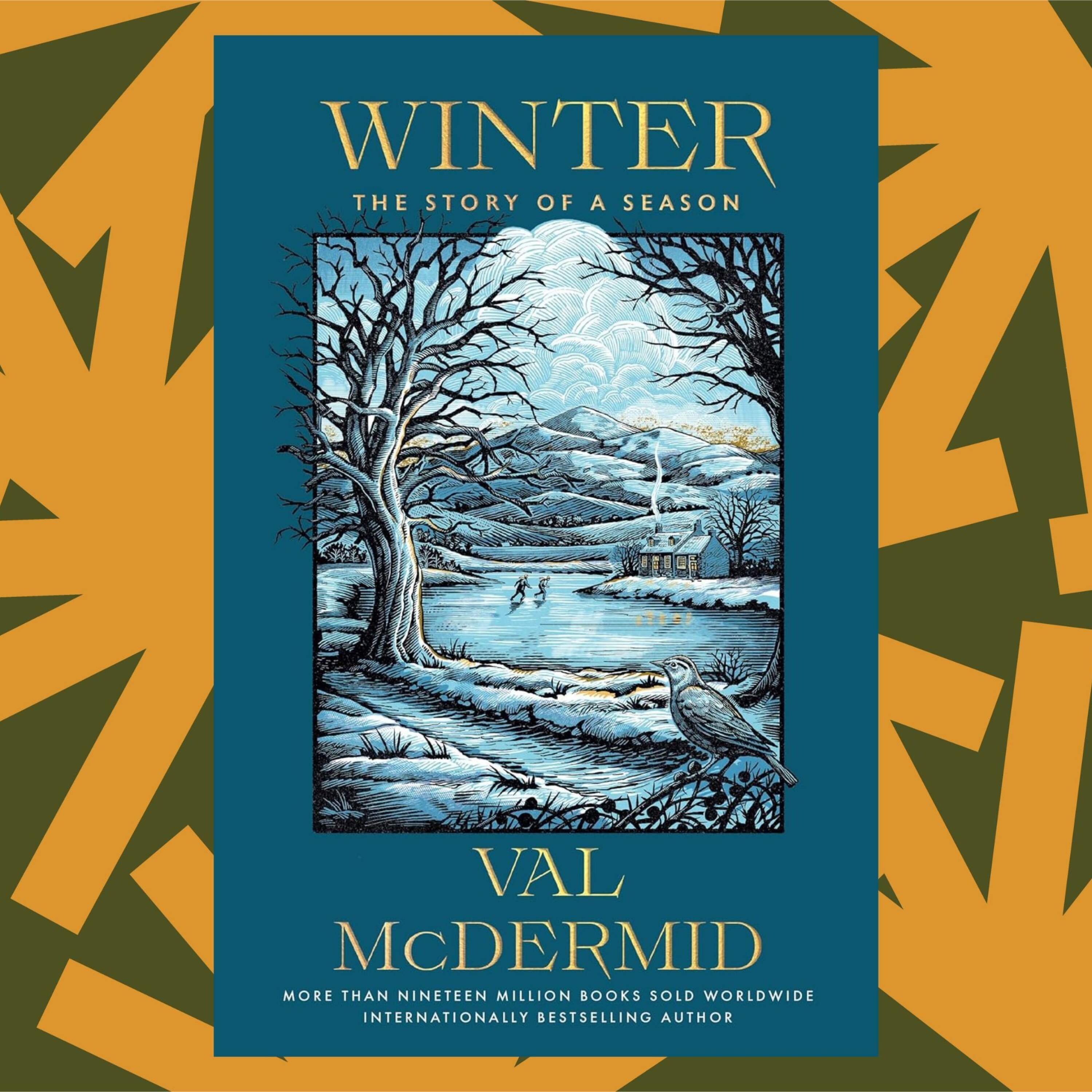
NPR's Book of the Day
With her new book, Scottish author Val McDermid wants to “charm you into winter”
00:07:57
Loading summary
Transcript31 lines
- [00:02]
A
Hey, it's NPR's Book of the Day. I'm Andrew Limbong. We are in the complete pits of winter. As early as four in the afternoon, I can already look through the window of my office and see the sun start to go down. There is, I suppose, some romance to the season, some beauty. Val McDermott's book the Story of a Season is all about finding that beauty to the season. In this interview with NPR's Daniel Estrin, she goes into some of her favorite winter traditions. And not to spoil it, but she does break out into song for a bit. That's ahead.
- [00:36]
B
This message comes from Wayfair. The new year is here. Wayfair's huge selection of home decor items makes it easy to elevate your space and find exactly what's right for you. From bedding and mattresses to storage solutions for every room in the house, Wayfair is your one stop shop. Get organized, refreshed and back on track this new year. For way less, head to Wayfair.com to shop. All things home. That's W A Y f a I r.com Wayfair Every style, every home the.
- [01:10]
C
Scottish author Val McDermid is best known for her crime writing, a world of brutal murders and dark alleyways. But contrast that with her latest book, where, among other things, she meditates on the nature of soup. I believe the world is divided in two, she writes, those who think soup is a meal and those who are wrong. Winter the Story of a Season is her ode to memories of winter's past and a heartfelt appreciation of all the season has to offer.
- [01:41]
D
I like the contrast with being out in the outside, where it's crisp and cold and you come indoors and it's all warm and lovely and you can sit down with a good book and a good fire, a wee glass of whisky. What's not to like about that?
- [01:53]
C
Well, I must confess, I Emma Winter Grinch, did you write this book for people like me?
- [01:59]
D
Well, I'm kind of hoping it charms you into winter as well. One of the great things I think about winter is it's full of interesting festivals. It's a way that everybody has something to celebrate, can do it during winter.
- [02:11]
C
You could have called this book writing because it feels like also a guide to writing.
- [02:17]
D
The room where I do most of my work has two windows, both with vistas of trees on one side, mature beeches and silver birches. In winter, the first frost produced the crunching underfoot of the pericarps left behind after the acorns have been plundered by squirrels, a percussive counterpoint to the susteration of the fallen leaves. Seen from my desk, the branches and twigs form a kind of roadmap. Tracing their paths is the perfect mindless activity when I need to let the wheels turn so the next piece of prose can form in my head. Winter makes it easy to follow strange tracks in my mind.
- [02:52]
C
You're a crime writer. Do those long winter nights get you in the mood for murder?
- [02:57]
D
I think they do. You know, just even sitting at my desk, looking out the window, there's not much movement because a nature reserve across the road from me. And there's no lights in the nature reserve. So sometimes, you know, there are shadowy figures walking through the nature reserve. And sometimes they have dogs, and sometimes they don't have dogs. And they make me wonder, if you don't have a dog, what are you doing wandering about a cold, lonely nature reserve in the middle of the night? When you know a place quite well, you see something peculiar. One day, think, what is that pile of leaves doing there? That wasn't here the last time I came through? Should I investigate? No, I think I'll just go home now.
- [03:31]
C
The imagination runs wild.
- [03:33]
D
Well, traditionally in the detective novel, of course, it's almost someone out walking the dog who comes across the body. One of the reasons why I don't have a dog.
- [03:42]
C
This book is a celebration of winter. But winter isn't all coziness and creative inspiration for everyone, is it?
- [03:51]
D
No, it's not. And I'm very aware of that. That was brought to my attention, I suppose, when I was an undergraduate at Oxford. One of my friends mentioned after dinner one night, when we were all sitting around having cups of coffee, she'd heard about a charity called the Cyrenians who had a barge on the Oxford Canal where homeless people could go for a hot drink or some soup and just some shelter. And it seemed to me to strike a note with some of the folk songs that I learned in my earlier youth, songs like Streets of London and Alan Hull's Winter Song. And I went round and volunteered, talking to homeless people, making them cups of tea, listening to their stories, and realizing that not everybody had, if you like, a bed to sleep in or a place to go where they could call home. It makes me angry and it makes me sad that we're so busy enjoying our lives that we don't think about the people who are condemned to living on the streets.
- [04:46]
C
Yeah, and you write about that beautifully in the book.
- [04:48]
D
Thank you.
- [04:50]
C
You do write a Lot about Scottish winter traditions in this book.
- [04:54]
D
Yeah.
- [04:55]
C
What's your favorite?
- [04:56]
D
Oh, that's a difficult one. I think my favorite is probably Hogmanay. For me, it's a mixture of memory, I suppose, a sort of sentimental memory of New Year's as I was growing up, where the family would come together and every member of the family who was in the room would have a party piece, so a song or a poem or some story to tell. And now we spent a lot of our time in a wee village on the East Nuke of Fife, which is about an hour's drive from Edinburgh. And by midnight on New Year's, we all go down to the harbour and we have fireworks at the harbour, and everybody hugs and kisses, wishes each other happy New Year. It's very sociable. Sometimes somebody has a wee party afterwards, or sometimes a few of us go back to one house or another house. It's a time for friendship and companionship and a reminder of what pulls communities together, I suppose.
- [05:42]
C
We've just celebrated New Year's. A lot of us sang Auld Lang Syne by Robert Burns, widely regarded as Scotland's national bard, and his birthday is celebrated later this month. How will you be marking that occasion?
- [05:58]
D
Well, I'll be a burn supper.
- [06:00]
C
A burn supper?
- [06:01]
D
Yeah, a burn supper, which consists usually of a bowl of soup, cock, a leaky soup, and then goes on to the main course, which is haggis neeps, that's turnips and mashed potatoes torties. And this is served up usually with a whiskey gravy. And you have your lovely, lovely, lovely burn supper meal, and then commences the main part of the evening, which is the speeches and the songs. There are certain set speeches, the main one of which is the toast to the immortal memory of Robbie Burns. These speeches are interspersed with songs and recitations of Burns poems and songs. Invariably, someone does Tam O Shantar, which is a wonderful, wonderful reading if it's done well. There's a climactic moment in the poem where Tam o Shantar calls out, well done, cutty sarg, and nobody who isn't Scottish has the faintest idea what that means. Yeah?
- [06:57]
C
What does it mean?
- [06:58]
D
It means, well done, lassie in the short petticoat.
- [07:04]
C
Care to treat us to. To a Robert Burns poem you particularly love?
- [07:09]
D
Oh, well, if I'm singing that Burns supper, I'll sing Green grow the rashes O which is there's not but care on every hand and every hour that passes O what signifies the life O man and twerena for the lasses. O green grow the rushes, O green grow the rushes O the sweetest stars Ad I spent, were spent among the lasses O come the songs that the Bundles Club guys who've been doing this for years because they love it, some of the songs they sing will be less familiar to people. There's Cold Kale and Aberdeen and Castocks in Stombogy. It's like listening to things in a foreign language. I suppose for a lot of people that's true. But the rhythms are good and the tunes are good. It's hard not to be drawn into it.
- [08:16]
C
Val McDermott, author of the Story of a Season it's been a pleasure speaking with you.
- [08:21]
D
Thank you.
- [08:31]
B
This message comes From NPR sponsor 1Password. Anyone else feel like 99% of your emails and texts are password reset codes trusted by millions of users and over 175,000 businesses? 1Password lets you skip the resets and sign in securely. With strong, unique passwords that autofill across all your devices, you can safely share logins, store cards and files. And finally, stop using your pet's name as a password. Try it free for two weeks at 1Password.com NPR this message comes from NPR sponsor Capella University. Interested in a quality online education? Capella is accredited by the Higher Learning Commission. A different future is closer than you think with Capella University. Learn more at capella.edu. this message comes from Greenlight. Parents say financial literacy is the hardest life skill to teach. Greenlight's debit card and money app for families makes it easy for kids to learn to earn, save and spend wisely. Start today risk free@greenlight.com NPR.