Podcast
Nuclear Investing Podcast
Hosted by Brennan Moore · EN
The Nuclear Investing Podcast features thoughtful, in-depth conversations about one of the most important pieces of the global energy mix: nuclear power.
Through interviews with leading industry leaders, investors, and policymakers, the show explores how nuclear energy is becoming central to the clean energy transition — and how investors are gearing up to support it.
Each episode gets to the root of how companies plan to build, finance, and deploy next-generation nuclear projects — and how they aim to create lasting value for investors and society.
The goal: to advance awareness and informed participation in the future of clean, reliable energy.
10episodes
Episodes
Newest firstAll episodes
#19: Deployable Energy | Post-Criticality Follow-Up with Bobby Gallagher
6d ago00:29:22Tap to summarizeIn this follow-up episode of the Nuclear Investing Podcast, host Brennan Moore catches up with Bobby Gallagher, co-founder and CEO of Deployable Energy, after the company reached criticality on June 30th — becoming one of only four companies to meet the July 4th deadline set by the executive orders. Bobby walks through what it took to get there, the challenges along the way, and Deployable's next steps as they expand into data centers, maritime, and critical infrastructure.For the full backstory on Deployable's 94-day delivery to Idaho National Lab and the lead-up to this milestone, check out Episode 18.
Transcribe →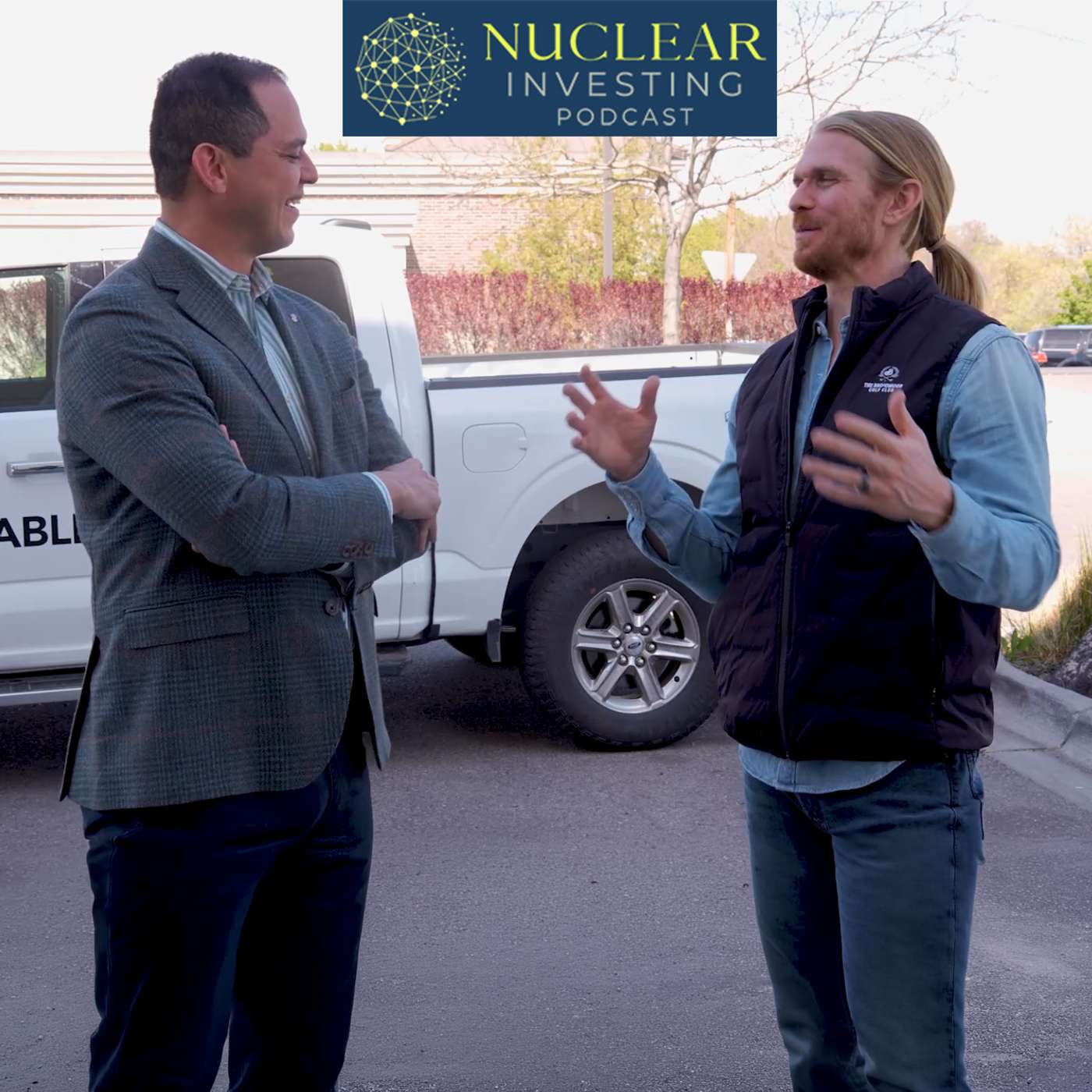
#18: Deployable Energy at Idaho National Lab | Inside the Sprint to Criticality with Bobby Gallagher
2w ago00:25:34Tap to summarizeIn this episode of the Nuclear Investing Podcast, host Brennan Moore interviews Bobby Gallagher, co-founder and CEO of Deployable Energy, about their innovative 1 MW, air-cooled mass-manufactured micro-reactor. Gallagher details how the company delivered a test reactor to Idaho National Lab in just 94 days through a strategic partnership with INL, and was recently selected for the Nuclear Energy Launch Pad program. Focusing on a product-over-project approach based in Houston, Deployable aims to build one thousand units annually. The interview covers high-impact applications in maritime transport, remote island grids like Fiji, and industrial sectors, alongside the streamlined six-month NRC Part 57 licensing pathway.
Transcribe →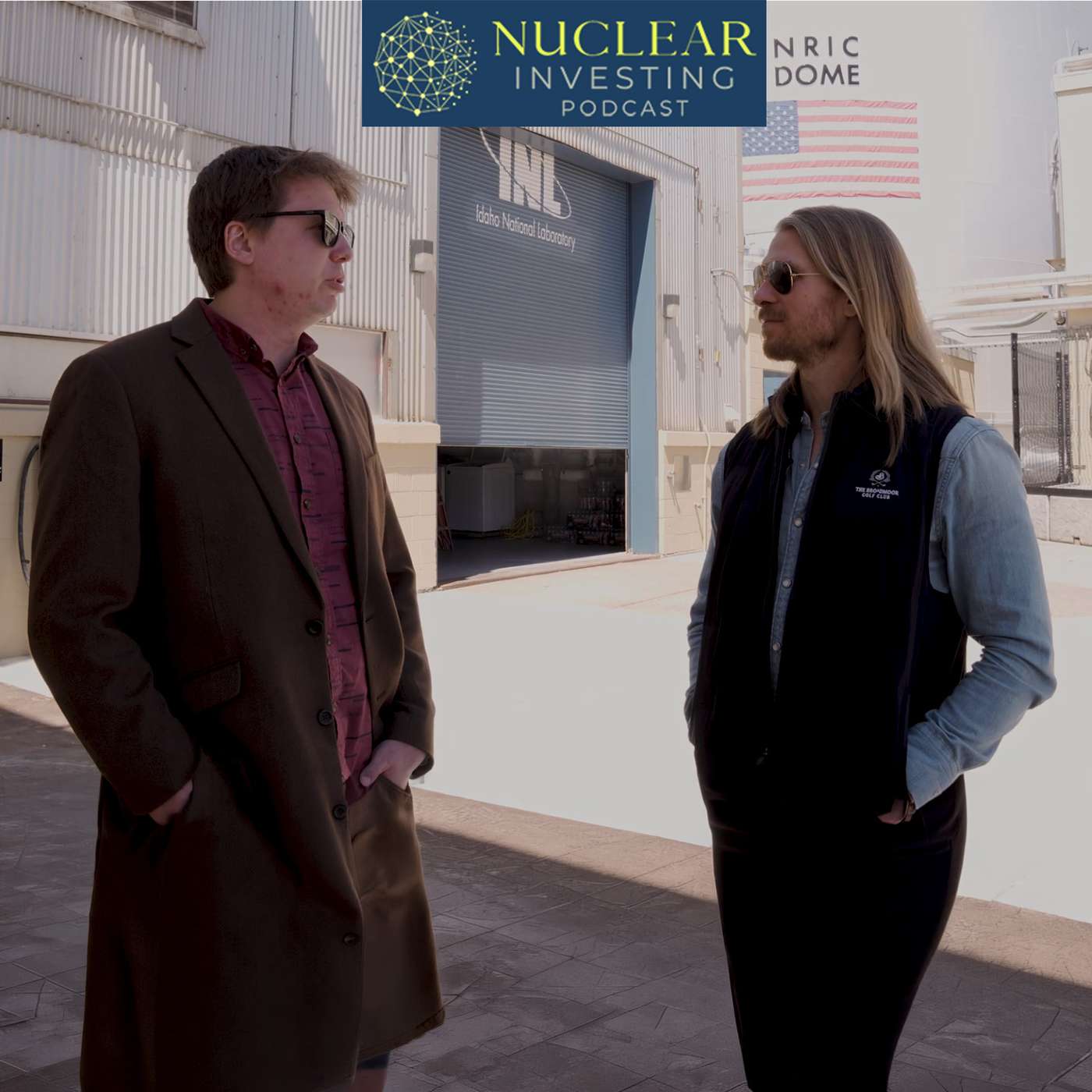
#17: Idaho National Lab | Exploring the DOME with Sam Reiss
4w ago00:12:25Tap to summarizeHost Brennan Moore interviews Sam Reiss of the National Reactor Innovation Center at Idaho National Lab regarding "the DOME" testing facility. Reiss outlines how NRIC's full cost-recovery model structurally de-risks advanced nuclear microreactors operationally, financially, and chronologically for commercial developers. Highlighting Radiant as the flagship facility's first upcoming developer, the discussion details the rigorous, bounded 20-megawatt safety criteria and supporting infrastructure ecosystem. Finally, a tour of an analog control room contrasts early passive safety stress-testing with modern, error-reducing digital interfaces.
Transcribe →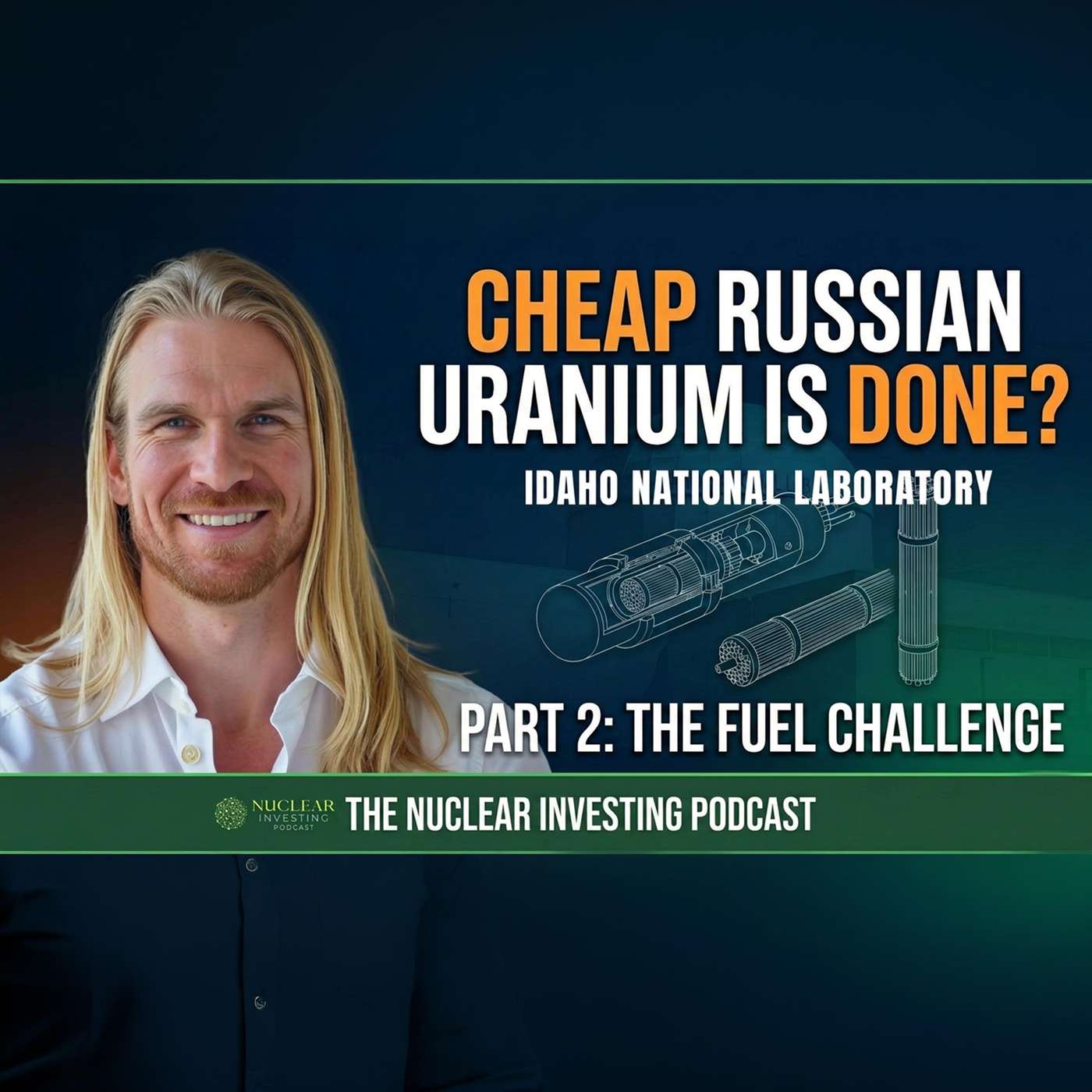
#16: Idaho National Lab | Inside the DOE Advanced Fuels Campaign with Dan Wachs
Jun 1801:05:00Tap to summarizeHost Brennan Moore sits down with Dan Wachs, National Technical Director for the Advanced Fuels Campaign at Idaho National Lab, to explore the changing landscape of nuclear energy. Wachs details the industry's evolution from the "dark ages" of the 1990s to today's commercial renaissance driven by high-quality power demands. The conversation highlights critical supply chain bottlenecks in uranium conversion and enrichment, the development of robust TRISO and metallic fuels, and the game-changing economic potential of fuel reprocessing. Ultimately, Wachs underscores that scaling advanced reactors requires stabilizing domestic fuel cycles to secure long-term energy independence.
Transcribe →
#15 - Idaho National Lab: The Silicon Valley of Nuclear | Accelerating Advanced Reactor Tech
Jun 400:51:12Tap to summarizeJosh Gillespie, COO of the National Reactor Innovation Center (NRIC), discusses the pivotal role of Idaho National Laboratory (INL) in launching the next era of commercial nuclear energy. Transitioning from a 20-year career in Navy nuclear propulsion, Gillespie explains how NRIC bridges the gap between government resources and private startups through programs like Launchpad. By repurposing historic infrastructure like the EBR-II dome as a modern testbed, the lab provides the essential land, data, and safety expertise required to accelerate advanced reactor commercialization and secure domestic energy independence.
Transcribe →#14: Jake Jurewicz of Blue Energy | Prefab Nuclear and the Path to Project Finance
May 1400:46:22Tap to summarizeWhat if the key to scaling nuclear isn't a new reactor design — it's rethinking how you build them? Jake Jurewicz, co-founder and CEO of Blue Energy, joins Brennan Moore and Andrew Meehan to break down how prefabricating nuclear plants in shipyards — borrowing from the LNG and offshore oil and gas playbook — could cut construction timelines in half, eliminate the traveling circus problem, and finally make new nuclear projects financeable with private capital.
Transcribe →#13: Nick Smith of Raven-Flint | Solving the Uranium Conversion Crunch
Apr 3001:08:29Tap to summarizeNuclear's future hinges on solving hidden bottlenecks like uranium conversion — a critical but often overlooked step in the fuel cycle. Nick Smith, founder of Raven-Flint and former Director at Idaho National Lab, brings deep nuclear engineering expertise to modernizing this step and helping advanced reactors scale faster and more safely. In this episode, he digs into the complexities of advancing nuclear technology, the chemistry behind efficient conversion, and how Raven-Flint is working to resolve a supply chain vulnerability with implications for both national security and the future of nuclear energy.
Transcribe →#12: Nuclear Roundtable | March 2026 with Andrew Meehan and Canon Bryan
Apr 1601:26:44Tap to summarizeJoin host Brennan Moore, Andrew Meehan, and Canon Bryan as they unpack X-Energy's upcoming IPO, TerraPower's NRC construction permit, the new regulatory Path 53 that could expand nuclear approval in the near future, and much more. This month's roundtable has the latest news in the world of nuclear energy, including news from CERAWeek, their thoughts on cost-effective energy, and how the war in Iran proves the resilience of nuclear energy infrastructure.
Transcribe →#11: Financing New Nuclear: Inside the DevCo Model with NEI's Benton Arnett
Mar 2601:05:04Tap to summarizeBenton Arnett, Senior Director of Markets and Policy at the Nuclear Energy Institute (NEI), joins Brennan Moore to break down how new nuclear projects are actually getting financed today. We cover key takeaways from NEI’s Nuclear Financing Summit, why traditional nuclear players still have an edge in market perception, and how the DevCo model is emerging as a practical path to getting projects built. Benton also explains the different “currencies” in nuclear financing today, from government support to corporate PPAs, and why big tech wants exposure to nuclear without owning the assets outright. If you’re trying to understand what’s real vs. theoretical in nuclear deployment, this is a useful primer.
Transcribe →#10: Nuclear Roundtable | February 2026 with Andrew Meehan and Mark Hinaman
Mar 1201:22:02Tap to summarizeWhat happens when the hype around SMRs meets the harsh realities of public markets? Join Andrew Meehan and Mark Hinaman as we unpack why many SMR stocks have struggled recently despite soaring interest and explore where true investment opportunities lie between private innovation and uranium’s rising momentum. This month's roundtable has the latest news in the world of nuclear energy, including a look at prediction markets on which company achieves criticality first, whether it's better to be a public or private company in the industry right now, a conversation on uranium markets, and much more.
Transcribe →