Podcast
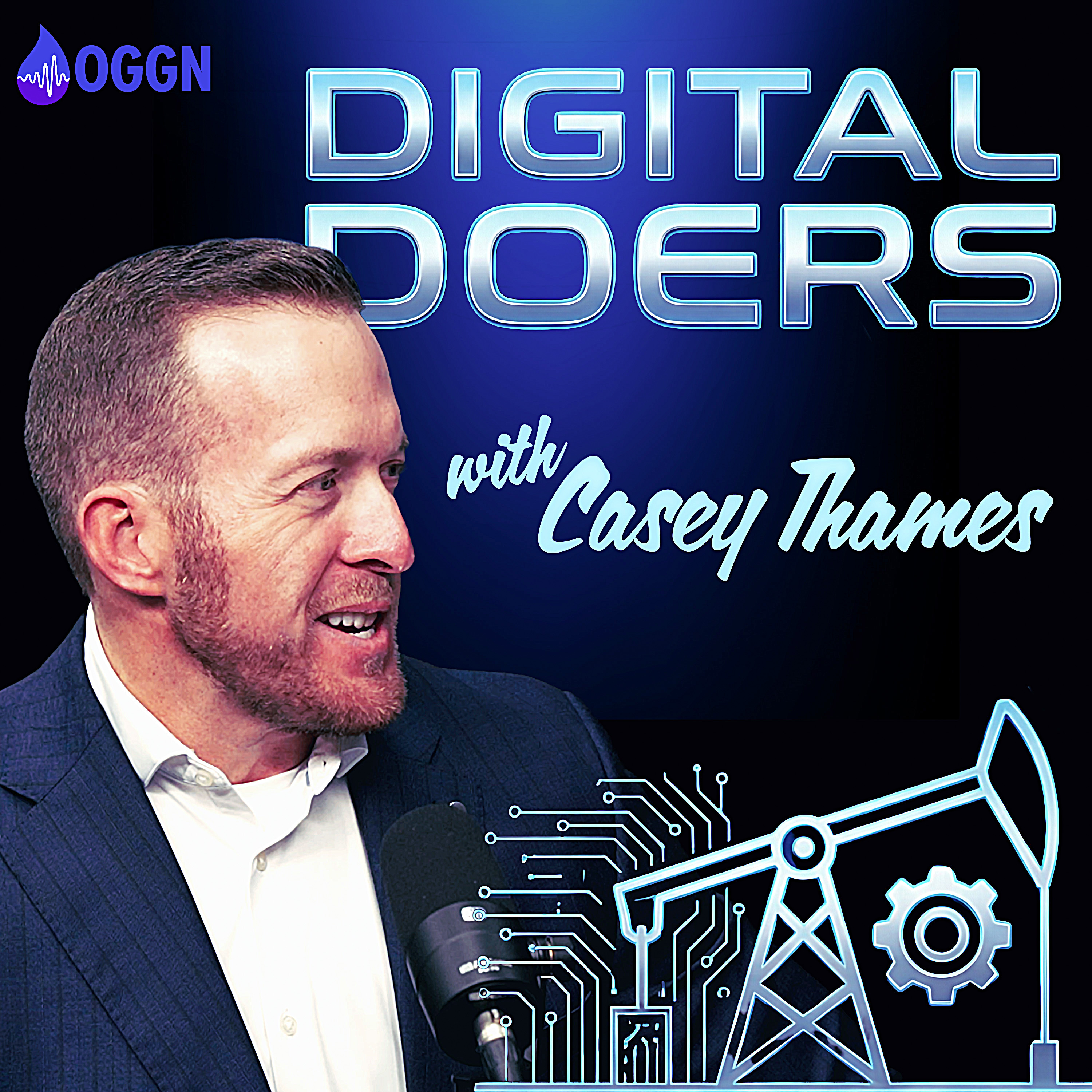
Digital Doers
Hosted by OGGN · EN
Real stories about the industry leaders who are getting digital done.
22episodes
Episodes
Newest firstAll episodes
The Hidden Innovators Behind Industrial Technology | Ep 128
Jul 800:41:44Tap to summarizeSponsored by Ericsson – Driving oil and gas forward with seamless connectivity. This episode of Digital Doers features Casey Thames sitting down with David Smith, Vice President of Innovation and Technology at Black Pearl Technology, for a conversation about a side of industrial innovation that most people never see. While many companies receive credit for the products and technologies they bring to market, there is often an engineering team working behind the scenes turning ideas into reality. The discussion begins with Black Pearl’s unique role in the industry as a product development and technology partner for energy and industrial companies. David explains how organizations frequently come to Black Pearl with a challenge, an idea, or a concept, but lack the resources, expertise, or time needed to transform it into a field-ready solution. Rather than focusing on a single product or technology, Casey and David explore the broader process of innovation itself. From embedded systems and industrial electronics to remote monitoring, automation, and edge computing, the conversation highlights how practical engineering helps bridge the gap between concept and execution. The discussion also touches on the challenges of introducing new technologies into industries where reliability, simplicity, and operational performance matter more than buzzwords. The episode examines how industrial companies are using connected devices and real-time data to reduce manual field work, improve visibility into operations, and make faster decisions. David shares examples of how technology can be adapted to solve challenges across multiple industries, while also discussing the importance of designing solutions that are flexible enough to evolve alongside customer needs. As with many conversations on Digital Doers, the discussion extends beyond technology itself and focuses on the people behind innovation. David shares lessons learned from decades of product development, the value of customer collaboration, and Black Pearl’s commitment to developing the next generation of engineers through hands-on mentorship and real-world project experience. Whether it’s creating a new product, modernizing existing operations, or solving problems that don’t have an off-the-shelf answer, this episode offers a look behind the curtain at the engineering teams helping drive industrial innovation forward. Host Casey ThamesHost, Digital Doers Guest David SmithVice President of Innovation & Technology, Black Pearl Technology Website: https://www.blackpearltechnology.com Brought to you on OGGN, the largest and most listened-to podcast network for the oil and energy industry. Sign up for OGGN newsletters here.Visit the OGGN Merch store here.Curious about podcast advertising? Learn more here. More from OGGN …PodcastsLinkedIn GroupLinkedIn Company PageGet notified about industry events
Transcribe →Connecting the World’s Largest Energy Projects | Ep 127
Jul 100:46:18Tap to summarizeSponsored by Ericsson – Driving oil and gas forward with seamless connectivity. This episode of Digital Doers features Casey Thames sitting down with Sameer Shah, Lead Telecommunication Engineer at Bechtel, for a conversation about the critical infrastructure that powers modern energy facilities but often goes unnoticed: telecommunications. Drawing on nearly two decades of experience supporting LNG, petrochemical, refining, and industrial projects around the world, Sameer shares how communications systems have evolved from isolated, analog networks into the digital backbone of today’s connected operations. The discussion explores how improved connectivity has transformed the way operators, technicians, and engineers access information, make decisions, and safely manage increasingly complex facilities. Rather than focusing solely on technology, Casey and Sameer examine the real-world impact these advancements have had on the workforce. From replacing clipboards and paper documentation with connected mobile devices to enabling real-time access to engineering drawings, data, and operational information from anywhere in a facility, the conversation highlights how connectivity has fundamentally changed the way work gets done. The episode also explores the challenges of delivering telecommunications infrastructure across multi-billion-dollar energy projects. Sameer shares lessons learned from working on some of the world’s largest LNG and petrochemical developments, discussing the importance of standardization, interface management, and collaboration across engineering disciplines to successfully execute projects at scale. As the conversation looks toward the future, Casey and Sameer discuss emerging technologies such as private LTE, 5G, fiber networks, and low-earth-orbit satellite communications, and how these tools could further improve reliability, reduce installation complexity, and expand connectivity across industrial environments. As with many conversations on Digital Doers, the discussion extends beyond technology itself and focuses on the people using it. Whether improving safety, enabling better decisions, or helping teams operate more effectively, the episode explores how connectivity has become one of the foundational elements of modern energy infrastructure. Host Casey ThamesHost, Digital Doers Guest Sameer ShahLead Telecommunication Engineer, Bechtel Website: https://www.bechtel.com Brought to you on OGGN, the largest and most listened-to podcast network for the oil and energy industry. Sign up for OGGN newsletters here.Visit the OGGN Merch store here.Curious about podcast advertising? Learn more here. More from OGGN …PodcastsLinkedIn GroupLinkedIn Company PageGet notified about industry events
Transcribe →Closing the Engineering Gap: Helping Small Companies Innovate at Speed | Ep 126
Jun 1900:30:54Tap to summarizeSponsored by Ericsson – Driving oil and gas forward with seamless connectivity. This episode of Digital Doers features Casey Thames sitting down with Aaron Ladwig, Founder and Principal Engineer at Velox, for a conversation about one of the less-discussed challenges facing the energy industry: not every company has the engineering resources needed to turn good ideas into practical solutions. The discussion begins with the evolution of Velox, which originally set out to address supply chain inefficiencies before discovering that many operators and service companies were struggling with a different problem altogether. As organizations grow, engineering often becomes a bottleneck, leaving product ideas, process improvements, and operational challenges waiting for the time and expertise needed to move them forward. Rather than focusing solely on engineering design, Casey and Aaron explore what happens after the drawings are complete. From prototyping and manufacturing to automation and field implementation, the conversation centers on closing the gap between concept and execution, an idea that aligns with many of the themes explored throughout Digital Doers. The episode also examines why smaller companies often innovate faster than larger organizations, how integrated engineering and manufacturing can shorten development cycles, and why engineers who understand field operations often produce more practical solutions. Aaron shares stories from customer projects, including the development of a new well-site power generation concept that demonstrates how unconventional ideas can move quickly from concept to field testing. As with many conversations on Digital Doers, the discussion extends beyond technology itself and focuses on execution, adaptability, and solving real operational problems. Whether it’s improving a process, developing a new product, or helping companies overcome limited engineering resources, the episode highlights the value of bringing ideas across the finish line instead of leaving them on the drawing board. Host Casey ThamesHost, Digital Doers Guest Aaron LadwigFounder & Principal Engineer, Velox Website: https://www.veloxmfg.com Brought to you on OGGN, the largest and most listened-to podcast network for the oil and energy industry. Sign up for OGGN newsletters here.Visit the OGGN Merch store here.Curious about podcast advertising? Learn more here. More from OGGN …PodcastsLinkedIn GroupLinkedIn Company PageGet notified about industry events
Transcribe →Turning Digital Strategy into Operational Performance | Ep 125
Jun 1000:42:46Tap to summarizeSponsored by Ericsson – Driving oil and gas forward with seamless connectivity. This conversation features Casey Thames sitting down with Swapnil Bhadauria and Ben Williams of EY to discuss why digital transformation remains one of the most talked-about initiatives in oil and gas, yet many organizations still struggle to move beyond pilots, dashboards, and disconnected technology investments.Drawing on experience across upstream, midstream, downstream, and chemical operations, Swapnil and Ben share practical perspectives on what it takes to translate digital strategy into measurable operational results. While artificial intelligence continues to dominate industry discussions, the conversation explores why success often depends less on the technology itself and more on understanding operational workflows, improving data quality, and creating alignment between people, processes, and systems.The discussion examines how operators are using AI to improve decision-making, accelerate analysis, and unlock greater value from existing data. From maintenance and reliability programs to production optimization and capital projects, the guests explain where AI is creating tangible benefits today and where organizations are still working through challenges related to trust, adoption, governance, and execution.Casey brings a field operations perspective to the conversation, sharing examples from pipeline and gas plant environments where technology initiatives frequently encounter real-world obstacles. Together, the group explores the importance of usability, frontline engagement, organizational buy-in, and connecting insights to actions that operators can actually execute.The episode also dives into the future of human and AI collaboration, discussing confidence levels, risk management, decision orchestration, and the evolving role of operations leaders in driving transformation efforts. Rather than replacing people, the discussion highlights how AI and digital technologies can help organizations focus resources on higher-value work while improving safety, productivity, and operational performance.Ultimately, the conversation reinforces a simple principle: digital transformation only creates value when it becomes part of how operations actually run.HostCasey ThamesGuestsSwapnil Bhadauria, Digital Operations Leader, EYBen Williams, Global Industrials & Energy Consulting Leader, EYLearn MoreEY Energy & Resources Consultinghttps://www.ey.com/en_us/energy-resources Brought to you on OGGN, the largest and most listened-to podcast network for the oil and energy industry. Sign up for OGGN newsletters here.Visit the OGGN Merch store here.Curious about podcast advertising? Learn more here. More from OGGN …PodcastsLinkedIn GroupLinkedIn Company PageGet notified about industry events
Transcribe →Turning Time Data Into Operational Intelligence with the CEO of Journyx, Curt Finch | Ep 124
May 1900:45:46Tap to summarizeSponsored by Ericsson – Driving oil and gas forward with seamless connectivity. This episode of Digital Doers features Casey Thames sitting down with Curt Finch, founder and CEO of Journyx, to discuss how workforce and project time data can evolve from a simple payroll function into a strategic operational tool. The conversation explores how Journyx originated from Curt’s early experience tracking software development work for IBM, where detailed labor and project tracking revealed patterns around profitability, efficiency, and resource allocation long before modern AI tools existed. That experience became the foundation for building a system focused on operational intelligence rather than just timesheets. Curt explains the concept of “time intelligence” and how organizations can use labor and project data to identify inefficiencies, improve forecasting, and detect operational problems before projects go off track. The discussion highlights the importance of accurate data collection, structured workflows, and reducing reliance on manual employee input through automation and intelligent suggestions. The episode also dives into the realities of implementation and adoption in industrial environments, including challenges tied to workforce buy-in, cultural resistance, and balancing operational visibility without creating a perception of surveillance. Curt emphasizes that the value comes not from monitoring employees, but from helping organizations better understand cost drivers, project performance, and strategic decision-making. Casey and Curt discuss parallels across industries including energy, utilities, pharmaceuticals, and large-scale operations, covering how predictive insights can help organizations recognize failing projects early, improve estimation accuracy, and reduce wasted time and capital. The conversation also touches on AI’s growing role in reporting, analytics, and workflow automation, along with the risks and regulatory concerns surrounding its adoption. The episode closes with a broader discussion around leadership, organizational culture, workforce dynamics, and lessons learned from scaling a technology company over nearly three decades. Curt shares practical insight into hiring challenges, company culture, and why operational data becomes most valuable when organizations use it proactively instead of reactively. Guest:Curt Finch – Founder & CEO, Journyx Host:Casey Thames – Digital Doers / OGGN Sponsored by:Ericsson Brought to you on OGGN, the largest and most listened-to podcast network for the oil and energy industry. Sign up for OGGN newsletters here.Visit the OGGN Merch store here.Curious about podcast advertising? Learn more here. More from OGGN …PodcastsLinkedIn GroupLinkedIn Company PageGet notified about industry events
Transcribe →Inside Autonomous Industrial Inspections with ANYbotics and Yokogawa | Ep 123
May 1300:26:22Tap to summarizeSponsored by Ericsson – Driving oil and gas forward with seamless connectivity. This conversation features Casey Thames sitting down with Dr. Péter Fankhauser, CEO of ANYbotics, and Dr. Darius Ngo, Senior Vice President at Yokogawa, to discuss how robotics, industrial AI, and operational technology are beginning to reshape inspection and monitoring across industrial operations. The discussion focuses on the limitations of traditional inspection methods and why operators are increasingly looking toward autonomous systems to improve visibility, safety, and operational reliability. In many industrial environments, manual inspection rounds still consume significant time and expose personnel to hazardous conditions, while fixed sensor deployments alone are often impractical or too costly to scale across entire facilities. Robotics are emerging as a way to bridge that gap by collecting richer and more frequent operational data while reducing personnel exposure in high-risk environments. Dr. Fankhauser and Dr. Ngo explain how robotic systems are being deployed across oil and gas, utilities, manufacturing, offshore operations, and other critical infrastructure environments where safety, distance, and operational continuity are constant concerns. The conversation explores how robotic inspection data is integrated into existing OT systems, control rooms, and asset management platforms, allowing operators to contextualize findings and incorporate them directly into operational workflows and maintenance planning. The episode also examines the operational realities of implementation inside existing facilities, particularly brownfield sites that were never originally designed with digital integration or robotics in mind. Topics include management of change, workforce adoption, operator confidence, and the cultural shift that comes with introducing robotic coworkers into industrial environments. Rather than replacing field personnel, the discussion emphasizes how robotics are increasingly being used to complement experienced operators by automating repetitive inspection tasks and improving access to actionable operational insight. The conversation closes with a look ahead at the future of autonomous operations, including industrial AI, multi-robot coordination, predictive maintenance, and the long-term evolution toward robotic systems capable of supporting broader operational and maintenance activities. GuestDr. Péter FankhauserCEOANYboticshttps://www.anybotics.com/ Dr. Darius NgoSenior Vice PresidentYokogawahttps://www.yokogawa.com/ HostCasey ThamesHost, Digital DoersOil & Gas Global Network (OGGN) Brought to you on OGGN, the largest and most listened-to podcast network for the oil and energy industry. Sign up for OGGN newsletters here.Visit the OGGN Merch store here.Curious about podcast advertising? Learn more here. More from OGGN …PodcastsLinkedIn GroupLinkedIn Company PageGet notified about industry events
Transcribe →The Reality of IT–OT Integration in Midstream Operations | Ep 122
May 600:34:32Tap to summarizeSponsored by Ericsson – Driving oil and gas forward with seamless connectivity. This conversation features Casey Thames sitting down with David Panthagani, Director of Operations and Managing Partner at Lindsey Inc., to break down the real-world challenges of connecting IT and OT systems in oil and gas operations. The discussion focuses on how operators can modernize infrastructure without compromising safety or uptime, with a grounded look at where integration efforts often break down. From acquisition-driven system consolidation to legacy infrastructure that does not align with current platforms, many of the challenges stem from incomplete documentation and a lack of full visibility into what actually exists in the field. As systems evolve, ensuring compatibility between old and new technologies while maintaining secure, reliable data flow becomes a critical piece of the equation. David shares lessons learned from decades in the industry, emphasizing that OT environments require a deliberate and tested approach to change. Unlike IT, where rapid updates are common, operational systems demand stability, with safety and uptime always taking priority. The conversation highlights how strong alignment between IT and operations teams is essential, as each group brings a different perspective on risk, functionality, and success. Bridging that gap effectively is often the difference between a system that simply works and one that truly adds value. The episode also explores how modern communications and SCADA infrastructure are enabling better visibility across operations, allowing companies to move away from manual, routine field checks and toward more targeted, data-driven decision making. This shift not only improves efficiency but also reduces unnecessary exposure for field personnel, reinforcing safety as a direct benefit of thoughtful digital implementation. Rather than replacing people, these systems create the opportunity to focus time and resources on higher-value work that directly supports reliability and performance. Guest David PanthaganiDirector of Operations & Managing PartnerLindsey Inc. Lindsey Inc is a well-established and agile multidisciplinary team of operational technology experts, digital advocates, and solution designers dedicated to driving innovation and delivering meaningful outcomes for oil & gas and critical infrastructure operators.We empower industry operators by providing infrastructure and application solutions to improve awareness, control, compliance, and security. Website:www.lindseyinc.com Host:Casey ThamesHost, Digital DoersOil & Gas Global Network (OGGN) Brought to you on OGGN, the largest and most listened-to podcast network for the oil and energy industry. Sign up for OGGN newsletters here.Visit the OGGN Merch store here.Curious about podcast advertising? Learn more here. More from OGGN …PodcastsLinkedIn GroupLinkedIn Company PageGet notified about industry events
Transcribe →Inside Advanced Computing in Oil and Gas with Hyperion Research | Ep 121
Apr 2900:29:04Tap to summarizeSponsored by Ericsson – Driving oil and gas forward with seamless connectivity. In this episode, Casey Thames sits down with Mark Nossokoff and Jaclyn Ludema from Hyperion Research to break down how high performance computing and AI are being applied across the energy industry. The conversation focuses on how operators are using advanced computing to process massive datasets, improve seismic imaging, and support reservoir modeling, ultimately driving better decisions in exploration and development. They also explore where AI is creating real value today and where it still has limits. Rather than replacing engineers and geoscientists, AI is currently being used to narrow down scenarios, reduce analysis time, and support more efficient workflows. In safety critical environments, the human element remains essential, with companies taking a measured approach to adoption as the technology continues to mature. The discussion highlights some of the biggest challenges facing the industry, including fragmented data systems, legacy infrastructure, and the pace of change in computing technology. As energy companies look ahead, the ability to integrate data, maintain modern infrastructure, and stay aligned with emerging technologies will play a major role in maintaining competitiveness. The episode also touches on broader shifts across the industry, including increasing compute demands, power and cooling requirements, and how companies are beginning to expand beyond traditional oil and gas into alternative energy and new digital opportunities. Host:Casey ThamesHost, Digital Doers (OGGN) Guests:Mark NossokoffResearch Director, Hyperion Research Jaclyn LudemaLead Sustainability Analyst, Hyperion Research Learn more:Hyperion Researchhttps://hyperionresearch.com OGGN – Oil and Gas Global Networkhttps://oggn.com Brought to you on OGGN, the largest and most listened-to podcast network for the oil and energy industry. Sign up for OGGN newsletters here.Visit the OGGN Merch store here.Curious about podcast advertising? Learn more here. More from OGGN …PodcastsLinkedIn GroupLinkedIn Company PageGet notified about industry events
Transcribe →How Nexus Black Uses AI to Transform Field Operations | Ep 120
Apr 2200:24:59Tap to summarizeSponsored by Ericsson – Driving oil and gas forward with seamless connectivity. In this episode, Mark LaCour interviews Nick Vandivere from IFS Nexus Black to explore how AI and innovative technology are transforming the oil and gas industry. They discuss Nexus Black’s focus on industry-specific solutions, the role of AI in field operations, data ownership, cybersecurity, and future trends in industrial tech.https://www.linkedin.com/in/nicholas-vandivere-6bb79b18/https://www.ifs.com/en/industries/energy-utilities-and-resources Brought to you on OGGN, the largest and most listened-to podcast network for the oil and energy industry. Sign up for OGGN newsletters here.Visit the OGGN Merch store here.Curious about podcast advertising? Learn more here. More from OGGN …PodcastsLinkedIn GroupLinkedIn Company PageGet notified about industry events
Transcribe →Technology and Execution in Unconventional Oil and Gas | Live at NAPE | Ep 119
Apr 900:18:12Tap to summarizeSponsored by Ericsson – Driving oil and gas forward with seamless connectivity. This episode features Mike Smith and Steve Burnaman from Nextier Energy, recorded live at NAPE Expo in Houston. Casey sits down with Mike and Steve to discuss their work as independent operators and consultants focused on unconventional oil and gas development. With experience spanning the Barnett Shale, international projects, and advisory work across multiple basins, they bring a practical perspective on evaluating, developing, and executing energy projects. The conversation covers how technology has advanced field operations, including real-time data monitoring, remote decision-making, and improved visibility into drilling and completions performance. They also break down how technical evaluation and economic modeling work together, emphasizing the importance of disciplined decision-making when assessing project viability. Additional topics include global unconventional opportunities, lessons learned from international consulting, infrastructure constraints in the Permian, and emerging trends such as alternative uses for stranded gas and increasing energy demand from new infrastructure. Michael “Mike” Smith, President & COONextier Energy Stephen “Steve” Burnaman, VP, Exploration and DevelopmentNextier Energy Casey ThamesHost, Digital Doers Brought to you on OGGN, the largest and most listened-to podcast network for the oil and energy industry. Sign up for OGGN newsletters here.Visit the OGGN Merch store here.Curious about podcast advertising? Learn more here. More from OGGN …PodcastsLinkedIn GroupLinkedIn Company PageGet notified about industry events
Transcribe →