← Omni Talk Retail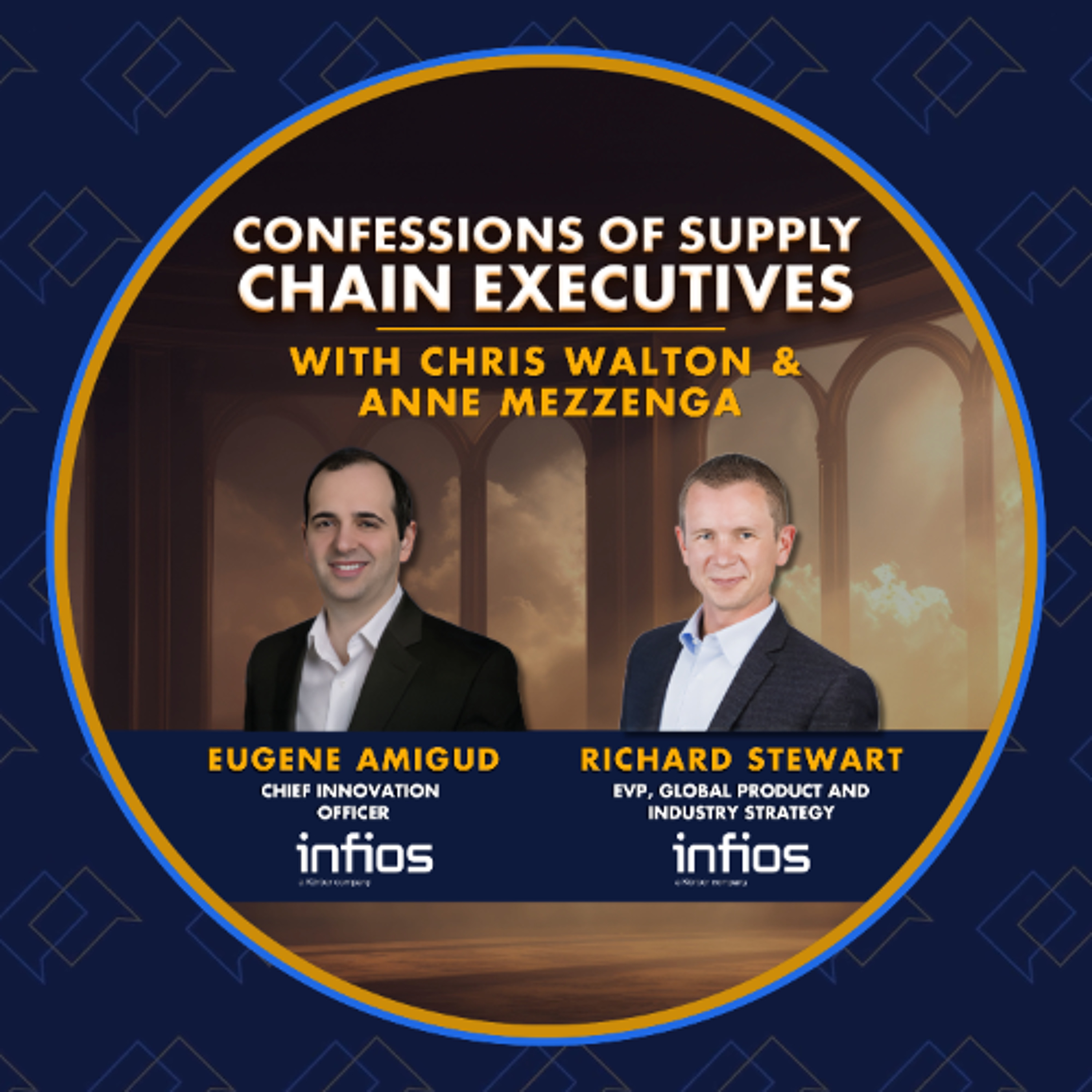
Omni Talk Retail
Confessions of Supply Chain Executives | The Brutal Truth About Retail Out-of-Stocks
00:52:52
In this inaugural episode of Confessions of a Sup…
Loading summary
Transcript87 lines
- [00:01]
A
Picture this. Customer walks into your store ready to buy. They've driven across town, they've got their wallet out, but they're standing in front of an empty shelf where your product should be. And just like that, you've lost the sale, damaged your brand, and possibly lost the customer forever. According to recent studies, the average retailer has an 8 to 10% out of stock rate at any given time. But here's what most won't admit. Despite billions spent on technology, many still don't understand why their shelves are empty. Today, we're going to attempt to change that. Welcome all of you to Confessions of a Supply Chain Executive, the podcast where we get brutally honest about the challenges, failures and also celebrate the victories in retail supply chains. I'm your host, Chris Waltman. Today's episode is different. Today we're going to do a deep fish forensic dive into one specific problem out of stocks. We're going to walk through every single breakdown point, from forecasting failures to the infamous backroom problem and give you a framework to diagnose what's really happening inside of your operation. My guests for this inaugural episode are Richard Stewart. Richard is the Executive Vice President of Product and industry strategy at Infios, a role to which he brings a powerful combination of 25 years of industry experience and strategic vision to his role shaping the company's product and industry strategy to drive growth and performance. And of course, longtime friend of Omnitalk and one of my personal go tos for all those listening out there for all things supply chain, Eugene Amagood. Eugene is the Chief Innovation Officer at Infios and he is also a 20 year veteran of order management and supply chain execution systems. Eugene has literally seen every way inventory can fail to reach a customer's hand. And for that reason, he also serves as a trusted advisor to leading retailers such as Walmart, Target, Staples and Best Buy. Just a few of the biggest names out there. All right, gentlemen, it's great to have you here. But before we go into all the ways things can go wrong, I want to set the stage today with a big picture question. In your two decades, both of you have working with retailers on order management and supply chain execution. My question is, has the out of stock problem over those 20 years gotten better, worse or is it just different? Richard, what do you think?
- [02:30]
B
Chris, Two decades, You're making us sound old right off the bat. But you know, it's a great question. I think. I really wish I could take today's technology and capability hit rewind 20 years because I would be the smartest person in the room. And I could solve all the appstock problems, but the reality is there's really only one answer and that it's. It's different. Right. Because the consumers have changed, markets have changed, technology has changed, hit rewind. Like most of the out of stock problems back then were like true supply constraints. Right. Or bad replenishment process. Today, I would say it's, it's less about if the product exists and more about whether the data exists. So I mean we've taken and connected so many different systems that we're starting to see the weak points now exist at the seams. It's between planning and order management and store execution. So it's really not, it's different that it's not really a problem in the warehouse anymore. It's more of a problem with the workflow itself.
- [03:24]
A
Just so I make sure I understand too. So the overall scale of the out of stock problem in terms of its impact to. I guess the best way to say it would be revenue at the end of the day or bottom line profit is still the same. It's just coming from different places or different angles.
- [03:37]
B
Yeah, it's. And to some extent it's, yeah, it's much harder to solve now because there's so many more moving.
- [03:42]
A
Oh, wow. Interesting, interesting. So we've almost created our own complicated issues. All right then. So my next question that is let's say, let's say a CEO or a supply chain executive comes to you and says, you know, we've got an out of stock problem, which I'm sure they do. They come to you. That's probably, and that's probably one thing you both hear quite often what Richard is the first thing that you tell them is there usually one culprit that you try to zero in in or I'm kind of getting the impression you think it's a, you know, it's kind of death by a thousand cuts. But, you know, what's your take?
- [04:12]
B
Yeah, I mean the truth is most, Most leaders, most CEOs are going to hope that it's one culprit, but it never is. Right. It's. For me, I would typically try to turn around and challenge them a little bit that it's not, they don't have an out of stock problem. They have a connectivity problem. Right. They have, most of the time the inventory exists somewhere in their network. It's just not where it needs to be when they need it to be there. And it's. If you trace that back, you know, there's where's the disconnect? Was it the systems? Was it like incentives, human nature? Was it data? Was it timing? And there's a tendency to kind of play whack a mole, so you chase each one down, right? But the truth is you gotta, you gotta look at it. You gotta look for those patterns and start to identify them and then bring your systems along. Because ideally you're teaching your systems how to do what you're doing as a problem solver so that they can stand, then start to self correct.
- [05:01]
A
So Eugene, I'm curious, what would you add there? And I'm curious, is your impression of the average supply chain executive or CEO asking you to fix their supply chain issues the same or their out of stock problems the same?
- [05:11]
C
Yeah, I mean, as sad as it is, very few things changed. Literally. Just talked to a CIO last week and they said, well, accuracy improved from 7% to 3%, so 50% improvement, but it's still a 3%. And then if I remember back in early 2000s, everyone still talk about, hey, I have single digit percentages issues, right on out of stock inventory being inaccurate, et cetera. Now, just like Richard said, complexity increased exponentially, right? So fundamentals remain the same, right? Whether it's connectivity, whether it's right. Once you get into the store, you get right walking customers versus digital demand. So the whole omnichannel becomes more and more interesting and more complicated. Now, right? Yesterday I was watching buying something from TV now, right as possible. So how do you kind of surface that inventory, especially if you're filling out of store and making it all kind of work together. So just more complexity but similar fundamental problems.
- [06:10]
A
So what I'm hearing from you both then to start us off for the audience is really that managing out of stocks, it's complex, it's multifaceted, it requires a whole nother level of connectivity which the past 20 years of retail's evolution has made more complex just because of all the different touchpoints that we now have available to us as consumers. Okay, so to, so to understand that then now I want to really click into it and I want to try to identify every single place in the shopper journey that an out of stock situation can arise, or where the systems can fail or the connectivity can break down. And to start, I want to start first with when the product enters the supply chain. Someone has to decide to buy it. Going back to my merchandising days, someone has to decide where to buy it. And that's where demand forecasting things like promotional planning and the purchasing Decisions really start to happen. So, Richard, walk us through the forecasting and demand planning failures that hit execution systems and also set retailers up for out of stocks before a single order is even placed.
- [07:14]
B
It's quite the journey going on here, Chris.
- [07:16]
A
All right, we're going into it, man. We're taking a long journey together today.
- [07:19]
B
Solve the world's problems today. I mean, if I, I mean if you go all the way upstream, like I'd say the real failure is anytime we ever looked at the forecast as like a fixed truth, right? Like, I think we got to recognize that, especially in today's market, like it is a living, breathing thing. So if you look at like the industry leaders, they're using everything real time. Like they're watching the orders, they're watching the click streams, they're watching social sentiment, the influencers, right? They're continually adjusting before execution ever gets a chance to even get their hands on, right before that first order comes in. Because if you don't have that, you're not really forecasting demand. You're kind of forecasting yesterday's news.
- [08:01]
A
Going back to what we said at the outset too, like some, a good friend of mine said that the difference between retail of yesteryear and retail of today is that retail of yesteryear always planned for everything they thought was going to be right. And the people that get retail of the future are understanding that you can't plan for that and you have to plan for everything that you actually don't know. And that's where the, the new systems and I come into play. Eugene, how do you think about that? Like that dichotomy, like, how would you sum that up? And, and you know, is AI and machine learning, are they helping to actually improve demand forecasting at the end of the day?
- [08:33]
C
Absolutely. And there are right tools for these problems, right? Again, everyone talks about Gen AI, but I kind of love demand forecasting because some of the machine learning is very, very effective for demand forecasting, right? To figure out what's the kind of, what's the most optimal way to fulfill an order, out of where? And then most importantly, from execution systems to start feeding back to the forecasting systems to say, hey, there was an out of stock situation here. Well, do you replenish the location that's been out of stock, or do you replenish the location that should have fulfilled that order to begin with? So there are all these kind of complexities. And again, based on the disruptions, machine learning was very effective and many retailers actually do use it now. And Definitely able to make good, good progress on their out of stock situation.
- [09:21]
A
And Eugene, how long has that been in practice? Like the machine learning side of the forecasting and demand planning side like that? That's not new, right?
- [09:28]
C
I mean, I remember doing some of this work in 2014, some of the work a little bit earlier. But like any new tech, right. It takes time to adopt. It takes time to kind of roll out data. Data is key, right? How do I know? And the connectivity, right. For me to know proper demand forecasting, I need to get point of sale feeds. If I don't have the data near real time, it gets harder and harder, right. It's not very accurate. So there's a combination of data connectivity. If you get this, all right, then machine learning becomes very effective. What happens in reality is you may kind of come up with this cool algorithm or use this cool product, but again, if you don't have these other steps, again, you don't get all the benefits out of it. Right.
- [10:11]
A
And that's what I want to ask you too, because you know, in my experience, you know, as much as, as investments were being put in behind the scenes, algorithmic, algorithmically, to the degree that you're talking about to improve the forecasting, when you came right down to it too, there were still a lot of buyers and planners that were using spreadsheets to determine how they wanted to place their orders and to what degree that they wanted to buy certain products. So how does the use of spreadsheets muck with things? And I'm curious, you mentioned that people are using. More people are using machine learning, but what percentage of retailers are still using spreadsheets and potentially mocking everything up versus, you know, going the true way of, you know, actual demand planning with true machine learning.
- [10:50]
C
I think it also that answer depends on the type of a customer, type of retailer. Right. From our perspective. So you look at tier one, largest, heaviest, right. There's probably a lot more automation, a lot more machine learning, but especially kind of where what we look at a lot is this whole integrated supply chain is missing at the next year. Right. So I might be a, you know, mid tier retailer with the, you know, maybe 200 stores shipping out, you know, with digital, multi channel, et cetera. I think very high percentage is still doing it using spreadsheets. Right. Like that's where the massive opportunity is. Because again, for, for the type of retailers, because. Right. It's still a lot of tape, a lot of connectivity issues, a lot of kind of saying, well, I don't have my POS is completely different. I just opened this 10 stores. I don't have the feeds coming in or my, you know, I'm still operating based on a spreadsheet. So there's, I think, massive opportunity there.
- [11:48]
A
Yeah, it's probably still faster for them in a lot of ways and probably, you know, less, less expensive that for them too. You know, looking at the way, you know, things have always been done. All right, all right, so now let's make a big assumption then based on that discussion. Let's assume for the sake of argument that at the next point in the process that we've actually ordered all the product in the right way, which is probably a big assumption, but let's just go with it. And so my next question is going to be, you know, can we get the product and how does that impact things? So, Richard, starting upstream, what are the supplier and inbound logistics failures that can lead to out of stocks?
- [12:22]
B
Very important question, Chris, because I think all too often we think, especially in the world like transportation, everybody focuses on the outbound leg. Once you order it, how do I ship it to you, how do I ship it to the store and all that. And I think we often overlook that probably the most problematic area is the inbound logistics side of things, really.
- [12:40]
A
Okay.
- [12:41]
B
I mean, I get a chance to make statistics up on the fly. Right. I mean, gut feel, I would say a quarter of the time, like maybe it's a supplier failure, but the vast majority of the time, I would call it not a relationship of thing, but more of a just an overall coordination failure. Right. Like, to what you were just talking about spreadsheets. How many people are still managing their inbound with email threads and spreadsheets and attachments? Right. And if you're, if you're managing it that way, you're kind of setting yourself up for failure because you're already going to be a couple of days behind reality if you, if you focus just in maybe on the transportation side, like, I'll go with the assumption. Let's say it's on the truck, it's on the boat, and it's on its way in. I mean, just look at the transportation side of, you know, well, what if the appointment gets missed? What if the load doesn't happen? What if it's detention you didn't plan for? Like, that's, for me, where things start to really shine is like, okay, everything's on its way. I know it's going to be two hours late, but I'm not telling anybody upstream that it's going to be Two hours late. So I can't react to it, even though I know there's a person that's got an email that said, hey, that's okay, we're going to be fine. Did you turn around and tell the doc to say, hey, move your labor around? Hey, we're not going to make the cutoff on the outbound load. Let's divert it somewhere else. I mean, that's really where I would say it's like I said, it's more of a coordination failure than it is the supplier just simply didn't ship it.
- [14:07]
C
I would just add on inbound. One of my favorites out of stock stories is always, well, warehouse has inventory and you're missing the dates, you're missing shipping dates. It's not there, cannot be found. What's going on? You take a look at it. Oh, it's in the yard, right? So it's in the yard. The inventory shows up as in the warehouse. You try to send, you know, to WMS system saying, hey, pick it up and ship it today. And your cutoff is this. Right. And by extension we talk about out of stock, but obviously connectivity there is expected delivery days, like as a customer, when can I get it? And you do all this fancy logic. You calculate you have the right products, you know, systems in place, and guess what, it's actually not in the warehouse. It's still in the yard. And it takes until tomorrow to open the dock and receive this product. I've seen this like 15 years ago. Still see it now and again with mid tier retailers, it's kind of very, very frequent. So if the first thing you say, like, is it really in your warehouse or is it maybe in your yard and it hadn't been received yet. Right. So those still happen quite often.
- [15:10]
A
Yeah, I can remember that from my days at the Gap. And I want to get into the warehouse side of it too. But before I do that, Richard, I want to go back to you for a second too. So. So I'm curious and hey, if you got to make up another statistic off the fly, go ahead here. But I'm curious because you mentioned it like how many of the, the issues that you discuss on the supplier side of things are because the quote unquote supplier didn't deliver. As, you know, we always used to say as merchants or you know, are more the result of we didn't manage the relationship properly. Is it more the latter? That was what I was picking up from what you were saying.
- [15:41]
B
The big thing there is that I don't know. So Much that it's the relationship, it's the blocking, attack, healing. It's the tactical element. Like you think relationship. I think kind of more on the personal nature of it. For me, it really does come back to. It's the tactical coordination, Supplier Transparency of what's happening. Yeah. Supplier says, I've got. It's ready to go. And then any delays that happen between then and you hitting the go button, like, that's really lack of coordination. If that gets lost into an email, it's a spreadsheet. It's a bill of lading that you're not quite filing through. That's right. I think it kind of comes back to, like, the. I think it's less relationship and more the coordination side.
- [16:18]
A
Got it.
- [16:18]
C
Right. Got it.
- [16:19]
A
How you're all staying in the same sheet of music. That makes sense. Which I think is also inherently why my mind went that direction and asking that question. Okay, so, Richard, again, so. So, because Eugene teased it. So, like, warehouse, like what. What are the execution failures at the warehouse level that lead to out of stocks, you know, even when the inventory is actually there, as Eugene was saying.
- [16:39]
B
So I grew up in the four walls of a warehouse. And so Eugene's favorite story is in the yard. If you fast forward, like my favorite story has been, we would show up to design a new WMS project. Right. You're talking to the customer, and you're always talking to the WMS folks. Right. They're measured on order, gets dropped into my warehouse, hit the stopwatch. How long does it take you to get it out the door? Right. That is how I'm measured. So I would always ask, because we have the ability, like, do you want me to post the inventory when it's received pallet by pallet or case by case, or do you want to wait until the whole thing's there and then hit the button 99 times? If you ask the warehouse person, they would say the latter, and they would even try to push it to say, can you make it so it doesn't tell the ERP until it actually gets to the pick face. Because they were trying to buy themselves as much time as possible to beat their sla. Right. And that's the. For me, that's always the funny one, is the inventory. It is physically there. It's just kind of digitally invisible. Right. And that's. That's the truth. I mean, if you think about the warehouse and how does it affect out of stocks, it's not posting to the system. It's. It's sitting in the Wrong zone because somebody put it there. Or it's been allocated to an order that is now hung up in a resolution. You can't free it up to let it go to other areas. Those are the kind of things, the small lags, the delays, the processes that really kind of snowball into what eventually could become that story level Stockholm.
- [18:00]
A
And it sounds like both of you are mentioning what some would call phantom inventory, right? You're creating a situation where there's phantom inventory, where the systems thinks the inventory is there and it's not. And so that's one issue. And then, Eugene, I'm curious too, if you could talk on the impact of phantom inventory. But then also, how does the issues at the warehouse, particularly on E commerce, come into play when you have to start thinking about prioritization of items for one channel over another?
- [18:28]
C
Again, the complexity before used to be, well, I'm doing B2B only, or if I'm doing retail. And now you have so many right out there who kind of saying, well, I might actually sell, right, as a B2B channel as well as B2C. So I have store demand, I have wholesale demand, I have digital demand. And how do I prioritize all of that? How do I get visibility? How do I plan? And the old days, the favorite one was inventory segmentation, which was. I always hated that answer. It was the simplest answer, right? Inventory segmentation to a point. I'm picking really from different places. It's three different locations right? Now, again, because of complexity, cost, et cetera, it's almost impossible. So you do need to have the right systems in place to be able to say like, Well, I have 100 units. How do I sell it to maybe to Amazon, to Walmart, to. On my own website and maybe some allocate to a TikTok demand that will spike potentially, right? So the prioritization becomes important, right? And how do you not disappoint the customer? Right? And then you have, you know, a customer just comes on the website, place an order for a single unit. You have to take into consideration all of these different channels, different demands. And again, that's where I think machine learning comes into play quite a bit, right? Because if I can start, start forecasting, it kind of gets. Gets a little bit simpler. The other thing is, and we haven't touched too much about it, right? This whole phantom inventory from store, that's a different nightmare altogether. Because guess what? At least in the warehouse, accuracy is somewhat decent in the store, right? Oh boy. Like that's right. You walk in During Christmas times into some store that does not look pretty and now kind of able to surface this inventory to digital to becomes different level of complexity.
- [20:19]
A
Yeah, and Eugene, explain that too. I mean because you know, folks like you and I, but maybe not all of our listeners understand that. Why is so A couple questions. Why is inventory accuracy generally so much better in a warehouse than in a store? And what, what ultimately causes. Second question. What ultimately causes phantom inventory at the store level too?
- [20:39]
C
So store the biggest problem, and I mean everyone talks about fraud, fraud prevention, et cetera. But to me that's probably not even by far the biggest problem. The biggest problem is actually coupled one is again system connectivity. You'll be surprised how many point of sale systems have one version of inventory. Right? And you might be selling, right? Starting the most basic example, right? Customer just walks into the store, buys this single item, walks out of the store, right. So point of sale process that. Well, guess what? Your digital channel, digital demand might have not been available. Supply might have not been updated for quite some time, maybe 15 minutes. So during this 15 minutes, you're ordering the same item that somebody just walked out of store saying hey, it's still available. So that's a typical kind of connectivity problem. Where it gets more interesting, right. Is what if I'm in the store in my shopping cart, walking around. So POS actually doesn't know that I'm going to buy this item just yet. Right. It's not on the shelf anymore. So I'm walking around with this product. How do you predict, how do you know whether I can sell it or now it's no longer there. Right. And there's some kind of technical hardware solution with the RFIDs. But again that's where AI comes in pretty handy. But that's where a lot of complexity is first in the warehouse, right. It's all very controlled, Right. There are no customers. Fraud is significantly less. Right. So it's just a lot more controlled environment.
- [22:09]
A
Yeah, that's what I always say. You just don't have the biggest, the biggest reason you don't have customers mucking with everything, right. At the end of the day I.
- [22:15]
C
Have, I have to add this like another one of my favorite stories. Another fashion retailer, they were doing peak back ship out of the stores. So they have, right. Like they're picking the items, they're putting it like they have this little card, they will put the side up on the card and they would go and pick another item. What they found is the customers thought that oh, it's somebody's like you like buying and selling it. So this must be a really good item. They would come to this card and just yank that item and like, oh, I want to buy this dress now. And like, good luck predicting that kind of behavior. It actually. Right. The associate picked it up successfully, put it on the card, went to pick up another item, and the customer walks into the card because, you know, just a card just yank the dress and says, hey, I want this dress right now. So I'm walking away with the dress. Yeah.
- [23:00]
A
And as a former store manager, I'm not going to tell that customer he or she's wrong and I want sale immediately. Right.
- [23:05]
C
That's where you get an immediate sale. But then what do you do now with the salad store? So you reject that order, Try to find another order. Those are fun.
- [23:12]
B
If you ever want to see like a warehouse person's like smoke come out of their ears as you say, hey, go pick inside of a store. I mean like all the rules, throw them out because are you supposed to. The person doing the picking, are they supposed to fight with the customer that wants the dress? I mean, it's just a complete different playing field as soon as you introduce the consumer into the flow.
- [23:32]
A
And what are the accuracy level differences part and parcel? Like is it 98% versus 80%? Like, what do you think, Eugene?
- [23:39]
C
I mean, store inventory, again, it depends by retail, etc. But right. Store inventory, I think accuracy increased significantly. So now I think at least retailers I'm talking to, often they're dealing with like single percentage points, like maybe 2, 3, 1%. That's inaccuracy within the store, which is like a, you know, big, big improvements since when we were maybe 10, 20 years ago, where sometimes you are like at 90% or 85%. So it got, it got, I think a lot, a lot better. I think in D.C. right. You're talking about like sub percentage and it's more around damage. But there's interesting kind of again, where there's opportunity is now potentially. Right. What about the inventory that's not within four walls? Returns. Can I start promising against returns that haven't reached my warehouse? Can I do pre orders where I don't even have pos? So kind of again, we're talking about physical path of the inventory. But what if it's kind of a little bit outside? Right. Like those creative ways so many retailers are figuring out saying, well, if the item is being returned and I can run AI and predict that it's a, you know, it's a legit customer, the Item hasn't been opened, I can probably start promising it before it even hits my warehouse, right? Or the other way around, right? Some kind of a pre order and say, hey, I want to sell, you know, thousand of those books before I even get them in the inventory. So there's some kind of interesting edge cases around it. But I think inventory is getting a little bit, you know, better within the store systems.
- [25:06]
A
Well, that's interesting too because you're bringing up, you're bringing up a whole nother level to this discussion that we haven't touched on, which is the actual stack that you're using to run this whole process, you know, because you've got the order management system, you've got the warehouse management system, you've got the transportation management system as well, just to name a few big matzo balls, quite frankly, when you get right down to it. So, so what are the, when you think about those systems, Eugene, that you know, you just alluded to? What, what are the failures you see or the configuration issues you see in them that can also lead or exacerbate.
- [25:38]
C
An out of stock problem at the core? That your question itself is probably what causes a lot of failures? Because customers like people. People think saying, hey, I need to buy a system for order management, or I need to buy a system for transportation, or I need to buy a system, I'm opening a warehouse and I'm going to buy a system for warehouse management. Or sometimes happens I'm closing a warehouse. What system do I need to buy now? Because I shrank number of locations I can ship from. And I think what's. It's been evolving a lot, right? And again, we've been in this for so many years, right? Erps came and then, you know, the man we said, hey, RP is a monolithic. Let's go look at order management systems. I think what we're saying now is maybe even order management systems or any particular system may be a bit of monolithic. What you want to do is you want to align with your business and functional needs. And if you need a saying I want to get close to the customer, it means that you need some capability from transportation, you need some capability from warehousing, and some capability from water management, right? And you need to be able to light up these functions and the more you think about how to align it, right? That's why we talk a lot about supply chain execution. Because in reality you might need capabilities from multiple systems, right? Which is quite different than saying, hey, I want to buy order management. That's number one and number two, current reality is that you may not have be able to afford to get the full order management because of time, because of resources, or a full warehouse management, et cetera. So I think systems are becoming more agile. You need to be able to kind of implement in more augmentative way. Your stack has to be cannot be a bottleneck for the business to light up these capabilities. Right again, tying in a little bit like tariffs. Right again, everyone had the plan and everything was kind of lined up and then tariffs hit and one of my customers said, hey, I'm shipping from China to Canada because I want to have product very close to the border and when things get sorted out, I'll open it up. Well now suddenly you need to kind of, okay, transportation is being impacted or management is being impacted and warehousing being impacted. So what do I need to light up to kind of get this functionality going versus as before, customers would say, well, let's drop in ERP or let's drop in oms, et cetera. So it's slightly different way of thinking about the whole system kind of footprint.
- [27:59]
A
Eugene's got me thinking like, okay, the systems you're using to do this can create all kinds of new complexity that I've never thought about. So when you get down to it, then are these systems themselves creating out of stocks versus actual inventory shortages? What's the proclivity there on that ledger? How would you think about that?
- [28:20]
C
I think there's definitely some inaccuracy due to systems for certain. Again, if we always discuss with Richard one example, right. If I know that Carrie is not picking up some specific items in the warehouse, why am I waving? Why am I working? Right. Kind of working on those shipments. If order management knows this upstream, it can actually start sending some different items. And then when Carrie actually picks up, you reprioritize. So all these kind of disruptions, potentially again typical happy path. Usually things are great, but the minute any of these kinds of disruptions occur, the limitations of system integrations cause potential out of stock. Or again, I always think about out of stock and missing the promise delivery date. Promise expectations is kind of the same.
- [29:13]
B
To your question specifically, I wouldn't say that any individual system creates the out of stock.
- [29:19]
A
Okay.
- [29:20]
B
What creates the out of stock is when they're not talking to each other. Right. So if you think about the oh, like Eugene always says, the OMS is the brain, WMS is the arms and the TMS is the legs. Like if the functions aren't talking to each other, things go wrong very, very quickly, you know, and that's how like if you have a truck that shows up and there's damaged product on the truck and you know that if your WMS then tells your own mess that I'm not going to be able to satisfy this order and I've got a whole other truckload sitting in another dc, I can solve that problem. And if the WMS records the damage and that doesn't get reported up for a few hours or even the next day, the lack of the communication between the two systems has definitely been caused. Out of stock.
- [30:02]
A
Okay, I want to ask a controversial question then. Or maybe it's a little bit controversial. I don't know. Probably not to me it's not, but to some people it might be. So, you know, everyone talks about legacy systems like my legacy systems. They're always outdated. I need to upgrade them. But are the systems the issue fundamentally or do the companies not know how to use the systems and integrate them to create the connectivity that you've been espousing?
- [30:25]
B
Richard, it's a good question. I wouldn't say it's controversial, but it is, it's an important one. Right. Like you can, okay, you can call a legacy system something that's actually fairly modern, right? There's good legacy and then there's bad ones. Right. Like, you know, I was at a conference and they said the legacy of like a Michael Jordan, that's a good legacy. Right? Legacy of it. Right, that. But the. For me, I think there's. There are certain fundamental elements of certain technologies throughout the past that. Yes, that's a legacy system. It's not going to be able to handle like real time data, real time communication. But at some level, you know, a legacy system only becomes a legacy system because the way that you're using it, I would always encourage folks, if they're thinking about it, don't think about it about modern versus legacy. Think about it on. In terms of as I evolve on my maturity curve, will that system be able to talk to external systems or it's just by its nature it's truly siloed. It's the truly siloed systems that I would really go after.
- [31:24]
C
I think we as vendors. So I've been obviously right. Building software for quite some time. I think we love complexity, right. So the reason also systems become almost legacy to a degree is because it's super difficult to configure and use. Right. Just we enjoy. And especially again, tier one more so. Right. Super complex to configure, super complex. To operate, right. There's so many levers, right. And we all know like 20% of every functionality just gets used, right? So we have 100 and you only enable 20%. But then you come back to the system like five years later and you're like, well I have no idea. Right. And there'll always be this one person in the entire company who knows why it was done that way and the reason I'm talking about it, right? I think there's massive opportunity with current tech, with the new tech to actually simplify it, bring it to completely different level, right? And that's where actually gen AI and I'm always kind of cautious what use cases, how do you approach gen AI versus machine learning versus optimization, et cetera. But like around configuration especially, it's awesome to kind of start creating kind of gen AI capabilities creating which will capture the tribal knowledge. So you can even three years later say, well okay, you configured this flow because you have the specific multiple channels that drove this requirements and that's how it was done. So I think new tech potentially could start expanding the time, the lifecycle of the, of the software just by making it simpler. And the reason why we spend a lot of time on that again is because we think about, okay, bringing tier one capabilities around supply chain execution to the masses. Again, if I look at mid tier, that's even harder, right? Like you try to bring this massive system to a mid, tier, they don't have hundreds of thousands of IT folks, they don't have all these complexities that they don't need to deal with them. But you end up implementing this kind of monster system, okay, how do you configure, et cetera? So I think that's where the new tag could really help.
- [33:27]
A
And I love what Richard said too about good legacy versus bad legacy. I might borrow that at some point. Richard, that's a really excellent point too. Do you want a good legacy like Michael Jordan? I'll never forget that. All right, all right, so let's shift gears a little bit. So if you, if we rewind what we've talked about before, we've, we've talked about ordering the product, we've talked about, you know, all the things that can happen in terms of the warehouse and IT arriving on time. We've talked about your systems helping you enable you to know exactly where it is as a retailer and, and it actually being in your store too and being, being confident is there. But even if we get all of those things right, all three of us on this call know we Know that there are still times where our customers cannot buy it. And so how in the world can that happen and what do we do when it does? And so that's what I want to talk about now. So some of the causes of retailers out of stocks are out of our control. So Richard, I'm curious, like what are some of those factors, particularly the external disruption side of things like port congestions, natural disasters and can those actually be prevented, is my question. Can we actually prevent those from impacting our supply chains?
- [34:33]
B
No. I mean, I wish I had a magic wand that could say no, poor congestions never happen again. Right? Like, no, it's just not the reality that we live in. Like external disruptions are. They're getting more frequent, not less frequent. Right? You think about what we've done to ourselves. We did this globally connected supply chain. So it can be fairly fragile, it can be brittle.
- [34:51]
C
Right?
- [34:53]
B
So I think modern day supply chain person has to start thinking that disruptions are simply the new norm and quit worrying about when they're going to happen. Just focus on how do you predict them, how do you react and how do you adapt. And I think we also have to, you know, good or bad. Consumers have gotten a little bit numb in my opinion, to disruptions like it used to be. It was an excuse, oh, we had this happening, so that's why your order is late. And they just kind of get used to it. To today's consumer is very, very unforgiving. They're just assuming that you can now figure it out anyway. And that's just the reality I think that everybody has to start thinking through. That's what we have to deal with.
- [35:31]
A
Eugene. The other thing I think about in terms of like that's along the same lines but a little bit different than what just Richard just talked about in terms of like the external shock is like this demand surge or the peak periods of time where demand just goes to a level no one could have expected or no system could have forecasted. What weaknesses do those types of events expose in the systems that we've been discussing?
- [35:54]
C
Actually just again talk to another customer of mine and wellness retailer and they do Special runs on TikTok and it generates absolutely crazy amount of demand. They kind of make it very unique that inventory is not available anywhere else but just during that TikTok kind of presentation, et cetera. And that definitely puts different level of stress on the system. So first of all it can create this instead of typical spread of inventory, right? Everyone is buying something else now there's like one Item one, sku. And that sku, everybody who's watching that channel wants to buy it like immediately. And so there's some kind of of stress on the system to be able to sell this one, one single item. And the other part is just a question on scalability, right? Whenever these spikes are created, the whole system historically you would always kind of say, well, let me scale for peak. That was like the most traditional, the most standard way of thinking, right? Especially like typical retailers, right? September, you kind of do code freeze of everything. You walk in October, you scale it out for, right. December, November, December, and then you're good, you scale it down again. Well, that doesn't work anymore, right? If you have this kind of unpredicted demand spikes, it puts so much stress on the system and you cannot plan for it. So then when you kind of implementing the system, you need to think differently, saying, okay, what about auto scaling? And everyone will say, well, we have auto scaling systems. Well, but in reality there's always be some bottleneck somewhere in your stack. It could be a database, it could be some kind of a search, it could be some API, it could be anything right in your stack that will not overscale and it suddenly becomes the problem. So this kind of spikes again, definitely put quite a unique stress on the systems throughout your supply chain.
- [37:51]
A
I want to get both of you on this one too. So then who actually owns the out of stock problem then? Because it's so complicated as we've just discussed, like where does the actual final authority lie? Is it merchandising, store ops? Is it the technology teams? Like, how should retailers think about that? Like, I, I don't know the answer to that. Like in terms of where does the buck actually stop? Eugene, what do you think?
- [38:16]
C
To me, unfortunately, if it would have been an easy question saying, well, it's, you know, maybe it's a chief supply chain officer, but in reality it's not. Some of the worst examples I've seen is as a vendor, you go and talk to a customer and somebody comes from the digital, like, you know, from a website and somebody comes from supply chain and they shake hands and introduce to each other, which means they, this is the first time they, you know, seen it, or maybe they don't talk to each other that often, right? And again, if there's one person who owns it, it's probably easier. But in reality, right, because of all these stresses in the system, because of all this multiple channels, like again, right, like retailers started, I just need to get inventory into the stores and I'm done. And now that's just one of many, many channels. Right. I don't see there's a single owner. What I do see is, right, it's a collection of systems put in place across this whole supply chain portfolio that have to work together and enable different parties to be able to react to all these disruptions. To be able to say like, hey, I have inventory. And obviously like warehouse will have its own inventory, store has its own inventory and so on. But yeah, I don't see it as a single owner per se.
- [39:24]
A
So it's almost gotta be a cross functional mandate from the top down. Richard, is that what you'd say too?
- [39:28]
B
Yeah, a hundred percent. I mean, if you assign a single person to own out of stocks, they're only going to get worse. Right. So if you think through it's to Eugene's point, it's the technology, it's the systems, but then it's also just kind of the human nature. And I would always look at aligning your incentives to the common good. Right. Is every decision we make, if it's made with how do we prevent the out of stock? In a team environment, that's how you're actually going to get to the finish line. To start to, to minimize those. If you do it any other way, everybody just optimizes for their piece. Like build my own little silo, what I can control is great. You build your own little silo, what you can control is great. And we still fail as a company. Like there is only one way to get it done and that is to definitely go cross functional.
- [40:12]
A
So wait, I wanna, I wanna make sure I just heard what you guys both just said because you two are 20 plus year veterans in retail supply chain technology. You work for a technology company. There's all this talk about technology fixing everyone's problems, but I feel like I just heard you say that technology alone can't solve all of the problems that come with out of stocks. Eugene, am I saying that correctly? It needs to be a coordinated effort here, inclusive of technology. But technology alone is not going to be the panacea.
- [40:44]
C
Yeah, I would say technology is probably the. I guess I'm lucky. Technology is the easiest part of this whole equation. Right. People and processes is. That's where the real heavy lifting is. Technology just cannot be the bottleneck to this improvement to these processes and kind of people working through that. Absolutely.
- [41:01]
B
I would say the technology is a tool that can help solve the problem, but it's not a solve in itself.
- [41:06]
A
Let's get to the Finish line here. And let's talk about AI, the big elephant in the room then. Because the big question then is, you know, if technology can't solve it and it requires coordination is like, how do we actually fix this? So Eugene, what are the basics one needs to fix first?
- [41:20]
C
If you look at from the AI perspective, we always kind of look at different parts of the AI. Again, everyone talks about Genai and I always kind of take a step back, maybe because of historical perspective as well. But right, there's machine learning, there's gen AI, there are optimizers, there are all the right tools you have to solve individual kind of problems. Right? So especially around out of stock, all of them could be very applicable depending on what the issue is, Right. It could be as simple as being able to predict, just load your historical data and you can probably very effectively see in the store. If you're dealing with the problem of inaccuracy within the store, you look at historical data and we'd be able to predict saying, well, you'll probably run out of stock on this item pretty quickly, so don't sell it on the website. That's kind of from machine learning perspective. Before you even get to AI, what we see often is you start implementing a common engine for inventory. So you have one. So from people perspective, multiple parties within the organization own the inventory. But from the tag you start having maybe one module, one service, one component that's responsible for that inventory. So you standardize that way and then you start saying, hey, within the system, how do I bring AI, how do I bring machine learning? How do I bring agentic to be able to write? With Richard, we always talk about saying, hey, there's like a stack of boxes within the warehouse because one item is missing, right? Instead of having the tribal knowledge to understand where, where that item is or how do I kind of move this box forward. Now you have Genai that can pretty quickly figure out saying, okay, the issue is because of replenishment. Let me do that. So again, AI could definitely be super helpful. What I would say also is make sure it's very use case driven. We don't like to AI wash everything. It becomes kind of, I think you lose the point of it. Right? But if you tie it to very specific use cases, just like out of stock situations, it could be very effective.
- [43:19]
A
So you're saying you should have one AI engine that is basically running or coordinating or acting as the brain across the oms, the wms, the tms, is that right?
- [43:31]
C
Exactly. So you centralize it as a One brain, one engine. And then some use cases within this engine you address through AI. Like that would be my recommendation on addressing the out of stock situation specifically.
- [43:43]
A
So let's say you put that into place. That sounds like that's a good basic first step to take and a great go away or takeaway for the audience to potentially go and do what's next. Like what else do you look to do inside the stack itself?
- [43:57]
C
So once you put that stack, the interesting part becomes, right, you kind of serve, you become everything to all these kind of channels. And they have such a different demands. I was talking to one of the largest beauty retailers in US and they said, well, we want to show this inventory and have this visibility. But guess what? I need response time to be in 100 milliseconds. That's a very different requirement that back in the days where my ERP had inventory or even typical order management system will not respond within 100 milliseconds, right? So once you have this kind of centralized component, you need to start working with your partners and build bridges. And actually human beings have to talk to each other and say like, hey, this service, I need to be able to return availability inventory information within 100 milliseconds across my store network. That's one kind of use case. Another use case could be like, well, I just need to post inventory to my financial systems from just reporting perspective, very different type of use case, massive data processing required. So again, we talk quite often about purposeful innovation. So purpose innovation for us, meaning, hey, tying it to very specific use cases with the stack. So again, build out the stack, centralize your inventory, then start lighting up those individual touch points because they will give very different requirements, very different perspective of what's needed there based on the business value.
- [45:29]
A
Okay, so because we touched on it before, then say I start that I do those things, how do I prepare the organization for it? Because we spent a lot of time talking about how the human element is also an important part of this equation. How do we make sure that the humans adapt to this new technology infrastructure in a way that best benefits the organization as a whole. What do you think on that, Eugene?
- [45:53]
C
Well, for me the big part there, again from just human nature, is I think pulling the teams early, pulling the folks early. Nobody like everyone hates, right? Just somebody saying, hey, this is the API and this is the component, start calling it tomorrow, right? Everyone has their own priorities, right? Digital, they have their own roadmap. On the supply chain, we have our own roadmap. Stores have a different roadmap so trying to kind of align, et cetera. But if you start kind of aligning based on the business need and saying, hey, out of stock causes customers being unhappy. If customer satisfaction is our priority overall as a company less than, act accordingly. Line up, pull in the right stakeholders early in this process so that whenever this kind of component is up there ready and running, there are no surprises. So there's a lot of kind of, I think that's required outside of tech, just humans. Humans talking to each other.
- [46:48]
A
Humans talking to each other. Always a good, always a good strategy in business to talk to those you work with. Yes. 100 I, I think I would wholeheartedly agree with that. All right, well, we've come to the end of today's interview and you know, I've saved the best for last. As I mentioned at the outset, this is our Confessions of Supply Chain Executives podcast. And so I'm going to ask you guys to both make a confession. And Richard, I'm going to start with you. And my question for you is confession here. What is the uncomfortable truth about out of stocks that most retailers you think don't want to hear?
- [47:23]
B
Well, I don't know if it's confessional, but the easy one is the fact that they're never going to go away. Right. Like, we can work to make them more predictable, we can work to make them more preventable. But I would perfection isn't the goal. What you're trying to do is just make yourself resilient. Right. If you think about like the industry leaders today, they just accept that disruptions are constant and they're going to build those intelligent connected systems that can sense and respond faster than a human used to be able to. Right. The ones that are still out there trying to chase zero stockouts, I mean, they're really just fighting yesterday's battle.
- [48:00]
A
And Richard, do you feel that that's the mindset? Do you have to like a culture people to that idea when you're talking to them across the boardrooms as you're working with retailers? Like, are there people that think perfection is an attainable goal?
- [48:13]
B
Yes. I mean, I always think there's a million different versions of this, but I love the saying that best is like the worst enemy of better, right? Like, yeah, 100%. I think there are folks that they're chasing perfection to a fault. What you really want to do is make, especially in supply chain world today, you want to be resilient, you want to be adaptable. If you aim at perfection, the market's just going to shift on you tomorrow. And now your definition of perfection yesterday is not the definition today.
- [48:38]
A
Wow, that's. That blows my mind that, that, that's that we're still seeing that given. Especially given everything we all lived through during the pandemic. All right, Eugene, similar. In a similar vein, similar confession. If I was to ask you to confess to the one thing you would like retailers or brands listening to this podcast to take away, what would it be?
- [48:59]
C
I would say start small. I've been in so many conversations where. Right. Again, this conversation is out of stock. Okay, out of stock. I'm going to go and replace every single system to get it all perfect. Right. And again, like Richard is saying, that's going to be a lot of waste of time. Start with one problem. Start maybe solving specific kind of. Okay, everybody knows like you go to any organization, they'll tell you 10 problems that are out of solve if you bring this kind of systematic view. But at the same time, like, hey, let me solve one problem. You get the small win and then you move on to the next, to the next, to the next. I think it resonates so much better in the current environment and you're getting benefits along this path versus kind of saying, hey, let me go and address the whole out of stock situation all at once. Because that just never happens.
- [49:48]
A
Never works, never works. Let me pressure on that a little bit too, because you actually surprised me a little bit. Like would you say too to also start with the brain, like identifying and creating the brain before you, you go and solve any of the problems. Like how does piece those together for me?
- [50:02]
C
Yeah, yeah, exactly. That's what I meant by systematic. So you need. So that's where, that's where it's more art than the science. So you don't want to do kind of a point to point solution saying, oh, I have out of stock because between a point of sale and order management, let me just build some integration point to point. Well, now it's better. You want to kind of start with this brain because that's what will orchestrate further and further. But at the same time, don't build out this kind of a massive thing just for the sake of it. You start building out the brain and you train the brain to solve the specific needs and then you keep doing more and more and more there. But again, very often there are almost two extremes. You can start with something very massive and say in two years all your problems, world hunger will be solved. Never happens. Or vice versa. Oh, I have a problem. Let me throw a couple consultants or a couple integration touch points there. And like that that problem goes away. That just again, more, more duct tape on the same problem. So it's definitely a bit of a more of art than a science to say like hey, I want to start building out the brain to control out of stock inventory situation but at the same time I'm gonna solve specific business, deliver specific business value.
- [51:13]
A
Wow, what a great conversation, Eugene. Richard, thank you both. I mean for those listening, like we covered a lot of ground today and that was intentional because you know, in the outset in terms of designing this podcast, I really want to go into in depth all the things that can create an out of stock and showcase for everyone listening just how complicated the solution, not the solution, but the problem can be and all the different ways you could potentially approach it. And then these guys are the true experts and I think they understand it as well, if not better than anyone on how to tackle your out of stock problems as retailers and CBG brands. If, if our listeners want to get in touch with either one of you, what's the best way for them to do that? Eugene, why don't you go first for.
- [51:53]
C
Me easiest I guess is Eugenefields.com email and would love to kind of get in touch LinkedIn. Anything is fine. This is the one topic that I can stay up all night and just talk about it as probably you've noticed.
- [52:06]
A
I know. Well, I said at the outset you are my go to guy on every question related to this. You and you and one of your, you and your colleagues are my speed dial on this topic. So Richard, same question to you. What's the best way for people to get in touch with you?
- [52:19]
B
Yeah, same answer. I'm Richard@infios.com or go out there, visit our website. It's up on LinkedIn. There's a variety of channels.
- [52:26]
A
Eugene, I'm a good. And Richard Stewart of Infios, thank you so much to both of you for joining us on Confessions of a Supply Chain Executive.
- [52:34]
B
Appreciate you walking through the conversation and helping us solve it.
- [52:37]
C
Thanks for having us here.
- [52:38]
A
I'm Chris Walton and this has been Confessions of a Supply Chain Executive. And never forget Omnitalk fans, confessions are almost always good for the soul. Be careful out there.