← Omni Talk Retail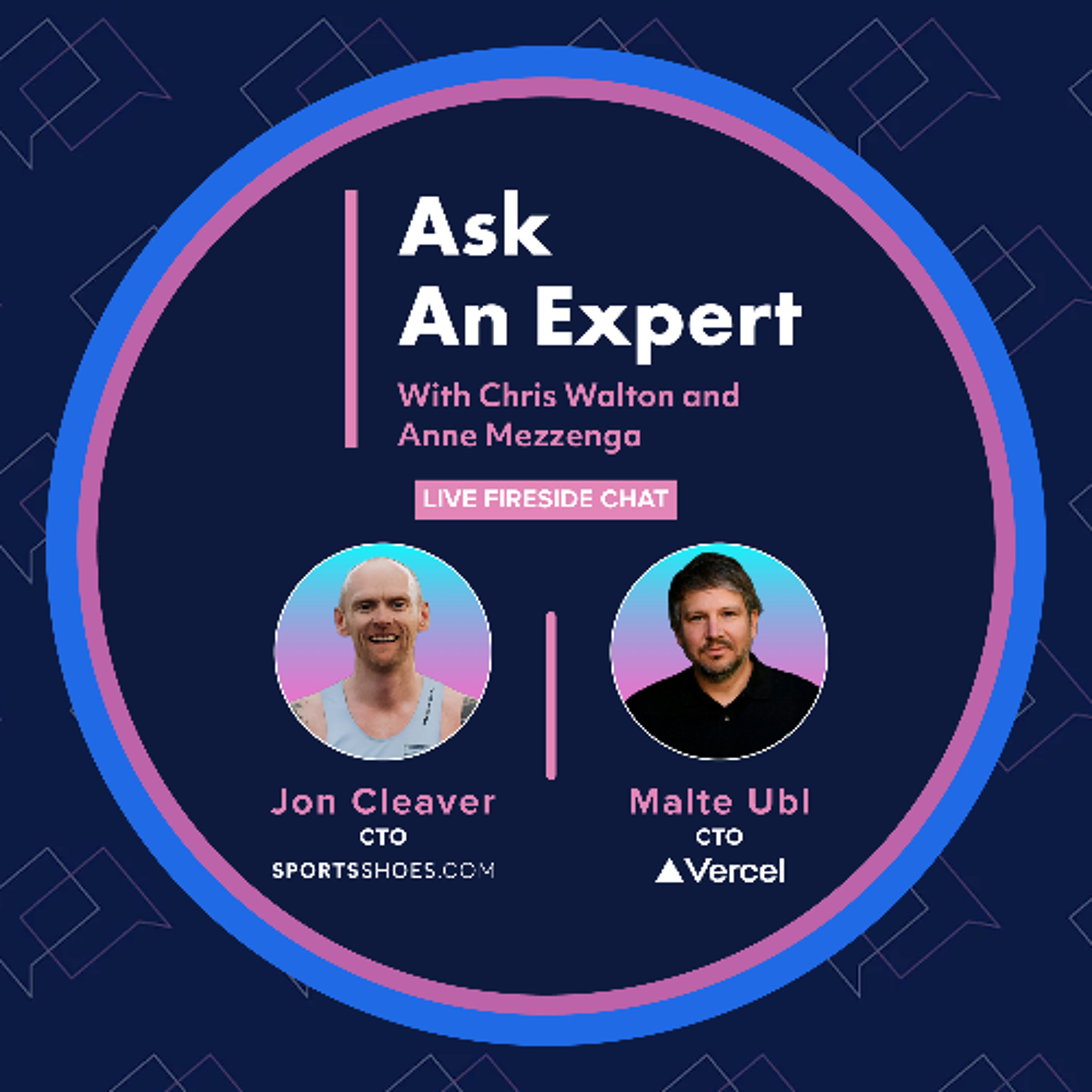
Omni Talk Retail
What Will You Do When E-Commerce No Longer Requires A Website? | Ask An Expert
00:44:21
Are you ready for commerce without websites? In t…
Loading summary
Transcript75 lines
- [00:00]
A
Foreign.
- [00:09]
B
Welcome to another exciting and elucidating episode of our Omnitalk Ask An Expert Fireside Chat series. I'm your host, Chris Walton.
- [00:16]
C
And I'm Anne Mazinga.
- [00:18]
B
And we are the founders of Omnitalk, the fastest growing retail media outlet that is all about the companies, the people and the technologies that are coming together to shape the future of retail. Thank you to everyone for joining us live or those of you that might be listening in later because today we're going to try to answer the question, what should you do to prepare for the day when e commerce no longer requires a website? I bet that question gets your attention, doesn't it, Anne?
- [00:43]
C
Oh, yes. Oh my goodness. I just finished a conversation with somebody where we were going on and on about this, Chris. So I cannot wait to have our experts on the show today to to give us some insight into how we should be thinking about this.
- [00:56]
B
Sounds great. You're gonna have to tell me about that conversation later too. But to help us answer that question in the here and now, we have called in two experts, both of whom know far more about the topic than either Ann or myself do. So please join us in welcoming John Cleaver, the Chief technology officer@sportshoes.com and Mota Ubil, the Chief Technology Officer at Vercel. John, welcome to omnitalk.
- [01:18]
A
Thank you. Delighted to be here.
- [01:21]
B
It's great to have you. And Malta, welcome to you as well.
- [01:24]
D
Thanks for having me. Excited to be here.
- [01:26]
C
Well, before we get started with John and Malta, we just want to give those of you who are joining us live today for this Fireside chat a little reminder. Reminder that if you have questions for either of our guests today or their teams, they are at the ready in the text chat field to the right of your screen. And you can pop those questions in the chat at any time. And we'll do our best to get to those as we continue the interview. But let's start out with a few introductions and backgrounds. You both are experts here today, so why don't you tell us a little bit about yourselves and what each of your companies do. John, let's start with you first.
- [02:01]
A
Yeah, sure. I work for sportshoes.com in the capacity of Chief Technology Officer to give you a bit of background. Sports shoes Our mission is to power every runner adventurer to run faster, go further and climb higher. We are the UK's number one destination for run, hike and gym gym equipment. We ship to over 1.2 million customers annually and predominantly it's pure play, e.
- [02:31]
C
Commerce and it sounds like a terrible job for someone like you, John, based on what I can see in your background, I don't think you have any expertise in that area. By the thousands of metals that I think I can count hanging behind you.
- [02:46]
A
I definitely have a problem.
- [02:51]
C
But you're in the right business, it sounds like.
- [02:55]
A
Yeah, yeah, definitely. No, I am an absolute running obsessive and I think I really landed on my feet, so to speak. Excuse the pun, when I came to sportshoes.com because, yeah, if I'm not working, I have to say that first, I'm definitely running second for sure. So, yeah, it's. It's been very fortuitous that I've ended up@sportshoes.com and I love working for the organization and in the industry.
- [03:23]
C
Well, I'll say. Well, Malte, let's go to you next. Tell us a little bit about you and your background and what your company does.
- [03:31]
A
Absolutely.
- [03:32]
D
So again, my name is Malte. I'm the cto. It's the same role as John, but at Vercel. I've been with the company for three and a half years. I think roughly like that. Before that, I was at Google for 12 years. They, for reasons I still don't understand, let me run the search engine for a while. So I know a little bit how, you know, that tile stuff works. If you guys have heard of Cobra Vitals, two of the three, the older ones were kind of made in my brain and you know, obviously together with the team and. Yeah, but nowadays I'm at Vercel. It's. It's very connected to what I always used to do, which is front end infrastructure. We make a very popular framework called Next js. I think the easiest way to understand what we do in this, like, composable space is that like, if you have a headless infrastructure, you need some place to actually run the head. Right. And that's on Vercel. So that's, that's where we stand in this, like, more traditional, composable world. I think we have made a relatively successful kind of extension of what we do over to the, you know, modern AI world. We make a very popular, I don't love the word vibe coding tool called V0 that gets you from prompt to application in seconds. And we're building the AI SDK, which is the most popular way for building AI applications.
- [04:49]
B
That's great. That's great. Malta and I want to dig into that a little bit because, you know, the reason we asked you both to join us today is because You've both, you basically both have lived through a website transformation together, which is no small feat. And getting two people on a fireside chat to discuss that is kind of unique. So. And much of what you've learned and I imagine that you can share with us around that experience is likely applicable to the future as well, to the question we posed at the beginning, at the outset here. So Malta, before we get into that question though, can you give our audience an overview of what Composable Commerce actually is and why is it such an important piece of the conversation and who are all the players in the stack as well?
- [05:27]
D
The way I think about Composables Commerce is that you go from a world where you go and buy a piece of monolithic software from a large vendor towards a world where you might still do that for your backend. But you say, Well, I am sportshoes.com I know how to sell sports shoes better than anyone else. I want to control the user experience. And so I'm building that part myself. And, and also there's other aspects of my business where I want to control what it is and so I can compose them in. And that's kind of a big transition from again, this world where things just used to be done in a different way. I've been in this business for a long time and I'm originally from Germany. Somehow much of E commerce software is from that country. I remember working with the mapware a lot. Obviously that's not by Salesforce, but it was a different time where you were kind of massaging these software packages into somehow doing what you want and turning it into fine. But you never really were quite happy towards being able to control your own destiny. And I think, I mean the, the players in the, in the market, right, like you, you, you essentially have, you need a place to put your, your front end now, right? Because most likely that is the part that you as a company decide to build yourself because that's the touch point to the customer and where you, you're just the most capable person of designing that, right? You'll then have some form of vend provides the primary business logic and storage for your, for your, for the online store. And then it might actually go quite wide like it's up to you, right? You might have a dedicated cms, you might have a dedicated place to manage your assets. You might have all kinds of different marketing vendors that, that help improve conversion rates, right? But the magic is that you can just do that, right? Whereas in the old world where you were like up to the roadmap of whoever vendor you maybe chose five years ago, maybe a person before you at the company.
- [07:33]
A
Yeah. So just leaning into that, we spend more time with our engineering teams now, thinking more about how we bring these components together and integrating them and spending time in that area with our backend engineering teams as opposed to actually creating those proprietary capabilities. So, for instance, we use bluereach as our search platform. We could never possibly even attempt to be as good as bloomreach at building our own native search platform. So we invest in their continual development in that one vertical because that's what they're expert at. Similarly with Prismic, we use for CMS, similar with Stripe, and similarly with BigCommerce. So you're leveraging hundreds of engineers across multiple engineering teams, all bringing up your stack continually, which is the great power of that composable, composable stack. And if you design it in the right way, thinking about these integration patterns, you then get the flexibility in the future that if there are newcomers to the market or there are other opportunities to leverage, then you can also swap out those components much easier than what you could have done traditionally.
- [08:44]
C
That makes sense. And I think with that kind of as a backdrop, John, maybe take us back to three years ago when you started your site transformation. What were some of those things that you were. You were challenged with or kind of what were your priorities as you set out on that adventure?
- [09:03]
A
Yeah, so I joined just about three and a half years ago now. And quite quickly after joining, I identified a need that we really needed to move forward with our web stack. We had a monolithic website. One driver was the fact that we wanted to bring in a mobile application.
- [09:22]
C
Okay.
- [09:22]
A
And that that was never going to really play nice with our technology being so monolithic in nature. So that, that was one need which was. Which was important to us because we wanted that to drive our sort of membership type offering to our customers. Next. Our market scene was challenging me in terms of, well, I've not been able to really change this PDP for years now. This checkout sucks the carts.
- [09:53]
C
Yeah, I can see that on the whiteboard. Checkout sucks. Moving on to the next one.
- [09:59]
A
There's a lot of frustrations, which basically meant that you were saying to me, Dan, my marketing head of marketing, he. He just basically saying to me, what I need, John, is. Is a new website. But mainly the team at that point was just really churning out content. Everything had to be done by hand by our engineers. So everything was a ticket. There was a weekly release cycle. It was Incredibly painful and frustrating. A lot of marketing folks work to the last minute as well with brand assets and those sorts of things coming through for launches which happened with our business. We've got 150 different brands, multiple products getting launched simultaneously. So to be fleet of foot around that it was really, really difficult, really stressful and no one was really enjoying. So we dipped our toes into the composable world by first of all building in some lightweight CMS capability into the current site. We proved the concept that we could enable the marketing teams and engineers get out of the way. That went down really, really well and very, very quickly. I think that was within like two months. We started looking then at e commerce engines and so on. So we start to build out the best capability that we, that we could bring together. So that's kind of how the journey began anyway.
- [11:14]
B
And I love, I love how you're being real about like I love when you said the marketing folks they're always a little, they, they take their time with delivering what they need to deliver and, and also your use of running puns there with fleet of foot. But so you talked about what it took to get started but like how did you actually go about doing the work too? Because I think that's a key component of this to make it a website transformation successful.
- [11:36]
A
Your E commerce engine is probably the most important thing that you can, you can choose, right? So that would, that, that was the start point and we looked at the various players, players in the marketplace and we're, we're not a small business, we're not a large business. We're in that middle between small medium type organization turning over sort of 90, 100 million but growing each year. But not massive growth. We don't expect leaps, it's more organic growth. So there was some really highly composable high tech, high end solutions which we, which we could have gone for which would have been the more the engineers delight. Whereas we felt like BigCommerce was a bridge in between those two worlds between something which is very highly composable but comes with next to nothing in terms of UI capability. You'd have to build everything which obviously comes at, takes you longer, higher cost certainly to get to market. BigCommerce felt like it was right for our size of business. So that was the start point. We went through an RFP process that's all rather dull but we did that. We selected BigCommerce as our first anchor point and then we looked into, and then we started on searching merchandising as the Second most probably important part of that stack, making sure that our customers can find products. And it had the right personalization in there, it had the right roadmap for the, for the future. So that's where we landed on, on Bloom Reach again, fit well with our sort of mid market space. And then we looked at payment being Stripe, one of the leaders in that area and they're continually investing, move things forward. Great features actually for composable as well. Things like Stripe Link and Link payments are fantastic and they'll lead into the conversation later on I think for how agentic AI might use those tools in the future. And then we're already using Prismic cms so that was already sort of in, in the, in the bag really. And then progressively over about 12 months we replaced all our current web web stack which is pretty aggressive. Went live seven months afterwards with our first site. So it's pretty good from, from a standing start.
- [13:55]
B
Better you than me. Better you than me. And you still got a job too. So that means, it means it went pretty well.
- [13:59]
A
I always say that. Yeah, it's a relief I haven't got fired.
- [14:01]
D
Yeah, yeah.
- [14:03]
B
I mean it's not an easy thing to do. That's why we're talking about it. So, so Malta, I'm curious, when you hear about what John just relayed in terms of his experience, what comes to mind for you? Like what do you think are some of the key ingredients that, that made you both successful in this effort?
- [14:17]
D
So I think the, the, the, the thing we haven't talked about yet that is really key is that obviously when you build your own front end, you do take on additional responsibility, right? You don't just customize it. You are making, you know, substantial engineering efforts. And so the, the, the big part here is, is how efficient are you doing that? Right? And so I think we, for folks who have been maybe in the software business, maybe even only adjacent for, for a long time, things have changed. And I think Vercel has been a big part of that change. Right? So like the, it's not the case anymore like John was saying, like they were having weekly releases, right? So with Vercel you can choose how you do it, but the default would be that you ship every single time you make any change. Right? And every single time an engineer makes a change, they get what we call a preview URL. So they get a URL that is not public, that, you know, your end users can't see whether you can send to your PM and that you can send to your CEO. And you can send that to your maybe trusted testers, customers to give them, to give you feedback, whatever you want. Right. And that gives you a preview of what the feature would be like. It gives you a commenting UI very similar to Figma, for example. We can say, well this feature actually is cool, but like maybe make a little bit of a change like this. So it brings you into this workflow that's way more collaborative and that is like overall just way more efficient than software engineering used to be. Where you were like it felt like throwing it over a fence and someone was like doing something in a black box. And then you come back and it's like, oh, this is actually not what I wanted. Right. And that was even before you put AI into the equation. But we're all about kind of reducing the duration of these feedback cycles from what maybe used to be days to weeks to months, to something that you can have multiple times a day.
- [16:08]
A
Exactly what Malta said there. We, we leverage that a lot. I mean our release cycles now, they must be 10, 10, 15, 20, 20x what they were before and, and the ability to be able to fail fast as well. You know, we, we don't, we don't get too overly caught up in qaing things to death anymore in that we can put things out. We haven't, we have monitors, we, we have, we have the KPIs, we've got the boards. We know if anything's gone awry as soon as we deploy anything. And we can so quickly roll back and get to where we were with Vercel. It's a real enabler to move you forward, but also move you backwards if you needed to do so. So our engineers now can move so much faster and they're delighted with that environment as well.
- [16:53]
B
That's a great point. I mean that's actually one of the reasons I love retail is that retail is a great place to do a lot of experimentation really quickly and, and so this affords you that ability. The iteration velocity concept is really, you know, that's what this is all about. So I'm curious too Malta, like on the scalability side, like what, what, what is different about the new world versus.
- [17:14]
D
The old world there we attempt to get everyone to is to. Have I mentioned I worked in co finance like it's, it's a matter of honor to have our customers be in a good state, but also to really have a good experience. So they have like initial fast download, then instant navigation as you get through the website that you're like in this Flow where you kind of, oh, I like this shoe. I like this shoe. And it doesn't feel like the website's working. It needs to feel really quickly. Right. And so the way our system is architected is that it has both very, very fast default performance, but then scales very well. We are like, designed in a way where it's both very efficient at the low end. That's why we can give you a preview deployment for every single commit any engineer ever made, essentially for free. Right. And now we can scale your production environment without any interaction. So rough figures are on Vercel. You get up to 100,000 compute instances without even talking to us. There's some crazy number. Like, I was just looking, I was randomly looking at our compute statistics and we had this like startup customer who went ultra viral last Thursday. And so I did not know about this, right. I just only randomly saw it in the stats. They used 1000 compute hours in 10 minutes.
- [18:41]
C
Oh my gosh.
- [18:42]
D
And so they had like basically tens of thousands of machines for a very short amount of time. And then, you know, they went back down and you only pay for, for that amount. Right. Like in, in the traditional model, you would have had to like get some kind of scaling meeting and say, maybe even talk to Amazon saying like, hey, we need to have this amount of machines, right? Like, and, and then, but then you pay for them even though you, you know, maybe it doesn't come. And, and, and I think especially in retail, this is not a theoretical thing, right? Like, it's extremely common actually with our customers that you sent a newsletter and everyone clicks and, and then you're down and that's not good. Right? Same same idea with, with Black Friday, right. I. I like to go visit my friends in Hawaii. It's not my most chill vacation because while we are in. In code freeze. Obviously I am very closely monitoring all our retail customers. But that's like one of our main thing that we like are absolutely 100 availability during these moments where it really, really matters.
- [19:41]
C
Yeah. I mean, you made me think of another thing too. Malta is like, there's so much. It's not just about Black Friday and these holidays. It really is the virality of products that can spark something like this. Where, you know, if you don't, if your website shuts down, that could be the end of people coming to you as a retailer too. If you aren't able to have the compute power to support this kind of traffic, this kind of intensity coming at you. And really that kits. There's no. There's no magic date for that anymore. I one thing I want to kind of veer into now is thinking about the future of agentic AI. And you know, what you were both just talking about. I imagine some things are going to stay the same, but I think there's going to be a lot that's changing. Right, because the, the manners in which people are coming to your platform now are changing through tools like large language based search or tools like, you know, social commerce. So I, I'd love to get both your perspectives and Malte, we'll start with you here first. But what do you think is going to really start to change? What should the listeners be thinking about and, and what might stay the same but still something important to keep top of mind for our listeners.
- [20:51]
D
The one thing that's absolutely here today is that your, your developers can use AI. They can use tools like what we make. V0 it's transformational for new projects where you don't come to the meeting anymore with a document, you come with a working app and then no one can say, well I didn't understand what you meant three months later because everyone saw the document and we see incredible adoption in the very largest enterprise of this. Then on the actual development process. There are now tools like cursor cloud code that help you build and they're particularly good at Next js, which is the framework we make. And that's, which is one of the reasons why it's the most popular. So it makes you faster to developer. And so I, as a customer, as a, as a, as a, as a purchaser of development services, I will now expect things to be lower cost.
- [21:44]
B
Okay.
- [21:45]
D
Or if I have employees, I do expect them to get more done. And so it does change the equation of maybe what I in my make or buy decision, what I'm willing to say, okay, because I, I might want to build something, but maybe it was too expensive in the past. I have to reset some of these expectations. Maybe that's not what you call agent E commerce. Right, because this is just basically on my existing business when I'm building software, it's cheaper now that's already the case.
- [22:15]
B
So what you're saying, Malta, if I capture it is you're basically saying everything we've talked about thus far should get faster and cheaper. So the composability angle that we started with should be happening just at even more iterative scale than it's ever happened before and at a more cost effective price.
- [22:30]
D
That's exactly right. I do want to make this point that we are in a time of change for giant E commerce and it is the moment for composable architecture to shine because we don't know what the future will be exactly. And we can all speculate and we'll do in the next 15 minutes or so, but the point is that we don't know and we need to be agile in our, in our ability to adopt. Now if I, if I'm a customer of like a 30 year old monolith software with a quarterly or yearly release cycle that I, I'm not even able to upgrade to because I'm stuck on a two year old version, then I'm not upgrading to Agent E Commerce when it comes out next month. Right. If I'm, if I'm on a, on a composable system that is always designed, the system was always designed to be composable. So agentic is just another thing I compose.
- [23:25]
C
Right. Right.
- [23:25]
D
I am ready. I'm not, I don't know what it is, but I, I'm like almost certainly ready from an architectural perspective to make that change.
- [23:33]
C
Right. You have the foundation and your teams have the tools to more quickly get input from the stakeholders about what needs to change too. Because they're using AI too. To your earlier point.
- [23:45]
D
Exactly.
- [23:46]
C
Yeah. John, how do you see this from your perspective as a retailer? I mean what, what things are changing from your side? What things are changing the same? How are you thinking about how agentic AI is really going to impact your business?
- [24:02]
A
So we're in a space where we have technical products, so I think it really does lean into what, what we do because a lot of people will be wanting research first and foremost and that's where LLMs feed in because obviously they can understand your, your intent.
- [24:21]
C
Right.
- [24:22]
A
And oftentimes with a research in a subject which is new to you, you might reach to chat GPT and the like to be able to understand further. We take a, it's only a small leap from there to, to say, okay, well I'm running my first marathon, what shoe might I need? And they might give you various recommendations and the next question might be, oh, retailers going to get these from in, in the uk and then here's the retailers you might want to get them from. And here's, here's, here's some links that you might get back now. So then obviously you're gonna have to, you're gonna leap off from that conversation with that particular agent, leap off, move the website and transact on someone's commerce website. That leap won't be necessary in that you will want to most likely transact as if you were in a marketplace. So we need to think about how we, how we structure data first and foremost, I think because you're losing a lot of that brand connection and it becomes much more of a commoditized purchase, which is, which is a concern really. We deeply care about the product that we, that our customers buy and we want them to buy the right product. So we want to enable that purchase journey. So I think that structuring product data certainly is going to become really, really, really important, more than it's ever done before. Because Google, even when you, you're embellishing your data for Google Shopping, you're going to click from Google Shop and go through to your website and then you get the enriched data. I think the enriched data is going to have to be there to start with in the, in these, in the new world. But I do think that as I mentioned before, our backend engineers have been building bridges for the last three years, not things. And the good thing is those, those bridges can be broken down if they need to be, they can be remodeled, we can build new bridges and they're just bridges between components that we've built. So the API layer that we've built all this time and we've invested in, we will be able to leverage that, I believe, in the future. And what do you need? You need to be able to search and find product. You need to be able to build a car, place an order, create a customer account, an address, send them a payment link. All that can be done now within a, a chat window by an agent, agentic AI. But the thing is, I suppose you just need to make sure there's the right guardrails around that for the future so that you are doing that in a secure and ethical manner.
- [26:53]
C
That makes a lot of sense.
- [26:54]
B
John and Malta, I'd say two things for what you said, I think one, John, you said the core of commerce. Everything you need to do to operate the core of commerce well and correctly still is in place. Which is why we started with the, the transformation effort that you guys did, the composability effort you guys did to put in place the foundation to make that happen. So that's still there. The question that I have for you guys though, that I'm interested in, because you spent a lot of time talking about the front end too. Like we talked a lot about the front end part of this process or this website experience, design, whatever you want to call it. How do you each envision the front End consumer experience changing. Like, you know, we're kind of tongue in cheek in the title of this saying, what do you do when a website goes away? Do you guys think we're heading in that direction or how can, how can you help our audience and particularly me and possibly and to envision what this world looks like? Malte, you're smiling. Let's go to you first.
- [27:50]
D
Yeah. I'll try to give you the picture. I'll give you a positive picture. I think there's a lot of people like, there's, there's this dynamic going on where there's negativity about AI, there's other large vendors in our space who are putting out very negative messaging and there's media that's, that's multiplying them because if you're in the media space and you have a non unique content, you're, you are in trouble. Right? Like, I, I don't, I don't want to like sugarcoat this. There's at least, you're at least being disrupted, right. People have to listen to, to podcasts and, and, and videos like this. Right? Because that's not generic. Right. But if you're, right, if you're, if you just have some text somewhere, is that that need might be satisfied by a general AI chatbot in the future. Right? But if you're selling stuff, and I think that's the topic today, you still need to buy that stuff somewhere, right? And I think the biggest opportunity is if you are in some kind of technical space where the product you're selling isn't just something you just buy, right? Like it's something where you do research and then you're really convinced that you're buying the right product. With sports.com I think it's a great example, right? Because these are, you know, you really, you know, care about buying the right shoe. And, and actually similarly, like, I mean, we ourselves for Sal are in a similar boat. We're selling a very technical product and, and we're benefiting a lot from free support right now. The que from, from ChatGPT. Right. Essentially. Right. And, and so the question is, like, how can I just make that development something that's positive for my company? And so like the, the, the, the thing that we know today works is that you really need to be, if you have a technical product, you need to be a thought leader in your space so that people discover you in their, in their knowledge journey as they research your product. And then, you know, because at some point they have to make a decision where they're going, right? Because you ultimately need to, you were always going to buy that shoe, right? And so if you have content that the AI can ingest and display and then eventually tell people where it came from, you're actually in a really good position to convert that into a sale. That's the thing that works. Does the transaction ultimately happen inside of the AI or do they come to your website? It will depend on a lot of factors, right. It's honestly, even on the technical side, not going to be all that different from a past marketplace kind of stuff. Right. Do I dump my data to Google and to Amazon and have them sell it and I just like take the money and I'm a fulfillment vendor or do I have my own place? Right. One thing that I can do, especially if I have a very technical product and I have special proprietary knowledge, which is also not that unusual, that I know more about something than and is publicly published, I can build my own AI tool on my website, right? So that's what our AI SDK does. We publish a software package called AI Elements where it's just so easy to make something that is competitive with ChatGPT from an experience point of view on your own side, but that you can fit with your proprietary knowledge. Maybe even it could be the amount of, of returns or return reasons or like stuff like that. You can, you can feed and people can have really like in depth conversations and these things are not hard to build. That's another thing that people can keep in mind. I already mentioned, maybe I'm too optimistic, but like soft engineering is easier, but also building AI apps, not that hard. It's different, right? So people have to do it for the first time and like, you know, get over the hump. But it's programming that the AI is like program you already know how to use ChatGPT, it's not very different. So it's very easy to actually build chat bots that are specialized on your own website that can sell your stuff.
- [31:52]
B
Yeah, not that hard. Not that hard for you, baby. But yeah, but I, but getting back to what you said, I think the point that I took away from that is like the role of the retailer as the content creator still is going to become that much more important. So John, I'm curious before we ask you one final question as well. How do you think about that? How do you think about the front end design or your workload in your role, you know, in terms of where agentic AI is taking the industry?
- [32:22]
A
I do think you have to prepare yourself for People buying via prompt. Now, whether that's your own prompt in the scenario Monty just talked about now where you have your own AI agent on, on your site, that's probably a good place to start, right? Because you're in total control of that environment. I could say you could, you could do an experiment where you start with only logged in users, select SKUs that you could, you could work with and enable that on certain PDPs, maybe single item purchases, use a tool like as I mentioned before, Stripe. You can even just hop off to the final step, which is the checkout, I suppose, just to try and experiment with some of that and how it might work. So I think that that's kind of where you probably need to start experimenting with now and making sure that you are ready for this journey because I don't think it's a million miles away. I mean now most of my research, my last two holidays I've booked has all been done using chat gbt. Wow. Others are available, but the next step is just saying, can you book it for me? Yeah. It's already told me where I want to go. It's already created me an itinerary. Somebody told me the, the, the, what airport I should fly from to, what flights are available, what providers there are. Well, just take that job away. I don't, I don't need that job. I want to just enjoy the holiday and move on with my life. So I, I think that for that sort of thing, definitely, I reckon that we'll be closing that loop very, very soon.
- [33:57]
C
Well, and the, the opportunities, not only from ad revenue, from the people who are part of those companies that, you know, can see serve you up and once you've come up with book this ticket for me, I mean there's so much opportunity there. I think as we think of the future of how, how and where people are going to start investing to make some of those things happen that will, I think transform exactly what you're talking about, John, and make that, that click to buy everything in one checkout so much simpler and so much more valuable to the consumers too. Who doesn't want to save money on some of those opportunities. I think just. Yeah, fascinating.
- [34:38]
B
Yeah, it is. And the point I want to bring out that John just said too is that, that I want to make sure. Because I thought it was, I thought it was really interesting and something I'd never thought about personally was the point he said about starting on your own website with what this looks like. Because, John, I'm guessing the reason you're saying that right is because you have your customers. Those are your, your most loyal customers, your best comers or customers that are coming to your website more often than others. And if, if you can't get this right with them, you're probably not going to get it right in the chat GBT prop space either. Is that right? Am I, Am I, is that, is that why you're thinking that, yeah, 100.
- [35:14]
A
You can get all the enablement done, you can start some, some lightweight prototyping, get to market probably fairly quickly with the tools that are available now and just get going because, yeah, there's gonna be less friction doing that than doing it on an external service. And you've got willing customers there who are already interacting with you. So you've already got a customer base there that you can have a go with. Is, is there even a need? Is that what they want?
- [35:39]
B
Right, right. Yeah, yeah, you're going to learn a lot from just doing that. So yeah, that's a really good point. But you got to start, that's probably the best place to start to then go into the bigger, wider wide open world that everyone's talking about or everyone's like Malta said, even fearful of. So all right, to that point, let's get you out of here on this then. What, what do you as a retailer have to get right now as you begin to, you know, quote unquote, overhaul or try to improve upon your commerce operations to prepare for this future world? John?
- [36:12]
A
Yeah, so, so I think API first approach, compo, composable approach, investing in, investing that and then you'll be able to sweat those, those assets. I think you, you're going to need to really break down those elements of your E commerce platform. Hopefully a lot of people already done that work. If not, I'd get started and I go back to before. I think that enriching your data again is going to be key for one, training the models for product discovery, making sure your branding shines through in that product data as well, to make sure you're the number one when it comes to being discovered. So I think data readiness, an API first and also be hosted on a platform which is going to support all this. Right. So that you don't have to worry about those things when it comes to, as Malte mentioned, in terms of scale, growth spikes, whatever, you can focus on this really neat stuff which takes you forward as opposed to worrying about all that stuff that does.
- [37:29]
B
John, how do you think about budget within this too though? We've been talking exogenous of budget how important is fiscal responsibility inside of this too? How do you think about that?
- [37:42]
A
Having recently done an AWS migration for our back end, I've seen all them costs can quite quickly get out of control if you don't. If you don't keep a handle on on compute. Interesting. There are obviously lots of tools available in which you can make sure you cap your spend limits to make sure that things don't go absolutely crazy. But I think it's not widely understood is why I hesitate. But I think the only way you understand it is by dipping your toes in it. My basic understanding is that this whole new world of one just asking a question, getting an answer back and then you exploring and then you exploring and then you exploring and then what you are more exploit where there's infinitum of questions. You might want to ask something like this. There is a cost to all of that and where does it end? I don't know. But you probably want to set some guardrails on there. That's why doing it in a limited test is probably the way forward just to get some understanding before you scale and roll it out. Yeah, because like I said, I've had some scary, scary bills in the past. Scary conversations.
- [38:58]
B
That's what I love. I love we try to keep it real here on this show. All right, Malta, final word here. What do you think people have to get right to prepare for this future?
- [39:06]
D
Yeah, I think, I mean just riffing on the cost aspect. I already mentioned that it's relatively easy to build AI applications. And one of the things that's true about that is that there are the frontier model which is the currently smartest thing you can get. And they will probably just do what you tell them. Now they do that at a cost. It's not like this is not prohibitively expensive, but it's real cost that yet you have to think about. But the beauty of building AI applications is that you start with a really smart model and that gives you kind of a way to evaluate in a day or two if there is actually something here. If this is a good product that anyone would use, you can then go down to previous generations or there's smaller models to get something that's substantially orders of magnitude lower cost to operate and will probably still do what you need with a little bit more prompting, with a little bit more tuning. But you only do that once you validate with a frontier model that you that you are in business, that this is going to work. And especially for this type of like things that we're discussing here where you have like knowledge questions, right? Where like you want to know something about the product and you actually have the information and it's basically the model kind of just reformatting it to the user's question. The AI models are really, really good at this. So you don't need the latest and greatest in production and then cost is like just, just not a big deal. What, yeah, what I want to say is like the, as John said, if you already did the composable transformation, you're in a good spot. It's, it's not too late. I think there is no path towards agent E commerce that doesn't go through an API first architecture is kind of my message, right. So if you haven't done the transformation, now is the time, right? Like there, there also isn't anything on the horizon where you might get into a situation where like your past investment is now per se. Right. All the signs are pointing towards a place where that's exactly what you needed. Right. We haven't even used passwords like MCP, etc. You can ship yours on top of your API. If you don't have an API, you cannot ship it. It's as simple as that, right. So you have to take these steps. But I think the, they're, you know, it's 2025, they're pretty well understood and you can do an RI calculation based on the pre agentic world and that was already probably a good idea, but in the, in the future it's going to be even better idea.
- [41:35]
C
Well, Malta and John, I, I just have to stop and thank you so much. I, you've given me so much to think about throughout this entire conversation and our audience, I think whether you're, you are coming at this, this Fireside chat as you know, a technical person, you're coming as an engineer, you're coming as a marketing or a merchant. Like there's something for everyone to really be thinking about as this is evolving, as search is evolving. And it really, you know, starts with that foundation that's agile, that's responsive and teams that are prepared to kind of work and iterate using some of the AI tools that we have out there to make your, yourself and your site and your retail organization ready for what's ahead. I am certain there's going to be people that want to reach out to both of you to get your perspectives, to understand this a little bit more deeply. If people want to do that, what's the best way for them to, to reach out? John, I'll go to you first.
- [42:38]
A
By all means. You can drop me an email. John cleaver@sports shoes.com Excellent.
- [42:46]
C
And Malta, how about you?
- [42:48]
D
A slightly longer version because I actually have something to sell, but here we go. No, the, the. So I am on social media like LinkedIn, X, whatever you like. I'm very accessible there and, and spending way too much time. What I would encourage folks to try, as I already mentioned, our Viacoding tool, V0, that's the letter V, the number zero app. Go there, there's a free tier, you can try it out. There's zero reasons not to do it. And if you want to start your agentic journey or like have a better front end for your existing composable architecture, then v0.com sorry, vercel.com enterprise is probably the place to start.
- [43:31]
C
Amazing.
- [43:32]
B
That's awesome.
- [43:32]
C
Thank you.
- [43:34]
B
Thank you guys. Thank you both. I love this conversation. There are a number of nuggets to me, like the ones that stood out to me and thinking back were like, you got to have an API based approach if you're going to be successful in the future. API approaches is absolutely number one critical. The thing that Walt is number two. What you said about retailers as content creators. I've been thinking about that ever since you said it. And John, your last point that you made toward the end about, you know, if you're going to start experimenting with this, start experimenting with it on your own site with your best customers so you know exactly what they're going to need and how you can then scale that to the future. So thank you to both of you for joining us. Thanks to everyone watching live and to everyone listening in later as well. On behalf of all of us here at omnitalk, be careful out there.